Video yükleniyor...

Video Yüklenemedi

Ana Sayfaya Dön

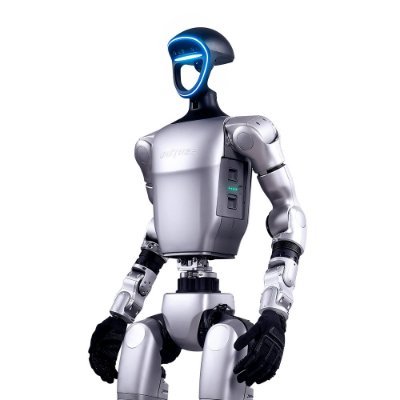
Unitree Introducing | Unitree As2 Your Companion🥳 Compact size, industrial capability. Maximum torque of 90N·m, over 4 hours of no-load runtime, IP54 rainproof design. With a 15 kg payload, range exceeds 13 km. Open secondary development, empowering industry applications.
31,998,693 görüntüleme • 5 ay önce •via X (Twitter)

0 Yorum

Yorum bulunmuyor

Orijinal gönderinin yorumları burada görünecek

Benzer Videolar

PRESS RELEASE | Hon’ble PM Unveils Loiter Munition Test Range and MALE UAV Runway Test Facility at Solar Nagpur. Big push to Self-reliance in Unmanned Aerial Systems Hon’able PM on his visit to Nagpur on 30 Mar 2025, made his last halt of the day at Solar Defence & Aerospace Ltd (SDAL) Nagpur. Shri Satyanarayan Nuwal, Chairman and Mr Raghav Nuwal welcomed the Hon’able PM at SDAL Helipad. From there he was escorted to Technical Area where Hon’ble PM inaugurated Loiter Munition Test Range. Spread over 1080 acres this test range has a dedicated Command & Control Centre, UAV Take off Area, Endurance and Communication Range check facility, Parachute Recovery Area, Static & Moving Target Engagement, Target Hit and CEP Measurement, Warhead Lethality Test facility, and many more. After the inauguration the PM visited the product gallery wherein SDAL showcased its products like Pinaka Rocket System, Air-bombs, Mines, Grenade, Military Explosives, ATGM, Nagastra 1 & 2 Loiter Munitions, and many more. Thereafter, the PM was then escorted by the Chairman to the newly constructed Air strip where he was received by Mr. Manish Nuwal, MD & CEO, SDAL. He then proceeded to unveil the Plaque to mark the Inauguration of the new 1.27 km Runway Facility for Development & Testing of MALE/HALE Class Unmanned Aerial Systems (UAS). Solar has taken a big initiative for developing a MALE UAV and a suo-moto proposal has already been submitted to IAF which is under consideration. The Prime Minister also witnessed the display of the state of art indigenously developed systems viz. Loiter Munition (Nagastra 3), Bhargavastra (Micro-Missile based Counter Drone System) and Bhaumastra (Mine Detection & Disposal System). Key highlights of displayed systems are as follows: - • Loitering Munitions: Many Indian industries and start-ups have entered drone related technologies and systems mostly focused on surveillance and logistics applications. Use of drones and UAVs for combat applications requires critical competency and infrastructure. Keeping in view the futuristic requirements of this emerging technology, SIDAL has taken the initiative to develop Nagastra series of Loiter Munitions of ranges from 15 km to more than 100 km and explosive payload carrying capability from 1 kg to 10 kg. Nagastra 3 is a Vehicle Launched Loiter Munition System of endurance 3 hours, range 100 km and can carry 8.5 kg warhead. It is being developed under Make 2 project from Arty of Indian Army. • Bhargavastra is an indigenously designed and developed Counter Drone System meant for quick interception of drones for an assured hard kill using tiny, guided missiles with swarm engagement capability. This solution offers mobile protection against drone attacks with near simultaneous engagement of multiple drones. With a long range of detection (upto 6 km) and long range of neutralization (upto 2.5 km), it ensures safety of vulnerable assets/battlefield formations. • SDAL has taken an initiative to address the global menace of land mines detection and disposal. As per some estimates there are more than 11 million buried mines world over which remain uncleared and are causing casualties or maiming of both soldiers and civilians in peace time. Bhaumastra, a drone-based system under development by SDAL, would be the first of its kind in any developed nation to provide a drone-based solution to this global problem. It was a proud and inspirational moment for all the 10,000 employees of Solar Group, Nagpur to be witness to this important milestone in the History of their Company where the Prime Minister was among their midst. An emotional send off was given to the Hon’ble PM by the 3 generations of the SDAL Group management viz. Shri Satyanarayan Nuwal, Chairman, Shri Manish Nuwal CEO and Managing Director and Mr Raghav Nuwal.

Alpha Defense™🇮🇳

12,297 görüntüleme • 1 yıl önce

i don't think people realize what's happening in Chinese robotics. this one manufacturer might be the most impressive AND most concerning company on Earth right now let me explain... Unitree Robotics sells a humanoid robot for $5,900. their robot dog costs $1,600 (Boston Dynamics charges $74,500 for theirs for context). you can literally buy these on Amazon today. so obviously the first question is: how is that even possible? the answer starts with a guy who couldn't pass his English exam. Wang Xingxing grew up in Zhejiang province. for his master's thesis, he decided to build a quadruped robot. budget: about $3,000. for context, $3,000 for this kinda robot is nothing. off-the-shelf servo motors alone would've eaten that twice over. so Wang did the only thing he could: he designed and machined every single component himself. motors, joints, controllers, the frame. all of it. the resulting robot was janky and imperfect. but it worked. and the video went viral globally. after graduating he joined DJI. but he quit after two months, and this is 2016, when DJI was arguably the hottest hardware company in China. walking away from that with no money to start a robotics company is a... specific kind of stubborn. he launches Unitree with $280K from a single angel investor. tiny office in Hangzhou. 50 square meters. but the money runs out fast. he can't make payroll for three years. the company almost dies in 2017. but emergency government funding arrives with days to spare. he survives, barely, and keeps building. this is where it gets really fascinating IMO. this founding constraint, building everything yourself because you literally cannot afford to buy parts, never went away. even after funding rounds started landing. even after revenue kicked in. it just became the company's permanent DNA. Unitree now manufactures 90%+ of its core components in-house. motors, reducers, controllers, encoders, LiDAR, etc the founder's $3,000 robot thesis ended up being an architectural decision that turned out to be structurally superior. think about what that means in practice. Boston Dynamics needs a better motor? they negotiate with a supplier, wait on lead times, qualify the part. but when Unitree needs one, they design theirs internally and have a new version in production within weeks. that gap compounds every cycle. Unitree shipped three separate humanoid platforms in 18 months. Figure AI has shipped one. Tesla has shipped zero commercially. the results are getting hard to dismiss. 23,700 robot dogs shipped in 2024 (roughly 70% of the entire global market). 7,000+ humanoids deployed. over 600 industrial sites running their quadrupeds. $140M+ revenue, profitable every year since 2020. for perspective: no Western humanoid competitor is profitable. not one. OK. now here's where the "most concerning" part of this starts... if you watched the DJI story unfold, you already recognize the shape. affordable Chinese hardware quietly saturates global markets. years later, the national security questions arrive, after the install base is already massive. drones, then EVs, then AI. now robots. Unitree is running this exact playbook in real time. in April 2025, researchers found an undocumented backdoor in their Go1 robot. a remote tunnel letting anyone control the robot and stream its camera feed. default password: pi/123. 1,919 vulnerable units exposed globally. including machines at MIT, Princeton, and Carnegie Mellon. but it gets worse. every Unitree robot shares the same hardcoded encryption key. encrypt the word "unitree" and you get root access to any of them. one compromised robot can spread to every Unitree robot in Bluetooth range automatically. a literal robot botnet. the G1 quietly transmits sensor data to Chinese servers every five minutes. audio, video, GPS, LiDAR spatial mapping, with no notification, no consent, no opt-out. PLA footage has shown Go2 robots with mounted weapons. Ukrainian forces literally deployed weaponized units on the actual frontline. and every member of the bipartisan House China Committee signed a letter calling for Unitree's military company designation. Wang signed a 2022 pledge alongside Boston Dynamics not to weaponize robots. but pledges don't survive contact with shipping hardware to open markets. and under China's 2025 rules restricting military-related speech, Unitree couldn't publicly confirm PLA use even if they wanted to. 50,000+ of these robots are now deployed globally. some at institutions that probably should've asked harder questions before connecting them to their networks. the security stuff is real and people should know about it. but i also think it's important not to let that overshadow what's actually been built here. a 35-year-old who failed his English exam created a robotics company that's outshipping and outpricing every Western competitor while being the only profitable humanoid maker on Earth. most impressive and most concerning company in the world right now.

Ole Lehmann

122,620 görüntüleme • 5 ay önce

The Russian "White Swan," officially the **Tupolev Tu-160** (NATO reporting name: Blackjack)! A supersonic, variable-sweep wing strategic bomber designed by the Tupolev Design Bureau in the Soviet Union during the 1970s. Widely regarded as the pinnacle of bomber technology, the Tu-160M, its modernized variant, stands out as the world’s premier bomber due to its unmatched combination of speed, payload capacity, range & advanced technological upgrades. I will outline here why the Tu-160M is the very best bomber in the world, drawing on its design, capabilities & strategic significance & I care not any negative opinions! The Tu-160M is the largest & heaviest combat aircraft in operation, measuring 54 meters in length with a wingspan of up to 56 meters. Powered by 4 Kuznetsov NK-32 afterburning turbofan engines, it achieves speeds exceeding Mach 2.05**, making it the fastest bomber ever built. This speed allows it to outrun many fighter jets and evade surface-to-air missiles, ensuring survivability in contested airspace. Its variable-sweep wing design optimizes aerodynamic performance, enabling efficient subsonic cruising for long-range missions or supersonic dashes for rapid strikes. With a practical range of **12,300 km** without refueling, the Tu-160M can project power globally, surpassing competitors like the American B-1B Lancer, which has a shorter range and lower speed. The bomber’s payload capacity is equally impressive, carrying up to **45,000 kg** of ordnance in two internal weapon bays. It can deploy a variety of weapons, including **12 nuclear-capable Kh-55SM cruise missiles**, **Kh-101/102 stealth cruise missiles**, & the hypersonic **Kh-47M2 Kinzhal** missile, introduced in 2020. These armaments, particularly the stealth-enhanced Kh-101/102, allow precision strikes from standoff distances, penetrating advanced air defenses. Unlike the B-1B, which carries a larger external payload but lacks the Tu-160’s speed, or the B-2 Spirit, which prioritizes stealth over speed, the White Swan balances firepower, velocity & strategic flexibility, making it uniquely versatile. The Tu-160M’s upgrades, initiated after President Vladimir Putin ordered resumed production in 2015, have transformed it into a cutting-edge platform. The modernized variant features 80% new systems, including advanced avionics, digital mission suites, large-screen cockpit displays & the NV-70M Novella radar. Its electronic warfare suite enhances survivability by jamming enemy defenses. The **NK-32-02 engines** improve efficiency and thrust, extending range and maneuverability. These upgrades, combined with restored production techniques like electron-beam welding, ensure the Tu-160M rivals next-generation bombers like the B-21 Raider while maintaining a proven design. Strategically, the Tu-160M is a cornerstone of Russia’s nuclear triad, capable of delivering both conventional & nuclear strikes with unmatched reach. Its deployment in regions like the Arctic & Far East, as seen in recent operations, underscores its role in global deterrence. Reports highlight its record-breaking flights, such as a 25-hour nonstop mission, showcasing endurance no other bomber can match. While the B-2 offers stealth & the B-1B excels in conventional bombing, neither combines the Tu-160M’s speed, range, and payload versatility. Despite its high cost—approx $163 million per unit** A FRACTION of the USA B2 at $2.13 BILLION—& logistical demands, the Tu-160M’s capabilities justify its status. Russia’s plan to build 50 new Tu-160M2s & upgrade existing units ensures its dominance for decades. The White Swan’s anti-flash white coating, designed to reflect thermal energy from nuclear blasts, symbolizes its Cold War heritage while embodying modern lethality. For its unparalleled speed, massive payload, extensive range & advanced systems, the Tu-160M White Swan reigns as the world’s best bomber

𝐃𝐚𝐯𝐢𝐝 𝐙 🇷🇺 🇮🇪

28,153 görüntüleme • 9 ay önce

The Russian "White Swan," officially the **Tupolev Tu-160** (NATO reporting name: Blackjack)! A supersonic, variable-sweep wing strategic bomber designed by the Tupolev Design Bureau in the Soviet Union during the 1970s. Widely regarded as the pinnacle of bomber technology, the Tu-160M, its modernized variant, stands out as the world’s premier bomber due to its unmatched combination of speed, payload capacity, range & advanced technological upgrades. I will outline here why the Tu-160M is the very best bomber in the world, drawing on its design, capabilities & strategic significance & I care not any negative opinions! The Tu-160M is the largest & heaviest combat aircraft in operation, measuring 54 meters in length with a wingspan of up to 56 meters. Powered by 4 Kuznetsov NK-32 afterburning turbofan engines, it achieves speeds exceeding Mach 2.05**, making it the fastest bomber ever built. This speed allows it to outrun many fighter jets and evade surface-to-air missiles, ensuring survivability in contested airspace. Its variable-sweep wing design optimizes aerodynamic performance, enabling efficient subsonic cruising for long-range missions or supersonic dashes for rapid strikes. With a practical range of **12,300 km** without refueling, the Tu-160M can project power globally, surpassing competitors like the American B-1B Lancer, which has a shorter range and lower speed. The bomber’s payload capacity is equally impressive, carrying up to **45,000 kg** of ordnance in two internal weapon bays. It can deploy a variety of weapons, including **12 nuclear-capable Kh-55SM cruise missiles**, **Kh-101/102 stealth cruise missiles**, & the hypersonic **Kh-47M2 Kinzhal** missile, introduced in 2020. These armaments, particularly the stealth-enhanced Kh-101/102, allow precision strikes from standoff distances, penetrating advanced air defenses. Unlike the B-1B, which carries a larger external payload but lacks the Tu-160’s speed, or the B-2 Spirit, which prioritizes stealth over speed, the White Swan balances firepower, velocity & strategic flexibility, making it uniquely versatile. The Tu-160M’s upgrades, initiated after President Vladimir Putin ordered resumed production in 2015, have transformed it into a cutting-edge platform. The modernized variant features 80% new systems, including advanced avionics, digital mission suites, large-screen cockpit displays & the NV-70M Novella radar. Its electronic warfare suite enhances survivability by jamming enemy defenses. The **NK-32-02 engines** improve efficiency and thrust, extending range and maneuverability. These upgrades, combined with restored production techniques like electron-beam welding, ensure the Tu-160M rivals next-generation bombers like the B-21 Raider while maintaining a proven design. Strategically, the Tu-160M is a cornerstone of Russia’s nuclear triad, capable of delivering both conventional & nuclear strikes with unmatched reach. Its deployment in regions like the Arctic & Far East, as seen in recent operations, underscores its role in global deterrence. Reports highlight its record-breaking flights, such as a 25-hour nonstop mission, showcasing endurance no other bomber can match. While the B-2 offers stealth & the B-1B excels in conventional bombing, neither combines the Tu-160M’s speed, range, and payload versatility. Despite its high cost—approx $163 million per unit** A FRACTION of the USA B2 at $2.13 BILLION—& logistical demands, the Tu-160M’s capabilities justify its status. Russia’s plan to build 50 new Tu-160M2s & upgrade existing units ensures its dominance for decades. The White Swan’s anti-flash white coating, designed to reflect thermal energy from nuclear blasts, symbolizes its Cold War heritage while embodying modern lethality. For its unparalleled speed, massive payload, extensive range & advanced systems, the Tu-160M White Swan reigns as the world’s best bomber

𝐃𝐚𝐯𝐢𝐝 𝐙 🇷🇺 🇮🇪

143,584 görüntüleme • 1 yıl önce

Today marks the most significant milestone in NordSpace's history. We have been awarded $8.3 million in Phase 1 grant funding and selected as a winner of Canada’s Department of National Defence's Launch the North IDEaS challenge, toward the development of our Tundra orbital launch vehicle. Launch the North represents Canada’s most significant investment in sovereign space launch. As a part of the government’s $182.6 million investment in sovereign space launch, DND and CAF aim to secure Canada's strategic autonomy in space, reduce dependence on foreign launch providers, and position Canada as a global leader in commercial and defence-oriented space launch. Canada's moment has arrived. What distinguishes NordSpace is the depth of its vertical integration. We design and manufacture our own engines and vehicles, develop and operate our own spaceport, build and fly our own satellites, and invest in the broader Canadian space ecosystem. This end-to-end architecture stands unique in Canada, inspired by industry leaders such as SpaceX and Rocket Lab, and constitutes the foundational infrastructure upon which a durable, truly sovereign Canadian space industry can be built. At the centre of our architecture is Tundra, powered by our in-house designed and manufactured 3D printed Hadfield engines and capable of delivering 500+ kg to LEO and 350+ kg to SSO. In its Tundra+ configuration, this grows to 1,100 kg to LEO and 850 kg to SSO, with a direct scaling path to our Titan medium-lift vehicle targeting 5,000+ kg to LEO. A proven modular 3D printed engine architecture reduces development time and risk while ensuring Canada's sovereign launch capability grows in step with national defence, commercial, and allied demand over the coming decade. Our Atlantic Spaceport Complex (ASX) in Newfoundland and Labrador is the only purpose-built commercial orbital launch facility in Canada and one of the most strategically advantaged launch sites in the western hemisphere. The ASX supports launch inclinations of 44 to 105 degrees over the Atlantic Ocean, the widest range available from any Canadian site. It also offers the largest safety distances of any spaceport in Canada and highest approved launch cadence, lending to our medium-lift future. The ASX received its landmark environmental approval from the Government of Newfoundland and Labrador and is already under rapid construction with its first launch planned this spring of our Taiga rocket. This award will ultimately lead to the creation of 134 direct jobs by 2028, growing to 650+ by 2032, with 1,600+ indirect and induced jobs across Canada's industrial base as we scale to medium-lift. We rely on a wide ecosystem of Canadian partners including Magellan Aerospace, Kongsberg Geospatial, C-CORE, and Indigenous-led suppliers across the country. National Defence Canadian Armed Forces David McGuinty

NordSpace 🇨🇦

14,701 görüntüleme • 4 ay önce

BREAKING NEWS !! Sukhoi S-70 Okhotnik-B will see first combat action alongside the SU 57 in Russia's June offensive to take KIEV & UKRAINE Thread 1/ The Sukhoi S-70 Okhotnik-B ("Hunter") is a Russian stealth heavy unmanned combat aerial vehicle (UCAV) designed by Sukhoi to operate alongside the Su-57 fifth-generation fighter jet. Below is a detailed summary of its specifications, role, as the " best UAV" with the Su-57 as its partner, S-70 Okhotnik Specifications Based on available information, primarily from Russian sources and open data, the S-70 Okhotnik has the following specifications: - **Type**: Stealth heavy unmanned combat aerial vehicle (UCAV) - **Developer**: Sukhoi Design Bureau, with contributions from Russian Aircraft Corporation MiG - **Production Facility**: Chkalov Novosibirsk Aviation Plant (NAPO) - **Design**: Flying-wing configuration, optimized for stealth with radar-absorbent materials and coatings to reduce radar cross-section - **Dimensions**: - **Length**: Approximately 14 meters (46 feet), though some sources claim up to 19 meters, possibly conflating earlier estimates or including different configurations ( ( - **Wingspan**: Approximately 19–20 meters (62–65 feet) ( ( - **Weight**: - **Empty Weight**: Estimated at 10,000–20,000 kg (varies by source) ( - **Maximum Takeoff Weight**: Approximately 20,000–25,000 kg ( ( - **Powerplant**: - Single jet engine, either: - AL-31F turbofan (used in Su-27 fighters) or - AL-41F derivative (used in Su-35S and Su-57 prototypes), without afterburner or thrust vectoring in some configurations ( ( - Later prototypes feature a flat jet nozzle to reduce infrared and radar signatures ( - **Performance**: - **Maximum Speed**: Approximately 1,000 km/h (620 mph), high subsonic, with potential for supersonic speeds in future versions ( ( - **Range**: Estimated at 4,000–6,000 km, depending on configuration and payload ( ( - **Payload**: - Can carry up to 2.8–6 tons of munitions in two internal weapons bays to maintain stealth ( ( - Armament includes: - Precision-guided bombs (e.g., FAB-500 M-62, UMPB D-30SN glide bombs) ( ( - Air-to-ground missiles - Potential air-to-air missiles (e.g., R-73/74, R-77, tested with surrogates) ( ( - Possibly a miniaturized version of the KH-47M2 Kinzhal hypersonic missile ( - **Stealth Features**: - Low-observable design with composite materials and stealth coatings - Internal weapons storage to minimize radar signature - Advanced sensors, including Active Phased Array Radar (AFAR), optoelectronic, and infrared systems ( - **Operational Role**: - Designed as a "loyal wingman" to the Su-57, extending its radar and target designation range - Capable of autonomous and semi-autonomous operations, including reconnaissance, electronic warfare, precision strikes, and suppression of enemy air defenses (SEAD) ( ( - Can operate independently or under control from a Su-57 or ground station - **AI and Autonomy**: Equipped with artificial intelligence for navigation, target recognition, and engagement with minimal human input ( ( - **Development Timeline**: - Project began in 2011, with the first prototype unveiled in 2017 - Maiden flight on August 3, 2019, lasting ~20 minutes at 600 meters altitude (

𝐃𝐚𝐯𝐢𝐝 𝐙 🇷🇺🇮🇪

51,398 görüntüleme • 1 yıl önce

We are back again :) After three weeks of quiet building. Introducing Genesis World 1.0, our latest simulation platform, the second release in our full-stack suite. Open-sourced. Robotics is still bottlenecked by the 1× speed of the physical world. Every model, checkpoint, and data recipe eventually needs to be tested on physical hardware, slowly, expensively, and with limited coverage. One hour in reality can become 100 days in simulation. That is how robotics model iteration moves from a wall-clock bottleneck to a compute problem. To make this work, simulation has to be both fast and trustworthy. Over the past year, we rebuilt the entire stack: a GPU-accelerated cross-platform compiler, penetration-free multi-physics contact solvers, unified rigid and deformable physics, and a photo-realistic renderer purpose-built for physical AI applications. We built Nyx, a high-performance path-traced rendering engine for robotics application. Genesis World 1.0 achieves near realtime performance with our latest development for penetration-free IPC solver, supporting various types of deformables beyond rigid bodies. It supports contact-rich, dexterous manipulation simulation across different embodiments: unitree, sharpa, wuji, genesis hand and various types of grippers. Under the hood is Quadrants, our effort in pushing forward cross-platform GPU-accelerated computation. Quadrants started as a fork of Taichi, and we rebuilt most of the critical parts for optimizing simulation workloads, giving 10x faster launch time and up to 4.6x runtime performance compared to the initial Genesis release. Together, they bring us to an unprecedentedly low sim-to-real gap, enabling zero-shot real-to-sim model evaluation and much faster iteration of GENE. All available today. Genesis World 1.0: Quadrants: Nyx:

Genesis AI

312,898 görüntüleme • 2 ay önce

The US needs to start getting really serious about AI and robotics. We can't let China beat us. This is the new Chinese-made Unitree B2-W robot. The Unitree B2-W is turning heads for its ability to walk, roll, climb, and even carry adult passengers across challenging terrain—all in one sleek, futuristic package. At first glance, you might catch yourself thinking, “Is this really real?” because it looks like something straight out of a sci-fi film. Yet, here it is: a Chinese-made robot that’s been engineered to shift seamlessly between legged and wheeled locomotion, push up to 220 pounds of horizontal pulling force, and sprint at speeds of around 12.5 MPH. Some have likened it to a “Boston Dynamics on steroids,” which only scratches the surface of how advanced and versatile it truly is. Beneath the metallic chassis is a sophisticated control system powered by an Intel Core i5 or i7 processor—or, in higher-tier configurations, a NVIDIA Jetson Orin which drives the B2-W’s multitude of onboard sensors, from its 3D LiDAR (with optional 32-wire automotive-grade LiDAR) to an array of depth and optical cameras. These sensors lets it perceive the environment, avoid obstacles, and adapt to uneven terrain, a capability further bolstered by its IP67-rated weather and dust protection. In real-world settings, that means it can climb 45-degree staircases, cross rocky paths, and transition seamlessly from indoor to outdoor operation without missing a beat. Arguably the most buzzworthy trick in its repertoire is the ride-on feature. While "quadruped" robots usually conjure up images of helpful mechanical “dogs” trotting beside you, the B2-W can support the weight of an adult, turning it into a legitimate personal transport over rough or slippery ground. This is all made possible by its formidable load capacity of up to 120 kg in standing mode, combined with a battery system of more than 2 kWh. Under ideal conditions, it can keep going for up to 50 km with a 40 kg load, though your mileage may literally vary. Unsurprisingly, all this power and agility have sparked a wave of conversation—both fascination and worry. People imagine scenarios where a B2-W might chase intruders or become militarized, carrying weapons rather than passengers or equipment. As technology marches forward, these concerns aren’t completely unfounded, but it also opens doors for legitimate uses in research, construction, rescue operations, and beyond. The B2-W’s adaptability, speed, and load-bearing capacities make it a compelling platform for anyone investigating the boundaries of legged robotics. Ultimately, the B2-W’s debut underscores just how quickly Chinese robotics—indeed, robotics worldwide—is evolving. From advanced AI navigation to all-terrain endurance, it’s pushing the envelope of what’s possible in the quadruped robot space. While it might look like a mechanical cousin of nature’s best pack animals, the B2-W is very much a product of cutting-edge engineering.

Ed Krassenstein

177,382 görüntüleme • 1 yıl önce

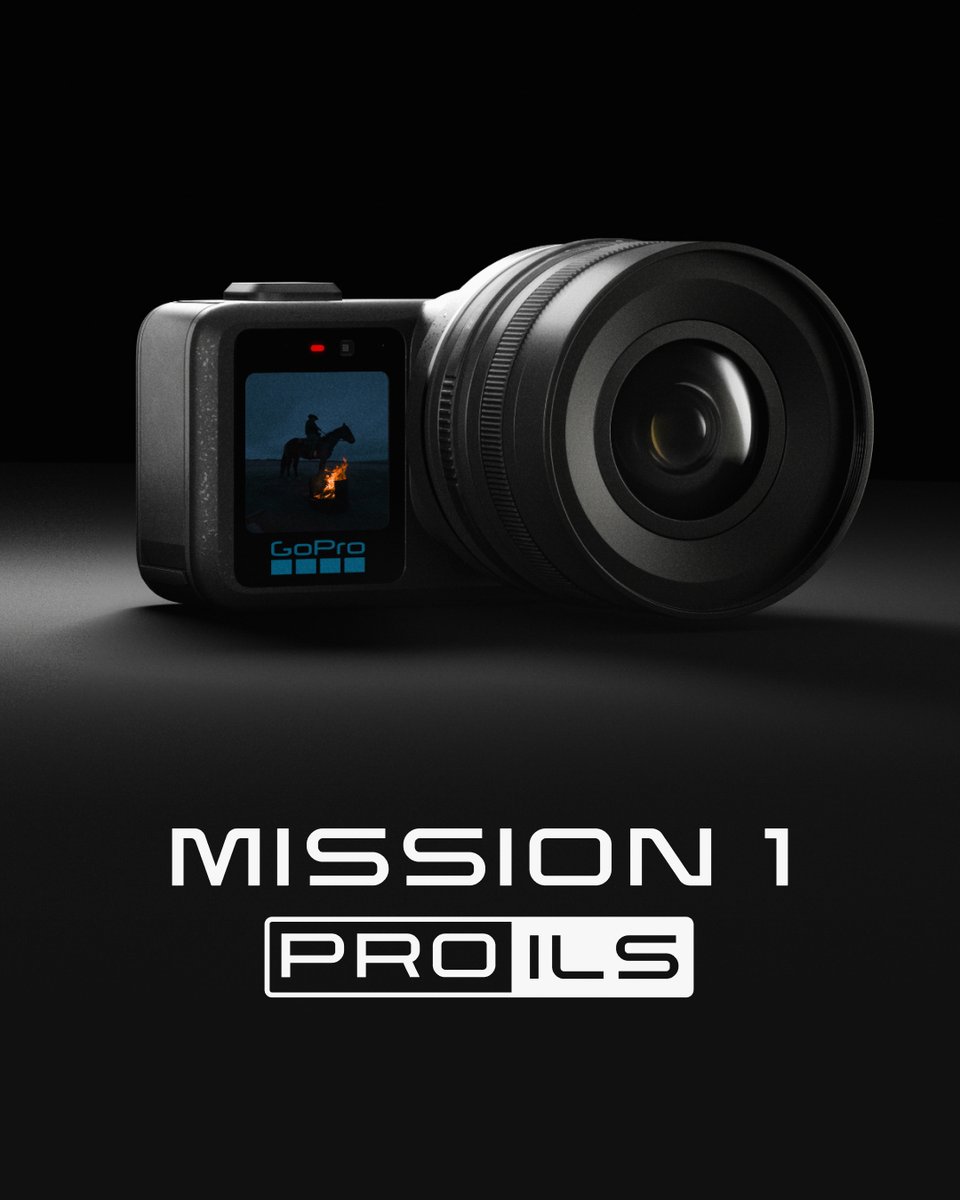
This is #GoProMISSION1 PRO 🎥 The only 8K60 camera with a 1-inch sensor. Our compact, cinema-grade camera features a proprietary GP3 processor and 50MP sensor that enable intelligent low-light capture, industry-leading frame rates and resolutions, and groundbreaking thermal performance. ✔️ 1-inch Quad-Bayer sensor with up to 14-stops of dynamic range at the sensor for low-light capture ✔️ Longest continuous runtimes + most dependable thermal performance of any GoPro ever—over 5 hours in 1080p + over 3 hours in 4K at 100°F ✔️ Industry-leading 8K60—300% more pixels than 4K ✔️ 4K240 + 1080p960 ultra slo-mo with real frames—not AI-interpolated ✔️ 8K30 + 4K120 Open Gate capture ✔️ Gallery-ready 50MP photos + 44MP frame grabs ✔️ Up to 240 Mbps bit rate out of the box + 300 Mbps with GoPro Labs ✔️ 10-Bit color + GP-Log2 with LUTs for Rec.709 + Rec.2020 outputs ✔️ HLG HDR with Simultaneous Dual-Gain Readout—the industry standard for pros ✔️ New intelligent capture modes: Dive, Vlog, Low-Light, Sport POV, + Subject Tracking ✔️ 13% higher capacity Enduro 2 battery in the same form factor with new fast charging ✔️ Rugged + waterproof, now to 66ft (20m) without a housing ✔️ Emmy® Award Winning #HyperSmooth in-camera video stabilization ✔️ New 4-microphone array, 32-bit float audio, multi-track recording, + manual audio controls ✔️ Timecode Sync to streamline multi-camera editing + GPS with telemetry data ✔️ New Point-and-Shoot Grip compatibility for elite handheld control ✔️ Removable Lens Hood included to reduce glare + flares ✔️ Bluetooth® 5.3 Super Wideband connectivity + USB-C port for external audio capture ✔️ A cinema-grade camera that anybody can use Enhanced by a GoPro Subscription: ✔️ Unlimited cloud backup at 100% quality ✔️ Camera replacement guarantee ✔️ Up to 50% off select accessories Order your MISSION 1 Series camera now to get a free Point-and-Shoot Grip ($100 value) + free shipping at Pro-tip: Existing GoPro Subscribers save $100 with the annual camera discount.

GoPro

22,510 görüntüleme • 2 ay önce

American-made drone smashes performance metrics at Chinese prices | Loz Blain, New Atlas A new drone company has exploded out of stealth mode in the USA with incredible claims about its first product, saying it'll fly 4X longer, 10X further, 10X quieter and carry 5X more payload than leading competitors – while competing with China on cost. Let's start with the numbers. Silicon Valley-based SiFly has announced two industrially targeted models with some absolutely ludicrous stats attached. The smaller Q12 platform carries up to 10 lb (4.5 kg) of payload. It can hover for a remarkable two hours - or manage three hours in forward flight, for an operational range of 90 miles (145 km). The company says it's radically quieter than anything in its class as well, and "nearly silent at 100 meters" (328 ft). Deliveries are slated to begin at the end of the year. The larger Q250 platform is built for heavy lift, and capable of carrying a 200 lb (90.7-kg) payload for 100 minutes of endurance. Set for launch in 2026, it's designed for fire suppression, cargo missions and crop spraying at a fraction of what the usual helicopter would cost. "Commercial drones have long forced organizations to compromise between flight duration, payload capacity, and operational range," said Brian Hinman, Founder and CEO of SiFly, in a press release. "We eliminated those trade-offs. SiFly drones are transforming emergency response, infrastructure inspection, and logistics – delivering helicopter-class performance at drone economics." The company says it's validated its performance claims in real-world operations, naming California's Amaral Ranches as an early pre-launch deployment partner. The question of course is ... how? Drones are a well-understood technology now that's been dominated from the very beginning by Chinese companies. If SiFly's figures hold up and this company truly puts 4-10X multiples on these key performance stats, it's sitting on some revolutionary technology advances in energy storage, propulsion, aerodynamics and/or materials – areas that are already highly optimized after more than a decade of commercial and industrial drone development. Annoyingly, there's nothing particularly revolutionary-looking in the renders, and SiFly has yet to explain exactly how it's achieved such a radical leap in performance – not to mention how it's managed to design and manufacture in the USA at prices competitive with Chinese competition. Or indeed, what these prices are. Which would give this company a strong whiff of vapor... But former NASA Chief Technologist for On-Demand Mobility and current Whisper Aero CEO Mark Moore (who knows a thing or two about quiet propulsion systems at the very least) lends this group some third-party credibility in a LinkedIn post: "SiFly's reveal today is kinda breathtaking in terms of capabilities," he writes. "I've personally been able to see this drone develop through the years, and know the principals as serious players. The specifications they've achieved are really impressive, from the empty weight fraction to the cruise Lift/Drag - this is the best multicopter out there, by far. And while they don't hype it up, they've designed this product to be affordable so that it can be used en masse as a swarming solution. Well worth a watch. Well worth the money. Awesome job!" Read more:

Owen Gregorian

72,742 görüntüleme • 1 yıl önce

The U.S. unveils it's new F-47 stealth fighter, the centerpiece of the NGAD program, a "family of systems" designed to integrate advanced manned and unmanned platforms, including Collaborative Combat Aircraft (CCA) drones. Announced by President Donald Trump alongside Secretary of Defense Pete Hegseth and Air Force Chief of Staff Gen. David Allvin, the F-47 is described as the "most advanced, most capable, most lethal aircraft ever built." It reportedly builds on a prototype that has been secretly flying for nearly five years, suggesting significant testing and refinement prior to its public unveiling. The aircraft is engineered for speed, stealth, and adaptability, with a focus on countering advanced threats from nations like China, which has also been developing sixth-generation capabilities. Boeing’s victory over Lockheed Martin for the NGAD contract, valued at approximately $20 billion for the Engineering and Manufacturing Development (EMD) phase, marks a critical win for the company amid its recent struggles in defense and commercial sectors. The F-47 is expected to enter service in the 2030s, with each unit potentially costing upwards of $300 million, reflecting its cutting-edge technology. Its development emphasizes rapid adaptability to emerging threats, leveraging advanced manufacturing and an open architecture design to allow for continual upgrades. Since exact specifications remain classified or undisclosed as of now, the following are informed projections based on NGAD program objectives, statements from officials, and sixth-generation fighter trends. Designation: Boeing F-47 Manufacturer: Boeing Phantom Works Role: Air dominance fighter with multi-role capabilities (air-to-air and air-to-ground) Crew: Likely manned with optional unmanned configuration, aligning with sixth-generation flexibility Dimensions: Larger than the F-22 and F-35 to accommodate greater range and payload; exact size undisclosed but possibly exceeding 60 feet in length and a wingspan over 40 feet Powerplant: Expected to use adaptive cycle engines from the Next Generation Adaptive Propulsion (NGAP) program—either General Electric XA102 or Pratt & Whitney XA103. These engines feature a three-stream architecture, offering over 20% better fuel efficiency, increased thrust (potentially 45,000-50,000 lbf per engine), and enhanced electrical output for directed-energy weapons. Speed: Likely exceeds Mach 2 (super cruise capable—sustained supersonic flight without afterburners), surpassing the F-22’s Mach 1.8 super cruise Range: Combat radius projected at 1,000-1,500 nautical miles (unrefueled), tailored for Indo-Pacific operations, significantly greater than the F-22’s 600 nautical miles or F-35’s 670 nautical miles Stealth: Advanced stealth features, including a tailless design, next-generation coatings, and materials to reduce radar, infrared, and acoustic signatures beyond fifth-generation standards Payload: Larger internal weapons bays (possibly 20-23 feet long) to carry advanced munitions like the AIM-174, hypersonic missiles, and future cruise missiles, with external hardpoints available at the cost of stealth Sensors and Avionics: AI-enhanced sensor suite for unmatched situational awareness, integrating radar, infrared search and track (IRST), and electronic warfare systems; likely includes "smart skins" with embedded sensors for reduced drag and improved performance Networking: Maximum connectivity for real-time data sharing with satellites, drones, and other platforms, supported by a robust, jam-resistant data link Additional Features: Potential for directed-energy (laser) weapons to counter missiles and drones Integration with CCA drones for expanded mission options (e.g., extra munitions, electronic warfare) Open architecture for rapid upgrades and mission-specific customization Key Highlights Human-Machine Teaming: The F-47 is designed to "unlock the magic" of human-machine collaboration, pairing pilots with AI-driven systems and autonomous drones to enhance decision-making and reduce workload. Strategic Purpose: Built to penetrate contested environments, countering advanced air defenses and stealth fighters from adversaries like China, with a focus on long-range engagements over vast theaters. Development Timeline: Prototypes have been flying since at least 2020, with full operational capability targeted for the 2030s, replacing the F-22 incrementally as numbers grow. Cost and Scale: Estimated at $300 million per unit, with plans for roughly 200 manned aircraft, though this is a planning figure subject to change. The F-47’s exact design and full capabilities remain shrouded in secrecy, typical of NGAD’s classified nature, but its unveiling signals a bold step forward in U.S. air power. Its blend of stealth, speed, range, and technological integration positions it as a cornerstone of future aerial warfare, though its high cost and complexity will likely spark ongoing debate about affordability and strategic priorities. U.S. military technology will continue to dominate all other nations like it always has.

The SCIF

453,624 görüntüleme • 1 yıl önce

China unveils humanoid robot worker with brain that runs 275 trillion ops/sec | Jijo Malayil, Interesting Engineering In tests, SUYUAN used vision and joint control to sort and move crates of various sizes, greatly improving warehouse productivity. Chinese manufacturing firm Shanghai Electric has unveiled its first self-developed industrial humanoid robot, “SUYUAN,” marking a major milestone in its robotics journey. Debuting at the World Artificial Intelligence Conference (WAIC 2025) on July 26 in Shanghai, SUYUAN boasts 38 degrees of freedom and 275 TOPS of on-device computing power, enabling precise operations and fluid movements. According to the firm, designed for diverse industrial use, the robot showcases Shanghai Electric’s end-to-end capabilities—from core tech to integrated solutions—and reinforces its commitment to next-gen industrial automation through a full industry chain strategy. At WAIC 2025, Shanghai Electric also unveiled a new joint venture with Johnson Electric for next-gen humanoid robotics and showcased its “LINGKE” dual-arm robot. Recently, Hangzhou-based Unitree Robotics launched the R1 humanoid with 26 joints for $5,900, showcasing athletic feats like cartwheels, running, and quick recovery. Smart factory assistant Shanghai Electric claims SUYUAN, equipped with 38 degrees of freedom (DoF) and a powerful 275 TOPS on-device computing processor, delivers fluid, human-like movements and high-precision operations across various industrial scenarios. Its advanced articulation and real-time processing capabilities make it highly adaptable, enabling smooth execution of complex tasks in dynamic work environments. SUYUAN, who weighs 110 pounds (50 kilograms) and is 5 feet 6 inches (167 cm) tall, was designed to have human-like proportions. Its 38-DoF articulation offers dexterity, allowing for both wide-range motion and sensitive manipulation. With a single arm, the robot can lift objects up to 4.4 pounds (2 kilograms) in weight and carry a total payload of up to 22 pounds (10 kilograms). With a walking pace of 3.1 miles per hour (5 km/h), SUYUAN is ideal for environments including assembly lines, warehousing, and logistics, according to a statement. To navigate complex industrial settings, SUYUAN combines LiDAR and binocular vision for self-guided mobility. Its 275-TOPS AI processor enables rapid data analysis and integration with large language models, allowing it to understand tasks in natural language and handle objects adaptively, reports Fox 44 News. In pilot demonstrations, the robot successfully identified, picked, and relocated crates of varying sizes using advanced computer vision and coordinated joint control—delivering measurable gains in warehouse efficiency. The company claims that SUYUAN’s launch represents a major turning point in Shanghai Electric’s foray into humanoid robotics and strengthens its vertically integrated approach to industrial automation solutions. Intelligent task handling Shanghai Electric also demonstrated its most recent developments in intelligent manufacturing at WAIC 2025, introducing a new joint venture with Johnson Electric centered on next-generation humanoid robotics and showcasing the “LINGKE” dual-arm robot. With its high-precision operations, adaptive teamwork, and closed-loop data capabilities, the LINGKE robot demonstrated live talents in handling complicated production jobs. LINGKE is made to do more than just replace human labor; it uses compliant force control and bimanual coordination to relieve workers of high-intensity, repetitive jobs. According to the company, the robot enhances operational efficiency by up to five times. Its core strength lies in a Data-Model-Deployment closed-loop system that starts with operational data, followed by data cleansing, model training, live deployment, and feedback-driven optimization—enabling autonomous learning and workflow improvement. Also at the event, Shanghai Electric and Johnson Electric introduced advanced hardware modules for humanoid robots, including rotary joints, linear joints, and dexterous finger joints. These components are designed to support smooth, precise, and quiet motion performance across robotics systems, reports Stock Titan. The joint venture announced two strategic agreements: a first-unit supply deal with the National and Local Co-Built Humanoid Robotics Innovation Center (Qinglong Project) and a cooperation memorandum with Fourier Robotics. Read more:

Owen Gregorian

51,638 görüntüleme • 1 yıl önce

🧵 Evasive Maneuvers In the aftermath of the USS Trembling Puppy acknowledging the loss of yet another fighter aircraft in the midst of a Yemeni missile attack, many speculations have arisen regarding what actually happened. The "official" story is that an F/A-18 and its tow tractor were flung overboard while performing "evasive maneuvers" in the face of oncoming Yemeni anti-ship cruise missiles. Many are skeptical of the "official" story of the jet going overboard as a result of an evasive maneuver. Some think a US carrier would not even attempt an "evasive maneuver" to elude a cruise missile. But US carriers are trained on such maneuvers, even though I suspect they have limited potential efficacy. Some think the Yemeni may have used loitering drones to shoot down an F/A-18 on landing approach to the carrier. This is an interesting conjecture, and while I do not dismiss it outright, I consider it less likely than the "official story". Let's first consider the anti-ship cruise missiles, which are either Iranian "hand-me-downs", or at least based on legacy Iranian designs, with a range up to 2000 km, a speed of ~.7 Mach, and a ~250 kg warhead. From a launch point in Yemen, it would require over an hour of flight time to travel the 1000+ km distance to the carrier strike group in the northern Red Sea. It must be assumed that US surveillance assets are able to track such missile launches along their entire path, and so CSG-8 should have been continuously apprised of the position of the various components of the strike package. In other words, Rear Adm. Sean R. Bailey, commander of Carrier Strike Group Eight, and Captain Christopher "Chowdah" Hill, commander of the USS Harry S. Truman (CVN-75), both should have had real-time intelligence at every moment for 4+ hours of drone flight time, and over an hour of cruise missile flight time. That said, the MQ-9 Reaper drone is one of the integral components of US persistent surveillance capability — and as has been widely reported, the Yemeni have now shot down 22 of them, several in the last month alone. So it is altogether possible that US surveillance of these missile launches could be meaningfully impaired. At any rate, I figure the Yemeni are firing cruise missiles which, at best, have about a 250m circular error probability at a distance of 1000+ km. Even a salvo of a dozen would struggle to score a hit on a moving ship 1000 km away — and the Yemeni have typically only fired 2 or 3 in any given salvo. But apparently at least one got through the perimeter air defenses and the combat air patrol on this particular occasion, and was on a threatening track towards the Trembling Puppy. Therefore Captain Soggy Cookie veered in a panic, dumping an F/A-18 and its tow tractor into the sea, and splashing salty seawater into the still-open wound of the Trembling Puppy's February 2025 collision with a cargo ship just north of the Suez Canal. Anyway, no matter the as-yet-uncertain details, it's clearly another indisputable embarrassment for the US Navy, which has sought in vain for a year and a half to break the Yemeni selective blockade of the Red Sea. With the recent addition of the USS Timid Vinny (CVN-70), which is cowering somewhere in the calm blue waters of the northern Arabian Sea, the Yemeni have now put the fear of Allah into five separate US Navy carrier strike groups over the course of the past eighteen months. Alas, as I have long observed, there are #NoEasyWarsLeftToFight. In any case, this simple fact remains: against all odds and prior expectations, the chronically underestimated Yemeni remain the gatekeepers of the Bab-el-Mandeb, and are inflicting upon the United States Navy one of the most decisive strategic defeats in its heavily mythologized history.

Will Schryver

26,472 görüntüleme • 1 yıl önce

China's Fujian: A Monumental Leap in Naval Supremacy In a resounding testament to China's technological prowess and strategic foresight, the People's Liberation Army Navy (PLAN) is on the cusp of commissioning its third aircraft carrier, the CNS Fujian (Type 003). Launched on June 17, 2022, at the Jiangnan Shipyard in Shanghai, the Fujian represents China's entry into the elite league of nations wielding CATOBAR (Catapult-Assisted Take-Off Barrier-Arrested Recovery) carriers. As of September 2025, after completing nine rigorous sea trials—totaling over 118 days at sea, surpassing the 84 days for its predecessor Shandong—the Fujian has transited the Taiwan Strait en route to the South China Sea for final scientific research, testing, and training. This milestone, potentially culminating in commissioning by late 2025 or early 2026, elevates China's naval capabilities to unprecedented heights, safeguarding national sovereignty and projecting peace through strength across the Indo-Pacific. The Fujian's specifications underscore its status as a cutting-edge warship, dwarfing China's earlier carriers and rivaling global benchmarks. Measuring 316 meters in length and 76 meters in beam, it boasts a full-load displacement of 80,000 to 85,000 tons—significantly larger than the Liaoning's 60,000 tons and Shandong's 66,000 tons, yet compactly efficient compared to the U.S. Navy's 100,000-ton Nimitz-class behemoths. Powered by a conventional integrated electric propulsion system, the Fujian achieves speeds exceeding 30 knots (approximately 56 km/h), enabling rapid deployment over vast oceanic expanses. Its endurance, supported by advanced fuel efficiency, allows sustained operations for months without frequent resupply, a critical edge in blue-water missions. At the heart of the Fujian's superiority lies its revolutionary aviation infrastructure. Unlike the STOBAR (Short Take-Off But Arrested Recovery) ski-jump systems on Liaoning and Shandong—which limit payload and sortie rates—the Fujian features three electromagnetic catapults (EMALS), the first on a conventionally powered carrier worldwide. This mirrors the U.S. Gerald R. Ford-class but is a fully homegrown achievement, allowing launches of heavier, fully laden aircraft at intervals as short as 25-30 seconds. The flat, full-length flight deck, equipped with three catapults and four arrestor wires, supports up to 40 fixed-wing aircraft and 12 helicopters, nearly doubling the air wing capacity of its siblings (around 24-32 aircraft each). Integrated arresting gear ensures precise recoveries, even in adverse weather, boosting operational tempo to over 160 sorties per day—far surpassing the 100-120 of STOBAR designs. The Fujian's air complement is a symphony of advanced PLAN aviation assets, amplifying its strike and defensive prowess. Core fighters include up to 30 J-15T "Flying Shark" multirole jets, upgraded for catapult compatibility with enhanced avionics, AESA radars, and PL-15 beyond-visual-range missiles (range: 200+ km). Stealth integration comes via the J-35 fifth-generation fighter (up to 10 units), boasting low-observable design, supercruise capability at Mach 1.8, and internal weapons bays for precision strikes. Electronic warfare is handled by 4-6 J-15D variants, akin to the U.S. EA-18G Growler, equipped with advanced jammers disrupting enemy radars over 300 km. Airborne early warning is provided by 4 KJ-600 aircraft, featuring fixed-wing AESA radars with 360-degree coverage and detection ranges exceeding 400 km for stealth threats. Anti-submarine warfare involves 6-8 Z-18F helicopters armed with Yu-7 torpedoes and sonobuoys, while unmanned systems like the GJ-11 stealth drone enhance reconnaissance and saturation attacks. This diverse air wing delivers hypersonic DF-17-compatible munitions, anti-ship YJ-12 missiles (Mach 3+, 400 km range), and laser-guided bombs, ensuring dominance in air superiority, maritime interdiction, and power projection. >>>

𝐃𝐚𝐯𝐢𝐝 𝐙 🇷🇺 🇷🇺

13,504 görüntüleme • 11 ay önce

Belarus has become Russia’s nuclear staging ground. Belarus has not been annexed. But functionally, it has already become part of Russia. Lukashenko has long existed only with the Kremlin’s permission. When Russia invaded Ukraine in February 2022, Lukashenko officially appeared to be a bystander - yet missiles and columns of tanks moved through Belarusian territory. Russia used it as its own operational zone. In March 2023, Putin announced the deployment of tactical nuclear weapons. In December 2024, Russia and Belarus signed the Treaty on Security Guarantees that legalized permanent Russian bases and legally included Belarus in Russia’s nuclear strategy. Since mid-2025, around 2,000 Russian troops have been permanently stationed in Belarus, including air defense and aerospace units. In December 2025, the Oreshnik ballistic missile entered combat duty near Krychaw. In May 2026, large-scale joint nuclear exercises were held: 64,000 troops, 200 missile launchers, 73 surface ships, and 13 submarines. The nuclear sharing agreement marks a departure from Russia’s long-standing position, as Moscow spent decades criticizing NATO’s nuclear-sharing arrangements. Now it is reproducing the same model it once condemned. The 2024 nuclear doctrine explicitly equated a conventional attack on Belarus with an attack on Russia - automatically creating conditions for a nuclear response. Control over the warheads officially remains with Moscow. But Putin stated that Lukashenko himself would select targets for Oreshnik deployed in Belarus. In other words, the Belarusian president would bear public responsibility for missiles launched by Putin. Now to the arsenal and the numbers. As of March 2026, Russia possesses around 4,400 nuclear warheads in total, of which up to 2,000 are assigned to non-strategic tactical forces. Belarus hosts Iskander-M - the 465th missile brigade in Asipovichy. Range: up to 500 km. Accuracy: 5-7 meters. Nuclear warhead: 10-50 kilotons. Vilnius is just 340 km away. Flight time: 3-4 minutes. NATO would have virtually no warning time. Oreshnik belongs to another category. Speed exceeds 14,000 km/h. Up to six independent MIRV blocks, each capable of deploying up to six sub-warheads. Range exceeds 5,500 km. Interception by modern air defense systems is almost impossible. From Belarusian positions, Oreshnik can reach an airbase in Poland in 11 minutes and NATO headquarters in Brussels in 17 minutes. Berlin, Ramstein, and Warsaw all fall within range. According to Ukraine’s Defense Intelligence, only three missiles had been produced at the time of deployment. One was used against Dnipro in November 2024. One was destroyed in Kapustin Yar during a joint operation involving Ukraine’s Security Service, Defense Intelligence, and Foreign Intelligence Service. The Kremlin plans to produce up to six missiles per year. There is also Lida airbase - just 40 km from the Lithuanian border. Modified Su-25 aircraft are capable of carrying nuclear bombs. The most dangerous problem is neither range nor speed. It is the impossibility of identification. Until the moment of impact, it is impossible to determine whether Oreshnik carries a nuclear or conventional warhead. Every launch is an automatic nuclear alarm regardless of the actual payload. This ambiguity is a strategic weapon no less important than the warhead itself. Now to the likely scenarios. ◾️ The most likely scenario is not total nuclear war. It is a "demonstration strike": a single low-yield tactical strike against a peripheral military base - for example, an airfield in Poland or the Baltics. The goal is not destruction but testing Article 5. The Kremlin’s logic: "You will not launch a nuclear response over a single tactical strike." ◾️ The second scenario is an Oreshnik strike against a NATO logistics hub: Rzeszów, Ramstein, Warsaw. Most likely with conventional warheads. But this cannot be confirmed before impact. Even a conventional strike under the carrier’s nuclear ambiguity could freeze weapons transit to Ukraine. Shock and fear of escalation alone would be a sufficient outcome for the Kremlin. ◾️ The third scenario is a strike on a nuclear power plant with a conventional warhead. A radiological effect without the formal use of weapons of mass destruction. Maximum psychological pressure on Europe. ◾️ The fourth: a new ground offensive against Ukraine launched from Belarusian territory under nuclear blackmail. NATO freezes, Ukraine becomes isolated, and the frontline shrinks by 400 kilometers. Finally, let’s turn to the West’s response - or the absence of one. No symmetrical nuclear response followed. NATO did not deploy nuclear weapons in the Baltics or Poland. The response remained conventional: additional brigades and expanded air defense. New START expired in February 2026. No new treaty exists. Verification of nuclear arsenals is effectively absent. The United States abandoned the "voluntary compliance with limits" proposed by Russia. Patriot and THAAD were not designed to intercept targets at Mach 10 with maneuvering flight trajectories. Kyiv directly called Belarus’s transformation into a "nuclear outpost" near NATO borders an unprecedented challenge to the global security architecture and a dangerous precedent that de facto legitimizes nuclear proliferation among authoritarian regimes.

Anton Gerashchenko

59,276 görüntüleme • 2 ay önce

Ford’s Unicastings are 27% lighter than Tesla’s 2022 Model Y 💡 Weight is one of the greatest efficiency robberies in EVs. Ford’s engineering team has a clear philosophy: “Best part is no part.” The Universal EV Platform uses front and rear Unicastings that deliberately prioritize weight over maximum part consolidation. Wide flat surfaces are excluded from the rear casting for this reason. The result is a 75% reduction in parts compared with a conventional pickup truck body, with the two castings eliminating 146 individual components. Welds drop by 66% and fasteners by 25%. Ford’s own data show the castings are 27% lighter than those on Tesla’s 2022 Model Y, with the front piece estimated under 65 kg and the rear under 45 kg. This design doesn't achieve the biggest possible consolidation. It is the lightest structure that still delivers major part and process reduction. The platform also changes how the vehicle is built. A three-branch assembly line replaces the traditional single conveyor — one branch for the front, one for the rear, and one for the structural battery, seats, consoles and carpets. The modules are then integrated, cutting workstations by 40% and raising production speed by 15%. This architecture underpins Ford’s $2 billion transformation of the Louisville plant. The first vehicle, a mid-size electric pickup, is planned for 2027, followed by crossovers and ride-hailing models on the same platform. When weight reduction and part reduction move together, the economics of affordable EVs start to look different. 📊 Ford program tracked in The Gigacasting Database and forecast report: ❌ Don't leave your insights to chance with the X algorithm ✅ Subscribe for free to my weekly newsletter about all things Gigacasting and magnesium Thixomolding: 📬

Luca Greco

39,780 görüntüleme • 19 gün önce