Загрузка видео...

Не удалось загрузить видео

На главную

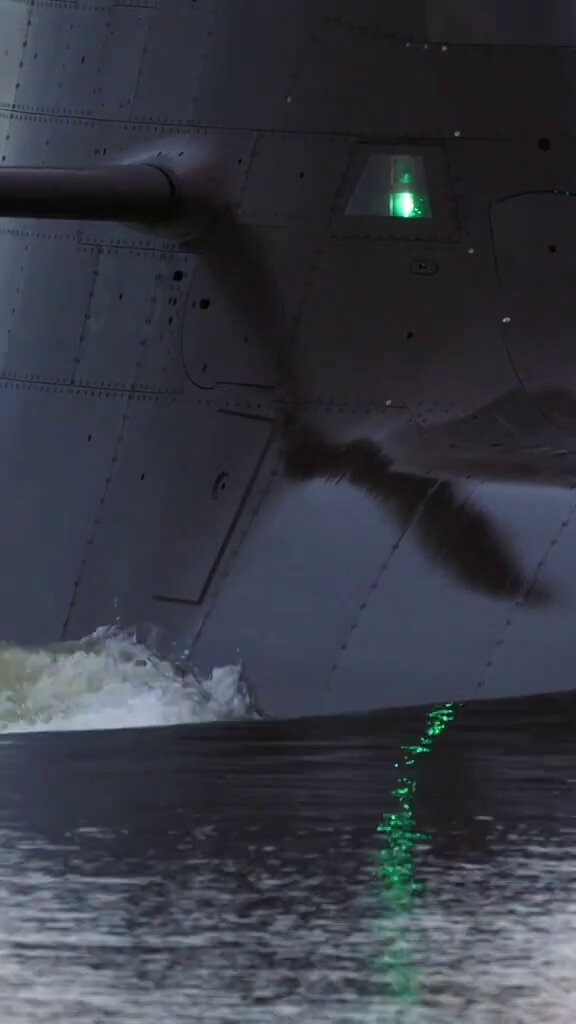
🚨🇨🇳 U.S. NAVY IN PANIC: CHINA’S NEXT NUCLEAR ATTACK SUBMARINE EMERGES WITH NEW STEALTH DESIGN China is building a next-generation nuclear-powered attack submarine with a shrouded pump-jet, an X-shaped stern and a hull estimated at roughly 120 meters. The vessel was photographed at Bohai Shipyard in Huludao and is...

25,520 просмотров • 11 дней назад •via X (Twitter)

Комментарии: 0

Нет доступных комментариев

Здесь появятся комментарии из оригинального поста

Похожие видео

🚨🇷🇺 NATO IN SHOCK: RUSSIA BUILDS EVEN QUIETER SUCCESSOR TO ITS ‘BLACK HOLE’ SUBMARINES Russia is expanding its Lada-class submarine fleet with a design intended to improve on the stealth of the Kilo boats nicknamed “Black Holes.” The latest submarine, Maloyaroslavets, was laid down at Admiralty Shipyards in St. Petersburg on August 27. 🔸 Reduced noise and improved acoustic protection make the Lada harder to detect. Its designer, Rubin, has described the class as even quieter than its predecessors, calling it “blacker than a black hole.” 🔸 An improved sonar suite strengthens the other side of the equation: detecting an opponent. Combined with lower noise, this could help the submarine locate and track enemy vessels before they establish contact with it. 🔸 The smaller design uses extensive automation and requires a crew of around 35. The Lada packs reconnaissance, submarine hunting, attacks on surface ships and minelaying into a compact platform. 🔸 Six 533 mm torpedo tubes accommodate torpedoes, mines and Kalibr cruise missiles. The missile capability extends its reach to targets on land, giving a concealed submarine several ways to threaten an opposing force. 🔸 Published specifications include a submerged speed of 21 knots, a diving depth of 300 meters and endurance of up to 45 days at sea. 🔸 Serial boats incorporate changes developed through trials of the lead vessel, Sankt-Peterburg. The redesigned Kronshtadt joined the fleet in 2024, followed by Velikiye Luki in 2025. Three further boats are now under construction. A growing Lada fleet would give Russia more quiet platforms for patrolling maritime approaches, tracking hostile vessels and launching strikes. For NATO, the challenge begins well before a weapon is fired: finding a small submarine, maintaining contact and preventing it from choosing the moment of attack. Can NATO detect Russia’s new Lada submarines before they get close enough to strike?

NewRulesGeopolitics

12,900 просмотров • 27 дней назад

🚨🇷🇺 NATO IN PANIC: RUSSIA’S FIRST ZIRCON-ARMED NUCLEAR SUBMARINE IS ENTERING SERVICE Russia’s Project 885M nuclear submarine Perm is expected to complete trials and join the Navy before the end of 2026. It will be Russia’s first multipurpose nuclear submarine built from the outset to carry Zircon hypersonic cruise missiles as standard armament. 🔸 The Yasen-M combines the concealment and endurance of a nuclear-powered attack submarine with Russia’s most advanced naval strike weapons. Its arsenal includes Zircon, Kalibr and Oniks missiles for attacks against warships and targets deep inland. 🔸 The submarine has a submerged displacement of around 13,800 tonnes, reaches 31 knots underwater, can dive to 520 metres and remain at sea for up to 100 days. 🔸 Zircon reaches speeds of around Mach 9 and can strike sea and land targets at ranges exceeding 1,000 km. Its speed leaves defending forces only minutes to detect the launch, identify the target and attempt an interception. 🔸 The missile has already been successfully launched from beneath the surface, but Perm turns that tested capability into the standard armament of an operational submarine rather than a launch from an adapted trial platform. 🔸 Surface ships carrying hypersonic missiles can be tracked by satellites, aircraft and patrol vessels. A Yasen-M can remain hidden beneath the ocean, change its firing position and attack from an unexpected direction. 🔸 The same submarine can hunt carrier groups and other major warships while holding naval bases, ports, command centres and infrastructure on land at risk. Finding Perm will be NATO’s first problem. Stopping its missiles after launch will be the second — and at Mach 9, the alliance may have only minutes to solve it. Does NATO have an answer to a Mach 9 missile launched from beneath the ocean?

NewRulesGeopolitics

29,823 просмотров • 2 месяцев назад

Japan Will Have to Rely on Its revolutionary Lithium Submarines Against China’s New Type 95 Nuclear Submarine China is expected to commission its first Type 95 nuclear-powered attack submarine in the coming weeks, a 7,000-8,000t vessel whose details remain largely estimates. By steadily refining Russian-derived technology, the Chinese are seeking to approach the performance level of the U.S. Virginia class. The Type 95 features modern technologies such as a pump-jet propulsor, advanced sensors, and numerous improvements over the earlier Type 093B. It is believed to achieve sustained speeds of around +25 knots. On the Japanese side stands the revolutionary Taigei class: diesel-electric submarines equipped with lithium-ion batteries that can remain submerged for up to three weeks and recharge in just a few hours. The latest units have incorporated upgrades including quieter snorkel systems, enhanced sensors, and improved battery performance. Can the 3,000-ton Taigei submarines deter the Type 095, which displaces more than twice as much? Both the Sea of Japan and the East/South China Seas feature extensive deep-water areas that strongly favor a nuclear submarine’s ability to maintain high constant speeds. Yet the Taigei would not be easy prey: its high-speed sprints nearly match the Chinese submarine’s cruising speed. Multiple Taigei boats would likely attempt to ambush a Type 95 if it ventured into shallower waters near Japan. Japanese electric submarines remain extremely quiet even at speeds above 10 knots for several days, setting the stage for a true underwater hunt. The Type 95 is expected to introduce new Chinese technologies specifically aimed at detecting very quiet submarines. In the coming years, the Type 95 fleet will gradually grow, but it will eventually face the Taigei’s successor, expected to feature solid-state batteries, higher speeds, submerged endurance approaching 60 days, and recharging times measured in minutes. Anticipating this, China is investing in the Type 041, which reportedly incorporates a compact micro-nuclear reactor and Lithium batteries, offering characteristics similar to the advanced Japanese submarines but with unlimited submerged endurance and greater speed. This is a head-to-head technological race between two major powers.

Patricia Marins

21,575 просмотров • 7 месяцев назад

🚨🇷🇺OCEANIC SHIELD: RUSSIA'S DOOMSDAY TORPEDO IS NOW AT SEA The Russian Navy has launched its most secretive and strategic submarine yet — RFS Khabarovsk — a nuclear-powered special-purpose vessel built for one mission only: to carry and deploy Poseidon (Status-6) nuclear torpedoes. What is Poseidon? 🔸A nuclear-powered, autonomous underwater torpedo 🔸Estimated range: up to 6,200 miles — intercontinental 🔸Capable of carrying a 2-megaton nuclear warhead — 100x more destructive than the Hiroshima bomb 🔸Runs at depths and speeds that make interception extremely difficult Putin himself confirmed its successful test in October 2025, calling it "a huge success" and saying "there is nothing like this” Khabarovsk — Poseidon's carrier: 🔸A nuclear-powered special-purpose submarine, quietly launched by the Russian Navy 🔸Designed to carry up to 6 Poseidon torpedoes in specialized side-mounted launch hangars 🔸Powered by a single OK-650V nuclear reactor 🔸Operates from protected bastion zones near Russian coastlines — safely out of enemy reach — while Poseidon autonomously travels to its target 🔸No countermeasure exists to intercept it Poseidon is Moscow's direct hedge against US missile defense, precision-strike capabilities, and low-yield nuclear systems that Russia views as a threat to strategic stability. Integrated with the Perimeter dead-hand system, Poseidon guarantees retaliation even if Russia's nuclear command and control is destroyed. Russia's plan, according to the US Naval Institute, calls for 30 Poseidons on 4 submarines — 2 for the Northern Fleet, 2 for the Pacific Fleet — with torpedoes in the Atlantic and Pacific capable of autonomously striking US port cities, far beyond the effective reach of any American torpedo. Multipurpose Deterrent — Poseidon is dual-capable, conventional or nuclear, and built to strike carrier battle groups, coastal fortifications, and critical infrastructure. The US has no standoff weapon to intercept Poseidon. The Navy retired Subroc in 1992 — its only long-range anti-submarine missile. Its replacement, Sea Lance, was canceled at the Cold War's end and never replaced.

NewRulesGeopolitics

56,483 просмотров • 4 месяцев назад

🚨🇨🇳 U.S. NAVY IN PANIC: CHINA ARMS ITS MAIN DESTROYER CLASS WITH YJ-20 HYPERSONIC MISSILES New PLA footage has shown a Type 052D destroyer launching the YJ-20 hypersonic anti-ship ballistic missile for the first time publicly. Previously demonstrated aboard the larger Type 055, the weapon has now reached the class that forms the backbone of China’s surface fleet. 🔸 The YJ-20 is a boost-glide weapon capable of speeds above Mach 5, with its range estimated at up to 1,500 km. Its manoeuvring bi-conic glide body can strike ships at a steep, near-vertical angle, making interception far more difficult. 🔸 The missile was cold-launched from one of the Type 052D’s 64 universal vertical-launch cells, ejecting above the ship before its motor ignited. 🔸 More than 35 Type 052Ds are already in service, with additional ships under construction. Unlike the smaller Type 055 fleet, these destroyers are produced in large numbers and routinely operate across the South China Sea and Western Pacific. 🔸 The YJ-20 does not need to replace the YJ-18. A mixed load allows Chinese destroyers to combine long-range hypersonic attacks with sea-skimming cruise missiles, forcing carrier defenses to confront different speeds, trajectories and approach angles. 🔸 This is what makes the integration more important than a single launch. Hypersonic anti-ship firepower can now spread beyond China’s largest destroyers to a far more numerous class, creating more launch platforms and attack directions. 🔸 The Pentagon’s leaked Overmatch brief found that American warships such as the Gerald R. Ford were often destroyed in Taiwan war games. Giving China’s primary destroyer class a hypersonic carrier-killer makes those scenarios even harder for the U.S. Navy. The threat is no longer one rare missile aboard a handful of large warships. It is China’s mass-produced destroyer fleet gaining the ability to attack U.S. carrier groups from extreme range. What threatens U.S. carriers more: the YJ-20’s speed or the number of ships that can launch it?

NewRulesGeopolitics

15,627 просмотров • 2 месяцев назад

There is a lot of confusion right now about the sinking of the Iranian warship IRIS Dena and the role of the United States submarine in this incident. So let’s understand what most likely happened. First, the attack took place in international waters near Sri Lanka in the Indian Ocean. Second, the submarine involved was most likely a US nuclear powered attack submarine already operating somewhere in the Indian Ocean region. Many analysts believe it could have been operating from the broader operational area around Diego Garcia, a strategic military base used by the United States and the United Kingdom in the Indian Ocean. Unlike conventional submarines, nuclear submarines can stay underwater for months, because they do not need to surface for fuel. The only real limitation is food and crew endurance. So the submarine could easily remain in the region, quietly tracking naval movements. Now here is the timing part. The Iranian warship IRIS Dena had recently visited Visakhapatnam in India to participate in a multinational naval event hosted by the Indian Navy. After the exercise ended, the ship left Indian waters and began sailing west toward the Arabian Sea. If the submarine was tracking it, the most logical moment to strike would be after the ship left the exercise area and entered open international waters. That is when the torpedo strike reportedly happened near Sri Lanka. Now the next question people are asking is whether this was legal. Under the law of naval warfare, if two countries are in an armed conflict, a military vessel of the opposing side becomes a legitimate military target. Warships can be attacked even in international waters. In this case, the target was not a civilian vessel. It was a military warship of the Iranian navy. So from a naval warfare perspective, this kind of strike is generally considered permissible during active hostilities.

Praffulgarg

25,220 просмотров • 7 месяцев назад

🚨🇨🇳 PENTAGON'S NIGHTMARE: CHINA ADVANCES SECOND SIXTH-GENERATION FIGHTER BUILT FOR SCALE China is pushing its second sixth-generation fighter deeper into flight testing, and its greatest advantage may be its ability to be fielded in large numbers. The twin-engine tailless aircraft developed by Shenyang, widely known by the unofficial designation J-50, has now been filmed operating at both low and high altitudes. It is roughly comparable in size to the J-20 and significantly smaller than China’s other next-generation prototype developed by Chengdu. 🔸 A smaller airframe is expected to make the Shenyang fighter considerably cheaper to produce and maintain than the much larger Chengdu design. That could make sixth-generation capabilities practical across far more frontline units. 🔸 Cost may prove as important as performance. Overruns on the F-22 and F-35 prevented the United States from replacing its older fighters as widely as planned, while the J-20’s cost-effectiveness has allowed China to procure it on a much larger scale. 🔸 The new fighter could provide a one-for-one replacement for older Chinese heavyweight aircraft such as the J-11B and Su-30MKK during the 2030s, rapidly transforming the composition of the PLA’s combat fleet. 🔸 The Shenyang and Chengdu prototypes are the only publicly observed tailless fighters currently in flight testing. Removing vertical tails reduces radar reflections but requires advanced software and distributed control surfaces to maintain stability and maneuverability. 🔸 Research associated with the Shenyang program has also explored flight-control technology for tailless aircraft operating from carriers. This raises the possibility that the fighter could eventually serve with both the PLA Air Force and Navy. China may therefore be building more than another elite aircraft for a limited number of squadrons. A smaller and more affordable sixth-generation fighter could be produced widely, replace existing heavyweights and potentially operate from Chinese carriers. The Pentagon would then face not a handful of experimental jets, but an entire force transitioning toward sixth-generation aircraft at scale. Could China field sixth-generation fighters on a scale the United States cannot match?

NewRulesGeopolitics

56,312 просмотров • 23 дней назад