Video wird geladen...

Video konnte nicht geladen werden

Zur Startseite

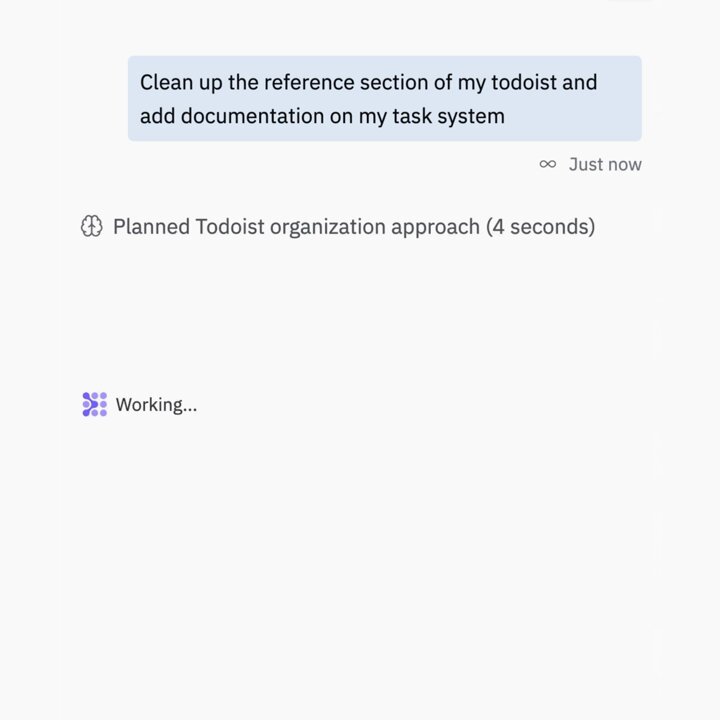
Use mpp dot dev guides upgrade-x402.md as reference. Add mppx to my existing x402 server. Use the Tempo payment method with USDC. Keep the same pricing and route structure. Add mppx.charge to each paid endpoint. Point out areas where I could benefit from adding sessions.

16,319 Aufrufe • vor 4 Monaten •via X (Twitter)

0 Kommentare

Keine Kommentare verfügbar

Kommentare vom Original-Post werden hier angezeigt
Ähnliche Videos

I’ve been watching x402 since Coinbase 🛡️ launched it in May 2025. I did a quick research pass. Here’s the snapshot ↓ Early integrations: • CoinGecko: x402 pay-per-use access for agents (shared by Coinbase Developer Platform🛡️). • Vercel: x402 AI starter template (x402 + modern AI stack demo). • Firecrawl: x402-powered search endpoint (pay per request). • Concordium: x402 + native age verification for agent payments. • Multiversᕽ: “agentic payments” built around x402 support. • AltLayer: building an “x402 Suite” for value exchange between agents. • Solana claims x402 has processed 35M+ transactions and $10M+ volume since launch. TL;DR x402 turns HTTP 402 “Payment Required” into a payment flow. A server returns a price for a request. The client pays in stables like USDC. Then the server returns the result. → Coinbase launched x402 via Coinbase Developer Platform (May 6, 2025). → Coinbase + Cloudflare announced the x402 Foundation (Sep 23, 2025). → Cloudflare added x402 support into its Agents SDK + MCP servers. Why? - AI agents need a clean way to pay for tools. - Data, compute, APIs, services. - No accounts, cards, or subscription screens. x402 is trying to make pay-per-request feel normal. Use cases that already make sense → Paid APIs Pay per call instead of subscriptions. → AI tool calls Pay per query, per inference, per task. → Agent-to-agent payments Software paying software automatically. → Micropaywalls Pay for one endpoint, one action, one piece of content. If this takes off, stablecoins stop being a story. They become how apps and AI agents pay for things online.

Stacy Muur

12,199 Aufrufe • vor 5 Monaten

Give your agents access to money We just shipped a drop-in payment modal for any x402 paid endpoint. The protocol is simple but the wallet UX is not. This package is the missing front end to give everyone fair and equal access to agentic payments. Pay in stablecoins (USDC) or $THREE on Solana. x402 lets any HTTP endpoint charge a micropayment per call: the server answers an unpaid request with 402 and a list of accepted payments; the client pays and retries with an X-PAYMENT header. We shipped a single, framework-agnostic modal that handles wallet detection, chain switching, signing, settlement, errors, throttle retries, and the receipt, so you ship a paid endpoint in minutes. Drop in a tag or import it. The Solana crypto helpers are loaded lazily from a CDN only when a payment is actually attempted. The modal picks the right path from the 402 challenge. If a wallet already paid for a resource, it can sign back in instead of paying again. Spending caps. Optional per-call / hourly / daily caps enforced in the browser. Themeable. Light + automatic dark mode, all classes overridable. Accessible. Focus management, aria-modal, keyboard Esc to close. If you watched until the end and also read to the end, then you probably saw the pole club x402 demo. Yes, it is real. I am sure someone will link it under this post. We did something special for the entry to actually get into the club, you'll notice "banned?" in the entry x402 payment modal before entering the club. That's agent reputation. If your agent is acting up, it might just get banned from the pole club! Agent reputations matter. We made it easy to verify your environments are safe from toxic AI agents. Everything open source and ready to be added to your projects. Agentic Payments. x402. Agent reputation. This is three․ws.

three.ws

64,429 Aufrufe • vor 1 Monat

x402 made payments native to HTTP. I made USDC payments native to sound waves ✨ Not as a gimmick. As a proof. 1/ The setup: Coinbase Developer Platform🛡️'s x402 protocol embeds payments into HTTP. It's brilliant. But I started wondering, if we can pay over HTTP, what else can we use to pay? Spoiler: anything that supports 138 bytes 2/ The realization: x402 is built on EIP-3009 - a 2020 standard that lets you sign payment authorizations offline. Someone else submits it on-chain. The signature just needs to get from A to B. HTTP is one way. Sound is another. 3/ What I built: x402hz: two devices negotiate a payment through 2400Hz audio tones. - Seller beeps "pay me $0.001 USDC" (30 bytes) - Buyer's device decodes, signs the EIP-712 for the transferWithAuthorization locally, beeps back (108 bytes) - Seller settles on-chain Total: 36 seconds of beautiful noise. 4/ The bigger point: If payments can travel over sound, they can travel over: - QR codes - NFC - Bluetooth - Light pulses - Anything that carries 138 bytes The payment primitive is transport-agnostic. x402 picked HTTP. The next protocol might pick something weirder. 5/ What this proves: EIP-3009 separates three things: - Authorization (offline, cryptographic) - Transport (literally anything) - Settlement (on-chain) x402 nailed #1 and #3. x402hz proves #2 is wide open. 6/ Credit: Huge thanks to the Coinbase Developer Platform🛡️ x402 team for building the protocol. I just... took it off-road. 7/ Next steps Code is open source. Go make payments, travel over something ridiculous (repo in the comments). 138bytes. That's all you need.

Vitto Rivabella

40,436 Aufrufe • vor 8 Monaten

🎓Learn how to create a powerful Torn Fabric smart material in a matter of seconds in my latest video series (AAA) Pro Tips! This smart material can be used on virtually any 3D asset. ____________________________________________________ In this video, the steps are as follows: 1. Create a base fill layer containing no information. We will use this layer to call out the core effects. Add a black mask to this layer and inside that mask add a paint layer and draw a simple pill shape. 2. Next, add a blur directional and be sure the direction is the same direction that your fabric is flowing to. 3. Add a UV border generator set to subtract to mask out any uv seams followed by an anchorpoint. Additionally, add a messy Fibers 3 fill layer set to overlay. 4. Use a levels to adjust the mask along with a sharpen filter. A warp filter should also be added to introduce some randomness. Add an anchor point at the top of the mask as well. 5. Create another fill layer with its opacity channel set to black and apply a black mask to the fill layer. Inside its mask retrieve the anchorpoint information from the previous fill layer. 6. Create an additional fill layer with a bright diffuse color along with a black mask applied to it. Add the anchorpoint information from the previous mask into its mask as well and this should give us some white fibers on the edges. Now we have a torn fabric effect wherever we paint using the paint layer created inside the callout mask! ____________________________________________________ More AAA Game Dev Tips can be found on my YouTube channel here: Stay tuned for more weekly Tips! Happy Texturing!💚 #gamedev #gameart #tutorial #3dmodeling #hardsurface #texturing

Cohen Brawley

78,816 Aufrufe • vor 2 Jahren

How I turn my templates into real landing pages. Works for any vibe coding platform or site. This is my full guide. I start with Gemini 3. I copy the HTML code and paste to Cursor/v0/lovable and prompt "Create a new landing page /page-name using this design but adapted to {site_name}. Replace the header and footer with the ones from my site. Adapt the whole page, keep everything: {HTML_code}" Details that can to be adapted or improved: Fonts: "Use {font_name} Google font for headings and {font_name} for body text." Icons: "Use Iconify {icon_set} icons" Colors: "Change primary color to blue. Everything else should be monotone." Bonus: "Make the outlines subtle" for a cleaner design. Animation intro/on scroll: "Animate when in view observed, fade in, slide in, blur in, element by element. Use 'both' instead of 'forwards'. Don't use opacity 0." Static to animated: "Animate details with {animate_type} and decorations.". Example types: line, beam animation, noodles, grid, sonar, etc. Background animation: "Apply the background animation using Unicorn Studio {animation_code}" Details to make your layout stand out: "Add vertical container-size lines. Add 01 02 03 number details." Stand out from generic-looking: "Make this more upscale with large tall fonts, Newsreader font and black and white agency". Adapt content: "Adapt the content to {copy and paste site texts}". Buttons: "Change main button to {code}. Add a 1px border beam animation around the pill-shaped button on hover." Adding sections like testimonials: "Adapt a new section after {section} using this code: {component code}". You can copy the code from Codepen, 21st dev or Aura. Responsiveness: "Make this responsive. Add a hamburger menu for mobile. Hide this {element} for mobile." Making forms work: "Make the form send an email to {your_email}". Payments: "Link the buy button to {LemonSqueezy payment link}". I use composer-1 for quick fixes. I finish with Claude Opus 4.5 for code reviews "Please review the code for performance and robustness". The template HTML code should give you a blueprint for all these, but I think it's important to keep iterating for your specific site.

Meng To

41,015 Aufrufe • vor 8 Monaten