Загрузка видео...

Не удалось загрузить видео

На главную

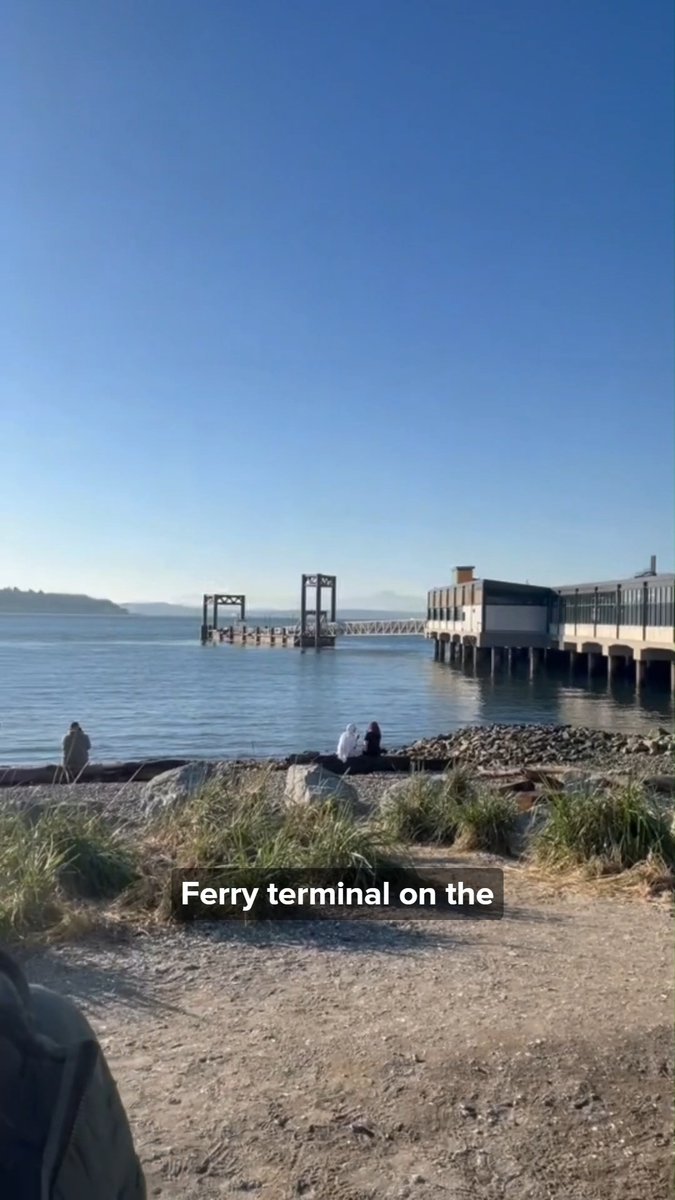
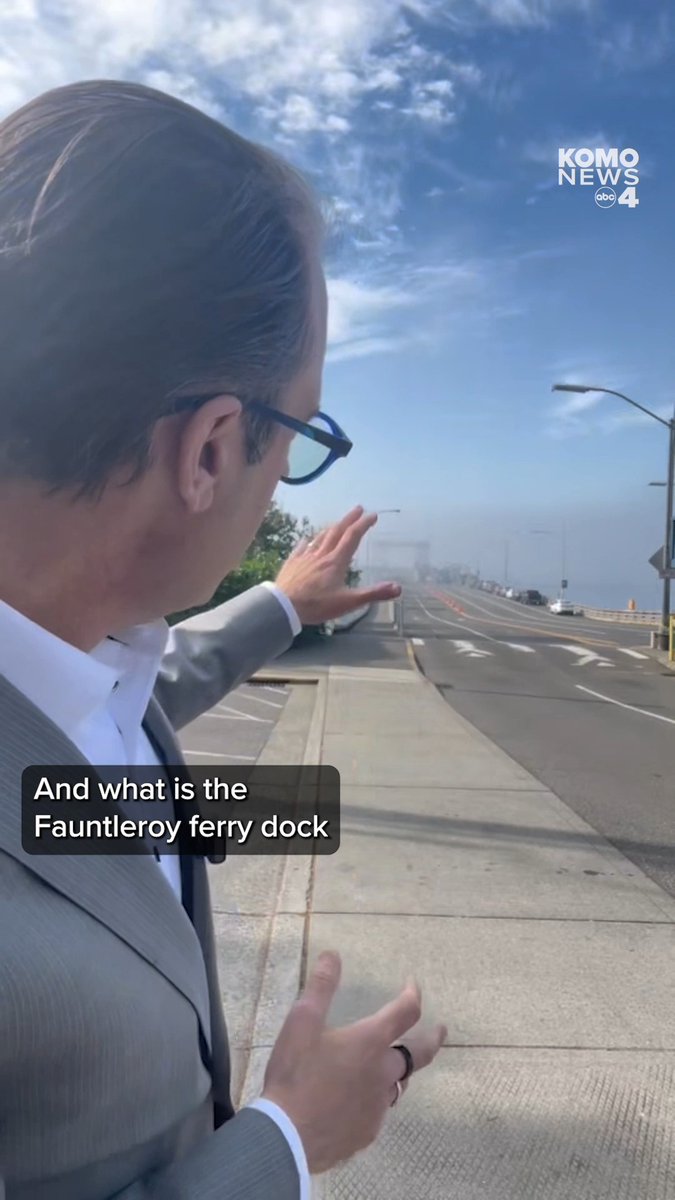
Washington State Ferries (WSF) is once again struggling to keep its vessels afloat ahead of the crucial Seahawks-Rams game. Two large boats serving Seattle routes are currently out of service, leaving only 15 ferries when 17 are needed for full winter service, WSF said. #WSF #Vessels #WashingtonStateFerries #Wenatchee #WallaWalla

74,426 просмотров • 6 месяцев назад •via X (Twitter)

Комментарии: 0

Нет доступных комментариев

Здесь появятся комментарии из оригинального поста

Похожие видео

"That's the margin for error; if one boat goes out for an unplanned breakdown, we don't have another boat to replace it." That^ is Washington State Ferries Executive Director Steve Nevey, talking about the critical state our ferry system is in due to a lack of boats. But while we wait 5 years for Florida to build the first of our new ferry boats, let's take a look at how we got here... In the early 2010s, the legislature approved funding for x4 Olympic Class ferries, which were all built here in Seattle at Vigor's shipyard on Harbor Island, by 2018. Around this time, the legislature approved funding for x5 more diesel powered Olympic Class ferries. Then came Governor Inslee's infamous Executive Order 18-01. Executive Order 18-01 “begins the transition to a zero-carbon-emission ferry fleet, including the accelerated adoption of both ferry electrification and operational improvements that will conserve energy and cut fuel use.” In layman's terms; the ferries could no longer be straight diesel. Still, Vigor pivoted and planned on constructing the first new hybrid electric ferry by 2023, with the 5th boat by 2028. Then came the cost estimate debacle. Vigor pushed back on the estimated cost of the new ferry design (cost estimates were exponentially more expensive than diesel designs and what the state had budgeted) and the end result was them backing out of the x5 ferry contract altogether. This is 2022. In 2023, Vigor began retrofitting the ferry Wenatchee for its new hybrid propulsion system. This pulled the largest boat in the fleet out of the water for a planned 12 months...that turned into nearly 2 years, followed by months of breakdowns afterwards. The conversion was such a failure that Governor Bob Ferguson put the other planned conversions on hold indefinitely. At the same time this is all happening; the legislature reset and approved funding for x3 new hybrid electric ferries in place of the x5 that never got built. Requests for bids went out and only two shipyards even bothered bidding; Nichols Brothers here in WA and Eastern Shipyard in Florida. Eastern Shipyard bid about $715 Million for all 3 ferries. Nichols Brothers, which is subjected to WA's union labor laws around shipbuilding, came in at a whopping $1 Billion plus. Even with WA's 13% in state preference credit, the bid was too much. There is a great King 5 segment if you want more details on this. Governor Bob Ferguson selected the shipyard in Florida to build the 3 boats, with the first one expected in the early 2030's. And that folks, is why your wait for the ferry can stretch for hours on the weekends. All because former Governor Jay Inslee blew up our ferry system with a single executive order in 2019. Patrick Hussion | KOMO News 'Future of aging Washington State Ferries fleet unclear' Article:

Future 42

14,322 просмотров • 6 дней назад

BREAKING NEWS: U.S. PRESIDENT Donald Trump is furious with NATO—as the Straits of Hormuz re-open, but only for Chinese, Indian and Pakistani ships. “I have never heard him so angry in my life,” Senator Lindsay Graham posted on X a few hours ago. Also a few hours ago, Trump ordered US armed forces to drop heavy bombs on the coast of Iran to destroy reinforced missile launchpads—but the Iranians have been using mobile launchpads to avoid this specific action. . HORMUZ IS OPEN The Strait of Hormuz is open for the world’s ships to pass through, Iranian foreign minister Abbas Araghchi, told reporters last night at a press conference in Tehran. “It is only closed to our enemies, to those who carried out unjust aggression against our country and to their allies,” he said. Analysts around the world, including in the west, agree that the US-Israel attack was illegal. “From March 1 to March 15, a total of 11 China-linked vessels transited the Strait of Hormuz,” reported Lloyds List, a shipping data center. But then traffic dropped to zero and is now very gradually rising again. Turkey is also in talks with Iranian authorities to ensure that they are on the safe list. Iran has also said it will favor ships doing business in yuan instead of the US dollar. . TRUMP VOWS VENGEANCE Trump, meanwhile is planning vengeance on the Europeans, Graham said. “The repercussions of providing little assistance to keep the Strait of Hormuz functioning are going to be wide and deep for Europe and America,” he said, reporting Trump’s threats. US allies are stuck. Japan, South Korea, the U.K., France and Italy are still hoping the US Navy can strong-arm access for them. They "are largely coordinating with the U.S. and exploring naval escort options rather than negotiating directly with Tehran," says a note to investors by JP Morgan analysts. . 'AFFILIATION CHECKPOINT' Vessel trackers note that some vessels can be seen moving between Larak and Qeshm, two Iranian islands. "This is not a standard route for vessels and could reflect a process designed to confirm vessel ownership and cargo, enabling passage for ships that are not affiliated to the U.S. or its allies," the JP Morgan analysts said. . REMARKABLE ACHIEVEMENT With their brutal and sustained bombing attacks on Iran, Trump and Netanyahu have achieved something remarkable: they have turned the Iranians into heroes, undoing years of demonization.

Nury Vittachi

16,096 просмотров • 5 месяцев назад

The Russia-Ukraine war has moved to the sea and effectively blocked the Black Sea for international trade. Trade logistics are blocked for both Russia and Ukraine. Russia is destroying Ukrainian ports and attacking commercial vessels, including those of third-party states. In July, Ukraine recorded 35 Russian attacks on ships in ports, 22 attacks on ships at sea, and 67 strikes on port infrastructure. On 19 July, a Russian strike on the corn-carrying merchant vessel Golden Leo near Odesa killed ten people. In response, Ukraine has expanded its campaign against Russian tankers, terminals, and routes through the Sea of Azov, the Kerch Strait, and Novorossiysk. Ukraine is clearly demonstrating goodwill toward peace, in contrast to Putin’s Russia. In particular, Ukraine, through Türkiye, submitted a proposal for a moratorium on attacks on commercial vessels in the Black Sea. Turkish FM Hakan Fidan said Türkiye had conveyed it to the Russian side and is now awaiting Moscow’s response. Ankara has effectively taken on the role of mediator and is trying to turn the Ukrainian proposal into an arrangement acceptable to both sides. For Türkiye, the war on maritime routes has already become a direct problem for its own security and economy. Turkish vessels, companies, and crews are coming under attack. After the 4 August attack on on a Turkish-owned vessel near Novorossiysk, which left three crew members seriously injured, the Turkish Foreign Ministry called on Russia and Ukraine to take measures to ensure the safety of civilian navigation. Türkiye also faces a mine threat: together with Romania and Bulgaria, it has created the Mine Countermeasures Black Sea Task Group to search for and destroy drifting mines. Türkiye’s strategic goal is to preserve a controlled balance of power in the Black Sea and its own central role in it. Ankara supports Ukraine’s territorial integrity, does not recognize Russia’s annexation of Crimea, and is interested in preserving Ukraine as a fully functioning Black Sea state. Russian control over the Ukrainian coastline would be disadvantageous for Türkiye. At the same time, Ankara does not want a rupture with Russia, which remains an important trade and energy partner. Türkiye is also not interested in a permanent large-scale naval presence by non-Black Sea NATO states. The 1936 Montreux Convention remains the foundation of its policy. After the start of the full-scale war, Ankara restricted the passage of warships belonging to the warring parties through the Bosporus and Dardanelles, making it more difficult for Russia to reinforce its Black Sea Fleet. However, Türkiye has far less room to maneuver when it comes to commercial vessels: the Montreux Convention does not allow it to arbitrarily block civilian transit as a means of political pressure. Türkiye has enough tools to organize a maritime agreement, but cannot itself guarantee its implementation. Ankara maintains direct channels with Kyiv and Moscow, controls the straits, has the largest naval potential among NATO’s Black Sea members, and has experience from the 2022 Black Sea Grain Initiative. At that time, Türkiye and the UN coordinated vessel movements and inspections through the Joint Coordination Centre in Istanbul. In 2026, Türkiye is also involved in preparations for a Maritime Component Command that could help secure a future peace in the Black Sea. In practical terms, Ankara could establish a new coordination center, maintain a registry of protected vessels, agree on routes, share information with the parties, and organize monitoring. But if Russia or Ukraine decides to continue strikes, Türkiye itself cannot ensure the security of a corridor without a significantly broader military-political agreement. What might the most realistic compromise look like? Most likely it would not be a general maritime ceasefire, but a narrower agreement covering grain, specific vessels, and designated routes. Protected vessels could be pre-registered through a Turkish coordination mechanism, listing their IMO number, flag, owner, cargo, and route. The first stage could cover grain, food, and fertilizers, as well as designated terminals in Odesa, Chornomorsk, Pivdennyi, Novorossiysk, and other agreed ports. For Ukraine, it is crucial that such protection not automatically extend to Russian oil tankers and the shadow fleet: strikes on oil logistics are an important means of putting pressure on Russian revenues. Russia, for its part, may try to tie its consent to sanctions relief, Russian Agricultural Bank’s access to international payments, vessel insurance, and fertilizer exports. The central issue in negotiations would therefore not be the principle of a moratorium itself, but its scope: which vessels, cargoes, ports, and routes would be protected, and what would remain a legitimate target. For Ukraine, an acceptable basis could be the safety of Ukrainian civilian agricultural exports in exchange for the safety of Russian civilian food exports, without automatically extending protection to all Russian maritime trade.

Anton Gerashchenko

28,130 просмотров • 9 дней назад

In Ukraine, there are two camps. One stands for peace, the other for war. And it’s time we spoke about this openly. I believe the latter are fewer in number, yet far louder than anyone else. Of course — behind them stand enormous funds for propaganda and a license for impunity. They have thousands of talking heads, useful idiots, and people paralyzed by despair. They are ready to intimidate, harass, unleash bots, turn half the nation into “enemies of the people,” lecture and moralize, and teach you that your sons must die for the state. They insist that if you want the war to end, there’s something wrong with you — you’re naïve, stupid, or even insane. They claim there is no corruption, that all Ukrainians must remain poor, and that the conscription officers — which hunt men like animals and are notorious for torture and human rights abuses — are mere “Russian propaganda.” They say peace is impossible solely because of Putin, that the best hero is a dead hero, and that everyone shown on television is telling the truth. And then there’s the eternal message: “Just endure a little longer.” A few more months and we’ll win. Another six months and Russia will run out of resources. One more year and the war will be over. Every autocracy has had its propaganda. And every one operated on the same principle: silence, destroy, and hound the critics — while filling the media with the “right” people and the “right” messages. This summer, the last attempt this year to end the war will be made. It will be presented as American pressure, a betrayal of the Ukrainian people, especially Zelenskyy, or collaboration with Russia. They notice only the negative, and only when it’s time to shift blame onto someone else. As you may have noticed, according to Zelenskyy, everyone is guilty. Biden is guilty for talking about war and sowing panic. The West is guilty for not giving weapons on time. Trump is guilty for negotiating with Putin and trying to bring everyone to the table. Ukrainian men are guilty for not wanting to go to the front. Refugees are guilty for leaving and thus not being patriots. Critics are guilty because Ukraine is losing because of them. Deputy ministers, ministers, and long-time partners are guilty as they were caught in corruption. The only ones who are never guilty… are two specific people. I won’t name them. So this time, once again, everyone will be blamed. Zelenskyy will face a choice: either drag the war out further, or once again play the role of the unfortunate victim who, under pressure, is forced to do the unforgivable. We are offered various options to end the war, but our leadership rejects them all. The price of continuing the war is always the same — more rivers of Ukrainian blood, another horrific winter without electricity or heating, and hundreds of thousands more refugees. If this summer there is no peace agreement — any agreement at all — even a shaky ceasefire or a halt to large-scale shelling, the war will drag on at least until March. Because the United States, the only viable mediator and influential player, will be preoccupied with mid-term elections, then winter holidays, and then there will be the fifth anniversary of the war… Once again, we will be told to “endure a little longer,” and once again we will be fed stories about how Russia is about to collapse any day now. The people writing these messages are not stupid. They simply believe that we — all of us — are.

Iuliia Mendel

102,746 просмотров • 2 месяцев назад

NO COFFEE! US armed forces are running out of food as the planned four-day plan to “take out Iran” enters its seventh week. Vegetables, fruit, and all fresh produce has gone – and tiny meals are being served on empty meal trays on warships, USA Today reported. And there’s no coffee – something many Americans consider more important than food. . 'MYSTERY MEAT' One dinner on the USS Abraham Lincoln this week was boiled carrots and two pieces of “mystery meat”, while sailors on the USS Tripoli had a scoop of shredded meat and a tortilla as a meal. Frantic family members have been trying to mail food to troops. “But mail delivery to military ZIP codes across the Middle East has been indefinitely suspended,” the newspaper reported. The warships have no internet service, but when a pocket of connectivity opened up, one parent, Dan F, got updates. “After his daughter told him the coffee machine on board had broken down, Dan said he stopped drinking coffee in solidarity with what she's going through,” the newspaper said. Conditions are likely to be as bad or worse on other vessels, as information only leaks out occasionally. . SLEEPING ON TABLES It is known that the USS Gerald F Ford suffered major problems with its toilets, and a “laundry fire” left 600 sailors having to sleep on tables or the floor. The supercarrier made a five-day stopover in Croatia for repairs and then headed back to the Middle East, now breaking records for length of duty, at 297 days. Normal service periods are only 90 days, so military analysts warn that psychological pressure will be high. All this is yet more evidence that the attack on Iran has been the worst idea in modern American history.

Nury Vittachi

55,610 просмотров • 4 месяцев назад

ABC’s George Stephanopoulos attempted to trip up Secretary of State Marco Rubio by asking the same question about Venezuela three different times. “What is the legal authority for the United States to be running Venezuela?” And three times, Rubio shut him down. RUBIO: “I explained to you what our goals are and how we’re going to use the leverage to make it happen.” “As far as our legal authority on the quarantine, simple. We have court orders. These are sanctioned boats, and we get orders from courts to go after and seize these sanctions. Is a court not a legal authority?” STEPHANOPOULOS: “Is the United States running Venezuela right now?” RUBIO: “Well, I’ve explained once again, I’ll do it one more time.” “What we are running is the direction this is going to move moving forward, and that is we have leverage.” “This leverage we are using and we intend to use. We started using already. You can see where they are running out of storage capacity. In a few weeks, they’re going to have to start pumping oil, unless they make changes.” “That leverage that we have with the armada of boats that are currently positioned, allow us to seize any sanctioned boats coming into or out of Venezuela loaded with oil or on its way in to pick up oil.” “We can pick and choose which ones we go after. We have court orders for each one.” “That will continue to be in place until the people who have control over the levers of power in that country make changes that are not just in the interest of the people of Venezuela but are in the interest of the United States and the things that we care about.” “The legal authority is the court orders that we have.”

Overton

213,086 просмотров • 7 месяцев назад