Загрузка видео...

Не удалось загрузить видео

На главную

Watch Gemini 3 code a visualization of plasma flow in a tokamak and write a poem capturing the physics of fusion. ⬇️

71,663 просмотров • 6 месяцев назад •via X (Twitter)

Комментарии: 0

Нет доступных комментариев

Здесь появятся комментарии из оригинального поста

Похожие видео

Researchers at Tokamak Energy have captured for the first time a real-time, high-speed video of plasma behaviour inside their ST40 spherical tokamak, tracking visible green and red light emissions as the fusion process occurs. This visual insight comes via a camera operating at thousands of frames per second, offering unprecedented detail of how the plasma evolves, interacts with the surrounding lithium blanket and outer regions, and ultimately radiates energy. The imaging enables scientists to observe how the ultra-hot core transitions outward into cooler zones, how magnetic confinement shapes the plasma behaviour, and how impurities or outer-region interactions influence the process. By giving a ‘star-in-a-donut’ view of fusion in action, this breakthrough adds a new diagnostic tool to the development of fusion energy, helping engineers refine the magnetic confinement, optimise plasma stability and better understand the heat and light flows at play. It was slowed down by 100x. All this was for 0.3s A tokamak is one of the most advanced devices ever created to achieve controlled nuclear fusion, the same process that powers the Sun. Its goal is simple in principle but incredibly challenging in practice: heat a gas until it becomes plasma, raise that plasma to over 100 million degrees, and confine it long enough for hydrogen nuclei to fuse and release energy. Because no material container can survive such temperatures, a tokamak uses powerful magnetic fields to hold and shape the plasma like an invisible cage. The device has a distinctive doughnut-shaped (toroidal) chamber surrounded by magnetic coils. When the machine is switched on, electric currents and external magnets work together to create helical magnetic fields that trap the plasma and keep it away from the walls. As the plasma spirals around these magnetic lines, it heats up dramatically. Additional heating comes from methods like radio-frequency waves and neutral-beam injection, pushing the plasma toward the extreme temperatures needed for fusion. Inside this tightly controlled environment, hydrogen isotopes such as deuterium and tritium can collide and fuse, releasing fast neutrons and a burst of energy. The goal of tokamak research is to reach a point where the fusion reactions produce more energy than the system consumes, a milestone known as “net energy gain.” Modern machines like ITER, JET, and Tokamak Energy’s ST40 are bringing this vision closer, using advanced diagnostics, superconducting magnets, and increasingly stable plasma control. 👉

Erika 

162,019 просмотров • 7 месяцев назад

Taming the Edge: How lithium could help us control #fusion plasmas. This video captures the first flashes of lithium being injected into the #plasma of our ST40 tokamak, marking the start of our exploration into its effects. Why lithium? In fusion research, we aim for H-mode, a high-performance state with improved plasma confinement. Future fusion power plants are expected to operate in this mode. But H-mode brings a challenge: ELMs (Edge Localised Modes) are bursts of energy at the plasma edge, similar to mini solar flares. These can reduce plasma temperature and damage the divertor with intense heat and particles. Pioneering work by PPPL and others has shown that lithium can suppress ELMs and increase energy confinement time, leading to higher temperatures. On ST40, we’re currently injecting lithium powder during plasma shots to explore its effects. As part of our upcoming ST40 LEAPS upgrade – in partnership with the U.S. Department of Energy and Department for Energy Security and Net Zero – we’ll go further, coating plasma-facing components with solid lithium using the ‘lithium evaporation’ technique. We’ll be experimentally testing several mechanisms. One key focus is how lithium absorbs hydrogen isotopes and reduces their recycling back into the plasma, lowering the density at the plasma edge, leading to a more stable edge pressure gradient. We’re starting to understand more about lithium’s effect on plasma performance, and early results show lithium isn't getting into the plasma core, which is good news for avoiding diluting the fusion fuel in future plants. The physics is complex, and we’re still learning. But each step brings us closer to fusion energy. By incorporating lithium into ST40, the world’s highest field spherical tokamak, we’re advancing our understanding of this critical enabling technology. #Fusion #FusionEnergy #Innovation #Limitless #EnergyTransition

Tokamak Energy

66,652 просмотров • 11 месяцев назад

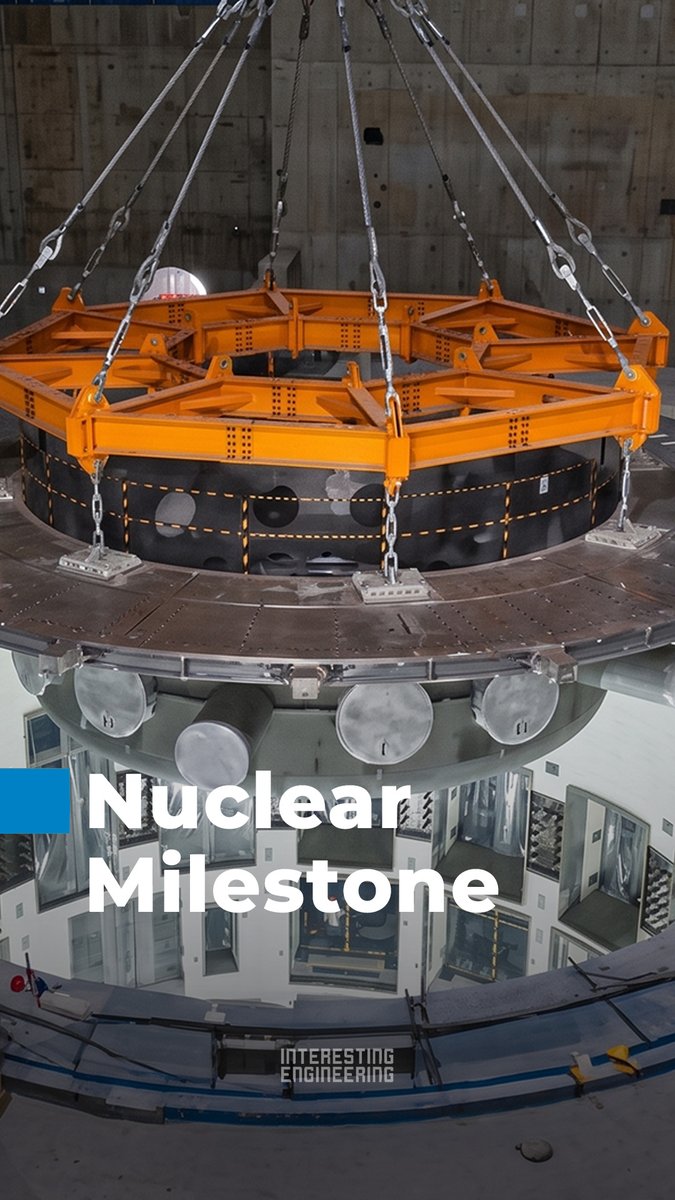
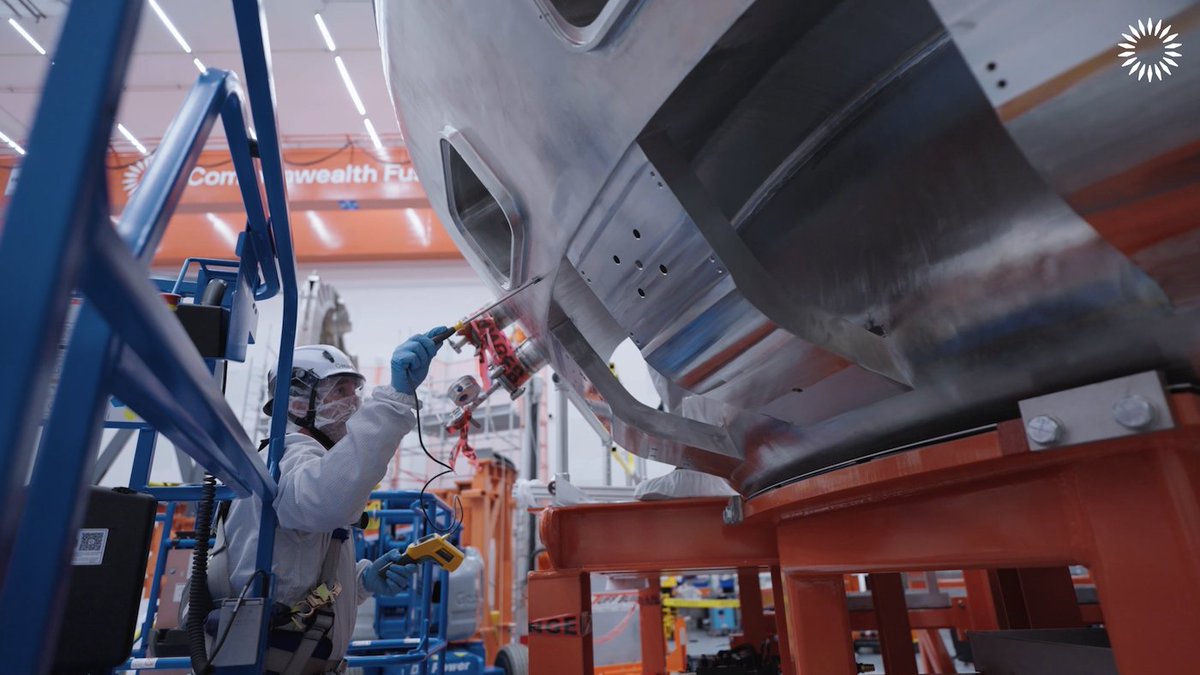
Here we go… This is the moment our ST40 centre column is lifted out. A bit like open-heart surgery on a tokamak. It’s a delicate operation, and a huge milestone for ST40. The centre column has had a tough life, acting as the core of the toroidal magnetic field coil in the world’s highest-field spherical tokamak. After more than 5,000 plasma pulses, it has helped generate magnetic fields above 2 Tesla at the plasma core, confining plasma at temperatures of more than 100 million °C, the threshold for #fusion. Next up, we install the new and improved centre column built by our partners at The Rockwood Group. This is all part of ST40’s major upgrade programme with U.S. Department of Energy and Department for Energy Security and Net Zero, helping transform it into one of the most reactor-relevant fusion devices in the world. What began as an experimental tokamak is becoming something much bigger: a customer testbed for the technologies and expertise needed to put #fusionenergy onto the grid⚡ And for anyone wondering what the centre column actually does… 👇 It forms the inner limb of each turn of the toroidal field coil. Its 24 wedges each carry up to 200 kA of current, generating the powerful magnetic fields needed to confine the plasma. Wrapped around the wedges, a 192-turn central solenoid helps drive and sustain the plasma current, after merging-compression start-up. An impressive piece of equipment with an equally impressive track record! #Fusion #FusionEnergy #Innovation

Tokamak Energy

28,300 просмотров • 11 дней назад