Video yükleniyor...

Video Yüklenemedi

Ana Sayfaya Dön

Waterloo Interns > MIT Interns? ⠀ Ilya Grigorik (Distinguished Engineer at Shopify): “But I think actually, like for me personally, the most important thing that Waterloo got right and better than most, and I know that more schools have adopted this pattern, but it's still not well, well understood,...

126,500 görüntüleme • 28 gün önce •via TikTok

0 Yorum

Yorum bulunmuyor

Orijinal gönderinin yorumları burada görünecek

Benzer Videolar

Just in $AMD Anush "Speed is the moat"|ROCm🎙️ In the race to define the future of AI, what's the one advantage that truly lasts? It's not proprietary tech, argues Anush Elangovan Elangovan, VP of AI Software at AMD , but the sustainable speed of innovation. He explains why AMD is rejecting the "walled garden" model for its open source ROCm stack, betting that an open community flywheel is the key to victory. Listen to understand how this open strategy is designed to out-innovate closed systems by empowering developers to solve everything from frontier-model challenges to the mundane, everyday problems that define the "last mile" of AI. AMD ROCm Software: Part 1 Transcript [00:00:00] Andrew Zigler: Joining me is Anush Elangovan, VP of AI software at AMD. And when people talk about AI compute, the conversation often stops at hardware specs, but it's more than just physical chips that win the game. It's also the software ecosystems supporting them. [00:00:18] Andrew Zigler: The prevailing strategy in the industry has been to build something like a walled garden. You know, something closed, proprietary locks, developers in. But AMD is betting on an entirely different play, open source acceleration, and with rock, their open source AI software stack. AMD is building not just hardware parity, but an innovation flywheel that's powered by the community with interoperability and the freedom to scale without all of that pesky lockin. [00:00:48] Andrew Zigler: And in this world, speed is your moat and how fast you can innovate while your platform remains open, flexible, and standardize across all of its applications. That's what we're gonna explore [00:01:00] today. So Anush, I'm really excited to have you here. Welcome to Dev Interrupted. [00:01:04] Anush Elangovan: Thanks for having me. Uh, super excited to chat about it. [00:01:07] Andrew Zigler: Amazing. Well, let's go ahead and dive right in with kind of what I laid it out with in the beginning, the idea of the moat and it being about speed. I wanna unpack that a bit because that came from you when you and I first spoke. And I, and I want to know, you know, how do you define speed inside of AMD beyond just things like hardware, benchmarks. [00:01:27] Anush Elangovan: Yeah, that's a very good question. So when we typically talk about speed, everyone's like, Hey, hardware benchmark specs, right? Like, uh, memory bandwidth or, or flops. And that is one important part of it, uh, AMD does very well. With that, we do have, a, a very good history of executing on that axis. [00:01:47] Anush Elangovan: But when I say speed is the moat, it is about, uh, how we prepare, how we build the muscle to run the race for a long time and run it fast. And it is [00:02:00] not about a single point in time that you've, you've beat some you know, benchmark and, and you declare victory. It's about building the ability to consistently develop and deliver. [00:02:13] Anush Elangovan: Both hardware and software innovation at scale and do it fast, right? Like, you know, we we're increasingly getting to a point where models come out and they're, uh, you know, a year or two ago it was like, Hey, they work on AMD on day zero, which is great, but now they are performing on AMD the day it releases, right? [00:02:32] Anush Elangovan: So, what does it take to Prefetch where the industry is going? Be prepared to intercept. At that point is what you know, I, I refer to as you know, the, the speed factor in, in creating this mode, right? And the mode is just shed all things that hold you back and run as fast as you can. [00:02:53] Anush Elangovan: Uh, because the pace of innovation that is, uh, being seen in, in AI [00:03:00] industries is just. Amazing. Right? And it's like, it's transformational at at how you generate electricity. It's transformational as at how you build data centers. It's transformational at how you deploy compute, networking. It's transformational at what kind of use cases you, you know, uh, use AI for. [00:03:17] Anush Elangovan: Uh, and for that, you need to be prepared to, see what comes tomorrow and be prepared to run the race tomorrow. [00:03:23] Andrew Zigler: Yeah, it's a really great perspective because it highlights that it's not just like a checkpoint that you run through. I like how you called out, like it's not just hitting that benchmark or being the best in class at that moment, in that snapshot, it's about having a. The throughput and about having that dedication to the idea and continuing to deliver on it. [00:03:43] Andrew Zigler: It's not just crossing the threshold, but it's also being the engine. And that's what, that's what protects a business. That is the moat, because the moat is that innovation layer, the faster and more, uh, future forward. That you can work and think, [00:04:00] you know, the better. Uh, we, we talk a lot about like future forward work styles. [00:04:04] Andrew Zigler: Like what are the things I could be doing right now today that are gonna be like, way more useful tomorrow? Let, let's abandon those, workflows that are older and that kind of like, that translates into. An advantage when you work that way. You know, what kind of things have you learned working with, uh, like across all spectrums of people who would use ROCm, right? [00:04:23] Andrew Zigler: You have like the developers, but then you also have the enterprises and you have this large span of adoptees, right? So what is the, what does that look like that you learn? [00:04:32] Anush Elangovan: Yeah, so, so the way I look at it is there are gonna be pockets of different, uh, you know, cadences, right? Like, so people who are deploying in enterprises, for example, right? The validation and how long it takes for them to deploy an LLM that's secure. It's, with guardrails, et cetera, maybe longer. [00:04:52] Anush Elangovan: but you still have to go through the process and you have to be prepared to like, walk that walk to deploy an enterprises. That doesn't mean it's [00:05:00] not fast, that's as fast as you can do for that industry, right? And if you are deploying AI in healthcare, right, it's, it's got its own, uh, cycle. [00:05:07] Anush Elangovan: but in each one of these, you want to see how, like, go down to the essence of what is it that you actually have to do. And, you know, I, I, I like how you framed it. It's like it's, you shed your prior assumptions of how things are done, right. And, and you kind of build up from a, uh, first principles, uh, approach to say, this is how I could use AI to unlock, whatever I'm doing. [00:05:33] Anush Elangovan: And, and, some of it, you know, it's good to really step back and look at. Just question every part of it, right? Like right now you're getting chat GPT and, Gemini competing for like, math, olympiads and, and, uh, college, uh, reasoning, uh, tests. Right? And, and those are like that, that is amazing and increasingly like complex tasks that they're trying to do. [00:05:58] Anush Elangovan: But there may also be like. [00:06:00] More mundane things that AI could, could get applied to. Right? And, and so when we think about shedding old ways, you wanna shed it not just in like the tip of the spear. It's like, you know, I'm gonna see what's the frontier model. It's also, it could be something as simple as. [00:06:18] Anush Elangovan: How do you choose a, a movie, uh, you know, like a recommendation system, right? Or, or, uh, an automated, uh, flight, uh, rebooking system. So the moment, you know, your flight is late, uh, right now it's a notification, right? It's like, oh, you got a text message saying your flight's late. And I got that like three times this week. [00:06:38] Anush Elangovan: But anyway, uh, and, and, and, and, I was just like, okay, so if I were to rethink this. All this MCPs that we have that should be hooked up into an MCP that says, your flight's delayed. Here are your options. If you want, you know, these are the paid options. Yeah. Here are the free options. This will get you back into your you know, Toronto airport [00:07:00] tonight. [00:07:00] Anush Elangovan: Or if you stay, here's a hotel plus this, plus this, plus. It's just like, go ahead is all I should say. Versus now I'm like, okay, can someone, you know, can I call a travel agent? Can I do this? Can I go online and log into And you know, so we gotta fundamentally rethink even those like small, nuances of, things that we do that can be automated out and AI is really, really good at doing something like this, right? Maybe I just explained an AI startup idea right now. Somebody should just start that. [00:07:29] Andrew Zigler: I think you did. Yeah, you definitely did. Someone, one of our listeners is definitely going to lift that off of you. I, I, I, you know, I hate being on the receiving end of those. You feel a little helpless and then you have to like, follow the whole flow. So I know what you mean. Like I, I like how you called out that the build and this like. [00:07:45] Andrew Zigler: Where speed is your moat and the innovation layer is protecting you, is what makes you better than your competitors. How you scale that and you bring that to market. So by understanding the problems that you're solving, uh, throwing away those older assumptions, but also [00:08:00] recognizing that like. We're building every single day, new things and new ways of using stuff that we're still figuring out the implications of. [00:08:08] Andrew Zigler: And so when you have a lot of velocity and you're introducing a lot of new ideas, and maybe you have that workflow now that automatically rebook your flight off of your late flight text message, and uh, I know I would certainly use it, but you know, what kind of philosophies guide the way that y'all think about building this ecosystem to manage that stability while letting folks. [00:08:29] Andrew Zigler: Play with the speed and the assumptions and the airplane re bookings. [00:08:34] Anush Elangovan: so, so I think, you know, we need to peel one layer down, right? and the philosophy is, Hey, we, we just discovered electricity, right? And you know what we're gonna do? We are gonna make motors, uh, or dynamos, right? Like engines. Uh, sure. We don't know if it's gonna be a Ferrari that you're gonna make, or it's a a a a dump truck. [00:08:57] Anush Elangovan: That's good for doing this. But let's [00:09:00] let, which is also required, right? You need a dump truck. You need a garbage truck. And, [00:09:04] Andrew Zigler: Yeah. You need the [00:09:04] Anush Elangovan: course you need, uh, a Ferrari for a midlife crisis, right? So, [00:09:09] Andrew Zigler: precisely. [00:09:10] Anush Elangovan: But, but my, uh, point is what do we build next? And, uh, and this is what I meant by like, okay, let's, let's take those baby steps to build the. [00:09:20] Anush Elangovan: Infrastructure that's required that we know we'll have to use, right? So, so if I just discovered electricity, okay, great. Now one, how do I save this electricity and how do I use it? So there's battery technology, so you need to do something like that, right? Like so. But then you also want to make it into an actionable thing. [00:09:37] Anush Elangovan: You want to make it for like automobiles, or you wanna use it for, you know, powering, uh, entire cities. So it is that transformational. So, uh, AI is that transformational. So, if you distill down, it'll, it'll come down to how do we think about, what we can do with this this fundamental technology that, We may not be aware of what it [00:10:00] is gonna unlock next, but at least you know the next step is clear, right? It's like a dense fog, you know, it's gonna be like, it, it's the right path. You see the light, but it's kind of like out there and, and the steps you're taking are concrete and you're like, okay, this is good. [00:10:16] Anush Elangovan: I, this is better than where I was or where we were. So we are moving forward. So you can build with the. Intuition from what you see in the short term and a tactical view, but towards what you think the future is gonna be. [00:10:28] Andrew Zigler: Right. You almost like we're all in this like fog of war, right? And like you said, you're reaching out and you're trying to step through it. You could think of it too, as like you're in the dark and your hands are up in front of you and you know that. You're, you're not gonna run your face into a wall because your hands are out in front of you, but you're not gonna maybe do much better than that. [00:10:45] Andrew Zigler: So that's kind of like, I think the eco, the, the industry, the world that we find ourselves in, uh, and we all have to, then this becomes the power of an ecosystem, of a group of people working together to create that layer of, [00:11:00] uh, of establishing the [00:11:01] Anush Elangovan: exactly. And I, I, I just, instead of, you know, saying fog of war I describe it as like, you're in this. Beautiful valley with like a morning, uh, fog that's in. You can smell the flowers. You, you hear the birds. You are like, okay, it's, we are in like, uh, utopian paradise and yes, I just need to like, continue the walk, right? [00:11:24] Anush Elangovan: and then move forward with that, conviction that you're in the right spot. [00:11:27] Andrew Zigler: Yeah. So let's talk about that ecosystem world. This nice, I love how you describe it, this grassy side of a hill in the morning that's covered in some mist and maybe we can't see 30 feet in one direction, but it sure is a beautiful hill and it smells nice. And so we're all here. And why is, in that world, why is. [00:11:44] Andrew Zigler: You know, open source, their strategic advantage that y'all are going for in the AI hardware market. And, and then how does like ROCm turn that into wins for people within that ecosystem? [00:11:56] Anush Elangovan: you know, the, the way we look at it is this, is kind of like how I view [00:12:00] AI and the ecosystem, right? But, but it is for everyone to enjoy. Uh, and so we do want to make sure that. You know, it is, uh, beneficial for everyone. [00:12:09] Anush Elangovan: The ecosystem can come in and, and innovate. It's an open innovation engine. and uh, it is very different from, you know, having a walled garden with, Hey, only I know how to do this and I'm gonna do it and throw it over the fence and you can use it or keep walking, right? So we'd like to be good citizens that way, but also. [00:12:30] Anush Elangovan: Uh, it is self-fulfilling in a way, right? Like it, the, the pace at which we innovate with open source is unmatched. Like, you know, our serving engines are like VLLM and, and sg l. Those things, uh, those frameworks are like super, super aggressive in terms of how fast they come out with features and how fast they can you know, get performant models out. [00:12:52] Anush Elangovan: And that compared with what, uh, you'd get from, you know, the likes of like T-R-T-L-L-M or something is always lagging, right? Because you [00:13:00] just can't keep up with you know, 200 commits a week just on one particular model to get that model really performant [00:13:06] Andrew Zigler: And, and, and in that world where, you know, everyone can enjoy the winds of this, what kind of customer stories or innovation stories have really stood out to you and excite you about building and creating this place for developers? [00:13:19] Anush Elangovan: Yeah. So I think the parts that are super exciting for me are when when we get to see a customer that is first skeptical. Then they start a little like, okay, fine, we'll give you a chance. Uh, we do a simple, uh, POC and then they're like, huh, this seems to work. Yeah, we told you it works. [00:13:42] Anush Elangovan: You don't have to change one line of code. Really? Yes, no need to change one line of code. Okay, let's try a production workload. So then they try it. Oh, you're more performant than the competition. Yes. We're more performant than, than the competition. So how much does it cost? And we're like, oh, it's your TCO is better with, uh, [00:14:00] AMD. [00:14:00] Anush Elangovan: So again, they're like, wow, okay, good. So now how do we deploy at scale? And then we go deploy it at scale. And when they give a thumbs up on that and they say, this is good, right? That's when you know, you, you see it go full circle from like, oh, we, we've never heard about AMD to like actually deploy to tens of thousands of GPUs In the order of a few months, right? It, it, it really is fascinating to see and very exciting and invigorating to [00:14:28] Andrew Zigler: Yeah. At like a great exposure to a lot of interesting problems. And, and then people using the infrastructure, the, the technology available to solve those problems. Really specific problems by the way, that's often why they're bringing their data and AI to it, uh, is because it is really specific and important for them. [00:14:45] Andrew Zigler: And there's a, a lot I think that other engineering orgs can learn and even emulate from AMD's success and, and having this open source ecosystem and it causing this acceleration within. You [00:15:00] know, uh, customers and enterprises that use and adopt the tools and, and, and that creates an advantage. And that goes back to why we're talking and like the real thesis of our conversation today. [00:15:10] Andrew Zigler: So how do you think engineering leaders that are listening to this and obviously tapping into this great success AMD has from an open source flywheel, how do you think other, other folks building in the same space can foster that open, first, that open source oriented culture in order to, you know, accelerate their innovation goals? [00:15:29] Anush Elangovan: Yeah, that's a very good question. So the startup that um, was acquired by AMD we, we built, I mean, we started off doing iot stuff and you know, smart ring and all that, right? But in the, the end of like, uh, and not the end, the last six years of the company was building ML compilers. [00:15:47] Anush Elangovan: And ml, ML compilers are like super, uh, complicated, sophisticated, advanced algorithms, dah, dah, dah. but it was all open source, right? So our VCs were like, wait, what do you mean your core [00:16:00] IP is open source? And um, the speed is the moat applied even then, right? It was just like, yes, if you have an idea that. [00:16:08] Anush Elangovan: Because someone saw this idea that you are, they're gonna be able to catch up, then you probably have the wrong idea anyway. But if they are, you know, you execute and they're gonna catch up, that you should assume they're gonna catch up. Right? So you gotta move forward. So keeping it open source is super important. [00:16:25] Anush Elangovan: But also to your question on like, you know, the learnings from an AMD standpoint, right? If there are, hard problems, I'd say dig in and work through it, right? Like there's no way but through it, right? That should be the simple mentality. And more, uh, frequently than not. you'll see that you'll just make it through in a, in, in good form. [00:16:52] Anush Elangovan: But if you doubt it and you're like, oh, I don't know if I should commit, if I'm, I, you know, what should just commit to do the right thing [00:17:00] every step, right? Every step, and just keep taking one step in front of the other. And in no time you'll see that you'll be running. Right. And, and yes, the first few steps will be like, yeah, everyone's complaining about your software quality. [00:17:15] Anush Elangovan: Everyone's complaining about this and that, and it doesn't work. And, and a few steps in, you know, you get, you get the hang of all the complaints that are coming in. You get the feedback loop. You're like, okay, what, what are you prioritizing again? One step in front of the other, right? You just keep knocking that out and then you get to a point where you're, it just becomes second nature, right? To do the, to do the right thing. And, and then yes, if someone gives you two options, you'll be like, fine. This is, uh, you know, there's always the resource trade off. There's always a human capital trade off, but what's the right thing to do? of course, I, I'm pragmatic about what we choose, but, but if the right thing for your long-term success is dig in, go first, principles, make it [00:18:00] happen. [00:18:00] Anush Elangovan: Well. Then just go for that. There's, there is no shortcut to [00:18:04] Andrew Zigler: acknowledging, you know, how it aligns with your mission, your core company goals, and what you're looking to achieve. And, and I, I love how you rightfully called out that in the open source world and you know, you have your technology that you've built, what you think is your moat upon, right? [00:18:22] Andrew Zigler: It's your code and, and to open source that, or to just make it where anyone could peer in is, you know. Scary in one regard, but two, it just kind of feels like you're handing away your throne room in some kind of sense, a very direct feeling sense. But the ultimately, you were really right to call out, and this is something I think about all the time, that the real power there is still the speed This the speed. [00:18:42] Andrew Zigler: That was the moat at the beginning of our conversation. It's the speed in combination with your. Very specific domain understanding of what you're building and what you're creating, and your new role as the steward of that world and how people plug into it, which [00:19:00] has frankly, a lot more influence and power than lording over a closed. [00:19:04] Andrew Zigler: You know, repository or an ecosystem, and like you said, like throwing things over the wall. Sure. There, there might be people always on the other side of that wall, but you're not gonna have a great connection with them. You're not gonna be able to really clearly understand them. I, I like your metaphor of the side of the field of the mountain a lot more. [00:19:23] Andrew Zigler: But, but in the, in this world, you know, where. That speed is, is the power and, and open source is just one way that you can harness that speed to get really far ahead and to innovate. , There's other parts of this equation that you can be experimenting with too, and I'd love to pick your brain about them as a software leader and, and, and one of them is about looking forward and kind of understanding that future that we're all building towards and beyond today's models and hardware. [00:19:48] Andrew Zigler: You know, what do you see as the next major bottleneck or opportunity in the AI compute space? As, as you know, enterprises and folks start to get a little more mature about what's available to [00:20:00] them. [00:20:00] Anush Elangovan: Yeah, I think, the bottleneck and opportunity is, uh, what I'd call, call walking the last mile of ai. Right. Uh, and like I I, I gave you an example, uh, previously, but, but it's similar to that. It's like there are cases where Humans have so many, uh, things to do in your day. You know, like the, if we sit down and actually had a customer focus like, okay, these customers lives, I'm gonna save four hours of this customer's life. And if you actually sit down and look at all of that, it'll be. Easily automatable, easily you know, uh, applicable, uh, for ai, right? [00:20:39] Anush Elangovan: Like, but then making it happen is gonna take a little bit, right? It's like maybe it's, uh, paying your utility bill, right? Or something like that, right? Or, or, your healthcare explanation of benefits. Uh, like, I'm sure you get an explanation of benefits, and I'm like, I, I don't even know what that thing is. [00:20:55] Anush Elangovan: It's just like EOB and like. [00:20:57] Andrew Zigler: it's a big, a big old PDF. Yeah, [00:21:00] exactly. [00:21:01] Anush Elangovan: Like, like, I'm like great straight to the, uh, shredder, right? And but that could be, you know, automated with the ai, right? It, it, it'd be like, Hey, the summary of this thing is you went and visited this day. Everything is okay. Everything is paid for, so don't worry, it's not a bill. [00:21:17] Anush Elangovan: That again, the same, uh, thing, but the sense of what that information overload is could be. Digested by ai, uh, accumulated over time and retrieved when you need it. Like, I don't, I actually don't even need to know this EOB right now, unless of course, whenever I need to know it, that maybe, you know, like for some benefits I need to figure out what do, what did I do over the past year and how do I apply it? Source:

Mike

15,248 görüntüleme • 11 ay önce

Trump: Now they'll say all these stories are terrible. Well, these stories have, you know, you heard my story in the boat with the shark, right? I got killed on that. They thought I was rambling. I'm not rambling. We can't get the boat to float. The battery is so heavy. So then I start talking about asking questions. You know, I have an, I had an uncle who was a great professor at MIT for many years, long, I think the longest tenure ever. Very smart, had three different degrees and you know, so I have an aptitude for things. You know, there is such a thing as an aptitude. I said, well, what would happen if this boat is so heavy and started to sink and you're on the top of the boat. Do you get electrocuted or not? In other words, the boat is going down and you're on the top, will the electric currents flow through the water and wipe you out? And let's say there's a shark about 10 yards over there. Would I have to immediately abandon or could I ride the electric down and he said, sir, nobody's ever asked us that question. But sir, I don't know. I said, well, I want to know because I guarantee you one thing, I don't care what happens. I'm staying with the electric, I'm not getting over with it. So I tell that story. And the fake news they go, he told this crazy story with electric. It's actually not crazy. It's sort of a smart story, right? Sort of like, you know, it's like the snake, it's a smart when you, you figure what you're leaving in, right? You're bringing it in the, you know, the snake, right? The snake and the snake. I tell that and they do the same thing

Headquarters

2,057,014 görüntüleme • 2 yıl önce

I hear so often from the Dommes I work with that they struggle with people online fetichizing them and simply seeing them for how sexy and beautiful they are. They project their fantasies and their desires onto you. That stops immediately once you move the attention from you to them. From 'look at me' to 'I see you'. What does that look like? When you create content, think of them and what this scene or that narrative is evoking. What will they learn from you? What they want is not to passively watch how sexy you are, but for you to train them, to give them instructions, to teach them, to guide them, to be in charge, to command them. This is not being an object but the main subject. The Authority figure. How is your content already doing that. The sexy photos can still be there, they are important to already capture des attention. But what you do with that attention once you have it, is where the power dynamic is established. Positioning yourself as more than a stunning Goddess, but actually a woman who has a voice, opinions, perspective, a philosophy, a way to doing things, teaching them what you like, how you like it, why you like it, already makes them want to be that for you. You hold the attention, you hold the power, so you direct it. And for that, you want them to know you get them and you know what lives within them... that creates the desire for you to be the one exposing it. You instantly build trust. Not because you demanded it, but because you earned it: you showed them you know what you are doing. You have experience, you understand them. They are not told to come see you, they are seduced into it. They desire it. And they will work for it. This will attract better clients (real subs) and instead of you trying to get their attention, they will work to earn yours. If you want to learn more about power dynamics, building a brand as a Pro or the psychology behind BDSM, you can now access all my trainings and classes in one place for a fraction of the cost of The Dominatrix Academy. And you can reinvest the total amount towards the Program. Message me [SECRET] for the details. This offer is not available on my website.
0:51

Sensitive content

I hear so often from the Dommes I work with that they struggle with people online fetichizing them and simply seeing them for how sexy and beautiful they are. They project their fantasies and their desires onto you. That stops immediately once you move the attention from you to them. From 'look at me' to 'I see you'. What does that look like? When you create content, think of them and what this scene or that narrative is evoking. What will they learn from you? What they want is not to passively watch how sexy you are, but for you to train them, to give them instructions, to teach them, to guide them, to be in charge, to command them. This is not being an object but the main subject. The Authority figure. How is your content already doing that. The sexy photos can still be there, they are important to already capture des attention. But what you do with that attention once you have it, is where the power dynamic is established. Positioning yourself as more than a stunning Goddess, but actually a woman who has a voice, opinions, perspective, a philosophy, a way to doing things, teaching them what you like, how you like it, why you like it, already makes them want to be that for you. You hold the attention, you hold the power, so you direct it. And for that, you want them to know you get them and you know what lives within them... that creates the desire for you to be the one exposing it. You instantly build trust. Not because you demanded it, but because you earned it: you showed them you know what you are doing. You have experience, you understand them. They are not told to come see you, they are seduced into it. They desire it. And they will work for it. This will attract better clients (real subs) and instead of you trying to get their attention, they will work to earn yours. If you want to learn more about power dynamics, building a brand as a Pro or the psychology behind BDSM, you can now access all my trainings and classes in one place for a fraction of the cost of The Dominatrix Academy. And you can reinvest the total amount towards the Program. Message me [SECRET] for the details. This offer is not available on my website.

Ms. Malissia

18,325 görüntüleme • 6 ay önce

Whoopi Goldberg dismisses Pratt losing his house in the wildfires and says he needs to know what he's talking about and offer "solutions" before "passing judgment" on Karen Bass. She claims he doesn't "understand what people are going through": GOLDBERG: No, he's not the answer but here's the thing, nobody -- You know, they have bitched about these wildfires as long as I've lived in California, it's always been -- it's always been a problem. But what I don't like is if you don't have any solutions that have not been already tried or if you're throwing shade on people saying she diverted water from this place -I mean, you have to -- you have to have some idea of what needs to be done. A lot of people were affected by those wildfires, a lot of my friends, a lot of people you know lost everything. HOSTIN: Right. GOLDBERG: So this is not, you know, a ha, ha, let's do an A.I. video. This is real stuff. People -- this is people's lives. And so, before you're passing judgment, you need to be able to tell people what you have to offer, Spencer. [Applause] You know, and, you know, I don't know what qualifies as the right way to be a politician, but what I do know is they have to be the people who understand what people are going through. And if you don't understand what people are going through, in the way they're going through it, when you're talking about communities, whole communities that have been burned out, whole groups, legacies that are gone. It's more than just this. It's all these things. You got to be prepared for a lot more stuff than I think you -- it is a really hard job and in California particularly.

Nicholas Fondacaro

21,041 görüntüleme • 6 ay önce

Martin Lewis, founder of MoneySavingExpert. com, on the four things it takes to be really successful, and why the most important one isn't what you'd expect: He opens with a clear framework: "It takes four things to be really successful. Talent, you've all got it, as do many more people than you think. Hard work. If you want to be really successful, you're going to have to work hard. Focus. Zone in on what you're good at." On focus, he pushes back against the idea that you need to be exceptional at everything: "Understand, none of us are unfailingly brilliant at everything. So, find the thing that you're good at and zone in on that. And that is what will create your success." But the fourth factor is where his message turns unexpected: "The most important thing is luck. You can do everything right, but it still not work for you. And you need to know that now." This reframes how he wants people to think about setbacks: "Failing does not make you a failure. Do not judge yourself. See it as a way to learn and to give yourself a better opportunity the next time." Martin Lewis then challenges a common assumption about what success actually delivers: "Success can be stressful. Success is not a synonym for happiness. As you go through your working careers, at sometimes you may want to make a call. Do I continue to push that hard or do I smile at what I've got and enjoy happiness and the other things that life starts to give me?" He closes with a message aimed at those who do make it big: "One or two of you in here will make it really big. If that's you, remember of those four things, the most important one is luck. And that means if you're that super successful one in the room, you have a moral duty to give back."

Big Brain Business

292,339 görüntüleme • 7 ay önce

.Rob Miles is spitting fire: “People are starting from a prior in which ‘[AIs] are safe until you give me an airtight case for why they're dangerous.’ This framing is exhausting. You explain one of the 10,000 ways that AIs could be dangerous, then they explain why they don't think that specific thing would happen. Then you have to change tack, and then they say, 'your story keeps changing'... "If you're building an AGI, it's like building a Saturn V rocket [but with every human on it]. It's a complex, difficult engineering task, and you're going to try and make it aligned, which means it's going to deliver people to the moon and home again. People ask “why assume they won't just land on the Moon and return home safely?" And I'm like, because you don't know what you're doing! If you try to send people to the moon and you don't know what you're doing, your astronauts will die. [Unlike the telephone, or electricity, where you can assume it’s probably going to work out okay] I contend that ASI is more like the moon rocket. "The moon is small compared with the rest of the sky, so you don't get to the moon by default - you hit some part of the sky that isn't the moon. So, show me the plan by which you predict to specifically hit the moon." And then people say, “how do you predict that [AIs] will want bad things?” There's more bad things than good things! It's not actually a complicated argument... I'm not going to predict specifically where it off into random space your astronauts are going, but you're not going to hit the moon unless you have a really good, technically clear plan for how you do it. And if you ask these people for their plan, they don't have one. What's Yann Lecun’s plan?” "I think that if you're building an enormously powerful technology and you have a lot of uncertainty about what's going to happen, this is bad. Like, this is default unsafe. If you've got something that's going to do enormously influential things in the world, and you don't know what enormously influential things it's going to do, this thing is unsafe until you can convince me that it's safe." HOST: “That’s a good way of thinking about it - with some technologies you can assume that the default will be good or at least neutral, or that the capacity of a person to use this in a very bad way is bounded somehow. There's just only so many people you could electrocute one by one."

AI Notkilleveryoneism Memes ⏸️

77,397 görüntüleme • 3 yıl önce

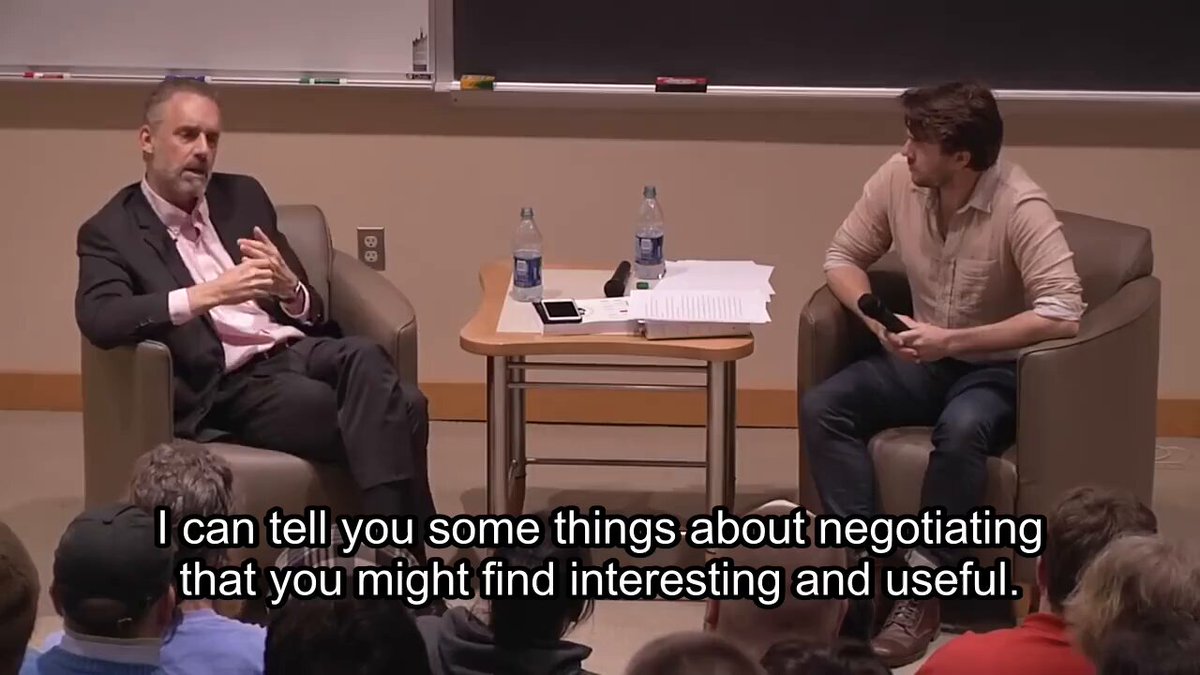
Jordan Peterson: "If you're competent and silent you will be ignored." "You might think well people should reward you because you're competent. And yes of course they should. But if you're competent and silent then you're just part of the background that's keeping everything functioning" On why you cannot negotiate from a position of weakness: "If you want to push your career forward you have to push it forward. You have to be competent and you have to be strategic" "To be strategic when you negotiate for a new position or a new salary you have to be able to say if you don't give me what I want then something you don't like will happen to you" "It's not a physical threat. It's that you have an option" "You have your CV in order. You're educated and competent and desirable to people outside of your immediate job. You're willing to instantly put yourself on the job market" "So that when you go talk to the person you're negotiating with you're credible" On the one thing most people completely miss about negotiation: "It's very seldom that you're talking to the person who's at the top of the pecking order. What you need to do is tell them a story that they can tell to their boss to make you not a problem" "A good story is look we really need this person because they're hyper competent and they have a better offer" "If you go in there with no power you're going to lose. Obviously" He concludes with the one thing every competent person needs to hear: "The first thing you need to know if you're going to negotiate is that you have to be able to say no. And what no means is that you're not going to do it"

Brad

35,334 görüntüleme • 3 ay önce

Coinbase CEO Explains “Reverse Prompting” and the Rise of the AI CEO Brian Armstrong: “One of the big pushes we made in the last year was we got our own internal hosted AI model that was connected to all of our data sources, right?” “So it's like every Slack message, every Google doc, Salesforce data, Confluence, you know.” “So now the data is all aggregated and I've started to ask it really… it's not just like prompting it, ‘Hey, can you write this kind of memo for me,’ or something.” “I'm asking these AI agents now, ‘As CEO, what should I be aware of in the company that I might not be aware of?’ And it'll tell me, ‘Did you know that there's actually disagreement on this team about the strategy?’ And I was like, actually, I didn't know that.” “This is like reverse prompting. So instead of telling the AI agent what you want it to do, you ask it what you should be thinking more about.” @jason: “It's a mentor. It's a coach.” Brian: “Yeah. Like, what could make me a better CEO? And it's like, ‘Well, I looked at how you spent your time in the last quarter and here's how you said that you wanted to spend it, but you actually spent 32% of your time on this instead of 20%.’” “I've asked it other questions like, ‘What's the thing that I changed my mind on the most over the last year?’ Things like that.” “It'll prompt you with information you should be thinking about instead of the other way around.” Thanks to our partner for making this happen!: Our episode is sponsored by the New York Stock Exchange - a modern marketplace and exchange for building the future. It all happens at the NYSE 🏛.

The All-In Podcast

80,833 görüntüleme • 9 ay önce