Video yükleniyor...

Video Yüklenemedi

Ana Sayfaya Dön

What is scientific harvesting? When are trees cut? Is cutting any tree destroying the forest? Which trees are impotent to saved? Four days in Khyber Pakhtunkhwa’s forests completely changed the journalists’ views about deforestation Samina Pasha Sanaullah Khan Muqadas Farooq Awan Shakir Mehmood Awan Harmeet Singh views on this...

14,919 görüntüleme • 14 gün önce •via X (Twitter)

0 Yorum

Yorum bulunmuyor

Orijinal gönderinin yorumları burada görünecek

Benzer Videolar

THE VP & KEMENYAN - Benzoin Needs Forests - Today, I am going to talk about benzoin, also known as ‘kemenyan’. Some of you might have seen this video: “I once discussed the issue of downstream processing of benzoin; many people laughed, saying, ‘Benzoin is for shamans. Neneneneh… Wrong. Benzoin is as valuable as nickel. However, we have always sold it in its raw form. The women who wear perfumes like LV and Gucci are made from benzoin. We continue to sell it raw. That’s why we encourage young people to research, offering them other good places for research...” First, in this video, I won’t focus on the price comparison between benzoin and nickel, because comparing the price of a finite resource like nickel to a renewable forest product like benzoin isn’t straightforward. Any good economist knows that to make an accurate comparison, we need to account for community equity and natural capital in the calculation. Secondly, done responsibly, I support the development of the downstream industry for benzoin. However, first, consider the whole picture. Benzoin, a resin obtained from various species of Styrax trees, is one of the Non-Timber Forest Products that have been collected for centuries using traditional knowledge and techniques. Cinnamic acid, contained in the sap produced by Styrax benzoin, is an important compound that is used for various purposes, such as preservatives, fragrances, cosmetics, and pharmaceutical products. Benzoin is called kemenyan in Indonesian and haminjon in Batak. This is very important: Styrax trees can be found in the undergrowth of primary forests and secondary forests. Native to tropical regions in Eastern and Southeast Asia, the trees grow along streams and require consistent moisture; they thrive as understory plants in the shade of larger trees. In Sumatra, Styrax trees are often found within the local community’s customary forests. Traditional benzoin forest management involves only low-intensity disturbances, maintaining an ecological structure that enables the effective accumulation of forest species. The source of seedlings and good quality of seeds mostly comes from natural forests. In summary, the sustainable production of benzoin needs a sustainable forest. My question is, to develop a sustainable downstream industry for benzoin or kemenyan, will Mr Vice President end the destruction of natural forests? Will Mr Vice President guarantee the protection of local communities’ customary forests, and support the community in building a sustainable benzoin industry based on equity and fair treatment? The fact is that to date, less than 8% of customary forests in Indonesia are recognised by the government. Many are threatened and destroyed for monoculture palm oil, pulpwood plantations and others. I am unsure whether Louis Vuitton or gucci will accept products from sources associated with deforestation or community rights violations. Will Mr Vice President walk the walk?

Aida Greenbury

149,762 görüntüleme • 1 yıl önce

Baobab, a prehistoric species which predates both mankind and splitting of continents over 200 million years ago. Baobabs (Adansonia) are distinctive trees with incredibly large trunks. They can store tremendous amounts of water, as their trunks noticeably swell during the rainy season. Tree is native to African savannah, where climate is extremely dry and arid, it is a symbol of life and positivity in a landscape where little else can thrive. African baobab (A. digitata) has a vast range throughout the arid parts of Africa; six additional species are native to the Indian Ocean island of Madagascar, off south-east Africa; and an eighth species is native to north-west Australia. The largest known living baobab is the Sagole Big Tree, a specimen of A. digitata located in Masisi, Vhembe, South Africa, near the border with Zimbabwe. Based on its most recent measurements, Sagole has an extremely large base that covers 60.6m², a height of 19.8m and a total wood and bark volume of 414m³. Its aboveground dry mass is estimated to be 54 tonnes. Baobab trees grow in 32 African countries. Tree known for its longevity and some specimens in Africa have been dated to between 1100-2500 years old and reach up to 30m high and up to an enormous 50m in circumference. Baobab trees can provide shelter, food and water for animals and humans, many savannah communities made their homes near Baobab trees. Baobab also looms among ancient mounds and remains scattered around them are invariably early medieval or Portuguese. Until 2018, the largest living baobab was sacred Tsitakakoike Baobab, a specimen of the endangered species Adansonia grandidieri, which grew near Andombiro in the Ambiky Forest of south-west Madagascar. The incredibly stout and compact tree had a cylindrical trunk with a base that covered 59.6 m², a height of 14.6m and a total volume of 455 m³ - 380 m³ of which was trunk and 75 m³ of which was canopy. It partially broke and collapsed in February 2018 leaving about 40% of the tree still standing, but this was expected to also collapse soon after. An even larger African baobab tree (A. digitata) alive during 21st Century was the Platland/Sunland Tree of Modjadjiskloof, South Africa, with a base of 67.9 m², height of 18.9m and a total wood and bark volume of 448 m³. Unfortunately, a large portion of the Platland Tree collapsed and died in 2016, leaving the Sagole Big Tree to claim the top spot. Baobabs have among the lightest wood for any tree. Balsa wood is well known to model aeroplane makers as one of the lightest and softest woods, with a wood density that averages around 0.15 g/cm³, yet baobab wood is even lighter, averaging 0.13 g/cm³. As a result, the aboveground dry mass of the Platland baobab was estimated at only 58 tonnes and about 59 tonnes for Tsitakakoike. In terms of mass, giant gum trees (Eucalyptus) of Australia are the largest hardwood trees. The Sagole Big Tree has been carbon-dated to 800 years old, the Platland Tree to 1100 years and Tsitakakoike to 1270 years. 🎥© Africa Live #archaeohistories

Archaeo - Histories

83,444 görüntüleme • 1 yıl önce

Imagine buying a home specifically for its lush, mature greenery, only to come home and find your neighbors have completely cleared 20 trees and bushes from YOUR property without permission. ​This viral nightmare is a masterclass in why neighborly boundaries matter, the massive legal ramifications of "tree theft," and how bad communication can ruin a neighborhood. ​What many property owners don’t realize is that "Tree Law" is a highly specialized and incredibly punitive legal area. Cutting down trees on someone else's property without consent isn't just a minor dispute—it is a major liability. ​The Age Factor: In this case, one of the destroyed trees was 33 years old. You cannot simply go to a nursery, buy a sapling, and call it even. Replacing a mature, decades-old tree requires professional sourcing, massive machinery, and astronomical costs that the offending party is legally liable for. ​Treble Damages: In many jurisdictions, timber trespass laws allow the court to award triple the actual value of the trees if the cutting is found to be intentional or reckless. ​To add insult to injury, the neighbors followed up the destruction by installing a 7-foot horizontal fence. Ironically, their previous fences with other neighbors featured standard vertical slats. The horizontal construction required cutting down standard 6-foot boards, meaning extra labor was intentionally spent to build a mismatched, uneven barrier facing this specific yard. Furthermore, a massive tree on the property line had its root system hacked away to accommodate the fence, virtually guaranteeing the tree will die and create a hazardous fall risk. ​This entire situation highlights a critical lesson for every homeowner: Never rely on assumptions. ​The Missing Paper Trail: If the neighbors had simply requested a property survey and communicated their plans in writing, this disaster could have been avoided. ​Get It in Writing: Even if a neighbor verbally agrees to trimming or fencing, always secure a paper trail. Without it, you are exposed to immense financial and legal ruin. ​Instead of accepting a reasonable offer to simply replace the destroyed greenery, these neighbors doubled down, continued cutting, and told the homeowner to "call their lawyers." Now, a petty dispute is turning into a massive, costly lawsuit. Neighbor drama is entirely avoidable—all it takes is a little respect, a property survey, and basic communication.

✨️Serenitee♡Sam✨️

87,333 görüntüleme • 2 ay önce

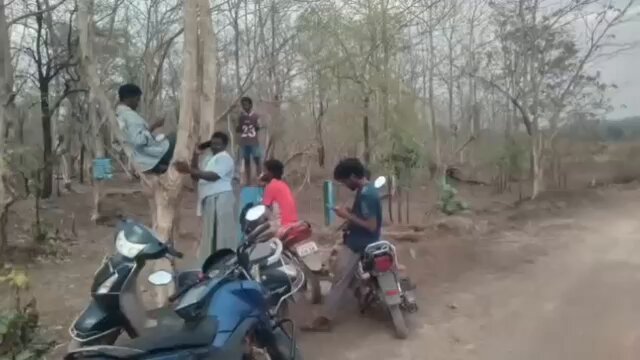
Can you see the men climbing trees and being perched on them with a mobile phone in their hand? These men aren’t climbing trees for fun, this has been their daily ritual for the past few months. This video is from Penchikalpet Mandal, Asifabad District, Telangana The people in this video climbing trees are local farmers. Telangana Congress government decided to go all fancy with fertilizer supply and launched an app to book the same. Most farmers don’t have smart phones, and those who do also don’t know how to use an app. People in many villages are taking help of youngsters and are also buying cheaper smart phones just to book urea!! More than 90 percent of farmers in the country cannot afford smart phones and are not well versed with the technology - a very important detail the smartest policy makers in the government decided to ignore. These farmers perched on the trees - their problem is a lot more complicated. They have no network connectivity because they live in tribal areas. Every morning it is now a ritual to find the last point of connectivity and climb the highest tree for any signal. Also, this is not one village problem. Many villages in Adilabad, Kumuram Bheem Asifabad, Mulugu, Bhadradri Kothagudem, and Nagarkurnool have severe signal connectivity issues. It is important to note that according to the report of Department of Telecommunications (DoT) there are at least 303 villages in Telangana which have mobile phone towers! Meaning zero mobile network access. And they all now cannot get urea or have to depend on the mercy of the local officers even to book a bag of urea. These are the farmers that need maximum support from the government. But this government has denied them the basics right to life and dignity to produce their own food, all because of their half-brained policies. PS: Do you know why the Congress government started this whole Urea Booking App suddenly? Due to the severe shortage of urea and subsequent long queues resulting in public anger & social media attention - they decided to bring in app booking so that it will make their lives easier; not the farmers’ but the government’s..!!!

Revathi

15,698 görüntüleme • 2 ay önce

🚨 #Manipur: Guarded by fully armed transnational Kuki Zo Chin terrorists, massive deforestation & leveling of long stretches of mountains continue to construct illegal roads without proper clearance and authorization. 🚨 Illegal is the word #ViolentKukiZoCommunity loves a lot. Under the protection of transnational Kuki Zo Chin militants, they are illegally cutting forest trees, illegally leveling mountains, to construct illegal roads without any legal authorization. N. Biren Singh Rajkumar Imo Singh how long will you allow this? MoEF&CC MORTHINDIA Bhupender Yadav Nitin Gadkari when did you approved the clearance of these activities by known militant groups in Indian soil in Manipur? गृहमंत्री कार्यालय, HMO India Amit Shah Rajnath Singh PMO India Narendra Modi are you going to keep watching while #KukiNarcoTerrorists finish destroying precious forests of #Manipur? Assam Rifles The Assam Rifles SpearCorps.IndianArmy EasternCommand_IA are you all blind? It’s just within 30-40 range of your camps. However I understand retired army officers and active chameleons like Lt Gen P R Shankar (R) and Shokin Chauhan are very reluctant to talk about Kuki militants and their activities but happy to put blame everything on Meiteis. Who wants their failures and dirty bags out in public after decades of posturing with moral high ground and propaganda? Kartikeya Sharma Rajat Sethi Rami Niranjan Desai Aadi Achint 🇮🇳 Abhijit Chavda Abhijit Iyer-Mitra Ajeet Bharti Tanushree Pandey GenLNishikantaSingh(Veteran) कुशल मेहरा Sanjay Dixit ಸಂಜಯ್ ದೀಕ್ಷಿತ್ संजय दीक्षित BJP Congress

Pukning

10,488 görüntüleme • 2 yıl önce

There's something in most British villages older than the church. Older than the English language. You've walked past it a thousand times. And nobody told you what it was. 🌳 The yew tree. Some are 2,000 years old. Some are closer to 5,000. The Fortingall Yew in Scotland. One of the oldest living things in Europe. They were sacred before Christianity arrived. When the new religion came, they didn't cut the trees down. They built the churches next to them. The church came to the tree. Not the other way around. Some are hollow. The heartwood rots away. But the tree keeps growing from the outside. A tree can be hollow for centuries and still be alive. Yew wood made the English longbow. Agincourt. Crécy. The weapon that changed European warfare. The wood came from churchyards. Yew is poisonous. Every part of it. Livestock can't go near it. That's why they survived in churchyards when they were cut down everywhere else. The wall saved them. The Ankerwycke Yew. Near Runnymede. Two and a half thousand years old. Magna Carta may have been sealed beneath it. The tree was already a thousand years old when that happened. You can touch them. They're not behind glass. They're in your village. Walk up to one on Sunday morning. Put your hand on the bark. That tree was alive before Julius Caesar crossed the Channel. And it's still growing. Still standing in the same churchyard. Still alive. Still yours. Sources and more available at Be part of us. Be Proud Of Us. 🇬🇧

Proudofus.uk

65,957 görüntüleme • 4 ay önce

Seshachalam Forest is not merely a forest; it is the sacred abode of Lord Balaji, blessed by the seven holy hills. And here, in this divine place, a heinous crime is being committed against our nation, our economy, our faith and our environment. We speak of the Red Sanders tree. This incredible wealth, this Rakta Chandanam, is found nowhere else on Earth. It is a unique treasure, and it carries the spiritual weight of our people. Legends say it emerged from the divine blood of Lord Venkateswara himself! To cut this tree is not just a forestry crime—it is a spiritual desecration! These trees are not lifeless wood. We know from the work of the great Indian scientist, Sir Jagadish Chandra Bose, that plants feel pain and shock. They live in a community, what the German forester Peter Wohlleben calls the "Wood-Wide Web." They share, they communicate, they protect each other. When a mother tree is felled, the entire network shudders with an agonizing electric shock. The criminals who wield the axe are tearing apart a living, sacred community! They see only the red treasure, but we see the wounded faith of millions! The recent inspection of the godowns at the Mangalam Depot reflected a chilling testament to the plunder of the last few years. It is a silent graveyard. 2.6 lakh logs—the severed remains of an estimated 1.3 lakh Mother trees—stolen, butchered, and stacked as numbered inventory. The financial theft alone is staggering: ₹2,000 crore, perhaps ₹5,000 crore, stolen directly from the State Exchequer and our national future! This is money that belongs to our people, money that should be building roads, schools and hospitals. But this raises critical questions How can a few people encroach on forest lands so easily? Who gives them the audacity to cut down the red sandalwood trees without fear? How do they smuggle them in broad daylight, escaping from the police, the security, the government agencies, and the community around the forest? The answers point to systemic failure and a terrible lack of political will in the past. We must stop asking why and start demanding justice. It’s time all those culprits faced the law and its consequences! No more can individuals treat these ancient forests as gardens in their backyards or treat the Endangered Red Sanders as their personal property. Our coalition government will not tolerate the smuggling of Red Sanders any longer. We are identifying the smugglers, kingpins and all culprits involved. We will not just arrest them; we will seize their assets under the Forest Act! A special, full-fledged operation, similar to the Centre's 'Operation Kagar,' to wipe out every single individual involved in this illegal trade shall be initiated soon. We will ensure fear among the smugglers so that no one, no one, dares to touch a single Red Sanders tree again. The Red Sanders is a life that feels, it is our national wealth, and it is sacred. We are watching, and we will protect the wealth of our nation and the divine sanctity of Seshachalam! #OperationAranya

Pawan Kalyan

1,140,847 görüntüleme • 8 ay önce

Pune Metro has been the cause for the maximum disruption of traffic and causing traffic chaos across Pune for the past decade. Besides this is a government run by thugs and thieves along with corporate executives who have pouring concrete over the entire city as their only objective. Among other things. We are trying to knock some sense into the @punemetro3 , roads and projects department to be more environmentally conscious. It’s mostly a losing battle. Unfortunately large corporate interests such as Tata Group Larsen & Toubro KPMG India are all complicit in the denuding of the cities green cover. It’s astonishing that they as of yet don’t have the capacities in-house to simply help move ancient trees 🌳 in situ at the same location or another as the case may be - so that Pune doesn’t have to sacrifice its ancient trees. Their engineering under the mandate of the chump in chief Devendra Fadnavis and his sidekick Ajit Pawar is about laying to waste a living breathing city. Never about conservation. When they’re not defending criminals like Karads or Mundes this is what they do…. Turn Mumbai and Pune into a dust bowl desert. Some notes emergent out of yesterday’s meetings with the metro officials. 1. The metro work has been the cause of the maximum tree felling in the area through Mann Hinjewadi to Shivajinagar. It also is the cause of the maximum traffic jams across the city in the past decade. 2. ⁠There isn’t a single example of the Pune IT City Metro Rail Corporation Ltd. having replanted or transplanted a single tree 🌳 fully in all its glory along this route. Not one success story. 3. ⁠What has happened instead is that trees in their hundreds and at times without permission have been butchered by the Metro authorities under the offices of Bhanudas Mane. Sakalnagar has lost 40 trees. Ganeshkhind Road over a few hundred trees. Karve road countless old growth trees. Wherever the metro goes, it creates traffic jams and destroys the road side green cover. 4. ⁠These criminals led by the offices of the Municipal Commisioner and supported by the house of Tata’s @RNTata2000 are responsible for the destruction of the green cover of Ganeshkhind Road. Aundh Baner Balewadi Road until Hinjewadi. 5. ⁠Some sad transplantation techniques have been applied along with making rudimentary compensatory plantation attempts to come up with numbers to justify further tree felling along Ganeshkhind Road. The biomass lost hasn’t been replaced by the biomass newly planted (never was meant to be). What was meant to be was to screw Pune’s population out of its green cover and its ability to fight pollution and traffic caused by the increasing heat and dust from the metro work force which will justify anything in its means to keep destroying the city and its natural capital. 6. ⁠All the officials involved have been incriminated on several counts in the courts of law, especially at NGT and Supreme Court and High Court. A current contempt proceeding also remains open towards these matters. Yet, nothing is taken seriously by any of them. Tree felling permissions continue to be applied for, they continue to be given despite strong objections raised by all citizens groups and movements. It’s a KPMG & BJP modus operandi to destroy our environment. Today Ganeshkhind Road is a former shadow of itself. The Metro work looms over everything here. 7. ⁠Despite the road department, projects department and the Metro Transit functions having made commitments to transplant trees In situ with minimum damage at the same locations preferably. Some or the other excuse is always given and not a single example of a successful transplantation of huge ancient trees along the roads exist. What does exist is gerrymandering of the records and data to keep showing trees as of lesser age, lesser dimensions, lesser numbers than what is actually reflective of reality on the ground. Continued 1/2

ameet singh

20,187 görüntüleme • 1 yıl önce