Video wird geladen...

Video konnte nicht geladen werden

Zur Startseite

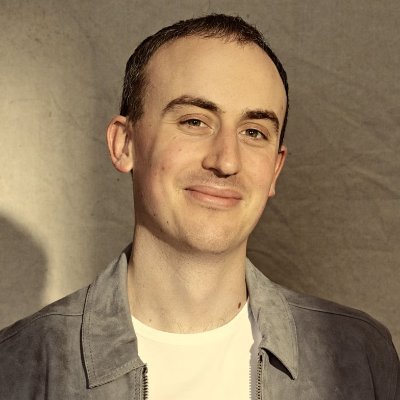
When is harness optimization enough? When does post-training make sense? What will determine who becomes the new AI hyperscaler? Yash Patil, co-founder of Applied Compute, was the perfect person to discuss this and more. Yash worked on Codex at OpenAI before leaving to co-found Applied Compute with fellow OpenAI...

21,237 Aufrufe • vor 2 Tagen •via X (Twitter)

2 Kommentare

Profilbild von Yash Patil
Yash Patilvor 2 Tagen

@appliedcompute Thank you so much for having me @jacobeffron!

Profilbild von Jacob Effron
Jacob Effronvor 2 Tagen

@appliedcompute Really enjoyed our conversation!

Ähnliche Videos

Why AI Can Now Make Discoveries - my conversation with Dan Roberts, Lead of the Foundations of Reinforcement Learning team at OpenAI 00:00 Intro: AI's wild week in mathematics 01:21 What OpenAI's Foundations of RL team does 03:08 Dan's journey: from black holes and quantum gravity to frontier AI 07:04 Are AI systems becoming useful for real science 08:21 The AI math moment: Erdős, OpenAI, DeepMind, and Anthropic 08:52 Why the OpenAI result was an act of exploration 10:25 OpenAI vs. DeepMind: informal reasoning vs. formal proof 12:13 RL 101: learning by doing, not just watching 15:10 Why reinforcement learning works 15:58 How RL breaks: sparse feedback and long-horizon tasks 17:03 RLHF: how human feedback shaped early language models 18:48 Move 37, self-play, and the search for novel strategies 22:16 Explore vs. exploit in scientific discovery 24:49 Why RL may now be "the cake," not the cherry on top 25:46 Why RL started working with large language models 27:29 Is RL "sucking supervision through a straw"? 28:47 Why language may be the grounding layer for intelligence 31:46 A contrarian take on the Bitter Lesson 32:41 What test-time compute actually is 34:50 How RL gives models the ability to think 35:40 Verifiable rewards, math, coding, and the messy real world 38:00 What physics can teach us about AI 42:08 Is there a thermodynamics of AI? 43:08 From Erdős problems to Einstein-level AI 45:16 Is AI already doing original science? 45:51 How far are we from AI automating AI research 47:41 Why Dan is excited about the future of science

Matt Turck

69,801 Aufrufe • vor 4 Monaten

Thanksgiving-week treat: an epic conversation on Frontier AI with Lukasz Kaiser -co-author of “Attention Is All You Need” (Transformers) and leading research scientist at OpenAI working on GPT-5.1-era reasoning models. 00:00 – Cold open and intro 01:29 – “AI slowdown” vs a wild week of new frontier models 08:03 – Low-hanging fruit, infra, RL training and better data 11:39 – What is a reasoning model, in plain language 17:02 – Chain-of-thought and training the thinking process with RL 21:39 – Łukasz’s path: from logic and France to Google and Kurzweil 24:20 – Inside the Transformer story and what “attention” really means 28:42 – From Google Brain to OpenAI: culture, scale and GPUs 32:49 – What’s next for pre-training, GPUs and distillation 37:29 – Can we still understand these models? Circuits, sparsity and black boxes 39:42 – GPT-4 → GPT-5 → GPT-5.1: what actually changed 42:40 – Post-training, safety and teaching GPT-5.1 different tones 46:16 – How long should GPT-5.1 think? Reasoning tokens and jagged abilities 47:43 – The five-year-old’s dot puzzle that still breaks frontier models 52:22 – Generalization, child-like learning and whether reasoning is enough 53:48 – Beyond Transformers: ARC, LeCun’s ideas and multimodal bottlenecks 56:10 – GPT-5.1 Codex Max, long-running agents and compaction 1:00:06 – Will foundation models eat most apps? The translation analogy and trust 1:02:34 – What still needs to be solved, and where AI might go next

Matt Turck

168,186 Aufrufe • vor 10 Monaten

My conversation with OpenAI co-founder Greg Brockman This is the most detailed first-person account of the 72 hours after Sam Altman was fired. We also go deep on what comes next: the global race to AGI, why ChatGPT stopped showing reasoning, how much of OpenAI's own code is now written by AI ("it's hard to know what percent is not"), and the untold story of how OpenAI actually started in 2015. 00:00:00 Introduction 00:00:49 Meeting Sam Altman and Starting OpenAI 00:02:40 Building the Founding Team 00:04:25 DeepMind's Lead Over OpenAI 00:04:54 Changing OpenAI to a For-Profit Model 00:06:05 Breakthrough Moments at OpenAI 00:08:22 What Dota 2 Meant for OpenAI 00:10:04 Reasoning Versus Prediction 00:11:59 Tensions Grow at OpenAI 00:15:44 Sam Altman's Firing 00:17:49 Greg Quits OpenAI 00:19:56 Sam Explores Deal with Microsoft's Satya 00:20:28 Petition for Altman's Return 00:23:43 Ilya Sutskever Leaves OpenAI 00:24:59 Lessons Learned after Sam Ousting 00:28:22 The Thing Ilya Said that Greg Can't Forget 00:32:22 Is AI Going Parabolic? 00:33:24 How Much of OpenAI's Code is Written by AI? 00:36:21 Do AI Chatbots Tell Us What We Want to Hear? 00:38:06 The Global AI Race to Reach AGI 00:38:40 What Happens if US Doesn't Reach AGI First? 00:39:49 Are Countries Stealing AI Advancements? 00:40:38 Why ChatGPT No Longer Shows Reasoning 00:41:47 The Finite Constraints of Compute 00:43:38 On Investing Early in Data Centers 00:46:31 The Future of Data Center Specialization 00:47:52 How to Decide Whose Queries to Serve 00:49:08 OpenAI on Consumer vs Enterprise Models 00:53:05 Data Centers in Space? 01:00:56 What Should AI Regulation Look Like? 01:04:33 The Future of AI-Powered Entrepreneurship 01:04:44 AI and Job Loss 01:07:15 The Skills Young People Should Invest In 01:11:30 What Does Success Look Like For You? Full episode on X below. Also find it on: • YouTube: • Spotify: • Apple:

Shane Parrish

450,952 Aufrufe • vor 5 Monaten