Loading video...

Video Failed to Load

Go Home

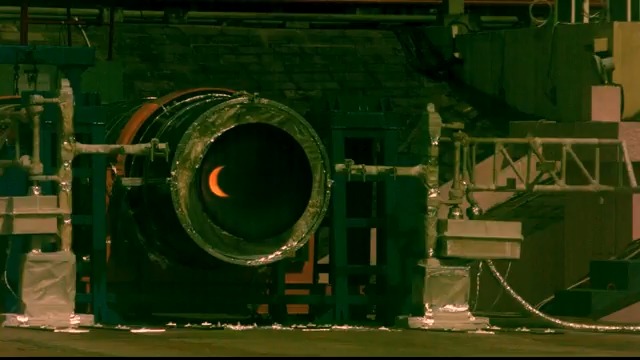
Why catch a rocket when you can just land it? Physics YouTuber explains the high-stakes engineering behind SpaceX’s “Mechazilla” catch system. As a rocket descends, its engines become less efficient due to air resistance, often forcing them to shut off just before touchdown; causing the vehicle to literally fall...

49,873 views • 6 months ago •via X (Twitter)

0 Comments

No comments available

Comments from the original post will appear here

Related Videos

BREAKING: For 10 years the world believed there was one way to reuse a rocket: land it upright on its engines, the way SpaceX does. Today China refused to copy it, and pulled off something SpaceX never managed on a first flight. It caught the rocket instead. The Long March 10B lifted off from Hainan, China this morning, and about 6 minutes later its first stage came back down toward a 25,000-ton ship at sea. It did not land. Hooks on the falling booster snagged a net of tensioned steel wires strung across the deck, the wires riding robotic rails that slid into place to meet it. No landing legs. No touchdown. A rocket plucked out of its own descent by a moving net, on the maiden flight of a brand-new vehicle. No one handed China this. SpaceX guards its rocket tech as “trade secrets”, not “patents”, precisely so it cannot be read and copied. China watched a decade of public flights and then built an entirely different machine to reach the same prize, catching instead of landing, which sheds the heavy legs and spares the fuel a soft touchdown burns to hover. And this was never about cheaper satellites, though it delivers those too, feeding the thousands of birds in China's Starlink rival. Its deeper purpose is the Moon. That booster shares its core with the rocket meant to land Chinese astronauts on the lunar surface by 2030. In the same season, America's own Moon rocket, Starship, has flown 12 times and still has not shown the single maneuver its lunar plan depends on. One flight does not dethrone SpaceX. It has landed hundreds. What ended today is not SpaceX's lead. It is Uncle Sam’s belief that it owns the only road to the Moon. The piece works out which way of coming home actually wins.

Shanaka Anslem Perera ⚡

2,632,873 views • 1 month ago

🚨WHOA!!! Gravity Just Got Outmatched… Watch a C-17 Drop Out of the Sky Using Reverse Thrust Most people think giant cargo aircraft descend slowly in wide lazy circles. Not the American 🇺🇸 C-17. What you’re seeing in this footage is one of the most aggressive controlled descents ever engineered into a military aircraft. The C-17 Globemaster can actually deploy thrust reversers while still in the air… something almost no other jet transport can safely do. When those massive engines flip into reverse thrust, the physics of the aircraft changes instantly. Instead of the engines pushing the aircraft forward… they begin fighting the forward motion of the airplane. The result is dramatic. The aircraft can transition from flying nearly parallel to the horizon… to a steep nose-down descent that looks almost perpendicular compared to the Earth below. Pilots can drop altitude incredibly fast… going from high cruising altitude to landing approach in just a couple minutes. Why does this matter? Because the C-17 was built for battlefield logistics. It was designed to fly into dangerous airspace, descend rapidly to avoid threats, land on short or rough runways, unload equipment or troops, and get back into the air before anyone has time to react. That rapid descent capability allows the aircraft to minimize time exposed to enemy radar or missile threats. The moment the thrust reversers are disengaged, the aircraft stabilizes instantly and transitions back into normal controlled flight for landing. It’s a perfect example of American aerospace engineering. Four massive turbofan engines… flight computers… and aerodynamics working together to make a 585,000-pound aircraft move like a precision instrument in the sky. For people who have never seen reverse thrust used mid-air before… this footage is a rare look at how military airlift aircraft operate when seconds matter. It’s one of the coolest demonstrations of aviation physics you’ll ever see. #SilentMajoritySpeaks #AStoneGroove

A Gene Robinson

1,045,647 views • 6 months ago