正在加载视频...

视频加载失败

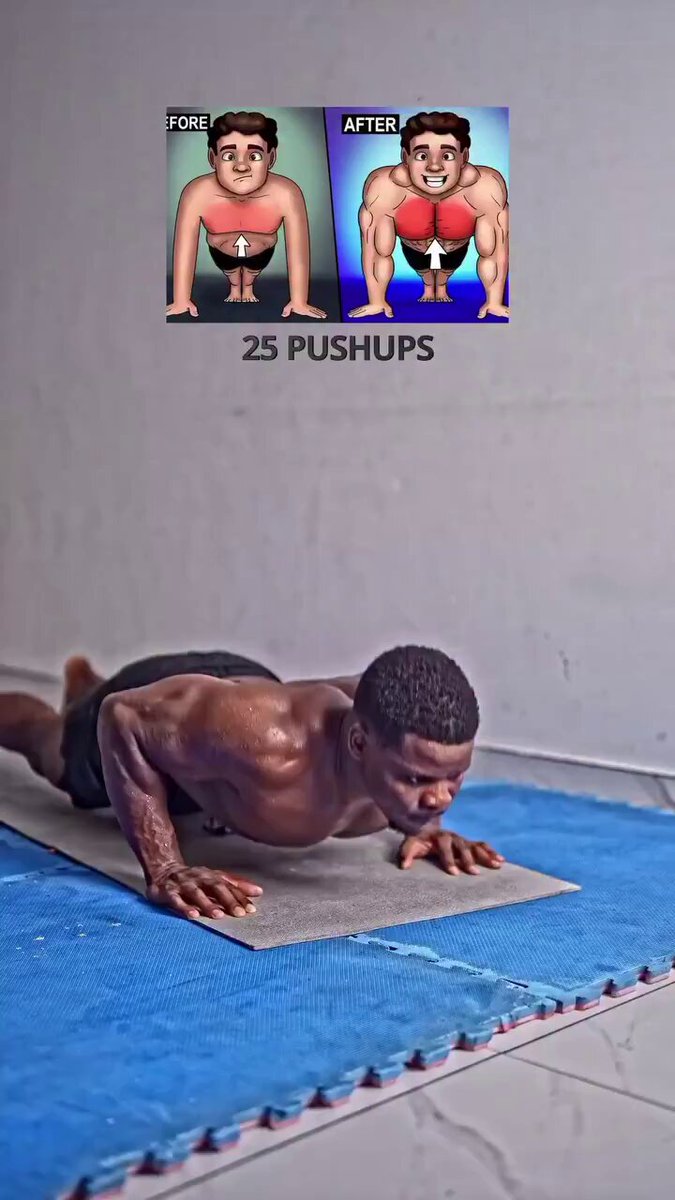
Your chest isn’t growing because you skip this. 👀 Most guys only do regular push-ups and wonder why their chest stays flat. You need to hit it from all angles: • Decline Push-ups → Lower chest • Regular Push-ups → Middle chest • Incline Push-ups → Upper chest •...

16,267 次观看 • 29 天前 •via X (Twitter)

0 条评论

暂无评论

原始帖子的评论将显示在这里
相关视频

Incline Smith Machine Press Tips: 1) Set the bench to roughly 15-30°….steeper angles generally increase front delt involvement and reduce pec involvement 2) Position yourself so the bar tracks toward the upper chest / lower clavicle region at the bottom of each rep 3) Retract and depress the shoulder blades (“chest up, shoulders down and back”) before unracking to set your base but allow scapula to move freely during the set 4) Keep feet planted firmly on the floor and maintain a stable base 5) Lower the bar under control until you come into contact with your chest (if you cannot do this without pain, just shy of chest is fine) 6) Allow the elbows to travel roughly 45-60° away from the torso…neither excessively tucked nor excessively flared 7) Keep wrists stacked directly over elbows throughout the rep 8) Avoid excessively bouncing the bar off the chest or relaxing at the bottom position 9) Use a grip width that allows the forearms to remain approximately vertical from the front view near the bottom of the rep 10) Full lockout is optional for hypertrophy…stopping just short of lockout can sometimes help maintain continuous tension 11) Control the eccentric and perform the concentric with intent and aggression while maintaining technique 12) If shoulder discomfort occurs, experiment with: - A lower incline angle - A slightly narrower grip - Bringing the touch point slightly lower on the chest - Reduced ROM The Smith machine’s fixed bar path will improve stability and allow greater focus on loading the target musculature close to failure safely….making it a strong hypertrophy option As always, ensure progressive overload is occurring on a regular basis!

Dean Turner

44,032 次观看 • 1 个月前

This post about bench press safety escaped containment and got a lot of people commenting in disagreement that safeties/spotter arms would've saved him. And in truth, my language below was a little too absolute: safeties MIGHT have saved his life (though even if so, would not have prevented all damage), but it's far from certain that they would have, so I stand by the overall sentiment. I will explain in detail below. The spotter arms have to be set below the top of your arched chest or else they’ll interfere with every rep - you'll clang the bar on the safeties, which not only severely interrupts proper technique and performance, but can also be potentially injurious in its own right as the clanging against the safeties takes you out of the rhythm of the rep and leads to uneven and chaotic force application demands mid-rep. The safeties can’t be set a mere milimeter or even a half inch below the chest: both because most racks have 2-3 inch hole spacings that don't allow such finely calibrated setting, but even if they do - also because as a gross movement pattern, not a fine movement pattern, you can’t control the movement of the bar precisely and accurately enough not to clang the safeties if they’re so close to your chest. Human beings performing gross movement patterns simply lack such fine control: on heavy sets, the bar might be slightly uneven on one side, you might lose a touch of your arch over the course of the set, etc... and end up clanging the safeties anyway, if they're set so close to the top of your arched chest. These issues are not form errors that can be prevented with proper training, but are inherent limitations in the human capability to control gross motor pattern movements at a heavy weight. Thus, the safeties have to be far enough below your chest in order to not interfere with the set itself, such that they can’t possibly catch the bar before it hits your chest in the case of a sudden catastrophic drop. The proper placement for the safeties is far enough below your chest so as not to interfere with the normal execution of the set and so the bar never touches the safeties at all during the set, even with the inherent human limitations of gross motor pattern control. But high enough such tha - if you find yourself unable to successfully press the bar to lockout - you can bring the bar under control back down to your chest, exhale and drop your arch, and the bar will ideally now rest on the safeties instead of your chest and you can crawl and slither out from under it. Worst case, you can roll the bar slightly upwards and the safeties will soon take it, well before it would lie on your neck. I have an example of using the safeties this way in the video below, with 485 lbs. The ability to set this position with precision and accuracy depends on the equipment you're using: Some racks/benches have 1 inch spacings for this purpose, which is excellent and allows greater precision in safety placement, but most common racks have 2-3 inches between holes and thus people must often have the safeties a little lower than they'd ideally be. The main point is the proper use and purpose of safeties in the bench press is not really to catch a very rare catastrophic sudden drop onto your chest, but to allow you to survive the much more common situation of a normal failed rep. Could they theoretically save your life in such a situation where you drop it? Yes, they might. They won't stop the bar before it hits your chest but they might reduce the impact by stopping the bar from going further down and reducing the impact. This may or may not save your life in this rare catastrophic drop situation - it's good to have them there, set up anyway, but it's far from a sure bet. The most important things you can do are to learn and practice good technique, which involves stiff wrists in a very slightly bent back position, and thumbs around the barbell - NO SUICIDE GRIP. The safeties won't catch the bar and stop it from hitting your chest, so it's best to reduce the chances of dropping the bar on your chest from almost zero to even closer to almost zero. I've been bench pressing regularly for well over 20 years, always put my thumbs around the bar, and have never dropped it on myself. Nor has anyone I have coached to the best of my memory, over tens of thousands of sets and hundreds of thousands of reps. I have used safeties to successfully avoid getting trapped under the bar after a failed rep. In the video below, I tweaked my pec while pushing through a rep at 485 and had to set the bar on the pins to avoid getting trapped under it. This kind of situation is the primary use for the safeties. It's good to have them set up regardless - they might indeed save you if you somehow still manage to drop the bar, but they also very well might not.

Deep Squats, Shallow Thoughts

922,414 次观看 • 7 个月前