Video yรผkleniyor...

Video Yรผklenemedi

๐–๐ก๐š๐ญ ๐ข๐Ÿ ๐ญ๐ซ๐š๐๐ž ๐š๐ ๐ซ๐ž๐ž๐ฆ๐ž๐ง๐ญ๐ฌ ๐œ๐จ๐ฎ๐ฅ๐ ๐œ๐ซ๐ž๐š๐ญ๐ž ๐ฃ๐จ๐›๐ฌ ๐š๐ญ ๐ก๐จ๐ฆ๐ž ๐ฐ๐ก๐ข๐ฅ๐ž ๐ฎ๐ง๐ฅ๐จ๐œ๐ค๐ข๐ง๐  ๐ฌ๐จ๐ฆ๐ž ๐จ๐Ÿ ๐ญ๐ก๐ž ๐ฐ๐จ๐ซ๐ฅ๐'๐ฌ ๐ฅ๐š๐ซ๐ ๐ž๐ฌ๐ญ ๐ฆ๐š๐ซ๐ค๐ž๐ญ๐ฌ? ๐ŸŒ๐Ÿ‡ฎ๐Ÿ‡ณ Under PM Modi, India's trade strategy is opening new opportunities for businesses, farmers, and manufacturers while strengthening the country's position in the global economy. ๐Ÿ”น India-Oman deal offers duty-free access for...

16,058 gรถrรผntรผleme โ€ข 2 ay รถnce โ€ขvia X (Twitter)

0 Yorum

Yorum bulunmuyor

Orijinal gรถnderinin yorumlarฤฑ burada gรถrรผnecek

Benzer Videolar

๐€ ๐ฅ๐š๐ง๐๐ฆ๐š๐ซ๐ค ๐๐ž๐š๐ฅ. ๐€ ๐›๐ข๐ ๐ ๐ž๐ซ ๐ฆ๐š๐ซ๐ค๐ž๐ญ. ๐€ ๐ฌ๐ญ๐ซ๐จ๐ง๐ ๐ž๐ซ ๐ˆ๐ง๐๐ข๐š. ๐Ÿ‡ฎ๐Ÿ‡ณ๐Ÿค๐Ÿ‡ฌ๐Ÿ‡ง Under PM Modi's leadership, the Indiaโ€“UK Free Trade Agreement marks a major step towards expanding India's global economic footprint. ๐Ÿ”น 99% of Indian exports to the UK to enjoy ๐ณ๐ž๐ซ๐จ-๐๐ฎ๐ญ๐ฒ ๐š๐œ๐œ๐ž๐ฌ๐ฌ ๐Ÿ”น Bilateral trade targeted to reach $120 billion by 2030 ๐Ÿ”น Major boost for textiles, engineering goods, gems and jewellery, marine products and auto components ๐Ÿ”น Easier mobility for Indian professionals in IT, healthcare, finance and education ๐Ÿ”น Double Contribution Convention to save Indian businesses and professionals โ‚น๐Ÿ’,๐ŸŽ๐ŸŽ๐ŸŽ ๐œ๐ซ๐จ๐ซ๐ž+ ๐–๐š๐ญ๐œ๐ก ๐ญ๐ก๐ž ๐ฏ๐ข๐๐ž๐จ ๐ญ๐จ ๐ฎ๐ง๐๐ž๐ซ๐ฌ๐ญ๐š๐ง๐ ๐ก๐จ๐ฐ ๐ญ๐ก๐ž ๐ˆ๐ง๐๐ข๐šโ€“๐”๐Š ๐…๐“๐€ ๐œ๐จ๐ฎ๐ฅ๐ ๐›๐จ๐จ๐ฌ๐ญ ๐ฃ๐จ๐›๐ฌ, ๐ž๐ฑ๐ฉ๐จ๐ซ๐ญ๐ฌ ๐š๐ง๐ ๐ž๐œ๐จ๐ง๐จ๐ฆ๐ข๐œ ๐ ๐ซ๐จ๐ฐ๐ญ๐ก ๐ฐ๐ก๐ข๐ฅ๐ž ๐จ๐ฉ๐ž๐ง๐ข๐ง๐  ๐ง๐ž๐ฐ ๐จ๐ฉ๐ฉ๐จ๐ซ๐ญ๐ฎ๐ง๐ข๐ญ๐ข๐ž๐ฌ ๐Ÿ๐จ๐ซ ๐ˆ๐ง๐๐ข๐š๐ง ๐›๐ฎ๐ฌ๐ข๐ง๐ž๐ฌ๐ฌ๐ž๐ฌ ๐š๐ง๐ ๐ฉ๐ซ๐จ๐Ÿ๐ž๐ฌ๐ฌ๐ข๐จ๐ง๐š๐ฅ๐ฌ. ๐ŸŽฅ

BJP

30,857 gรถrรผntรผleme โ€ข 1 ay รถnce

๐Ž๐ง๐ž ๐ญ๐ซ๐š๐๐ž ๐๐ž๐š๐ฅ. ๐๐ข๐ฅ๐ฅ๐ข๐จ๐ง๐ฌ ๐ข๐ง ๐จ๐ฉ๐ฉ๐จ๐ซ๐ญ๐ฎ๐ง๐ข๐ญ๐ฒ. ๐Ÿ‡ฎ๐Ÿ‡ณ๐Ÿค๐Ÿ‡ฆ๐Ÿ‡ช The Indiaโ€“UAE CEPA, signed under PM Modiโ€™s leadership, is unlocking growth, creating jobs and opening new global opportunities for Indian businesses. ๐Ÿ“ˆ Finalised in a record 88 days, it came into force on May 1, 2022 ๐ŸŒ 97% of UAE tariff lines now provide duty-free or preferential access, covering 99% of Indian exports by value ๐Ÿ’น Bilateral trade has crossed US$100 billion, driven by strong growth in non-oil trade ๐Ÿ’Ž Sectors including gems and jewellery, electronics, pharmaceuticals, engineering goods, textiles and agriculture are seeing significant gains ๐Ÿญ The agreement is creating new opportunities for MSMEs, farmers, artisans and exporters while strengthening Indiaโ€™s role in global supply chains ๐–๐š๐ญ๐œ๐ก ๐ญ๐ก๐ž ๐Ÿ๐ฎ๐ฅ๐ฅ ๐ฏ๐ข๐๐ž๐จ ๐ญ๐จ ๐ฌ๐ž๐ž ๐ก๐จ๐ฐ ๐ญ๐ก๐ž ๐ˆ๐ง๐๐ข๐šโ€“๐”๐€๐„ ๐‚๐„๐๐€ ๐ข๐ฌ ๐จ๐ฉ๐ž๐ง๐ข๐ง๐  ๐ง๐ž๐ฐ ๐ฆ๐š๐ซ๐ค๐ž๐ญ๐ฌ, ๐›๐จ๐จ๐ฌ๐ญ๐ข๐ง๐  ๐ž๐ฑ๐ฉ๐จ๐ซ๐ญ๐ฌ ๐š๐ง๐ ๐š๐œ๐œ๐ž๐ฅ๐ž๐ซ๐š๐ญ๐ข๐ง๐  ๐ˆ๐ง๐๐ข๐šโ€™๐ฌ ๐ฃ๐จ๐ฎ๐ซ๐ง๐ž๐ฒ ๐ญ๐จ๐ฐ๐š๐ซ๐๐ฌ ๐›๐ž๐œ๐จ๐ฆ๐ข๐ง๐  ๐š ๐ ๐ฅ๐จ๐›๐š๐ฅ ๐ž๐œ๐จ๐ง๐จ๐ฆ๐ข๐œ ๐ฉ๐จ๐ฐ๐ž๐ซ๐ก๐จ๐ฎ๐ฌ๐ž. ๐ŸŽฅ

BJP

32,504 gรถrรผntรผleme โ€ข 12 gรผn รถnce

๐ˆ๐ง๐๐ข๐š ๐ข๐ฌ ๐ฌ๐ญ๐ž๐š๐๐ข๐ฅ๐ฒ ๐ž๐ฆ๐ž๐ซ๐ ๐ข๐ง๐  ๐š๐ฌ ๐ญ๐ก๐ž ๐ฐ๐จ๐ซ๐ฅ๐'๐ฌ ๐ง๐ž๐ฑ๐ญ ๐ฌ๐ž๐ฆ๐ข๐œ๐จ๐ง๐๐ฎ๐œ๐ญ๐จ๐ซ ๐ฉ๐จ๐ฐ๐ž๐ซ๐ก๐จ๐ฎ๐ฌ๐ž. ๐Ÿ‡ฎ๐Ÿ‡ณ๐Ÿ’ป For decades, India led the world in software. Now, under PM Modi's leadership, the nation is laying the foundation to become a global semiconductor manufacturing hub. ๐Ÿ”น India's semiconductor market is projected to grow from $45โ€“50 billion today to $120 billion by 2030 ๐Ÿ”น โ‚น76,000 crore allocated under the India Semiconductor Mission ๐Ÿ”น Target to meet over 60% of India's chip demand through domestic production by 2035 ๐Ÿ”น Massive investments in fabs, packaging and testing facilities across multiple states ๐Ÿ”น Around 2 million new jobs expected by 2035 across manufacturing, design and allied sectors ๐–๐š๐ญ๐œ๐ก ๐ญ๐ก๐ž ๐Ÿ๐ฎ๐ฅ๐ฅ ๐ฏ๐ข๐๐ž๐จ ๐ญ๐จ ๐๐ข๐ฌ๐œ๐จ๐ฏ๐ž๐ซ ๐ก๐จ๐ฐ ๐ˆ๐ง๐๐ข๐š'๐ฌ ๐ฌ๐ž๐ฆ๐ข๐œ๐จ๐ง๐๐ฎ๐œ๐ญ๐จ๐ซ ๐ฆ๐ข๐ฌ๐ฌ๐ข๐จ๐ง ๐œ๐จ๐ฎ๐ฅ๐ ๐ญ๐ซ๐š๐ง๐ฌ๐Ÿ๐จ๐ซ๐ฆ ๐ญ๐ก๐ž ๐œ๐จ๐ฎ๐ง๐ญ๐ซ๐ฒ'๐ฌ ๐ž๐œ๐จ๐ง๐จ๐ฆ๐ฒ ๐š๐ง๐ ๐ฆ๐š๐ค๐ž ๐ข๐ญ ๐š ๐ฆ๐š๐ฃ๐จ๐ซ ๐Ÿ๐จ๐ซ๐œ๐ž ๐ข๐ง ๐ญ๐ก๐ž ๐ญ๐ž๐œ๐ก๐ง๐จ๐ฅ๐จ๐ ๐ฒ ๐ฌ๐ฎ๐ฉ๐ฉ๐ฅ๐ฒ ๐œ๐ก๐š๐ข๐ง. โฌ‡๏ธ

BJP

24,052 gรถrรผntรผleme โ€ข 14 gรผn รถnce

๐ˆ๐Ÿ ๐ฒ๐จ๐ฎ ๐ฐ๐ž๐ซ๐ž ๐›๐จ๐ซ๐ง ๐ข๐ง ๐Ÿ๐ŸŽ๐ŸŽ๐Ÿ–, ๐ญ๐ก๐ข๐ฌ ๐ข๐ฌ ๐ญ๐ก๐ž ๐ˆ๐ง๐๐ข๐š ๐ฒ๐จ๐ฎ ๐ข๐ง๐ก๐ž๐ซ๐ข๐ญ๐ž๐. You may not remember the years of terror, corruption and policy paralysis, but your parents do. Since 2014, India has witnessed a decade of transformation under PM Modi. ๐Ÿ”น Jan Dhan brought banking to millions ๐Ÿ”น Ayushman Bharat expanded healthcare access ๐Ÿ”น Article 370 was abrogated ๐Ÿ”น Balakot changed India's response to terrorism ๐Ÿ”น UPI went global and Digital India accelerated ๐Ÿ”น Defence exports, infrastructure and global standing reached new heights From a nation battling scams and uncertainty to one driving growth, security and innovation, this is the story of a changing India. ๐–๐š๐ญ๐œ๐ก ๐ญ๐ก๐ž ๐Ÿ๐ฎ๐ฅ๐ฅ ๐ฏ๐ข๐๐ž๐จ ๐ญ๐จ ๐ฌ๐ž๐ž ๐ก๐จ๐ฐ ๐ˆ๐ง๐๐ข๐š'๐ฌ ๐ฃ๐จ๐ฎ๐ซ๐ง๐ž๐ฒ ๐ญ๐ซ๐š๐ง๐ฌ๐Ÿ๐จ๐ซ๐ฆ๐ž๐ ๐›๐ž๐ญ๐ฐ๐ž๐ž๐ง ๐ฒ๐จ๐ฎ๐ซ ๐›๐ข๐ซ๐ญ๐ก ๐ข๐ง ๐Ÿ๐ŸŽ๐ŸŽ๐Ÿ– ๐š๐ง๐ ๐ฒ๐จ๐ฎ๐ซ ๐š๐๐ฎ๐ฅ๐ญ๐ก๐จ๐จ๐ ๐ข๐ง ๐Ÿ๐ŸŽ๐Ÿ๐Ÿ”, ๐š๐ง๐ ๐ฐ๐ก๐ฒ ๐ฒ๐จ๐ฎ๐ซ ๐ ๐ž๐ง๐ž๐ซ๐š๐ญ๐ข๐จ๐ง ๐ง๐จ๐ฐ ๐ก๐จ๐ฅ๐๐ฌ ๐ญ๐ก๐ž ๐ฉ๐ž๐ง ๐ญ๐จ ๐ฌ๐ก๐š๐ฉ๐ž ๐•๐ข๐ค๐ฌ๐ข๐ญ ๐๐ก๐š๐ซ๐š๐ญ. ๐ŸŽฅ

BJP

35,738 gรถrรผntรผleme โ€ข 1 ay รถnce

๐ˆ๐ง๐๐ข๐š'๐ฌ ๐ง๐ž๐ฑ๐ญ ๐›๐ข๐  ๐ฆ๐š๐ง๐ฎ๐Ÿ๐š๐œ๐ญ๐ฎ๐ซ๐ข๐ง๐  ๐ฌ๐ญ๐จ๐ซ๐ฒ ๐ฆ๐š๐ฒ ๐ง๐จ๐ญ ๐›๐ž ๐จ๐ง ๐ฅ๐š๐ง๐, ๐›๐ฎ๐ญ ๐š๐ญ ๐ฌ๐ž๐š. ๐Ÿšข๐Ÿ‡ฎ๐Ÿ‡ณ For decades, India watched others dominate global shipbuilding despite its strategic coastline. Today, under PM Modi's leadership, that story is beginning to change. ๐Ÿ”น Over 7,500 km of coastline at the heart of global maritime trade ๐Ÿ”น Government backing with a โ‚น69,725 crore shipping ecosystem package, including a โ‚น25,000 crore Maritime Development Fund ๐Ÿ”น Global firms exploring partnerships with Indian shipyards ๐Ÿ”น New shipbuilding and repair clusters approved in Gujarat ๐Ÿ”น Vision to make India a top 10 shipbuilding nation by 2030 and top 5 by 2047 India isn't just aiming to manufacture for the world. It wants to build the very ships that carry global trade. ๐ŸŽฅ ๐–๐š๐ญ๐œ๐ก ๐ญ๐ก๐ž ๐Ÿ๐ฎ๐ฅ๐ฅ ๐ฏ๐ข๐๐ž๐จ ๐ญ๐จ ๐ฌ๐ž๐ž ๐ก๐จ๐ฐ ๐ˆ๐ง๐๐ข๐š'๐ฌ ๐ฆ๐š๐ซ๐ข๐ญ๐ข๐ฆ๐ž ๐จ๐๐ฒ๐ฌ๐ฌ๐ž๐ฒ ๐ข๐ฌ ๐ช๐ฎ๐ข๐ž๐ญ๐ฅ๐ฒ ๐ ๐š๐ข๐ง๐ข๐ง๐  ๐ฆ๐จ๐ฆ๐ž๐ง๐ญ๐ฎ๐ฆ, ๐š๐ง๐ ๐ฐ๐ก๐ฒ ๐ญ๐ก๐ž ๐ฐ๐จ๐ซ๐ฅ๐ ๐ข๐ฌ ๐ฌ๐ญ๐š๐ซ๐ญ๐ข๐ง๐  ๐ญ๐จ ๐ญ๐š๐ค๐ž ๐ง๐จ๐ญ๐ข๐œ๐ž.

BJP

62,163 gรถrรผntรผleme โ€ข 11 gรผn รถnce

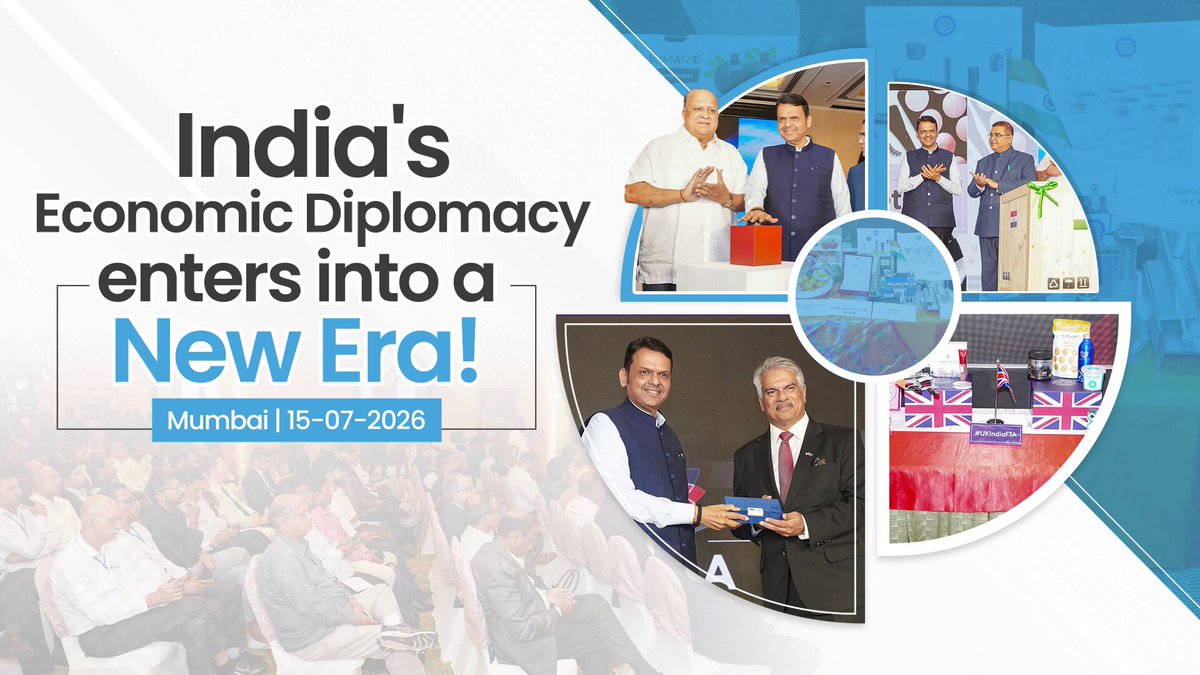
India-UK CETA: A New Wave of Global Opportunities! ๐Ÿ‡ฎ๐Ÿ‡ณ๐Ÿ‡ฌ๐Ÿ‡ง Glad to attend the ceremonial inauguration and cargo exchange, celebrating the entry into force of the India-UK Comprehensive Economic and Trade Agreement. This landmark agreement marks a new chapter in the strategic and economic partnership between India and the United Kingdom. It highlights an India that negotiates with confidence and is increasingly seen as a trusted global partner. Heartiest congratulations to Hon PM Narendra Modi Ji for his transformative leadership and to Hon Union Minister Piyush Goyal ji for his tireless efforts in making this historic agreement a reality. Under the visionary leadership of Hon PM Narendra Modi Ji, India has witnessed a defining transformation since 2014 that has transformed governance, strengthened the economy and elevated its standing in the world. The landmark trade agreements being signed by global powers with India represent another significant milestone in our nation's journey. The India-UK Comprehensive Economic and Trade Agreement is more than a trade agreement. It is an opportunity for exporters, manufacturers, MSMEs, startups, professionals, young entrepreneurs and the agriculture sector to expand their global presence, access new markets and strengthen exports. The agreement will provide new opportunities for Maharashtra in global trade, investment and exports, while enabling industries and agricultural products from the state to gain direct access to global markets. Maharashtra is ready to lead from the front in this new era of opportunity. Its strong manufacturing base, financial strength, world-class infrastructure, thriving startup ecosystem, and leadership in engineering, IT, pharmaceutical and agriculture sectors give the state a unique advantage to benefit from this partnership. The message to industry and entrepreneurs is simple, think bigger, think globally and seize the opportunities created by this landmark agreement. The India-UK CETA will become a gateway for higher exports, greater investment and stronger global partnerships. Minister Mangal Prabhat Lodha ji, Minister Jaykumar Rawal, Trade Commissioner for South Asia and the British Deputy High Commissioner for Western India Harjinder Kang and other dignitaries were present. Mangal Prabhat Lodha Jaykumar Rawal Harjinder Kang UK in Mumbai ๐Ÿ‡ฌ๐Ÿ‡ง๐Ÿ‡ฎ๐Ÿ‡ณ UK in India๐Ÿ‡ฌ๐Ÿ‡ง๐Ÿ‡ฎ๐Ÿ‡ณ #Maharashtra #IndiaUKCETA

Devendra Fadnavis

20,513 gรถrรผntรผleme โ€ข 1 ay รถnce

The historic #IndiaUKFTA was signed last week. Here are the highlights of some of the key benefits from the deal: 1โƒฃ: Indian goods gain zero-duty access on 99% of tariff lines, covering nearly 100% of trade value. $23 billion export opportunity in labour-intensive sectors unlocked for India. 2โƒฃ: MSMEs and small businesses will see a demand boom, boosting both jobs and investments. They can also now participate in the UKโ€™s government procurement. Our artisans, craftsmen, and others will emerge as key players in global value chains. 3โƒฃ: The deal will create opportunities for over $900 million of exports in the leather and footwear industries. With tariffs cut from as high as 12% to zero, there will be a big surge in exports of Indian textiles and clothing. Production in sectors like gems and jewellery, chemicals, plastics, furniture, sports goods & toy manufacturing, among others, will see a big uptick. 4โƒฃ: Big gain for our farmers with duty-free access into the $37.5 billion UK market on over 95% of our agri and processed foods tariff lines. Indiaโ€™s sensitive sectors like dairy, apples, oats & edible oils stay protected. Tariffs on 99% marine exports have been eliminated, opening up the UKโ€™s $5.4 billion marine market to our exporters and fisherfolk. 5โƒฃ: A key breakthrough is the Double Contribution Convention, which improves take-home pay for Indian workers and lowers costs for companies. 75,000 Indian workers have been exempted from the UK social security payments for 3 years. 6โƒฃ: The Indian pharma industry is poised for big gains with the agreement. Zero tariffs will give our generic medicine exports a massive impetus. With tariff cuts to zero, our engineering goods & electronics will also strengthen our foothold in the UK market.

Piyush Goyal

13,731 gรถrรผntรผleme โ€ข 1 yฤฑl รถnce

DUMB TRUMP DIDN'T EVEN REALISE .Narendra Modi JI IS 10 STEPS AHEAD OF HIM! Trump's pressure on EU to impose 100% Tariffs on Bharat ISN'T GOING TO WORK! Bharat's Exports to EU will remain INTACT by rerouting. MODI'S MASTERSTROKE: BHARAT- EFTA FTA๐Ÿ”ฅTariff Shield Against Trump! In a shrewd geopolitical maneuver, Modi Sarkar has orchestrated a masterstroke with the Trade and Economic Partnership Agreement (TEPA) signed with the European Free Trade Association (EFTA)โ€”comprising Iceland, Liechtenstein, Norway, and Switzerlandโ€”in March 2024, which took effect on October 1, 2025. Amid escalating U.S. President Donald Trump's tariff blitzโ€”including a 50% levy on Bharatiya imports and his September 2025 push for the EU to impose up to 100% duties on Bharatiya goods over Russian oil purchasesโ€”this deal fortifies Bharatiya export fortress by granting duty-free access to 99% of EFTA markets for key sectors like textiles, pharmaceuticals, and engineering goods. As non-EU nations deeply embedded in the European Economic Area (EEA) and bilateral pacts with the EU, the EFTA quartet serves as a seamless conduit, enabling Bharatiya exporters to route goods through their low-tariff hubs for re-export into the broader European single market, sidestepping potential EU barriers without violating rules of origin. This not only sustains Bharat's $100+ billion annual EU trade flow but also attracts a pledged $100 billion in EFTA investments over 15 years, fueling domestic manufacturing and job creationโ€”turning Trump's protectionist pressure into an opportunity for diversified, resilient supply chains that bolster Bharat's global trade sovereignty. Trump can keep licking his ego, Bharat will keep scaling high.

BhikuMhatre

441,026 gรถrรผntรผleme โ€ข 10 ay รถnce

Here are the major highlights from the Ministry of Commerce and Industry in the last week. 1๏ธโƒฃ The second round of Indiaโ€“New Zealand Free Trade Agreement negotiations made significant progress across key areas, including goods, services, investment, rules of origin, customs, trade facilitation, technical barriers, SPS measures, and economic cooperation. The third round is slated to be held in New Zealand in September 2025. 2๏ธโƒฃ Held a series of productive meetings with leaders from the steel, textiles, engineering, agri, food processing, and seafood sectors. Discussions focused on boosting advanced tech adoption, global competitiveness, value chain integration, and empowering MSMEs, farmers & fisherfolk, strengthening 'Make In India' and driving our rise as a resilient, Aatmanirbhar global manufacturing and export powerhouse. 3๏ธโƒฃ The Revised Guidelines for Examination of Computer-Related Inventions (CRIs), 2025, have been released to bring greater clarity, consistency, and global alignment in patent practices. They address emerging tech like AI, ML, Cloud & Quantum Computing, and Blockchain, marking a major boost for transparency and innovation in India's patent ecosystem. 4๏ธโƒฃ MoUs have been signed to boost innovation and entrepreneurship across affordable housing, healthcare, and EV/clean mobility sectors. These will support startups through mentorship, infrastructure, strategic investments, joint innovation programs, and global linkages- advancing a future-ready, self-reliant startup ecosystem.

Piyush Goyal

25,645 gรถrรผntรผleme โ€ข 1 yฤฑl รถnce

Here are the major highlights from the Ministry of Commerce and Industry in the last week. 1โƒฃ: The 10th meeting of the ASEAN-India Trade in Goods Agreement (AITIGA) Joint Committee was held in Delhi, with delegates from all 10 ASEAN member states participating. Discussions focused on advancing the ongoing review of AITIGA to improve its effectiveness, accessibility, and trade facilitation. 2โƒฃ: The 4th Meeting of the India-Singapore Joint Working Group on Trade & Investment (JWGTI) in Delhi focused on deepening trade and investment ties, improving logistics, streamlining regulations, and facilitating cross-border trade. 3โƒฃ: Inaugurated the expanded International Searching Authority building at the Intellectual Property Office, Delhi. With greater capacity, modern facilities, and cost-efficient operations, it will boost productivity, strengthen Indiaโ€™s global IP leadership, and drive R&D and innovation. 4โƒฃ: Held interactions with leaders from the pharmaceutical, chemicals and petrochemicals, renewable energy, and electrical machinery sectors. Discussed strategies to boost competitiveness, spur innovation, expand manufacturing, and create skilled jobs. 5โƒฃ: Chaired a Consultative Committee meeting on the promotion of agricultural exports, and discussed strategies to boost agri trade, further strengthen the National Programme for Organic Production & ensure continuous support to our farmers for greater exposure in the global markets. 6โƒฃ: DPIIT has signed MoUs to scale early-stage startups in mobility, clean tech, deep tech & manufacturing. The partnerships will connect industry experience with grassroots innovation by providing R&D access, mentorship, market linkages & supply chain integration, empowering innovators across India. 7โƒฃ: Fresh Halman apricots from Ladakh have made their international debut, exported for the first time to Saudi Arabia, Kuwait, and Qatar. Sourced from the high-altitude belts of Kargil, they are prized for their sweetness, rich flavour, and long shelf life.

Piyush Goyal

13,146 gรถrรผntรผleme โ€ข 1 yฤฑl รถnce

Here are some of the major highlights from the Ministry of Commerce and Industry in the last week: 1๏ธโƒฃ: We marked two years of the India-EFTA TEPA, with benefits trickling in from investments from Iceland for $30 million in the fisheries sector in Maharashtra. The agreement has created an investment pathway with a legally binding investment commitment of $100 billion over 15 years, with the potential to create 1 million direct jobs. 2๏ธโƒฃ: The National IP Awards, recognising the invaluable contributions of scientists, innovators, technocrats, MSMEs, entrepreneurs, agricultural institutes and IITs driving Indiaโ€™s innovation-led growth, were given away. Their pioneering work embodies the spirit of a confident, innovation-driven New India. 3๏ธโƒฃ: Eleven women MSME entrepreneurs were awarded the FICCI FLO National MSME Awards in recognition of their excellence. With nearly 65% of the developed markets now part of India's FTAs, Indian manufacturers have a huge opportunity to integrate into global supply chains and meet international demand. 4๏ธโƒฃ: Held a meeting with members of the Consultative Committee on Promotion of Export of Marine Products. Discussed scaling up value addition, boosting global competitiveness, enhancing infrastructure & strengthening compliance standards. 5๏ธโƒฃ: The first consignment of 25 metric tonnes of GI-tagged Joha Rice from Assam has been flagged off to the United Kingdom and Italy. Earlier, Joha rice has been exported to Vietnam and five Middle Eastern countries.

Piyush Goyal

12,075 gรถrรผntรผleme โ€ข 4 ay รถnce

๐Ÿšฉ๐ŸšฉThe NZ Govt has put up its NZ Trade and Export page to encourage NZ businesses to relocate to India. The main selling point ? - โ€˜ CHEAP LABOURโ€™. This deal will gut what is left of NZโ€™s manufacturing, and Luxon is all for it. As per the trade agreement with India NZ will facilitate $35 Billion of investment from NZ into India over 15 years. Thirty five billion. The expected exports we will earn over this time is a paltry $500 Million in extra exports a year. At the moment NZ exports a tiny $500m a year to India, National are saying this will grow to 1 billion. To put this into context, NZ exports $10 billion to Australia, and $9.5 billion to the U.S (where we endure tariffs & do not have a FTA). Is this sounding like a good deal? In the interview below Todd Mclay lets the cat out of the bag, admitting we could not get a deal on our dairy as dairy is the cornerstone of Indiaโ€™s unsophisticated economy so they will guard it zealously. Micro dairy farms throughout India are a key source of Income domestically for the masses of poor people. India wants to modernise this and commercialise it rapidly, which is why the FTA also stipulates NZ is to โ€˜share innovation (IP) and technology to modernise Indiaโ€™s dairy sectorโ€™ โ€ฆ. Do you really think they will ever let us sell dairy to India? I have a bridge for sale if you do. The median income in India in 2026 is NZD $400 a month, $100 a week. wtf are they ever going to buy off us ? Fonterra could for example open a plant there and process our value added productsโ€™. NZ has been here before, exporting raw product to overseas and buying it back in as a finished product, think forestry. In the interview he also inadvertently admits the deal cannot be changed once signed. Mclay lets it slip that โ€˜India cannot change the deal once signedโ€™ Which by deduction means neither can NZ. And it gets worse. Hipkins admits that India will more than likely enforce the $35 billion investment as India has set up an office to ensure it happens, but Hipkins is still happy to sign the deal anyway - โ€˜itโ€™s up-to businessโ€™ he says regarding the risk. And then an all time shocker, Mclay tells Hoskings that other parties will come around or theyโ€™ll get punished by 100 Nz businesses, and by โ€˜350,000 Indian voters in NZโ€™. Which is probably why Labour supports it. National and Labour are fighting over the Indian vote. Hereโ€™s the deal, anytime in 15 years if India doesnโ€™t feel like itโ€™s sucking enough life out of NZ it can kill the deal, which you can guarantee the NZ govt will then drop to their knees to offer anything to India to keep itโ€ฆ like I donโ€™t know, unlimited immigration. Luxon who literally got on his knees to pray to their god during negotiations never really understood Leverage did he? This is mental. NZTE site :

Holyhekatuiteka

12,152 gรถrรผntรผleme โ€ข 3 ay รถnce

Dear Global Pioneers, Yesterday, the Africa Community successfully hosted a GCV leaders Conference. The following is the speech by Global GCV Ambassador, Ms. Lumari. Her speech is very good, and I hope all pioneers will read and listen to the voice message. I would like to express my gratitude to Africa GCV Ambassador Mr. Oliver for the invitation and to all Africa GCV Ambassadors for their hard work on GCV education and barter. Please note that my speech is only for community leaders, so I will not make it public. Thank you. Doris Yin ๐Ÿชท๐Ÿชท๐Ÿชท ------------ Lumari's Speech on Africa GCV Leaders Conference Good morning esteemed members of the GCV African Leadership Conference, It is with great pleasure and enthusiasm that I stand before you today. I would like to acknowledge some key individuals whose dedication and leadership have been instrumental in advancing our cause. First and foremost, let us recognize Ms. Doris Yin, our esteemed Founder and Grand Global GCV Ambassador, for her unwavering commitment and inspiring leadership. A heartfelt thank you also goes to Mr. Olivier Ndatimana, Vice Chairman of the International Trade Committee, for his excellent leadership. I extend my appreciation to Ms. Nonny, our enthusiastic GCV Ambassador from Indonesia, for her remarkable contributions. Also, special recognition to Mr. Danyll Chen, Chairman of the International Trade Committee, for his pivotal role in fostering international trade partnerships. Furthermore, I commend Mr. Mazi zaOnyido, GCV Ambassador, and all the dedicated GCV ambassadors and leaders across Africa who are tirelessly contributing to our movement. Thank you all for your dedication, passion, and commitment to the GCV vision. Together, we are making a significant impact. Sending my warm regards and respect to each one of you. In our interconnected world, international trade serves as a cornerstone of economic growth, fostering collaboration and opening doors to new opportunities. The exchange of goods, services, and ideas across borders enhances the prosperity of nations and promotes innovation. Businesses can tap into new markets, consumers can access a wider array of products, and countries can leverage their comparative advantages to achieve higher efficiency and productivity. However, traditional barriers pose significant challenges to the seamless flow of commerce. For instance, regulatory differences, tariffs, and logistical hurdles can complicate international transactions. These barriers can slow down the growth of international trade and prevent businesses from fully realizing the benefits of a global marketplace. Therefore, it is crucial to work towards reducing these obstacles. For example, incorporating partial Pi payment alongside fiat can help bridge these gaps. By doing so, we can pave the way for a more connected and prosperous global economy. The concept of partial Pi payment presents a revolutionary paradigm shift. Even within the current enclosed mainnet, we can take advantage in utilizing Pi and in this manner it strengthens the foundation of our ecosystem. Take, for example, the 50% Pi payment option in Chinaโ€”a tremendous opportunity allowing us to leverage competitive advantages over traditional market practices. Imagine the impact: Businesses save significantly with a 50% Pi payment, enabling reinvestment into growth and innovation. This encourages more frequent purchases and attracts additional merchants, amplifying savings. While temporary in the enclosed mainnet phase, transitioning to the open mainnet promises 100% Pi payment. Now is the time to fortify our ecosystem. Let's collaborate because Piโ€™s success rests in our collective efforts. Each of us plays a vital role in achieving Phase 2 and fostering a robust ecosystem. The concept of partial Pi payment alongside fiat offers dual benefits. It enables businesses to harness Pi's advantages, mitigating risks, and optimizing operational efficiencies. For the GCV community in Africa, embracing partial Pi payment can unlock tremendous opportunities. It enables local businesses to participate more actively in global trade networks, promotes financial inclusion by lowering entry barriers, and fosters innovation in financial technologies across diverse sectors. Furthermore, as we navigate the complexities of international trade, it is crucial to emphasize the importance of collaboration and knowledge-sharing within the GCV community. By leveraging our collective expertise and resources, we can effectively address challenges, seize emerging opportunities, and drive sustainable growth across the continent. In conclusion, the integration of partial Pi payment and fiat in international trade represents not just a technological advancement but a transformative force for economic empowerment. Together, let us embrace this future with optimism and determination, paving the way for a more inclusive and prosperous Africa within the global economic landscape. Thank you. Lumari Global GCV Ambassador, Philippines

Doris Yin ไธœๆ–น็ดซ่Žฒ๐Ÿชท

17,691 gรถrรผntรผleme โ€ข 2 yฤฑl รถnce

The 8th China International Import Expo (CIIE) is taking place in Shanghai from November 5 to 10, bringing together over 155 countries and regions, along with 4,108 overseas exhibitors. This year, the Expo has set up a dedicated section for products from least developed countries (LDCs), featuring specialties from more than 30 nations โ€” including coffee, fruits, handicrafts, and daily chemical products. A total of 123 Belt and Road participating countries and 163 enterprises from LDCs are represented, marking year-on-year increases of 23.1% and 23.5%, respectively. These initiatives help enterprises from 53 African countries make full use of zero-tariff treatment and gain better access to the Chinese market, expanding the Expoโ€™s role from a trade fair into a gateway for shared development opportunities across the Global South. When the first CIIE opened in 2018, Chinaโ€™s total goods imports reached US$2.14 trillion. By 2024, this figure had risen to US$2.58 trillion, reflecting Chinaโ€™s unwavering commitment to high-level market opening and its role as a stable platform for global enterprises amid economic uncertainty. Notably, the CIIE has evolved into a key platform for global cooperation and innovation. The concurrent Hongqiao International Economic Forum hosts sub-forums on topics such as WTO reform, international AI standards, and supply chain resilience, contributing to global economic governance. Over the past seven years, more than 3,000 new products, technologies, and services have made their debut at the Expo โ€” including 461 innovations launched this year alone. In terms of policy support, Chinaโ€™s overall import tariff rate now averages 7.3%, while the World Bank reports a weighted average tariff of below 3%, aligning with global standards and significantly lowering market entry costs for overseas firms. At its core, the CIIEโ€™s sustained success lies in its ability to connect Chinaโ€™s evolving consumer demand with high-quality global supply, continuously injecting new vitality into global trade and cooperation.

Sinical

56,639 gรถrรผntรผleme โ€ข 9 ay รถnce

Warm greetings on Indian Foreign Service Day! Hardeep Singh Puri Sir, your journey as a diplomat and now as a key figure in India's leadership is truly inspiring. The pride and responsibility youโ€™ve carried while representing India globally, and now in shaping key policies, is commendable. Wishing you continued success in fostering international relations and driving India's growth forward. Here are some achievements of Shri Hardeep Singh Puri Sir : 1. Participation in G20 Summits: Advocated for global economic stability and cooperation. 2. Ambassador to Brazil: Enhanced bilateral relations and trade between India and Brazil. 3. Permanent Representative to the United Nations: Involved in significant negotiations on peacekeeping and global security. 4. Advocacy for Development Issues: Focused on poverty alleviation and sustainable development at the UN. 5. Promotion of India's Soft Power: Enhanced India's cultural diplomacy and global governance contributions. 6. Role in International Conferences: Contributed to discussions on peace and security at global summits. 7. Strengthening Ties with the Indian Diaspora: Fostered connections and highlighted their role as cultural ambassadors. 8. Crisis Response Initiatives: Led diplomatic responses during crises, providing humanitarian assistance. 9. Global Health Initiatives: Advocated for international cooperation in combating health issues. 10. Advancement of Global Trade Discussions: Promoted fair trade practices for developing nations. 11. Minister of Petroleum and Natural Gas: Focused on energy security and sustainable practices. 12. Implementation of PM Gati Shakti National Master Plan: Improved multimodal connectivity and infrastructure development. 13. Expansion of Pradhan Mantri Ujjwala Yojana: Provided LPG connections to below-poverty-line households. 14. Support for Electric Mobility: Advocated for electric vehicles to reduce pollution. 15. Investment in Renewable Energy Projects: Championed large-scale solar and wind projects. 16. Housing for All: Implemented PMAY (Pradhan Mantri Awas Yojana) for affordable housing. 17. Promotion of International Trade: Facilitated agreements to enhance India's energy exports. 18. Public Health Initiatives: Launched campaigns for safe and clean energy practices. 19. Global Energy Partnerships: Fostered collaborations in the energy sector for security and innovation. 20. Launch of the National Hydrogen Mission: Promoted hydrogen as a clean energy source. 21. Vande Bharat Mission: Led the repatriation of millions of stranded Indians during the pandemic. 22. COVID-19 Response: Maintained supply chains for uninterrupted fuel and energy availability. 23. Support for Startups and Innovations: Encouraged entrepreneurship in energy and aviation sectors. 24. Enhancement of Oil and Gas Exploration: Promoted self-sufficiency in energy resources. 25. Promotion of Alternate Fuels: Advocated for biogas and ethanol usage to support sustainability. 26. Revival of Air India: Played a key role in restoring the national carrierโ€™s operational efficiency. 27. Expansion of LPG Infrastructure: Improved access to clean cooking fuel in rural areas. 28. Skill Development in Aviation: Promoted initiatives to enhance workforce capabilities. 29. Enhancement of Airport Infrastructure: Upgraded airports for better passenger experience. 30. Leadership in Energy Transition Discussions: Influenced sustainable practices in global energy policies. 31. National Biofuel Policy: Promoted the use of biofuels in transportation for energy security. 32. Energy Conservation Building Code (ECBC): Improved energy efficiency in urban buildings. 33. Support for Women Empowerment Initiatives: Focused on increasing women's participation in energy sector leadership. 34. Crisis Management in Diplomacy: Ensured timely evacuation and assistance during international emergencies. 35. Engagement with Non-Aligned Movement: Reinforced India's leadership role among developing nations. 36. Role in Climate Agreements: Actively participated in climate change negotiations, including the Paris Agreement. 37. Promotion of India's Maritime Interests: Advocated for security cooperation in maritime affairs. 38. Promotion of Digital Diplomacy: Utilized technology for enhanced diplomatic outreach. 39. Collaboration with International Organizations: Worked with bodies like the International Energy Agency (IEA) for best practices. 40. Crisis Response During Natural Disasters: Coordinated India's humanitarian aid efforts in response to global crises. 41. Global Leadership in Energy Efficiency: Advocated for international collaboration on energy conservation. 42. Public-Private Partnerships in Energy: Encouraged collaborations to enhance energy infrastructure and investment. 43. Support for Renewable Energy Initiatives: Championed policies for sustainable energy generation and usage. 44. Advancement of Smart City Projects: Promoted urban development with intelligent transport systems. 45. Initiatives for Rural Electrification: Focused on extending electricity access to rural communities. 46. International Recognition: Gained accolades for contributions to energy policy and diplomacy. 47. Leadership in Peacekeeping Operations: Advocated for India's role in UN peacekeeping missions. 48. Participation in International Security Dialogues: Engaged in discussions on global security challenges. 49. Role in Counter-Terrorism Efforts: Strengthened India's position in international counter-terrorism discussions. 50. Engagement with Global Energy Forums: Influenced international energy discussions and policies. 51. Smart City Mission: Played a crucial role in the launch and implementation of the Smart City Mission, focusing on urban innovation. 52. Attracting Foreign Investment: Worked to bring in foreign investments in both the petroleum and aviation sectors. 53. Advocacy for Sustainable Urban Planning: Promoted policies to ensure sustainable urban development and housing. 54. Facilitation of International Cooperation in Urban Development: Engaged with global partners to share best practices in urban planning. 55. Launch of Housing Initiatives for Urban Poor: Developed schemes specifically targeting housing for low-income families. 56. Promotion of Energy-efficient Technologies: Advocated for the adoption of cleaner technologies in the energy sector. 57. Support for Womenโ€™s Health Initiatives: Focused on energy access and its impact on womenโ€™s health and well-being. 58. Enhancement of Indiaโ€™s Energy Diplomacy: Strengthened relationships with energy-producing nations. 59. Promotion of Research and Development in Energy: Encouraged innovation in energy technology and research. 60. Implementation of Smart Grids: Promoted the development of smart grids for efficient energy distribution. 61. Role in Enhancing Regional Cooperation: Advocated for regional energy cooperation in South Asia. 62. Promoting Indiaโ€™s Energy Security Agenda: Focused on securing Indiaโ€™s energy needs through diverse sources. 63. Collaboration with Industry Leaders: Worked with industry stakeholders to promote sustainable practices. 64. Global Advocacy for Clean Energy Solutions: Represented Indiaโ€™s interests in global clean energy discussions. 65. Promotion of Corporate Responsibility in Energy: Encouraged corporations to adopt sustainable energy practices. 66. Leadership in Urban Mobility Initiatives: Promoted policies to improve public transport and reduce urban congestion. 67. Development of Integrated Transport Systems: Advocated for a multimodal approach to transportation planning. 68. Promotion of Decentralized Energy Solutions: Supported renewable energy projects at the community level. 69. Encouragement of Local Manufacturing in Energy Sector: Advocated for indigenous production of energy technologies. 70. Promotion of Innovative Financing Mechanisms: Supported new financing models for energy projects. 71. Enhancement of Air Safety Standards: Focused on improving safety measures in civil aviation. 72. Promotion of Cargo and Logistics Services: Advocated for the growth of air cargo services to boost trade. 73. Support for Regional Air Connectivity: Strengthened initiatives for connecting underserved regions. 74. Leadership in Aviation Policy Reforms: Worked towards comprehensive reforms in the aviation sector. 75. Development of Aviation Infrastructure: Facilitated investments in airports and aviation facilities. 76. Community Engagement in Energy Projects: Promoted community involvement in renewable energy projects. 77. Support for Energy Access Initiatives: Advocated for projects that increase energy access for marginalized communities. 78. Promoting Sustainable Agriculture Practices: Focused on the role of clean energy in enhancing agricultural productivity. 79. Engagement with Youth on Energy Issues: Promoted awareness among youth regarding energy conservation and sustainability. 80. Support for Skill Development Programs: Encouraged training programs in renewable energy technologies. 81. Advocacy for Climate Action: Continued efforts in addressing climate change and promoting sustainable practices. 82. Promotion of India as an Energy Hub: Positioned India as a central player in the global energy market. 83. Leadership in Global Energy Transitions: Influenced discussions on transitioning to renewable energy sources. 84. Engagement with Multilateral Organizations: Strengthened Indiaโ€™s position in international organizations related to energy. 85. Commitment to National Development Goals: Aligned energy policies with national development objectives. 86. Promotion of Environmental Sustainability: Advocated for policies that balance development with environmental conservation. 87. Support for Technology Transfer: Encouraged collaboration for the transfer of clean technologies to India. 88. Participation in International Forums on Energy: Actively engaged in global dialogues on energy security and sustainability. 89. Role in Disaster Management Initiatives: Contributed to policies that integrate energy management in disaster response. 90. Implementation of Smart Energy Solutions: Advocated for the adoption of smart meters and energy-efficient appliances to enhance energy management. 91. Promotion of Clean Cooking Solutions: Launched initiatives to provide access to clean cooking fuels to reduce health hazards in rural areas. 92. Strengthening of Regulatory Frameworks: Worked on reforms to streamline regulations in the oil and gas sector, enhancing transparency and efficiency. 93. International Collaborations for Renewable Energy: Established partnerships with countries for joint research and development in renewable energy technologies. 94. Advocacy for Energy Efficiency Labels: Promoted the labeling of appliances to encourage consumers to choose energy-efficient products. 95. Engagement in International Climate Finance Discussions: Represented India in dialogues aimed at securing funding for climate change mitigation projects. 96. Promotion of Urban Sustainability Initiatives: Advocated for integrated urban development strategies that focus on sustainability and livability. 97. Support for the Production of Biofuels: Encouraged initiatives to enhance the domestic production of biofuels to achieve energy security. 98. Advancement of Womenโ€™s Leadership in Energy: Launched programs to promote women's leadership in the energy 99. Fostering Innovation in Energy Startups: Supported initiatives aimed at nurturing startups in the energy sector through mentorship and funding. 100. Commitment to Indiaโ€™s Energy Independence: Continually worked towards policies that enhance Indiaโ€™s energy independence and reduce reliance on imports and 100+ more. Narendra Modi Amit Shah Office of Hardeep Singh Puri Lakshmi M Puri Ministry of Petroleum and Natural Gas #MoPNG Bharat Petroleum Hindustan Petroleum Corporation Limited GAIL (India) Limited Indian Foreign Service Association BJP เค—เฅƒเคนเคฎเค‚เคคเฅเคฐเฅ€ เค•เคพเคฐเฅเคฏเคพเคฒเคฏ, HMO India PMO India rasaal dwivedi BJP Delhi Manohar Lal Parshottam Rupala Indian Oil Corp Ltd ChairmanIOC Indian Diplomacy Ministry of Housing and Urban Affairs

Rajashekhar Masna

50,775 gรถrรผntรผleme โ€ข 1 yฤฑl รถnce

AfDB PRESIDENCY: ZAMBIA'S DR. SAMUEL MAIMBO OFFICIALLY LAUNCHES CANDIDACY Dr. Samuel Maimbo has been endorsed by both the Southern African Development Community (SADC) and the Common Market for Eastern and Southern Africa (COMESA). LUSAKA, Zambia, Jan. 31, 2025 /PRNewswire/ -- Development finance expert Dr. Samuel Maimbo today announced his candidacy for President of the African Development Bank (AfDB), presenting a transformative vision for Africa's economic future. "Africa stands at a critical juncture," Dr. Maimbo declared. "We need to get one billion people to work as quickly as possible by strategically supporting the industries that will improve livelihoods and ignite prosperity on our continent. The AfDB needs bold, results-driven leadership that is unafraid of making the hard decisions required to get the job done." With a 30-year career characterized by delivering real-world impact โ€“ record-breaking fundraising, translating bold ideas into practical implementation plans, and enhancing institutional efficiency โ€“ Dr. Maimbo represents an exciting way forward for the AfDB. His presidential platform focuses on achieving middle-income status for Africa through an AfDB which is laser focused on pace, scale and effectiveness of delivery. "Africa needs significantly higher rates of growth to successfully navigate today's development challenges and capture tomorrow's opportunities," said Dr. Maimbo. "I'm ready on day one to support governments in reaching their goals. It's time to stop talking about Africa's potential and start realizing it." Dr. Maimbo's core priorities include: Trade and Regional Integration: Currently at just 3% of global trade, Africa has immense growth potential through the AfCFTA's unified market of 1.4 billion people. Financial Resources: Strengthening markets, boosting savings, and attracting diverse investments can close Africa's financing gap. Agricultural Transformation: With 60% of the world's uncultivated arable land, Africa can become a global agricultural powerhouse. Infrastructure Development: Modernizing infrastructure is crucial for competitiveness and growth. Energy Access: Accelerating energy access while promoting sustainability will power Africa's long-term economic advancement. Climate Action: Despite contributing <4% to global emissions, Africa faces disproportionate climate impacts. Scaling up investments in resilience and embracing new technologies will safeguard Africa. Creative Industries: A powerful driver of youth employment and cultural exports, Africa's creative industries can amplify Africa's global impact. Inclusivity: Young people, women, and underserved communities across Africa must help design effective strategies. Born and raised in Lusaka, Dr. Maimbo has worked in development finance across Africa and the globe, most recently serving as the Vice President of Budget, Performance Review, and Strategic Planning at the World Bank. As Chief of Staff to successive World Bank Presidents, he played an instrumental role in advancing the institution's mission and strategy at the highest international levels. His stewardship in resource mobilization secured an unprecedented $93 billion financing package under the International Development Association replenishment, with over 70% of the organization's global commitments directed toward Africa. To learn more, visit

SADC Secretariat

11,635 gรถrรผntรผleme โ€ข 1 yฤฑl รถnce

The global oil market is changing. Events surrounding Venezuela and Iran show that the global energy market is entering a period of major restructuring. The main difference is that the previous oil market was more unified, predictable, and transparent: prices were mainly formed around common benchmarks, trade went through understandable routes, and the rules of the game were set by a relatively stable combination of exchanges, traders, and producers. The new format will be more fragmented, politicized, and multi-layered: part of the oil goes through sanctioned and 'shadow' channels, logistics and insurance are becoming instruments of pressure, maritime chokepoints are regaining strategic importance, and market influence is increasingly determined not only by production, but also by control over finances, sanctions, routes, and access to major buyers, primarily China and India. The current conflicts are accelerating changes that have already been underway for some time. One of the most important changes concerns the so-called oil benchmarks - the main reference prices. For a long time, Brent, which is primarily associated with the UK and London's financial infrastructure, has been the main benchmark for a large part of the global market. However, the American WTI, which is traded through the US, NYMEX/CME, and is based on huge American production and exports, is becoming increasingly important. This means that the American factor in global pricing has become stronger. Today, we can speak about a gradual convergence between Brent and WTI. The US is strengthening its position not only because it produces a lot, but also because its oil, exchanges, financial system, and logistics are increasingly influencing the global market. The UK retains an important role through Brent, London, as an insurance center, and its broader maritime infrastructure. Another important trend is sanctions fragmentation. Sanctions against Russia, Iran, and Venezuela have not completely removed their oil from the market. But they have created a parallel, less transparent trading segment. There are more intermediaries, complex routes, discounts, and opacity. As a result, the global market formally remains unified, but in practice it is increasingly divided into separate segments. In this situation, China and India gain additional opportunities. They can buy cheaper oil and strengthen their role as key buyers. For China, this is also a chance to gradually develop its own trade and pricing mechanisms. But it is too early to say that China is already replacing the old global system. For Russia, this situation has a dual effect. In the short term, it may benefit if some Iranian or Venezuelan oil temporarily disappears from the market. Then demand for Russian oil will increase, and discounts may decrease. But in the long term, this situation is risky for Russia. Excessive dependence on a narrow circle of buyers, sanctions restrictions, and general market instability create many vulnerabilities. The main conclusion is that today, the struggle is not only for oil itself but also for the rules of the game. Whoever controls routes, exchanges, insurance, logistics, sanctions infrastructure, and pricing mechanisms gains increasing influence. And here, it is important to understand that this control is not concentrated in one place. The US and the UK have the greatest influence on pricing rules, finance, insurance, and sanctions. Saudi Arabia, the UAE, Iraq, and Kuwait remain critical to the physical market balance. Iran and Oman are important because of the Strait of Hormuz. Egypt is important because of the Suez Canal and SUMED, and Yemen because of the Bab el-Mandeb Strait. Malaysia, Indonesia, and Singapore are important because of the Strait of Malacca. And China and India are increasingly influencing the direction of flows as the main buyers.

Anton Gerashchenko

25,703 gรถrรผntรผleme โ€ข 5 ay รถnce