Loading video...

Video Failed to Load

Go Home

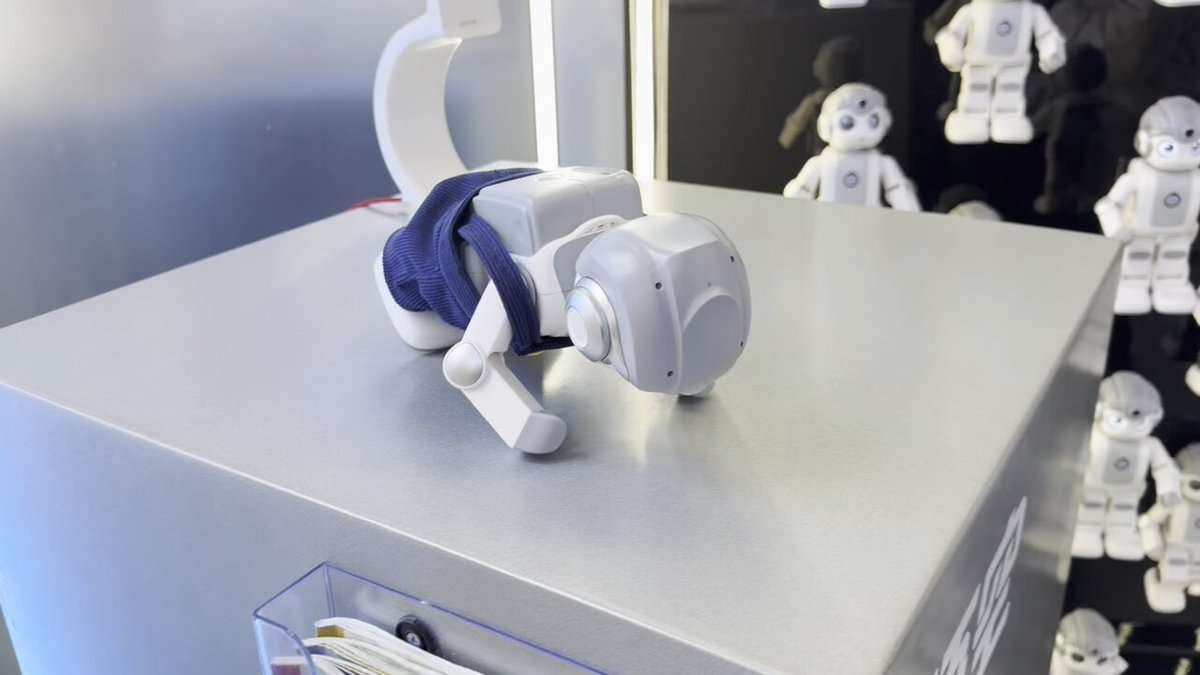
๐—ฌ๐—ผ๐˜‚ ๐—ฑ๐—ผ๐—ป'๐˜ ๐—ป๐—ฒ๐—ฒ๐—ฑ ๐—ฎ $๐Ÿฑ๐Ÿฌ,๐Ÿฌ๐Ÿฌ๐Ÿฌ ๐—ฟ๐—ฒ๐˜€๐—ฒ๐—ฎ๐—ฟ๐—ฐ๐—ต ๐—ฟ๐—ผ๐—ฏ๐—ผ๐˜ ๐˜๐—ผ ๐˜๐—ฟ๐—ฎ๐—ถ๐—ป ๐—”๐—œ ๐—ฝ๐—ผ๐—น๐—ถ๐—ฐ๐—ถ๐—ฒ๐˜€. Our ML team is integrating the Elephant Robotics - Robotic Arms mechArm 270 Pi with the Neuracore platform. The biggest barrier to learning robot learning isn't talent or ideas, it's access to expensive hardware. We've already open sourced...

21,658 views โ€ข 6 months ago โ€ขvia X (Twitter)

0 Comments

No comments available

Comments from the original post will appear here

Related Videos

As a newly appointed ๐—”๐˜€๐˜€๐—ถ๐˜€๐˜๐—ฎ๐—ป๐˜ ๐—ฃ๐—ฟ๐—ผ๐—ณ๐—ฒ๐˜€๐˜€๐—ผ๐—ฟ at Imperial College London, I'm thrilled to announce the ๐—ฆ๐—ฎ๐—ณ๐—ฒ ๐—ช๐—ต๐—ผ๐—น๐—ฒ-๐—ฏ๐—ผ๐—ฑ๐˜† ๐—œ๐—ป๐˜๐—ฒ๐—น๐—น๐—ถ๐—ด๐—ฒ๐—ป๐˜ ๐—ฅ๐—ผ๐—ฏ๐—ผ๐˜๐—ถ๐—ฐ๐˜€ ๐—Ÿ๐—ฎ๐—ฏ (๐—ฆ๐—ช๐—œ๐—ฅ๐—Ÿ) at ๐—œ๐—บ๐—ฝ๐—ฒ๐—ฟ๐—ถ๐—ฎ๐—น ๐—–๐—ผ๐—น๐—น๐—ฒ๐—ด๐—ฒ ๐—Ÿ๐—ผ๐—ป๐—ฑ๐—ผ๐—ป. ๐—ฆ๐—ฎ๐—ณ๐—ฒ ๐—ช๐—ต๐—ผ๐—น๐—ฒ-๐—ฏ๐—ผ๐—ฑ๐˜† ๐—œ๐—ป๐˜๐—ฒ๐—น๐—น๐—ถ๐—ด๐—ฒ๐—ป๐˜ ๐—ฅ๐—ผ๐—ฏ๐—ผ๐˜๐—ถ๐—ฐ๐˜€ ๐—Ÿ๐—ฎ๐—ฏ (๐—ฆ๐—ช๐—œ๐—ฅ๐—Ÿ) ( is a new research lab focused on the intersection of safety and intelligence in next-generation robotics. We're hiring exceptional PhD students who are passionate about pushing the boundaries of robot learning. ๐—ช๐—ต๐—ฎ๐˜ ๐—บ๐—ฎ๐—ธ๐—ฒ๐˜€ ๐—ฆ๐—ช๐—œ๐—ฅ๐—Ÿ ๐˜‚๐—ป๐—ถ๐—พ๐˜‚๐—ฒ? We operate at the exciting convergence of: โ€ข Online & offline reinforcement learning โ€ข Imitation learning & human demonstrations โ€ข Sample-efficient learning methods โ€ข Whole-body and soft robotics systems We're ๐—น๐—ผ๐—ผ๐—ธ๐—ถ๐—ป๐—ด ๐—ณ๐—ผ๐—ฟ ๐—ฝ๐—ฟ๐—ผ๐˜€๐—ฝ๐—ฒ๐—ฐ๐˜๐—ถ๐˜ƒ๐—ฒ ๐—ฃ๐—ต๐—— ๐˜€๐˜๐˜‚๐—ฑ๐—ฒ๐—ป๐˜๐˜€ interested in: โ€ข Developing safe exploration algorithms for robotic systems โ€ข Creating sample-efficient learning methods that minimize real-world trials โ€ข Building foundation models for robotics with safety guarantees โ€ข Advancing soft robotics and compliant human-robot interaction โ€ข Bridging theory and practice in embodied AI Why now? As robots become more capable and work closer with humans, we need systems that are both intelligent enough to handle complex tasks ๐—”๐—ก๐—— safe enough for real-world deployment. Traditional approaches treat safety and intelligence as competing priorities, we believe they're synergistic. If you're a motivated researcher who wants to develop the theoretical foundations and practical algorithms for tomorrow's safe, intelligent robots, I'd love to hear from you. Want to join? Apply via

Stephen James

16,605 views โ€ข 10 months ago

Robora Sim: A PyBullet-Powered Environment for Learning Robotic Physical Intelligence We are currently building our Robora simulation environment setup for our sim based learning, leveraging PyBullet, an industry-standard physics engine widely used in AI-driven robotics research and development. The environment is optimized with GPU-accelerated learning algorithms, enabling high-speed imitation learning and reinforcement learning within a safe and controlled virtual setup before shipping out to real world. This simulation platform allows our models to learn, adapt, and generalize across different robot morphologies, terrain types and task objectives - all before deployment to the real world. At it's core, the system combines a VLA-powered high-level planner with low-level motion control algorithms, working cohesively to produce emergent, physically intelligent behaviors. This synergy between simulation, learning, and real-world transfer marks a major step forward in our pursuit of adaptive and intelligent robotic systems. Through advanced domain randomization and synthetic data generation, the Robora Simulation Environment ensures that policies trained in simulation transfer effectively to real-world robots, minimizing the sim-to-real gap. Moreover, users will be able to test and integrate their own hardware kits within selected simulation environments in the Robora Dapp, ensuring seamless compatibility and safer real-world implementation.

Robora

23,489 views โ€ข 9 months ago

๐Ÿšจ BREAKING: NVIDIA just announced the Isaac GR00T Reference Humanoid Robot. The first fully open humanoid robot reference design built on Jetson Thor, and it's going straight to the world's top research institutions. This is Jensen Huang's bet on open physical AI infrastructure. The hardware stack is serious: โ†’ Unitree H2 Plus chassis, 6 feet tall, 150 pounds, 31 degrees of freedom โ†’ Sharpa Wave tactile five-finger hands, 22 degrees of freedom, bringing total to 75 across the full body โ†’ NVIDIA Jetson AGX Thor onboard compute, 2,070 FP4 teraflops of AI performance, 128GB unified memory โ†’ Multi-view sensing, stereo head camera, wrist cameras, IMU Alongside this announcement, Unitree also introduced the H2 Plus as a standalone product, a frontier humanoid combining Unitree's own body, Sharpa's five-finger hands and NVIDIA Robotics Jetson Thor compute into one fully integrated research platform. The full Isaac GR00T software stack ships with it, teleoperation for data capture, open foundation models, Isaac Sim for training, Isaac Lab for evaluation, and accelerated ROS middleware for deployment. The complete loop from data to real-world robot in one unified platform. ETH Zรผrich, Stanford Robotics Center, UC San Diego and Ai2 are already on board as launch research partners. NVIDIA Robotics did to AI what it's now doing to robotics, build the platform, open the ecosystem, let the world build on top of it. Whoever owns the infrastructure layer wins. NVIDIA knows this better than anyone. ๐Ÿ‘€ Read more here: ~~ โ™ป๏ธ Join the weekly robotics newsletter, and never miss any news โ†’

Lukas Ziegler

16,062 views โ€ข 2 months ago

I spent a month in Shenzhen visiting factories and robotics companies, and the contrast with the U.S. was striking. While Figure and Boston Dynamics hide their humanoids behind closed doors, Chinese companies have massive showrooms open to the public. But what really stood out wasn't just the transparency, it was how good they are at selling. Take UBTech: they've already sold 1,200 humanoid units at $200k each to factories. And here's the kicker, these robots aren't even that useful yet. They can only pick up and drop boxes at 1/10th the speed of a human, and factories still need to hire system integrators to train them for specific tasks. My theory is that these factories are terrified of getting left behind in the robotics/AI wave. They're investing in new tech not because it's ready, but because they can't afford to wait. The second surprise was the breadth of their robotics portfolio. These companies aren't just building humanoids, they're deploying service robots everywhere: restaurants, hotels, apartments. Consumer robots are cleaning houses, pools, pet waste, dishes. They're covering the entire spectrum. But the education piece shocked me most. I picked up what I thought was a high school or college robotics textbook, it was for primary school. The government mandated AI and robotics education starting in elementary school. Almost every single school in China now has AI and robotics curriculum, complete with education robots so kids can learn by building. They're creating a generation that grows up fluent in robotics and AI. China owns the supply chain and the hardware stack. But here's what I think people are missing: the race isn't just about who can build robots faster or cheaper. The U.S. advantage has always been in the layer between hardware and human, the interaction design, the software intelligence, the intuitive interfaces that make complex technology feel natural. China is building the physical infrastructure, but they're also learning fast. Every deployed service robot, every classroom full of kids building with education kits, every factory running humanoids, that's all data collection at scale. The window for the U.S. to establish its wedge is narrowing. It's not enough to be better at AI or software anymore. We need to be building the integration layer, the intelligence that makes physical AI actually useful, not just impressive in a showroom. Because right now, China isn't just manufacturing robots. They're manufacturing a robotics-native culture, and that might be the most defensible moat of all.

Miyu Horiuchi

90,718 views โ€ข 6 months ago

Something big is happening in robotics - and itโ€™s hiding in plain sight. This post is not about dancing robots but in the data that powers them. Open robotics datasets have exploded this year, turning the field into a more scalable and collaborative ecosystem. In just two years, Hugging Face datasets grew from 11k to over 600k - and robotics is by far the fastest-growing segment. We went from 1k robotics datasets in 2024 to 27k in 2025! For comparison, text generation, the second-largest category, has only around 5k datasets in 2025. That gap is massive. Open datasets are important because robotics lives and dies by real-world robot data - video, actions, sensors, failures. By making this data easy to upload, reuse, and benchmark, researchers, startups, and large players are now releasing real-robot datasets that would have stayed locked inside labs just a few years ago. Major contributors include NVIDIA, LeRobot initiative, and a rapidly growing maker community. This surge is also enabled by cheaper video storage, better tooling, and an open-source AI culture now spilling into the physical world. And it really matters: open robotics data dramatically lowers entry barriers, accelerates learning-by-doing, and speeds up progress toward generalist and humanoid robots. Robotics wonโ€™t scale through hardware alone - but to a large extent through shared data. Viz below from AI World - link to the story and more viz/filters in comment.

Pierre-Alexandre Balland

186,017 views โ€ข 7 months ago

A Letter to Our Community: The Road Ahead for Robotics To our Community and Partners, As we step into 2026, our mission at Axis is clearer than ever: Constructing the definitive End-to-End Scaling Layer for Robotics. Our goal is to accelerate the transfer of diverse human intelligence into Robotics General Intelligence (RGI). By owning the critical path of intelligence creation, we are turning the physical limitations of robotics into a scalable, software-driven future. Here is our strategic outlook and roadmap for the year ahead. The Core Thesis: Simulation is the Only Way Out The path to RGI is currently blocked by Data Scarcity, Generalization Fragility, and Hardware Fragmentation. At Axis, we believe Simulation is the only way out. Our Simulation Data Platform and Data Augmentation Engine transform raw data into "Synthetic Gold". Backed by academic milestones like Roboverse, Skill Blending, and GraspVLA, we have proven that pure simulation can achieve the generalization required for the real world. We donโ€™t just collect data; we architect it. The Engine: Why Crypto? We believe RGI should come from all, not a few. Crypto is not just a feature; it is the primitive that powers our entire ecosystem flywheel: - Incentive Mechanism: Democratizing contribution and rewarding the trainers and developers. - Assetization: Turning proprietary data and refined models into liquid, ownable assets. - Verifiable Workflow: We are opening the "Black Box" of AI. By bringing total transparency to the Task Generation โ†’ Data Collection โ†’ Model Training pipeline, we ensure every byte of intelligence is verifiable, traceable, and secure. 2026 Strategic Deliverables This year, we are committed to delivering three foundational pillars: - The World's Largest Training Dataset for Robots: A robot training setโ€”diverse, high-quality interaction data at an unprecedented scale. - A Robotics Foundation Model: A universal robotic brain trained on our pure simulation and synthetic data, capable of robust cross-embodiment transfer and open-world adaptability. - Evolvable Robot Hardware: Robots deployed with Axis models that autonomously evolve through continuous interaction, turning every deployment into a self-improving node within our RGI network. The Ultimate Vision We are building more than models; we are architecting the Distributed Machine Economy. A future where every dataset, model, and robotic embodiment is a verifiable asset in a global, autonomous network. Thank you for building the future of intelligence with usโœŒ๏ธ๐Ÿ“ท

Axis Robotics

27,858 views โ€ข 7 months ago

๐—ฅ๐—ผ๐—ฏ๐—ผ๐˜๐˜€ ๐—ฑ๐—ผ๐—ปโ€™๐˜ ๐—ป๐—ฒ๐—ฒ๐—ฑ ๐—บ๐—ผ๐—ฟ๐—ฒ ๐—ฑ๐—ฒ๐—บ๐—ผ๐—ป๐˜€๐˜๐—ฟ๐—ฎ๐˜๐—ถ๐—ผ๐—ป๐˜€. ๐—ง๐—ต๐—ฒ๐˜† ๐—ป๐—ฒ๐—ฒ๐—ฑ ๐˜๐—ผ ๐—น๐—ฒ๐—ฎ๐—ฟ๐—ป ๐—ณ๐—ฟ๐—ผ๐—บ ๐—ณ๐—ฎ๐—ถ๐—น๐˜‚๐—ฟ๐—ฒ โ€” ๐—ฎ๐—ณ๐˜๐—ฒ๐—ฟ ๐˜„๐—ฎ๐˜๐—ฐ๐—ต๐—ถ๐—ป๐—ด ๐—ต๐˜‚๐—บ๐—ฎ๐—ป๐˜€. Most robot learning systems assume failure is the end of learning. In our new work, we study whether robots can improve after deployment by learning from their own failures, without any human intervention, teleoperation, or corrective labels. The key idea is simple: human videos contain structure about how the world works. We use them to learn cross-embodiment representations of action, dynamics, and value, enabling a shared predictive space between human behavior and robot experience. This allows a new learning loop: ๐Ÿ‘‰ pretrain on human videos ๐Ÿ‘‰ deploy robot policy ๐Ÿ‘‰ observe failures ๐Ÿ‘‰ reinterpret failures using human priors ๐Ÿ‘‰ improve autonomously We evaluate this across 7 real-world manipulation tasks, showing: ๐Ÿ“ˆ 40% โ†’ 81% success rate ๐Ÿ† Strong improvements over ฯ€0.6 RECAP and RISE โœ”๏ธ Zero human intervention during post-deployment improvement ๐Ÿงฌ Generalizes across robot embodiments and policy backbones A key finding is that explicit failure repair significantly outperforms failure reweighting, yielding substantially larger gains under identical data conditions (+25 pts vs +5 pts on the same ฯ€0.5 base policy). Overall, the results suggest a shift in how we think about robot learning: Human videos are not only for pretraining policies. They can provide the structure needed for continual self-improvement after deployment. ๐Ÿ“„ Paper: ๐ŸŒ Project: I am grateful for working with the fantastic leads Hanzhi Chen and Anran Zhang, and our collaborators Simon Schaefer, Kejia Chen, Shi Chen, Daniel Cremers. Special thanks to Stefan Leutenegger for co-advising this project with me. ETH Zรผrich TU Mรผnchen Microsoft Check out Hanzhi's ๐Ÿงต for more details

Oier Mees

12,277 views โ€ข 1 month ago