NASA Earth
@NASAEarth • 3,721,124 subscribers
NASA’s favorite (habitable) planet. 🌎💚 Studying Earth from ground to orbit.
Shorts





Videos

New record🥇 The Artemis II astronauts are now farther from Earth than humans have ever been! At 1:57 p.m. EDT, they broke the record set by Apollo 13 in 1970. Their journey around the far side of the Moon today will take them a maximum distance of 252,752 miles from Earth.
NASA Earth4,418,819 views • 6 months ago


NASA can see penguin poop from space. Also, it’s pink. 💩 The exact shade can tell scientists a lot about Adélie penguins and their Antarctic environment. The results come from a study of over 100 penguin sites and about 30 years’ worth of @nasa @usgs Landsat satellite images.
NASA Earth36,493 views • 24 days ago

Farming information from space 🧑🌾🛰️ The @nasa @usgs Landsat and European Space Agency Sentinel-2 satellites can ‘see’ more than human eyes can. Combining near-infrared and visible light data allows us to monitor where crops are growing and how healthy the plants are.
NASA Earth60,209 views • 2 months ago

For the second consecutive year, winter sea ice in the Arctic reached a level that matches the lowest peak observed since satellite monitoring began in 1979. On March 15, Arctic sea ice extent reached 5.52 million square miles, NASA and National Snow and Ice Data Center report.
NASA Earth127,928 views • 7 months ago

To study sea ice thickness, more than one view can help. NASA scientists spent two weeks flying above the Arctic with cutting-edge sensors aboard. When combined with satellite and on-the-ground measurements, the data helps us better understand how the region is changing.
NASA Earth66,808 views • 3 months ago


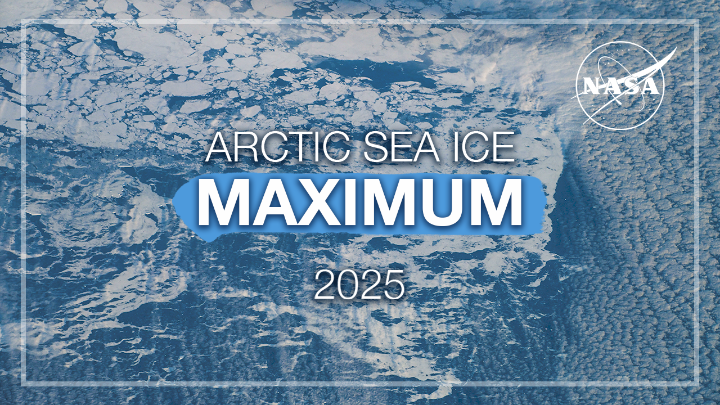
Sea ice update 🌊🧊 Global sea ice hit a record low this winter, NASA and National Snow and Ice Data Center report. In the Arctic, winter sea ice was the lowest it’s ever been at its annual peak this year. The Antarctic sea ice minimum was also the second-lowest on record. More:
NASA Earth206,960 views • 1 year ago

NASA’s Artemis program has its eyes on the Moon—but so does Landsat! 🌕 Once a month, the Landsat satellites turn to look at the Moon instead of Earth. Observing the Moon helps calibrate the satellites’ instruments, allowing Landsat to consistently and reliably study our planet.
NASA Earth65,610 views • 5 months ago

Thirsty grapes? 🍇 The NASA/USGS Landsat can spot them from space! Through the research project, GRAPEX, scientists used Landsat data to estimate crop water use. This led to a free tool called OpenET, which helps farmers across the U.S. use water more efficiently.
NASA Earth33,546 views • 2 months ago


The 2023 Canadian forest fires released about 640 million metric tons of carbon, according to a NASA study. That’s comparable to the annual fossil fuel emissions of a large industrialized nation. The fires were driven by Canada’s warmest and driest conditions in decades.
NASA Earth197,742 views • 2 years ago