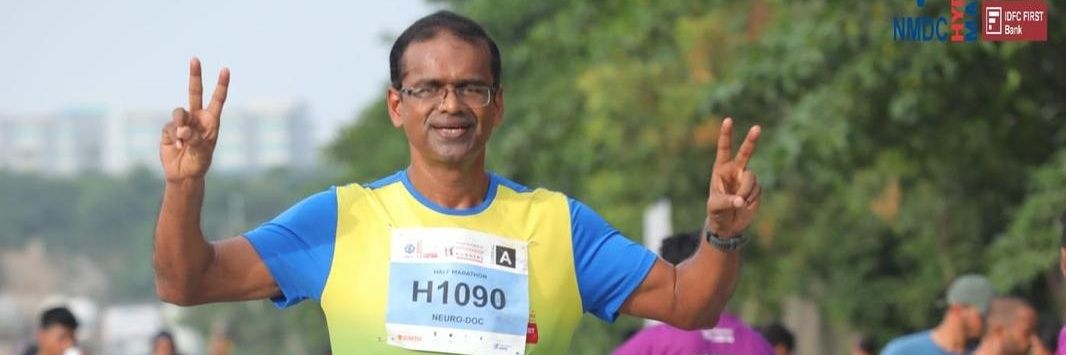

Dr Sudhir Kumar MD DM
@hyderabaddoctor • 110,647 subscribers
Neurologist, Apollo Hospitals, Hyderabad/ Running, Fitness, Health/ On a mission to prevent people from becoming patients/ Online consultation: Apollo 24/7 app
Shorts


Videos

14 years back, when I had some savings, I had two options: 1. My senior colleagues (popular neurologists in Chennai and Hyderabad) advised me to invest in own private clinic, which would increase the number of patients and thus revenue. 2. My wish: To own a farm, where we would grow fruits and vegetables; and can spend some time during weekends. I chose the second option. 14 years later, I am happy with my decision. (1/4)
Dr Sudhir Kumar MD DM166,998 次观看 • 4 个月前

Brain shrinkage starts at 40. Brain volume reduces by 5% every decade after the age of 40, and at a much faster rate after 70. Various strategies such as ensuring adequate sleep, minimizing stress, meditation, regular physical activity, engaging in cognitively-stimulating activities and consuming healthy foods can slow down the age-related Brain volume reduction.
Dr Sudhir Kumar MD DM418,594 次观看 • 2 年前


Important tips to reduce Stroke Risk: 1. Maintain HbA1C 50 3. Maintain TG:HDL ratio<2.5 4. Maintain homocysteine <15 5. Maintain hs CRP<2 6. Maintain normal body weight and waist circumference, 7. Maintain BP<130/80 8. Maintain a lower resting heart rate, 9. Sleep for 7-9 hours, 10. Avoid overworking, 11. Manage stress, 12. Engage in optimum physical activity (300 min of light or 150 min of moderate-vigorous physical activity per week), 13. Strength training: 2-3 sessions per week, 14. Healthy diet, 15. Reduce consumption of sweets, packaged fruit juices, sugary drinks, and ultraprocessed packaged foods, 16. Avoid smoking, 17. Abstain from alcohol. #stroke #strokeprevention #strokeawareness
Dr Sudhir Kumar MD DM185,394 次观看 • 1 年前


Teaching Video for junior doctors Analyze the gait of this 60-year old man; also observe his hands. He has had these symptoms for the past one year. He has no clinical evidence of supranuclear gaze palsy or backward falls. He also has no bladder or bowel symptoms. 1. Describe your findings. 2. What is the likely diagnosis? #medtwitter #neurotwitter
Dr Sudhir Kumar MD DM49,694 次观看 • 5 个月前

Clinical Video for discussion 🔸60-year old lady presented with shivering (tremors) of both hands, predominantly affecting the left hand, for 10 years. 🔸There is no history of slowness of movements of rigidity. 🔸She is a known hypertensive, currently taking metoprolol for the same. 1. Describe the clinical findings. 2. What is the likely diagnosis? #MedTwitter #NeuroTwitter
Dr Sudhir Kumar MD DM33,266 次观看 • 4 个月前

Mr. Annamalai is a great politician, however, his claims suggesting that 24-hour or 7-day fasting can "kill all cancer cells" are scientifically inaccurate and potentially harmful to patients. 1. The Warburg Effect: It is true that many cancer cells consume more glucose than normal cells. However, they are highly adaptable. Simply "starving" them through fasting does not consistently kill them, as they can often find alternative ways to survive. 2. Fasting is not a Standalone Cure: While research (like that of Dr. Valter Longo) explores how fasting-mimicking diets can assist chemotherapy by protecting healthy cells, it is not a replacement for medical treatment. A 24-hour fast is not a "kill switch" for cancer. 3. The Danger of Misinformation: Claiming a 7-day fast can eliminate "all cancer" is a dangerous overreach. For many patients, prolonged fasting can lead to severe muscle loss (cachexia) and weakened immunity, which are leading causes of death in cancer patients. Conclusion: Nutrition plays a vital role in cancer care, but medical advice should come from oncologists and registered dietitians. Cultural practices like fasting have spiritual value but should not be mistaken for a medical cure for a complex disease like cancer. (Source of video: Sun News)
Dr Sudhir Kumar MD DM57,795 次观看 • 8 个月前

Generally, the trip from Gangtok to Lachung is a "package", which includes transport from Gangtok to Lachung, 2 nights stay at Lachung, day trip from Lachung to Yumthang valley and zero point and return journey from Lachung to Gangtok (with all meals included). The trip to Lachung needs permits, and the travel agent arranges that too. You need to submit ID proof (Voter ID or passport preferably) and photographs. Permits should be obtained 1-2 days in advance. (6/n)
Dr Sudhir Kumar MD DM29,874 次观看 • 3 个月前

Losing just one hour of sleep could take you four days to recover ➡️The optimum sleep duration is 7-8 hours per night. ➡️Lack of sleep (sleep deprivation) results in various problems, such as poor attention, focus, concentration and memory. ➡️Poor sleep also increases the risk of headache, anxiety and stress. ➡️Sleep deprivation is associated with poor decision making and driving errors, leading to more vehicle crashes. ➡️The most important aspect what I wish to highlight is that: Losing just one hour of sleep could take up to four days time to recover. ➡️Therefore, ensure a regular sleep schedule and sleep for 7-8 hours every night. #sleep #sleepbetter #sleephealth
Dr Sudhir Kumar MD DM124,867 次观看 • 2 年前

Which is the best exercise modality for reducing resting Blood Pressure (BP)? Isometric exercise training is the most effective mode to reduce resting BP. A recent network meta-analysis of randomised controlled trials (RCTs) by Edwards and colleagues concluded that: Isometric resistance training (IRT) was the most effective modality in reducing BP, with mean reductions of −8.2 mm Hg for systolic and −4.0 mm Hg for diastolic BP, followed by Dynamic resistance training (DRT −4.6/–3.0 mm Hg), Concurrent exercise training (–6.0/–2.5 mm Hg), Aerobic exercise training (AET −4.5/–2.5 mm Hg) and High-intensity interval training (HIIT –4.1/–2.5 mm Hg). Wall sit is the best 8 minutes of isometric exercises, three times a week can result in significant reduction in blood pressure. Maintain the "sit or squat" pose for two minutes, then take a 2-minute break, then again sit for 2 minutes, followed by a 2-minute break. Continue until you have completed a total of 8 minutes of wall sit. Do "wall-sit" on three days a week for maximum benefits (on BP reduction). (It is important to note that one should continue other exercises as per the guidelines or recommendations.) Reference: (Disclaimer: This is a general advice. Please consult your physician for the best advice for individual cases of hypertension.)
Dr Sudhir Kumar MD DM137,896 次观看 • 2 年前

✅If you can do around 40 consecutive push-ups, it’s a strong indicator of good fitness and a much lower risk of heart attack or stroke A study published in JAMA Network Open (2019) involved over 1,000 male firefighters. Here’s what it found: 1. Men who could complete more than 40 push-ups in a single attempt had a 96% lower risk of heart disease events (heart attack, stroke, or cardiac arrest) over 10 years compared with those who could do fewer than 10. 2. The push-up test was a simple measure of overall fitness, particularly upper-body strength and cardiovascular endurance. 3. Push-up capacity correlated strongly with aerobic fitness (VO₂ max), a key predictor of heart health. Important caveats: 1. The study included middle-aged men (mean age ~40) who were physically active firefighters, not the general population. 2. It shows association, not causation: Being fit enough to do 40 push-ups reflects good cardiovascular fitness, which lowers heart disease risk. 3. The protective effect comes from the fitness level and not the push-ups themselves. (VC: Dr Jacob George)
Dr Sudhir Kumar MD DM48,880 次观看 • 11 个月前

Teaching video for doctors 🔸Watch this video carefully and describe the findings. What is your diagnosis? 🔸It is of 44 year old man, who has had symptoms for 10 years. Symptoms have more or less remained non-progressive over this period. 🔸He has no slowness of movements or tightness of hands/legs, and his gait is normal. #MedTwitter #NeuroTwitter
Dr Sudhir Kumar MD DM23,344 次观看 • 5 个月前

Important tips to reduce Diabetes Risk: SLEEP-RELATED FACTORS: 1. Sleep for 7-9 hours at nights 2. Avoid sleeping lesser than 5 hours 3. Avoid oversleeping (more than 10 hours) 4. Avoid daytime napping of more than one hour 5. Avoid exposure to bright lights during night time (sleep) 6. Morning chronotype (sleeping early and getting up early) is healthier. DIET-RELATED FACTORS: 1. Restrict carbohydrate consumption 2. Avoid sugary drinks such as soft drinks and packaged fruit juices 3. Do not skip breakfast (if you are not practicing intermittent fasting), 4. Intermittent fasting with eating window of less than 10 hours (under medical supervision) 5. Avoid snacking in between meals 6. Prefer whole fruits over fresh fruit juices, 7. Minimize consumption of fruits with higher glycemic index 8. Reduce consumption of starchy vegetables such as potatoes PHYSICAL ACTIVITY RELATED FACTORS: 1. Regular aerobic exercises, 2. Strength training, 3. Short walk after meals 4. Short walking break every 45 minutes during periods of prolonged sitting 5. Reduce total sitting (sedentary time) #diabetes #DiabetesAwarenesss
Dr Sudhir Kumar MD DM65,988 次观看 • 1 年前

Waking Up to an Alarm in Mornings can cause a Significant Surge in Blood pressure ➡️Many people routinely use an alarm to wake up. As per a study, waking up to an alarm can result in 74% increase in Blood pressure (BP), as compared to those who wake up naturally (without an alarm). ➡️The increase in BP is greater among those who have slept for less than 7 hours (before waking up). ➡️This surge in BP can increase the risk of heart attack and stroke. ➡️The risk is higher among those who have preexisting heart disease or hypertension. ➡️Alarm can awaken you all of a sudden from deep sleep, and this can result in "sleep inertia", where a person can feel groggy for up to two hours. ➡️Waking up to an alarm can also increase the stress levels. What are the safer alternatives? 1. Avoid using alarm on a regular basis, 2. Sleep adequately (7-8 hours), allowing you to naturally wake up from sleep, 3. Allow natural light to come into your room, so that melatonin (sleep hormone) production in brain can reduce (with light exposure), allowing you to wake up naturally, 4. Maintain a consistent sleep schedule (going to bed at around the same time every night), which is in sync with your circadian rhythm, 5. If you must use an alarm, use a melodic or soothing sound, which are pleasant to listen too. #sleep #alarm #bp #bloodpressure #heartattack #stroke
Dr Sudhir Kumar MD DM63,666 次观看 • 2 年前


#TeachingVideo #Parkinsonsdisease *Pill rolling tremor (rubbing of thumb & forefinger back & forth) *Short step length *Slow walking *Reduced arm swing *Postural instability *Difficulty while turning Disease duration: 3 yrs Symptom onset- right side #MedTwitter #neurotwitter
Dr Sudhir Kumar MD DM77,744 次观看 • 3 年前

Parkinson's Disease This gentleman, currently aged 65, has been suffering from Parkinson's disease (PD) for the past 15 years. Video shows the following features of PD: 1. Resting Tremors of hands, 2. Short-shuffling gait, 3. Stooped posture 4. Difficulty in turning. Though there is no cure for PD, it can be managed well with medications & physiotherapy (and deep brain stimulation surgery in selected cases).
Dr Sudhir Kumar MD DM37,335 次观看 • 1 年前
