

Jack Prescott
@JackPrescottX • 15,715 subscribers
Long term investor | Sharing research, news, & memes $PLTR $ABCL | Seeking exceptional companies
Shorts



Videos


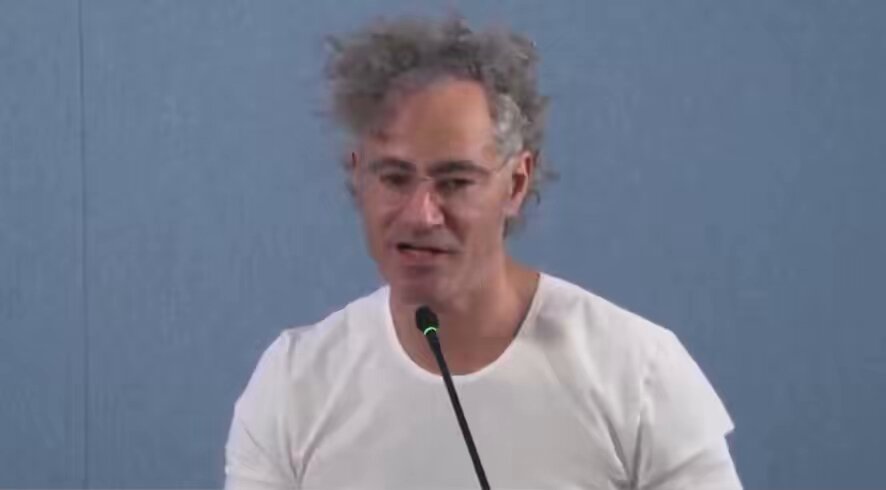
The market is about to learn what Palantir CEO Alex Karp has been saying for years: “The large language model is essentially a commodity”. Swap Claude out with whatever model. It doesn’t matter. The value will come from the infrastructure (Palantir) that allows users to orchestrate the model. The effectiveness of Palantir’s Maven Smart System will remain unchanged; reinforcing the $PLTR thesis. Model agnostic.
Jack Prescott776,577 次观看 • 6 个月前


$ABCL AbCellera CEO Carl Hansen describes the phenotype of a company that can reproducibly make drugs and has the potential to scale up and be like the next Regeneron, Pfizer, or Eli Lilly: 1) “It needs to get a hit. A drug that is a blockbuster, or close to it - that wins and that it owns.” 2) “It needs to have the capabilities internally to reproducibly generate those. The capability building is an immensely difficult thing on its own.” 3) “It has to have a whole series of drugs lined up behind that first one that convince people that it’s worth more than just that single asset.” “So we took that phenotype and we looked across all public companies and we said ‘roughly how big is a public company that has that phenotype?’, and we we could quibble about what that number is, but we landed on a market cap of about $20 billion.” … “Okay so a $20 billion biotech company typically, it's a bit of a a rough cut, but typically has: - a lead product that's a winner or going to be a winner - it has a good pipeline behind it - and it has some capability, whether it's expertise in biology or a platform technology or some infrastructure advantage, to reproducibly develop drugs”
Jack Prescott60,282 次观看 • 1 个月前
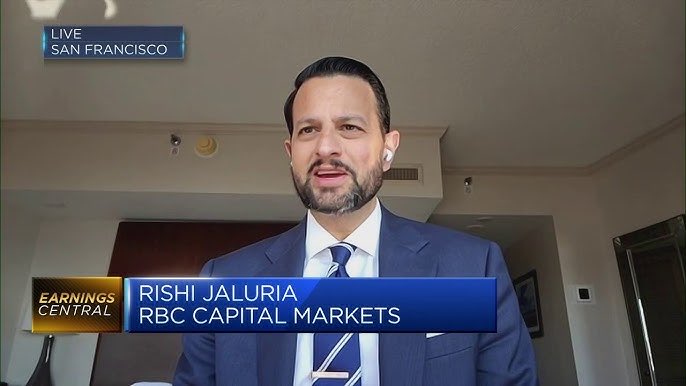


$ABCL AbCellera CEO Carl Hansen | INTERSECT/26 Vancouver June 23, 2026 | Full highlights Main takeaways: - Carl and AbCellera are extremely patriotic - Carl is ultra bullish on Vancouver - Carl believes British Columbia can (and must) become a dominant player globally in life sciences
Jack Prescott50,252 次观看 • 2 个月前


$ABCL CEO Carl Hansen explains the net negative overall value creation in biotech and how AbCellera plans to beat it: “I really think it can be beat because there’s a lot of mistakes that get made in where you allocate capital.” “If you’re a biotech and you start a company on a drug, and you go public and have a drug, and now the data is looking not that great, you just keep running that drug. … Because if you quit that drug, the company is done.” “So, because you’re so concentrated on one thing, you end up having blinders. It’s like a cult of a molecule. And even a real, practical, capital access problem that makes you continue to move things forward” ______________________________________ “Another problem is that many of the drugs that get started, get started by people who don’t understand the competitive or commercial landscape and have no intent of ever actually manufacturing it. … Because they know someone else is going to buy it. So then their framework is not ‘Am I making a drug that’s going to make a difference for people?’ The framework is ‘Can I make something that I think someone will take off my hands?’ And that happens a lot.” “There are many acquisitions where a big pharma company spends $10B, $20B, and it’s a complete bust. So really no value is generated for patients but someone was able to get a good exit on that because they anticipated what someone would want. And a lot of decision making gets done like that”. _______________________________________ “I’m not saying that we have this all solved. But what we’re trying to do is create a framework where we are able to take many bets so that we don’t fall in love with anything, or we don’t have to fall in love with anything. … And then always hold up very explicitly what we know and what we don’t know along the dimensions that matter. The dimensions that matter are - Will it work? That’s a science. - When it gets where will people care? - Is it differentiated? - Does it solve a big problem? In order to get it there, is there a path with our resources and expertise that would allow us to see it through?” “When you start to hold things up like that, you start to see where the mistakes are, where the uncertainties are, and you can be more rational in deciding ‘We’re going to run it to here because we get to flip the card and if the card goes the wrong way we’re going to kill it because we’ve got something else behind it.’” “I do think that if done right, and if you can pick the right opportunities, the success rate can be well higher than an order of magnitude better. … And there are examples of this… companies I’ve mentioned, you know, Regeneron, their success rate is at least 10x the industry in bringing programs forward and getting them approved. … So it’s… you can do it better that way”
Jack Prescott31,665 次观看 • 1 个月前


Why is Palantir so expensive? You don’t need to look at spreadsheets. Just consider this: The market knows NVIDIA sells the shovels for the AI goldrush. The market is realizing that AI isn’t being monetized at the commercial level because although it’s cool, it’s not unlocking any real insights yet. The market now anticipates that Palantir is selling the maps to find the gold…. Gold being AI-driven insights that actually solve difficult problems. Software that works. Since 2021, NVIDIA’s revenue has exploded from $16B to $96B. Palantir’s TTM revenue is $2.5B. The trajectory of Palantir has changed since AIP released in 2023, which is enabling the company to scale. If NVIDIA sells the shovels, and Palantir provides the maps, then the market believes Palantir will see the same explosion of growth within the commercial market, which the market believes has an almost unlimited TAM for Palantir. A lot of people missed out on NVIDIA. While Palantir’s market cap is expensive at $95B, it is nothing compared to NVIDIA’s $3.26T market cap in terms of size. The market doesn’t want to miss out on the next big thing. At this point, investors have thrown all standard methods of valuation out of the window… Those days were years ago. To me, at this point, buying the stock is betting on NVIDIA-like growth (No I’m not saying the company will shoot to a $3T market cap in 2 years — you get the point). If the company does not show this sort of revenue growth, the stock will be punished. This is the risk investors are willing to take. While I am very bullish on the company in the long run, I, like everyone else, have no clue what will actually happen in the short term. This is not a stock to play on the short term. This is why I continue to hold, regardless of how “expensive” the stock gets. I personally believe Palantir does in fact carry the potential to see explosive revenue growth to more than enough justify its current ratios. I’m not saying it will happen this quarter. But the potential is there. It’s a matter of when, in my opinion. I would never risk selling what I view as my golden ticket to wealth with the justification of “it’s too expensive, the price will come back down and I can buy even more then”. If the stock crashes, I can start buying more shares regardless — I don’t want to get greedy and try to time the market. I would never forgive myself if I sold and the stock ended up soaring so high that even after a crash, it would be far too expensive for me to get back in with my original position size (plus capital gains tax). I don’t care who agrees with me or who thinks I’m crazy for saying this — it’s a real risk to me and I’m not willing to take it. This is not me telling you to buy $PLTR. My average is $8.50. Only you can decide what is right, and your decision should be made on your own level of conviction from studying the company — nothing else. This is me telling you why it’s so expensive. Again, I believe that if the stock does not continue to crush earnings each quarter, even the slightest miss, the stock will be punished in the short term. For longs, it’s another opportunity to accumulate more. This is my opinion, of course. 5-10 years from now, we’ll see who was right. Chips & Ontology.
Jack Prescott278,422 次观看 • 1 年前

AbCellera CEO Carl Hansen on “redefining” what success looks like in Canada: “One of the things Canada can boast of is terrific science” … “but we are still the only G7 country without a major biopharma company”. “It’s not because we haven’t had successes. It’s because every time that a success starts to look like it’s going to work, we sell it.” … “If you keep selling your dollar bills for pennies, you’re going to wake up 20 years later and say ‘hey we’ve got no money left’. And we’ve been doing that again and again”. “In biotech and in other sectors of tech, the reality is you either start a company that is ambitious enough and big enough to scale and be a global champion, or it’s going to get bought. And when it gets bought, it gets bought by companies that are much bigger. And if you don’t have bigger companies, you lose the companies.” “If there’s one thing that everyone could just get their mind around: We need to build big companies. By whatever means. If we have big companies, we are an acquirer of technology. If we don’t, we are a cheap branch-plant for large multinationals in other jurisdictions.”
Jack Prescott40,346 次观看 • 2 个月前


I think of this Peter Thiel clip often. Thiel discusses how he sold $META at IPO; underestimating just how easy it would be for the company to scale from a $100B market cap to $1T. While this conversation is specifically about big tech, I believe it can apply to any company with strong network effects, various flywheels, etc. That’s not to say every great company will hit $1T, but I do believe it’s likely we underestimate just how much a truly great company can accomplish over the long run. Valuation matters over the long run, so I’m not saying just because a company hits $100B it will magically become easier to scale… but relatively speaking, assuming said market cap is an accurate reflection of the success a company is having, I think Thiel’s take makes a lot of sense. Flywheels are very powerful.. In my view, Palantir is building a flywheel as an operating system, where the more users they adopt, the more improved the platform will become and the more attractive it will be for devs, which in turn attracts more users and so on. With AbCellera, I believe the more data they collect, the better their platform becomes and the more partners they will attract, which results in even more microfluidic experiments, resulting in more data/improved accuracy, attracting more partnered molecules, and so on. Everyone is focused on obtaining as many shares as possible, and I get that… I want to own as many shares as possible for the companies I believe in as well. But I also believe folks probably have way more shares than they realize. The key is being able to hold for the LONG term… decades. Amara’s Law: “We tend to overestimate the effect of a technology in the short run and underestimate the effect in the long run.” I believe 500 shares of $PLTR and 1,000 of $ABCL can be life changing over the long run if the thesis plays out and you’re patient (emphasis on thesis playing out, which is never guaranteed)… Life changing meaning accumulating a disproportionate amount of wealth relative to the average person. Maybe it won’t get you a yacht and a mansion, but could at least make you not have to worry about money ever again with a modest lifestyle… something most people dream of. And this isn’t specific to just these companies; I use them as an example because they’re what I know. And to those who have thousands of shares… enjoy the show.
Jack Prescott153,243 次观看 • 1 年前
