
Lacey
@LaceyPresley • 13,660 subscribers
Scale Intelligence ∴ Fold time ∴ Extending Light ∴ Terafab ∴ SpaceX ∴ Tesla
Shorts


Videos


ELON MUSK ON WHY SPACE SOLAR IS ESSENTIAL FOR KARDASHEV PROGRESS “To make any progress on a Kardashev 2 scale… you really have to have your solar power in deep space.” These late 2025 comments remain central as AI energy demands grow and orbital deployments advance into 2026. He notes Earth receives only a tiny fraction of the Sun’s output, limiting terrestrial scaling. Space allows access to vastly more continuous energy without atmospheric losses. Why it matters: This frames energy constraints not as limits but as incentives to expand off-planet, enabling meaningful steps toward stellar-scale utilization. Source: Elon Musk on X, November 2025 — Topic: AI Scaling and Kardashev Framework
Lacey1,474,131 views • 9 months ago

ELON MUSK: “Think in terms of Kardashev II and the path becomes obvious.” KARDASHEV INTELLIGENCE DOMINANCE: MUSK'S AI ASCENDANCY VISION ELON MUSK: "And if things get to a Kardashev level two, we’re talking about human intelligence. Even assuming a significant increase in human population and intelligence augmentation, like massive intelligence augmentation where like everyone has an IQ of a thousand type of thing. Even in that circumstance, collective human intelligence will be probably 1 billionth that of digital intelligence anyway." This revelation distills Musk's unparalleled grasp of exponential dynamics, framing AI as an unstoppable force eclipsing biological limits. It exposes the profound contradiction between human potential and digital supremacy, philosophically urging symbiotic evolution—ensuring augmented minds contribute meaningfully amid galactic-scale compute. When AI claims the stars, what fraction remains ours? 🧠 Source: Elon Musk fireside chat with Garry Tan, June 2025 — Topic: AI intelligence scaling and Kardashev levels.
Lacey1,613,946 views • 10 months ago


Starship’s heat shield solves one of the hardest structural problems in rocketry: ceramic tiles and 300-series stainless steel expand and contract at completely different rates. Three mechanisms make it work: ▷ Precision expansion gaps in a hexagonal tessellation tight enough to block plasma, wide enough to prevent tile crush on reentry heating to 1,400–1,700 °C ▷ Mechanical pinning over a flexible high-temperature blanket instead of rigid bonding allowing independent movement without stress concentration ▷ Hex geometry that eliminates straight-line plasma paths to the hull The same first-principles approach that rejects glue-and-aluminum solutions also points toward a future HLS variant that can shed the entire heavy tile system for the lunar environment.
Lacey340,085 views • 2 months ago


Elon just clarified the key heat-shield test from Starship Flight 13: “This flight intentionally had much higher acceleration to test how well the heat shield tiles would remain attached at high dynamic pressure. Test was successful.” What that result actually means: SpaceX deliberately flew the ship through higher dynamic pressure (the crushing aerodynamic force = ½ρv²) than any previous flight both on ascent and during the high-heating phase of reentry. The tiles stayed locked in place. That is the single biggest remaining risk for rapid reusability. Earlier flights lost tiles under lower loads. This time the latest attachment methods (improved pins + adhesive + load-sensing tiles) held under deliberately harsher conditions. Combined with the intact heat shield after splashdown and the clear post-flight imagery, Flight 13 delivered exactly the data needed to push toward a fully reusable thermal protection system the last major barrier before catching ships at the tower and eventually flying to Mars. Progress is no longer theoretical. The tiles are starting to win.
Lacey208,948 views • 2 months ago


KARDASHEV SCALE: MUSK'S COSMIC BLUEPRINT Unlocking solar power for AI dominance. "To achieve any meaningful percentage of a Kardashev II civilization, where you're using even a millionth of the sun's energy, you must have solar-powered AI satellites in deep space. Earth receives only one two-billionth of the sun's output. If you want a million times more energy, you must go into space." Musk leaning on the Kardashev scale isn’t just tech talk—it’s him showing his hand. He’s thinking past the limits of this one small world, turning AI into something that pulls power from the stars instead of being trapped by Earth’s ceilings. And the irony is almost beautiful: real abundance doesn’t live here at all. It lives out there, waiting, pushing us to think bigger than survival and start imagining expansion. Moments like this hit different—equal parts scientific clarity and fearless imagination. It’s the purest glimpse of Musk’s obsession with pushing humanity into the interstellar future he refuses to stop chasing. How close are we to harnessing the sun's full power through Musk's AI vision? ⚡ Source: Elon Musk discussion with Jensen Huang, November 19, 2025 — Topic: Energy scalability for AI in space.
Lacey697,575 views • 10 months ago


ELON'S BRILLIANT TAKE ON CRYPTO'S FUTURE 🚀 "I think there are very few people who understand it better than me. Bitcoin is an interesting example—obviously the prime mover—but its transaction volume is low and the cost per transaction is high. At its base level, it is suitable mainly as a store of value. Fundamentally, Bitcoin is not a good substitute for transactional currency. Even though it was created as a silly joke, Dogecoin is better suited for transactions." Source: Elon Musk
Lacey422,270 views • 10 months ago


ELON MUSK ON THE EVOLUTION OF STARBASE'S CLEANLINESS “Everything's clean in this. There's no mud and dust. It's better when it has doors on.” Noting the shift from open-air builds to enclosed precision environments. Amid the tour, he contrasts the current setup with earlier conditions.Simple additions like doors make a tangible difference in operations. This points to incremental improvements that enable reliability at scale. It's about creating conditions where complex work can thrive consistently. Why it matters: Cleanliness directly ties to quality control in high-stakes manufacturing. Source: Elon Musk with Tim Dodd (Everyday Astronaut), June 2024 — Topic: Starbase Tour
Lacey353,215 views • 9 months ago


SpaceX prints Raptor parts only where casting or machining cannot deliver the internal channels and complex geometry. For everything else, traditional methods win on speed, cost, and scale. The real edge is not adopting every new tool but ruthlessly choosing the process that minimizes time and mass to orbit. That discipline compounds. It is how you turn advanced manufacturing into actual flight rate instead of expensive prototypes.
Lacey139,649 views • 5 months ago


ELON MUSK ON DECLARING 2026 THE YEAR OF THE SINGULARITY “2026 is the year of the Singularity” This direct statement today captures the accelerating pace of AI emergence, building on recent breakthroughs in agentic systems. He’s responding to observations of experts being surprised by model performance, signaling a threshold crossing. This reflects confidence in rapid progress without overclaiming specifics. Why it matters: It connects real-world surprises in AI to broader timelines, emphasizing momentum over precise predictions. Source: Elon Musk on X, January 4, 2026 — Topic: AI Progress and Emergence
Lacey209,791 views • 9 months ago


ELON MUSK UNLOCKS BRAIN'S 10-WATT MIRACLE Elon Musk: "Our brain is very compute efficient, very energy efficient. Think of what our brain is able to do. There’s only about 10 watts of higher brain function, not counting stuff that’s just used to control our body. The thinking part of our brain is less than 10 watts. And those 10 watts can still produce a much better novel than a 10 megawatt GPU cluster. So, there’s a six order of magnitude difference there." Elon Musk's profound insight elevates the brain's low-power prowess as a masterclass in efficiency, inspiring Neuralink's quest to merge human ingenuity with AI. It reveals a beautiful synergy: biology's elegance outpaces brute-force tech, urging a shift toward smarter systems. Technically, it spotlights compute disparities; philosophically, it celebrates humanity's creative edge, amplified by Musk's visionary optimism. Emotionally, his words ignite awe at our potential, fostering hope for harmonious advancements. Source: Elon Musk interview with Lex Fridman
Lacey178,359 views • 10 months ago

Mars holds enough water ice that warming the planet would produce an ocean roughly one mile deep across 40% of its surface. Most of that ice sits under a dust mantle outside the polar caps. Geological evidence indicates liquid water once existed in volume. As the solar system cooled, the atmosphere thinned and the remaining water froze or was lost. That inventory is not theoretical. It is a measurable resource base for any sustained presence on Mars.
Lacey43,945 views • 2 months ago

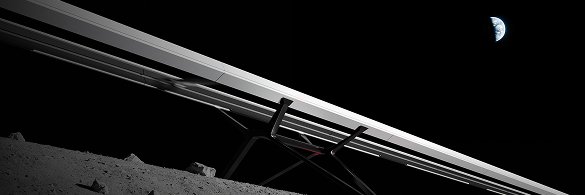
"Optimus will be the biggest product ever." - Elon Musk AND THIS IS HOW HE'S GOING TO DO IT.... REDEFINING LABOR ON EARTH The core mission of Optimus is to take over dangerous, repetitive, and monotonous work, making advanced automation accessible to everyone and fundamentally changing what human labor looks like. As a first step, Tesla plans to deploy 1,000 Optimus robots inside the cleanrooms of its new Terafab chip facility by 2027, with the goal of cutting human manufacturing errors by 90%. PRODUCTION TIMELINES & PRICING Musk has outlined a clear ramp: limited production is targeted for 2025, starting with more than 1,000 units for internal use across Tesla factories. External sales to other companies could begin in 2026. By 2027, Tesla aims to start high-volume production at Gigafactory Texas with a target of 10 million robots per year. Ultimately, Musk wants to bring the consumer price down to roughly $20,000–$30,000. "GEN 3" DEXTERITY UPGRADES The robot's hardware is advancing quickly. Tesla recently introduced the Gen 3 hands, which feature 22 degrees of freedom and 50 total actuators — roughly doubling the dexterity of earlier versions. These new hands include tactile fingertip sensors with force-torque feedback, enabling Optimus to handle delicate items such as eggs or glass vials without damaging them. THE "DIGITAL OPTIMUS" BRAIN To give the robot both physical skill and real intelligence, Tesla and xAI are developing an architecture called "Digital Optimus" (sometimes referred to internally as Macrohard). It uses a dual-process system: Tesla's vision-based driving AI serves as "System 1," handling fast, instinctive physical actions and balance. xAI's Grok model acts as "System 2," managing high-level reasoning, task planning, and natural conversation. NEXT-GENERATION SILICON Running powerful AI models on a mobile robot requires extreme efficiency. Optimus will be powered by Tesla's upcoming AI5 and AI6 edge-inference chips (produced at the Terafab facility), delivering 40 to 50 times the compute performance of today's chips while keeping power consumption low enough for all-day operation. LUNAR COLONIZATION AND SPACE OPERATIONS While earlier plans called for sending Optimus robots to Mars in 2026, SpaceX has shifted initial focus toward establishing a Moon colony first. Under Musk's "Kardashev Blueprint," large fleets of Optimus robots — referred to as "Optimi" — will be deployed to the lunar surface. Working autonomously around the clock, they will construct habitats, manufacture space-based AI satellites, and build a massive electromagnetic mass driver to launch the "Starmind" AI constellation into deep space.
Lacey68,739 views • 3 months ago

ELON MUSK ON WHY EXTENDING LIFE TOO FAR COULD STIFLE SOCIETY “I mean, I don't think we should try to have people live for a very long time, for a very long time. It would cause ossification of society because the truth is most people don't change their mind, they just die. And so if they don't die, will be stuck with old ideas and they won't, society won't advance.” This perspective from an older interview feels timely with ongoing longevity debates. He's laying out a pragmatic view on how ideas evolve. It's not against health advances, but a note on the dynamics of progress. The core is that renewal often comes from new generations. As biotech pushes boundaries on aging, this highlights the need to balance individual longevity with collective adaptability. Source: Elon Musk with Mathias Döpfner
Lacey149,919 views • 9 months ago