
Christian Keil
@pronounced_kyle • 51,259 subscribers
investor @a16z ◦ fmr. satellite builder @astranis ◦ dad
Shorts


Videos


Overnight, China successfully launched a new medium-class rocket to orbit — Long March 12B. Looks like they gave no airspace notice (!), and carried suspiciously Starlink-shaped satellites to orbit... all on their first try. China's space industry is catching up to ours, fast.
Christian Keil399,917 Aufrufe • vor 4 Monaten

I want to fund a space warfighting prime. Space is a unique domain. It's huge, hostile, and fragile — so we need tech that can help America secure outer space *while preserving the domain itself.* If you're thinking about the future of space and defense, please get in touch.
Christian Keil321,168 Aufrufe • vor 5 Monaten

In this episode of First Principles, we'll learn about asteroids, the telescopes that find them, and the satellites that protect us against them. ✧ In 2004, astronomers discovered a new, 60-million-ton asteroid hurtling towards Earth. They scrambled the world's best telescopes, traced its path in the sky as accurately as they could, and concluded that the asteroid, 99942 Apophis, had a 2.7% chance of causing "regional devastation" here on Earth. Today, that estimate has been revised down. We now know that Apophis will make its closest pass on Friday, April 13th, 2029, missing Earth but only just barely: the asteroid will pass closer than satellites in geostationary orbit, and will be visible to the naked eye. Exactly how we know that — and what we would do if we determined an asteroid really *was* heading our way — is the focus of today's episode. In this episode, we'll visit the telescope that discovered Pluto, one of the biggest optical reflecting telescopes in the world, and the factory floor of AstroForge, a company building satellites for asteroid mining and planetary defense. Special thanks to Matthew Gialich, whose connections to Lowell Observatory made this episode possible — and whose meteorite collection is the envy of space nerds everywhere. ✧ 00:00 — Asteroids & Apophis 1:08 — Pluto Discovery Telescope Overview 1:57 — Pluto Discovery, Tracking 2:34 — Pluto Discovery, Optics 3:38 — Pluto Discovery, Sensor 5:06 — Lowell Discovery Telescope Overview 5:24 — Lowell Discovery, Tracking 7:08 — Lowell Discovery, Optics 8:07 — Lowell Discovery, Sensor 9:35 — Driving the Lowell Discovery Telescope 11:26 — The AstroForge Satellite Factory 13:46 — How AstroForge Deflects Asteroids 14:49 — AstroForge 1.5 kW Laser Demo
Christian Keil35,364 Aufrufe • vor 18 Tagen


The first internet satellite ever dedicated to the Philippines launches TOMORROW.
Christian Keil690,510 Aufrufe • vor 1 Jahr

First Principles is back — and it's no longer a podcast. My goal is to explain hardware engineering in simple terms. But after ~25 episodes, it was clear that podcasting wasn't dense or visual enough… So I went to a nuclear reactor, pulled out a control rod, and got it all on film. The resulting video recently crossed 1 million views across platforms; it's been out almost two years, and it's still getting >1,000 views every day. Awesome format. Hard to pull off, equally hard to replicate. I was stoked and wanted to make more. But unfortunately for the show / very fortunately for my career & life, I got WAY more busy at Astranis at exactly that time... and creating fell by the wayside. But we are back, baby! Next video drops *tomorrow*, and I just shot two more last week. If you're building a hardware product that can teach a smart college freshman something about engineering — or want to nominate another startup for a feature — please reach out. Can't wait for tomorrow. Video goes live at 5am Pacific.
Christian Keil26,946 Aufrufe • vor 19 Tagen
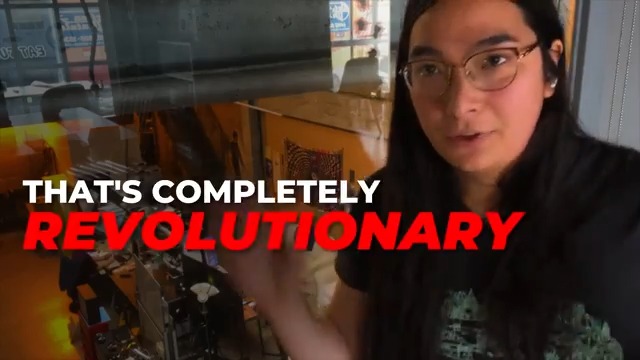


Somos Internet is a Y Combinator startup that lays 2 km of fiber every day in Colombia. They already have 27,000 subscribers — because people want what they offer: 100 Gbps internet connections for just $80/m. How is that possible? Somos is building a new kind of network from the ground up — plugging into transatlantic fiber, building his own backbone, connecting into apartments, and building custom routers that can handle that much throughput. Forrest (Forrest Heath) visited me at my office, and we talked through the technical details. I think you'll love it. HD Version at the link in my bio. Timestamps: 00:00 — Introducing Somos Internet 02:40 — Nobody Understands how Telco Networks Work 03:51 — How to Learn About Telco Anyways 04:53 — How Forrest Won Over the Local Drug Lords 06:50 — The Idea Maze: from Wifi to Fiber 09:25 — What Somos Internet is Building: Enterprise-Grade Fiber to Your Home 12:05 — How Telcos Work Today (and Their Fundamental Flaw) 15:46 — "The Core Innovation of Somos Is..." 17:40 — HOW IT WORKS: A Nested-Ring Topology, Not a Tree 21:43 — An End-to-End Service 23:57 — (Including Routers) 25:00 — How is 100 Gbps per Customer Possible? 31:08 — How They're Cheaper: Switches, not Routers 35:00 — Why Sell a Consumer Service? 39:40 — Why Doesn't Bell Labs Still Exist? (It's the MBAs.) 42:28 — Customer Service is Easier When You Build Everything Yourself 43:37 — Telcos Have Given Up on Innovating 47:46 — How to Build a Team Smart Enough to Execute This Vision 51:41 — Is This a Hard Idea to Pitch a VC? 55:58 — Could Somos Have Started in America, not Colombia? 59:23 — How Did Forrest Learn All of This From Zero? 1:02:36 — What Technical Challenges Are Next For Somos?
Christian Keil270,646 Aufrufe • vor 2 Jahren


One of my favorite visualizations of all time: This is 24 hours on orbit.
Christian Keil147,490 Aufrufe • vor 1 Jahr

It's (always) a great day to cut titanium at Astranis Space Technologies.
Christian Keil90,475 Aufrufe • vor 1 Jahr

I pulled a control rod out of an active nuclear reactor. It was Matt Loszak's idea — he cofounded Aalo Atomics to build a nuclear reactor safe enough for your backyard, a bold idea... and one worthy of an experiment. Our hypothesis was that we would survive this experiment thanks to Uranium Zirconium Hydride (UZrH), the fuel used by both the test reactor at UT Austin and Aalo's future reactors. Matt said this fuel wouldn't melt down given its strong "negative temperature coefficient of reactivity." If you don't know what that means... neither did I. But it may be the key to unlocking abundant, safe, clean energy. That's why I flew down to the University of Texas to make this video, and ran an experiment on UZrH fuel using a real nuclear reactor. I think you're going to love it. HD version at the link in my bio, and thank you to Fifty Years Fund for helping make this episode happen. 00:00 — What if nuclear power didn't have to be dangerous? 01:09 — Introducing Aalo Atomics 02:20 — UT Austin TRIGA reactor tour & overview 04:26 — Nuclear energy 101 05:27 — The experiment: control rod ejection 06:57 — Experimental results: power, energy, temperature 08:22 — "Negative Temperature Coefficient of Reactivity" 09:41 — Why isn't everyone using this? 10:32 — Aalo's bet: adapting UZrH for power production 11:40 — The future of nuclear power
Christian Keil134,501 Aufrufe • vor 1 Jahr

Last night, I asked Fable 5.1 and Astra to turn a 3D render into a real product. I asked for a full kit of parts, build instructions, software/firmware, and a new 3D render. And they delivered! Astra's design is simple, but strange — the "face" is on the back of the base. On the positive side, it has way fewer parts and therefore will be easier to build once the parts get here. Fable's design is more ambitious, and closer to the reference design. The build instructions are clear, though, so it seems buildable. The ultimate test is still to come... we'll see if they actually work! Ordered both sets of parts last night.
Christian Keil11,594 Aufrufe • vor 1 Monat

This video is great doomer antidote. Another masterpiece from Jason Carman
Christian Keil43,475 Aufrufe • vor 7 Monaten

Robinhood co-founder Baiju Bhatt is back with a new company — but it's not finance, it's space lasers. At @AetherfluxUSA, Baiju is building both: ‣ an expeditionary power source for America's warfighters ‣ the beginnings of humanity's first Dyson Sphere It's a constellation of satellites in Low Earth Orbit that beam solar power down to Earth using lasers. I invited him to my factory to ask about how he's building it, and why. Chapters: 00:00 — Why is the Robinhood co-founder starting a space company? 05:11 — Introducing Aetherflux: the American energy grid in orbit 10:30 — The energy cost & energy opportunity 18:24 — “You’re not a space company until you have something in space.” 20:12 — What are the hardest parts of engineering this product? 25:27 — Figuring out how to build a hyper-ambitious company from zero 28:06 — How do you get from a demo to the ultimate vision? 32:25 — “What’s an industry that could exist, that doesn’t exist right now?” 35:28 — American innovation is a juggernaut 39:23 — Expeditionary power for the Department of Defense & disaster response 44:50 — The analogy between Robinhood and Aetherflux 47:41 — Assigned watching, playing, and reading from Baiju
Christian Keil86,267 Aufrufe • vor 1 Jahr


I made a space-themed picture book for kids. It's called "REAL SPACE SHIPS," and it's available for purchase and free download! Zero words. Just REAL pictures of rockets, satellites, & spacecraft: from Apollo to the Space Shuttle, from the ISS to commercial space, and more.
Christian Keil43,413 Aufrufe • vor 10 Monaten