Sina Toossi
@SinaToossi • 42,051 subscribers
Senior Fellow @CIPolicy | Sharing analysis, commentary, and research on Iran, U.S. foreign policy, and Middle East geopolitics.
Shorts




Videos

Significant comments today amid UNGA U.S.-Iran diplomacy from Mohsen Rezaei, secretary of Iran’s top national security body, the Supreme National Security Council. He says Pezeshkian & Araghchi went to New York to convey Iran’s internally agreed terms, not negotiate new ones: “There has been no discussion of changing the conditions.” Araghchi was tasked with transmitting them through mediators. Rezaei says Iran won’t return to the diplomacy of the Islamabad ceasefire. He says Washington must first accept Iran’s conditions and has “4–5 days” to act. The short deadline amounts to an implicit threat of further escalation if it doesn’t. He also warned neighboring states aiding US pressure on Iranian aviation: block Iranian flights and “your airports will have no flights.” His message overall is that Tehran is open to diplomacy, but its terms are fixed and US action must come first.
Sina Toossi184,176 görüntüleme • 2 gün önce
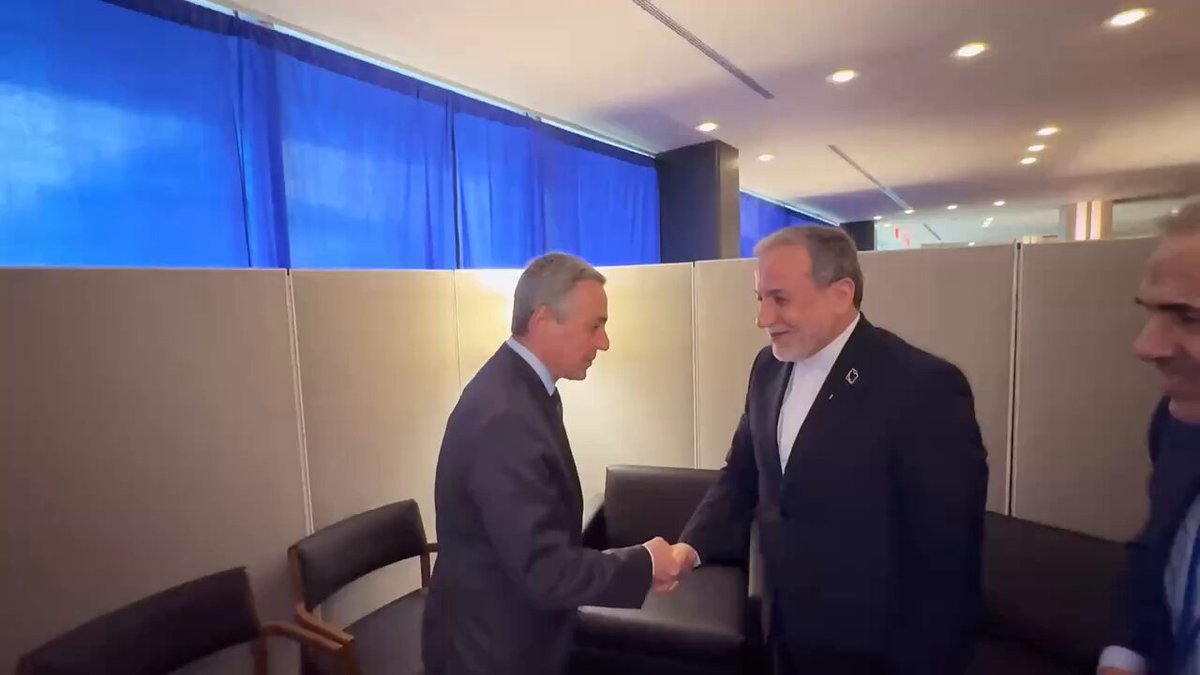
As the Trump admin seeks to further isolate Iran, European officials are engaging Tehran. After failing to meaningfully obstruct the US path to a war that has proven disastrous for Europe, the Italian, Greek & Swiss FMs and the EU foreign policy chief met Iran’s FM today at UNGA.
Sina Toossi24,238 görüntüleme • 3 gün önce


Horrific story out of Iran: a religious singer was kidnapped, skinned alive, his lungs & heart removed. The video was sent to his family & posted on monarchist channels, where they celebrate it. ISIS/cartel-level barbarism. A dangerous, festering cult backed by Israel.
Sina Toossi125,688 görüntüleme • 1 ay önce

Something tells me this isn’t the “new Middle East” Netanyahu wants: Just a day after Iran’s missile attack, Saudi Arabia’s Foreign Minister meets with Iran’s president, declaring that Saudi Arabia wants to “permanently close the chapter on our differences.”
Sina Toossi1,720,764 görüntüleme • 2 yıl önce

Araghchi briefly appeared in the same room with Vance before the cameras. But Iranian sources report Tehran refused to enter the meeting until journalists left, rejecting what they called an American "media show." Iran is still denying Trump the photo-op he's long sought.
Sina Toossi185,440 görüntüleme • 3 ay önce

🧵In a striking moment at the White House today, Trump told reporters that direct talks with Iran have begun—and will continue this Saturday. The implications could be huge. Here's why this matters and what could really be happening behind the scenes. >>>
Sina Toossi759,412 görüntüleme • 1 yıl önce

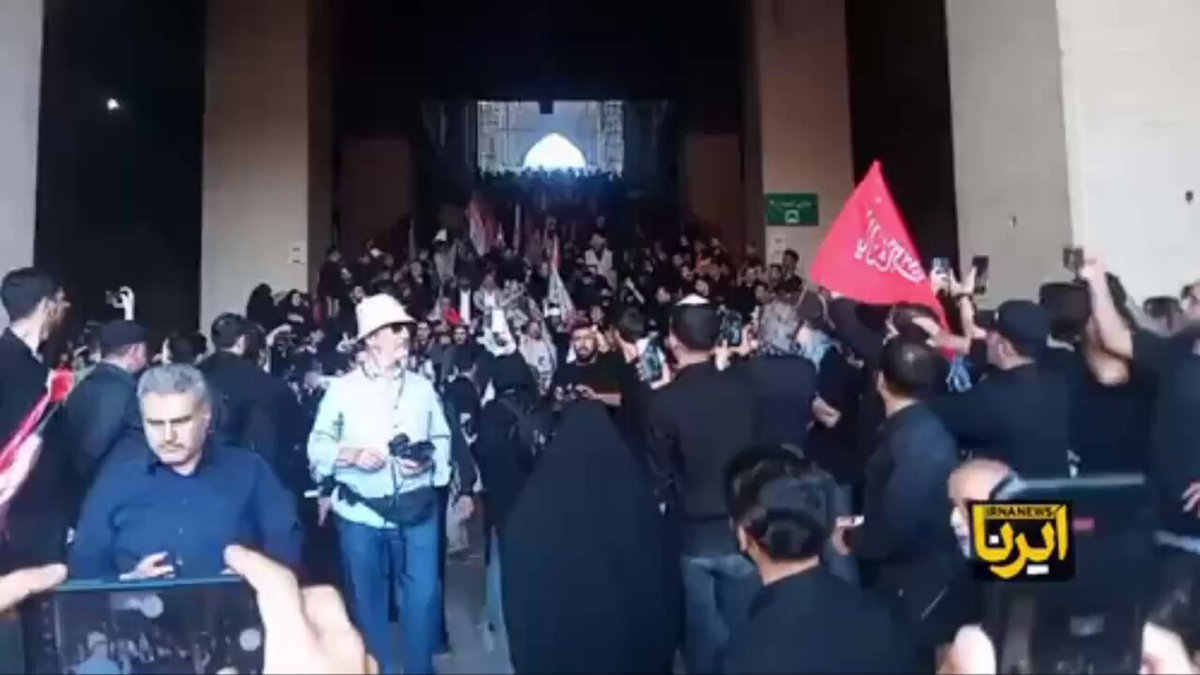
Iran is deep in Muharram mourning rituals ahead of Ashura tomorrow. This year's ceremonies have been shaped by the aftermath of the war, giving the themes of sacrifice, loss, resistance, martyrdom a renewed resonance. Scenes from Tehran, Karaj, Yazd, Zanjan in recent days 👇
Sina Toossi104,625 görüntüleme • 3 ay önce

There’s been a rush to interpret recent comments by Iranian officials as an admission that Tehran is nearing its breaking point and urgently needs a deal. I think that reading misses what they are actually saying. The economic strain is clearly severe. Central Bank chief Abdolnaser Hemmati says oil exports have fallen to nearly zero amid the US naval blockade and conditions are harder than during the initial 2018–21 maximum-pressure period. President Pezeshkian says Iran should end the war while it remains in a position of “power and dignity.” Ghalibaf has warned that military strength cannot compensate indefinitely for economic weakness. But acknowledging these vulnerabilities is not the same as signaling a change in Iran’s negotiating bottom lines. One point that is often missed outside Iran is that Iranian political and state-media debates can be surprisingly candid about the country’s vulnerabilities, internal disagreements, and strategic constraints. It's important look at what these same officials are saying alongside those warnings. Ghalibaf says Iran will endure substantial costs rather than sacrifice its “dignity and honor,” and is calling for new regional economic and security arrangements to offset US pressure. FM Araghchi says Iran’s foreign policy going forward will be fundamentally different and more assertive. Deputy FM Gharibabadi portrays Washington’s economic campaign as the next phase of a war the US failed to win militarily. Rezaei is threatening US economic interests and Gulf oil exports if regional states join Washington’s economic war. So yes, Iran wants a deal. It needs one too. But neither is new. The real question is what deal Tehran is prepared to accept. There is little here suggesting Iran is ready to reopen Hormuz on the prewar terms, relinquish the leverage it gained during the war, or accept a settlement it views as reflecting maximalist US demands. Tehran instead appears determined to demonstrate that it can withstand enough pressure to negotiate without surrendering those gains. That creates a dangerous paradox for Washington: greater economic pressure can simultaneously increase Iran’s need for a deal while hardening the terms on which it believes a deal is acceptable. That does not mean US pressure is ineffective. Iran is clearly hurting. It means pain and capitulation are not the same thing, and assuming the former will inevitably produce the latter risks repeating one of the central miscalculations that produced this war in the first place.
Sina Toossi27,856 görüntüleme • 1 ay önce

Professor John Mearsheimer warns that Israel is in "deep trouble" after Hanniyeh's assassination. With no military solutions to external threats, internal chaos threatening civil war, & crippling dependence on US support, their problems are "unfixable & they're digging deeper."
Sina Toossi435,002 görüntüleme • 2 yıl önce
We were told Iran was on the brink. That one more push would bring the Islamic Republic down. Netanyahu & Reza Pahlavi begged for revolt. Instead, we see a wave of mourning across the country for their dead. So who really understands Iran—and who just sells delusions?
Sina Toossi198,664 görüntüleme • 1 yıl önce

Iranian analyst says if war restarts, Iran has will & capability to escalate with more devastating strikes on energy infrastructure. He says past drone attacks were just a signal. If it chooses, Iran could use missiles or hit more precisely, targeting UAE's Bu Hasa & Zirku.
Sina Toossi76,293 görüntüleme • 5 ay önce

👇This is a deeply misleading framing. Iranians are not being placed in front of targets. Many are voluntarily showing up to defend the infrastructure that keeps their society alive. You have famous artists like Ali Ghamsari at a power plant and Benyamin Bahadori at a bridge in Tehran, alongside other ordinary people doing the same. This is about people trying to safeguard electricity, water, and basic *civilization* under open threat. The real legal and moral question is why civilian infrastructure is being targeted at all.
Sina Toossi70,731 görüntüleme • 5 ay önce

👇 This is an important window into how Iran is viewing the current diplomatic track. A post-Islamabad interview with Majid Shakeri, an advisor to Mohammad Bagher Ghalibaf, who led Iran’s delegation in Islamabad and headed talks with JD Vance. It offers a revealing look into how the Iranian side, especially Ghalibaf’s camp, is assessing the process. He says the first round was fundamentally about each side evaluating the other. But he highlights a core “problem” with the US delegation: “it neither has clear goals nor does it have the necessary mandate and the necessary ability for decision-making.” At the same time, he claims that for everything raised, “a solution truly existed.” His overall assessment of the round is telling: it was “not completely failed or completely won,” and no one expected that in a single round, a “result would immediately be created.” On escalation, he addresses Trump’s blockade threat. He says it is unclear whether it is a bluff or not. But in either case, he suggests it does not fundamentally alter Iran’s position, where the Strait of Hormuz remains its key leverage. More striking is his description of Iran’s economic posture. He argues Iran has long prepared for a blockade scenario. With imports reduced during the war, it now has more resources and liquidity, including proceeds from oil sold at sea. And this line stands out: “parallel to the war” the “the sale of Iranian oil no longer has any connection to the Dirham or any type of infrastructure susceptible to sanctions or American pressure.” If true, that is a significant shift given Iran’s previous dependence on UAE-linked financial channels. He adds that oil trade and currency exchange are now happening at the point of sale, for example in China. He also points to a broader logistical shift, saying Iran has diversified away from southern and western routes toward land-based and other alternatives, and that this transition is already complete for vital goods. On a wider geopolitical level, he argues a US blockade would “expand the game” by pulling in China more directly, ultimately to Iran’s benefit. He also notes that pressure on the Strait of Hormuz and shifts toward Red Sea export routes increase the leverage of actors like the Houthis. His closing assessment is blunt. He characterizes US decision-making currently as irrational and argues Washington is pursuing a path that raises costs for both sides while making the situation more entrenched and difficult to resolve.
Sina Toossi66,659 görüntüleme • 5 ay önce

Iran is rolling out a major economic reform: shifting key subsidies directly to households & moving toward exchange-rate unification. The bet is currency stability, real income gains & reducing poverty. Whether it works—or eases unrest—remains is an open question. 🧵>>>
Sina Toossi86,206 görüntüleme • 8 ay önce

I think ignoring pro-government mobilization in Iran weakens ability to provide realistic analysis. The key is to separate: -regime capacity from regime legitimacy -short-term survival from long-term stability -protest movement setback from protest movement defeat A key part of Iran’s political reality today—one that shouldn’t be ignored for the sake of wishful thinking—is that the state has managed to bring sizable pro-government demonstrations onto the streets across multiple cities, even amid its brutal crackdown. This of course does not confer legitimacy on the Islamic Republic, nor does it erase the scale of repression, the hundreds confirmed killed so far, or the horrific violence obscured by internet shutdowns. But it does matter for assessing the immediate viability of protests or the efficacy of a US military attack on the country. As of now, there are no confirmed reports of major elite splits or security-force defections, though under conditions of near-total information blackout it is impossible to gauge the depth of internal fractures. What is visible is a state that has doubled down, relying on repression and foreign intervention narratives to rally its base. This suggests that a critical mass sufficient to topple the system has not yet formed. But it would be a grave mistake to conclude from this that the Islamic Republic can simply restore the prior, already highly volatile balance that existed between itself and society. The protesters’ message to the ruling elite has been unmistakable: coercion can no longer compel consent. Fear barriers have been breached. Iranians have en mass risked bullets to demand change. The state may suppress this round of protests, but without meaningful political and economic transformation, the conditions that produced them will persist. What lies ahead won't be stability for it, but a system limping forward—more brittle and increasingly vulnerable to the next eruption of public anger.
Sina Toossi84,051 görüntüleme • 8 ay önce

👇 A revealing comment from Iranian economist Saeed Laylaz, whose leaked 2021 interview with Javad Zarif on “the battlefield vs diplomacy” ignited a seminal debate inside Iran over foreign policy and the IRGC’s role. Laylaz now argues there is effectively no meaningful deal on offer for Iran: even if Tehran gave Trump everything he wants, it would not fundamentally change Washington’s posture toward Iran. In that context, he says “surrender” amounts to suicide and Iran has no choice but “resistance.” This gets at one of the biggest flaws in the U.S. approach to Iran: diplomacy becomes impossible when the other side comes to believe sanctions and pressure are not meant to change behavior or reach compromise, but to permanently weaken their country and/or pave the way for war. Washington has spent years undermining its own ability to negotiate with Iran. This was not an accident. It was the product of sustained campaigns by hawkish groups and the Israel lobby network in Washington (a la FDD, UANI, WINEP, etc...), which openly pushed policies meant to kill even the possibility of diplomacy, from building a “sanctions wall” against future deals to politically entrenching maximalist untenable demands.
Sina Toossi43,923 görüntüleme • 4 ay önce

New Israeli footage shows Iranian missiles striking the Bazan oil refinery in Haifa, disabling it. As more emerges, it’s clear: despite Israeli narrative, Iran’s missiles vary in RVs, speed, and maneuverability—and some can hit Israeli targets with precision.
Sina Toossi104,354 görüntüleme • 1 yıl önce