
Dr. Nicole LePera
@Theholisticpsyc • 1,266,435 subscribers
Join my private healing community @selfhealerscirc 👇🏼
Shorts


Videos

Bookmark to practice any time you need to self regulate. The vagus nerve is a bundle of nerves that goes from the brain stem to every major organ. It regulates our autonomic nervous system. We can access vagus nerve stimulation through our ears. Using your finger pull down with medium pressure. Then do some gentle circular motions. Repeat on both sides. Notice how calm your entire body feels afterwards. How your thoughts are less racing. If you get the urge to yawn, or cry, or release your jaw— do it. This is your nervous system releasing sympathetic energy. And yes, this is why q-tips feel so good.
Dr. Nicole LePera1,640,781 views • 2 years ago


Bookmark this practice called: The Neuro-Fascial Release Techique. In order to be physically and mentally healthy, our vagus nerve has to be functioning properly. When our vagus nerve functions properly were in primarily in what’s called social engagement mode. We’re also flexible and able to react appropriately to stress. We’re less susceptible to disease because our immune system is functioning at its best. You can practice this as often as you make time for. Ideally daily— or any time you want to get back to a parasympathetic state. Test your mobility before and after doing this practice. And if you can— journal after. Notice how your emotions change when you help your body do so what it naturally does. TO PRACTICE: You’ll feel the occipital bone at the base of your skull. Press firmly, but NOT too hard. Move the skin to the right and hold. Then to the left. Keep breathing. This practice was created by Stanley Rosenberg who through polyvagal theroy (Dr. Stephen Porges) initiatively understood that trauma is stored within the body. His work with clients focused on somatic practices, specially clients with depression, anxiety, and other “disorders” that are actually adaptions. Please share so other people have access to the healing power that can come when we understand the role of the vagus nerve and our nervous system #selfhealers
Dr. Nicole LePera1,130,339 views • 1 year ago

Bookmark this and practice. It only takes a few minutes and with practice your body will get into a tremor quicker. Animals naturally shake after stressful and traumatic events—it helps them discharge sympathetic energy and return to a parasympathetic state. We humans need this, too. But no one teaches us how to self soothe. It’s on us to help our body release the stress from our bodies. The more we release it, the more our body registers: ok I’m safe. The more confident we become knowing we can restore our own bodies. You might yawn or cry— let yourself. Share with anyone on a healing journey #selfhealers
Dr. Nicole LePera818,644 views • 1 year ago


Emotionally reactive parents put us into fight or flight. This can cause: - issues expressing emotions - fawning (people pleasing) being the “easy” child - fear of conflict - hypervigilance: always on edge, thinking someone’s mad/upset. I hope this video helps you understand yourself and your behavior. RETWEET FOR AWARENESS
Dr. Nicole LePera994,027 views • 3 years ago
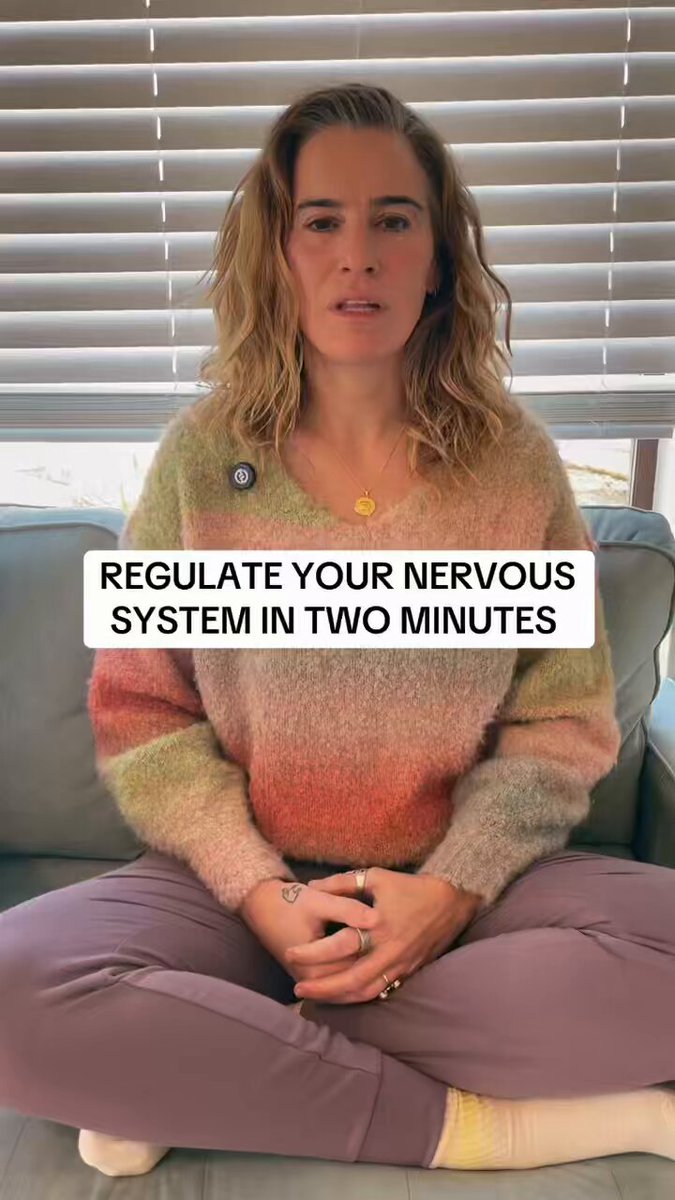
Bookmark and practice this to regulate your nervous system anywhere.
Dr. Nicole LePera495,746 views • 1 year ago


We all want secure attachment. And the best part of our attachment patterns is we can shift them. Through self awareness, practice, and healthy communication. People with secure attachment have 3 core traits: 1. The ability to not take things personally: this gives them space to understand people close to them aren’t attacking them. It also makes it so they can get to self reflection. 2. The ability to self reflect: this is actually more rare than people realize. Those with secure attachment can self reflect. They can ask “is there truth here?” “Is this valid?” If it is, they face it and begin to integrate. Integration is why people with secure attachment patterns tend to grow and evolve more than those with insecure patterns. 3. The ability to be accountable for their impact: if they self reflect and see that someone has a point, they can be accountable. Instead of deflecting or being defensive they can say “I see where you’re coming from” and “I’m sorry and want to do better.” They create a space to have conversations which is why people in their lives feel safe and heard. All of us can practice these traits. It’s about hearing things in new ways and responding in new ways. You’ll see how differently people engage with us when we’re not trying to defend our self image or deny their reality.
Dr. Nicole LePera809,654 views • 3 years ago


In 2017, I knew I was stuck in fawn. It was part of my overall pattern of dissociation. I would zone out and appease everyone around me. My needs didn’t matter. All I cared about was making sure I didn’t create any conflict around me. I just wanted things to be “easy.” Of course fawning actually makes life much more difficult. For me, it was a response to a chronically ill and emotionally distant mother. I learned to be easy to not cause any more stress or conflict in the home. It helped me to cope growing up. But as I got older, it became destructive. It was a core reason I stayed in unhealthy or dysfunctional relationships. It stopped me from seeing that my own inability to emotionally connect was creating a lot of my issues. It kept me in cycles where I would neglect my body and use any situation to distract myself. Getting out of fawn was about establishing pattern breaks. New routines every morning to I could be more in my body. I actually looked at my relationships and realized how I didn’t have any boundaries. So, I started practicing. I started saying “no.” I started placing limits. Without needing to over-explain or to justify myself. It was some of the most difficult work I’ve ever done. And it changed my life. I still have a deep pleasing tendency. But now I know what is and what isn’t my responsibility. I can be kind to myself when I feel guilty for letting people down. I can take care of myself which allows me to actually be there for others. Does anyone else resonate with being stuck in fawn?
Dr. Nicole LePera746,901 views • 3 years ago

0:54
Sensitive content
This media may contain sensitive content.

Bookmark and practice any time you need to self regulate. Our vagus nerve runs through the neck. Stretching your neck and using your eye movement sends a powerful signal of safety to the body. Your body will start to naturally release sympathetic (fight or flight energy) and you’ll slowly go into a parasympathetic state. Keep breathing. Repeat on both sides. You’ve just let your body do its magic of self soothing. Share with anyone who teaches, runs therapy groups, works with children, addiction recovery centers or people trying to heal complex trauma.
Dr. Nicole LePera487,127 views • 2 years ago

Learning to repair as an adult is one of the most important skills. It shows we’re accountable and we respect the feelings of those around us. HOW TO REPAIR: 1. Listen to what someone is saying without getting defensive or deflecting. 2. Notice if something they’re saying is valid or something you didn’t see in yourself. 3. Be empathetic and apologize for hurting them. This builds trust and emotional intimacy. RETWEET FOR AWARENESS.
Dr. Nicole LePera666,701 views • 3 years ago

This one might resonate if you grew up with an emotionally immature father…
Dr. Nicole LePera461,507 views • 2 years ago

This one might resonate if you were called mature for your age.
Dr. Nicole LePera759,980 views • 3 years ago

The impact of growing up with a highly emotionally reactive parent:
Dr. Nicole LePera671,342 views • 3 years ago

If you’re always asking a partner if they’re mad or upset, watch this:
Dr. Nicole LePera616,607 views • 3 years ago
