Apple just trained a 3D Gaussian head reconstruction model... on 10,000+ subjects. Feed-forward. No test-time optimization. New identity in, reconstructed Gaussian head out. The UV-parameterized Gaussian representation decouples the number of Gaussians from the number and resolution of input images, making it practical to train with many high resolution views. And the heads are not just static either: text-conditioned identity generation, plus blendshape-driven latent animation across identities. We've been building in the 3D Gaussian Splatting space for a while. The gap between "research demo" and "works on real people at scale" is closing fast.show more

KIRI Engine - 3D Scanner App
12,181 просмотров • 3 месяцев назад
Single video → a reframeable 4D Gaussian Splatting scene.... Not a sequence of separately built 3D frames played back like a video. This is one continuous space-time scene, reconstructed from a single clip shot on an iPhone 16. We combine feed-forward Gaussian generation, 3D tracking, and 4D Gaussian Splatting, aiming to deliver it as a compact 4D video file that runs on your phone. Still early R&D. The goal: make 4DGS something anyone can create and experience, not just researchers with a camera rig.show more
KIRI Engine - 3D Scanner App
30,603 просмотров • 1 месяц назад
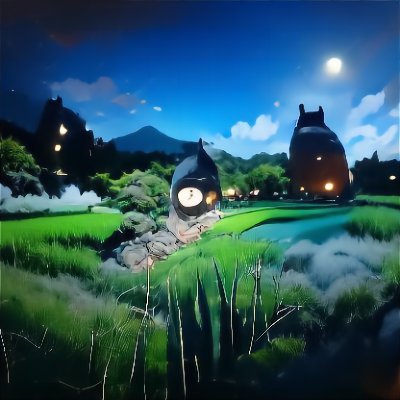
Gaussian Head Avatar: Ultra High-fidelity Head Avatar via Dynamic... Gaussians paper page: Creating high-fidelity 3D head avatars has always been a research hotspot, but there remains a great challenge under lightweight sparse view setups. In this paper, we propose Gaussian Head Avatar represented by controllable 3D Gaussians for high-fidelity head avatar modeling. We optimize the neutral 3D Gaussians and a fully learned MLP-based deformation field to capture complex expressions. The two parts benefit each other, thereby our method can model fine-grained dynamic details while ensuring expression accuracy. Furthermore, we devise a well-designed geometry-guided initialization strategy based on implicit SDF and Deep Marching Tetrahedra for the stability and convergence of the training procedure. Experiments show our approach outperforms other state-of-the-art sparse-view methods, achieving ultra high-fidelity rendering quality at 2K resolution even under exaggerated expressions.show more
AK
65,860 просмотров • 2 лет назад
DroneSplat: 3D Gaussian Splatting for Robust 3D Reconstruction from... In-the-Wild Drone Imagery Abstract: Drones have become essential tools for reconstructing wild scenes due to their outstanding maneuverability. Recent advances in radiance field methods have achieved remarkable rendering quality, providing a new avenue for 3D reconstruction from drone imagery. However, dynamic distractors in wild environments challenge the static scene assumption in radiance fields, while limited view constraints hinder the accurate capture of underlying scene geometry. To address these challenges, we introduce DroneSplat, a novel framework designed for robust 3D reconstruction from in-the-wild drone imagery. Our method adaptively adjusts masking thresholds by integrating local-global segmentation heuristics with statistical approaches, enabling precise identification and elimination of dynamic distractors in static scenes. We enhance 3D Gaussian Splatting with multi-view stereo predictions and a voxel-guided optimization strategy, supporting high-quality rendering under limited view constraints. For comprehensive evaluation, we provide a drone-captured 3D reconstruction dataset encompassing both dynamic and static scenes. Extensive experiments demonstrate that DroneSplat outperforms both 3DGS and NeRF baselines in handling in-the-wild drone imagery.show more

MrNeRF
21,346 просмотров • 1 год назад
GSTAR: Gaussian Surface Tracking and Reconstruction Contributions: • A... new framework for tracking and reconstructing dynamic scenes, combining 3D Gaussians and meshes to effectively manage changes in topology. • A method for Gaussian unbinding and surface re-meshing, allowing for the generation of new surfaces as topologies evolve. • A method for handling large or fast deformations of surfaces between frames using scene flow warping. Abstract (excerpt): However, tracking dynamic surfaces with 3D Gaussians remains challenging due to complex topology changes, such as surfaces appearing, disappearing, or splitting. To address these challenges, we propose GSTAR, a novel method that achieves photo-realistic rendering, accurate surface reconstruction, and reliable 3D tracking for general dynamic scenes with changing topology. Given multi-view captures as input, GSTAR binds Gaussians to mesh faces to represent dynamic objects. For surfaces with consistent topology, GSTAR maintains the mesh topology and tracks the meshes using Gaussians.show more
MrNeRF
22,698 просмотров • 1 год назад
3D Gaussian Splatting for Real-Time Radiance Field Rendering paper... page: Radiance Field methods have recently revolutionized novel-view synthesis of scenes captured with multiple photos or videos. However, achieving high visual quality still requires neural networks that are costly to train and render, while recent faster methods inevitably trade off speed for quality. For unbounded and complete scenes (rather than isolated objects) and 1080p resolution rendering, no current method can achieve real-time display rates. We introduce three key elements that allow us to achieve state-of-the-art visual quality while maintaining competitive training times and importantly allow high-quality real-time (>= 30 fps) novel-view synthesis at 1080p resolution. First, starting from sparse points produced during camera calibration, we represent the scene with 3D Gaussians that preserve desirable properties of continuous volumetric radiance fields for scene optimization while avoiding unnecessary computation in empty space; Second, we perform interleaved optimization/density control of the 3D Gaussians, notably optimizing anisotropic covariance to achieve an accurate representation of the scene; Third, we develop a fast visibility-aware rendering algorithm that supports anisotropic splatting and both accelerates training and allows realtime rendering. We demonstrate state-of-the-art visual quality and real-time rendering on several established datasets.show more
AK
633,674 просмотров • 3 лет назад
First fully ML-framework-free 3D Gaussian Splatting implementation in LichtFeld... Studio. I’ve completed the migration of the full training pipeline to a custom CUDA-based tensor library. No PyTorch, no LibTorch, no autograd. Every gradient is implemented by hand, either through CUDA kernels or minimal abstractions on top. This makes it the first full training setup for 3D Gaussian Splatting with zero dependencies on existing ML frameworks. It’s not just about independence, it's about control! We now manage every byte of GPU memory, which opens the door to tighter optimization and finer performance tuning. The framework footprint is minimal, without pulling in gigabytes of ML runtime code that was never designed for real-time or graphics-driven applications. A few modules, such as the metrics and 3DGUT interfaces, are still being ported, and some operations are temporarily naïve, so performance is not yet on par with master. But this refactor lays the groundwork for: - A fully self-contained binary - Fine-grained memory optimization - Easier experimentation without the weight of an ML stack We’re getting close.show more
MrNeRF
50,548 просмотров • 9 месяцев назад
Wonderland: Navigating 3D Scenes from a Single Image Contributions:... • First, we introduce a representation for controllable 3D generation by leveraging the generative priors from camera-guided video diffusion models. Unlike image models, video diffusion models are trained on extensive video datasets. This enables them to capture comprehensive spatial relationships within scenes across multiple views and embed a form of "3D awareness" in their latent space, which allows us to maintain 3D consistency in novel view synthesis. • Second, to achieve controllable novel view generation, we empower video models with precise control over specified camera motions. We introduce a novel dual-branch conditioning mechanism that effectively incorporates desired diverse camera trajectories into the video diffusion model. This enables expansion of a single image into a multi-view consistent capture of a 3D scene with precise pose control. • Third, to achieve efficient 3D reconstruction, we directly transform video latents into 3DGS. We propose a novel latent-based large reconstruction model (LaLRM) that lifts video latents to 3D in a feed-forward manner. With this design, during inference, our model directly predicts 3DGS from a single input image, effectively aligning the generation and reconstruction tasks—and bridging image space and 3D space—through the video latent space. Compared with reconstructing scenes from images, the video latent space offers a 256× spatial-temporal reduction while retaining essential and consistent 3D structural details. Such a high degree of compression is crucial, as it allows the LaLRM to handle a wider range of 3D scenes within the reconstruction framework, with the same memory constraints.show more
MrNeRF
52,849 просмотров • 1 год назад
NVIDIA just released a very impressive text-to-video paper. Video... Latent Diffusion Models (Video LDMs) use a diffusion model in a compressed latent space to generate high-resolution videos. Here's a brief overview of how it works: 1. Pre-train image LDM on a dataset of images. 2. Turn the image LDM into a Video LDM by adding temporal layers to model video frames. 3. Fine-tune the Video LDM on encoded video sequences to create a video generator. 4. Temporally align diffusion model upsamplers to generate high-resolution videos. 5. Validate Video LDM on real driving videos of 512x1024 resolution, achieving state-of-the-art performance. 6. Apply the approach in creative content creation with text-to-video modeling. Paper: Project:show more

Lior Alexander
158,565 просмотров • 3 лет назад
Competition 2: Mesh Generation 🦾 Until now, our subnet... has focused on Gaussian splats. That work led to integrations with Unity, building the world’s largest 3D dataset, and early application deployments with real users and organic traffic growth. 🕹️ The next step is clear. Developers want native mesh generation that drops straight into existing game pipelines and unlocks real production use today. 🤖 Our competition format lets us move flexibly between goals, optimizing for near term commercial utility with meshes and balancing longer term research with Gaussian splat world models and digital twins. 📈 With significant open source mesh models releasing in the past weeks, the timing is right and the bar for miner innovation has never been higher. Mesh competition launches in 2 weeks!show more

404
33,090 просмотров • 7 месяцев назад
A quick test of using 3d drawing with 6DOF... controllers as an "instructor" for a generative AI process. There's so many powerful and fun new ways to create just around the corner.. Here I'm using Dreams, Krea and 3daistudio. The 3d model at the end of the video was generated from the Dreams+Krea output in just around 15 seconds. Only the model on the left is a "true" 3d model. #ai #madeindreamsshow more

Martin Nebelong
132,864 просмотров • 2 лет назад
In the summer of 2023, I cold emailed Jensen... Huang and asked to capture a NeRF of him at SIGGRAPH. He responded in about an hour and said yes. A radiance field is, in the simplest terms, akin to a 3D photograph. A moment in time, so completely reconstructed that you can move through it and see it from angles the original cameras never occupied. NeRFs were the original method. Gaussian splatting, which debuted at that same SIGGRAPH, has since become the dominant form of radiance field. I called my late friend James, who told me we needed to begin practicing immediately. We ran capture after capture for weeks until we consistently got the capture time down to ~30 seconds with one camera. Later, in a hallway at the LA Convention Center during SIGGRAPH, I captured the portrait you're seeing now, a full 360° gaussian splat of Jensen, rendered here as a 2D flythrough. Afterward, I continued the conversation with him and members of his team to make the case for radiance fields as a foundational representation for imaging. To my surprise, they listened. Three years later, NVIDIA has several works, including NuRec, fVDB, 3DGRUT, and gsplat all utilizing radiance fields. The landscape has evolved enough that the reasoning is obvious. Gaussian splatting has begun to ship across some of the world’s largest industries, including autonomous vehicles, AEC, geospatial, media and entertainment, robotics, e-commerce, hospitality. It’s become clear that lifelike 3D is here to stay. And yet I think we will look back and be disappointed by how late we started taking 3D portraits of the people around us, just like how we have sparse 2D photos of our grandparents and great grandparents. We have billions of photographs of the people we know and love, but almost no radiance fields of them. I'll be returning to SIGGRAPH in LA where this was initially captured three years ago, with the landscape looking significantly different. Radiance fields are more under deployed than ever relative to what they can do. I'm excited for the future of imaging, and for 2D to transition into 3D. I have a few things up my sleeve that I think will make that case plainly.show more

Radiance Fields
18,084 просмотров • 2 месяцев назад
Two weeks ago I fixed one of my teeth... with algorithms I wrote a couple of years ago! I got hooked by 3D scanning when I started to work for a software shop in Zurich that was programming 3D computational geometry algorithms for denture scanning to produce crowns (and more). Back then, a typical reconstruction pipeline was like: scan the patient’s teeth using an intraoral scanner, reconstruct the surface mesh, design the restoration digitally, and finally mill the crown out of ceramic. We were working mostly with point clouds and meshes, but it wasn’t just math, it was craftsmanship translated into a digital process. Every micron mattered. You could literally see how a good algorithm meant a better fit in someone’s mouth. Gaussian Splatting isn’t about surface reconstruction, it’s about appearance reconstruction. It doesn’t care about explicit topology, it captures how light interacts with the scene. In a sense, it’s the opposite philosophy of the dental world: instead of modeling what the object is, it models how the object looks. 3D Gaussian Splatting enables applications like training self driving cars, teaching robots to understand their environment, creating virtual worlds, or monitoring real sites. It represents scenes as millions of small Gaussians rendered in real time without the need for meshes or textures. Coming from a world where precision geometry was everything, this shift felt natural. It’s still about reconstruction, but with a different goal: not manufacturing a perfect object, but reproducing how the world actually looks. Two weeks ago I got my first dental crown, made with the same software, reconstruction algorithms, and Swiss precision I once helped develop. I haven’t worked there in two years, but sitting in that chair and seeing the process from the other side was a proud moment. It reminded me why I love this field.show more
MrNeRF
290,202 просмотров • 9 месяцев назад
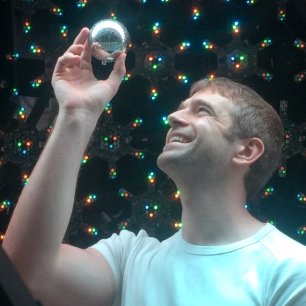
📢Announcing our 3D head avatar benchmark📢 Two tasks with... hidden test sets: - Dynamic Novel View Synthesis on Heads - Monocular FLAME-driven Head Avatar Reconstruction Our goal is to make research on 3D head avatars more comparable and ultimately increase the realism of digital humans. The benchmark studies distinct phenomena of 3D head avatar creation, such as extreme facial expressions, slow motion captures of shaking long hair, or complicated light reflection and refraction patterns of glasses. The two benchmark tasks assess two core desiderata of 3D avatars: While the novel view synthesis challenge focuses on best possible rendering quality of complex moving scenes, the avatar animation challenge is concerned with how well a driving signal is translated into an avatar. Evaluations are light-weight and consist of diverse video recordings from the popular NeRSemble dataset with a hidden test set. Participation in the benchmark is therefore straight-forward and requires only 5 reconstructions per task. Leaderboard and benchmark submission: Benchmark data access and toolkit: Great work by Tobias Kirschstein Simon Giebenhainshow more
Matthias Niessner
28,094 просмотров • 1 год назад
We are excited to introduce Stable Fast 3D, Stability... AI’s latest breakthrough in 3D asset generation technology. This innovative model transforms a single input image into a detailed 3D asset in just 0.5 seconds, setting a new standard for speed and quality in the field of 3D reconstruction! Alongside this release, we’ve also published a technical report that highlights how we achieve fast inference speeds with reduced baked illumination and material parameters. 👾You can learn more and access the report here:show more

Stability AI
438,489 просмотров • 2 лет назад
This is some quietly impressive work on making video... world models actually controllable in 4D space. VerseCrafter lets you take an input image, use something like Blender to animate the 3D camera path and object trajectories, then uses that to condition generation. Scribbling in 2D feels so crude in comparison. The authors represent everything in a shared 4D world state - static background as a point cloud, moving objects as 3D gaussian trajectories. The gaussians are an interesting choice because they capture position, shape, and orientation probabilistically rather than forcing rigid bounding boxes or category specific models like SMPL-X for human bodies. They bolt this onto frozen Wan2.1 with a lightweight adapter, so they get a strong video prior. They also built a pipeline to auto extract 4D annotations from real world videos to train this puppy. It doesn't look sexy yet, but IMO this is the interface video world models need - actual 3D authoring tools to exert control rather than crude scribbles and prompt incantations.show more

Bilawal Sidhu
26,017 просмотров • 7 месяцев назад
Create a 3D model from a single image, set... of images or a text prompt in < 1 minute 😮💨 This new AI paper called CAT3D shows us that it’ll keep getting easier to produce 3D models from 2D images — whether it’s a sparser real world 3D scan (a few photos instead of hundreds) or your favorite 2D image generator like Midjourney (just an image). How does this magic work? “This architecture is similar to video diffusion models, but with camera pose embeddings for each image instead of time embeddings. The generated views are passed into a robust 3D reconstruction pipeline to create the 3D representation (Zip-NeRF or 3DGS)”show more
Bilawal Sidhu
92,867 просмотров • 2 лет назад
Another big drop from Hunyuan3D by Tencent. Hunyuan3D-Buffalo 1.0... is not just another text-to-3D model. The more interesting part is its approach to 3D understanding and editing. It can understand separate parts of a complete asset, extract them, remove or replace them with prompts, and edit only the selected region while keeping the rest of the geometry unchanged. That feels like a much more useful direction for 3D AI in general: not just generating a mesh once, but actually understanding its structure and letting you continue working with it. The model combines Qwen-VL, TRELLIS and Hunyuan3D, and was trained on an impressive dataset of 87 million 3D samples. Source:show more

Stefan 3D AI
35,878 просмотров • 17 дней назад