Most runners have underdeveloped internal rotation. That's why stretching... your hips never seems to fix anything. 90/90 heel lift trains the exact range that's missing. → Front leg in flexion and external rotation → Back leg in extension and internal rotation → Lift the back heel against gravity, that's the hip IR working → Can't lift it? Lean your torso slightly away from the working leg → Move slow. 2-3s up, 2-3s down I'm using a 1kg weight here. Start without load and build up. I'm adding this exercise in my routine because just like most runners, my adduction and internal rotation strength is lacking. 3 x 8-10 each side. If your pelvis is rotating, drop the weight. Quality over quantity.show more
Tim Roozendaal
19,915 görüntüleme • 2 ay önce
Hip airplanes might be the single best exercise for... runners. They've been in my routine for over a year now. I've been using them as a mobility drill. Bodyweight, slow, pushing the end range before a run. When my hip starts acting up, I hit a few reps of this goat mobility drill and usually find immediate relief after a few sets. One movement. Multiple benefits: → Foot splay → Lower leg rotation → Hip stability → Hip strength in multiple planes of motion Make this a staple in your exercise routine. Doesn't matter if you do it before or after your run or during your leg day routine.show more
Tim Roozendaal
75,573 görüntüleme • 3 ay önce
Strong hip flexors keep your knee drive holding up... when the late-race fatigue sets in. The kettlebell hip flexor march is a running-specific way to train them. Single leg, upright, knee driving up with load. Focus points: → Stand tall on one leg → Place a light kettlebell on top of the opposite foot → Brace your core before you lift → Drive the knee up to 90°, hold the kettlebell balanced → Lower slow and controlled, don't let the foot touch down between reps → Stay tall through the standing leg, no leaning back 3 x 8-12 per leg. Aim for RPE 7. The standing leg gets a stability challenge. The driving leg gets loaded hip flexion. And your shin works isometrically to keep the kettlebell from sliding off. Bonus tib anterior work most runners never train.show more
Tim Roozendaal
17,546 görüntüleme • 2 ay önce
Most runners under-load their calves. Heavy calf raises fix... that. Runners usually do bodyweight single-leg raises and call it done. But your Achilles tendon takes massive load every stride. Bodyweight isn't enough stimulus to make it stronger. Heavy load is what drives the adaptation. I do these on leg day. 50kg in the hands, standing on a plate so my heels can drop below the toes. Focus points: → Full range of motion. Heels drop below the plate at the bottom, full extension at the top → Slow on the way down. (~2 seconds.) → Go bilateral when loading heavy. Single-leg has its place, but two legs lets you put real weight through the tendon → Don't rush the rep. This isn't a calf burner, it's a strength lift 3 x 8-10 reps. Train your calves in the gym so they can handle what running demands.show more
Tim Roozendaal
31,153 görüntüleme • 2 ay önce
This might be one of the most under-trained muscles... in your whole lower leg. It's called the tibialis anterior, it runs down the front of your shin, and its main job is to lift the front of your foot up when you walk. At the lowest point of your step, your toes may only clear the floor by about a centimetre. Also called, minimum toe clearance in gait studies. This muscle is a big part of what keeps your toes off the ground. So when it gets weak, especially with age, your toes can scuff the floor and you trip more easily. That slow, foot-dragging walk you see in a lot of older people often comes down to weak shins. It's also what helps lower your foot down gently after your heel lands, instead of letting it slap flat. And because most people train their calves far more than the front of the leg, that imbalance can contribute to shin splints. A go-to for runners Also shows up in knee rehab Try this wall-supported version. You can do it anywhere.show more

Dr Neha Chawla || FreeGym
31,450 görüntüleme • 20 gün önce
Tigers Prospect Jackson Jobe averages 97mph ⛽️ Here are... the 3 keys to his delivery: 1. The drift and drop As he goes into his leg lift, notice how straight his back leg is. This sets him up to create a lot of energy and force as he goes into the drop (load). Along with keep the back leg straight into leg lift, he also gains ground towards home. This allow him to initiate linear momentum while also setting himself up for the load. 2. Hip to shoulder separation During the stride phase he does a great job of rotating the pelvis into foot plant while staying closed with the upper body. His ability to stay level with the shoulders and stacked puts him in a good position to rotate instead of push. 3. Rotational velocity of the chest Staying closed with the torso into foot plant plays a large role in rotational velocity of the chest. Think of separation like pulling a rubber band back. That pull back is creating tension and a stretch that will accelerate once it’s let go. Jackson does an exceptional job of this, allowing him to rotate the upper body extremely well. RECAP 3 keys to Jobe’s delivery: 1. The drift and drop 2. Hip to shoulder separation 3. Rotational velocity of the chest It all starts with the beginning of the delivery. Getting the first move right has a positive effect on the rest of the delivery. Jobe is a great example of one good move effecting the next one and the next one. FLATGROUND Pitchingshow more
Pitching Coach "U"
312,275 görüntüleme • 2 yıl önce
I'm so happy that PhoneBuff mentioned this extremely important... fact about battery tests And it's not just Apples internal testing. It's 9/10 battery tests on YouTube. They never touch the screen once which DOES in fact has a huge impact on battery life Every single time you touch your phones screen, it has to ramp up the processor to not just calculate the touch input, it hast to calculate predictably since you may not just be touching, but swiping. And it should continue scrolling once you lift your finger because that makes it feel more natural. And this needs power. Drains power. So a more important touchscreen and software can make a huge difference in battery life. And most battery tests just ignore that entirely. That's why some tests show vastly different resultsshow more

Tim 🏳️🌈
71,908 görüntüleme • 9 ay önce
This swing has racked up over 1.8 million views... on Instagram — and here’s why. In this move, I’m focusing on pulling my hands in toward my body as I turn the corner. This simple key accelerates my rotation and keeps the club in front of me — just like Hogan. When you feel it, you’ll never go back. 🎯 My next Classic Golf Swing Weekend School is happening September 20–21, and I’ll be teaching one-of-a-kind fundamentals that can truly change your game — and maybe even your life. Email me at [email protected] for more details. Spots are limited! #ClassicGolfSwing #BenHogan #MySwingEvolution #GolfSchool #GolfFundamentals #GolfTraining #SwingLikeTheLegends #GolfDallasshow more

Classic Golf Swing
148,220 görüntüleme • 11 ay önce
Most people can’t hold a Reverse Plank because their... nervous system doesn’t feel safe being that exposed. Collapsed shoulders and tight hips are postures of defense. This pose invites the body to leave that state. One minute a day can begin to reverse years of silent tension. If you want the fitness results you see in your mind to become real, you’ll need to teach your body how to relax first. Otherwise, forget the great transformation. You'll burn out before coming close to changing. At first, you may need to adjust the position or do shorter sets. You will notice slight improvements each time, whether it is strength, mobility, or endurance. One day, you will unlock the posture and feel much lighter within. Form Cues: - Hands shoulder-width apart, fingers pointing toward feet or slightly outward - Press palms firmly into the ground to engage shoulders - Lift hips in line with shoulders and heels - Squeeze glutes and push hips up, avoid letting them drop. - Keep legs straight and active, heels grounded - Draw shoulder blades down and together - Open the chest. - Gaze slightly upward or keep neck neutral - Breathe steadily, through the nose if possible - Hold tension evenly through arms, core, and legs Here are three adjustments you could make to ease into the Reverse Plank: 1. Bend the knees slightly - What it does: Reduces the load on tight hip flexors and stiff shoulders. - How to do it: Instead of keeping the legs fully straight, maintain a small bend at the knees and press through the heels. Focus on lifting the hips and opening the chest. 2. Use yoga blocks under the hands - What it does: Elevates the wrists and reduces wrist extension strain, especially for people with limited mobility or wrist pain. - How to do it: Place yoga blocks (or low, stable books) under your palms to give your shoulders more space and reduce the pressure on the wrists. 3. Turn the fingers outward slightly - What it does: Opens up tight shoulders and reduces internal rotation. - How to do it: Instead of pointing the fingers directly toward the feet, turn them slightly outward (about 30–45 degrees). This gives the shoulders more room to move and helps you stay open. You're not reading this by accident. Start using Reverse Planks to take your quality of life to the next level.show more

Alex Bernier
71,160 görüntüleme • 1 yıl önce
Is strength important for speed development? Here’s my take... ⤵️⤵️ For context — this is me cleaning 295 lbs at 167 lbs body weight and I credit my abilities in the weight room largely for helping my collegiate career flourish the way it did However… We can’t lift at the expense of speed training and development What that means is when we enter the weight room we can’t do so with blinders on acting as if the only thing in the world that matters is that weight training session or improving your 1RM YES… you need force to move your body through space YES… that force needs to be high relative to your body weight BUT… you must be a skilled mover to apply said force in the right positions, at the right times, with the right vectors for it to mean anything While important to holistic athletic development, we’ve got to stop acting like strength is the ultimate differentiator in speed Lot of “weak” athletes will blow your doors off in sprints Lot of “strong” athletes get folded in speed & power sports Go into the weight room with the idea that you’re complementing your speed and athletic development… not superseding it If your legs are so beaten and broken down from lifting heavy you can’t train for 2-3 days without excessive risk, you’re doing it all wrong. Just some perspective from someone who once pursued 1RMs to no end while my track times stagnated… and then was enlightened by world class coaches who lifted within the context of my sport to take me from a college tryout to D1 All American What’re your thoughts? Let’s discuss in the comments!show more
Brendan Thompson, PT, DPT
76,004 görüntüleme • 2 yıl önce
Unsure the level of concern at the moment (1.09... FIP + 27.5 K-BB%) but I think it's worth nothing that Sanchez's FB velo is down: First 3 G (2026): • 94.4 MPH (-2.1) • 94.3 MPH (-1.5) • 94.6 MPH (-0.6) *(L: '26, R: '25)* Last year: • Sanchez was a bit more efficient w/ his hip + shoulder separation • His body was more linear, helping that center of mass move correctly. • Better lower half allowing him to keep that pelvis a bit more linear -- which is likely result of the ribcage is stacked over his pelvis + sitting in that load longer on foot strike (??) This year: • Energy is leaking from that back knee into rotation • Upper + lower working w/ each other more and less of working against one another (arm doing more than it should) • His pelvis is noticeably tipping down through rotation (not a direct cue but more of a result of less lower half activation) Angles/WBC fatigue could also be at play here as well -- but assuming they're not could be some things to clean upshow more

Joseph Cammisa
43,317 görüntüleme • 3 ay önce
There is no such thing as "lower abs". Your... rectus abdominis is one continuous muscle. You cannot contract the bottom half on its own, and no exercise on earth isolates a region that does not anatomically exist. So all the things sold to you as "lower ab" builders are actually just glorified hip flexor exercises: - Leg raises - Reverse crunches - Flutter kicks - Scissor kicks - Mountain climbers - The dreaded "lower ab burnout circuit" None of them is carving a separate lower section. They train the same single muscle every other ab exercise trains, just with more hip flexor and more wishful thinking. The reason you cannot see your lower abs is not a missing exercise. It is the layer of fat sitting over them, which collects there last and leaves there last. So the actual programme is dull and two-part: - Get into a calorie deficit and strip the fat that is hiding them - Build the abs themselves with weighted crunches, 4-6 reps, adding load over time, like any other muscle That's it. There is no lower-ab secret. There is just a visible-ab one, and it lives in the kitchen and under a loaded cable.show more

Sama Hoole
27,193 görüntüleme • 25 gün önce
May be the most difficult hurdle for a wrestler... to clear—trusting that the same offense that built the lead is what protects it. The instinct is to protect the lead, but the approach that creates better odds, less regret, and is simply more logical is to keep wrestling the same way that created the lead. Stay on the attack, stay in position, and keep applying pressure. The one who needs to change and create opportunity is the opponent who is losing. So why would you go ahead and assist them in this by back peddling and lead protecting, opening up two windows that weren’t there before? 1 – Stall points 2 – Allowing your opponent to solely focus on their offense as they no longer have to respect your attacks. You hear wrestlers in post-match interviews “We do this all the time in the room! Down 2 with 30 seconds left and working to find a takedown.” Not so much the opposite… “up 2 with 30 seconds left and just have to find ways to back up to protect the lead!” So why resort to something you don’t practice in the most crucial moments of a match—or your season? This is from the excellent series “The Climb” by Stilly Boys on YouTube — a segment from Episode 2: Road to the Big 12s.show more

Cornell Kevin
42,071 görüntüleme • 4 ay önce
Misiorowski: 2025 (left) vs. 2026 (right) mechanics -He's been... averaging nearly 2 mph harder on his fastball over his last handful of starts compared to last year. -His K/BB has almost doubled: from 2.81 to 5.41 this year, reflecting much better command. What you'll immediately notice is a significantly pre-set forward torso posture. Why? ✅Shifts the loading strategy from quad/toe to glute/heel ✅Back heel stays connected longer ✅Deeper back knee/hip flexion ✅Able to stay in his load longer, building more linear momentum ✅Less motion happening at the trunk - this is a "set it and forget it" approach that was likely targeted at improving his command over velocity. ✅Pelvis rotating level into release, not dumping arm side He also has noticeably larger legs, allowing him to produce more ground force, both on the back side and lead leg block standpoint. I've said for a while that I don't think we'll see a pitcher hit over 107 in our lifetimes, but Miz is one of the few who has a chance to knock on that door.show more

Ben Brewster
329,272 görüntüleme • 26 gün önce
Best Kegel Exercises for Erctile Dysfnction (E.D.) and Premture... Ejacultion (P.Ε.) strengthening the pelvic floor muscles (the ischiocavernosus and bulbocavernosus) can provide a natural first line of treatment to improve stability and control. Kegel Exercises for Better Performance 1. Floor Lying (On Your Back) - Lie on your back with knees bent and feet flat. Draw your p*nis inward toward your body. Hold for 5 seconds, then release. Squeeze your anus muscles (as if stopping a bowel movement). Hold for 5 seconds, then release. Repeat 8 to 10 times for 3 to 5 sets.2. Side Lying Squeezes Lie on your side with a large pillow between your knees. Squeeze your legs together firmly against the pillow. Hold for 5 seconds, then release. Repeat 8 to 10 times for 3 to 5 sets. 3. Sitting Chair Squeezes Sit comfortably in a chair. Squeeze your internal muscles as if trying to stop urine flow. Hold for 5 seconds, then release. Repeat 8 to 10 times for 3 to 5 sets. Important Training Tips Keep Breathing: Never hold your breath during the squeezes. Lift, Don't Push: Focus on squeezing and lifting the muscles upward rather than pushing down. Relax the Rest: Keep your stomach, glutes, and thighs relaxed. Only the pelvic floor should be working. Progress Gradually: Start with 5-second holds. After a month of daily practice, aim for 10-second holds and 8 to 10 sets.show more
forged manhood
19,380 görüntüleme • 3 ay önce
I created a dance movement sheet by using a... reference image to animate every 16 panels from the reference image I provided. GPT Image 2 + See Dance 2.0 on Yapper Tutorial Below Prompt Here’s every step with the text under each heading: 1. Basic Stance Stand with your feet shoulder-width apart. Relax your knees. Keep your upper body relaxed. Get ready. 2. Step to the Right Step to the right. Move your body in the direction of the step. Keep your knees soft. Keep your gaze forward. 3. Step to the Left Step to the left. Move your body in the direction of the step. Keep your knees soft. Return to the starting position. 4. Two Steps Take two steps in sequence. Step to the right first. Then step to the left. Connect smoothly. 5. Body Wave Start the wave from your chest. Move through your ribs and hips. Finish with your lower body. Make the motion smooth like a wave. 6. Hip Sway Move your hips side to side. Shift your weight with the motion. Use your body naturally. Keep your upper body relaxed. 7. Arm Swing Swing your arms wide. Step to beat with your feet. Coordinate your arms and steps. Return your arms to center. 8. Turn Preparation Prepare for a turn in place. Cross one foot over the other. Use your core to maintain balance. Spot in the direction of the turn. 9. Right Turn Turn to the right. Keep your core engaged. Pivot on the ball of your foot. Spot forward after the turn. 10. Left Turn Turn to the left. Keep your core engaged. Pivot quickly. Keep your posture upright. 11. Jump Up Bend your knees and jump up. Reach your arms overhead. Land softly on your feet. Connect to the next move. 12. Kick Pose Kick your leg forward. Keep your supporting leg stable. Engage your core for balance. Control your landing. 13. Side Lunge Step wide to one side. Bend one knee and lower your body. Keep the other leg straight. Show the direction of your strength. 14. Freeze Pose Hit a strong pose on the beat. Freeze your body momentarily. Create a powerful shape. Show your presence. 15. Finishing Pose Finish the dance gracefully. Keep your balance. Show your confidence. End with a clean, sharp pose. 16. Whole Flow Connect from the basic stance to the finishing pose. The steps, waves, and turns flow naturally together. Express your own style.show more

Sharon Riley
54,571 görüntüleme • 2 ay önce
Did you know? Your calf has a muscle that... helps pump blood back to your heart. It’s called the soleus, and it’s part of your peripheral heart. When it contracts, it squeezes the deep veins in your calf and pushes blood up against gravity. Valves stop it falling back. But if you sit still all day, this pump sits idle while blood pools in your legs. Mind you, standing calf raises won't fully challenge it. With the knee straight, the gastrocnemius (the muscle on the surface) is free to share the load, because it crosses the knee. So the soleus always gets help and never works at its limit. But if you bend the knee, that flips. A bent knee shortens the gastrocnemius until it goes slack and can barely produce force. Also called ‘active insufficiency’ in exercise science, where a two-joint muscle, shortened at one end, drops out of the movement. So the gastroc switches off, and the soleus, which only crosses the ankle, has to carry the whole thing on its own. That's why the best way to hit it is a bent knee: seated calf raises, or this deep squat version. It’s nearly 80% slow-twitch, so it loves volume and barely fatigues. Sustained work here has even been shown to improve blood sugar control for hours. Train it deep, slow, and often.show more
Dr Neha Chawla || FreeGym
78,757 görüntüleme • 21 gün önce
You should NOT workout if you merely want to... stay in shape or look good Maybe if you're over 40 or a woman I could understand But if you're a young man, that's an indicator of extremely low T and that you're unoriginal and blindly mimicking everyone else If all you do is controlled movements inside of a building, that's extra ghey You should be taking risks and having fun OUTSIDE (The gym is a ludic fallacy) That's not to say you shouldn't lift with controlled movements at all, but they should serve a greater goal Let's say that you want to land a jump 10ft away and you couldn't go that far, you should be squatting to get the strength of your quads, glutes, and hamstrings up. You should also be doing accessory exercises for bulletproofing your ankles, ACL, hips, neck, etc. But that's a completely different approach to working out compared to bodybuilding. You should be trying out cool stunts that you want to do FIRST Parkour, breakdancing, MMA, gymnastics, surfing, anything truly impressive Then when you're caught lacking, focus on progression and prehab that would lead you to your goals Anyone can look good in the mirror But like Bruce Lee said, "Boards don't hit back." Don't become a bored, you're a biological open system in motion Dare to pull off some cool stunts God loves braveryshow more

Mimetic Value 🚀
18,856 görüntüleme • 2 yıl önce
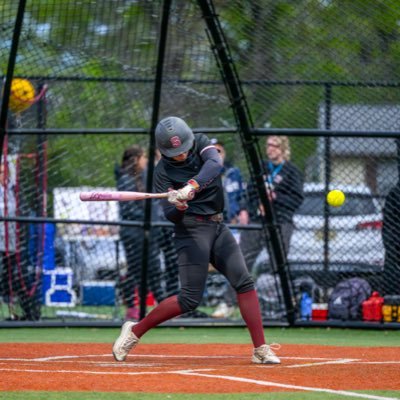
Yeah, I know the Mookie video gets overused… but... what he says here is absolute gold. Some of the best info on social media, period. Mookie shows how going back lets the lat pull the top arm. In a game, when he lets that move flow into the ground, the chain fires correctly: ground → pelvis → torso/lat → hands. That’s why the barrel turns from the middle instead of being pushed. Trevor Bauer explains the same thing on the mound: rotation pulls the lat, the arm just whips through. Swing or throw it’s the same principle. Stay connected, let rotation compress into landing, and the sequence works. Cut it off, and you’re just pushing. And here’s the truth: Once you understand this connection as a parent or coach, you can’t mess a kid up it’s how the body naturally moves around center mass. The mistake comes from listening to people who’ve never taken health or fitness seriously. If they don’t understand how the body sequences, they’ll lead you down the wrong road. This isn’t a “method.” It’s just how the body works. And the barrel path? It’s not something you force behind center it happens because the sequence is right.show more
John Sangillo
100,200 görüntüleme • 11 ay önce
Strength work for Leadville 100 💪 Over the years,... I have felt judged by the research--my strength routines were limited to a few minutes at a time, while everyone was screaming at me from their Abstracts that I needed to do way more. I noticed two big problems whenever I committed to more resistance training: 1. I'd carry around soreness even after the initial adaptation window, likely corresponding to high CK levels and some background inflammation. Either way, it would reduce running economy on subsequent running training days, and every training day counts. Split squats are the ultimate offender--an exercise that I know I should be doing, but I can't without feeling like Forrest Gump after he was shot in the butt. 2. I just wouldn't do it. Oops. With lots of guessing and testing, I developed this routine, which I'd do after my easy run on Sunday (before a Monday rest day), and sometimes after my workout on Wednesday (if I felt like it): 1. Three Minute Mountain Legs, working up to 100 single-leg step-ups (I think step-ups in particular are a magic exercise for running uphill. But remember, magic is not equal to science): 2. Back squats, 2 sets of 10 (135 pounds for me, which I make look like 800 pounds in this video. The 17-year old me who played football would laugh so hard) 3. Back extensions, 2 sets of 30, engaging glutes and hamstrings 4. Single-leg calf raises, 1 set of 100 on each leg, with a 35 pound dumbbell 5. Every day, I do the 2-minute Core Snack routine 1-3 times. My core strength is one of my best attributes for ultras, and I can do the Core Snack with our toddler Leo. I also do daily band work before running (bandz a make me dance): That's it! I also foam roll and stretch daily (don't tell the researchers, but I am a tight boi and as soon as I stop stretching, I get hurt). The lesson is not to do this particular routine, but that strength training for runners can be based on individual needs. And I personally think that routines should be short and efficient for both performance (limiting breakdown) and adherence (limiting me from being a lazy little punk). Find what works for you, do it 1-2 times per week year round (on top of some daily supportive work), and don't feel the need to pursue progressive overload. It's not about getting stronger and stronger (unless you're into that sort of thing for its own sake, which I think will sacrifice some running growth). It's about supporting performance and health 🧡show more

David Roche
66,383 görüntüleme • 1 yıl önce
watched a guy stream yesterday. 1000 games this season.... same rank. but here's what he did: posted a highlight clip. "consistency is key" talked about his "grind mindset" made a tier list video about matchups. created content about his journey. everyone in chat: "grind god, keep pushing" but nobody asked: why are you still here? 1000 games. still master tier. that's not a grind. that's an addiction. here's the brutal truth: grinding FEELS productive. you're playing. you're improving. you're getting better. except you're not. you're just busy. the highlights you post? that's 1 out of 50 games. the other 49? you're making the same mistakes. the same positioning. the same macro decisions. but the GRIND itself feels good. because grind = progress in your mind. virgin grinder: plays 100 games, reviews nothing, posts highlights, calls it a grind chad improver: plays 10 games, reviews every one, makes changes, climbs but the virgin FEELS like he's doing more. feels like he's working harder. feels like he DESERVES to climb. here's what actually happens: you play 1000 games without CHANGING anything. your brain gets addicted to the effort. to the routine. to the FEELING of grinding. "i played 8 hours today" → dopamine hit im up 50 lp! so. you're still not good at the game the disconnect breaks your brain so you post another highlight and tell yourself "consistency" consistency at WHAT? being hardstuck? watched another guy play 200 games. changed his mindset. climbed 2 divisions. why? because he didn't grind. he ADAPTED. the grind is EASY. you just queue. you just play. you just show up. but actually IMPROVING? that's hard. that's thinking. that's admitting you were wrong. that's changing habits. most of you will never do that because the grind is COMFORTABLE. it FEELS like you're working. it FEELS like progress. it FEELS like you deserve the climb. but more games does not equal results. your friends see you playing 8 hours a day and think you're dedicated. but you're not dedicated. you're ADDICTED. addicted to the feeling of "grinding". addicted to the routine. here's the uncomfortable truth: if you've played 500+ games and haven't ranked up significantly, you're not hardstuck. you're COMFORTABLE. you like grinding more than you like climbing. because climbing requires CHANGE and change is terrifying. grinding is safe. grinding has no accountability. grinding lets you post highlights and say "progress" but climbing? climbing forces you to admit: i was wrong. my playstyle is bad. i need to change fundamentally. that's painful. so you grind instead. you grind and you grind and you grind and you tell yourself the climb will come. but it won't. not until you stop grinding and start CHANGING. the saddest part? you have the time. you have the will. you have the mechanics. you just don't have the HONESTY. the honesty to admit 1000 games with zero progress isn't a grind. it's a cry for help disguised as improvement. study the saskio wayshow more

Tony Chau
44,529 görüntüleme • 8 ay önce