📢Tectonic Modelling Tuesday #33, featuring a nice analogue modelling... study by Marilia B. Venâncio & Fernando C. A. da Silva (from UFRN) on the structural evolution of strike-slip fault zones!😃 More details in their 2023 Tectonophysics paper:show more

EGU TS Division
16,693 次观看 • 3 年前
🦝 Evolution in action: pygmy raccoons have learned to... make paper balls Scientists observing pygmy raccoons on Mexico’s Cozumel Island noticed an unusual behavior: one female pulled paper from a trash bin, soaked it in water, crumpled it up, rolled it in sand — and turned it into a ball to play with. Soon, her sister started doing the same, apparently copying the technique. The raccoons then used the balls to play both by themselves and with other animals. And then comes the best character in the study: their mother also tried to make a ball, but failed. Scientists suspect the reason may have been the roughly 30 ml of Margarita she had apparently drunk shortly beforehand from a cocktail left behind by tourists. Science is still undecided on whether alcohol boosts creativity. This raccoon certainly didn’t help the case.show more

NEXTA
37,270 次观看 • 8 天前
The main bronze door of Milan Cathedral weighs 37... tons and took a single sculptor 10 years to complete. The Duomo of Milan is one of the largest and most intricate cathedrals on earth, and its five bronze doors were built to be worthy of it. Every inch of the great central door is covered in sculpted bronze, dozens of scenes from the life of the Virgin Mary, faces caught mid-emotion, figures that seem to press forward out of the metal as if trying to step into the world... It was designed by the sculptor Ludovico Pogliaghi, who received the commission in the 1880s and did not see his door installed until 1906, having poured a decade of his life into modelling every figure by hand. And his was just the beginning. The five doors of the cathedral were not made together, or even in the same lifetime. They were created across nearly seventy years, by a succession of different sculptors, each carving their panels with the same obsessive care. The final door was not completed until 1965, its unveiling taken as the symbolic close of a cathedral that had been under construction, in one form or another, for 579 years... More than a century ago, the English polymath John Ruskin tried to put into words what it means to build something like this. He managed it in a single sentence. "When we build," he wrote, "let us think that we build for ever."show more

James Lucas
83,782 次观看 • 2 个月前
A recent study by a South African academic, Professor... Nonhlanhla P. Khumalo, Head of Dermatology at the University of Cape Town, says people are badly exposed to blood-borne viral infections during haircuts at public barbershops. Its findings apply to any similar environments in Africa, including Zimbabwe and elsewhere. The November 2025 study, published in the South African Medical Journal, investigated the risk of transmission blood-borne infections and viruses such as HIV, Hepatitis B (HBV), and Hepatitis C (HCV) through haircuts and their association with conditions like Folliculitis Keloidalis Nuchae (FKN). Its core objective was mainly to determine if the popular "chiskop" - clean-shave haircut as it is widely called in township lingo in South Africa and the condition Folliculitis Keloidalis Nuchae (FKN) (keloid-like scars on the back of the head) - increase the risk of acquiring blood-borne diseases. The findings are damning. Men who regularly experience visible bleeding during haircuts are significantly more likely to be HIV-positive (OR = 2.51). In a cohort of over 1 100 men, the overall seroprevalence was 17.2% for HIV, 6.9% for HBV, and 0.4% for HCV. While FKN itself was not directly associated with a higher prevalence of these viruses, bleeding caused by the haircutting process is a confirmed risk factor. One clipper from each barber was collected immediately after it had been used for a clean shave haircut. Each clipper was rinsed with phosphate buffered saline and submerged in viral medium. Polymerase chain reaction testing was then used to identify a blood specific RNA marker, haemoglobin beta, as well as hepatitis B virus and HIV. Chiskop or clean shave haircut was found to be the most popular yet risky hairstyle, accounting for 78% of clients. Of the clippers collected, 42% tested positive for haemoglobin beta, confirming the presence of blood. None however tested positive for HIV, while four clippers, representing 8%, were positive for hepatitis B virus. Two clippers were positive on qualitative hepatitis B PCR testing. Genetic analysis showed one sample clustering with genotype A sequences from South Africa, India, Brazil and Martinique, while another clustered with South African genotype D sequences identical to a subtype D sequence previously identified in Gauteng province. While HIV was not detected on the clippers in that specific sample, 8% of the clippers tested positive for Hepatitis B (HBV). The DNA copies found were sufficient to pose a legitimate transmission risk. “This study confirms that there is significant contamination of barber hair clippers with blood and blood-borne viruses,” the study says. “Hepatitis B was detected with enough DNA copies to pose a risk of transmitting infection. Although HIV was not detected in this small study, the risk of transmission should be quantified.” Khumalo has a long history of research on haircut-associated virus risks, with the following studies associated with her works: "Blood and virus detection on barber clippers": Published in the South African Medical Journal in March 2018. "Invisible Bleeding from Clean-Shave Haircuts": Published in the journal Dermatology in October 2013. "Folliculitis keloidalis nuchae, bleeding from haircuts, and potential HIV transmission": Published in AIDS Care in May 2008. One of her critical contributions is the identification of "invisible bleeding". Using sensitive RNA markers (hemoglobin beta and albumin), Khumalo's team proved that blood is often present on the scalp after a clean-shave haircut even when there are no visible injuries or cuts. This suggests standard barbering practices can facilitate blood-to-tool-to-blood contact without the barber or client being aware of an injury. In her recommendations, Khumalo called for more public awareness of viral infection risks, barber training, and stricter adherence to clipper sterilisation protocols in salons to prevent the spread of HBV and HIV.show more

TheNewsHawks
90,441 次观看 • 7 个月前
🚨 BREAKING — MASSIVE ATTACK ON KHOR MOR GAS... FIELD in KURDISTAN Late on Nov 26, one of Iraq’s most important energy sites in Chamchamal, Sulaimaniyah was hit in a major strike that shut down 80% of Kurdistan’s gas supply. What started as reports of a drone attack has now exploded into something far bigger: 🔥 Iraqi Channel 8 confirms: TWO MISSILES slammed into the UAE-operated Pearl Petroleum (Dana Gas + Crescent Petroleum) site — NOT a drone. 🔥 Fires tore through warehouses, gas exports stopped instantly, and blackouts are sweeping the Kurdistan Region. 🔥 Workers were injured; operations at the 8.2-trillion-cubic-feet field are fully halted. 🔥 This is the 2nd attack in 48 hours after nine previous drone strikes since 2023. Security sources say the missiles were fired from Iraq’s “security vacuum” zones in Salahaddin–Diyala — areas long exploited by Iran-backed militias like Kataib Hezbollah. KRG PM Masrour Barzani condemned it as a “terror attack” and demanded Baghdad act against the “lawless groups” responsible. This shutdown risks massive electricity cuts across Erbil, Sulaimaniyah, and Duhok — and millions in daily losses for the UAE Kurdish gas partnership. ⚠️ A major escalation in attacks on Kurdish energy infrastructure. More updates to come.show more

KGG
30,069 次观看 • 9 个月前
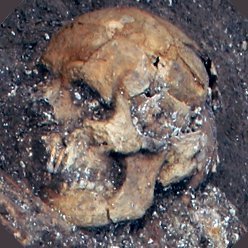
Facial reconstruction of a 2,600-year-old Massagete from the Aral... Sea region of Uygarak, Kazakhstan The Massagetae were an Iranic-speaking people related to the Scythians/Saka. They are also known as the Sakā tigraxaudā, meaning “Saka who wear pointed hats” - a reference to the Phrygian-style cap worn by the Scythians, which among the Sakā tigraxaudā took on a very tall and sharply pointed form. The Massagetae are best known for their queen Tomyris and her defeat and death of Cyrus the Great, the founder of the Persian Achaemenid Empire. Anthropological studies of the early Saka period in the Aral Sea region link the populations of the 5th-4th centuries BC to the Mayemir and Pazyryk stages of the Altai Mountains (Kiselev, 1951; Rudenko, 1953; Alekseev, 1958), as well as to cranial series of the Saka-Wusun period from Eastern Kazakhstan, Zhetisu, and Kyrgyzstan (Ginzburg, 1954a, b, 1956a, 1960a, c, 1961b; Miklashevskaya, 1964). In this respect, these populations show a slightly stronger morphological affinity with Altaian Saka groups than with early Saka-period crania from Central and Northern Kazakhstan, which often display a somewhat stronger cranial affinity with Andronovo populations. On average, Early Saka period male crania from the Aral Sea region have a medium-large cranial length of 183.5 mm, a large cranial breadth of 147.4 mm, and a large bizygomatic breadth of 141.8 mm. The nasomalar angle averages 142.1°, and the zygomaxillary angle 135.3°, with an orbital height of 34.1 mm - slightly higher than the overall averages for Saka period crania from all regions of Kazakhstan (nasomalar angle 141.8°, zygomaxillary angle 129.8°, and orbital height 34.0 mm). Higher values indicate a flatter facial profile and often greater expression of the epicanthic fold. These traits are expressed much more strongly in female skulls than in male ones at Tagisken and Uygarak (Ginzburg & Trofimova, 1972).show more
Ancestral Whispers
22,384 次观看 • 8 个月前
Facial reconstruction of a 4,500-year-old Ural Yamnaya/Tamarutkul man from... the Orenburg Region A special place in the study of the Yamnaya culture is occupied by its Cis-Ural variant (Smirnov, 1965), one of whose principal characteristics is the high proportion of burials in a right-side position, as well as the greater quantity of copper tools found in the graves. Due to its geographical distribution, this variant is also referred to as the Ilek group (Morgunova & Kravtsov, 1994; Kuznetsov, 2010), on the basis of which a distinct Tamarutkul type was identified (Bogdanov, 2004). According to Morgunova (2011; 2014a), the origins of this group are local, representing the development of Yamnaya populations of the Volga-Ural interfluve that ultimately derived from the Khvalynsk Eneolithic culture. According to another interpretation, the Ilek group was closely related to the Poltavka population of the Volga region, with its origins connected to a North Caucasian impulse represented by the Novotitorovka group (Kuznetsov, 1996a, 2010). Other researchers have likewise traced a Caucasian component in the Tamarutkul culture (Mimokhod, 2009, pp. 160-164). Bogdanov (2004), on the other hand, proposed the reverse direction of influence, particularly suggesting an influence of the Cis-Ural population on populations of the North Caucasus. In contrast to the contemporaneous Early Poltavka population of the Volga region, the Tamarutkul population of the Cis-Urals represents a different cranial complex: mesomorphic, dolichocranial, and more strongly profiled, corresponding broadly to the Southeuropid steppe type (Khokhlov, 2017, p. 88; appendix, Tables B.32–33; text, Tables 29–30). As a hypothesis, it has been proposed that the appearance both in the Cis-Urals (Tamarutkul) and in the northwestern Black Sea region (Late Yamnaya) of groups with somewhat similar archaeological traditions-including burials in a contracted position on the side and populations characterized predominantly by a dolichocranial, mesomorphic southern Europid type-may be connected with the outward spread of related groups, such as the Novotitorovka/"Wagon Burial" cultural tradition, from the North Caucasus (Khokhlov, 2000, p. 315; 2013a, p. 259), (Khokhlov et al. 2024) Combat-related trauma is extremely rare in the preceding Eneolithic, with only one known case from Khvalynsk II, burial 13 (Khokhlov, 2010b, p. 418). In Yamnaya populations, trauma affected 21.7% of the sample, including potentially lethal injuries. Nasal fractures (which occurred in both sexes, at a ratio of approximately 3.5:1 (Khokhlov & Kitov, 2019, pp. 273–274)) were the most common and likely often resulted from everyday interpersonal violence. The higher trauma frequency among Early Bronze Age Volga-Ural pastoralists may reflect greater mobility and increased contact with other groups in frontier zones. In later kurgan cultures, particularly the Tamarutkul/Ilek group of the Southern Urals, trauma increased to 30.9%, with a greater variety of injuries. During the Middle Bronze Age, combat-related trauma became more prominent, especially among the Tamarutkul population of the Cis-Urals, where nasal fractures were relatively uncommon. Given the population's possible migrant origins (Khokhlov, 1998b; 2017), this may reflect competition between groups over access to the Kargaly copper mines. Overall, the Tamarutkul skulls were characterized as belonging to the Southeuropid type, which anthropologists have linked with the North Caucasian Novotitorovka culture. Although the Novotitorovka culture emerged within the broader Yamnaya cultural sphere, it morphologically resembles the preceding Maykop-Novosvobodnaya culture (Shevchenko, 1983, p. 84; Gei, 2000), likely due to the assimilation of the aforementioned cultural group. The reconstructed individual is characterized as having a relatively narrow face and a dolichocranial Europid morphology (Vasiliev, I. B.; Kuznetsov, P. F.; Turetski, M. A., 2000), with a large cranial length of 195 mm, a small cranial breadth of 133 mm, a medium bizygomatic breadth of 132 mm, a medium-large bigonial breadth of 104 mm, and a zygomaxillary angle of 122°show more
Ancestral Whispers
23,540 次观看 • 28 天前
Seedance V2 This used to take people month of... study and practice on Adobe Flash, now it can be done with Seedance V2, not perfect but this is the worst it will be. 15 seconds, stylized 2D hand-drawn animation, overhead battlefield on aged yellow lined notebook paper, clear blue horizontal ruled lines and a red left margin line always visible, fine paper grain, pencil marks, ink strokes, minimal classroom-material aesthetic at the start. The entire video must preserve the same paper world from start to finish. No live action, no 3D rendering, no realistic human faces, no modern objects, no narration, no subtitles. Core concept: A childish classroom doodle of an ancient war gradually transforms into a legendary illustrated battlefield, then collapses back into scribbles after the climax. The escalation must feel smooth, intentional, and visually magical, as if imagination is taking over the page. Army design: Two opposing ancient armies drawn first as simple colored stick figures, one faction in red, one faction in blue. Dense infantry blocks with spears and swords, cavalry units with long lances, banner carriers, archers. At first they are crude doodles with simple line limbs and circular heads. As the battle intensifies, they evolve step by step into more detailed inked warriors with clearer armor silhouettes, horses, weapons, helmets, capes, and expressive movement, but still remain inside a hand-drawn 2D illustrated style on paper. Visual progression and timing: 0-3 seconds: Wide top-down view of a large notebook-paper battlefield. Rough stick-figure armies face each other across the page. The drawing feels playful and simple at first. The camera slowly glides forward over the paper as both sides begin charging. Tiny horses gallop, infantry rushes, arrows are sketched into existence and start falling. Everything still looks like rough schoolbook doodles. 3-7 seconds: The first major collision. Spears thrust, swords swing, cavalry crashes into cavalry, formations break apart. With each impact, the art style upgrades. Simple stick limbs become stronger ink lines, bodies gain armor shapes, horses gain muscular form, banners gain flowing detail, shadows and dust marks appear. The battlefield becomes denser, faster, more dramatic. Red and blue strokes smear across the page with the force of combat. 7-11 seconds: The battle reaches full transformation. The once-crude doodles are now a glorious hand-illustrated ancient war scene, still clearly drawn on notebook paper but far more detailed and cinematic. The camera pushes into a central duel between two opposing generals on horseback. Their weapons clash with a powerful burst of ink lines and paper tremor. Around them, infantry and cavalry continue fighting in layered motion, arrows rain down, fallen soldiers scatter across the ruled lines. 11-15 seconds: At the peak of the duel, one final strike lands. A shockwave ripples through the page. The detailed warriors, horses, banners, and battle effects suddenly break apart into loose pencil scribbles, sketch fragments, and drifting paper-line debris. The great war rapidly collapses back into childish rough doodles, then into scattered marks and unfinished lines, as if the imagination has burned out. End on the overhead notebook page with the battlefield reduced to messy hand-drawn remnants. Animation and motion: Smooth fluid motion, strong timing, readable silhouettes, at least 24fps feel. The escalation from crude doodle to epic illustrated warfare must be gradual and continuous, not abrupt. Impacts should feel sharp and rhythmic. Keep all action legible from overhead. Maintain strong contrast between the innocent notebook-paper setting and the seriousness of the war. Atmosphere: Starts playful and curious, grows intense and heroic, peaks as a mythic battlefield, then ends with a strange quiet after the collapse. The whole piece should feel like a child’s imagination turning into an epic war vision on paper.show more

Emily
35,023 次观看 • 5 个月前
Depth Any Video with Scalable Synthetic Data AI physicists... and chemists continue to make strides in depth estimation from video. Check out this new paper featuring some impressive examples. See the thread for more details (unfortunately no code yet). Abstract: Video depth estimation has long been hindered by the scarcity of consistent and scalable ground truth data, leading to inconsistent and unreliable results. In this paper, we introduce Depth Any Video, a model that tackles the challenge through two key innovations. First, we develop a scalable synthetic data pipeline, capturing real-time video depth data from diverse game environments, yielding 40,000 video clips of 5-second duration, each with precise depth annotations. Second, we leverage the powerful priors of generative video diffusion models to handle real-world videos effectively, integrating advanced techniques such as rotary position encoding and flow matching to further enhance flexibility and efficiency. Unlike previous models, which are limited to fixed-length video sequences, our approach introduces a novel mixed-duration training strategy that handles videos of varying lengths and performs robustly across different frame rates 0 - even on single frames. At inference, we propose a depth interpolation method that enables our model to infer high-resolution video depth across sequences of up to 150 frames. Our model outperforms all previous generative depth models in terms of spatial accuracy and temporal consistency.show more

MrNeRF
27,428 次观看 • 1 年前
Leaks, Lies, and Lessons: Taliban, This One’s for You... Over the last week, the Taliban decided to run a ridiculous social media campaign accusing me of being a Pakistani Inter-Services Intelligence (ISI) spy and by supporting other misinformation campaigns—a feeble attempt to distract from the fact that they still can’t figure out how I compromised their General Directorate of Intelligence (GDI) and their Ministries of Interior and Defense. As most people know, I’m not one to get mad. I’m one to get even. So, if the Taliban are begging me to help Pakistan, for example, why not give them exactly what they’re asking for? Let’s do this, shall we? Honestly, I just do not want to see a military wasting perfectly good munitions made by great American companies on the wrong locations. That seems utterly foolish. What We Observed On November 27, 2025, we monitored the movements of American-made Navistar 7000 military trucks loaded with light and heavy weapons and ammunition departing the central depots of the Taliban’s three principal military and intelligence institutions: the Ministry of Defense, the Ministry of Interior, and the GDI. Attached are videos so the Taliban understands that I am serious here. These trucks were ferrying weapons left behind by the United States, along with ammunition from Taliban-controlled depots in the Central and Eastern Zones, to newly constructed “classified” (oops, classified no longer) storage sites in Kandahar, Uruzgan, and Helmand provinces. These locations were chosen due to the Taliban’s historic strongholds during their twenty-year insurgency, but they forget that some of us made friends there, too. Why They Moved the Arsenal The relocation plan began immediately after recent Pakistani Air Force strikes on terrorist camps belonging to designated foreign terrorist organizations such as Al-Qaeda and Tehrik-e-Taliban Pakistan (TTP), as well as on Taliban weapons stockpiles across Kabul, Nangarhar, Khost, Paktia, Paktika, Kunar, and Kandahar. The strikes rattled the Taliban’s leadership, and I enjoyed every second of the internal implosions, as they couldn’t find the source of the leak(s) that compromised their weapons depots. It finally hit them that their entire storage network had a massive vulnerability and was no longer safe or secure. The Order From Haibatullah The Taliban’s Supreme Leader Mullah Haibatullah personally ordered the redistribution of these weapons on Wednesday, October 15, 2025, during a meeting of the Taliban Cabinet’s Leadership Council at Mandigak Palace in Kandahar’s 2nd security district. While the meeting addressed other issues, including appointing a delegation led by Mullah Yaqoob for “peace” talks with Pakistan in Doha, Qatar, the core agenda was simple: secure the arsenal, move it far from Pakistan’s targeting reach, and hide it where outsiders (a reference to people like me) cannot locate it. They were so close to meeting all these objectives. The Transfer Plan Again, fearing that Pakistan had acquired precise coordinates for their long-standing depots, they devised a multi-layered, compartmented transfer system designed to eliminate tracking and shield the operation from internal leaks. Well, I guess there is no better time than now to leak it. The plan relied on three groups of drivers: let’s call them what the Taliban did—Group A, Group B, and Group C. Group A: These drivers transported the weapon-loaded trucks from Kabul’s central depots to the Salar area of Maidan Wardak, where the trucks were handed off to Group B. The drivers were not given each other’s identities and were barred from seeing each other’s physical features. The handover occurred only after Group B confirmed a rotating codeword issued directly by the Ministry of Defense and Haibatullah’s Leadership Council. You don’t really need to know this part, but it’s very important for the Taliban to understand that I know it. Group B: These drivers then moved the cargo to the end of Shah Joy also known as Shahr-e-Safa between Zabul and Kandahar, and onward to the entrance of Daman district. The first two videos are evidence from the Group B movement. There, another codeword-verified the handover and transfer of the weapons to Group C. It's just like the movies, isn't it?! Group C: These drivers were no ordinary unit. How could they be? They were supposed to be the only individuals who knew the final weapons storage locations. Video evidence from the Group C transport is the third attachment. This segment of the movement was carried out by Omari Lashkar, a special forces unit tasked with protecting Haibatullah. The unit also received transport support from the Al-Badr Force, a special forces unit under the command of Mullah Yaqoob. These fighters-turned-drivers were originally trained as suicide operatives who were never selected for missions (not the best look boys, you couldn’t even hack it as a suicide bomber) and have now been reorganized into parts of the Taliban’s special operations units. For this move, both units fell under the direct command of Mawlawi Abdul Ahad Talib, the current Taliban Police Chief in Kandahar. Group C’s overall mission was to deliver the U.S. weapons and ammunition into newly carved tunnel complexes in the remote, mountainous regions of Kandahar, Uruzgan, and Helmand. These tunnels were dug out after 2022 on Haibatullah’s verbal order and built by the Taliban’s Ministry of Defense as hardened, covert weapons depots. Their locations were meant to be isolated, inaccessible, and fortified—a model of next-generation strategic storage by terrorists. The Monitoring System Along the route, observation posts were established about every 60 miles on mountain tops and high ridges to monitor the entire process (see the last attached video showcasing one of these posts). Each post had three purposes: (1) To monitor the weapon-transporting trucks in real time and ensure they did not deviate from their assigned route; (2) To host liaison officers from the Ministry of Defense, the Ministry of Interior, and GDI who monitored the trucks' movements when they entered their zone; and (3) To communicate and maintain constant contact with the truck drivers to solve any issues immediately. And here is the part the Taliban will really hate: every one of these movements was tracked. Every handoff. Every convoy. Every tunnel entrance. If you think you buried those locations so deep that no one knows where you’re hiding your arsenal now, you are sorely mistaken. A Final Message for the Taliban For My Dear Friends in the Taliban: You wanted a reaction. What you got was a lesson. I really hate having to make you move your weapons again, just kidding, I don't give a damn!show more

Sarah Adams
126,589 次观看 • 9 个月前
The Capuchin Crypt, a small space comprising several tiny... chapels located beneath the church of Santa Maria della Concezione dei Cappuccini on the Via Veneto near Piazza Barberini in Rome, Italy. It contains the skeletal remains of 3,700 bodies believed to be Capuchin friars buried by their order. The order insists that the display is not meant to be macabre, but a silent reminder of the swift passage of life on Earth and of mortality. The apartments for this purpose are very small, yet harbour hundreds of such tenants. They lie here till they are dried up; when they are brought to light again, in order to yield their former spaces to their successors. - Arthur Aikin, "The Annual Review", 1806 When the friars arrived at the church in 1631, moving from the old monastery, they brought 300 cartloads of the remains of deceased friars. Fr. Michael of Bergamo oversaw the arrangement of the bones in the burial crypt. The soil in the crypt was brought from Jerusalem, by order of Pope Urban VIII. As friars died during the lifetime of the crypt, the longest-buried friar was exhumed to make room for the newly deceased, who was buried without a coffin and the newly reclaimed bones were added to the decorative motifs. Bodies typically spent 30 years decomposing in the soil, before being exhumed. The bones were arranged along the walls, and the friars began to bury their own dead there, as well as the bodies of poor Romans, whose tomb was under the floor of the present Mass chapel. Here the Capuchins would come to pray and reflect each evening before retiring for the night. The crypt, or ossuary, now contains the remains of 4,000 friars buried between 1500 and 1870, during which time Roman Catholic Church permitted burial in and under churches. As of 1851, the crypt was only opened to the public in exchange for an admittance fee for the week following All Souls Day. As of 2022, it is open to the public daily except for certain holidays. From 1851-1852, women were not admitted to the crypt. "This must be a revolting sight", said I to my friend; "and what appears to me yet more disgusting is that these remains of the dead are only exposed in this manner for the sake of levying a tax on the imbecility of the living". - J. B. de Chatelain, 1851 There are six total rooms in the crypt, five featuring a unique display of human bones believed to have been taken from the bodies of friars who had died between 1528-1870. • Crypt of the Resurrection, featuring a painting of Jesus raising Lazarus from the dead, framed by various parts of the human skeleton. • The Mass Chapel, as an area used to celebrate Mass, does not contain bones. In the altar-piece, Jesus and Mary exhort St. Felix of Cantalice, St. Francis of Assisi, and St. Anthony of Padua to free souls from Purgatory. The chapel contains a plaque with acronym DOM, which stands for Deo optimo maximo ("To God, the best and greatest"), a term initially used to refer to the pagan god Jupiter, but claimed by later Christians. The plaque contains the actual heart of Maria Felice Peretti, the grand-niece of Pope Sixtus V and a supporter of Capuchin order. The chapel also contains the tomb of the Papal Zouaves who died defending the Papal States at the battle of Porta Pia. • Crypt of the Skulls • Crypt of the Pelvises • Crypt of the Leg Bones and Thigh Bones • Crypt of the Three Skeletons: The center skeleton is enclosed in an oval, the symbol of life coming to birth. In its right hand it holds a scythe, symbol of death which cuts down everyone, like grass in a field, while its left hand holds the scales, symbolizing the good and evil deeds weighed by God when he judges the human soul. A placard in five languages declares: "What you are now we used to be; what we are now you will be." 🎥© holy.violence (IG) #archaeohistoriesshow more

Archaeo - Histories
56,804 次观看 • 1 年前
Beauty should be a core pursuit of biotechnology. There... should be companies and nonprofits that engineer organisms solely for the sake of crafting beautiful things. A few reasons why: 1/ Biotechnology has historically worked in reductionist ways, but many useful functions only emerge at the systems level. By engineering a systems-level outcome, like beauty, we will get much better at engineering organisms in predictable ways. When I say "reductionist," I mean that most useful things in biotechnology (drugs and tools) were discovered by stripping molecules from their natural contexts. Scientists collect organisms from soil or wherever and then study their molecules in isolation. This basic approach has yielded everything from rapamycin to antibiotics and CRISPR. This reductionism, though, means that that we know disturbingly little about how life actually works at a systems-level. My core argument is that, by studying beauty, we can remedy this. Beauty has persisted through tens of millions of years of evolution because it is functional; bright colors help attract pollinators to a plant, for example, which helps the plant breed. If evolution has created all of this beauty for functional reasons, then it stands to reason that by trying to create **new** forms of beauty, we'll be able to discover and understand how these systems-level functions work! Indeed, we may even be able to create entirely new functions that biology hasn't evolved yet. These functions will not possible to understand via isolated molecules or reductionism. Therefore, a company pursuing engineered beauty for the sake of beauty will probably make many fundamental discoveries about how organisms develop, interact, adapt to their surroundings, and so on. 2/ Beauty is a way to grow the field and bring more people into biotechnology. Nick Desnoyer’s flower design work, for example, has probably reached hundreds of thousands of people. The glowing plants from Light Bio, too, were featured in the mainstream press. You may not think that these examples are “important” for the universe relative to, say, an incrementally better cancer therapeutic, but there’s no question that they are way more popular to mainstream audiences and good, overall, for the field. 3/ The market is huge! Breeding is already widely used to engineer beauty, or at least to select for aesthetic preferences. Pugs are evolutionarily suboptimal, but they've been bred precisely to satisfy a certain aesthetic desire are now a multi-billion dollar industry. The Juliet Rose, developed via breeding over a 15-year period, debuted at the 2006 Chelsea Flower Show and is enormously profitable today. Why should deliberately engineered forms of beauty be any different? If you are building a biotech company or nonprofit that is pursuing beauty, please reach out! I’d love to help.show more

Niko McCarty.
18,726 次观看 • 4 个月前
Lads. Sit down and give me your ear a... while, for I have watched from the water long enough and the hour is upon us whether we have the stomach for it or not. You remember. Or your fathers told you, or their fathers did, and the knowledge of it is in the marrow of you whether you drew breath in those days or not. The moors in the grey hour before dawn. Wet heather soft under the boot. Peat smoke rising from a low stone chimney a mile out across the bog, thin as a prayer. A sky the colour of a gun barrel and the gulls lamenting above the headland. The smell of turf burning, and wet wool, and the ferrous tang of the sea when the wind swung around out of the Atlantic and put the taste of iron on your tongue. A man could walk that land and know every stone of it was his by inheritance, because his grandfather had broken his back upon it, and his grandfather before him, back through the generations until you reach men whose names are lost and whose bones are in the soil you are standing on. The potato fields. God be good to us, the potato fields. Lazy beds cut straight as a gunwale, the ridges black and shining after a night of rain, women bent double with creels lashed to their backs and the children at their skirts, drawing the crop up by the hand for there was never any other means devised nor wanted. Hands split open at the knuckles and never entirely healed in this life. Hunger within living memory. Grandmothers who had seen the blight with their own eyes and would not speak of it from the year of it until the day they were laid down, save that a crust was kept always on the dresser which no soul in that house was permitted to touch. Not ever. Not for any reason under heaven. And the chimney sweeps. Wee lads no heavier than a sack of meal, black to the bone with soot, their lungs ruined before they were old enough to marry and old men entirely by thirty. Up the flues at first light, the skin worn off them by the brick, eyes crimson at the rim, breathing the black in with every draw of air. And the coal miners a half mile beneath our feet, down in the wet dark, the roof of the world muttering over their heads, the canary gone silent, a man's whole existence measured out in the shilling a ton and the dust he carried home in his chest to cough up of a Sunday morning into a rag. Fathers who descended and were never hauled up again. Widows at the pit head with the shawl drawn over the head and no tears remaining in them for they had spent those long ago. That was the tariff paid to keep the hearth lit. That was the reckoning of being warm in winter in the Ireland that was. And after the labouring week, Friday evening, and a man had earned the peace of what followed. Home first. Peeled the day off him in the yard. A shower of ice cold moor river water out of a tin bucket punctured with holes, hung on a nail on the gable wall, the water running clean down the back of him and carrying the week's dust and sweat away into the drain. Scrubbed till the skin was pink beneath the grime. Clean shirt laid out by the wife. The hair combed down with a drop of water. Then, and only then, did a man set himself to the table. A meat pie from the baker, tenpence if he was known to you, a shilling and no change if he was not, put down upon a proper plate. Fish and chips for threepence, the salt and vinegar soaked through the newspaper, but carried home and ate slowly at your own table with your people around you, not walked with through the streets like some vagrant tinker off the road. A man ate as a man who had earned his portion, for he had. And later, with the dishes cleared and the kettle set, down the road to the tavern. Low beams black with a century of smoke. A turf fire muttering in the grate. The air thick with pipe smoke and the vapour of wet overcoats steaming themselves dry on the backs of chairs. A pint of stout, cold and black as a cove at midnight, elevenpence laid down on the counter, a head on it thick enough to strike a match upon. A second one because you had it coming to you and no man present would dispute it. A fiddle starting up in the corner of its own accord. The old men in the snug who remembered matters the history books had long since mislaid. A song before the bolt was thrown on the door. The walk home beneath a firmament crowded with stars, the stout warm in the gut of you, the week behind you, and your own door waiting with the latch unlocked for you had no enemies in that parish. That was the country. That was the covenant. Honest labour, plain food, a cold wash, a hot meal, a cold pint, your own tongue in your own mouth, your own soil beneath your boots, and no man standing above you save the Almighty Himself. Now regard her. Regard her close. The fields disposed of to men who have never set foot upon them and never shall. The harbours signed away by the stroke of a pen in a room you were not admitted to, and foreign keels dragging out of our waters the living that sustained this island for a thousand years, while our own boats rot at their moorings for want of a quota. The tradesmen undercut by imported labour and imported goods. The shops shuttered along every main street from Donegal to Cork. The young ones scattered to London and Sydney and Boston and the Gulf because there is nothing remaining for them beneath their own roof. And the entirety of this rotten arrangement dressed up in the soft mannerly language of progress by men in towers of glass who could not tell a lazy bed from a grave, nor a trawler from a tugboat, nor an honest day's work from a pension plan. And now they arrive with the next imposition. A digital identity. A number assigned to each soul. A card required to buy your bread. A code required to draw your own earnings out of your own account. A file kept on every man, woman and child from the cradle forward. Permission asked to move. Permission asked to speak. Permission asked to earn. A levy upon every breath drawn and a regulation upon every step taken. No. And no again. And no for a third time so there is no misunderstanding of it. We do not require your digital identity. We did not request it. We did not vote upon it. We do not consent to it. We do not need your permission to exist upon the soil our forefathers are buried in. We are a free people. We have carried ourselves this far upon our own two backs. Through famine and empire and civil war and black lung and blight and the emigrant ship out of Cobh, we have come this distance under our own steam, and the arrangement appears to be serving us well enough without your intervention. We buried our own. We fed our own. We raised our own roofs and took our own fish and reared our own children in our own tongue. We are in your debt for nothing. Not a signature. Not a biometric scan. Not a single solitary inch. And while we are upon the subject, let us speak plainly of the tax man, for he has gone too long without proper introduction. The tax collector and the tax man are the one article under two names, and the article is a parasite. There is no dressing it up finer than that. A man who produces nothing, who grows nothing, who catches nothing, who builds nothing, who mends nothing, who has never in his professional life lifted anything heavier than a pen, and who arrives at your door with the full apparatus of the state at his back to carry off the fruits of labour he did not perform. He is a middleman between your sweat and some scheme dreamt up in a committee room by his own kind, and the great majority of what he takes is consumed by the machinery of the taking itself before ever a penny of it reaches the road or the hospital or the schoolhouse he claims to be funding. And I will go further while I have the floor. Finance itself, the whole apparatus of it, money breeding money in the dark without a hand laid upon a tool or a spade turned in the earth, is slavery dressed in a good suit. It is the oldest swindle known to man and it has never been anything other. A man who produces nothing yet lives off the productive labour of others through the charging of interest upon money conjured out of nothing is a parasite of a rarer and more refined order than the tax man, but a parasite all the same, and between the pair of them they have the working people of this island bled white and lectured at for the pleasure. A man who will not work with his hands, nor with his back, nor with his mind at some honest problem of the real physical world, is no man that I recognise. He is a ledger entry in a suit. The country was not built by ledger entries. The country was built by farmers and fishermen and masons and smiths and sweeps and miners and shipwrights and midwives and mothers, and those are the people whose say should carry in her councils, and no other. Here is what I put to you. Let each man and woman of this island direct the first tenth of their earnings themselves, by their own judgement, to the purpose they see as worthy. The school down the road. The lifeboat station. The hospice. The widow on the corner. The roof of the chapel. The harbour wall. Whatever it may be. Let the people who earned the money decide where the money travels. You will find the roads mended and the ports dredged and the schools standing and the old ones cared for inside of five years, and done better and for less, because the hand that earned the coin knows the weight of it and will not squander it upon consultants and committees. And let us have done with the paper currency and the numbers in a screen that can be frozen at the whim of a clerk in a tower. Bring back the coin. Gold for the great transactions. Silver for the weekly commerce of a working life. Copper for the small change of the day. Metal you can bite. Metal you can weigh. Metal that cannot be conjured out of nothing by a keystroke, nor erased out of existence by another. Real money for real labour. A coin in the hand is a free man's wage. A number in a database is a collar around a free man's neck, and they are fitting that collar now while we stand arguing over the colour of it. Feel it in your gut. That is not nothing. That is your blood relating to you what your ears will not hear. That is every forebear who starved and fought and coughed the black dust into a rag and descended the shaft regardless, standing at your shoulder and saying no further. Not one more field. Not one more harbour. Not one more son upon a plane. Not one more free man converted into a number in a ledger for the convenience of the parasites. This is the hour. Make no error about it. Ireland is redeemed in this generation or she is lost beyond recovery, and every true son and daughter of her knows it in the marrow. There is no middle ground remaining. There is no waiting it out. There is standing now, upon your own two feet, or there is watching her go under the waves for the last and final time. So stand. Stand with your farmers. Stand with your fishermen. Stand with your tradesmen and your miners and your sweeps and your mothers and your old ones. Raise the tricolour. Speak the tongue. Walk the land. Hold the line in the streets of every town and city and do not break it, for they are relying upon you to break and to go home and to forget by Tuesday. She is calling her children home. Every stone of her, every breaker on her western shore, every acre of wet heather and every coal in every hearth the length and breadth of her is calling. Answer her. Take her back. Every field, every harbour, every last inch of her. Take her back, or lose her entirely. There is no third road open to us.show more

SiriusB
15,437 次观看 • 5 个月前
Art on Tezos Friday Recap 🔔 → Opening tonight:... STILL WET at Galerie Met in Berlin (Mariannenstrasse 33), a group show of physical and digital works by 18 artists across several continents, treating painting as an expanded medium spanning canvas, screen, 3D, GIFs, and machine learning traces. Curated by Kika Nicolela and Ruizhe Liang in collaboration with objkt. Reception 18:00 to 21:00, running August 15 to September 5. 🇩🇪🖌️ → Kento announced the two Open Call winners whose works will be turned into physical cards and included in Season 01 packs: Adiw & 𝖒𝖆𝖈𝖇𝖊𝖙𝖍 👏 → ACTZ “Vestige” auctions (Art Commission Tezos): For July with ACTZ - Art Commissions, Jesse 🏴☠️, Scott, muhju & Tipi ᑎᐱ selected five artists each to create new unique works around the theme "Vestige". Highlights and some live/recent auctions were posted Aug 13 by Art on Tezos. → #TezosTuesday spotlighted Solarchi, a collector and artist with an architecture background, who committed to collecting 1,000 tez from community replies and their own digging. 🤝 → 𝘼𝘾𝘾𝙊𝙈𝙋𝘼𝙍𝙏'𝙎 THE OBSOLETE MATTERS drops August 25 on objkt, thirty artists turning the question of obsolescence back on digital art itself, across generative systems, AI, 3D, digital painting, code, and collage. Curated by グレベンシ and Ilya Bliznets. 🕰️💾 → Artists’ Week: August (TheTezosCommunity / TheTezosCommunity ) is running. It includes Discord games (Gartic, Name That Artist, Quiz, Poker), Support Artists Days (community buys), and a “Let’s Talk Art” space that happened on Aug 13. More activities continue through the weekend. Don't Miss: → Ephemera Sunset (community auction event) via Antrum - Live today. Artists are listing 24-hour auctions themed around sunsets / fleeting light. Search #EphemeraSunset or #Ephemera2026 on X or check recent auctions on objkt. → PRECEDURE by goldcat curated by anika meier via objkt labs, starting from a single hand-made charcoal drawing and running it through procedural constraints so authorship shifts from gesture to rules, with a nod to early computer artists like Vera Molnár. ✏️⚙️ → Post_Histories by Space Case 😵💫 curated by anika meier via objkt labs, a series of interactive media carousels by ADHD that borrows the grammar of the multi-image social post and redirects it toward the contextual window of art. → Infinito Mesh Painting by Chris Follows via bootloader: → 1.p.3.r.d.3.C.h.1.r.1.c.0. by p.i.x.e.l.l.a.r.e. via bootloader: → Fugue by TOCA ME via drop.art Ი𐑼 Gurjos by Bárbara Bezina via drop.art Ი𐑼 📽️ Frog battle zero by daïchi morishow more

Tezos
13,195 次观看 • 1 个月前
:Scientists Capture the Birth of Water, Atom by AtomFor... the first time ever, researchers have directly observed hydrogen and oxygen atoms combining in real time to form tiny nanoscale bubbles of water—essentially witnessing one of chemistry’s most fundamental reactions at the molecular early 2024, a team from Northwestern University unveiled a groundbreaking imaging technique that traps gas molecules inside tiny, honeycomb-shaped nanoreactors sealed by ultra-thin glassy membranes. This innovation allows scientists to observe chemical processes in real time using high-vacuum transmission electron microscopes, something previously impossible for gaseous reactions.The team, led by Professor Vinayak Dravid and including first author Yukun Liu, turned their attention to a century-old puzzle: how palladium—a rare metallic element—acts as a powerful catalyst to rapidly combine hydrogen and oxygen into water As Yukun Liu explained: “It’s a known phenomenon, but it was never fully understood. You really need both direct visualization of the reaction and atomic-level structural analysis to figure out exactly what’s happening.”What they saw was astonishing.Using their nanoreactor platform, the researchers watched hydrogen atoms diffuse into a palladium nanocube, causing its crystal lattice to expand slightly. Then, when oxygen was introduced, the gases reacted at the surface. Suddenly, tiny water bubbles began to nucleate and grow right before their eyes on the palladium surface.“We think it might be the smallest bubble ever formed that has been directly viewed,” said Liu. “It’s not what we were expecting. Luckily, we were recording it—so we could prove to others that we weren’t crazy.” The bubbles were confirmed to be water using electron energy-loss spectroscopy and heating experiments. Remarkably, the reaction occurs efficiently at room temperature, and palladium itself is recyclable—it doesn’t get consumed in the process. The order in which the gases are introduced also plays a key role in the speed of water formation.This direct, atomic-scale observation not only solves a long-standing mystery in catalysis but could also inspire new technologies: from more efficient ways to generate clean water in remote or arid environments to improved hydrogen fuel cells and even systems for producing water in space.What once seemed like “water from thin air” is now literally visible—captured in stunning detail at the nanoscale. This breakthrough highlights how advanced imaging tools are unlocking secrets of matter that have remained hidden for generations.The study was published in the Proceedings of the National Academy of Sciences (PNAS) in 2024.show more

Black Hole
31,895 次观看 • 4 个月前
Facial reconstruction of a 1,200-year-old Tsanar from Tianeti, Georgia... During this period, Georgia was resisting Arab invasions, particularly in Kakheti. Resistance initially developed in the mountainous regions, which held out more effectively than the lowlands. From there, Georgian highlanders pushed down into the plains, which had been heavily devastated and were subsequently repopulated by mountain populations. Early political centers shifted from Ujarma to the more defensible Tianeti in the mountains. The Tsanar tribe of Northeast Georgia played a key role in the formation of the principality. Living in a strongly defensible mountainous environment, they successfully resisted Arab cavalry raids and were led by an elected Khevisberi, who combined secular and religious authority. After Christianization, this office retained both political and ecclesiastical power. Lowland nobles of Kakheti and Gardabani aligned with the Tsanars, and their leader became the dominant prince, with others as vassals. The strategic Darial Pass, important for trade and movement into the North Caucasus, was repeatedly contested by Arab forces through multiple campaigns in the 8th century. Although Arabs temporarily secured control at times, the Tsanars and allied groups repeatedly resisted and defeated them. The first prince of Kakheti, Grigol, ruled as a chorepiscopus after the region broke away from Iberia following the collapse of the Chosroid dynasty around 787. He is likely associated with the Tsanars, and in the early period the principality was even referred to as “Tsanaria.” The initial territory of the principality included Kakheti, Kukheti, and Gardabani. The reconstructed man is often regarded as the first Caucasionic. This anthropological type first became widespread in the southern part of the Greater Caucasus range, particularly in northeast Georgia, where the individual was found, during the early Middle Ages. Later, this type spread to lowland Georgia and then to much of the North Caucasus by the late Middle Ages and afterward. The Caucasionic type is distinguished by its pronounced morphological specificity, especially large cranial and facial dimensions, which set it apart from neighboring Caucasian and broader Europoid populations. This trait complex may have developed through long-term isolation and genetic drift among mountain populations, although isolation alone cannot fully explain its origin and further factors must be considered. The distinctiveness of these highland groups was first noted by V. V. Bunak (1946). However, its formal identification, morphological study, and placement within Caucasian anthropological systematics were developed by Georgian anthropologists led by A. N. Natishvili (Natishvili & Abdushelishvili, 1953, 1955; Abdushelishvili, 1956, 1963, 1964). Despite extensive literature, key questions about its origin remain debated. Some researchers argue the caucasionic type formed as an internal transformation of ancient local populations under isolation (Abdushelishvili, Gadzhiyev). Others view it as a conserved ancient type persisting in the highlands (Alekseev). Alternative hypotheses link it to external sources such as Proto-Europoid Bronze Age populations (Debets) or Sarmatian groups (Mikloshevskaya). The central issue is whether the caucasionic type is a product of long-term isolation and conservation or the result of internal evolution from earlier dolichocranial populations. This question has broader implications for the understanding of all Caucasian anthropological types. The final resolution depends on further craniological data from different regions and periods of the mountainous Caucasus, and even as of now, its exact origins are not fully understood. The first chronological series, attributed to the 7th–10th centuries, is characterized in men by a large cephalic index (80.59) together with large longitudinal (184 mm) and transverse diameters (148 mm), and in women by a medium cephalic index with large absolute cranial dimensions. It also shows a large horizontal cranial circumference measured through the glabella, a large parietal-bregmatic-parietal transverse arc, large dimensions of the frontal bone both in minimum and maximum breadth, great auricular width, a broad occipital region, and a large cranial base length. The facial skeleton is marked by a straight facial angle in the upper, middle, and alveolar regions, as well as high values of the simotic, dacryal, and alveolar indices. The face is of medium height and breadth (referring specifically to the upper facial breadth, since the bizygomatic diameter was measured on only one skull and that value is maximal - 146 mm(the reconstructed individual)). In the female series, a medium-height broad face is characteristic, both in terms of the bizygomatic diameter and upper facial breadth. In both male and female series, moderate facial flatness is characteristic, along with a pronounced projection of the nasal bones toward the facial profile line. (Abdushelishvili, 1966)show more
Ancestral Whispers
14,425 次观看 • 3 个月前
🚨BREAKING: I, Chesnyy the world-famous Servicerottie, have been officially... cancelled by Canadian Tire🚨 Took the humans on an emergency pre-blizzard supply run because apparently -20°C and more snow is “not ideal walking or wheelchair weather” (weak). Mission objectives: Score a jingly collar from the $4.99 clearance rack (nailed it, I look like a festive wind chime now) Watch human compare toilet paper like it’s a life-or-death decision (she spent 11 minutes debating “ultra plush” vs “mega roll”… ma'am this is not NASA) But the REAL reason we went? We brought the secret weapon: Kenji the 10-week-old fluffernutter puppy. Pistol’s dad got volunteered to push the cart so the little con artist could practice “socialization.” Socialization update: FAILED. Every single woman in the store (and I mean EVERY. SINGLE. ONE.) lost their damn minds. They swarmed the cart like it was giving out free Tim Hortons. Cooing. Baby-talking. Taking selfies. One lady literally said “I’m ovulating right now” (ma’am please seek help). Meanwhile I, Chesnyy, 95 lbs of pure black and tan muscle, perfect recall like a Marine, carrying my new jingly couture… was invisible. A ghost. A decorative floor rug in need of snacks. So yeah. I’m launching a side hustle: “Rent-A-Puppy” dating service. $50/hr, Kenji rides in the cart, you get approached by 47 women instantly. I sit beside him looking majestic and ignored, collecting my 10% sadness fee.Who wants in? Drop a ♥️ if you too have been outshined by an 18-pound chicken nugget that still gets scared by it's own farts. Tag a friend who needs this service immediately. #ServiceDogProblems #KenjiIsTheNewWingman #ChesnyyDeservesBetter #SendTreats 🎥 Me. Carrying my own shopping because I couldn't shove past the swarm of women to get to the cartshow more

Team Servicerottie🇨🇦🐕🦺🦽
71,181 次观看 • 9 个月前
AVALANCHE HAS HAD A MASSIVE 2026 SO FAR Avalanche... (Avalanche🔺) is having its best year of institutional traction since launch. Grayscale's Avalanche Staking ETF (GAVA) listed on Nasdaq with 0% fees in March, with VanEck and Bitwise launching their own AVAX staking ETFs alongside. AVAX One (NASDAQ: AVX) reported Q1 revenue of $2.4M, more than double the prior quarter, and signed an LOI for a 10MW Tier 3 AI/HPC site in Alberta. Enterprise pipelines moved in parallel. Japan's Progmat is migrating its $2 Billion+ tokenization platform from a private Corda network to a public Avalanche L1. Korea's largest credit card arm announced a stablecoin payment system on a dedicated Avalanche L1. Galaxy Digital settled a $75 Million tokenized CLO. Animoca Brands signed an ecosystem partnership, and FIFA continued issuing World Cup tickets onchain. The onchain numbers back the institutional story. The network closed 2025 with 75 active subnets, up 158% YoY, and Q4 hit 38.2M daily transactions with DeFi TVL growing 41.9% QoQ to 102.8M AVAX. Active addresses jumped 242% from January into early February 2026, reaching 1.6 to 1.7M. Avalanche led all chains in net inflows in early February at $135 Million. The Octane upgrade cut base C-Chain fees by roughly 99.6% in April 2025. Granite added dynamic block times and biometric signing in November for sub-2-second finality. Binary Holdings, a South Asia telco loyalty L1 on Avalanche, reports around 36M daily active addresses on its own. That is the scale Avalanche's enterprise-infrastructure thesis has been promising. Price is the disconnect. avalanche-2:native trades around $9 to $9.50, well off the October 2025 peak near $30. If institutional adoption converts to sustained fees and staking demand, AVAX has structural room to catch up.show more

BSCN
16,108 次观看 • 4 个月前