Video wird geladen...

Video konnte nicht geladen werden

Zur Startseite

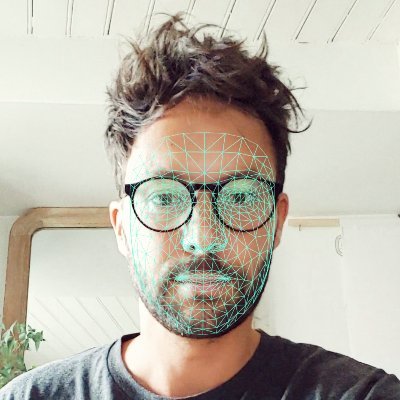
3D Gaussian Splatting is really impressive 🙂 Pushing some test here with 25 photos as input and only 10000 iterations. Hair, eyelashes are incomparable to photogrammetry. I'll bench against NeRF a bit more in detail soon!
671,605 Aufrufe • vor 2 Jahren •via X (Twitter)

10 Kommentare

Profilbild von Alexandre Devaux
Alexandre Devauxvor 2 Jahren

By the way if you're curious about the Photogrammetric version (processed through @RealityCapture_ ) I had a demo in webgl (@threejs) here:

Profilbild von George Saoulidis ⚡
George Saoulidis ⚡vor 2 Jahren

How can I play with that without an iPhone?

Profilbild von Alexandre Devaux
Alexandre Devauxvor 2 Jahren

Some Webgl viewer are going to appear very soon! (Some already exist like

Profilbild von Justin: Immersive AR 🥽 Creator & bird app tourist
Justin: Immersive AR 🥽 Creator & bird app touristvor 2 Jahren

Absolutely incredible. This is such a great technical milestone that will allow better 3D to fall into more consumer applications the next few years (3D shopping, location previews, their own 3D photos, etc). 🎉🙌🏻

Profilbild von Julien Blanchon
Julien Blanchonvor 2 Jahren

Did you pload the .ply file somewhere. I'm writing a custom viewer, looking for datasets to test.

Profilbild von Alexandre Devaux
Alexandre Devauxvor 2 Jahren

I generated the ply using the original code also for the viewer I used their SIBR_viewer. But I dream to make it run in WebGL like ! I could sent it to you if you want to play

Profilbild von Chuck Webster MD, MS AI, MS Systems Engineering
Chuck Webster MD, MS AI, MS Systems Engineeringvor 2 Jahren

Amazing. Never heard of it. Presume this is good overview. Is there a way to view or import into a VR headset?

Profilbild von Tiddy McGee
Tiddy McGeevor 2 Jahren

VR porn will be wild in the future...

Profilbild von Michael Figured - Founder of lucido
Michael Figured - Founder of lucidovor 2 Jahren

Is it possible to export this result as an obj or fbx file?

Profilbild von Alexandre Devaux
Alexandre Devauxvor 2 Jahren

I wonder if some people already created some converters. You can easily access the point cloud but to get a textured mesh would need some work

Ähnliche Videos

Nvidia announces GAvatar: Animatable 3D Gaussian Avatars with Implicit Mesh Learning paper page: Gaussian splatting has emerged as a powerful 3D representation that harnesses the advantages of both explicit (mesh) and implicit (NeRF) 3D representations. In this paper, we seek to leverage Gaussian splatting to generate realistic animatable avatars from textual descriptions, addressing the limitations (e.g., flexibility and efficiency) imposed by mesh or NeRF-based representations. However, a naive application of Gaussian splatting cannot generate high-quality animatable avatars and suffers from learning instability; it also cannot capture fine avatar geometries and often leads to degenerate body parts. To tackle these problems, we first propose a primitive-based 3D Gaussian representation where Gaussians are defined inside pose-driven primitives to facilitate animation. Second, to stabilize and amortize the learning of millions of Gaussians, we propose to use neural implicit fields to predict the Gaussian attributes (e.g., colors). Finally, to capture fine avatar geometries and extract detailed meshes, we propose a novel SDF-based implicit mesh learning approach for 3D Gaussians that regularizes the underlying geometries and extracts highly detailed textured meshes. Our proposed method, GAvatar, enables the large-scale generation of diverse animatable avatars using only text prompts. GAvatar significantly surpasses existing methods in terms of both appearance and geometry quality, and achieves extremely fast rendering (100 fps) at 1K resolution.

AK

140,992 Aufrufe • vor 2 Jahren

WOW. 😳 Apple just quietly won the 3D maps war at WWDC. Gaussian Splatting is coming to Apple Maps Flyover this fall. Apple Maps Flyover covers 300+ cities. Until yesterday, every single one was built on standard drone photogrammetry. The technology captures photos from the air and reconstructs 3D geometry from them. Gaussian Splatting does not reconstruct geometry. It represents the scene as millions of tiny 3D ellipsoids, each one carrying its own color and opacity information based on how light actually behaves in that location. The output is not a mesh model. It is a field of light. When you move through it, it does not crumble at the edges. The detail holds because it was never geometry to begin with. Apple has been hiring for this for years. Their SHARP model, published in research last year, generates photorealistic 3D scenes from a single image in under a second. Google has more sensor data than anyone. More Street View cars, more satellites, more capture history. On navigation accuracy and geodata depth, Google Maps is still ahead by most measures. But fidelity in 3D city rendering is a different competition, and Apple just set a bar in that. Most people will experience this in the fall without knowing the name of the technology. They will open Flyover, look at a city they know, and notice it looks different. Real, not rendered. That is the moment Gaussian Splatting stops being a research term and becomes something a billion people use. Bookmark this. It will look prescient by October.

Shruti

19,832 Aufrufe • vor 2 Monaten

3D scanning and rendering is moving so fast - got my splats up and running and I'm mind blown getting ~100fps for this complex 3D scene ⬇️ 🤯 1. WAY faster than NeRF: For comparison, NeRFs would takes around 10 seconds per frame (!) Instead I'm zipping around with FPV controls without breaking a sweat - though I do crash a few times towards the end of the video lol 2. Old Meets New: Gaussian Splatting is cool in that it fuses classical graphics and deep learning techniques. Like NeRFs, this is still a radiance field - just without the slower (ne)ural rendering part. 3. Explicit Representation: Instead you represent a 3D scene as a collection of ellipsoidal "splats" called gaussians. Each gaussian has a position, size, and color. Rendering in real-time is done by projecting into the image plane and alpha blending. 4. Photorealistic Effects: Gaussian splatting use spherical harmonics to represent the view-dependent effects and lighting - allowing surfaces to change color when viewed from different angles, enabling greater photorealism. It doesn't use a neural network, but the training loop is similar to deep learning. 5. Enables Direct Editing: But it's not just speed - with Gaussian Splatting you also get 3D editing support! So you can select, move, and delete stuff, even relight stuff. This type of editing has been more tedious to do with NeRFs and their implicit black box representations. 📲 More tests cooking! Much more to unpack here including simpler explanations. If you enjoyed this post, you might enjoy my feed: Bilawal Sidhu

Bilawal Sidhu

337,090 Aufrufe • vor 2 Jahren