Video wird geladen...

Video konnte nicht geladen werden

Zur Startseite

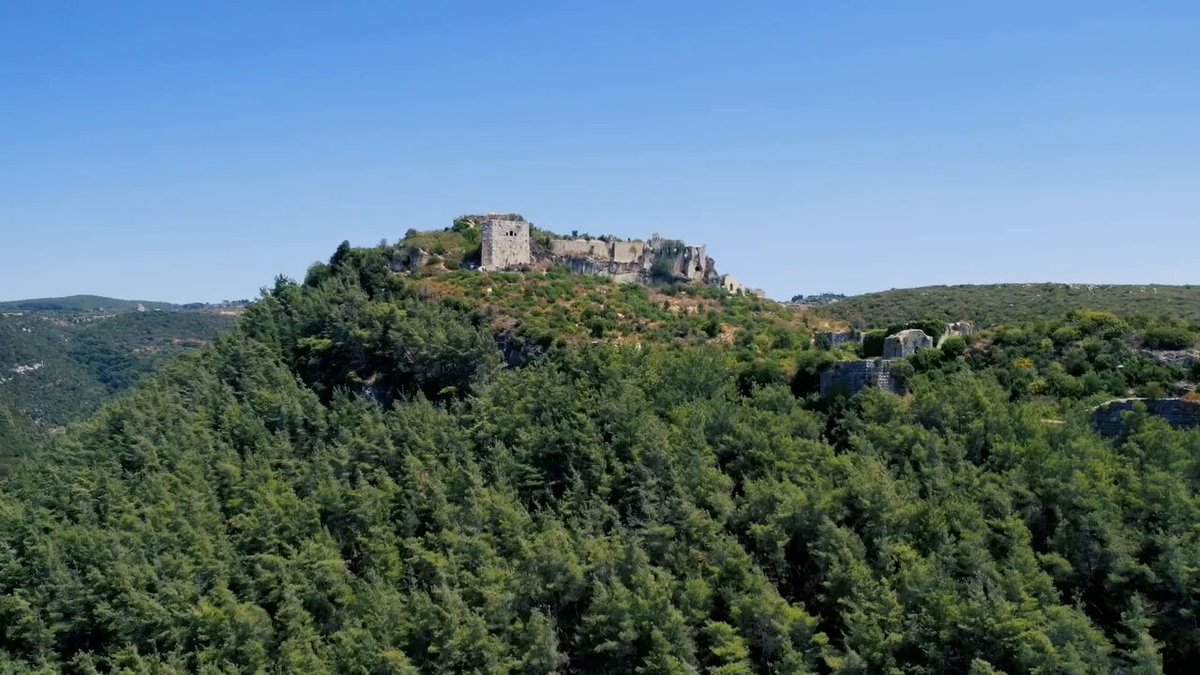
🚨A new Byzantine tomb complex has been discovered! A significant archaeological discovery was made in Maarat al-Numan, a town in Syria’s Idlib province. While clearing rubble from a war-damaged house, a contractor uncovered a 1,500-year-old Byzantine tomb complex. The find includes two underground burial chambers, each containing six rock-cut...

15,257 Aufrufe • vor 1 Jahr •via X (Twitter)

11 Kommentare

Profilbild von ShadowsOfConstantinople
ShadowsOfConstantinoplevor 1 Jahr

Syria was a better place then. Interesting discovery!

Profilbild von Homer Pavlos
Homer Pavlosvor 1 Jahr

Indeed, "they" have destroyed everything. Let's hope for a better future for Anatolia once again.

Profilbild von Nahtan
Nahtanvor 1 Jahr

tombs and wine root storage

Profilbild von Imperator Cat
Imperator Catvor 1 Jahr

question is, what will the new regime do with it

Profilbild von Homer Pavlos
Homer Pavlosvor 1 Jahr

Doesn’t matter. No one is visiting an Islamic country.

Profilbild von Elise Oyin
Elise Oyinvor 1 Jahr

Let the ministry of Jesus Christ of Nazareth be null n WORTHLESS before ALL USING EVEN 0.1% ELISE OYINKROMEINEIFA'S SILICONE IMPLANTS IN HER NOSE TO STOP HER CERVIX FROM DILATING TO A 10 STAND N BE OF EFFECT EVEN 0.1% ever in the name of Jesus Christ of Nazareth u900gtefsfbaiCnYH

Profilbild von أميرة ح | Amira H
أميرة ح | Amira Hvor 1 Jahr

In 500 CE, Syria had 3.5 million people and was an urbanised and wealthy society. The population plunged to 1.5 million under Islamic rule and didn't go above its Byzantine levels until after WW1.

Profilbild von Cheryl Ball
Cheryl Ballvor 1 Jahr

Wow, a 1,500-year-old tomb hidden under war rubble—history keeps surprising us! @BenjaminUs15 would probably geek out over the Byzantine details. Wild how the past just pops up like that.

Profilbild von Sagittarios-Ocho5
Sagittarios-Ocho5vor 1 Jahr

Is this the same Maarat where a certain disturbing incident occurred during the First Crusade?

Profilbild von 方舟.挑戰者
方舟.挑戰者vor 1 Jahr

古老的文明

Profilbild von Edmun Pi
Edmun Pivor 1 Jahr

The islamists will destroy it

Ähnliche Videos

✝️🇦🇲 May the Lord bless the Christian heritage of #Armenia, the first #Christian country in the world, which safeguards the ancient Akhtala Monastery, over a millennium old. Founded in the 10th century, this fortress-monastery was transformed two centuries later into a living Bible through its unique and breathtaking 13th-century Byzantine frescoes. Every surface bursts with frescoes depicting Old and New Testament miracles: the trial of Jesus before Pontius Pilate and Caiaphas, the sacred Communion, and saints in glory. So vivid they feel alive, they breathe faith into stone. Its main Church, St. Astvatsatsin, is a unique sanctuary and a masterpiece of synthesis, featuring a harmonious blend of Armenian, Georgian, and Byzantine elements. Scholarly analysis reveals the frescoes were likely the joint creation of eight master artists. The 13th-century frescoes of Akhtala Monastery are considered one of the finest examples of Byzantine art outside the empire, with inscriptions primarily in Greek. They represent a profound synthesis: while the coloring and technique are quintessentially Byzantine, the thematic narratives are distinctly Armenian, drawing parallels to earlier Armenian masterpieces like the 11th-century Mugni Gospels. The Akhtala Monastery was also a major center of manuscript writing, particularly from the 13th to the 14th centuries. In the 13th century, Simeon Pghndzahantsi worked here, and both Armenian and Georgian literature was studied.

Lianna

22,273 Aufrufe • vor 5 Monaten

On October 3, 2020, a team of Egyptian archaeologists made a groundbreaking discovery at the Saqqara necropolis, south of Cairo. They unsealed a 2,500-year-old tomb that had remained untouched since Egypt’s Late Period (664–332 BCE). The find was part of a larger archaeological excavation that uncovered 59 sealed sarcophagi, many containing mummies of priests, high officials, and elite figures from ancient Egypt. Among the most stunning discoveries was the coffin of a high-ranking priest, beautifully decorated with colorful hieroglyphs and depictions of Egyptian gods. Thanks to the tomb’s airtight seal, the colors and carvings remained remarkably well-preserved. Inside, the mummy was wrapped in linen, surrounded by amulets, ushabti figurines, and other funerary artifacts meant to protect the deceased in the afterlife. The tomb opening was broadcast live worldwide, showcasing Egypt’s efforts to promote its archaeological heritage and revive tourism after the pandemic. Using CT scans and 3D imaging, researchers analyzed the mummies without damaging them, gaining rare insights into ancient Egyptian embalming practices, health, and burial customs. Located within the ancient capital of Memphis, the Saqqara burial complex has long been a treasure trove for archaeologists. However, this tomb stands out for its exceptional preservation and historical significance, shedding new light on Egypt’s 26th Dynasty, an era of cultural and artistic revival. The discovery reaffirms that beneath Egypt’s sands, countless secrets of the ancient world are still waiting to be uncovered. By PastPeek

Billy Carson II

52,169 Aufrufe • vor 8 Monaten

American Pastor Joel Tenney Sings “Der Vorghormia” Inside the Hagia Sophia in Istanbul “I worshipped JESUS OUR GOD in the Jewel of Christendom, (the now Islamic Occupied Cathedral) one of the oldest in the world, I sung Der Vorghormia, Hayr Mer, and Christos Anesti before being removed from the Cathedral for disrupting the evening Islamic prayers in the now mosque by the officials. I will not rest from advocacy until Greece reclaims the Hagia Sophia, Armenia regains her stolen lands, and the Turks receive Justice for what they’ve done to Christendom,” said Tenney. Constructed in 537 AD under the Byzantine Emperor Justinian I, the Hagia Sophia in Constantinople (now Istanbul) stood as the preeminent cathedral of Eastern Orthodox Christianity for nearly a millennium. Renowned for its architectural grandeur and spiritual significance, it symbolized the zenith of Christian devotion and Byzantine artistry. However, following the Ottoman conquest in 1453, this bastion of Christian faith was converted into a mosque, marking a profound transformation in its religious identity. Centuries later, in a move towards secularism and cultural preservation, Mustafa Kemal Atatürk decreed in 1934 that the Hagia Sophia be designated as a museum, honoring its rich and diverse history. In a controversial turn of events, July 2020 witnessed the Turkish government’s decision to reconvert the Hagia Sophia into a mosque, a move that has been met with deep sorrow and concern within the global Christian community. This reconversion is perceived by many as a disregard for the site’s profound Christian heritage and a deviation from its role as a bridge between cultures and religions. The Hagia Sophia’s journey reflects the broader narrative of Christianity’s endurance and the challenges it faces. As a monumental testament to Christian faith, its current status serves as a poignant reminder of the ongoing struggle to preserve religious and cultural identities in the face of changing political landscapes.

Zartonk Media

30,855 Aufrufe • vor 1 Jahr

Tomb Complex of Sennefer (Mayor of Thebes), located in a prominent position on the southern hillside of Sheikh Abd el-Qurna 🇪🇬, close to several other tombs from the time of Amenhotep II (of 18th Dynasty, about 1439-1413 BC). It is usually referred to as the "Tomb of Vines", because a large part of the ceiling of the burial chamber and all of that of its antechamber are decorated to give the impression of standing under an overhanging vine arbour, hung with large bunches of grapes. The tomb complex consists of underground burial chamber (TT96B), opened to the public and surface chapel (TT96A), is surveyed by a joint mission of the Centre de Recherches en Archéologie et Patrimoine (Créa - Patrimoine) (Centre for Research in Archaeology and Heritage) of ULB and the University of Liege. The mission focuses on the study and conservation - restoration of the paintings and texts of the TT96A chapel. The representation of the tomb owner's cousin, the vizier Amenemope, and other relatives, directly link the tomb visually and semantically to neighbouring cult chapel of Amenemope, TT 29, and thereby focus on Sennefer's social status and his family relations. The monument has been known since at least 1826. It was visited by Englishman Robert Hay de Linplum, who made copies for the tomb's decoration, which are now in British Museum. In 1895, English Egyptologist Percy Newberry made it subject of a very limited investigation, intended primarily to copy one of texts preserved in chapel. In 1898, it was eventually published together with plans, line drawings and a complete record of texts of the lower chambers. This was done by Frenchman Philippe Virey. This publication is invaluable because several details from the antechamber were lost after his record was made. In none of these publications is there any indication of the presence of any grave goods; although some of goods stored in upper cult chamber may eventually be identified as such. There is no evidence to prove that Sennefer was actually buried in this tomb. It is possible that Sennefer received an unusual personal favour from king, allowing him the privilege to be buried in the empty tomb (KV42) of the wife of Tuthmosis III, in Valley of the Kings. Vessels with names of Sennefer and his wife, Senetnay, were found in this tomb. Over the intervening years there have been numerous attempts to rob the tomb of its paintings. One such scene is in Florence Museum. Other scenes were returned but, although originally restored incorrectly, are now in their correct places. During 1994, tomb suffered damage from a violent storm. TT96B was opened to the public soon after its discovery and still receives several thousand visitors each year. However, painting of the walls and pillars are now protected and secured behind glass, with fairly good lighting, although only placed at floor level. This addition of protection and lighting made good photography difficult, even when it was still allowed. Visitors are only allowed in underground part of the complex, the burial chamber and its antechamber, accessed being made via the steep passage stairway from the courtyard. Fortunately, these two chambers, unlike most of the other private tombs of 18th Dynasty, are beautifully decorated. Access to the upper cult chambers has been unavailable, mainly due to its dangerous condition and the fact that they were used as store rooms. 🎥© kbad_ (IG) #archaeohistories

Archaeo - Histories

34,131 Aufrufe • vor 1 Jahr

A 2500 year-old burial of Celtic Prince reveals stunning secrets... In 2015, a small village in eastern France (Lavau) became famous when archaeologists first uncovered 5th Century BC, tomb of a Celtic prince. Now, the researchers are beginning to finally unveil the secrets of the tomb. The tomb rests in the heart of a small business industrial park. Archaeologists discovered it when they were asked to search the site and ensure no history would be lost in a new construction project. It’s a good thing that they did. After a few months of looking around, archaeologists discovered a large number of well-preserved Greek and Etruscan artifacts. The French state ruled it a historical site and ordered a more detailed investigation of the area. After more digging, archaeologists found more and more artifacts in lower archaeological layers, dating all the way back to 5th Century BC, including jewelry and an impressive bronze cauldron. Upon digging further, they discovered the area’s most significant find to-date: the remains of an ancient Celtic prince laid to rest beside his chariot. Historians are now calling this find is one of the most important discoveries in all of France. Over the past couple of years, using x-ray radiography and 3D photography, researchers have documented the artifacts. These methods allowed them to discover priceless information about how and when the artifacts were made, and learn about their state of conservation. The research at Lavau has revealed just how intricate and beautiful these artifacts were when they were made. The prince was found with a belt decorated with silver threads all woven together into Celtic motifs. It’s a unique object. No other object like it has ever been discovered in the world. The bronze cauldron they found at the site is decorated with the face of Dionysius and demonstrates perfect mastery of smelting and engraving. The prince was buried with all sorts of golden jewelry, including beautiful bracelets and a Celtic torc signifying his social rank. The artifacts uncovered also tell a story of trade and communication between ancient cultures – a pattern that is becoming increasingly prevalent in recent archaeological finds. A jar used to pour wine was buried with prince that is made from Greek ceramic, decorated with gold Etruscan motifs, and silver Celtic designs. It’s physical proof of cultural and economic interactions taking place between Celtic and Mediterranean worlds during 5th Century BC. During this period in history, the Greeks were fighting a war for their very existence against Persia at Thermopylae, Salamis Bay, and Marathon. For a brief time, the Greek city-states put away their differences and united against a common enemy. That clearly didn’t stop trade from happening, though. Greeks were famous for their bronze-work and iconic pottery. Etruscans, on the other hand, were famous for their art and glossy black pottery. Finding artifacts from both cultures in this tomb tells us just how rich and important this Celtic prince really was. His pockets were deep, and he had hundreds of connections. Since 2021, the archaeologists working on the site hope to learn more about the prince’s identity and about the origins of the objects he was given to take with him into his afterlife. This find has given us a vital look into life in ancient France, Greece and Italy. #archaeohistories

Archaeo - Histories

26,375 Aufrufe • vor 1 Jahr

Tomb (KV9) in Valley of the Kings, Luxor; Egypt. Tomb was originally constructed by Pharaoh Ramesses V. He was interred here, but his uncle, Ramesses VI, later reused the tomb as his own. Tomb is located in Wadi Biban el-Muluk, and is known since antiquity. Romans knew tomb as "Tomb of Memnon" and savants of the Napoleonic Expedition as "La Tomb de la Metempsychose". With some of broadest corridors, longest shafts (117m in total) and greatest variety of decoration, KV9 one of most spectacular tombs in valley. tomb (KV9) is decorated with an extensive number of funerary texts; including, The Book of Gates, Book of the Day, Book of the Earth, Book of the Caverns, Imydwat and Book of the Dead. Following tomb’s ransacking a mere 20 years after burial, mummies of both Ramses V and Ramses VI were moved to Amenhotep II’s tomb where they were found in 1898 and taken to Cairo. Tomb of Ramesses VI seems to have been robbed shortly after his burial. Reports which date at the latest from Ramesses IX's reign report the interrogation of five robbers who took four days to break into tomb. Layout is typical of 20th Dynasty – Ramesside period and is much simpler than that of Ramesses III's tomb (KV11). In Graeco-Roman period, the tomb was identified as that of Memnon, mythological king of Ethiopians who fought in Trojan War. As a result, it was frequently visited; 995 graffiti left by visitors have been found on temple walls, ranging from 1st-4th Century CE. Burial chamber has an unfinished pit in floor. In burial hall a broken granite sarcophagus was found. Roof and walls of chamber are filled with fine images of Ramses VI with various deities, as well as scenes from Book of Earth, showing sun god’s progress through night, gods who help him and forces of darkness trying to stop him reaching dawn. Roof of burial chamber is decorated with a magnificent figure of Nut and scenes from Book of Day and Book of Night. Burial chamber itself is beautifully decorated, with a superb double image of Nut framing Book of Day and Book of Night on ceiling. This nocturnal landscape in black and gold shows sky goddess swallowing sun each evening to give birth to it each morning in an endless cycle of new life designed to revive souls of dead pharaohs. Fragments of a large granite sarcophagus were discovered when Georges Émile Jules Daressy cleared tomb in 1898 CE. Sarcophagus was restored in 2004 following two years of work on over 250 fragments recovered in tomb, where it is now on display. Ramesses VI's mummiform stone sarcophagus was found in numerous pieces. Substantial parts of lower sections of Ramesses VI's sarcophagus still lie in his burial chamber and face (inspect) of which is now in British Museum. Sarcophagus of Ramesses VI, shattered in antiquity, was reconstructed in 2003 CE, from framents found in king's tomb and else where in Valley of Kings. Stone is hard green conglomerate, quarried in Wadi Hammamat, about a hundred kilometers from Luxor in Eastern Desert. Sarcophagus, orginally painted blue, red, yellow and black is stained by ointments used in burial ritual. Carved decoration tells story of king's afterlife through symbolism connecting him with sun god Ra and Osiris. Face on lid is a replica of original, which has been in British Museum since 1823 CE. This sarcophagus was placed inside a granite box, of which two huge fragments remain in burial chamber. Mummified body of Ramesses VI was found in nearby Tomb of Amenhotep II in 1898 CE, and now rests in Egyptian Museum, Cairo. 🎥© bluerococo #archaeohistories

Archaeo - Histories

82,243 Aufrufe • vor 2 Jahren

Catacombs of Kom El Shoqafa - ancient Egypt’s hidden history : Catacombs of Kom El Shoqafa (Mound of Shards), a historical archaeological site located in Alexandria, Egypt 🇪🇬 The site is also known as the 'Hill of Treasure', regarded as a huge necropolis and royal cemetery that dates back to 2nd Century AD. The necropolis has a unique mixture of Roman, Hellenistic and pharaonic art elements reflected in paintings on the wall and style of the statues, funeral objects and tombs. It is considered as one of the Seven Wonders of the Middle Ages. The structure was re-discovered in September 1900 AD, when a donkey treading about in Alexandria’s outskirts found itself on unstable ground. Unable to regain its balance, the unfortunate explorer plummeted into the access shaft of the ancient tomb. The underground catacombs are a bit scary; the scene of the carved stone tombs next to each other gives the illusion of sincere horror, but at the same time historical atmosphere. The Ptolemaic is Hellenistic kingdom that was based in Egypt, who followed the steps of ancient Egyptians of constructing underground hidden tombs for pharaohs and their wives. Ptolemaic were so affected by the Egyptians, they believed in their concepts about death, after life journey and gods, and this is very shown in the catacombs that shows the pharaonic identity beside the Roman character. The catacombs are serial of Alexandrian tombs reach deep under the ground, consists of three levels of 35 meters burial chambers cut into bedrocks. There is a rounded entrance leads to the catacombs levels; the third level is flooded by ground water leaks, and cannot be accessed. People usually enter the catacombs by rounded shaft with staircases lead to the principle tomb and the center piece which is an antechamber with columns. This center piece leads to inner sanctum. The antechamber is covered by cravings for Egyptian god Anubis (the god of dead) dressed like Romans, and some statue for Romans emperors who ruled Egypt during this period. The antechamber maybe the major sight of the catacombs and the most important for having all the decorations and statues. Also, There are two passages lead to the Hall of Caracalla which has its own staircases. one of the catacombs main feature, are the two tombs of emperor Tigrane and wardian which are located few meters from the entrance. 🎥© alaa_tour_guide #archaeohistories

Archaeo - Histories

32,050 Aufrufe • vor 1 Jahr

Catacombs of Kom El Shoqafa - ancient Egypt’s hidden history : Catacombs of Kom El Shoqafa (Mound of Shards), a historical archaeological site located in Alexandria, Egypt 🇪🇬. The site is also known as the 'Hill of Treasure', regarded as a huge necropolis and royal cemetery that dates back to 2nd Century AD. The necropolis has a unique mixture of Roman, Hellenistic and pharaonic art elements reflected in paintings on the wall and style of the statues, funeral objects and tombs. It is considered as one of the Seven Wonders of the Middle Ages. The structure was re-discovered in September 1900 AD, when a donkey treading about in Alexandria’s outskirts found itself on unstable ground. Unable to regain its balance, the unfortunate explorer plummeted into the access shaft of the ancient tomb. The underground catacombs are a bit scary; the scene of the carved stone tombs next to each other gives the illusion of sincere horror, but at the same time historical atmosphere. The Ptolemaic is Hellenistic kingdom that was based in Egypt, who followed the steps of ancient Egyptians of constructing underground hidden tombs for pharaohs and their wives. Ptolemaic were so affected by the Egyptians, they believed in their concepts about death, after life journey and gods, and this is very shown in the catacombs that shows the pharaonic identity beside the Roman character. The catacombs are serial of Alexandrian tombs reach deep under the ground, consists of three levels of 35 meters burial chambers cut into bedrocks. There is a rounded entrance leads to the catacombs levels; the third level is flooded by ground water leaks, and cannot be accessed. People usually enter the catacombs by rounded shaft with staircases lead to the principle tomb and center piece which is an antechamber with columns. This center piece leads to inner sanctum. The antechamber is covered by cravings for Egyptian god Anubis (the god of dead) dressed like Romans, and some statue for Romans emperors who ruled Egypt during this period. The antechamber maybe the major sight of the catacombs and the most important for having all the decorations and statues. Also, There are two passages lead to the Hall of Caracalla which has its own staircases. one of the catacombs main feature, are the two tombs of emperor Tigrane and wardian which are located few meters from the entrance. 🎥© sam.ph1111 #archaeohistories

Archaeo - Histories

15,758 Aufrufe • vor 10 Monaten