Loading video...

Video Failed to Load

Go Home

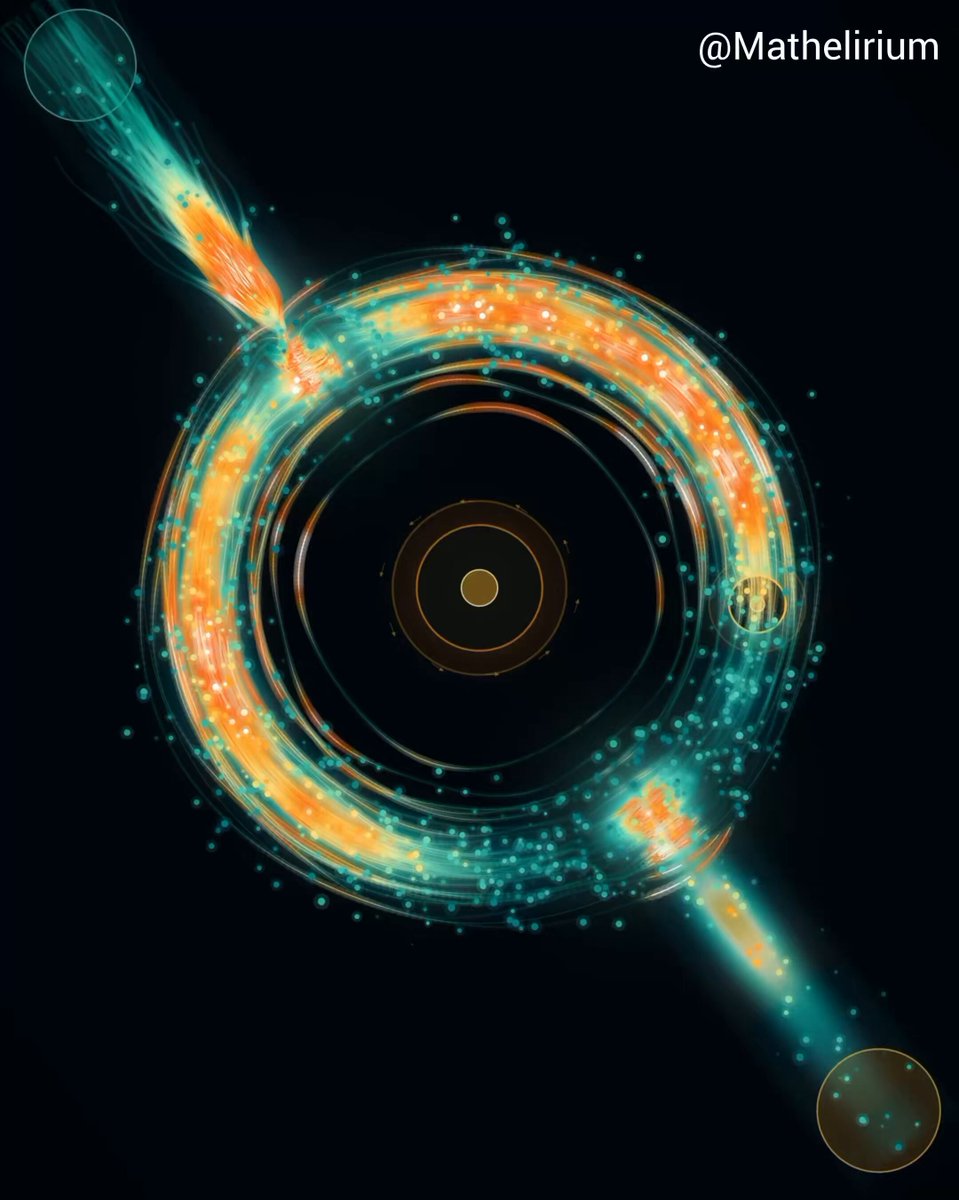
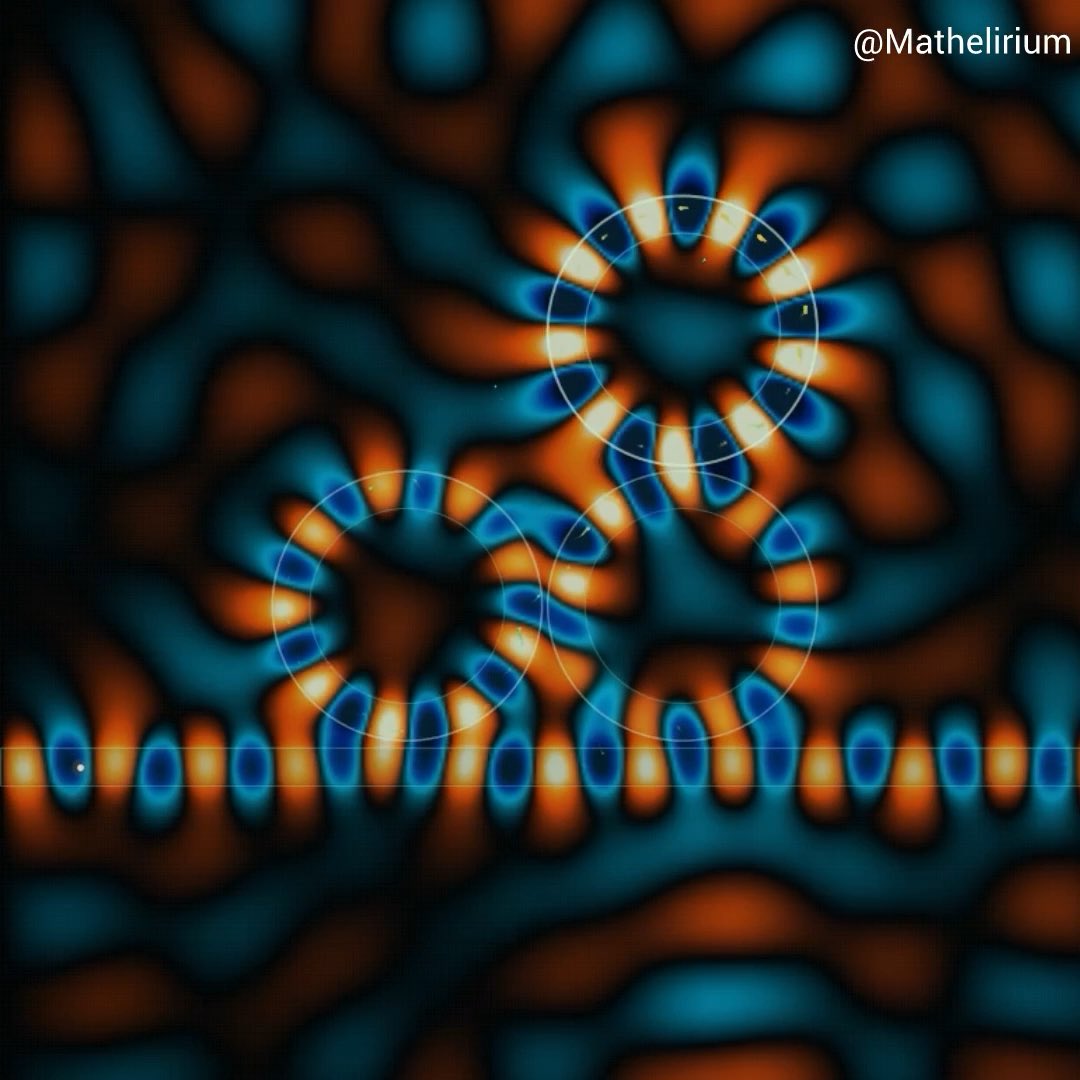
A Schrödinger quantum wave packet moves into a double barrier, swells inside the resonant chamber, and then tunnels through.

25,597 views • 1 month ago •via X (Twitter)

0 Comments

No comments available

Comments from the original post will appear here

Related Videos

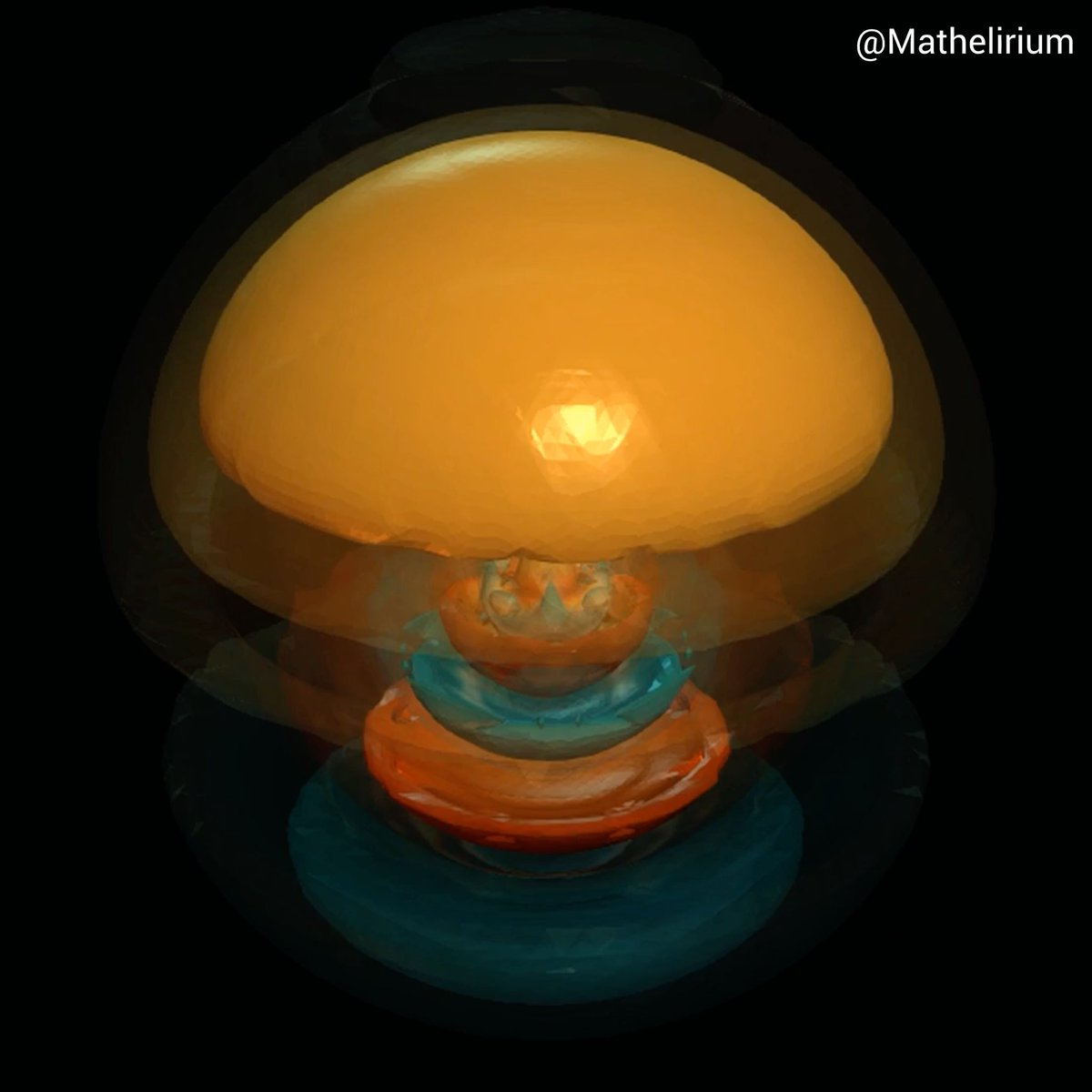
Quantum Mechanics Series Lecture 4 Lecture 1 established that ρ(x,t) = |ψ(x,t)|² behaves like a conserved probability density. Lecture 2 showed what drives that flow. We also saw that writing ψ = r exp(iθ) makes the probability current proportional to the phase gradient, making it clear that phase geometry literally steers the motion. Lecture 3 then showed that the centroid of that flow can move almost classically when the packet is tight and the external potential is smooth. However, that raises yet another question. If the centroid can look classical, why does the full wave still spread, bend, split, and interfere in ways no classical particle cloud would? This is because the wave is not driven only by the external potential. It is also driven by its own curvature. Write ψ(x,t) = r(x,t) exp(iθ(x,t)) with ρ = r². Then Schrödinger’s equation gives two coupled real equations. One is the continuity equation you already know. The other looks like a Hamilton-Jacobi equation, but with one extra term: Q = −(1/2m) ∇²r / r This is the so-called Quantum Potential. It depends entirely on how the amplitude bends across space. So, the wave is being shaped not only by V(x,t), but also by the geometry of its own envelope. In the animation, the upper surface is still |ψ| and its skin is still colored by arg(ψ). The glowing threads still trace the probability current. But now a second membrane hangs underneath. That lower membrane encodes the quantum potential Q itself. The porcelain bead marks the quantum centroid. The amber bead follows a classical centroid under the same external V. When those paths separate, the lower membrane tells you why. The difference is not magic but the extra term classical mechanics does not have. The math breakdown: Start from Schrödinger evolution in units with ħ = 1: i ∂ψ/∂t = [ −(1/2m) ∇² + V(x,t) ] ψ Write the state in polar form: ψ = r exp(iθ) Then ρ = |ψ|² = r² From the imaginary part, you recover probability conservation: ∂ρ/∂t + ∇·j = 0 with j = (1/m) Im(ψ* ∇ψ) = (ρ/m) ∇θ So the local velocity field is v = j / ρ = ∇θ / m Now take the real part of Schrödinger’s equation. That gives ∂θ/∂t + |∇θ|² / (2m) + V + Q = 0 where Q = −(1/2m) ∇²r / r This is the classical Hamilton-Jacobi equation with one extra term. That extra term is what makes quantum motion locally different from classical motion. Take a gradient of that phase equation and use v = ∇θ / m. Then the flow obeys an Euler-like equation: ∂v/∂t + (v·∇)v = −(1/m) ∇(V + Q) In other words, there are really two forces in the problem. One comes from the external potential V. The other comes from the wave’s own curvature through Q. That is why Ehrenfest is only approximate. The centroid can still satisfy d⟨x⟩/dt = ⟨p⟩/m d⟨p⟩/dt = −⟨∇V⟩ but the internal shape of the packet evolves under the combined influence of V and Q. When the packet stays broad and smooth, Q is gentle and the motion looks more classical. When the packet develops sharp curvature or interference structure, Q becomes strong and the classical picture breaks down. That is what this scene is designed to show live. #QuantumMechanics #Wavefunction #SchrodingerEquation #BornRule #ProbabilityCurrent #ContinuityEquation #Phase #EhrenfestTheorem #QuantumPotential #Madelung #HamiltonJacobi #MathematicalPhysics #Mathematics #Physics

Mathelirium

20,411 views • 2 months ago

Why Does Quantum Mechanics Use a Complex Wavefunction? Schrödinger’s equation doesn’t start from mystery. It starts from a very specific bet. The state of a particle is a complex field ψ(x,t), and whatever time-evolution rule we choose has to move ψ forward while preserving total probability. So the basic question is simple. What equation should ψ satisfy so that |ψ|² behaves like a conserved density, the way mass density does in fluid flow? What is ψ? Think of ψ(x,t) as an amplitude attached to the statement the particle is at position x at time t. It’s not a probability. It’s the thing you add first, and only at the end do you square it: p(x,t) = |ψ(x,t)|² Because ψ is complex, it has magnitude and phase. Write it as ψ(x,t) = r(x,t) exp(i θ(x,t)) Then r² = |ψ|² is the density, and the phase θ ends up controlling the flow through the probability current. Where does Schrödinger’s equation come from? Start with two empirical inputs that tie waves to particles: E = ħ ω p = ħ k Here ħ is Planck’s constant divided by 2π. It’s the conversion factor between frequency and energy, and between wavenumber and momentum. A plane wave with angular frequency ω and wavevector k is ψ(x,t) = A exp(i(k·x − ωt)) Now watch what derivatives do to this wave: ∂ψ/∂t = −i ω ψ ∇ψ = i k ψ ∇²ψ = −|k|² ψ Multiply by ħ and you get: i ħ ∂ψ/∂t = ħ ω ψ = E ψ −i ħ ∇ψ = ħ k ψ = p ψ −ħ² ∇²ψ = ħ² |k|² ψ = p² ψ So for plane waves, the operators Ê = i ħ ∂/∂t p̂ = −i ħ ∇ act like energy and momentum. Now bring in the classical, nonrelativistic energy bookkeeping: E = p²/(2m) + V(x) Kinetic plus potential. That’s it. Turn it into an equation for ψ by replacing E and p with the operators above: Ê ψ = (p̂²/(2m) + V) ψ Since p̂² = (−i ħ ∇)·(−i ħ ∇) = −ħ² ∇², this becomes i ħ ∂ψ/∂t = ( −ħ²/(2m) ∇² + V(x) ) ψ That’s the time-dependent Schrödinger equation. This derivation is a controlled heuristic. Match the plane-wave identities to the measured relations E = ħω and p = ħk, then impose the same energy bookkeeping you trust in classical mechanics. Why this is the right kind of rule If ψ is the state, we need a rule that preserves total probability: ∫ |ψ(x,t)|² dx = 1 Schrödinger evolution does, and you can see it by deriving a continuity equation. Let ρ(x,t) = |ψ|² = ψ*ψ. Differentiate: ∂ρ/∂t = ψ* ∂ψ/∂t + ψ ∂ψ*/∂t Use Schrödinger and its complex conjugate. The potential terms cancel, and what’s left can be rearranged into ∂ρ/∂t + ∇·j = 0 with probability current j = (ħ/(2mi)) ( ψ* ∇ψ − ψ ∇ψ* ) That’s the cleanest way to say what ψ is. |ψ|² behaves like a conserved density, the phase drives a current, and the time evolution is fixed, up to V, by combining wave relations with energy bookkeeping: i ħ ∂ψ/∂t = ( −ħ²/(2m) ∇² + V ) ψ #QuantumMechanics #SchrodingerEquation #WaveFunction #BornRule #Physics #MathematicalPhysics

Mathelirium

20,781 views • 4 months ago