Video wird geladen...

Video konnte nicht geladen werden

Zur Startseite

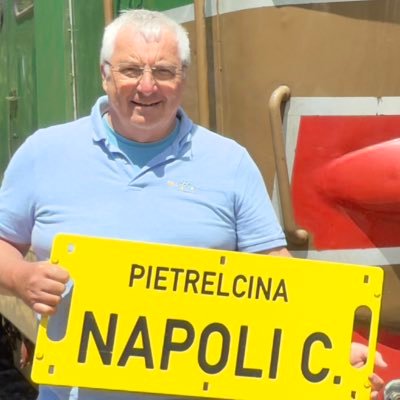
🚅🇮🇹 A second section of Italy's latest high speed/capacity railway opens today. Trains now running on an 18km stretch of the 150km, €6Bn, Naples-Bari line between Caserta & Benevento. It has a 4km tunnel, 8km viaducts & closes 13 level crossings.
62,053 Aufrufe • vor 6 Monaten •via X (Twitter)

0 Kommentare

Keine Kommentare verfügbar

Kommentare vom Original-Post werden hier angezeigt

Ähnliche Videos

Reviewed Key Rail Projects during the Parliamentary Standing Committee on Railways' study visit to Bengaluru. 1. Whitefield-Kengeri Suburban Rail Project: The 35-km Whitefield-Kengeri suburban rail (Parijatha line) will not be scrapped. The Modi Government-approved DPR for the 149.348-km Bengaluru Suburban Rail Project remains intact. 2. Panathur Railway Underpass (RUB): K-RIDE has already commissioned one vent way of the Panathur Railway Underpass (RUB), and the other will be commissioned by January 2025. 3. Carmelaram Rail Overbridge (ROB): The construction of the railway portion of the Carmelaram Rail Overbridge (ROB) is in progress. However, the approach work has been halted due to delays in land acquisition by the BBMP. 4. New Trains to Kempegowda International Airport: Requested a feasibility study for the introduction of new trains to Kempegowda International Airport from Bengaluru City, especially Whitefield. 5. Bengaluru Cantonment-Whitefield Quadrupling: The quadrupling of the Bengaluru Cantonment to Whitefield section will be completed by June 2025. 6. Doubling Projects: The doubling of the Hosur-Salem line via Yesvantpur station and the Baiyyappanahalli-Hosur line will be completed by August 2025. 7. Status of the Circular Rail Network: a. Oddarahalli-Devanahalli Segment: The survey is complete, and the DPR was submitted to the Railway Board on 23.09.2024 for ₹1638.24 Cr. The Railway Board has requested the complete DPR by February 2025. b. Remaining 6 Segments (Devanahalli-Malur-Heelalige-Hejjala-Solur-Nidavanda-Oddarahalli): The survey work is ongoing. 8. Bengaluru-Mumbai High-speed train: Proposed the introduction of a high-speed train between Bengaluru to Mumbai. 9. MEMU Trains Between Kengeri and Whitefield: Proposed the introduction of additional MEMU trains between Kengeri and Whitefield. 10. Namo Bharat Rapid Rail: Proposed the introduction of Namo Bharat Rapid Rail between Bengaluru-Tumakuru and Bengaluru-Mysuru.

P C Mohan

64,510 Aufrufe • vor 1 Jahr

URC in partnership with Ministry of Works & Transport and Safe Way Right Way Uganda has commenced a safety awareness campaign to educate road users on the best way to operate along Level Crossings and the railway corridor. Speaking journalists, the Benon M. Kajuna Mr. Benon Kajuna noted that, accidents involving trains across the globe are rare, but very destructive when they happen, and advised motorist and other road users to always exercise caution whenever they are driving across railway crossings. He further warned pedestrians who use the railway line as a pathway to desist from this practice because it exposes them to risks. Those who insist on using it should always ensure that they are aware of their surroundings. The same activity attracted leaders of the different transporters, associations in the country. Rail-Road safety cannot be achieved only through the physical installations. Other stakeholders (road users) should be aware of their responsibility, and that is the reason for the sensitisation drive. A few things to note 1. Always keep a distance from the railway lines at crossings by holding up behind the boom barriers. Parking in front of it is a risky undertaking. Parking below it makes its lowering impossible. This applies to both, the manual and automated barriers. 2. When stopped at any crossing, please respect the instruction. It is for your own good. 3. When approaching crossings, reduce speed. This gives you enough time to appreciate your surrounding before proceeding. 4. When a train is approaching any crossing, do not cross. Be patient. It is not as slow as you think.

UGANDA RAILWAYS CORPORATION

18,002 Aufrufe • vor 24 Tagen

Why Does Indonesia Have a 350 km/h Fast Train While Australia Still Struggles With Average-Speed Rail? By Jamie McIntyre, Political Commentator, Australian National Review One of the biggest surprises of my recent visit to Indonesia wasn’t the new capital city of Nusantara or Jakarta’s relentless pace. It was boarding the Whoosh high-speed train between Jakarta and Bandung. The experience was extraordinary. In just around 30 minutes, we travelled between two major cities at speeds reaching approximately 350 km/h. The journey was smooth, quiet and every bit as impressive as the high-speed rail systems I’ve experienced elsewhere in Asia. What struck me wasn’t simply Indonesia’s achievement. It was Australia’s failure. Indonesia is still commonly described as a developing nation, yet it has managed to build one of Southeast Asia’s most advanced transport systems while Australia, one of the wealthiest countries in the world on a per capita basis, still cannot deliver even ordinary passenger rail between many of its major population centres. Perhaps before politicians start talking about futuristic high-speed rail, Australia should first learn how to build an average-speed train. Take the Brisbane to Gold Coast corridor. The two cities are only around 70 kilometres apart. An ordinary modern passenger train travelling at about 120 km/h could complete much of that journey in around 30 to 40 minutes, transforming daily commuting for hundreds of thousands of people. Instead, commuters often spend 70 to 90 minutes on today’s rail services, and considerably longer if travelling by car during peak-hour gridlock. That isn’t simply inconvenient. It is an enormous drag on productivity, quality of life and economic growth. Every extra hour spent sitting in traffic is an hour not spent with family, running a business or contributing to the economy. Meanwhile, Indonesia has leapfrogged into the future. The country’s Whoosh high-speed railway demonstrates what can be achieved when governments decide that modern infrastructure is an investment rather than merely another political announcement. Australia has spent decades discussing high-speed rail. We’ve commissioned study after study, produced glossy reports and made election promises. Yet little changes. Australians deserve to ask an uncomfortable question. How can Indonesia build a 350 km/h railway while Australia still struggles to provide reliable, average-speed rail between nearby cities? Infrastructure should not be viewed through a political lens. It should be viewed through an economic one. -Faster transport means higher productivity. -It expands labour markets. -It reduces congestion. -It increases property values around transport hubs. -It attracts investment. -It improves tourism. Most importantly, it gives people back something increasingly valuable: time. Australia has the engineering expertise. It has the financial capacity. What appears to be missing is the political will. Watching Indonesia’s sleek high-speed train glide effortlessly across Java was inspiring. It also served as a reminder that Australia’s infrastructure ambitions have become far too modest. Perhaps it’s time to stop debating whether Australia can build world-class rail and instead start asking why nations with fewer resources are already doing it. Until then, Australians will continue watching other countries race ahead while we remain stuck in traffic.

jamiemcintyre

10,930 Aufrufe • vor 2 Monaten

How China washes its High Speed Trains everyday. They all shines as if brand new. High-speed trains are treated with the same care as luxury cars: they even have automated washing lines. A whole train can be cleaned in minutes. The wash stations are hidden inside the maintenance yards, and once a train rolls in at night, sensors activate the system automatically as it glides forward at just a few kilometers per hour. First comes the high-pressure rinse. Then a layer of neutral cleaning solution. No brushes, no blind spots, no scraping—everything is done with precision. A final cascade of clean water brings back the glossy finish. The entire process can be completed in five minutes. It isn’t just about looking good. A clean, polished surface reduces air resistance, improves energy efficiency, and even the wastewater is recycled. It’s an industrial choreography built for both beauty and engineering logic. Now compare this to the United States. While China washes its high-speed trains every night, keeping them sleek, spotless, and aerodynamic, America still relies on Amtrak’s aging fleet—trains that crawl along antique tracks, often slower than cars, and long overdue for modernization. Many Amtrak trains run on century-old bridges and tunnels, with speeds capped not by engineering ambition but by outdated infrastructure. Cleanliness varies, maintenance is patchwork, and the idea of a dedicated automated wash line feels like science fiction.

America-China Watcher

81,468 Aufrufe • vor 8 Monaten