Video wird geladen...

Video konnte nicht geladen werden

Zur Startseite

Many people often question why only Gujarat is getting a bullet train and not the rest of India. Let’s take a moment to understand the broader perspective: • Mumbai–Ahmedabad is the first High-Speed Rail (HSR) corridor, but definitely not the only one planned. • It’s one of the busiest...

77,927 Aufrufe • vor 1 Jahr •via X (Twitter)

11 Kommentare

Profilbild von Trains of India
Trains of Indiavor 1 Jahr

Planned High Speed Rail in India 👇

Profilbild von California Insider Show
California Insider Showvor 1 Jahr

California has the nation’s highest housing costs. Some blame a housing shortage; others, government policies. We sit down with experts to explore what’s driving costs and discuss the state-mandated Housing Development initiative and why some cities push back.

Profilbild von AEBICIDI
AEBICIDIvor 1 Jahr

lol whose gonna tell them that same corridor was proposed by Lalu Yadav in 2009-2010 rail budget UPA back then just proposed this corridor, NDA came in power and made efforts to make it reality.

Profilbild von play-station🇦🇪
play-station🇦🇪vor 1 Jahr

In bihario ne railway ki g@@nd maar rakhi hai ab in bhikhario ko bullet train chaiye 😂😂🤣

Profilbild von MD SHAHNAWAZ
MD SHAHNAWAZvor 1 Jahr

It seems you are misinterpreting. Biharis don't have any issue with the Bullet Train.We just want sufficient tracks, trains, seats to accommodate our people that’s all. Right now, Bihar is among the states with the lowest number of track length and trains per 1 lakh population

Profilbild von Trains of India
Trains of Indiavor 1 Jahr

Track density should be factor not track length, Bihar has 2nd most dense Railway network after West Bengal, almost every major city of Bihar has railway connectivity which is improving day by day, there are enough trains as well, but the main issue lies in the interstate migration which is quite high in UP/Bihar etc hence trains are always crowded, only solution to this problem will be stopping the migration by creating jobs locally

Profilbild von R B Zakaas
R B Zakaasvor 1 Jahr

Gujarat people will pay.. Bihar people will not pay..

Profilbild von lalith achudhan Kuma
lalith achudhan Kumavor 1 Jahr

Let Mumbai-Ahmedabad have their bullet train, bro. Meanwhile, we've got a metro zone in Chennai where a 2.5 km stretch has been under construction for nearly 20 years. Just saying....

Profilbild von Amey Kulkarni 🇮🇳
Amey Kulkarni 🇮🇳vor 1 Jahr

A bit of History

Profilbild von MD SHAHNAWAZ
MD SHAHNAWAZvor 1 Jahr

He is questioning the disparity and discrimination by @RailMinIndia. On one hand, you're providing bullet trains based on demand, but on the other hand, you're not even providing normal passenger trains in areas where the demand is also high. Isn’t that discrimination?

Profilbild von Jawahar
Jawaharvor 1 Jahr

Indian Railways is taking 20 years for just one high-speed corridor. Why not build multiple corridors in parallel — like Delhi-Jaipur, Delhi-Chandigarh, Mumbai-Pune, Bengaluru-Chennai? Faster progress, better impact.
Ähnliche Videos

Reviewed Key Rail Projects during the Parliamentary Standing Committee on Railways' study visit to Bengaluru. 1. Whitefield-Kengeri Suburban Rail Project: The 35-km Whitefield-Kengeri suburban rail (Parijatha line) will not be scrapped. The Modi Government-approved DPR for the 149.348-km Bengaluru Suburban Rail Project remains intact. 2. Panathur Railway Underpass (RUB): K-RIDE has already commissioned one vent way of the Panathur Railway Underpass (RUB), and the other will be commissioned by January 2025. 3. Carmelaram Rail Overbridge (ROB): The construction of the railway portion of the Carmelaram Rail Overbridge (ROB) is in progress. However, the approach work has been halted due to delays in land acquisition by the BBMP. 4. New Trains to Kempegowda International Airport: Requested a feasibility study for the introduction of new trains to Kempegowda International Airport from Bengaluru City, especially Whitefield. 5. Bengaluru Cantonment-Whitefield Quadrupling: The quadrupling of the Bengaluru Cantonment to Whitefield section will be completed by June 2025. 6. Doubling Projects: The doubling of the Hosur-Salem line via Yesvantpur station and the Baiyyappanahalli-Hosur line will be completed by August 2025. 7. Status of the Circular Rail Network: a. Oddarahalli-Devanahalli Segment: The survey is complete, and the DPR was submitted to the Railway Board on 23.09.2024 for ₹1638.24 Cr. The Railway Board has requested the complete DPR by February 2025. b. Remaining 6 Segments (Devanahalli-Malur-Heelalige-Hejjala-Solur-Nidavanda-Oddarahalli): The survey work is ongoing. 8. Bengaluru-Mumbai High-speed train: Proposed the introduction of a high-speed train between Bengaluru to Mumbai. 9. MEMU Trains Between Kengeri and Whitefield: Proposed the introduction of additional MEMU trains between Kengeri and Whitefield. 10. Namo Bharat Rapid Rail: Proposed the introduction of Namo Bharat Rapid Rail between Bengaluru-Tumakuru and Bengaluru-Mysuru.

P C Mohan

64,510 Aufrufe • vor 1 Jahr

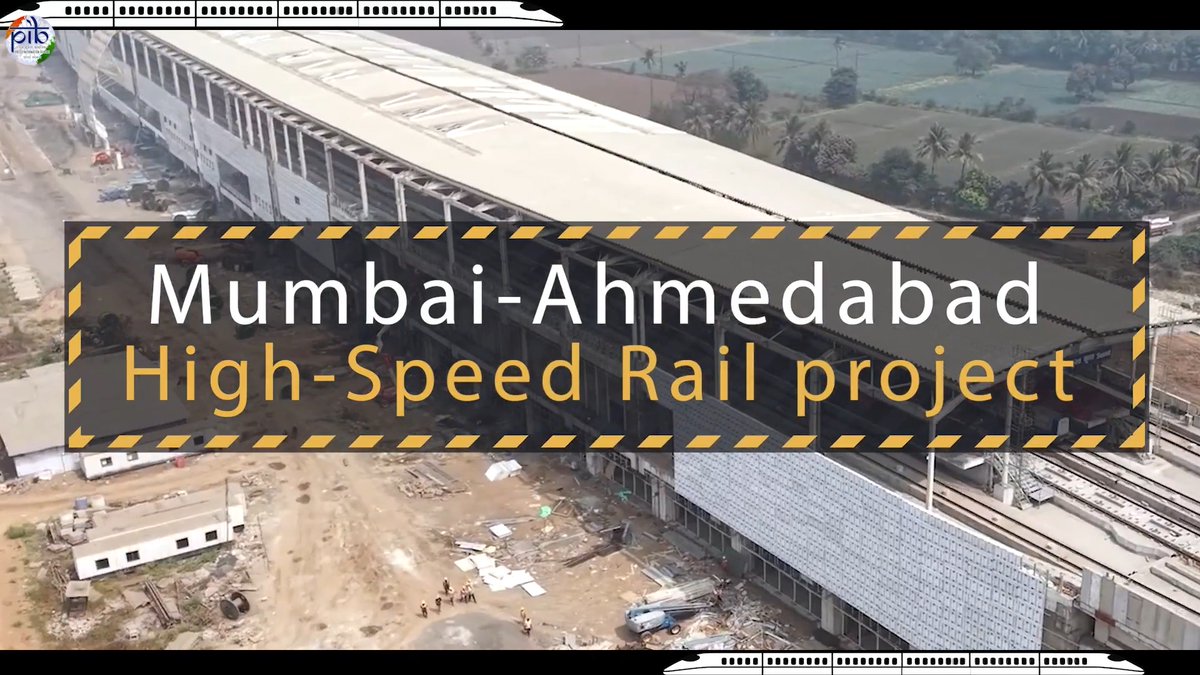
Congress seems to be the unhappiest when India makes progress. Its latest target is the Mumbai–Ahmedabad High-Speed Rail project. This is not just another infrastructure project. It is a transformative investment in India’s future. The India-Japan partnership remains firmly committed to operationalising the corridor at the earliest. While Japan’s advanced E10 Shinkansen trains are expected in the early 2030s, both countries have pragmatically agreed that services will begin with Indian-developed high-speed trainsets instead of waiting. The message is clear: deliver results first, while simultaneously building India’s indigenous high-speed rail capabilities. The benefits are immense: • It will connect India’s financial capital, Mumbai, with one of its fastest-growing commercial hubs, Ahmedabad, in a fraction of the current travel time. • Cities like Surat, the world’s diamond processing capital, and Vapi, a major industrial and chemical manufacturing hub, will be seamlessly integrated into a high-speed economic corridor. • Travel time will be cut by over four hours, making business travel, investment, tourism and regional connectivity far more efficient. • The project will strengthen manufacturing, create skilled jobs, enhance logistics and accelerate economic integration across one of India’s most productive regions. This is what nation-building looks like: combining global partnerships with Indian innovation, ensuring world-class infrastructure while strengthening domestic technological capability. Which raises a simple question: when a project promises faster connectivity, stronger economic growth, more jobs, and greater self-reliance, why is Congress so determined to ridicule it? Time and again, Congress has chosen to oppose transformational infrastructure instead of supporting India’s growth story. The country deserves better than politics that seeks to undermine progress.

Amit Malviya

22,641 Aufrufe • vor 1 Monat

Many people still don't grasp just how quickly India is moving 🇮🇳 The new Delhi-Mumbai Industrial Corridor (DMIC) will be completed in the next few years. The $100 billion project started in 2007 and has seen significant Japanese investment since the start. Stretching approximately 1,500 kilometers between the capital city Delhi (metro pop. of 34M) and India's financial capital Mumbai (metro pop. of 21M, this initiative will enhance connectivity and stimulate economic growth by developing smart cities, industrial parks along a new Delhi–Mumbai Expressway and the new Western Dedicated Freight Corridor (railway). The 1350 km 8-lane wide (expandable to 12-lane) expressway connecting the two mega-cities will be completed next year and will reduce the travel time from 24h to 11h. The 1500 km Western Dedicated Freight Corridor (WDFC) will also be completed in 2025. The high-speed line will support freight trains reaching 1,500 m (4,900 ft) length pulled by electric locomotives running at speeds greater than 100 km/h (62 mph). The tracks will be entirely grade-separated and have a generous loading gauge of 3,660 mm width and 7,100 mm maximum height allowing for double-stacked shipping containers to be transported on flatcars. This allows for single trains to have a 400+-container capacity. The corridor will reduce the travel time for containers from 50 h, by the existing freight train, to 17 h while significantly increasing the transport capacity on the route as well as decreasing transport costs. The DMIC megaproject also incorporates 9 Mega Industrial zones of about 200-250 sq. km, 3 ports, 6 airports and a 4000 MW power plant. India is rapidly outpacing China in both demographic and economic growth. The 21st century won't be the Chinese century. It will be the Indian century.

Visegrád 24

207,110 Aufrufe • vor 1 Jahr