Video wird geladen...

Video konnte nicht geladen werden

Zur Startseite

Achieving economic growth while meeting sustainability standards is challenging. As we navigate these complexities, innovation and strong partnerships among businesses, governments and communities are essential for impactful change. Shawn Cheng, Co-founder, Achelous Pure Metal Co. Ltd., Martin Neubert, Partner and Group Chief Investment Officer, Copenhagen Infrastructure Partners, Daniel Kaye,...

4,922,341 Aufrufe • vor 1 Jahr •via X (Twitter)

9 Kommentare

Profilbild von Jason傑森 🇭🇰|🛠️
Jason傑森 🇭🇰|🛠️vor 1 Jahr

每日一撸,安全第一!谨防钓鱼,空投别错过,冲呀~

Profilbild von Mobile Scanner
Mobile Scannervor 1 Jahr

Scan any documents, convert images into text, PDF files, etc. 👍

Profilbild von Taleb Ogola🇰🇪🇰🇪
Taleb Ogola🇰🇪🇰🇪vor 1 Jahr

💯🥂

Profilbild von Jason傑森 🇭🇰|🛠️
Jason傑森 🇭🇰|🛠️vor 1 Jahr

"Love the focus on innovation and collaboration for sustainable growth!"

Profilbild von K_Mara79
K_Mara79vor 1 Jahr

vaanathi akka if u have hunger on MLA seat plss leave BJP and join ADMK or DMK , DONT spoiled name of BJP, only really warriors of people entitled to stay in BJP and fight for people Justice🤬🤬 you are black sheep madam vanathi

Profilbild von Dung bathing & Urine drinking Indiot
Dung bathing & Urine drinking Indiotvor 1 Jahr

It is good if no western countries put their dirty fingers in Asian .

Profilbild von Jason傑森 🇭🇰|🛠️
Jason傑森 🇭🇰|🛠️vor 1 Jahr

Balancing growth and sustainability takes teamwork—great insights, Shawn!

Profilbild von 陈可儿(芝麻Gate.io返佣80%自动机返)
陈可儿(芝麻Gate.io返佣80%自动机返)vor 1 Jahr

💵🚀

Profilbild von Emma Thompson (互关、互粉、 Follow)
Emma Thompson (互关、互粉、 Follow)vor 1 Jahr

ESG talks, sustainability walks—let’s hope those partnerships don’t ghost us like my last group project. better deliver.

Ähnliche Videos

Gm Crypto Twitter! I mostly invest in crypto, but I'm also building a stock portfolio, and I see an opportunity here I think is worth sharing. Do with it as you please! #NFA In the past, I called $COIN when Coinbase was at $35 (now trading at $200), $AHOLD at $26 (now at $32), and Rabobank Certificates at 91% of nominal value (now 114%). Here's my latest buy: Bayer AG I believe this is a sleeping giant. Here’s why: 🧬 Bayer’s Strong Foundation & Vision Bayer has a legacy that spans life sciences and healthcare, and this century-old company is undergoing a transformation. With its experience and innovation, Bayer is set to shape the next era of healthcare and agriculture. 🌍 Global Demand & Bayer’s Role With the world population rising, the need for sustainable food and healthcare solutions is critical. Bayer’s R&D in crop science and pharma is positioned to meet this demand. Leading in seeds, pesticides, and pharmaceuticals, Bayer has the potential to be a global force. 💊 Pharmaceuticals: A Pipeline Full of Potential Bayer is diving deep into transformative fields like cell and gene therapy, oncology, and cardiovascular health. Their pipeline of innovative drugs and focus on personalized medicine suggest a promising future in healthcare. 🌾 Sustainable Agriculture: Feeding the Future Bayer’s commitment to sustainable crop science supports farmers and food systems. From advanced biotech to digital tools like Climate FieldView™, Bayer is essential to the future of global agriculture. 💡 Biotech & Digital Innovation Bayer is fully embracing AI and biotech, integrating precision health and precision agriculture into its strategy. Digital tools and strategic partnerships position Bayer to lead in the digital era of health and agriculture. 📈 Financial Resilience & Growth Despite facing challenges, Bayer has shown resilience. With a strong foundation, new partnerships, and a focus on sustainable growth, Bayer is primed for long-term profitability and growth. 🌐 Commitment to Sustainability Bayer’s mission, "Health for All, Hunger for None," aligns with strong ESG goals. Their sustainability initiatives in health, agriculture, and the environment make Bayer an attractive pick for impact-driven investors. With a strong pipeline, sustainability focus, and biotech & digital investments, Bayer is in a prime position for growth. If you’re interested in the future of healthcare and agriculture, Bayer is worth watching. Valuation Insights: Bayer currently trades at $27, with a market cap of $27B – far from its all-time high of $153 (and $153B market cap) before the Monsanto acquisition. Now, you can get ownership for a fraction of its former valuation. Ongoing lawsuits are putting pressure on the stock price, but once resolved, I believe Bayer will surge back toward previous highs.

Gem Buyer

237,724 Aufrufe • vor 1 Jahr

Announcement: HELLO Labs began as a Web3 entertainment brand, bringing crypto innovation to a global TV audience through our flagship series, Killer Whales. With a reach of over 600 million across Apple TV, Amazon Prime, and more, we introduced the world to founders building the future of Web3. HELLO Labs is now a full-stack growth engine for Web3, where media is the entry point to a complete ecosystem that helps projects launch, grow, and sustain momentum while rewarding users and $HELLO token holders. One platform combining Founders, KOLs, VC’s and Holders whilst accelerating growth and reach for all involved. 🐳 “When we initially developed Killer Whales, our vision was to transform HELLO Labs into a media & venture layer for Web3 - combining Hollywood-scale content, founder-focused acceleration, KOL activations, and on‑chain infrastructure into one powerful launch platform, with industry unique streaming series on Apple TV, Amazon Prime, and YouTube. Today we are proud to present that vision with HELLO Media, HELLO Growth, HELLO Protocol and HELLO Club to our community and WEB3 community” - , Co-Founder and CEO HELLO Labs. At the center is HELLO Club, where capital, creators, and communities work together. Founders get go-to-market support through media exposure, liquidity tools, and tailored quests within HELLO Club to engage communities and boost visibility. Club members unlock token rewards, co-investment opportunities, and rewards fueled by real activity across the $HELLO ecosystem. This is media, growth, and utility working together to power the next wave of Web3 adoption. Learn more and check out the Updated Website: 🔗

HELLO Labs

17,241 Aufrufe • vor 11 Monaten

From December 12th to 17th, 2024, continued to make waves in the Web3 world, representing at Taipei Blockchain Week #TBW2024 in Taipei and Taiwan Builder House #TBH in Tainan! 🇹🇼 Milestones from Our Taiwan Events: ➠ Taiwan Blockchain Week (Dec 12-14): We were honored to join a distinguished panel of Web3 leaders, moderated by Ashish | CyreneAI & NetSepio, Chief Business Officer of NetSepio. The panel featured: Jason Brink aka BitBender, Co-Founder & CEO of Datagram Network 📙 Anastasia, Head of Growth of Defactor Token Asher Looi, Co-Founder of BitDoctor.ai Our discussions focused on Decentralized Physical Infrastructure (DePIN) and Real-World Assets (RWA), highlighting how BitDoctor's advanced technology is bridging the gap between the physical and digital worlds to deliver real-world impact in healthcare through decentralized infrastructure. ➠ Taiwan Builder House (Dec 14-17): In Tainan, we took part in another impactful panel session moderated by Darren Gal, Marketing Lead of Nubila Network, featuring: Ming Wen, Founder of twin3.ai Kelvin Yan, General Manager of @BuzzUpHQ Judie Liu, Marketing Lead of Pundi AI Asher Looi, Co-Founder of BitDoctor.ai This discussion revolved around Constructing the Future of Web3 Startups, where we shared how BitDoctor's AI and blockchain-powered technology serves as a model for innovation, enabling startups to create sustainable, impactful solutions while addressing real-world challenges like healthcare accessibility. A Step Forward for Healthcare Innovation: Through engaging discussions with industry leaders and attendees, we reinforced our commitment to creating impactful solutions for global healthcare challenges. Fostering Global Innovation: We connected with visionaries worldwide, exchanging ideas and collaborations to integrate AI and blockchain, strengthening our mission to redefine healthcare through technology. Thank You, Taiwan! We’re grateful for the opportunity to share our journey and vision with the vibrant Web3 community in Taipei and Tainan. #BitDoctorAI #DeSci #AI #DePIN #healthtech #freediagnosis

BitDoctor.ai

77,710 Aufrufe • vor 1 Jahr

Addis Ababa’s Riverside Development is far more than a riverbank beautification project. From the Entoto to Peacock corridor to the Entoto–Kebena stretch, this is a large-scale urban transformation that extends up to 50 meters beyond the rivers, creating green corridors, public gathering spaces, walkable areas, recreation zones, and commercial spaces that are reshaping the city itself. What makes the project especially significant is its broader economic and social impact. Beyond improving the appearance and function of the riversides, it has created jobs for many people across construction, engineering, landscaping, logistics, and related sectors, while also generating opportunities for local contractors, suppliers, and businesses. The fact that so much of the work is being designed and delivered locally highlights the growing capacity of Ethiopian expertise in urban development and infrastructure. The sustainability aspect is equally important. Once dumping grounds for toxic waste and flood hazards affecting communities along the riverbanks, these areas are now being transformed into greener, healthier, and more liveable urban spaces. At the same time, the integration of commercial and public spaces demonstrates how environmental restoration and economic growth can work together rather than compete with one another. This is a long-term investment in the future of Addis Ababa as a greener, more connected, economically vibrant, and people-centered city.

Abiy Ahmed Ali 🇪🇹

58,020 Aufrufe • vor 1 Monat

Strengthening Tribal Communities with CSR Initiatives... Delighted to be a part of 'CSR for Change: Accelerating Scheduled Tribes Development through CSR Partnership', initiated by the Tribal Development Department, Government of Maharashtra, and the United Nations Development Program (UNDP). In Maharashtra, approximately 9.5% of the population belongs to tribal communities, contributing to the state's rich cultural heritage and well-developed society. Both the State and Central Governments are continuously working towards their progress and development, with a strong focus on education, healthcare, nutrition, and livelihood. Stunting and wasting remain significant concerns among tribal populations. We are actively addressing these challenges through sustained efforts aimed at improving nutrition, healthcare, and overall well-being. Additionally, we are strengthening the education system to facilitate better learning opportunities and uplift these communities. CSR plays a crucial role in introducing flexibility, leveraging technology, and bridging gaps in government initiatives. In Maharashtra, CSR contributions have made a remarkable and lasting impact on tribal communities. Together, we can drive meaningful change in healthcare, nutrition, and education. Notably, Maharashtra receives the highest share of CSR funding, reflecting strong collaboration and commitment. We deeply value our partnership with the United Nations Development Program. The government remains committed to supporting and enhancing these impactful collaborations, standing shoulder to shoulder with our partners to uplift every community and ensure a brighter future for all. During this event, Minister Dr Ashok Uike, Minister of State Indranil Naik, and other respective dignitaries were present. UN Development Indranil Naik Dr.Ashok Uike #Maharashtra #TribalDevelopment #Mumbai

Devendra Fadnavis

11,004 Aufrufe • vor 1 Jahr

It's great to see Sky finally raising these issues, but I fought to try and remove these toxic "cross-curriculum priorities" poisoning the minds of young Australians from our schools over a decade ago. Unfortunately, I had little support, and the Liberal Party was too weak to take action. Due to the Liberal Party's failure to reform the national curriculum while in office, we now have children leaving school indoctrinated with cultural Marxism since kindergarten. No wonder they emerge brainwashed and vote for the Greens or Labor. I’m disgusted that the Liberal Party failed to fight for so many things when they were in office and had the chance to make a difference - and these "cross-curriculum priorities" are just another thing they hoisted the white flag to. Here’s what I said about these "cross-curriculum priorities" back in 2014; The concept of sustainability under the new national curriculum will be embedded in all areas of the curriculum, including mathematics. If the definition of sustainability was about economic sustainability, how governments must run a sustainable budget, this would be a welcome change, something that is welcome in our curriculum …. but what is the definition of sustainability? I quote directly from our new national education curriculum which defines it as follows: ‘The Sustainability priority is futures-oriented, focusing on protecting environments and creating a more ecologically and socially just world through informed action.’ This is not a Greenpeace brochure; this is the concept that is embedded in everything Australian students learn under our national curriculum. Gone is the notion that our progress is defined as the exercise of mankind's ability to overcome our natural barriers. Gone is the inspiration and positive vision for the future that was instilled in my public school education back in the seventies. Gone is the need to strive to make our society wealthier and to grow the pie. Instead, we are replacing it with the idea of cutting the pie into smaller pieces in a so-called 'more socially just world'. We need to be teaching our kids about fierce determination and willingness so that they are not afraid to make mistakes. We need to teach them critical thinking and to question common dogma. But most of all, we need to teach our kids optimism. But instead, the definition of sustainability we have embedded in our national curriculum is simply a corrosive, green doctrine. It is at odds with progress. It teaches restraint and low growth, social conformity, a mistrust of society and a pessimistic fear of the future. This is not what we want. Rather than indoctrinate children about sustainability, the limits to growth and the limits to our resources, we should be teaching our kids that the greatest resource they have is human ingenuity and that it is something that has no limits. Instead, our curriculum has been hijacked by green ideology.

Craig Kelly:🇦🇺Foundation for Economic Education

11,593 Aufrufe • vor 1 Jahr

South Africa’s G20 presidency comes at an important time for developing and climate-vulnerable states. Jamaica supports the global effort to make growth sustainable, inclusive, and resilient. Our experience shows the value of disciplined macro-fiscal reforms, responsible debt management, institutional strengthening, and focused pro-growth measures. These actions stabilized our economy and created space for investment in our people. That progress is now threatened. Hurricane Melissa, a Category 5 storm, has devastated seven parishes and will place pressure on our fiscal outlook. This reflects the ongoing reality facing small island developing states. Recovery will require strong global partnership. The IMF’s Resilience and Sustainability Trust, made possible through G20 action, remains an essential source of long-term, affordable financing. Jamaica supports its continuation and strengthening. We also encourage the expansion of climate-focused financing tools, including thematic bonds, blended-finance options, and funding for resilient infrastructure. A rules-based global trading framework should provide predictability and flexible support for small economies, including access to risk-insurance instruments and opportunities for technological upgrading. Integrating multidimensional vulnerability indices across international financial institutions will help countries invest in resilience without jeopardizing fiscal stability. Jamaica also supports a clear loss-and-damage financing window and a global skills and trade compact. These steps will help ensure global systems promote resilience, stability, and shared prosperity for all nations.

Andrew Holness

17,846 Aufrufe • vor 7 Monaten

🎙 Episode 1 Is Live: Visa x WeFi This is a major milestone for us. Our first official podcast with Visa is now live, and we’re opening with one of the most important conversations in modern finance: stablecoins and the convergence of traditional payments and crypto. The conversation features Alexandra Soroko, Growth Product & Partnerships at Visa, and Michael Batuev, Head of Global Payments at WeFi. 👉 This episode goes beyond surface level commentary. We explore how Visa views stablecoins not as a passing trend, but as infrastructure. While they still represent less than 1 percent of global money flows, their efficiency, speed, and programmability position them as a powerful new layer in how money moves globally. Visa has been observing and building in crypto since 2018. Innovation at that scale requires navigating regulation, technology, and multiple geographies. But when they integrate something new, it connects to a network of more than 150 million merchants worldwide. That scale turns innovation into real world access. A key theme in the discussion is convergence. Fintech companies like WeFi move fast, design around users, and ship quickly. Global payment networks bring distribution, resilience, and trust. The future is not about replacement. It is about combining strengths. Will stablecoins replace fiat? Unlikely. The strongest innovations coexist and enhance what already exists. Stablecoins can evolve into a powerful financial rail while remaining connected to established payment systems, making them usable in everyday life. At WeFi, we are at the forefront of this movement. By working within established infrastructure like Visa and building products designed around real user needs, we are helping bring stablecoins from theory into practical, global utility. Digital assets are no longer on the fringe. They are entering the core of global finance. Episode 1 is just the beginning. Watch now and be part of the conversation shaping the next chapter of payments 🌍

WeFi

16,721 Aufrufe • vor 4 Monaten

📺Episode with Emanuele Francioni with DUSK👇. What I found fascinating about this interview is how much I learned about the regulatory environment in Europe and how much DUSK is being integrated into the financial rails--and, how little about it we are hearing in the USA. Because of the focus DUSK has on compliance in Europe, they are not only being invited to a seat at the regulatory table, but they are part of the architecting the design and have a strong voice at the table. I imagine we will hear more from DUSK digital ledger technology as they are integrated into more and more of the financial rails and financial life in Europe. Intro In this conversation, Emanuele Francioni Emanuele Francioni, founder of Dusk, shares his journey into the world of crypto and blockchain, detailing his background in avionics and how it influenced his approach to developing DUSK. He discusses the vision behind DUSK, focusing on the importance of privacy and compliance in blockchain technology, and how DUSK aims to create a financial market infrastructure that addresses these needs. Emanuele also highlights the unique transaction model of DUSK and the partnerships formed to navigate regulatory landscapes, emphasizing the importance of education in compliance. In this conversation, Emanuele discusses the advancements and regulatory compliance of DUSK Network, emphasizing its unique position in the blockchain space. He highlights the importance of building relationships with regulated entities and the challenges faced by other protocols. Emanuele also explains how the $DUSK token can accrue value through its integration with financial market infrastructure and partnerships, paving the way for future growth and opportunities. Takeaways - Emanuele's journey into crypto began with skepticism but evolved into a passion. - DUSK was founded to address privacy and compliance in blockchain. - The financial market infrastructure is crucial for trading and settlement processes. - Lessons from avionics taught Emanuele about consensus and reliability. - DUSK's unique transaction model enhances privacy and compliance. - Compliance in blockchain requires understanding specific regulations. - Partnerships with regulated entities are vital for DUSK's success. - Education is key when engaging with regulators and acquiring licenses. - DUSK aims to be a general-purpose, privacy-friendly layer one blockchain. - The future of DUSK includes further innovations and regulatory compliance. DUSK has received regulatory clearance to operate a stock exchange. - Emanuele serves as both CEO of DUSK and CTO of NPEX, a compliant exchange in Amsterdam. - DUSK aims to integrate financial market infrastructure on the blockchain. - Regulatory compliance is crucial for partnerships with financial institutions. - User retention is a challenge for crypto protocols due to market volatility. - DUSK's relationship with NPEX enhances its credibility and access to institutions. - The DUSK token will accrue value through transaction fees and network participation. - DUSK aims to decentralize financial market infrastructure for broader access. - Partnerships with regulated entities are key to DUSK's strategy. - DUSK is positioned to lead in the tokenization of real-world assets. Chapters 00:00 Introduction to Emanuele Francioni and DUSK 06:02 The Birth of DUSK and Its Vision 11:50 Lessons from Avionics Applied to Blockchain 18:01 Privacy and Compliance in DUSK 23:48 DUSK's Unique Transaction Model 30:14 Future Prospects and Innovations for DUSK 35:50 The Importance of User Base and Institutional Relationships 51:32 Value Accrual of the DUSK Token and Future Prospects

papiofficial

72,391 Aufrufe • vor 1 Jahr

Through Technology, a Centuries-Old Battle Is Coming to a Head "A Discussion of Open-Source AI with Travis Oliphant" Travis Oliphant Travis Oliphant is an entrepreneur and CEO and co founder of OpenTeams (OpenTeams®), a company that “helps organizations deploy, support, and own [AI] technology at enterprise scale.” One of their tag lines is “Connecting Companies with Communities.” As a data scientist and software developer, Travis is known for his contributions to Python and as the creator of NumPy and a founding contributor to SciPy, which together formed a foundation for modern AI and machine learning. When I was in Salt Lake City in the first week of June, Travis and I went into a studio to record this interview, continuing a conversation we had started when Travis and his team visited the Solari team in the Netherlands in early 2026. Our discussion focuses on how we can understand and manage the growing presence of AI in our lives. Travis has an impressive intellectual and entrepreneurial background. After earning Bachelor and Master of Science degrees in mathematics and electrical engineering at Brigham Young University, he completed a PhD in biomedical engineering at the Mayo Clinic. As an assistant professor at Brigham Young’s Department of Electrical and Computer Engineering from 2001 to 2007, he directed the Biomedical Imaging Lab, where his research centered on computational imaging techniques. He then went on to start several companies, each time identifying the need for a new standard, building the open-source infrastructure, and helping enterprises adopt it at scale. Brilliant, open-minded, deeply caring, and generous, Travis is someone who can help us understand what is happening and what we do about it. My hope is this will be the first of many conversations as we navigate the acceleration in technological innovation (and skullduggery) and seek to ensure that tools such as AI serve the health and prosperity of a human civilization. Full Report: Subscribe to

The Solari Report | Catherine Austin Fitts

10,858 Aufrufe • vor 17 Tagen

At the panel session on “Rising Seas, Resilient Communities: Climate Adaptation Strategies in West Africa” at Harvard Business School earlier today, I had the opportunity to share Lagos State’s realities as a coastal megacity. Lagos sits on the continental shelf. Our land mass has grown from 3,577 to 4,050 square kilometres, largely through reclamation of wetlands and lagoon bodies. While this expansion has created space for real estate and infrastructure, it also comes with risks. This is why we insist that no reclamation takes place without Environmental Impact Assessments and drainage masterplans. These checks are necessary because when reclamation is done indiscriminately, it blocks stormwater pathways, destroys natural buffers like mangroves, and exposes millions of our people to flooding and erosion. As a city of over 22 million residents, we face additional pressures in managing daily waste. Lagos has long relied on a linear waste system with landfills, many of which are now decommissioned or about to be decommissioned . Today, we are deliberately shifting to a circular model that sees waste as a resource for wealth and energy. We have entered partnerships across the sub-region and beyond , including with a Ghanaian company that is helping us turn thousands of tonnes of waste into compost and reusable materials, while also setting up transfer loading stations to reduce what ends up in our landfills . We also recognize that Lagos is not alone in these challenges. The entire Gulf of Guinea shares similar threats. What happens in Togo, with its 42-mile coastline, or in Ghana, can affect us directly. That is why we have reached out to our neighbors and built regional partnerships on coastal protection, solid waste management, and climate adaptation. Our commitment is clear: to protect our environment, prosecute those who damage it, communicate with our citizens through advocacy on safe practices, and work with regional and international partners to build a Lagos that is not just surviving climate change but leading in adaptation strategies. These moves and developments are set to put Lagos on a #NewHorizon.

Tokunbo Wahab

10,221 Aufrufe • vor 9 Monaten

✨ Participation in TOKEN2049 in Singapore was a true revelation for everyone working in the fields of cryptocurrency, blockchain, and AI. The innovative ideas, engaging discussions, and debates that took place at this event provide a unique insight into the rapid evolution of the digital economy. 🔗 The DeHealth team showcased our advanced blockchain protocol at the conference, which gives users full control over their medical data. Our decentralized storage system ensures the security, accessibility, and complete privacy of medical information by using private keys for data management and integration with eHealth applications. We aim to set a new standard in data security and user control, paving the way for widespread adoption in healthcare. 💡 The conference discussed key trends and challenges facing public and private markets, as well as the future of financial instruments and infrastructure based on cryptocurrencies. Eastern and Western projects, solutions to privacy and transparency issues, and the challenges of fragmented cryptocurrency infrastructures were all major topics on the agenda. 🌍 Token2049 demonstrated that the future of crypto is not limited to technology alone—building sustainable and practical systems that can integrate into the global financial ecosystem is becoming a crucial aspect. At DeHealth, we are confident that this is just the beginning of our journey, and we will continue to move forward, bringing innovation to the fields of health and finance. 🚀 More information about the event and insights can be found in the article by DeHealth CEO Denys Tsvaig , which he wrote exclusively for HackerNoon. #Token2049 #Blockchain #DeHealth #CryptoInnovation #HealthData #BlockchainInHealth #DeFi #Crypto #Privacy #Transparency #tsvaig #FutureOfFinance #MedTech #DigitalEconomy #Singapore #BlockchainProtocol #DataOwnership #FinancialInnovation

DeHealth

10,268 Aufrufe • vor 1 Jahr

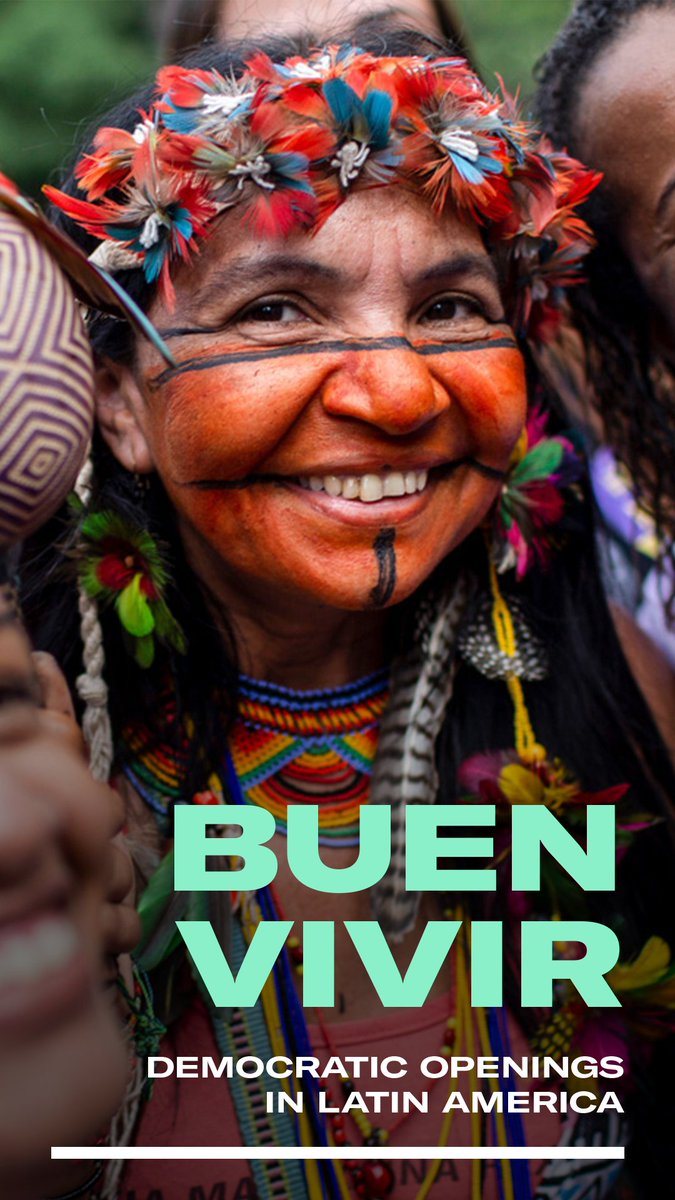
Today we’re launching a series of initiatives to promote social and economic well-being in Latin America by focusing on people’s real needs: access to services, care, a healthy environment, quality jobs, and security. “Buen vivir” (living well), a concept originating in Indigenous and Afro-descendant traditions across the region, inspires this work and emphasizes belonging, community, and harmony with nature. Spanning eight years, this work will support civil society organizations and partnerships with governments to co-create public policies that directly address the needs of historically marginalized populations, with a particular focus on Indigenous peoples, Afro-descendant communities, and women. The strategy will focus primarily on Brazil, Colombia, and Mexico, while also promoting regional exchange and collaboration with countries like Chile and Guatemala. “For decades, we have supported partners in Latin America striving for progress. Today in the face of global power shifts, and with trade systems being completely upended, we must rise to meet this moment. Collective action has never been so important. New coalitions will emerge. Where there are opportunities, we will act with boldness and conviction to improve living conditions and help strengthen open societies,” said Open Society Chair Alex Soros. “Today’s challenge is to show that democracy can be more than just a political system,” said Pedro Abramovay, vice president of programs at Open Society. “Inspired by the idea of ‘buen vivir,’ we want to restore democracy’s ability to offer both meaning and a shared future,” he added.

Open Society Foundations

33,746 Aufrufe • vor 10 Monaten

In this special live event, Founders In Arms Podcast brings together a room full of founders at Mercury's San Francisco headquarters for an intimate conversation about building, investing, and the future of AI. Max Mullen is co-founder at Instacart, where he led product and grew it from a contrarian idea into the leader in online grocery delivery and eventually a publicly traded company. Now Max Mullen is an active investor and runs a founder community in San Francisco called Workshop. Max shares lessons from over a decade of building and his perspective on AI's transformative potential. In this episode, we cover: (00:00) Welcome to the first live Founders in Arms event at Mercury HQ (00:43) Introduction to Max Mullen and his early investment in Mercury (03:58) Max's origin story and first startup at Startup Weekend (04:36) Building a social network and getting acquihired (05:39) The path from acquihire to founding Instacart (06:19) Why Max wanted to solve real-world operational problems (07:17) Starting Instacart when there was no gig economy (09:15) Overcoming the "grocery delivery is dead" narrative (11:48) Market timing and why Webvan was too early (14:37) Being a non-technical co-founder in a technical role (17:45) The PARE framework for building company culture (22:09) Max's approach to M&A at Instacart (24:00) The Caper smart shopping cart acquisition story (25:31) How founders can position for acquisition (28:26) Why product-market fit attracts acquirers (29:46) Evaluating investments: market size vs. founder quality (32:54) Max and Immad's differing investment philosophies (35:39) The current state of VC funding and AI companies (36:51) The three best times to raise money as a founder (39:15) Instacart's seasonal business patterns and fundraising timing (39:59) The most interesting opportunities in AI right now (40:24) Why every profession will have AI agent co-pilots (41:44) What AI-native companies will look like for the next generation

Rajat Suri

143,877 Aufrufe • vor 5 Monaten

Last week I joined scholars, business leaders, policymakers and practitioners at the Academy of International Business Africa Conference hosted by Strathmore University Business School Strathmore Business School. What stood out clearly is that in a world increasingly defined by uncertainty and complexity, Africa’s experience is becoming not just relevant, but a source of insight for global businesses. Complexity is now an accelerator driving faster innovation, new business models and globally relevant solutions rooted in local realities. From the continued evolution of M-PESA as a platform for financial inclusion and innovation, to the critical role of public-private partnerships, supportive policy environments and human-centred technology, the opportunities before us are immense. Realising them will require bold thinking, collaboration and a shared commitment to inclusive growth. I was encouraged by the depth of discussion and the exchange of ideas on how Africa can continue to lead through innovation, resilience and entrepreneurship. My sincere thanks to Dr. Vincent Ogutu, Vice Chancellor of Strathmore University, Professor Ben Ngoye, Conference Co-Chair, and the entire Strathmore Business School team for convening such an important forum and for their warm hospitality. The future of Africa will not be defined by what happens to us, but by what we choose to build together. #AIBAfricaConference #AIB2026 #DevelopingGreatAfricanLeaders

Peter Ndegwa

11,268 Aufrufe • vor 1 Monat

To our community, clients, and partners, We are closing the year with clarity. This has been Brickken’s best year. We began by announcing a 2.5m raise backed by venture capital firms that invested in execution, not noise. We used that capital to do what matters in this industry: ship product, secure strategic distribution, and build infrastructure that institutions can rely on. This year Brickken became an official tokenization provider for ecosystems such as MANTRA | The EVM L1 for RWAs and XDC Network . These are not symbolic partnerships. They are aligned networks with real demand, long term relevance, and a clear path to institutional scale. We chose partners that are building on chain capital markets, and we are building with them. We also delivered the full product stack. • Our web application is live and production ready. • Our white label platform is live for institutions that need brand control and compliant operations. • Our API is live for teams that require deep integration into existing systems. Brickken is not a promise. It is operational infrastructure. That execution turned into measurable traction. We closed the year with 41m in TVL and surpassed 100 active clients. These are real businesses deploying real assets, running real issuance flows, and building long term programs on Brickken . Tokenization is no longer a concept. It is becoming financial infrastructure, and Brickken is already operating in that reality. The market context matters. Crypto markets faced pressure and the BKN token moved with the cycle. That is not unique to Brickken, it is systemic. What matters is how a company performs when conditions are not easy. We stayed disciplined. We kept shipping. We kept onboarding. We protected the long term plan. This is where our community proved its strength. Your commitment is not passive support, it is a strategic advantage. • The token matters because it is part of the ecosystem we are building. • Our clients matter because they validate product market fit with capital and repetition. • Our partners matter because they expand distribution and credibility. Together, this forms a single system built on trust, alignment, and execution. Now to what comes next. 2026 is the year Brickken steps into leadership. We are contributing to the standards that will define the market, including ERC 7943, because leadership belongs to the builders who shape the rules and deliver the rails. Brickken has a voice in this ecosystem, and it is increasingly referenced and followed for one reason: we execute. We have what it takes to lead at scale. • The team. • The know how. • The product. • The treasuries. • The institutional relationships. • The discipline to keep building through any cycle. We always said we wanted to be a tokenization platform. That ambition has matured. Now the objective is unambiguous: To become the tokenization platform. Competitors can keep talking. We will keep delivering. The gap will not close, it will widen. Our goal is singular: unicorn scale built on real infrastructure, real adoption, and long term value creation. Thank you for building this with us. The foundation is complete. The next phase begins now. Edwin Mata CEO and Co Founder Brickken

Brickken

11,946 Aufrufe • vor 6 Monaten

Bihar is taking important steps toward building an AI-driven future. The Bihar Ai Summit brought together government leaders, policymakers, industry representatives, academia, and technology experts to discuss how Artificial Intelligence can accelerate innovation, improve public service delivery, and create new opportunities across sectors. The presence of Hon'ble Chief Minister Shri Samrat Choudhary Ji, Hon'ble Deputy Chief Minister Shri Bijendra Prasad Yadav Ji, Hon'ble IT Minister Shri Nitish Mishra Ji, IT Secretary Shri Abhay Kumar Singh Ji, Hon'ble DGP Mr Vinay Kumar ji, IPS and other distinguished participants reflects Bihar's commitment to leveraging technology for economic growth and digital transformation. As AI adoption expands across governance, healthcare, education, agriculture, banking, and enterprise, the focus must remain on building practical, accessible, and impactful applications that address real-world challenges. At CoRover | BharatGPT, we believe the next phase of AI will be driven by multilingual, inclusive, and population-scale innovation built on local knowledge, local languages, and local expertise. Bihar's young talent base, academic institutions, and growing technology ecosystem create a strong foundation for this journey. Sharing highlights from the Bihar AI Summit, I spoke about the opportunity to build AI in Indian languages, enable innovation beyond major technology hubs, and create technologies that can serve both India and the world. India's AI growth story will be strengthened when more states, institutions, entrepreneurs, and innovators contribute to building solutions for India and the world. Full video: #AI #SovereignAI #BharatGPT #IndiaAI #AgenticAI #AIInnovation #ResponsibleAI #DigitalTransformation

Ankush Sabharwal

165,688 Aufrufe • vor 1 Monat

Powering the Future: Maharashtra Advances Technology-Driven Manufacturing Delighted to inaugurate 'Taural India Supa Plant' a landmark initiative for industrial growth and sustainable Maharashtra at Parner, Ahilyanagar. Maharashtra is one of the key drivers of the Indian economy, leading various sectors with its robust, technology-focused manufacturing foundation. Aluminium is essential across diverse industries, from defence to healthcare, and the 'Taural India Supa Plant' represents a vital move to bolster this strategic landscape. By strengthening domestic capabilities and fostering a resilient, self-reliant manufacturing base, the plant's operations will significantly contribute to the nation's growth. This plant in Maharashtra marks a significant step towards strengthening India’s ‘Atmanirbharta’ in critical industrial materials. The plant at Supa MIDC, stemming from the MoU signed between the Government of Maharashtra and Taural India at Davos 2025, has been successfully inaugurated. This marks the transformation of investment into industry, job creation, and economic growth. As Maharashtra continues to convert global partnerships into on-ground progress, initiatives like this plant will shape a stronger, more resilient, and self-reliant industrial future for India. Legislative Council Chairman Prof. Ram Shinde, Minister Radhakrishna Vikhe Patil ji, Minister Uday Samant, MP Dr Bhagwat Karad ji, Founder and CEO of Taural India, Bharat Gite, H.B.P. Namdevshastri Maharaj, H.B.P. Shivaji Maharaj and other dignitaries were present. Ram Shinde प्रा राम शिंदे Radhakrishna Vikhe Patil Uday Samant Dr Bhagwat Kishanrao Karad (मोदी का परिवार) Bharat Gite Taural India Pvt Ltd #Maharashtra #TauralIndia #MakeInIndia

Devendra Fadnavis

11,848 Aufrufe • vor 5 Monaten

Dear Global Pioneers, Yesterday, the Africa Community successfully hosted a GCV leaders Conference. The following is the speech by Global GCV Ambassador, Ms. Lumari. Her speech is very good, and I hope all pioneers will read and listen to the voice message. I would like to express my gratitude to Africa GCV Ambassador Mr. Oliver for the invitation and to all Africa GCV Ambassadors for their hard work on GCV education and barter. Please note that my speech is only for community leaders, so I will not make it public. Thank you. Doris Yin 🪷🪷🪷 ------------ Lumari's Speech on Africa GCV Leaders Conference Good morning esteemed members of the GCV African Leadership Conference, It is with great pleasure and enthusiasm that I stand before you today. I would like to acknowledge some key individuals whose dedication and leadership have been instrumental in advancing our cause. First and foremost, let us recognize Ms. Doris Yin, our esteemed Founder and Grand Global GCV Ambassador, for her unwavering commitment and inspiring leadership. A heartfelt thank you also goes to Mr. Olivier Ndatimana, Vice Chairman of the International Trade Committee, for his excellent leadership. I extend my appreciation to Ms. Nonny, our enthusiastic GCV Ambassador from Indonesia, for her remarkable contributions. Also, special recognition to Mr. Danyll Chen, Chairman of the International Trade Committee, for his pivotal role in fostering international trade partnerships. Furthermore, I commend Mr. Mazi zaOnyido, GCV Ambassador, and all the dedicated GCV ambassadors and leaders across Africa who are tirelessly contributing to our movement. Thank you all for your dedication, passion, and commitment to the GCV vision. Together, we are making a significant impact. Sending my warm regards and respect to each one of you. In our interconnected world, international trade serves as a cornerstone of economic growth, fostering collaboration and opening doors to new opportunities. The exchange of goods, services, and ideas across borders enhances the prosperity of nations and promotes innovation. Businesses can tap into new markets, consumers can access a wider array of products, and countries can leverage their comparative advantages to achieve higher efficiency and productivity. However, traditional barriers pose significant challenges to the seamless flow of commerce. For instance, regulatory differences, tariffs, and logistical hurdles can complicate international transactions. These barriers can slow down the growth of international trade and prevent businesses from fully realizing the benefits of a global marketplace. Therefore, it is crucial to work towards reducing these obstacles. For example, incorporating partial Pi payment alongside fiat can help bridge these gaps. By doing so, we can pave the way for a more connected and prosperous global economy. The concept of partial Pi payment presents a revolutionary paradigm shift. Even within the current enclosed mainnet, we can take advantage in utilizing Pi and in this manner it strengthens the foundation of our ecosystem. Take, for example, the 50% Pi payment option in China—a tremendous opportunity allowing us to leverage competitive advantages over traditional market practices. Imagine the impact: Businesses save significantly with a 50% Pi payment, enabling reinvestment into growth and innovation. This encourages more frequent purchases and attracts additional merchants, amplifying savings. While temporary in the enclosed mainnet phase, transitioning to the open mainnet promises 100% Pi payment. Now is the time to fortify our ecosystem. Let's collaborate because Pi’s success rests in our collective efforts. Each of us plays a vital role in achieving Phase 2 and fostering a robust ecosystem. The concept of partial Pi payment alongside fiat offers dual benefits. It enables businesses to harness Pi's advantages, mitigating risks, and optimizing operational efficiencies. For the GCV community in Africa, embracing partial Pi payment can unlock tremendous opportunities. It enables local businesses to participate more actively in global trade networks, promotes financial inclusion by lowering entry barriers, and fosters innovation in financial technologies across diverse sectors. Furthermore, as we navigate the complexities of international trade, it is crucial to emphasize the importance of collaboration and knowledge-sharing within the GCV community. By leveraging our collective expertise and resources, we can effectively address challenges, seize emerging opportunities, and drive sustainable growth across the continent. In conclusion, the integration of partial Pi payment and fiat in international trade represents not just a technological advancement but a transformative force for economic empowerment. Together, let us embrace this future with optimism and determination, paving the way for a more inclusive and prosperous Africa within the global economic landscape. Thank you. Lumari Global GCV Ambassador, Philippines

Doris Yin 东方紫莲🪷

17,691 Aufrufe • vor 2 Jahren