Video wird geladen...

Video konnte nicht geladen werden

Zur Startseite

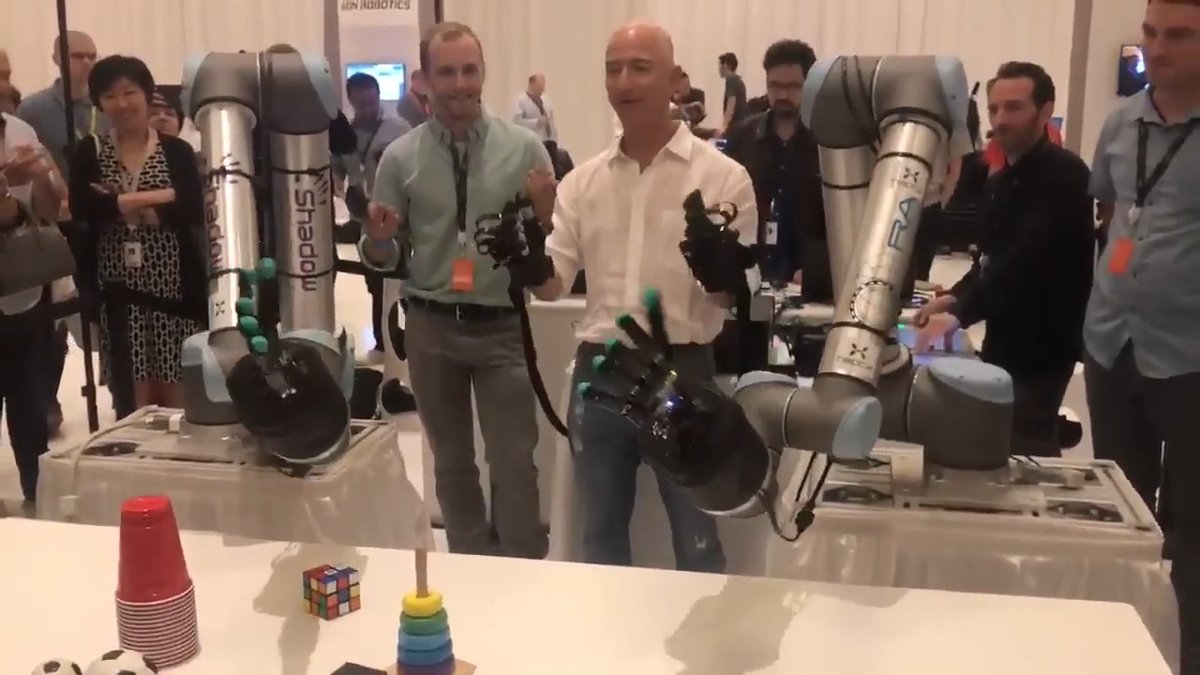
Allonic, a Hungarian robotics startup is developing humanoid robot bodies using a proprietary 3D Tissue Braiding system that weaves high-strength fibers, elastic tendons, wiring and sensors around a minimal internal skeleton, mimicking how human connective tissue wraps around bones. The approach enables complex, dexterous structures that are lightweight, strong...

16,816 Aufrufe • vor 3 Monaten •via X (Twitter)

0 Kommentare

Keine Kommentare verfügbar

Kommentare vom Original-Post werden hier angezeigt

Ähnliche Videos

⚡️📣👇Tremendously excited to share our new Cell article, where we develop TriPath, a method for analyzing 3D pathology samples using weakly supervised AI. Article: TriPath enables 3D computational pathology via 3D multiple instance learning allowing AI models to capture intricate morphological details from pathology volumes. Code: Blog post: Tested on two different imaging modalities, and patient cohorts from two institutions. Our superstar Andrew H. Song put in a monumental effort of leading the study, in a fantastic collaboration with Jonathan Liu at University of Washington . Interesting aspects: - Utilizing the whole tissue volume and leveraging 3D deep learning enable superior risk prediction performance compared to 2D deep learning baselines based on a few sampled tissue sections that emulate standard clinical practice. This indicates TriPath can harness additional information provided by 3D tissue morphology. - The performance is also superior to clinical baselines from a reader study that involved six expert pathologists. - The morphologically heterogeneous tissue volume could lead to opposing patient-level outcome predictions, dependent on which portion of the tissue volume is used. This concurs with current clinical literature warning that tissue sampling bias can lead to misdiagnosis. Some limitations: - While the 3D pathology cohort size is unprecedented, it is smaller than typical 2D pathology cohorts. Further large-scale studies will be required for validation. Nevertheless, we believe that this study will initiate a positive cycle, encouraging academic institutions and pharmaceutical companies to contribute large banks of human tissue blocks with paired clinical outcomes, thus speeding up advancements in 3D computational pathology. Concluding insights: We believe that 3D pathology is just around the corner - It has the huge potential to not only augment/improve the current clinical practice centered around 2D examination of human tissue, but also help reveal novel biomarkers for prognosis and therapeutic response.. Harvard Medical School Harvard Data Science Initiative Mass General Brigham Broad Institute

Faisal Mahmood

65,520 Aufrufe • vor 2 Jahren