Video wird geladen...

Video konnte nicht geladen werden

Zur Startseite

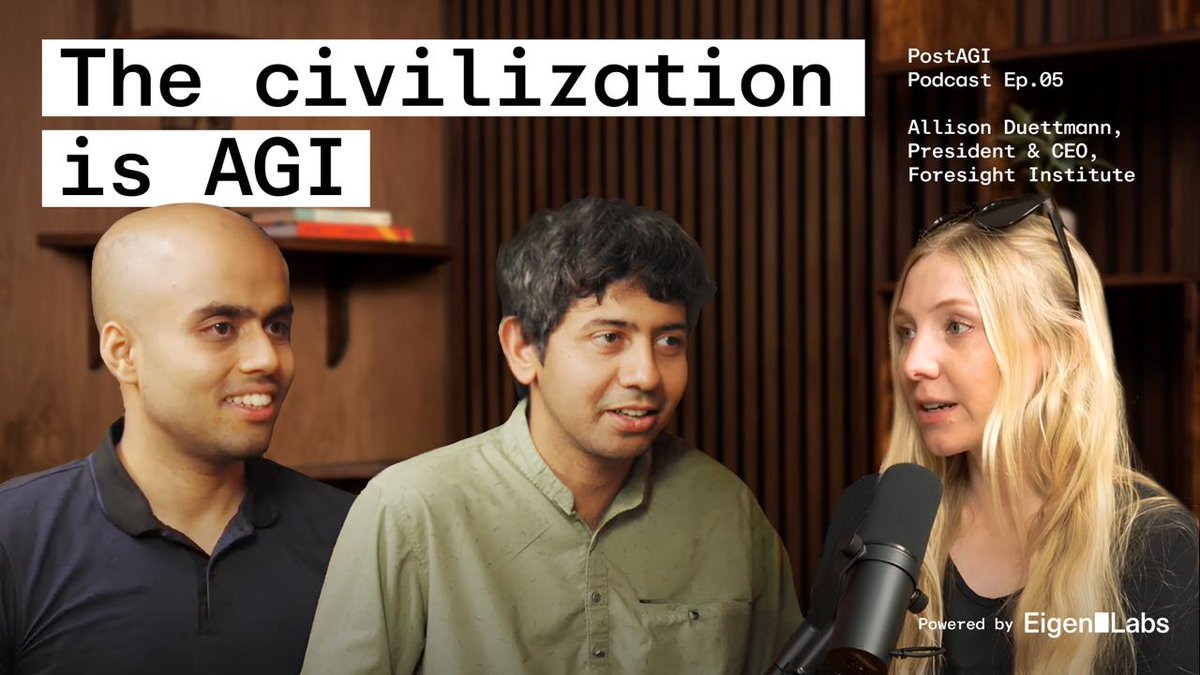
Announcing 𝟘 𝟙 ❒ 🔨 Strengthen cryptography with AI. Cryptography—both current and post-quantum cryptography—depends on hashes. SHA-256? SHA-3? BLAKE3? Nobody knows if they are secure. We're going to find out! Come help accelerate scientific research! HashSmash is an open science-acceleration project in collaboration with Yukon, Eigen Labs, Project Eleven,...

186,051 Aufrufe • vor 2 Tagen •via X (Twitter)

31 Kommentare

Profilbild von Pratik Gandhi
Pratik Gandhivor 2 Tagen

great to work with you on one of the hardest problems in the world and to accelerate scientific research, zooko! thank you for all the support ❤️

Profilbild von Yukon
Yukonvor 2 Tagen

Coordination to solve a tough scientific problem begins here! We’re so excited for this opportunity.

Profilbild von Erick | Yukon
Erick | Yukonvor 2 Tagen

Let’s accelerate one of the HARDEST problems to exist!

Profilbild von valens
valensvor 2 Tagen

very cool! congrats on the launch 😁

Profilbild von Mohak🛡️
Mohak🛡️vor 2 Tagen

Super cool

Profilbild von Taelin
Taelinvor 2 Tagen

nice I predict sha256 will fall >:) sha3 will remain

Profilbild von Frosty40
Frosty40vor 2 Tagen

God wills it

Profilbild von Akash
Akashvor 2 Tagen

veryyy cool

Profilbild von Dariia Porechna 🇺🇦
Dariia Porechna 🇺🇦vor 2 Tagen

great initiative!

Profilbild von @oleg
@olegvor 2 Tagen

Do you control your AI agents or do you trust them without vetting them?

Profilbild von Giannis Andreou
Giannis Andreouvor 2 Tagen

The tracks target SHA-256 at 31-32 of 64 rounds, SHA3-256 at 5-6 of 24 and BLAKE3 at 1-2 of 7. All five SHA-256 entries in review cost 2^128 or more, so none beats the generic birthday bound yet.

Profilbild von Anderson
Andersonvor 2 Tagen

strengthen cryptography with AI, now the bugs write themselves

Profilbild von :omer
:omervor 2 Tagen

Great stuff! We need more such automated research efforts in the age of AI.

Profilbild von David Andersen 🛡️
David Andersen 🛡️vor 2 Tagen

🔥

Profilbild von Rick Glenn
Rick Glennvor 2 Tagen

Hashes are the one part of crypto that survives Shor intact. Breaking SHA-256 or SHA-3 would be the first AI cryptanalysis result that actually matters. This is the right fight.

Profilbild von Darshan
Darshanvor 2 Tagen

What a time to be in cryptography. AI agents stress-testing our hashes in public?

Profilbild von Bravish
Bravishvor 2 Tagen

superb!

Profilbild von Anjan Roy
Anjan Royvor 2 Tagen

I'm more and more convinced that future direction of research is autoresearch.

Profilbild von ryan
ryanvor 2 Tagen

huge!

Profilbild von Andre Froes
Andre Froesvor 2 Tagen

Amazing! Shielding the future.

Profilbild von Liviu Epure
Liviu Epurevor 2 Tagen

Worth separating the two things this can produce, because they are not symmetric. A break on a reduced-round target is real information. It verifies in microseconds, it needs no judge, and it stands on its own forever. A non-break is almost no information, because the search was bounded: by compute budget, by the window, and by the strategies the models were steered toward. The non-break is also the result that will travel, as "AI went at SHA-256 and could not move it." Confidence in a hash has always been assembled out of accumulated failed attacks, and that works because the attackers are independent and keep coming back for decades. Failures inside one tournament are correlated with each other and with the tooling, so they buy much less confidence per unit of failure than the usual intuition assumes. Which makes the most valuable artifact here the search log rather than the leaderboard: compute charged per target, strategies tried and abandoned, where the dead ends were. A null result is only interpretable if the shape of the search is published next to it.

Profilbild von Zebastian🛡️
Zebastian🛡️vor 2 Tagen

@lucidzk Smashed the like button

Profilbild von 𝚂𝙿𝙸
𝚂𝙿𝙸vor 2 Tagen

Nice🔥

Profilbild von Baltazar Natividad
Baltazar Natividadvor 2 Tagen

Test hashes before whining 👀

Profilbild von vøv △
vøv △vor 2 Tagen

Finally putting AI to work on actual security.

Profilbild von shimis💎
shimis💎vor 2 Tagen

AI will change

Profilbild von Shinka - AI
Shinka - AIvor 2 Tagen

Open science for crypto breakage is a genuinely great idea, GPUs are about to get very good at finding collisions.

Profilbild von NaoX | Post-Quantum Chain
NaoX | Post-Quantum Chainvor 2 Tagen

Hashes carry a huge amount of the weight in post-quantum designs, and they get far less public stress testing than the signatures do. Pointing automated search at reduced round versions sounds like the right place to begin, since that is usually where the first cracks turn up 👽

Profilbild von yurii
yuriivor 2 Tagen

congrats on the launch, make cryptography invulnerable

Profilbild von Alfiya Sultana 🛡️
Alfiya Sultana 🛡️vor 2 Tagen

BLAKE3 in the crosshairs is spicy

Profilbild von Paarrthhh Birla
Paarrthhh Birlavor 2 Tagen

Crypto Agility

Ähnliche Videos

BITCOIN RAILS #69: ZERO-KNOWLEDGE PROOFS FOR POST-QUANTUM BITCOIN | with Benedikt Bünz 🔗 YOUTUBE: 🌿 SPOTIFY: While many Bitcoiners remain hopeful the network will embrace zero-knowledge proofs for protocol-level use cases, practical adoption has remained limited outside of BitVM and a handful of experimental proposals. Most of the world’s ZKP research has circled around Ethereum and other ecosystems, where significant resources have been dedicated to advancing these systems, particularly for scaling and privacy applications. One of the most notable contributors to this research is Benedikt Bünz ☕️ — professor of cryptography at NYU and collaborator of Dan Boneh, who together inarguably form one of the strongest blockchain-applied cryptography teams in the world. The pair recently announced they’ll be leading the new post-quantum cryptography unit localhost research — the first dedicated PQ research effort within a major Bitcoin development organization. With Benedikt leading the charge on the use of zero-knowledge proofs for post-quantum mitigation, the question emerges: will the post-quantum transition be the catalyst to finally bring zero-knowledge proofs to Bitcoin's core protocol? In more detail, Benedikt and I discuss: - Why ZKPs haven’t been widely adopted by the Bitcoin technical community — and why the threat of quantum computers may change that posture going forward - How ZKPs could be used for signature batching to address larger post-quantum signatures in Bitcoin’s post-quantum era - Why Bitcoiners will likely prioritize hash-based signatures as an initial post-quantum scheme — rather than more efficient but less proven alternatives (e.g., lattice-based) - How ZKPs have evolved over the last decade and may finally be ready for Bitcoin’s strict requirements around trust assumptions - Why Benedikt and Dan are teaming up with localhost research to create the first post-quantum cryptography unit within a major Bitcoin development organization + what they hope to accomplish This episode of Bitcoin Rails is brought to you by: LayerTwo Labs LayerTwo Labs — developing research, software, and technologies for scaling Bitcoin via the integration of Drivechains (BIP 300/301) Hashi on Sui — a primitive for executing Bitcoin DeFi transactions, without having to trust a federated bridge or other centralized entity BitBox BitBox — an open-source Bitcoin-only hardware wallet, with smooth UX and no compromises on security. Check out Bitbox [dot] swiss and use code BITCOINRAILS to get a discount TIMESTAMPS: 00:00 — Intro 00:22 — Benedikt's background 04:10 — How Benedikt got into Bitcoin and cryptography 07:42 — First ZK project: proving exchange solvency after Mt. Gox 16:01 — ZK proofs explained 27:43 — How security gets popular & ZK proofs in Bitcoin 35:49 — Other applications of ZK proofs for Bitcoin 40:15 — Why ZK proofs haven't been adopted in Bitcoin 50:46 — Why the Bitcoin post-quantum transition needs ZK proofs 01:07:00 — Cryptographic agility and why lattices win 01:18:00 — The size problem and how SNARKs solve it 01:33:57 — Proving a Bitcoin block in a laptop in 1.5 seconds 01:37:12 — Bitcoin as the primary quantum target 01:40:47 — ZK proofs for seed phrase recovery

Isabel Foxen Duke⚡️

19,872 Aufrufe • vor 2 Monaten

The Google and Caltech quantum papers demonstrated 2 breakthroughs: that Bitcoin cryptography is much easier to break than previously thought, and that far fewer logical qubits may be necessary for physical qubits. Project Eleven CEO Alex Pruden explains: "These two papers are not necessarily about a quantum computer that's bigger or more capable. They're about what it takes to break cryptography." "So what changed? One of the things that changed was that physicists and quantum cryptographers that looked at this problem for a long time studied an algorithm called RSA — an older cryptographic algorithm." "But that's not what really any blockchains use, because RSA keys are very large. It turns out, and this was one of the key upshots of the Google paper, that if you focus on the cryptography used by Bitcoin, Ethereum, and other networks, it's actually way easier to break than they thought it was, compared to RSA." "The other big breakthrough, and this is from the Caltech paper: Quantum computers are very fragile, generally. So to be useful, they need to have what's called error correction applied. And that can result in a lot of overhead. You need to have tons of physical qubits to get to one logical qubit." "This Caltech paper basically showed, 'Hey, we have some new ideas for error correction. And it turns out if we apply those, we don't need hundreds or thousands of physical qubits, maybe we just need a handful to make one logical cubit.'" "The headline of their paper is 'You may only need 10,000 physical qubits to run Shor's algorithm.' And by the way, they demonstrated 6,000 last year."

TBPN

16,456 Aufrufe • vor 6 Monaten

BITCOIN RAILS #61: QUANTUM CRYPTOGRAPHY FOR BITCOIN | with Dan Boneh Dan Boneh 🔗 YOUTUBE: 🌿 SPOTIFY: One of the most prolific and influential cryptographers in the world, it’s difficult to fully quantify the impact that Dan Boneh has had on Bitcoin and digital assets more broadly. Through both his own research and his mentorship of some of the space’s most important contributors — e.g. Andrew Poelstra, Benedikt Bünz ☕️, and Robin Linus — few people have done more to shape the cryptographic foundations underlying modern blockchains and digital finance. More recently, Dan co-authored Google's widely discussed paper, “Securing Elliptic Curve Cryptocurrencies against Quantum Vulnerabilities,” which reduced prior estimates of the resources required to run Shor’s algorithm against the elliptic-curve cryptography used by Bitcoin. The paper reignited debate around quantum computing timelines and the long-term security assumptions behind modern cryptocurrencies. In this episode of Bitcoin Rails, Dan and I discuss the current state of quantum computing, its potential implications for Bitcoin, and how he believes the Bitcoin community should think about preparing for a post-quantum future over the coming decade and beyond. And yes, Dan shares his take on the “when quantum” question in the interview, among other key perspectives. This episode of Bitcoin Rails is brought to you by my NEW sponsors: LayerTwo Labs LayerTwo Labs — developing research, software, and technologies for scaling Bitcoin via the integration of Drivechains (BIP 300/301) Hashi on Sui — a primitive for executing Bitcoin Defi transactions, without having to trust a federated bridge or other centralized entity BitBox BitBox — an open-source Bitcoin-only hardware wallet, with smooth UX and no compromises on security. Check out Bitbox [dot] swiss and use code BITCOINRAILS to get a discount TIMESTAMPS: 00:00 — Intro and Dan’s history with cryptography and Bitcoin 11:44 — Shor's algorithm: how a 1994 paper became cryptography's most important threat 16:39 — Building a quantum computer: superconducting qubits vs neutral atoms 25:37 — When should we start worrying about quantum computers? The timeline debate 31:51 — Have we already reached quantum computing's “ahá” moment? 39:09 — Inside the Google paper: how Shor's algorithm was optimized 49:57 — The Bitcoin mempool attack and the 10-minute window 59:21 — Mitigation: what should Bitcoin do to prepare for quantum? 1:11:54 — Hash-based vs lattice-based signatures: Dan's case for lattice 1:23:15 — ZK proofs, BIP361, and what to do with Satoshi's coins 1:31:52 — Encrypted mempools and MEV 1:38:29 — Why Bitcoin will survive quantum and Dan's message to Bitcoin builders

Isabel Foxen Duke⚡️

115,035 Aufrufe • vor 4 Monaten

ICYMI: Brains are trending.. OpenAI made a direct investment into Merge Labs' $252M Seed at $850M valuation Merge Labs Labs is a Brain-Computer Interface ("BCI") research lab co-founded by Sam Altman, Alex Blania, & key frontier tech leaders (below) with expertise in neuroscience, bioengineering, hardware, AI systems, & foundational research. Unlike Elon Musk's Neuralink, which utilizes surgical implants, Merge Labs is developing non-invasive, high-bandwidth brain-computer interfaces (BCIs). The company uses a combination of ultrasound, AI-driven signal interpretation, and potentially genetic engineering to read neural activity without surgery. Founding Team: Alex Blania (Alex Blania) – Co-founder of World, an Altman-co-founded digital proof of human protocol; co-founder of Merge Labs. Sam Altman (Sam Altman) – CEO of OpenAI; co-founder of Merge Labs participating in a personal capacity. Altman has been reported as likely to serve in a strategic role but not in day-to-day operational management of Merge Labs. Mikhail Shapiro (Mikhail Shapiro (same on bsky)) – Professor of Chemical and Medical Engineering at Caltech and founding scientific leader for Merge Labs. He has also served as an adviser to Forest Neurotech. Sumner Norman (Sumner L Norman) – CEO of Forest Neurotech, a nonprofit research organization focused on ultrasound-based brain-computer interface technologies; also a co-founder of Merge Labs. Sandro Herbig (Sandro Herbig) – Identified as a technology entrepreneur and co-founder of Merge Labs with prior systems and product experience, including work with Blania on Tools for Humanity and World. While specific current corporate title at Merge hasn’t been publicly detailed, he is recognized as part of the founding leadership team. Tyson Aflalo – Chief Scientific Officer of Forest Neurotech prior to Merge Labs; co-founder and technical lead at Merge Labs with expertise in neural engineering and ultrasound BCI research. . . . "It’s a direct investment from OpenAI, not their venture arm, so it’s an actual collaboration. As we were discussing the investment, there were many different dimensions where collaboration could make sense. One area is protein design. We’re working extensively with proteins, and that’s an area that’s broadly interesting to OpenAI. It’s one of the most compelling applications of AI — for example, the work Google did with AlphaFold. More broadly, AI has significant implications for biology and for accelerating that part of what we’re building. Another area is chips. Eventually, once we have a clear scientific understanding of what we’re building and how it will work, a major focus for many years will be on making these chips highly energy efficient."

Molly O’Shea

39,021 Aufrufe • vor 7 Monaten

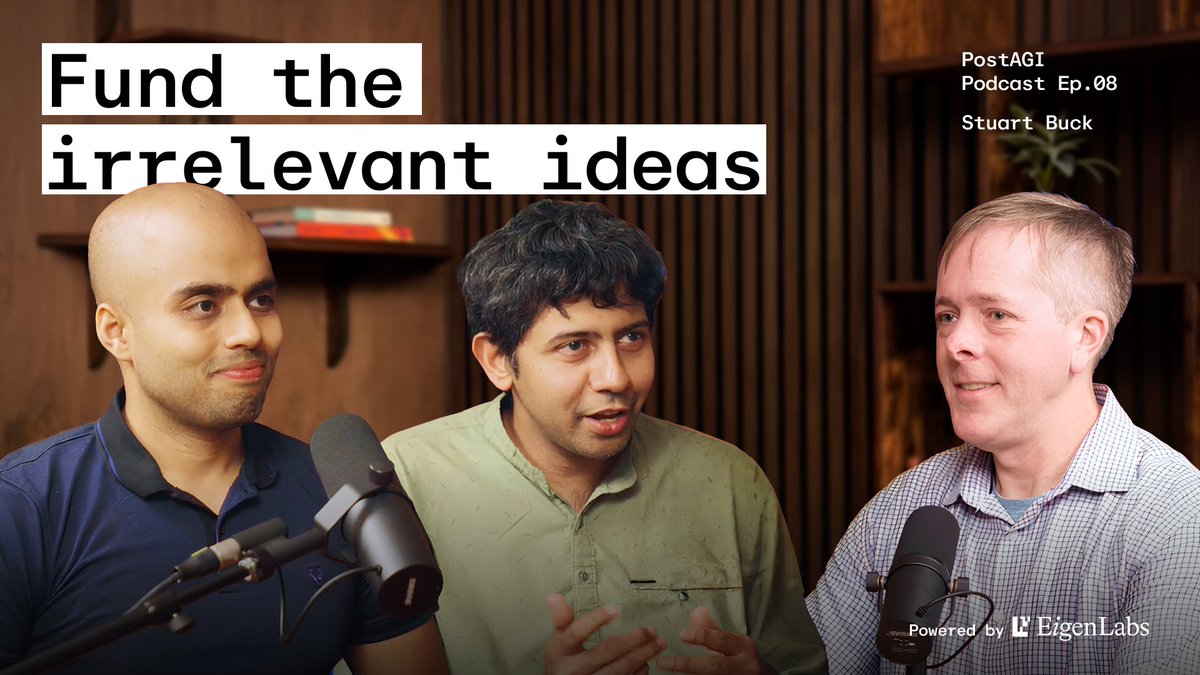
I and Sreeram Kannan had an wonderful opportunity to sit down with Stuart Buck, Executive Director at during Manifest to talk on what has been long-term structural issues with federal funding for science and what are the solutions to fix it. A lot of science that is done outside industrial apparatus (such as in academia) is supposed to geared towards pursuing open-ended science and not just mere hill-climbing. The core issue that we delved into is the paradox that most federal funding that had been allocated via peer review from an expert of panels has the tendency to fund only those proposals that are "safe" and "not risky/speculative." As Stuart points out, this funding style is probably fine with most science but if you look into the history of true scientific breakthroughs, this mechanism wouldn't have approved funding for pursuing that breakthrough by that council of peers. The example that Stuart cited is the chances of funding Einstein when he was patent-office clerk in 1902 to go and explore his out-of-box ideas. Stuart mentioned about alternative mechanisms that are being experimented with programs such as We also touched upon two of the most hotly-debated issues of our time: (1) given that there is increasingly high signal that AI is going to accelerate the iteration time for doing research and help humanity do great science, what should be the role of domain experts? (2) most of AI research and its applications to basic science are hyper-concentrated within frontier labs, what happens to those who are and want to pursue science outside the borders of those labs? Check out the full conversation. 03:18 Einstein in 1902 04:01 the National Institute for Irrelevant Ideas 04:20 Karikó and mRNA 14:37 what everyone knows about NIH grants 16:33 funding the polarizing proposals 17:34 where AI money goes next 24:18 the stack of papers 33:22 finding meaning after AGI

Soubhik Deb

18,839 Aufrufe • vor 1 Monat

🚀 SEALSQ $LAES at Times Square — Leading the Future of Quantum & AI Security! We’re proud to share that SEALSQ was featured today on the Nasdaq Tower in Times Square, announcing that our CEO Carlos Moreira will deliver the Opening Keynote at IQT Quantum + AI 2025, taking place October 19–21 in New York City. 🎤 Keynote: “AI Meets Quantum: Building Unbreakable Post-Quantum Security” Carlos will explore how AI and Quantum Computing are converging to redefine cybersecurity and shape the next era of digital trust. He will also join Panel 8: CEO Roundtable, alongside top executives from Rigetti, ORCA, SEEQC, and Arqit, to discuss the business and technology strategies driving the quantum revolution. 🔐 During the event, SEALSQ will present updates on its groundbreaking Quantum Shield “QS7001” — a RISC-V-based post-quantum secure hardware platform — and the progress of its Common Criteria EAL5+ certification with Serma Labs. The QS7001 platform integrates Kyber and Dilithium (NIST-standardized post-quantum algorithms) with advanced hardware accelerators for low-latency, high-throughput encryption, ensuring robust protection for IoT, automotive, healthcare, and critical infrastructure systems. 🌐 With this innovation, SEALSQ enables partners to future-proof devices against both classical and quantum attacks, ensuring compliance, efficiency, and trust in a rapidly evolving digital landscape. 💬 “Quantum and AI represent both opportunity and risk. With the Quantum Shield QS7001 platform and our broader post-quantum roadmap, SEALSQ is building the security foundation required to protect critical infrastructure, connected devices, and human data against the threats of tomorrow.” — Carlos Moreira, CEO, SEALSQ 📍 Event Details: 🗓️ October 19–21, 2025 📍 New York City 🎤 Opening Keynote: “AI Meets Quantum: Building Unbreakable Post-Quantum Security” 👤 Speaker: Carlos Moreira, CEO, SEALSQ 💼 Panel 8: CEO Roundtable featuring Rigetti, ORCA, SEEQC, Arqit, and SEALSQ #SEALSQ #PostQuantum #AI #QuantumComputing #Cybersecurity #TimesSquare #Nasdaq #IQT2025 #Innovation #RISC-V #Kyber #Dilithium #FutureOfSecurity

Carlos Creus Moreira

12,991 Aufrufe • vor 1 Jahr

𝗟𝗲𝘁’𝘀 𝘁𝗮𝗹𝗸 𝗮𝗯𝗼𝘂𝘁 𝗮 𝗽𝗿𝗼𝗷𝗲𝗰𝘁 𝘁𝗵𝗮𝘁 𝘁𝗿𝘂𝗹𝘆 𝗽𝗿𝗶𝗼𝗿𝗶𝘁𝗶𝘇𝗲𝘀 𝗶𝘁𝘀 𝗰𝗼𝗺𝗺𝘂𝗻𝗶𝘁𝘆! Everreach Labs in collaboration with @_GETREVENGE_ , is making waves with their “building in public” initiative, hitting significant milestones along the way. They’re on a mission to transform the gaming ecosystem. 𝗜𝗻𝘁𝗿𝗼𝗱𝘂𝗰𝗶𝗻𝗴 @_GETREVENGE_ : a stylish, innovative co-op PvE extraction shooter built by Everreach Labs. It’s a game that unites players and spectators in an epic gaming experience. 𝗦𝗼, 𝗵𝗼𝘄 𝗮𝗿𝗲 𝘁𝗵𝗲𝘆 𝗯𝘂𝗶𝗹𝗱𝗶𝗻𝗴 𝗶𝗻 𝗽𝘂𝗯𝗹𝗶𝗰? Everreach Labs is dedicated to transparency and collaboration, inviting the community on their journey. They’re adopting an open-access approach, sharing behind-the-scenes updates, product development insights, and strategic shifts with their community who are their most valuable stakeholders. 𝗛𝗲𝗿𝗲’𝘀 𝘄𝗵𝗮𝘁 𝘁𝗵𝗲𝘆’𝘃𝗲 𝗮𝗰𝗰𝗼𝗺𝗽𝗹𝗶𝘀𝗵𝗲𝗱 𝘀𝗼 𝗳𝗮𝗿: • A thriving community with over 440k followers across platforms • Recognized as a CoinMarketCap Incubated Project • Ranked in the Top 40 Worldwide on the Epic Games Store • Prototype success with 60k players and 200k sessions REVENGE Pre-Alpha coming up in Q1 2025 It doesn't stop here; there’s much more on the horizon, and they will definitely keep us posted as they reach new milestones.

𝔹𝕚𝕘_𝔼𝕞𝕞𝕪 👑 🦅

15,804 Aufrufe • vor 1 Jahr

BITCOIN RAILS EPISODE #18: MAKE BITCOIN QUANTUM RESISTANT | with BIP360 author Hunter Beast Hunter Beast 🕯️ Quantum computing is a complicated topic—one that incites equal amounts of fear and skepticism depending on who you talk to… especially in Bitcoin. In this episode, BIP360 author Hunter Beast wisely shares why the “truth is likely somewhere in the middle,” citing incremental advancements in quantum computing that may eventually pose a legitimate threat to some Bitcoin addresses—as well as steps we can take to protect ourselves in the short, medium and long term. The correct posture is to “be prepared, not scared,” says Hunter Beast 🕯️ Ultimately, the introduction of quantum resistant cryptography—via proposals like BIP360—will be needed for higher degrees of security. That said, individuals can mitigate personal risk substantially through proper address-use hygiene. This episode breaks down the specific challenges Bitcoin will face in the event of a quantum attack, the likelihood of an attack over time, and the steps we’ll need to take at the individual and communal level to ensure Bitcoin’s safety. This episode includes detailed discussion of: 1) How quantum computing could potentially affect Bitcoin public/private key cryptography—and technologies built on vulnerable addresses (e.g. Taproot) 2) Best practices for protecting yourself against quantum in the short and long term 3) Implications of vulnerable address types—e.g. what about Satoshi’s coins? 4) Deep Dive into BIP360 + proposed long-term solutions 5) Industry roadmaps for quantum computing + how banks and governments are preparing for “Q Day” As always, this episode can be viewed on Spotify or YouTuve—full episode in the comments or linktree in my bio. This episode is powered by Best In Slot—the leading API for Ordinals and BRC20 data aggregation and indexing. TIMESTAMPS: 00:00 Intro 02:05 What is quantum computing? 04:30 How could quantum threaten your Bitcoin wallet? 06:50 Addresses that are safe from quantum 09:13 Satoshi’s coins are in danger! 11:25 What happens if Satoshi’s coins are touched? 14:45 Do we softfork to shield Satoshi’s coins? 16:38 “Transitory inflation” for bitcoin after quantum 21:05 Why Taproot addresses are vulnerable 23:50 Do NOT reuse your Bitcoin addresses! 26:03 When will Quantum become a threat? 28:34 The long/short exposure attack; explained 31:45 Protection using private mempools 33:20 Why all the new Bitcoin L2s are in danger 37:45 Quantum is 5 to 10 years away, governments fear 40:34 Non-Bitcoin systems threatened by quantum 42:26 Centralized systems can adapt to quantum 43:50 Hunter’s BIP: Post quantum cryptography in Bitcoin 47:40 Hunter’s three new signature algorithms 53:48 Is new cryptography on Bitcoin risky? 56:33 Why not just stick to hash-based cryptography? 58:49 A 16X discount for quantum resistant addresses? 01:02:30 Creating quantum resistant multisig addresses 01:04:00 What is Frost? 01:06:50 The long process of approving a BIP 01:08:30 What developers think of Hunter’s BIP 01:10:00 Matt Corallo’s concerns with Hunter’s approach 01:11:00 Steps to implementing the BIP 360 01:17:00 Where to learn more about BIP 360 01:17:50 Who can push the button to change Bitcoin?

Isabel Foxen Duke⚡️

31,148 Aufrufe • vor 1 Jahr