Video yükleniyor...

Video Yüklenemedi

Ana Sayfaya Dön

Ansible Networking, You're doing it wrong. Boost your network playbook efficiency in under a minute: 🎛️ Leverage ansible_network_os for seamless portability. 📁 Switch tasks based on file names, no more conditionals! 🚫 Handle unsupported OS gracefully with with_first_found.

54,566 görüntüleme • 2 yıl önce •via X (Twitter)

11 Yorum

Cisco Nerd profil fotoğrafı
Cisco Nerd2 yıl önce

I find this content very helpful. Do you have a YouTube channel, if yes please share the link with me. Thank you 🙏

Sean Cavanaugh | CCIE #40514 profil fotoğrafı
Sean Cavanaugh | CCIE #405142 yıl önce

❤️

Moeeed profil fotoğrafı
Moeeed2 yıl önce

Hi Sean, do you have an Ansible wizardry course ? I want to get started.

Sean Cavanaugh | CCIE #40514 profil fotoğrafı
Sean Cavanaugh | CCIE #405142 yıl önce

We have some free interactive labs online then we also have a free introductory class DO007 You can also follow my team on Youtube:

CyberZeus✪ 🇺🇸 🇳🇬 profil fotoğrafı
CyberZeus✪ 🇺🇸 🇳🇬2 yıl önce

This is a game changer!!!! I love this

PacketSwag profil fotoğrafı
PacketSwag2 yıl önce

Awesome stuff. Thanks.

Petr Ankudinov profil fotoğrafı
Petr Ankudinov2 yıl önce

I know, it's just an example, but using "eos_vlans" is usually fundamentally wrong. Apart from some rare cases, use "eos_config" and "arista.avd".

monkey D profil fotoğrafı
monkey D2 yıl önce

I prefer to use the paramiko library 🙃🙃

marcompile profil fotoğrafı
marcompile2 yıl önce

How convenient :)

Joseph profil fotoğrafı
Joseph2 yıl önce

Hi, I'm a little lost when it comes to the "item" variable in the include_tasks. Is that being used to point to each device or another playbook?

Sean Cavanaugh | CCIE #40514 profil fotoğrafı
Sean Cavanaugh | CCIE #405142 yıl önce

item will return to anything in the loop, so in this case it will be your ansible_network_os.yml and if that doesn’t exist then it goes to unsupported.yml which is just a debug statement. It’s a programmatic way to avoid multiple conditionals.

Benzer Videolar

I just built a Brand Operating System inside Claude Cowork 🤯 A connected system of files that every skill automatically reads from, so your hook writer, brief generator, and script writer all speak in your exact brand voice. All inside Claude Cowork. Perfect for DTC brands and agencies tired of generic AI output that sounds like every other brand in their category. If you're opening a new Claude chat and re-explaining your brand, re-pasting your voice guidelines, and re-describing your customers every single time, a Brand OS fixes the entire loop: → Build 3 foundation files once per brand → Every skill you create reads from the Brand OS automatically → Hook writer pulls your voice + customer pain points → Brief generator pulls your positioning + angles → Script writer pulls the brief + brand DNA → Every output is calibrated to your brand on the first pass No re-briefing Claude on every chat. No editing for an hour to fix generic AI phrasing. No creative that sounds like it could belong to any brand. What you get in the playbook: → The exact Brand OS file structure I use → Templates for all 3 files you can fill in for any brand → The architecture that makes every Claude skill 10x sharper → The exact setup for agencies running a Brand OS per client For agencies: this is how you build a perfect, reusable knowledge base for every client on your roster. Set up the Brand OS once per client, and every campaign after that is already calibrated. I put together a full playbook with the file templates, the architecture, and the exact setup process so you can build your own Brand OS for your brand or your clients. Want it for free? > Like this post > Comment "OS" And I'll send it over (must be following so I can DM)

Mike Futia

30,273 görüntüleme • 4 ay önce

I just built an AI-powered creative search engine with Gemini Embedding 2 + Claude Code 🤯 Drop in your UGC clips, product shots, and ad variations — then search through everything in plain English. "Show me all the unboxing clips." "Find product shots with natural lighting." "Which creator talked about sensitive skin?" All inside Claude Code. Perfect for DTC brands and agencies sitting on hundreds of creative files they can never find when they actually need them. If you're digging through a folder of random file names, scrubbing through raw footage to find that one clip, and relying on memory to track down what's already been shot... This system eliminates the entire loop: → Drop your videos, images, and docs into a project folder → One prompt to Claude Code — it builds the entire search app for you → Google's new Gemini Embedding 2 model actually watches your videos and looks at your images → It understands what's inside each file — not just the file name → Search in plain English and get back the actual assets with confidence scores No scrolling through folders. No relying on file names to find anything. No re-shooting footage you already have. What you get: → A searchable library of every creative asset your brand has ever produced → Natural language search across video, images, and documents at the same time → Results that show the actual files inline — play videos, view images, read docs → A system that gets smarter every time you add richer descriptions to your assets One free API key. No monthly subscriptions. Runs on your machine. I put together a full playbook with the exact build prompt, the setup process, and DTC/agency use cases to get this running in under 30 minutes. Want the full playbook? > Like this post > Comment "SEARCH" And I'll send it over (must be following so I can DM)

Mike Futia

12,279 görüntüleme • 5 ay önce

Microsoft spent $13 billion and 3 years building an AI that knows your work context. Every time you open it, it still asks what you're working on. This developer set up a plain text file in 2 minutes. The file is called CLAUDE.md. It loads before every session. Before he types a single word. It already knows his name. It already knows his writing style. It already knows what he's building, who it's for, and what he never wants to see in a response. He doesn't introduce himself anymore. He doesn't explain his preferences anymore. He doesn't correct the same mistakes twice. He just works. No $30/month Copilot subscription. No Microsoft 365. No IT approval. No data sharing agreement. No onboarding. Just a plain text file, a free text editor, and 21 instructions a developer distilled from Andrej Karpathy's research. Those 21 instructions moved Claude's coding accuracy from 65% to 94%. The file hit #1 on GitHub with 82,000 stars. Most people using Claude right now have never heard of it. Microsoft has 221,000 employees, $13 billion invested in OpenAI, and a direct integration into every Windows laptop sold on the planet.. they built an AI assistant most companies pay $30/user/month for that still doesn't know your name. This developer has a laptop, a text file and a 2-minute setup.. he built something that knows more about how he works than any enterprise AI on the market. The $50 billion AI personalization industry just got embarrassed by a .md file. full breakdown down below

Dep

14,117 görüntüleme • 4 ay önce

🌟 Another Epic Sneak Peek: OptimAI Core Node’s Edge AI Computing Power! We’re excited to continue unveiling the upcoming OptimAI Core Node features! This time, we’re introducing Edge AI Computing, a game-changing feature that will make your devices even more powerful in contributing to the OptimAI Network. 🔥 What is Edge AI Computing? With the OptimAI Core Node, your device’s idle computing resources (CPU/GPU) and storage will be put to work, powering critical AI computing tasks, including: 🔸Edge Inference: Running real-time AI predictions directly on your device without sending data to centralized servers. 🔸Hot LLM Models: Accelerating large language models for high-speed NLP tasks. 🔸Generative AI Models and More: Contributing to the training and inference of cutting-edge generative AI, like text-to-image models, deep learning, and more. More Contributions, Bigger Rewards Await! This Edge AI Computing feature allows us to leverage the full potential of decentralized computing power, reducing latency, increasing efficiency, and making AI more accessible. The more you contribute, the bigger the rewards!🔥 Stay in the Loop—Start Today with OptimAI Lite Node! While the OptimAI Core Node is still in the works, you don’t have to wait to join the action. The more you contribute, the greater the rewards! Let’s build a stronger, smarter, and more decentralized AI network together. Stay tuned for more exciting updates! 🔸Extension Node: 🔸Telegram Node: 🔸Register at: #DePIN

OptimAI Network

44,382 görüntüleme • 1 yıl önce

Banking and development economist Richard Werner says the real reason we are seeing so many Data Centers being put up so quickly is because they are building the surveillance and digital currency network right now “We are so close to the scariest, most dystopian system. This is what the drive to build all these thousands of data centers is about, to micromanage the world's population through the New Financial World Order. AI is really about that. We're heading towards digital control systems where we have no more control over our liquid assets. It will be programmable, permission-based, so only what the central planners allow you to use your money for, at what time and place and location will be permitted. And if you're in the wrong place, it's not going to work. And If you're buying the wrong book, it's not gonna work. Your money won't work outside a certain zone, whether it's 15-minute prison zone or whatever it may be. It is the totalitarian dictator's dream come true” Here’s what he’s saying Data centers as infrastructure for control The data centers are essential for the massive computing power needed to track, analyze, and micromanage billions of transactions in real-time under a “New Financial World Order.” This includes enforcing rules on what you can buy, where you can spend, and when “15-minute city” style geographic restrictions or blacklisting certain purchases He’s saying AI isn’t just for chatbots or efficiency. It’s the perfect tool for the surveillance, predictive analytics, and an automated enforcement layer on top of digital money I think he’s right. I also think it’s for the massive camera infrastructure being installed all over America with Flock It’s all connected. This is the surveillance state being constructed

Wall Street Apes

254,247 görüntüleme • 3 ay önce

Figma Capture + Claude Fable 5 = clone any competitor's landing page in minutes 🤯 Figma just dropped a Chrome extension that copy/pastes any live website into Figma as editable layers. Point Claude Code — running the new Fable 5 model — at the capture, and it rebuilds the whole page in YOUR brand: structure, copy, design system, photography. All inside Claude Code. Perfect for DTC brands and agencies who keep losing weeks rebuilding proven landers from scratch. If you're still cloning competitor pages the old way, You're screenshotting their site and praying the AI guesses the structure right. You're rebuilding sections by hand because the fonts and spacing never come out true. You're paying a designer $3K to recreate a page that already exists. This workflow eliminates the entire loop: → Capture the competitor's landing page with Figma's new Chrome extension — editable layers, not screenshots → Claude Code reads the page structure through the Figma MCP: every section, every headline, in order → It rebuilds the page in YOUR brand — your colors, your fonts, your voice (it even respects your banned-words list) → GPT Image 2 generates on-brand product photography from the layer names → Claude places every image automatically — finished page, ready to ship No screenshots. No guessing at structure. No design invoice. What you get: → A pixel-structured clone of any proven lander, rebuilt in your brand → Every line of copy rewritten in your voice → 16 on-brand images generated and placed for ~$2 in API costs → Start to finish in about 15 minutes Built 100% with Figma + Claude Code on Claude Fable 5. I put together a step-by-step playbook showing you exactly how to set it up. Want access for free? > Like this post > Comment "CLONE" And I'll send it over (must be following so I can DM)

Mike Futia

47,009 görüntüleme • 2 ay önce

BREAKING: Anthropic just dropped Claude Fable 5—this is Mythos, made safe for public release. It is the best coding model in the world. We've been testing it internally Every 🪨 for the last week or so across coding, writing, marketing, editing, and more—here's our vibe check: - It broke our benchmarks. Fable scored a 91/100 on our Senior Engineer benchmark—this is human senior engineer level. The previous high score was Opus 4.8 at 63. GPT-5.5 is a 62. - It's a one-shot wonder. You can set it and forget for hours or overnight on huge coding tasks, and come back to completed work. It cleared entire production bug backlogs, built a playable 3D, and even made a 2-minute animated film—all one-shot. - Taste and attention to detail. In coding and knowledge work tasks, it has much better taste and attention to detail than we've ever seen. It gets subtle things right, adds little features you might not have thought of, and generally understands the assignment in ways that surprised us. - Great use of context. We set it loose analyzing customer feedback surveys and our website data and it came back with a crisp, clean report that identified a. our biggest problem and b. a concrete testable solution—and then we sent it off to build that. - It's best for power users. If you're already used to orchestrating multiple agents in your work, this model can do things that you've never seen before. If you're a knowledge worker or vibe coder with a more basic setup, you're not going to notice a huge difference—in fact, it probably isn't the right model for you. - It's very slow, token-hungry. Using this thing for regular knowledge work is like squashing an ant with a rocket launcher. It also routinely uses 500k to 1M tokens on tasks. That's why it's best for your heaviest jobs—but not as good for tasks like collaborative writing. - It's expensive. It's about twice as expensive as Opus, and it's also incredibly token hungry—so expect it to be something you'll use sparingly unless your company pays for it. Overall, I think of it like a warp drive for coding: It can get you across the galaxy in a few hours, when it used to take months or years. But it's not appropriate for getting around town—you need something faster, cheaper, and more maneuverable. The ceiling is extraordinarily high on this model though. Even our most advanced testers like Kieran Klaassen felt like they were only scratching the surface of it. Want our full vibe check with all of our testing and benchmarks? Read it on Every 🪨:

Dan Shipper

621,703 görüntüleme • 2 ay önce

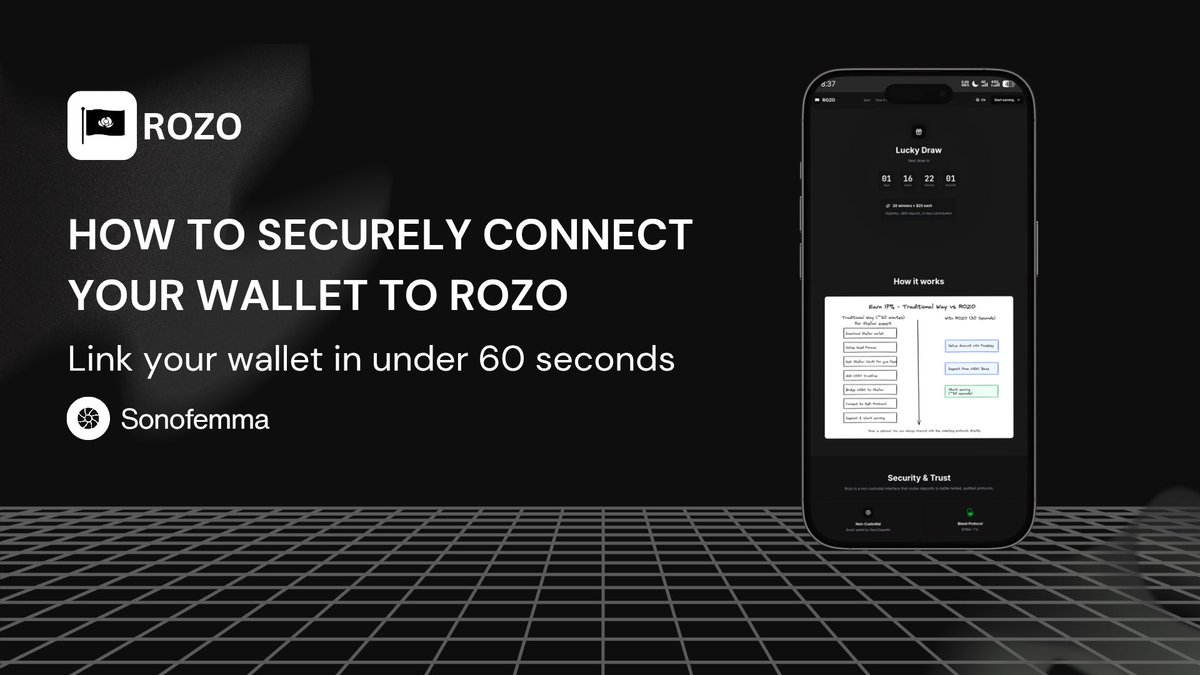
I never imagined connecting a wallet to ROZO would be hard for anyone… until someone reached out to me saying they were completely stuck and frustrated. So if you're dealing with that right now — don't worry, it's usually a quick fix with the right setup. ...here's what works for most people who hit this wall. 🔻 🔹️ The problem first Some browsers or wallets just don't cooperate with Rozo's connection flow. You get errors, nothing loads, or it keeps failing for no clear reason. The person who messaged me was running into exactly that. The good news? Switching a couple things makes it feel effortless. 🔹️ LOBSTR wallet + browser combo I recommend using LOBSTR wallet — it's built specifically for the Stellar network, so it stays stable and links up with Rozo much better than other options. Also: use Chrome as your browser. If it still doesn't work in Chrome, switch to Brave — that will definitely do the trick for almost everyone. 🔹️ How it actually works ⤞ Use Chrome (or Brave if needed) ⤞ Go to: ⤞ Use LOBSTR wallet ⤞ When you're on the site, use your Passkey (like FaceID or your fingerprint) to get in ⤞ Once you're done checking your earnings or moving funds, log out That's it. You're in. 🔹️ The part people overlook You won't need to dig up any long seed phrases. Passkey is a lot faster and keeps everything tied to your own device security. Logging out is a simple habit, but it's the best way to keep your wallet safe from any browser-based attacks. 🔹️ Final thought Connecting should feel boringly easy — not like a puzzle. With LOBSTR, Chrome (or Brave), and this setup, it finally does for most people who were stuck. ✔ Use LOBSTR. ✔ Use Chrome (or Brave). ✔ Log in with Passkey. ✔ Log out when done. ROZO community: If you're still having trouble, drop a reply — happy to help you get sorted

EMMA

22,771 görüntüleme • 8 ay önce