Video wird geladen...

Video konnte nicht geladen werden

Zur Startseite

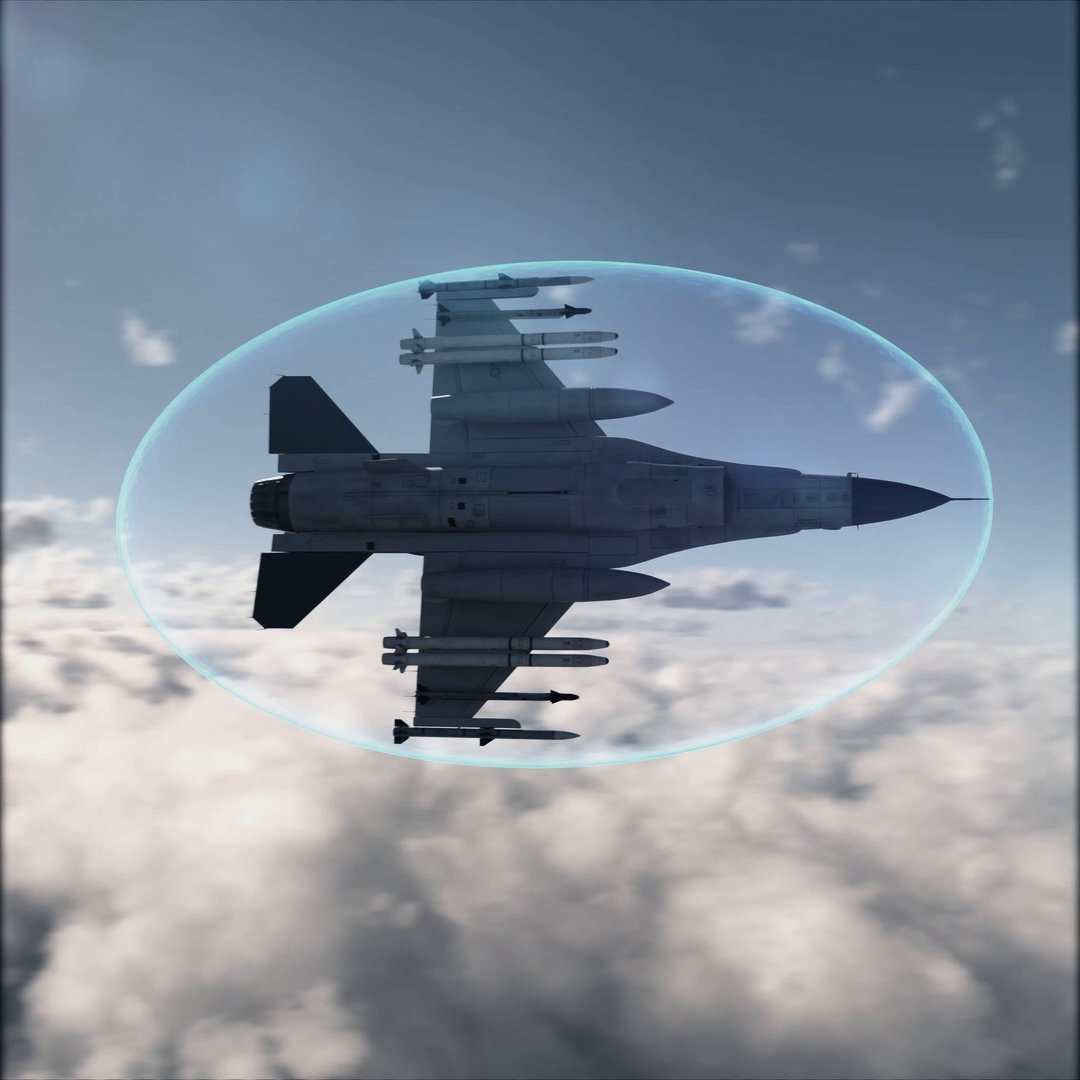
🇵🇪🇺🇸 BREAKING: Peru’s New F-16s Are Getting “Digital Armor” Peru has selected L3Harris Technologies’ Viper Shield™ electronic warfare system for its new F-16 Block 70 fleet. The upgrade will give Peru’s fighters an advanced electronic warfare layer designed to detect, identify and counter threats while strengthening both offensive and...

47,287 Aufrufe • vor 4 Tagen •via X (Twitter)

0 Kommentare

Keine Kommentare verfügbar

Kommentare vom Original-Post werden hier angezeigt
Ähnliche Videos

🇷🇺 Russia’s Starlink killers showcase new era of electronic battlefield warfare Russia has ramped-up EW use to detect and jam Elon Musk’s Starlink terminals and satellites, Ukrainian media reports. 👉 Meet Russia’s key counter-Starlink systems: 🔸 Volna Kupol Garant Russia’s latest electronic warfare system reportedly uses a directed high-frequency radio beam to disrupt Starlink operations. Rather than damaging satellites orbiting roughly 500 kilometers above Earth, the system blinds them – cutting their ability to connect with ground terminals while they remain under attack. According to reports, Volna is a mobile system built around six trailers. Each carries a pair of steerable satellite dishes mounted on rotating platforms. A single battery is reportedly capable of denying Starlink coverage across an area of up to 20 sq km. Some analysts say the system was previously referenced under the designation Peresvet-M, although this has not been independently confirmed. Ukrainian sources claim Volna was first deployed during Russia's offensive in the Kharkov region in 2024. They also say its use has increased significantly in recent months. 🔸 Tobol The secretive Russian EW complex is reportedly used to disrupt signals from NATO-linked satellite networks, including GPS, Galileo, and Starlink. Reports claim that Tobol attacks satellite communications on both ends of the link – jamming downlinks from satellites to ground receivers and uplinks from Earth to orbit. Its power and range also allegedly allow it to create an electromagnetic "umbrella." 🔸 Kalinka The system is designed to hunt down satellite communications signals, including those transmitted by Starlink terminals at distances of up to 15 km. It can reportedly track and lock onto even Starshield – SpaceX’s hardened military variant of Starlink. Western media warns that while Tobol disrupts GPS signals on a broad scale, the Kalinka’s precision-targeting capabilities could pose a more direct threat to specific military operations. 🔸 Krasukha The Krasukha-S4 is designed to neutralize reconnaissance satellites, ground-based radar installations, and airborne surveillance systems. It does so by emitting powerful electronic jamming signals that disrupt key radar bands and other radio-frequency emissions. A standard Krasukha-S4 battery consists of two vehicles and has an operational range exceeding 300 kilometers. 🔸 Borshchevik The light mobile system is designed to detect and geolocate Starlink terminals within a 180-degree sector at ranges of up to 10 km, with a reported accuracy of five meters. Using direction-finding and biangulation algorithms, it can locate a target in less than three minutes at a single scanning position. The Borshchevik-2 airborne system hunts Starlink signals from the sky, with reported accuracy down to 0.4 m.

Sputnik

25,528 Aufrufe • vor 25 Tagen

🧐🇺🇸 The Country That Put More Fighter Jets in Foreign Skies Than the Rest of the World Combined For more than 70 years, the United States has dominated the global fighter aircraft market, exporting thousands of combat jets to allies across the world. Its fighters have flown in the colors of dozens of nations, making American aircraft the backbone of many of the world's most powerful air forces. The numbers are staggering: ◽ F-16 Fighting Falcon, More than 4,600 built, making it one of the most successful fighter jet programs ever created. It remains America's most exported fighter and is operated by over 25 countries. ◽ F-15 Eagle & Strike Eagle, Among the most capable air superiority and strike fighters ever built, exported to key allies across the Middle East and Asia. ◽ F/A-18 Hornet & Super Hornet, Trusted by allied air forces and navies for decades. ◽ F-35 Lightning II, The largest fifth generation fighter export program in history, with more than 20 nations already committed to the aircraft. America's dominance is not just about building aircraft. It offers pilot training, weapons integration, maintenance support, continuous upgrades, and access to a vast military industrial network that keeps aircraft effective for decades. While many nations can build fighter jets, very few can provide the global support system that comes with them. From the F-4 Phantom and F-5 Tiger during the Cold War to today's F-35 stealth fighter, American aircraft have shaped air combat across generations. No nation has exported more fighter jets. No nation has equipped more allied air forces. And no fighter export empire has had a greater impact on the balance of air power worldwide.

Defence Index

10,320 Aufrufe • vor 1 Monat

🧐🇦🇪🇫🇷 The Most Advanced Mirage Ever Built Wasn't French When people think of the Mirage 2000, they think of France. But the most powerful and sophisticated version of this legendary fighter was built for the United Arab Emirates. Meet the Mirage 2000-9. Far more than a simple upgrade, the Mirage 2000-9 incorporated technologies developed for the Rafale, transforming the iconic fighter into one of the most capable 4th generation combat aircraft ever produced. Powered by the M53-P2 engine and equipped with the advanced RDY-2 multimode radar, the aircraft can simultaneously track multiple targets while conducting air to air and air to ground missions. Its arsenal is formidable: • MICA EM active radar guided air to air missiles • MICA IR infrared guided air to air missiles • Magic II short range air to air missiles • Black Shaheen long range cruise missiles • Laser guided bombs • Precision guided munitions • Conventional bombs • Air to surface missiles • Anti ship weapons • 30mm DEFA cannons The Mirage 2000-9 is also equipped with an advanced electronic warfare and self protection suite, allowing it to detect, jam, and evade enemy threats while operating deep inside contested airspace. With a combat radius stretching hundreds of kilometers and the ability to strike targets with precision, the aircraft became one of the most capable fighters in the Middle East. For years, it quietly stood as one of the region's most powerful air combat platforms, proof that even a design born in the 1970s could evolve into a world-class fighter. The Mirage 2000-9 wasn't just the final Mirage. It was the ultimate Mirage.

Defence Index

20,474 Aufrufe • vor 1 Monat

🚨🇨🇳U.S. IN PANIC: China's J-35 Stealth Fighter Now in 'Beast Mode' With Increased Firepower China's J-35 fifth-generation stealth fighter has been seen in a new configuration carrying four PL-15 long-range air-to-air missiles on external pylons under its wings. Combined with the six missiles it carries inside its internal weapons bays, the aircraft can now go into combat with up to ten air-to-air missiles in total. 🔸This setup is informally called "beast mode" — a term borrowed from the U.S. military's similar configuration for the F-35. The idea is straightforward: the aircraft trades some of its stealth capability for significantly more firepower. When weapons are carried externally, they increase the aircraft's radar signature, making it more visible to enemy systems. However, the PL-15 missile's long range means the J-35 can potentially engage enemy aircraft from a safe distance before that visibility becomes a serious problem. 🔸The J-35 entered service in 2025 in both Air Force and Navy variants. The naval version is designed to operate from Chinese supercarriers such as the Fujian. Both versions are considered among the most advanced fifth-generation fighters in the world today, alongside the J-20 and the American F-35 — all three of which are regarded as more sophisticated than the older F-22 or Russia's Su-57. 🔸Within China's own air fleet, the J-35 is expected to serve as a lighter and more affordable complement to the larger and more powerful J-20, which carries a bigger radar, heavier weapons load, and longer range. The J-20 is expected to remain the priority for large-scale procurement, while the J-35 fills a broader operational role at lower cost. Do you think the U.S. can really counter it? NewRulesGeopolitics❗️

🇷🇺 STANISLAV KRAPIVNIK 🇷🇺

11,360 Aufrufe • vor 3 Monaten

The Chinese are flying 4 sixth-generation prototypes, but what does that mean? While the West keeps debating wars that seem never-ending, huh, China is flying low – or rather, high! – improving their 6th generation fighter prototypes, like the J-36/J-50, with total focus on advanced integration. This gives a huge strategic advantage, with emphasis on long-range missiles and multiple guidance to dominate global scenarios. China already has about 4 6th generation prototypes and plans to reach 8, selecting the most adapted one. All this under the General Concept: Indestructible Flying Brain: 6th generation fighters go way beyond just a slightly improved stealth; they are central platforms that command a global war web via AI, drones, and varied weapons, making previous fighters obsolete in connectivity and limiting them to very local operations. This omnipresence redefines air superiority, with the fighter surviving as a resilient node in the first hours of conflicts and being able to operate with speed. Kill Web: The Global War Web: The fighter acts as the central node of a real-time network, connecting submarines, satellites, ships, drones, and troops worldwide. It allows omnipresence, receiving data from a destroyer thousands of km away and attacking as if it were right nearby, with AI assisting the pilot in analysis and target acquisition. That's why the Chinese focus on missiles with ranges of thousands of km, with multiple guidance, turning the 6th generation pilot into a tactical manager very different from today's. Being a 6th generation fighter pilot is going to demand a lot. Command of Drone Swarms (CCA/Loyal Wingman) The fighter controls 6-20 drones simultaneously for reconnaissance, jamming, or suicide attacks. It transforms the pilot (or AI) into a "maestro" of a robotic orchestra, or quarterback of Collaborative Combat Aircraft (CCAs), which carry extra weapons, expanding offensive power without exposing the main fighter. Like, a controlled symphony of destruction! Superior Multi-Spectral Stealth (Stealth++) Not limited to radar, it covers infrared, acoustic, visual, and electromagnetic. It uses advanced materials, tailless designs, and minimal thermal signature to penetrate dense A2/AD defenses, making it extremely hard to detect and essential for operations in contested environments. Extreme Range, Autonomy, and New Generation Weapons Combat radius of 1,800-2,500 km without refueling, with sustained supercruise (Mach 1.5-2.0) without afterburner, thanks to adaptive cycle engines and huge internal tanks. There's talk of including lasers, but so far, what's really there are internal hypersonic missiles and 2-3x greater armament capacity than the F-35, all while maintaining total stealth. Artificial Intelligence, Integrated Sensors, Resilience, and Open Architecture AI as co-pilot or main, processing data in real time and making tactical decisions to reduce human load; optionally manned mode: piloted, remote, or autonomous flight; virtual cockpit via helmet visor. Multifunctional sensors combine radar, electronic warfare, communications, and non-kinetic effects, with total data fusion transforming the fighter into a flying data center. Network resistant to jamming and GPS loss via quantum-resistant communications, mesh networks, and inertial/computer vision navigation. Modular architecture allows quick upgrades (90% by software), avoiding high costs like in the F-35; in "Decision Centric Warfare," AI decides in milliseconds, with the human as an optional bottleneck, including cyber warfare and active defense. In another article, I'll talk about what I think of this in terms of costs and demand and if such an investment is really worth it.

Patricia Marins

60,403 Aufrufe • vor 9 Monaten

❗️🇹🇭⚔️🇰🇭 - The Royal Thai Air Force has conducted airstrikes using F-16 fighter jets on a casino complex in Cambodia near the Thailand-Cambodia border, according to multiple reports. Thai military officials state that the targeted facility—allegedly repurposed as a command center, drone launch site, and weapons storage depot—was used by Cambodian forces to threaten Thai troops and civilians. The strikes are part of an ongoing escalation in border clashes that reignited in early December 2025, following a fragile U.S.-brokered ceasefire from July. Thailand claims the operations are defensive, targeting verified military assets amid Cambodian rocket and drone attacks. Cambodia, however, has condemned the bombings as violations of its sovereignty, accusing Thailand of aggression against civilian areas and infrastructure. Cambodian sources reported minor civilian injuries and damage to nearby structures, with at least four casinos damaged overall since fighting resumed. The conflict has displaced hundreds of thousands on both sides, killed dozens of troops and civilians, and prompted international calls for de-escalation from China, the EU, and others. Thailand has rejected ceasefire proposals, insisting on neutralizing threats, while Cambodia demands withdrawal and accountability. The situation remains tense along the 800 km (500-mile) disputed border, rooted in longstanding territorial claims dating back to colonial times.

🔥🗞The Informant

14,980 Aufrufe • vor 8 Monaten

Look closely at a roughly $109 million F-35B and the remarkable feature is what you barely see, fastener heads, wide panel gaps or steps between sections. That apparent single shell contains more than 40,000 threaded fasteners and over 1,000 measured seams in between panels. Despite weighing up to 27 tons and measuring 15.6 m long with a 10.7 m wingspan, the F-35B has an estimated frontal radar cross section of just 0.001 m², roughly a metal golf ball once in the air. Even advanced airborne AESA fighter radars and ground based long range SAM engagement radars like the S400 system, typically cannot detect or lock it until within 25-40 km, making long range air-to-air or surface to air missiles extremely hard to employ against it. Radar does not see a “smooth”surface as we do. The aircraft’s shape redirects energy away, while low observable materials absorb part of it. But a single raised fastener head, open or uneven panel gap or small step becomes a new edge or cavity that creates a radar signature. It disrupts electrical currents across the surface and can scatter energy back which advanced radar can pick up. Composite skins are formed on precision tools that set the exterior contour, then drilled to fit the structure beneath. The fasteners are not hidden inside, countersunk heads pass through the skin, are set flush or recessed, measured, filled until the curve is restored, and measured again. Exact F-35 tolerance limits are not public, but the inspection tool repeats to better than 0.001 inch, about 25 micrometres. Seams are separately checked for gap and vertical mismatch, conductive gap fillers and low-observable coatings help stop those transitions becoming strong reflectors points. Fourth-generation fighters already used flush fasteners for reducing aero drag. The real fifth-generation leap is treating every minute seam, material change and removable panel as radar geometry, then reproducing that finish across a fleet. At sea, salt, moisture, fluids and panel removal make preserving it a permanent maintenance discipline. A stealth outline can be copied from a photograph. The real manufacturing capability is making tens of thousands of parts and panels behave like one electromagnetic surface and restoring it for decades. Source, Pacific Airshow

Ammanichanda

47,383 Aufrufe • vor 3 Tagen

Iran war, Day 104 | Another Trump taco! Trump has capitulated again and will not be striking Iran for now given how hard Iran hit back wiping out the US 5th fleet in Bahrain and destroying various fighter jets (F-35s, F-15s, F-16s), stationed in Jordan’s Muwaffaq Salti Air Base in addition to key military installations at Al-Azraq base. Kuwait also got hit hard. Most of Trump’s weak strikes were also intercepted by Iran while the U.S. bases sustained billion in damage! The Bahrainis are also happy about Iran’s strike against their totalitarian dictatorship. And now Trump says he’s close to a deal for the 38th time! Sure you are Donnie! Take your meds grandpa! Needless to say, -Iran denies the existence of an agreement with the USA. -Israel says an agreement doesn’t exist -But Trump says the U.S. won militarily against Iran! Trump: “We removed many ships and hundreds of millions of barrels of oil from the Strait of Hormuz.” •Reality: regime change failed. Iran retains its missile & nuclear capacity; the SOH is closed. -Trump: “The Iranians have a chance to rebuild their country, as it is largely destroyed.” Reality: Iran is largely in tact and calls the shots! There’s no deal! Iran won’t compromise. Trump: “we reached a very strong MOU” Things aren’t looking good for Elon! Iran will target Elon companies (Starlink, SpaceZ), in West Asia, per Fars News. All interests related to economic holdings managed by Elon Musk in West Asia, including Arab countries and Israel, are under review to be included in Iran's new target bank. This move follows the proof of the use of infrastructure managed by Elon Musk, including Starlink, by the US, Israeli armies and Mossad!

Truth_teller 🇷🇺

51,242 Aufrufe • vor 2 Monaten

Another night, another long arc east… London Heathrow Airport to Hong Kong 🇭🇰, the Airbus A350 settling into cruise while the world slides quietly beneath us. Lately there’s been plenty of noise about GPS jamming and spoofing, so here’s the calm, practical version from the flight deck. Jamming is simply interference, other electronic noise overwhelming the GPS signal so a receiver can’t hear it properly. Spoofing is more mischievous, that’s nefarious actors broadcasting a false signal that tries to convince the receiver it’s somewhere it isn’t. Both can be inconvenient. Neither is new. And neither is a show-stopper for modern aviation. Airliners were navigating oceans long before satellites were part of the picture, using inertial reference systems, radio navigation aids, dead reckoning, time, distance, and a healthy respect for cross-checks. Today’s aircraft layer all of that together. If one element like the GPS becomes unreliable, the system doesn’t panic, it recognises it swiftly, dumps it, and reverts to one of the other systems. Crews verify, cross-reference, and carry on. That’s the quiet strength of modern aviation and aircraft, redundancy and judgement. No single sensor gets a veto. No single failure defines the outcome. The airplane doesn’t need GPS to fly safely; it uses it when it’s trustworthy and ignores it when it isn’t. From the cabin, the night looks serene. From the flight deck, it’s deliberate, systems monitored, assumptions questioned, margins protected. Just as it’s always been. If you’d like to learn more about GPS jamming and spoofing, and the tragic event that released this military system for civilian aviation, you can preorder my book JUMBO on Amazon or at any good bookstore. Hong Kong by morning. Same principles. New technology. Calm continuity. #A350 #PilotLife #AviationSafety #AvGeek #FlightDeckView #LongHaul #Navigation #GPS #ModernAviation #AirlineLife #AboveTheClouds #SystemsThinking #GlobalAviation #JUMBO #JUMBObook

Scott Bateman MBE

110,340 Aufrufe • vor 6 Monaten

‼️🇯🇵🇨🇳 BREAKING - Due to the threat from China, Japan will allocate an additional $5.4 billion in its 2025 budget for missiles and ships. Japan’s government has approved an additional $5.4 billion in 2025 to purchase extra ships and anti-ship systems. The corresponding document was published by Japan’s Ministry of Defense. The supplementary budget is allocated separately from the main defense funding. Specifically, $370 million is allocated for the acquisition of SSM-2 anti-ship missiles and Type-12 coastal defense missile systems. It is noteworthy that the missiles planned for delivery are not long-range versions — their maximum range will be up to 250 km. Japan will also purchase Type-03 Kai medium-range surface-to-air missile systems. The systems will be deployed on Yonaguni Island, located about 110 km from Taiwan. In total, Japan’s Ministry of Defense plans to acquire 29 batteries of the new surface-to-air missile systems. At the same time, about $800 million will be directed primarily toward accelerating orders for the construction of military vessels — specifically, multi-purpose frigates and submarines. In addition, part of the budget will accelerate purchases of UH-2 multi-role helicopters produced by Subaru. It should be recalled that the adjustment of Japan’s military budget is taking place in the context of the threat coming from China, especially following the national-security comments of Prime Minister Sanae Takaichi, who emphasized that a Chinese attack on Taiwan would threaten Japan itself, and that Tokyo might become a party to this conflict. For this reason, China has intensified its propaganda campaign, accusing Japan of returning to militarism and imperialist approaches. Moreover, in recent days, incidents involving increased activity of Chinese forces near Japanese territory have become more frequent. In response to China’s increased violations of Japan’s borders, both at sea and in the air, Japan’s Ministry of Defense announced the deployment of Type-03 air-defense batteries and electronic warfare systems on Yonaguni Island, 110 km from Taiwan — a move that sparked even greater dissatisfaction in Beijing. Japan’s multi-billion-dollar special boost, aimed at rapidly strengthening its military capabilities, suggests that geopolitical tectonic shifts may soon begin in East Asia and across the Indo-Pacific basin. Furthermore, the strengthening of Yonaguni Island — and Japan’s effort to turn it into an “unsinkable aircraft carrier” — signals that Japan does not intend to passively wait while China begins its struggle for state hegemony through the use of hard power, which would primarily affect neighboring states. See the latest updates with us: Visioner

Visioner

127,878 Aufrufe • vor 8 Monaten

Monthly WINR Protocol Development Update: To begin with, the WINR Protocol has distributed $900,000 to token holders, generated more than $500,000 in pure profit for liquidity providers on WLP, acquired more than 5,000 users, and has almost 9% of the supply burned. In the upcoming months, the WINR Protocol, which has been in production for years, will introduce a range of new products and deployments. These developments will represent the practical and technical evolution to V2 of the protocol. Here are the latest updates and further details as they progress: Progress on WINR Bonanza, Casino Hold'em, and Blackjack is nearing completion. These games are in the final stages of testing. Additional games, including a new type of crash game, have been finalized and are set to debut with the JustBet v2 launch. Take a look at the gameplay videos for a preview. These games achieve the long-term goal of providing a full-suite WINR Game Engine SDK, which can be used to build games with complex logic on-chain with modular smart contract infrastructure. For example, any grid slot game that dominates the iGaming industry could easily be developed on-chain using the WINR Bonanza SDK. - Permissionless Frontend Operator SDK Dashboard Release: March is poised to be a milestone month with the launch of the Frontend Operator SDK dashboards. These dashboards will enable any WINR Labs game to be seamlessly deployed on frontends, marking a significant advancement in protocol accessibility and integration for future games developed by independent iGaming developers. The frontend operator can deploy any game they choose through a few simple steps while utilizing 10,000 WINR per game via the WINR Game Factory smart contract. Each operator is assigned a unique smart contract address(es) for every game they deploy, allowing their revenue to be tracked independently. The deployment process includes instructions on integrating the game as a package into the operator's frontend. In subsequent phases, the games will transition through WINR Chain, streamlining user onboarding steps like wallet connection and token bridging to Arbitrum. This abstraction will make it easy for any web2/web3 platform on any chain to seamlessly integrate WINR-based games with just a few clicks. The new budget system changes how the revenue is calculated on the protocol and will see daylight with frontend operator, Solana, and Fantom deployments. This model was first tested with a lightweight version on and gave a lot of actionable feedback. Shifting from the existing bribe model, which in practice distributes almost half of the edge of the games in volume to WINR holders, the brand-new budget system checks the profitability of WLP. It distributes a larger part of the profit to game providers, frontend operators, and, most importantly, WINR holders. Any time a game's budget is in profit, a part of every loss is distributed to stakeholders. Here is an example: 1. The WINR Bonanza Game has a 10,000 budget for a frontend operator. 2. Let's assume the bet amount was $50, and Bonanza paid back $10 on that spin. That leaves $40 of pure profit. 3. This is distributed amongst 50% to WLP, 20% to frontend operators, 20% to WINR holders, and 10% to game providers. 4. To achieve this, V2 of WINR Liquidity Engine (WLP) will have a buffer for purchasing and selling, working in epochs to determine the above distribution and math. - Solana Deployment and Expansions: Solana audits are in their final phase, and frontend tests are ongoing. Solana launch will be alongside the V2 launch of @JustBetOfficial, with a chain switch available on the top bar. The VRF system WINR developed already is seeing requests from builders around the Solana ecosystem, and this will over time add an extra layer of income to the protocol. Solana's bankroll, at first, will be a lighter version of WLP but will inherit the above-mentioned budgeting system to generate income immediately upon launch. - Fantom Deployment and Expansions: Fantom's upcoming Sonic upgrade, with its 200ms finality and fast block production is a perfect chain for WINR Protocol to expand. Through the partnership with WINR Protocol will tap into a brand new user base on Fantom. The bankroll on Fantom will consist of FTM and stables. The launch is planned for late March or early April. This expansion aims to open up new markets and collaborations with fresh teams. which operates independently, will integrate a broad spectrum of WINR technologies, including WINR Account Abstraction, WINR VRF, and WINR games, marking a pivotal step in WINR Protocol’s journey of horizontal expansion. - XAI VRF Deployment Progress Update: The WINR Account Abstraction Wallet and WINR Verifiable Random Function (VRF) deployment on the XAI 🎮⛓️ is well underway, with the majority of the work completed. This step forward showcases WINR's expansion beyond gambling and trading, highlighting the protocol's adaptability and commitment to broadening decentralized services. The process to automize and permissionlessly let game developers start using WINR VRF by paying (and burning) fees in WINR will launch alongside WINR VRF deployment on XAI and expand to further chains to help DApp builders with the tooling they need. This process will work very similarly to frontend operators, where DApp builders will be able to easily deploy their VRF contract, pay the WINR fees, and enjoy the fastest random number generation transaction, as showcased on @JustBetOfficial for some time. - JustBet v2 Development Update: Set to launch in March, the last testing phase with long-time community members of JustBet V2 is underway. Boasting a completely refreshed look, JustBet v2 aims to captivate more users with its modern features, a significant upgrade from the classic JustBet designed in 2019. Expect dynamic animations and a user experience that rivals traditional web2 casinos, setting a new standard for online gambling platforms and serving once again as proof of concept for all the new WINR features and infrastructure set to launch over the coming months. As always, WINR Labs simultaneously develops protocol infrastructure and platform to best address the needs of one and only goal: horizontal expansion. Easter eggs: Upcoming Gitbook update with all the technical information of WINR V2. CEX listing. Detailed product pages on WINR web. Pyth competitions. WIP-4 and WIP-5 are ready to deploy. And an 🪂

WINR

37,891 Aufrufe • vor 2 Jahren

🚨🇺🇸 U.S. IN PANIC: Iran’s Shaheds are already breaking defenses — but China’s drones will be a nightmare Drones are getting cheaper, smarter, and harder to stop. Recent clashes in the Middle East showed how even relatively simple Iranian systems can slip through and damage high-value targets, exposing gaps in US/Israel air defense networks. That battlefield reality is now forcing a harder question, what happens when a more advanced industrial power applies the same logic at scale? China’s ASN-301 represents a different class of threat. Unlike Iran’s Shahed-136, which operates largely as a pre-programmed strike tool, the Chinese system is built to hunt air defenses. It can loiter for hours, detect radar emissions, switch to electro-optical tracking if signals disappear, and receive mid-flight updates via datalink. In effect, it turns the battlefield into a persistent seek-and-destroy environment for radars, the backbone of any modern defense system. Iran relies on volume: cheap, long-range drones launched in waves to exhaust interceptors. China combines that model with precision. Variants like the Feilong-300D push costs even lower while retaining flexibility in payload and targeting, making mass deployment economically viable on an entirely different scale. And this is where the real pressure point emerges. If US systems are already struggling to consistently intercept Iranian drones, the implications are stark. A conflict in the Western Pacific would hinge on production capacity. China’s ability to flood the battlespace with smarter, adaptable drones could force the US and its allies into a costly cycle: burning million-dollar interceptors to stop systems that cost a fraction to produce. The US is facing major difficulties in stopping Iranian drones—do they stand a chance against Chinese drones? NewRulesGeopolitics

𝐃𝐚𝐯𝐢𝐝 𝐙 🇷🇺🇮🇪

106,077 Aufrufe • vor 5 Monaten