Загрузка видео...

Не удалось загрузить видео

На главную

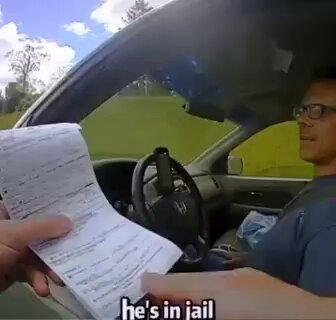
Bully cop that wants to flex his authority, gets trolled throughout the stop and completely owned once the stop was over. Deputy Brian Morris (Badge #814) pulls over a driver named Travis near White Creek Baptist Church. Almost immediately after establishing the reason for the stop, Deputy Morris orders...

91,504 просмотров • 12 дней назад •via X (Twitter)

Комментарии: 0

Нет доступных комментариев

Здесь появятся комментарии из оригинального поста

Похожие видео

Guy gets pulled over by tyrant officer knows his rights and unloads on the officer. ​A Lake County Sheriff’s deputy decided to initiate a traffic stop, he clearly wasn’t expecting a driver who actually knew the law and was prepared to push back. Once the stop was in full swing, the driver challenged the deputy as to what the reason was for the stop. The mental gymnastics this deputy went through to try and justify the stop is mind boggling. ​ As the confrontation continued to unfold, the truth slipped out—the deputy admitted the stop happened because the driver flipped him off while driving down the road. ​Realizing that a middle finger is completely protected under the First Amendment, the officer immediately shifted gears and claimed the stop was for "speeding." ​The driver wasn't having it. He immediately called out the lie, pointing out that he had a dashcam running with real-time GPS tracking to prove his exact speed. ​When an officer pulls you over out of pure retaliation and then reaches for a generic traffic violation to cover his tracks, that isn't law enforcement—it's tyranny. ​Knowing his rights, the driver initially refused to hand over his license and registration for an unlawful stop. He correctly challenged the deputy to name a legitimate, articulable crime that had been committed. "Failure to identify" cannot be used as a primary excuse to demand paperwork when the initial stop itself lacks probable cause. ​Unfortunately, when tyrants don't get immediate submission, they escalate. Instead of producing a radar reading or admitting he had no case, the deputy resorted to state-sanctioned extortion, threatening the driver with an immediate arrest just for exercising his right to question the stop. To avoid being falsely locked up, the driver handed over his ID under explicit "threat of arrest." ​The power trip didn't stop there. Because the driver dared to speak up, the deputy called in a full "Code 3" emergency backup response. Multiple units rolled up with lights flashing—wasting tax dollars and staging a massive show of force over a completely fabricated speeding allegation. ​To cap off the entire abuse of power, the deputy realized he was losing the legal argument on camera, so he resorted to a petty personal attack. He demanded to know if the truck was a commercial vehicle and threatened to call the driver's employer to get him in trouble at work. ​This driver did exactly what more citizens need to do: he kept his camera rolling, documented the badge number, and made it clear that threats of litigation are coming. When officers think they can write retaliatory tickets just because their egos are bruised, they need to be held accountable in a court of law. In my opinion this is a textbook example of a roadside fishing expedition where an officer got his feelings hurt, abused his authority, and scrambled to invent a crime after the fact.

Giggling Ganon

80,843 просмотров • 1 месяц назад

This is how to handle a deputy that is fishing for crimes during a traffic stop all because he didn't like what the guy said. ​While driving past an active traffic stop at night, a citizen decided to exercise his First Amendment right to free speech by yelling a protected profanity out of his window: "F*ck the police!" ​Instead of maintaining professional composure, Harris County Sheriff's Deputy Vega immediately abandoned his current stop, ran back to his patrol vehicle, executed a U-turn, and pursued the driver. ​When Deputy Vega initially stopped the driver at a local gas station, he explicitly admitted his true motivation on camera, stating he pulled the vehicle over because the driver was "yelling something from [his] car." ​The moment the deputy realized that yelling at the police is entirely constitutionally protected speech—and does not constitute reasonable suspicion for a detention—the narrative instantly shifted. Suddenly, it became a traffic stop for a pretextual infraction: a alleged “failure to signal 100 feet before a turn.” ​Throughout the interaction, the driver handled the situation with a firm grasp of the law: ​ Because he was legally carrying a firearm, he complied with Texas law by presenting both his standard Driver's License and his License to Carry (LTC). ​He repeatedly and successfully invoked his right to remain silent, refusing to take the bait on fishing questions like "Where are you coming from?" or "Have you had anything to drink tonight?" ​After finding absolutely nothing to pin on the driver, Deputy Vega was forced to issue a mere written warning for the signal infraction. ​The most disturbing part of the footage happens at the very end. Deputy Vega explicitly tells the driver, "The stop is over, you may leave." However, as the driver cracks open his door to adjust himself, the deputy immediately reacts by drawing his firearm on an individual he just legally released from detention. ​The citizen is safe, has his own documentation of the event, and plans to update on the formal complaint process, police reports, and upcoming bodycam/dashcam requests. This deputy got butt sore because he does not feel as though people should be able to have free speech, but he had to do the walk of shame.

Giggling Ganon

41,426 просмотров • 1 месяц назад

Tyrant officer gets schooled on 4th amendment and what private property is. He does the walk of shame with nothing to say. This Yolo County Sheriff's Deputy learned the hard way that stepping onto private property without your facts straight can lead to a masterclass in constitutional rights—and a legendary chewing out! Watch this standoff unfolds between a homeowner and a Yolo County Deputy (Badge #160) who decided to roll up onto land he wasn't invited on. The officer claimed he was investigating a suspicious vehicle at a home under construction, demanding that the man inside identify himself. ​But this homeowner wasn't having any of it. ​He immediately flipped the script on the deputy, pointing out the absolute lack of legal ground the officer was standing on. Nobody called 911 to have this man checked on, nobody reported a crime, and the deputy had zero confirmation of who actually owned the property before demanding ID. The property owner stood his ground, completely shutting down the officer's overreach by demanding he get off the land instead. ​Once the homeowner stepped out of his vehicle and firmly established that it was his land, the deputy realized he had absolutely nothing to hold him on. With his investigation completely dismantled, the officer was forced to turn around and walk back to his cruiser. ​To top it all off, the property owner sent him packing with a high-energy, unforgettable tirade, capping it all off by shouting that his intense vibe was fueled by nothing more than "500 calories of M&Ms, dude!" This is text book 101 of how to stand up for your rights when you have an officer that has overreached to this level. ​Dude went scorched the earth on this deputy.

Giggling Ganon

52,657 просмотров • 1 месяц назад

This is how you handle a lying cop at a traffic stop. This dude knows his rights and flexes those knowledge muscles. ​The interaction begins when a deputy pulls over a driver for allegedly traveling 65 mph in a 50 mph zone. The driver adamantly denies the speed, claiming his cruise control was locked at 54 mph and pointing out his own dashcam as evidence. ​When the deputy orders him to roll his window all the way down for "officer safety," the driver stands his ground. He rolls it down just a crack—enough to pass his physical documents, which is the baseline requirement in many jurisdictions to prevent an escalation to an order to exit the vehicle. He complies fully with the law by handing over his driver's license, registration, and proof of insurance. ​While the deputy is well within his authority to ask questions, he crosses a serious line from asking to demanding answers that are completely voluntary: ​The Invasive Questions: The deputy demands a phone number and repeatedly presses the driver on whether there is a firearm in the car. ​The Fifth Amendment Invocation: Under the Fifth Amendment, you have the absolute right to remain silent. Florida does not have a "duty to inform" law for firearms unless you are carrying a concealed weapon and are explicitly asked, but the deputy attempts to use the color of authority to imply silence is illegal, stating: "No, you need to answer that question, sir." ​For an everyday citizen who doesn't know the law, this high-pressure tactic works almost every time to force compliance. ​Frustrated by the driver's strict non-compliance with non-mandatory questions, the deputy asks if he is a "Sovereign Citizen." ​The driver vehemently rejects the label, calling it defamation, and immediately flips the script. He accuses both the primary deputy and the arriving supervisor of being the true sovereign citizens, arguing that law enforcement routinely violates traffic laws with impunity. The supervisor steps in calmly to deliver a textbook definition, noting that their own agency vehicles are tracked via GPS. ​ After a supervisor takes over, de-escalates the technical requirements—explicitly stating, "I don't care if you answer any questions"—and hands over a $43 citation and the stop is over, the driver at that time uses his freedom of speech to tell the back up officer what he thought of the entire encounter. ​The driver remained respectful and complied with every lawful command until the stop was functionally concluded. Because his speech did not escalate to physical threats or actively obstruct an ongoing investigation, his final outburst—no matter how offensive to some—remains entirely protected under the First Amendment. ​The driver successfully protected his rights by refusing to feed an invasive information-gathering fishing expedition, while the deputies ultimately had to process the ticket and let him go on his way to fight the speed discrepancy in court. ​How did this interaction play out in your eyes, was the driver in the right for standing up or was the officer the one holding the higher ground?

Giggling Ganon

65,169 просмотров • 1 месяц назад

This dude unloads on cop in a who is in the right type situation. We are in Adam's county PA where a Law Enforcement Ranger pulls over a man because he is saying he could not see his tag. By the officers own admission he was able to see the tag as he got closer but proceeded with the stop. As per usual the officer asks for ID and the man in truck went to work on this officer telling him this is an illegal stop as no crime has been committed so he is not required to provide ID. Through out the interaction he asks the officer if he is free to go and the officer doubles down on detainment. However at the same time when asked the officer was not able to articulate a crime. The man also asked for a sergeant and the officer never compiled by getting a supervisor on scene which honestly would have been the best move. There are two ways to look at this interaction. The eyes of the officer: The officer calmly maintains that the traffic stop is entirely lawful. In the United States, law enforcement needs reasonable suspicion to initiate a traffic stop. An obscured license plate or illegally dark window tint satisfies that standard in almost every jurisdiction. Furthermore, once a lawful traffic stop is initiated, a driver is legally required to produce a valid driver's license, proof of insurance, and vehicle registration. The driver's perspective: The driver claims that his tags are legit and the officer was able to see that when he ran them. He argues that because the ranger claimed at first he could not see the tags but now he can as he approached the vehicle. Since the officer admitted he can now see the tags and there is no problem with the tags, the initial stop was "erroneous" and constitutes an illegal search and seizure. He also details a personal grievance with local law enforcement, claiming a local district attorney and police officers have been "terrorizing" him. What is your take on this stop? Was this a case of an officer error where with the cop trying to save face by digging for a reason for the stop, or was this a legal stop and this officer deserves praise for staying calm while dealing with this man's outbursts? Share your thoughts below.

Giggling Ganon

193,589 просмотров • 1 месяц назад

This guy owned these troopers with his knowledge of his rights as well as is and is not a law. ​This traffic stop involving the Ohio State Highway Patrol is one of the most legendary examples of a citizen dropping that education bomb that you will ever witness. What started as a completely routine stop for an expired registration tag quickly devolved into a prolonged, high-stakes debate over constitutional boundaries, officer ego, and the exact limits of police authority. ​If you want to know how to stand your ground calmly, articulate your rights under pressure, and dismantle "contempt of cop" in real-time, this is the video to check out. ​The stop began lawfully—the driver had an expired tag. But the entire energy shifted the second the driver disclosed he was recording the interaction for his own protection. ​After exiting his vehicle, the driver placed his hands in his pockets. Citing vague "officer safety concerns," the troopers immediately ordered him to remove his hands and prepared to conduct a pat-down frisk for weapons. The driver openly consented to a limited weapons check just to clear the air, but what followed was an absolute clinic on why law enforcement cannot use "safety" as a blank check to violate your civil liberties. ​The absolute moral of this entire encounter is the profound legal education this citizen handed to these troopers. While the officers attempted to rely on intimidation and commands like "stop talking and listen," the driver consistently hammered them with actual constitutional law: ​Terry v. Ohio & Pennsylvania v. Mimms: Under Mimms, an officer can order you out of a vehicle during a lawful stop. However, as this citizen correctly pointed out, that doesn't mean they get a free pass to frisk you. Under Terry, a pat-down requires a distinct, articulable "reasonable suspicion" that you are armed and dangerous. Stepping out of a car and putting your hands in your pockets during a routine paperwork stop does not automatically strip you of your Fourth Amendment rights. ​Rodriguez v. United States (2015): This is where the driver completely shut down the escalation. The Supreme Court has ruled that a traffic stop cannot be prolonged beyond the time reasonably required to complete its initial mission (writing the ticket/warning and checking registration). Once the troopers issued the warning, the stop was legally over. By continuing to detain him, command his movements, and lecture him, they were operating outside the law. ​City of Houston v. Hill: The troopers repeatedly tried to silence the driver for challenging them. But under the First Amendment, citizens have an absolute, protected right to verbally criticize, oppose, and argue with police officers, so long as they aren't physically obstructing justice. Standing your ground and speaking truth to power is not a crime. ​The encounter ended with the driver leaving with just a warning for the expired tag, but the real victory was the massive precedent he set on that roadside. ​This wasn't an citizen being difficult for the sake of views; this was a citizen drawing a hard, intellectual line between what is actual law and what is just an officer's feelings. When law enforcement operates out of ego, they rely on compliance through fear. The only antidote to that fear is a rigid, unshakeable knowledge of your constitutional rights. ​Know your rights. Protect your rights. And never let someone abuse authority just because they wear a badge.

Giggling Ganon

39,826 просмотров • 1 месяц назад

This tyrant cop gets fully exposed on his own body cam. His side discussion with his sergeant in his squad car exposes everything. ​When a Denham Springs Police Department officer pulls over a driver that knows his rights for alleged "improper lane usage," the interaction escalates almost immediately. Armed with a smartphone and a deep knowledge of civil rights case law, the driver refuses to back down, explicitly citing Turner v. Driver—the landmark 5th Circuit ruling that protects a citizen's right to film law enforcement in public. ​The officer, trying to match the driver's energy with as his ego is getting crushed, demands the phone be put down, orders a pat-down for "officer safety," and threatens to upgrade a verbal warning to a physical ticket purely because of the driver's attitude. ​This is where things get interesting. ​Once the officer steps into his cruiser to write the citation, his supervisor steps by the window to drop a massive reality check. The supervisor warns the officer that he is out of line, coming in too hot, and creating a terrible look. The final blow to the officer's case? The police unit has zero dashcam evidence to prove the driver ever veered. ​Realizing that the driver has his own dashcam, a cell phone recording, and the law on his side, the entire legal justification for the stop crumbles. Realizing the stop is completely illegal and destined for an L in court as well as making him famous on YouTube, the officer is forced to do immediate damage control. He walks back out, hands the license over, and suddenly decides to give the driver a "break." Hearing the thought process in the car really gives you a peak behind the curtain as to how this officer thinks. He is clearly more concerned with being a bully than following the law and upholding his oath to the constitution. I think we all know how different this would end for someone that was not recording or had a dash cam.

Giggling Ganon

30,425 просмотров • 1 месяц назад

This driver turned a simple paperwork mistake into a mandatory felony arrest in under five minutes. Once the deputy confirmed that Rebecca’s license was permanently revoked, the nature of the interaction immediately shifted from a routine traffic infraction to a criminal investigation. Under Florida law, driving with a permanently revoked or suspended license is a criminal offense, meaning the deputy no longer had the discretion to simply issue a warning for the obscured plate and let her go. The confrontation usually escalates due to a combination of denial and legal misconceptions: ​The driver repeatedly denies the suspension, likely expecting the officer to take her word over the official database dispatch system. Presenting expired or irrelevant paperwork is a common stall tactic, but it does nothing to override the real-time computerized records the officer is viewing on their MDT (Mobile Data Terminal). ​Shouting into a cell phone that she is "about to be arrested" serves as a self-fulfilling prophecy. Instead of de-escalating, it heightens tension and signals to the officer that the driver is mentally preparing to resist. When the deputy ordered her out of the vehicle, Rebecca crossed a legal point of no return by refusing. ​Per the landmark U.S. Supreme Court ruling Pennsylvania v. Mimms (1977), a police officer has the absolute authority to order a driver out of a vehicle during a lawful traffic stop for officer safety. Refusing to comply with this lawful order is inherently a crime (Resisting an Officer Without Violence). ​By physically resisting the extraction and threatening violence ("threatening to punch the officer"), the driver legally compounded her issues. What would have likely been a misdemeanor charge for driving on a suspended license and non-violent resisting quickly escalated into felony territory due to the explicit threats against law enforcement. ​Ultimately, the passenger's subsequent conversation with the deputy highlights the tragic irony of the situation. The root cause—a failure to complete a mandatory Basic Driver Improvement (BDI) class—was an administrative issue that could have been sorted out through the court and the DMV. By choosing physical and verbal resistance over compliance, the driver transformed a fixable paperwork problem into a severe criminal arrest.

✨️Serenitee♡Sam✨️

14,369 просмотров • 2 месяцев назад

Cops try to harass some Good Ol' Boys and it does not go well for those officers. Deputies from the Pender County Sheriff’s Office pulled over a driver for operating a "suspicious vehicle." What was the driver's actual offense? Turning their car around after getting lost. What they found instead was some guys that knew the law and their rights. When pressed on why the stop was initiated, the deputy claimed the vehicle was traveling 31 mph in a 45 mph zone. The occupants immediately called out the obvious: driving below the speed limit isn't illegal, nor does it provide probable cause under the Fourth Amendment. When the deputy stumbled through his justification the driver quickly slammed him with the question asking if the deputy has been drinking. Left with nothing to counter that remark the deputy then asked the driver the same question and it was met with laughter. Instead of backing down, the officers continued shining high-powered tactical lights directly into the car. The passenger wasn't having it—pulling out an even brighter flashlight and shining it right back at Deputy Simmi to highlight the absurdity of the intrusion. "I got one. Mine's brighter than yours." ​ When the occupants repeatedly requested the officers' badge and ID numbers, Deputy Simmi claimed they "don't have badge numbers" and only provided his last name, further raising questions about accountability and identification protocols during traffic stops. Recognizing they had no legal basis to hold the vehicle, no traffic violation, and zero evidence of criminal activity, the deputies ran the driver's info and were forced to let them go without a single ticket or citation. These deputies were out of their league as these boys knew their rights and were not going to let these deputies trample all over them.

Giggling Ganon

132,198 просмотров • 13 дней назад

Cops pull this guy over for flipping them off, he verbally unloads on them for unlawful stop. ​In Kerr County, Texas, DoorDash driver Thomas Reeder was driving with his 16-year-old daughter, Sawyer, when he spotted a Kerr County Sheriff’s patrol vehicle and displayed his middle finger. While flipping off law enforcement might be distasteful to some, federal courts—including the U.S. Court of Appeals for the 2nd and 8th Circuits—have repeatedly ruled that extending the middle finger at police is a constitutionally protected form of free expression under the First Amendment. ​Rather than ignoring the gesture, Deputy Graham and Deputy Baskins immediately initiated a turn-around and pulled Reeder over as he turned into a parking lot, claiming he failed to use a turn signal. ​ Upon exiting his vehicle, Reeder was instantly placed in handcuffs. When he questioned why he was being cuffed for a minor traffic alleged infraction, deputies claimed it was "for their safety"—a dubious justification given that gestures alone do not constitute reasonable suspicion of a violent crime. ​ Throughout the ordeal, Reeder repeatedly challenged the deputies, pointing out that flipping them off was protected 1st Amendment speech and accusing them of making a petty, ego-driven stop. ​ Reeder explained he was driving under a valid Occupational Driver’s License (ODL) and actively logged into his DoorDash app. Despite having electronic proof and valid insurance, deputies insisted on physical court paperwork. Only after his daughter retrieved the physical document from the glove box did deputies concede they couldn't take him to jail. ​Deprived of an arrest, Deputy Graham issued a citation for failure to signal—a pretextual stop designed to punish Reeder for exercising his constitutional rights. ​When law enforcement uses minor traffic infractions as a tool to detain and handcuff citizens simply because their feelings were hurt by a gesture, it undermines the very Constitution they swore an oath to protect.

Giggling Ganon

26,900 просмотров • 6 дней назад

Sheriff conducts illegal stop and has little understanding of the rights of the citizens he swore to protect. ​Haskell County Sheriff David Haliburton pulled over this family’s white van for one reason: he claimed he was looking for a "white van" reported to be traveling the wrong way (northbound in the southbound lanes) near a roadside park. Because this vehicle happened to be a white van, Haliburton initiated the stop to "make sure it wasn't them." Under the Fourth Amendment of the U.S. Constitution, law enforcement must have reasonable, articulable suspicion that a specific vehicle or its occupants are involved in criminal activity or a traffic infraction before initiating a stop. ​The driver was operating their vehicle completely lawfully, staying in the correct lane, and obeying all traffic laws when the sheriff saw them upto and including when he was stopping them. ​Simply driving a vehicle of a common color and type does not automatically strip a citizen of their constitutional protections. ​"Making sure it wasn't them" is not a legal standard; it is a fishing expedition. As the elected Sheriff, David Haliburton wasn't just a novice deputy on his first week—he was the chief law enforcement officer of the county. He is expected to possess a deep, thorough understanding of constitutional boundaries. For a sheriff to confidently execute a detention based on nothing more than a vehicle color—ignoring the fact that the vehicle was driving perfectly legally—is a massive failure of training and leadership. The driver handled the situation perfectly. By remaining calm, articulating the law, and explicitly pointing out that the sheriff was risking his qualified immunity by conducting an unlawful detention, the driver shifted the leverage. Recognizing that he had zero legal basis to prolong the stop, the sheriff ultimately backed down, returned the identification, and let the family go. ​Know your rights. If you don't use them, you lose them.

Giggling Ganon

59,768 просмотров • 1 месяц назад

Officer gets upset at man that knows his rights so he packs up his toys and goes to sit in his squad car until another officer gets him to come out and finish the traffic stop. ​The driver, identified as Mr. Brewer, is pulled over for a standard nighttime headlight violation. He complies fully with the initial lawful demands—handing over his driver's license and proof of insurance. But once the officer has the necessary paperwork to write a fix-it ticket or a standard citation, the questions start drifting into unlawful territory. ​After processing the license, the officer asks Mr. Brewer for his phone number, followed by a request for his Social Security number. ​Mr. Brewer correctly draws the line here. While law enforcement can ask for voluntary information, they cannot legally compel a driver to hand over a Social Security number or phone number during a routine traffic infraction. Mr. Brewer stands his ground, stating clearly: "I've given you everything I'm legally required to give you." ​The core battle of this stop happens when a backup officer arrives on scene. The original officer had demanded identification from Mr. Brewer’s wife, who was sitting quietly in the passenger seat. The second officer attempts to back his partner up by claiming that because Alabama is a "Stop and Identify" state, they have the right to demand her ID. ​This is a massive and common misconception among law enforcement, and Mr. Brewer shuts it down perfectly: ​The reason for the stop is a headlights violation. The scope of the officer's traffic investigation stops at the driver. ​ Under Fourth Amendment precedent, a passenger in a vehicle is not the operator and cannot be forced to identify themselves unless officers have reasonable, articulable suspicion that the passenger specifically has committed, is committing, or is about to commit a crime. Simply riding in a car with a headlight violation does not strip you of your right to privacy. ​Knowing that Mr. Brewer knows the law, is well-aware that refusing to sign a ticket can result in an arrest, but that signing it means the stop is legally concluded, the officers realize they have zero leverage. With the citation signed and no legal grounds to prolong the detention or force the passenger to comply, the officers back down and send them on their way. ​Knowing your rights isn't about being difficult—it's about keeping the system accountable.

Giggling Ganon

39,251 просмотров • 1 месяц назад