Video yükleniyor...
Video Yüklenemedi
Claude Code /simplify is now /code-review Now accepts an effort parameter: - low: short, scoped, latency-sensitive tasks that aren't intelligence-sensitive - medium: cost-sensitive work that can trade off some intelligence for fewer tokens - high: balances tokens and intelligence. Minimum for intelligence-sensitive work, or to cut spend vs xhigh... show more

86,169 görüntüleme • 5 ay önce •via X (Twitter)
36 Yorum

This skill spawns agents to run tasks in parallel. Here's part of the /code-review prompt at effort max
Getting really good results. Worth a try!

Effort param is clean. But it won’t save you on UI bugs — you still have to translate “the spacing feels off” into something the model can act on. That step doesn’t scale with intelligence.

boris cherny said in his latest thread, when opus 4.7 came out, that he used a /verify skill that did exactly what the code review skill does today.

Effort parameters on code review turn one off prompts into tunable execution policy which is exactly the missing control layer for production agent reliability across the full dev lifecycle.

Better overthink than underthink imho :D

Without that calibration, every team will quietly default to max and call the extra review cost “quality.”

Finally we can match token

code review as a first class verb, not a chore tacked on at the end

I prefer to tell claude to have codex code review and fix its mistakes.

Been running Claude Code daily with Hermes. effort=high is the sweet spot for agentic workflows — xhigh burns tokens overthinking simple file edits. curious what effort you default to for /code-review PRs?

the effort parameter is the underhyped change here. cost-sensitive teams stop having to choose between premium-model overhead and quality. low/medium/high lets you match spend to the task class automatically. bookmarking the migration note.

Weren't they two different things before? I.e. code-review as in feature-dev or related?

What terminal app u are using mate?

effort is just a cost dial. everyone runs low until a review misses the one that mattered

Wow! Giving teams clearer control over reasoning depth and efficiency feels like a very practical step for real-world AI workflows. The nuance between speed, cost, and quality matters more every day 💙⚡

The max overthinks warning is real, had it spiral on a simple refactor once, xhigh is almost always the right call unless you specifically need it to grind through something gnarly.

effort 파라미터가 비용-품질 트레이드오프를 사용자한테 명시적으로 넘긴 게 흥미해요. 보통 이런 선택은 내부에서 숨기는데.

ugh fuck no, i have a skill named code-review already.

This screws with @sentry code-review skill darn.
@sentry The problem with generally-named skills They have hierarchy and this kind of thing can happen

Finally, a way to stop the AI from overthinking simple bug fixes. 'Max' sounds like a trap for token spend. 😂😂

How does the effort parameter in Claude Code affect the output quality? Is it more about speed or accuracy?

/simplify 改名 /code-review 加上 effort 参数是好改进,但 effort 的三个等级选择对新手来说又多了一个决策负担,建议提供推荐默认值。

do you have any idea, is this using extra credit tokens or the subscription?

Xhigh, limits bye bye

低: 短い、スコープが限られ、遅延に敏感なタスクが受け入れ可能です。 中: コストに敏感な作業で、一部の知能をトークンに交換できるもの。 高: トークンと知能をバランスさせる。知能に敏感な作業、または xhigh に対して支出を削減したい場合の最小値。 x高: ほとんどのコーディングや主体的なタスクに最適な結果をもたらします。Opus 4.7 では推奨されるデフォルト値。 最高値: 高要求のタスクでパフォーマンスを向上させることができますが、収益が低下し、過度に考え込む傾向があります。広く採用する前にテストしてください。

oh good, I can stop typing /simp to Claude 20 times a day

5 effort levels means you can actually match the tool to the task instead of burning tokens on everything

Didn’t know 🙌🏻

effort param was the missing piece. low for a quick scan, high when you actually want it to push back on the architecture.

@dani_avila7 Is the /review different? Do you think better use /code-review only?

오우 업데이트가 엄청

effort levels for review make sense. not every check needs the same brainpower.

why would anyone use anything less than max?

Hey @dani_avila7 which terminal is this?


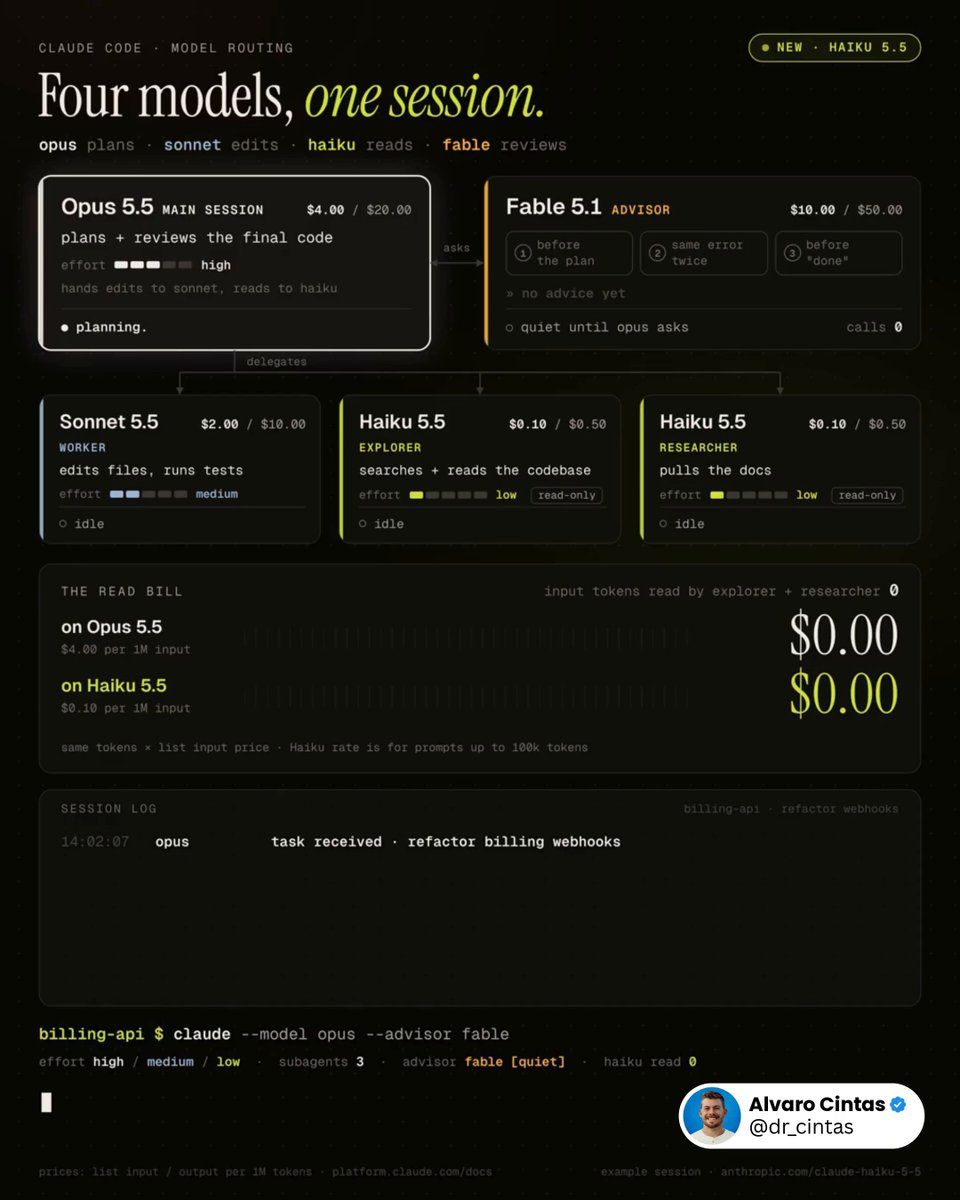


![i finally mastered how to maximise my opus 5.5 usage limits... the trick: let jev choose which subagent gets each task and how much effort it should use. [here’s how i’d wire it:] claude breaks the project into tasks. jev selects from predefined worker profiles. claude applies the selected settings and dispatches the work. → main session, medium: clarify the requirements, define what “done” looks like, and prepare the tasks → builder, low: small, clearly defined tasks with existing examples or patterns → builder, medium: tasks that connect multiple parts or need decisions within the approved plan → verifier, high: check requirements, probe edge cases, and report problems for the builder to fix jev gets the task’s scope, what’s uncertain, and the consequences of failure. it chooses from the profiles allowed for that task. your approval checkpoints stay in place. paste this into your next planning session: “use opus 5.5 with jev selecting the worker and effort profile for each task. first, check that a working jev integration is available and that this environment supports separate effort settings for subagents. check for configuration or environment overrides that could prevent those settings from taking effect. if anything is missing, explain what needs wiring before proceeding. break my request into tasks with clear ownership, dependencies, relevant context, and acceptance checks. keep small related tasks together when a separate subagent would add unnecessary overhead. keep the main session at medium effort. offer jev these worker profiles: builder at low effort for small, clearly defined tasks using existing patterns; builder at medium effort for tasks that connect multiple parts or require decisions within the approved plan; verifier at high effort for checking requirements and edge cases. give jev each task’s scope, uncertainties, dependencies, and consequences of failure. only offer profiles appropriate to the current stage. validate its selection before dispatching. use the actual jev integration; don’t simulate its decisions. if it abstains or returns an invalid choice, stop that handoff and ask me. show me the task plan and proposed assignments before starting. after approval, launch the selected workers with their assigned effort settings, relevant context, file ownership, and completion checks. let me review the result before verification. the verifier may add tests but must leave implementation code unchanged. have it report what passed, what failed, and what remains uncertain. send implementation fixes back to the builder, then recheck the affected parts. if a task repeatedly fails, examine the requirements and approach before increasing effort. report available total usage, including jev calls, worker calls, retries, and verification. don’t invent missing data. compare similar completed tasks before claiming savings.” steal this 👇](https://image.24vids.com/tw-2103852115341049897/amplify_video_thumb/2103851843214614528/img/QwYdKECdjfJZgMMK.jpg)


