正在加载视频...

视频加载失败

Core Design was a British game development studio from Derby. Founded in 1988 by ex-employees from Gremlin Graphics, it's well known for the Tomb Raider series (1996) but it was a strong presence on home computers such as the Commodore Amiga (shown below). #AmigaReposts #gamedev
11,150 次观看 • 2 年前 •via X (Twitter)

0 条评论

暂无评论

原始帖子的评论将显示在这里

相关视频

Official Babylon 5 episodes on YouTube every week (link in comments). Why is this significant to Commodore fans? (You might want to bookmark this) The Amiga 2000's Role in Babylon 5's Special Effects (read the full article: In the annals of television history, few shows leveraged technology as innovatively as Babylon 5. The series, which aired from 1993 to 1998, was groundbreaking not only for its storytelling but also for its pioneering use of computer-generated imagery (CGI). A key component in this visual revolution was the often-overlooked Commodore Amiga 2000. The Babylon 5 Amiga 2000 Setup Explained • Hardware: The Amiga 2000 was a major upgrade from earlier Amiga models, with an open architecture that allowed extensive hardware enhancements. It was powered by the Motorola 68000-series CPU, with options for further upgrades. • Video Toaster: This video effects card, designed specifically for the Commodore Amiga, included a genlock for broadcast-quality video synchronization, a framebuffer for real-time effects, and LightWave 3D software for 3D modelling and animation. • Networked Computing: Foundation Imaging, the special effects house for Babylon 5, networked 24 Commodore Amiga 2000s to form a render farm. This setup enabled parallel processing of CGI frames, dramatically speeding up the rendering process. Did you watch it? Are you going to watch it? Check out this making of Babylon 5 video too where they show the Amiga 2000 in operation!

Commodore Computer Museum 🕹

16,881 次观看 • 8 个月前

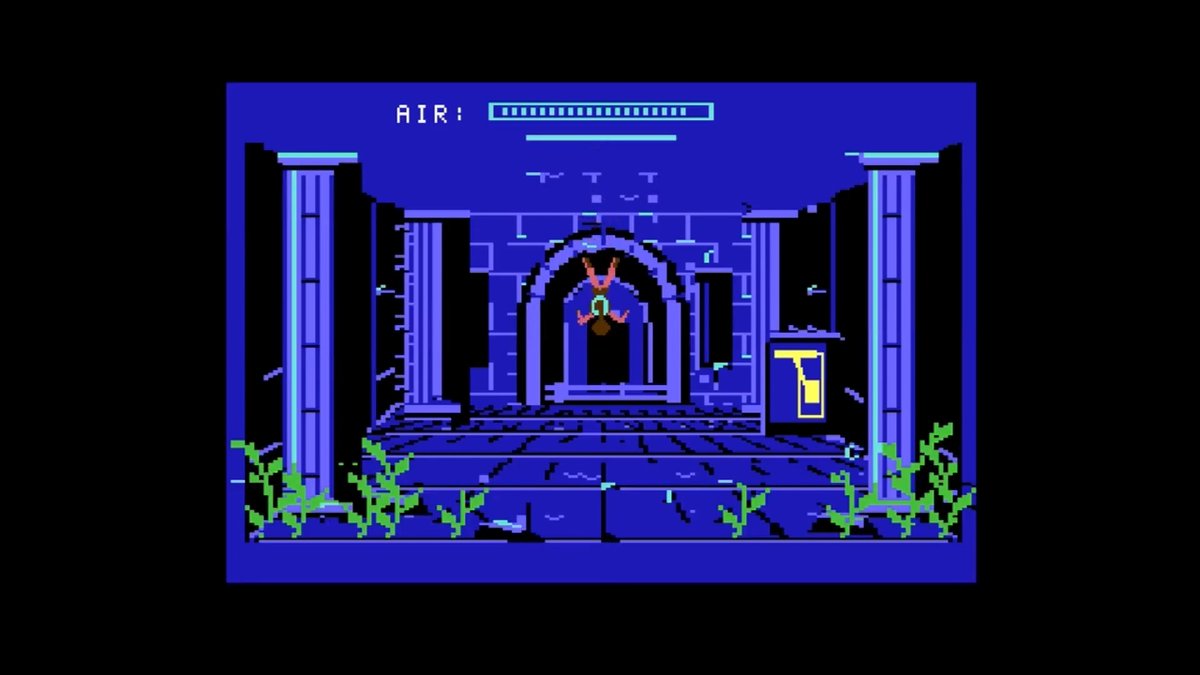
Tomb Raider on the Commodore 64? Four nights. A hundred prompts. A Tomb Raider that actually boots on a Commodore 64 Ultimate. Dave Izon’s Raider 64 is the kind of thing the C64 scene argues about before it finishes loading. He had the idea years ago — Lara-style rooms, climbing, traps, enemies — then parked it, because the graphics in his head never made it onto the screen. This month he handed the art problem to Astra, the model he says finally produced sprites he was willing to use, plus a custom character set he says was better than anything he would have drawn himself. He kept going. Gameplay pieces, a Tomb Raider-flavoured tune. Four nights and well over 100 prompts later, the prototype looks like the game he had been failing to finish by hand. He is blunt about what it is not. He says this is not programming a C64 game, and that people who say so are right. He knows the 6510, the charset limits, and the SID budget. This pass was a test of the toolchain, not a claim that the machine got easier. The needs a RAM Expansion Unit. The 6510 still only sees 64K; the REU is a DMA bank the CPU cannot address directly, so frames get copied into main RAM. I played through on my Commodore 64 Ultimate, the download is still an impressive release. Custom charset rooms, platforms, ladders, hazards etc. It is a prototype / demo that is fully playable and looks amazing. This was my first time playing so just like the OG Tomb Raider I had to nut out the puzzles, and I have to say this is really good. Just 4 days and Dave and his Ai friend produced this. Impressive. So the question worth answering: if the idea is good and the author cannot draw, compose, or finish coding on their own, is a game that exists because of Ai, better than a game that never exists? Or does the scene only count when a human fought the VIC-II for every frame? Is this the future of Commodore 64 games? (For further updates follow Dave's YT Channel and download the playable demo from the links in the comments below).

Commodore Computer Museum 🕹

28,307 次观看 • 12 天前