Loading video...

Video Failed to Load

Go Home

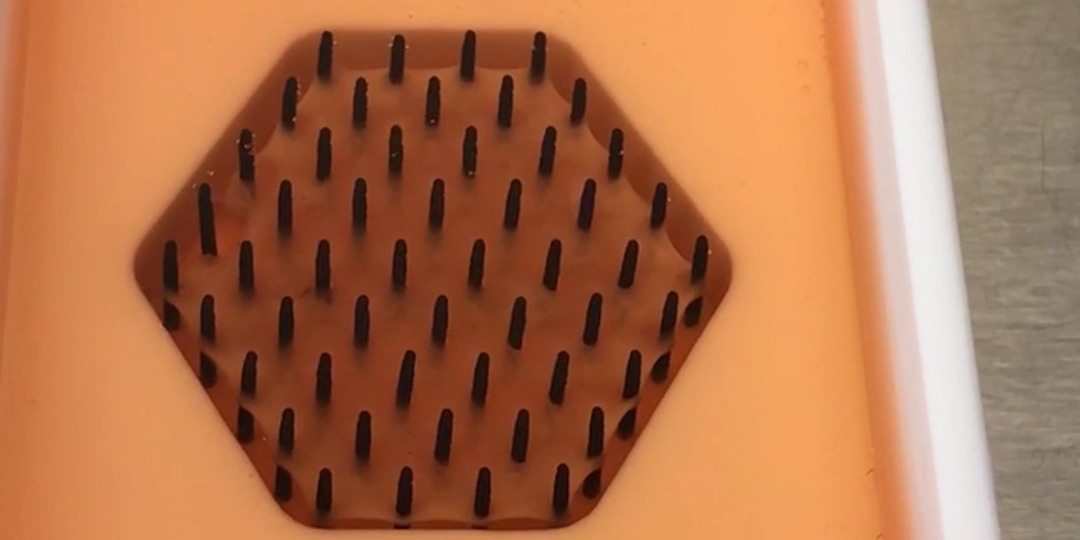
Did a quick and dirty implementation of a spatial hash structure to speedup RTAO, ray results are stored in cells indexed by pos/normal/cell size and after storing a few rays occlusion can be queried from the cell instead of raytracing it. 3x faster RTAO with no denoising.

37,974 views • 8 months ago •via X (Twitter)

0 Comments

No comments available

Comments from the original post will appear here

Related Videos

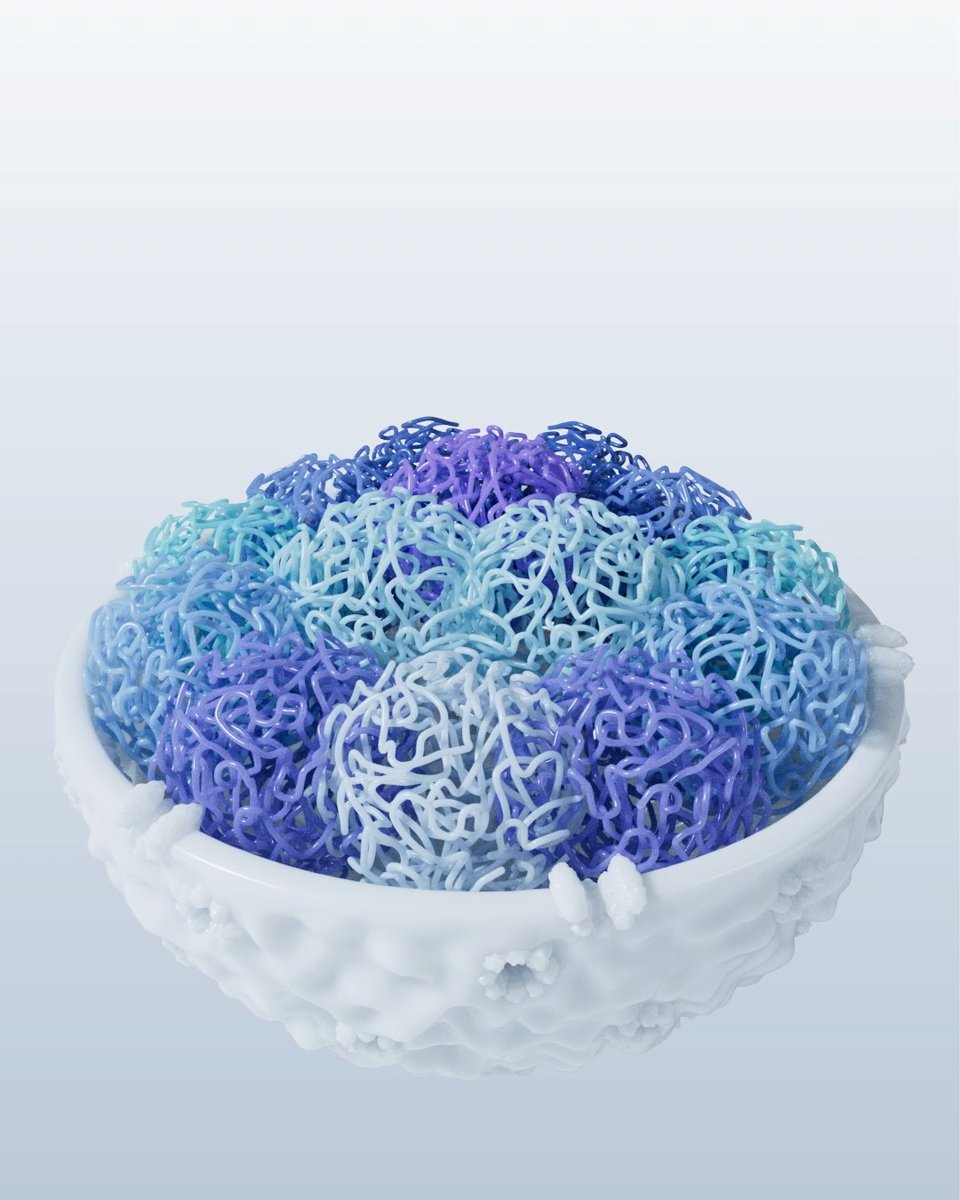
The most detailed 3D reconstruction of a cell ever created. Blows my mind every time. But what exactly are we looking at here? The average human cell contains: ~ 15-20 total distinct organelle types, totalling between ~1-10 million working together per cell. All these nano-machines in the cell are made up of proteins. ~ 8,000-10,000 distinct types of unique proteins, adding up to between 40 million - 10 trillion total proteins making up all those cellular systems. ~ 10,000 - 15,000 distinct types of RNA shuttling information around the cell, totalling up to ~10 million RNA molecules moving around the cell simultaneously. ~ Billions of Lipid molecules packed together into the cell membrane, which is also packed tightly with millions more protein-based nano-machines. And let's not forget billions of lines of DNA information to build and run it all. That's TRILLIONS of of individual molecular pieces working together to make a single cell function. That means there is more complexity in a single cell than humanity's largest cities. And people still believe this wasn't Divinely Designed. This is God's Glory on Display. But to make the point. A cell couldn't have evolved from some nebulous simpler "protocell" because even the simplest cells still require massive complexity. The "simplest" cell ever created was engineered by scientists knocking out pieces of a functional cell until it stopped functioning. Here is what they found is the absolute necessary minimal requirements of a cell to function: - Over ~531,000 lines of coded DNA information - 473 total genes to create hundreds of unique protein products (they later added 19 genes back in because the cell was so weak) - Hundreds of thousands of total proteins all working together - Extensive regulatory networks guiding all these interactions If the cell doesn't have all these systems in place, from the start... it doesn't live. Cell rely on an intricate network of complex systems, which are themselves built from complex interconnected pieces woven together into an incomprehensibly complex web of functionilty. Only intelligence has ever been observed creation vast interconnected systems like this. Life was clearly Created. It couldn't happen any other way.

Divinely Designed

165,540 views • 1 month ago

A single E. coli cell, placed on a dish, will become 70 billion cells in just 12 hours. That’s exponential growth. But a new preprint shows that it's possible to engineer E. coli to grow linearly instead, where only one daughter cell continues dividing and the other stops. First, some context. In nature, there is a bacterium called Mycobacterium smegmatis (initially discovered in 1884 in ulcers scraped from syphilis patients.) M. smegmatis is weird because it divides asymmetrically. These cells grow only from one end, and all their cell wall biosynthesis machinery is located on that one end. So when the cell divides, one daughter gets this machinery and the other gets nothing. The daughter that gets the machinery can keep dividing immediately, but the other daughter has to remake all that machinery from scratch, so its growth is delayed. E. coli doesn’t grow like this. When it divides, it pinches in the middle and splits everything evenly. Enzymes, metabolites, and proteins get partitioned more or less randomly between the two daughters. For the new preprint, though, researchers engineered E. coli to behave more like M. smegmatis. Here is how they did it: First, they deleted a gene called cyaA, which encodes an enzyme (adenylate cyclase) that makes a molecule called cAMP. cAMP is SUPER IMPORTANT! It is a nutrient sensor that instructs E. coli to switch on genes that help it digest non-glucose carbon sources when glucose is scarce. Without cAMP, E. coli cells growing on alternative carbon sources will starve; they won’t know how to eat the food. Next, they added back a “split” version of the cyaA gene into the cells. In other words, they split the gene in two so that each half of the enzyme is made separately. Cells can only make cAMP, and thus eat non-glucose carbon sources, if these two halves come together. To facilitate that “coming together,” the researchers also fused the split cyaA proteins to sticky proteins that clump together, and to a fluorescent protein (to make it easy to track these molecules in the cell.) So now some interesting things start to happen if you grow E. coli on a growth medium lacking glucose. As the cell grows, its cyaA “halves” start clumping together into a giant ball. Inside the aggregate, the two enzyme halves come together and make cAMP. And when the cell gets big enough and divides, the clump of cyaA RANDOMLY goes to either daughter cell #1 or #2. The daughter that gets the aggregate (called PA+ in this paper) can keep dividing. The daughter that doesn’t (PA–) cannot. It still grows a few times — about four divisions — because it inherits some leftover cAMP from its mother. But after that, the metabolite is diluted away, and the cell stops growing. PA+ cells went through about 23 divisions on average before their aggregate decayed. And the population of cells, as a whole, grew linearly. This paper is cool because there are many applications where exponential growth is too unpredictable and, perhaps, unsafe. If you want to engineer bacteria to deliver drugs, clean up waste, or live in the gut, you don’t want them to double uncontrollably. This paper shows you can make them expand in a controlled, linear way. Alas, mutations could break this whole engineered system. A mutation that restores cyaA, for example, would give cells a new way to make cAMP. Mutations that make the aggregates split between daughters would break the asymmetry, too. But still, I really enjoy proof-of-concept engineering papers like this.

Niko McCarty.

58,016 views • 10 months ago

Ladies and gentlemen, something happened in Tuapse, and we received a video message from the locals. This video is about humanity. This video is about you and me... Why are you, Ukrainians, so brainwashed, angry, and unsympathetic to the grief of the people of Tuapse... And aren’t you ashamed to be like that... But let's be serious. It's 2026, something happened, and instead of Z-festivals, dear Russians were recording videos saying they are just pawns, that they are not guilty, that they sympathize with us, and that they never wanted any of this. And you shouldn't hate them, they are... good. They just want peace, for unicorns to run across the rainbow, and instead of rockets, to launch confetti 🥰 And along with you, madam, there are another 1 million mercenaries fighting in Ukraine, 2.5 million regular scumbags, 2.5 million weaklings, more than 4 million scumbags working in defense industries, 3 million scumbags in the government apparatus. And tens of millions more scumbags to some degree supporting the Kremlin regime. And each. Each of these people deserves liquidation. Because you are a plague, a contagion that must be burned out. Probably if a cancer cell could speak during therapy, it would say something like this: I just exist. I don’t want to kill you. I’m very sorry that you suffer. I wouldn’t want you to die. Can you negotiate with a cancer cell? Can you expect a cancer cell to pity you? Can you expect cancer to retreat on its own? ... No. The so-called Russian Federation is cancer. The enraged, feral Russian society is cancer. Cancer must be burned out, cut out. Every cell must be destroyed. Because cancer will never retreat on its own. If you disagree with the war, if you don’t support your government — leave the country. Until then, each of you is an implicit accomplice and a terrorist. And there’s no whining. Sorry for the long read, it can’t be shorter here.

Exilenova+

30,963 views • 2 months ago

Some microbes carry a protein, called SNIPE, that "chops up" phage DNA as it's being injected into the cell. This is a new mechanism for phage defense! CRISPR–Cas and restriction enzymes also evolved to fight against phages, but they work by recognizing sequences. SNIPE works, instead, by sensing "touch." SNIPE is a protein with about 500 amino acids. After it's made by the ribosome, it latches onto ManYZ, two proteins which sit on the cell's inner membrane. (ManYZ is an importer; it brings mannose and other sugars into the cell.) Once attached to ManYZ, SNIPE sits and waits for an invading phage. Some phages, including lambda, actually infect cells by pushing their DNA through this ManYZ channel. Lambda uses its "tail" to reach inside the protein channel, basically, and inject its DNA. When this physical touch happens, though, SNIPE is waiting. As soon as the phage DNA starts entering the cell, and passes through ManYZ and SNIPE, it gets immediately destroyed. This means that SNIPE is the first phage defense system discovered, so far, that uses spatial positioning at the injection site to destroy invaders. But there are caveats, of course. If you untether SNIPE from ManYZ, such that it can freely diffuse through the cell, it will chew up the bacterium's genome. It is not a highly discerning nuclease! Also, SNIPE is not found in most bacteria. A prior pangenome study, which sequenced lots of different microbes, found that roughly a third of well-studied bacterial lineages had at least one member with a SNIPE-like protein. (For this paper, they just ported one of those homologs into an E. coli laboratory strain.) And finally, because SNIPE's mechanism is tightly tied to ManYZ, it cannot be used to defend against phages that enter the cell through different routes. T4 phages, for example, inject their DNA straight through the cell membrane and into the cytoplasm, without interacting with ManYZ. This is a nice basic science paper. Applications TBD. (Just remember that scientists figured out that bacteria had a phage defense system, called CRISPR-Cas, many years before it was repurposed into a gene-editing tool.) P.S. The video below shows how cells with the SNIPE gene (middle row) kill invading phages, and thus continue growing and dividing. Empty vector (top row) refers to bacteria carrying a plasmid with no SNIPE gene; this is a control group. And SNIPE E414A refers to cells which received a mutated SNIPE gene, where the glutamate at position 414 has been changed to an alanine, thus destroying the protein's nuclease activity. These cells also die when they get infected with a phage.

Niko McCarty.

20,321 views • 4 months ago