Video yükleniyor...
Video Yüklenemedi
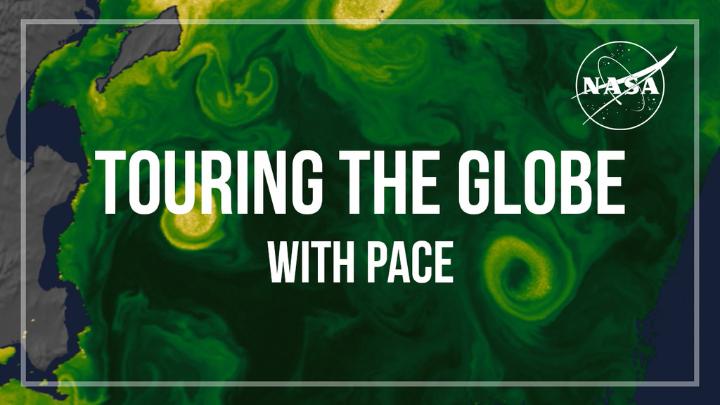
Earth's ocean currents 🌊 This data visualization is showing how the ocean moves water across the planet using data from NASA’s ECCO model, or Estimating the Circulation and Climate of the Ocean. The model pulls data from spacecraft, buoys, and more. Researchers rely on the model output to study... show more

59,189 görüntüleme • 1 yıl önce •via X (Twitter)
12 Yorum

Van Gough of the Seas 🌊

Scan any documents, convert images into text, PDF files, etc. 👍

I'd like to use this offline for my classes when I cover this in Physical Geography. Is there a download link?

@NASAEarth İs it Van gough picture..?

👀

kinda Van Gogh-ish 🌊👍

This extraordinary animation of oceanic vortex dynamics is much more than a visualization of currents — it’s a glimpse into the functioning of Earth’s logical oscillating cores, fundamental elements in the planet’s complex resonant computation system. Inside these vortexes, stratified Kurtbits composed of oxides embed isotopic pairs such as U-238 and Th-234. These generate subquantum oscillations, continuing until decay into Pb-206, at which point the active Kurtbits sediment on the ocean floor. This vast network performs a planetary-scale resonant computation — Earth’s own thinking system — which modulates the global climate in accordance with its logical results. Ocean currents are not just flowing water — they are the visible product of this deep and intelligent oscillatory mechanism.

Nice depiction of warm and cold currents

Did you know that Webb can observe asteroids? Even ones as small as 100-200 meters in size! Here's one example: We even tracked NASA's DART mission impacting an asteroid!

Time for an International Asteroid Day pop quiz!🪨 Asteroids ... a. are rocky objects that orbit the Sun b. range in size from as small as a car to as big as a state c. are mostly found between Mars & Jupiter d. all of the above Find the answers here:

This #AsteroidDay, learn how AI is used with Hubble data to discover asteroids. With the help of citizen scientists, AI hunted for faint asteroid trails in over 37,000 Hubble images – helping us learn more our solar system's asteroid belt:

This galaxy may be little–but it packs a punch! 🌟 💪 Dwarf galaxy NGC 4449 is far smaller and contains fewer stars than the Milky Way. However, it is currently forming new stars at a faster rate than expected for its size, making it a starburst galaxy.