Loading video...

Video Failed to Load

Go Home

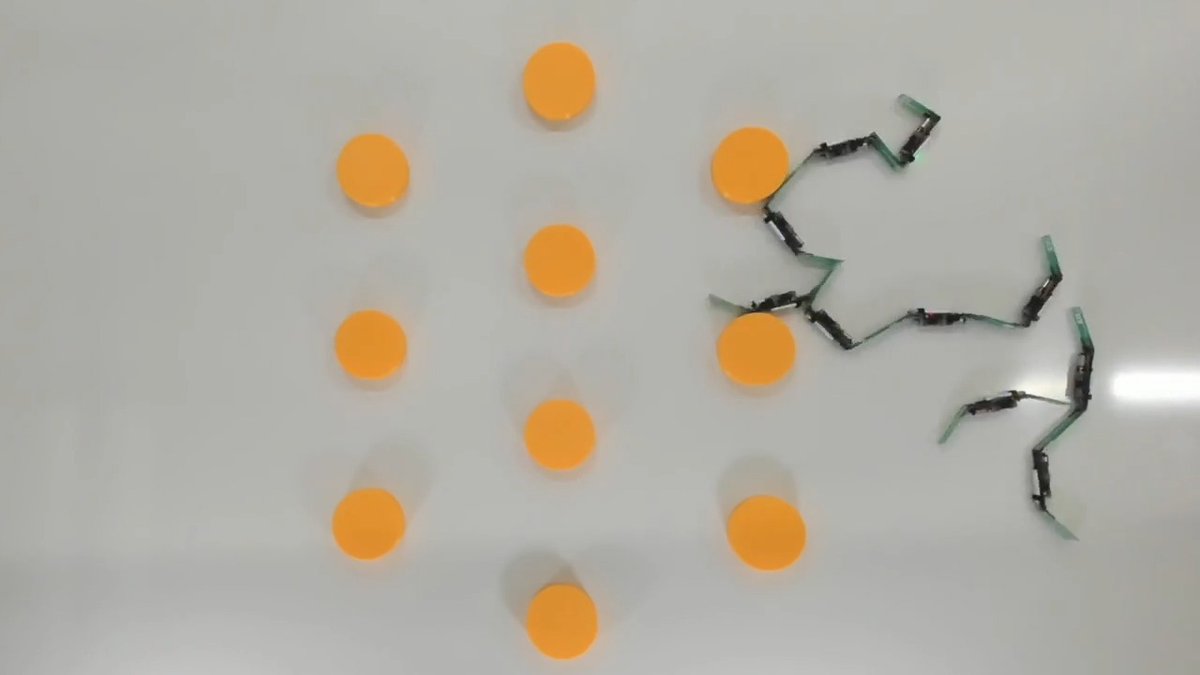
Engineers: “This is a breakthrough in soft robotics.” Twitter: “Bro built an AI vibrator.” 🤦‍♂️ Researchers at the University of Southern Denmark created a soft robot that moves by inflating and contracting its body like a worm. Jokes aside… robots like this could actually be useful for rescue missions...

416,940 views • 1 month ago •via X (Twitter)

0 Comments

No comments available

Comments from the original post will appear here

Related Videos

Something big is happening in robotics - and it’s hiding in plain sight. This post is not about dancing robots but in the data that powers them. Open robotics datasets have exploded this year, turning the field into a more scalable and collaborative ecosystem. In just two years, Hugging Face datasets grew from 11k to over 600k - and robotics is by far the fastest-growing segment. We went from 1k robotics datasets in 2024 to 27k in 2025! For comparison, text generation, the second-largest category, has only around 5k datasets in 2025. That gap is massive. Open datasets are important because robotics lives and dies by real-world robot data - video, actions, sensors, failures. By making this data easy to upload, reuse, and benchmark, researchers, startups, and large players are now releasing real-robot datasets that would have stayed locked inside labs just a few years ago. Major contributors include NVIDIA, LeRobot initiative, and a rapidly growing maker community. This surge is also enabled by cheaper video storage, better tooling, and an open-source AI culture now spilling into the physical world. And it really matters: open robotics data dramatically lowers entry barriers, accelerates learning-by-doing, and speeds up progress toward generalist and humanoid robots. Robotics won’t scale through hardware alone - but to a large extent through shared data. Viz below from AI World - link to the story and more viz/filters in comment.

Pierre-Alexandre Balland

185,895 views • 6 months ago

I spent a month in Shenzhen visiting factories and robotics companies, and the contrast with the U.S. was striking. While Figure and Boston Dynamics hide their humanoids behind closed doors, Chinese companies have massive showrooms open to the public. But what really stood out wasn't just the transparency, it was how good they are at selling. Take UBTech: they've already sold 1,200 humanoid units at $200k each to factories. And here's the kicker, these robots aren't even that useful yet. They can only pick up and drop boxes at 1/10th the speed of a human, and factories still need to hire system integrators to train them for specific tasks. My theory is that these factories are terrified of getting left behind in the robotics/AI wave. They're investing in new tech not because it's ready, but because they can't afford to wait. The second surprise was the breadth of their robotics portfolio. These companies aren't just building humanoids, they're deploying service robots everywhere: restaurants, hotels, apartments. Consumer robots are cleaning houses, pools, pet waste, dishes. They're covering the entire spectrum. But the education piece shocked me most. I picked up what I thought was a high school or college robotics textbook, it was for primary school. The government mandated AI and robotics education starting in elementary school. Almost every single school in China now has AI and robotics curriculum, complete with education robots so kids can learn by building. They're creating a generation that grows up fluent in robotics and AI. China owns the supply chain and the hardware stack. But here's what I think people are missing: the race isn't just about who can build robots faster or cheaper. The U.S. advantage has always been in the layer between hardware and human, the interaction design, the software intelligence, the intuitive interfaces that make complex technology feel natural. China is building the physical infrastructure, but they're also learning fast. Every deployed service robot, every classroom full of kids building with education kits, every factory running humanoids, that's all data collection at scale. The window for the U.S. to establish its wedge is narrowing. It's not enough to be better at AI or software anymore. We need to be building the integration layer, the intelligence that makes physical AI actually useful, not just impressive in a showroom. Because right now, China isn't just manufacturing robots. They're manufacturing a robotics-native culture, and that might be the most defensible moat of all.

Miyu Horiuchi

90,718 views • 5 months ago

Imagine you go to a store and you want to buy candy. The shopkeeper knows you're a real kid because they can see you standing right there. Now imagine you send a robot to buy candy for you. The shopkeeper looks at the robot and thinks: wait, who sent this? Is this robot allowed to buy candy? What if someone else's robot pretends to be yours and steals your candy money? That's basically what's happening with AI right now. Companies like Visa let people buy things all over the world. But now, smart computer robots (AI agents) want to buy things too. Shop around, compare prices, even pay for stuff. Visa looked at this and said: nope, not yet. Because they have no way to check if the robot is real, who it belongs to, or if it's allowed to spend that money. The problem is that all the rules we have for checking identity - showing your ID, scanning your face, typing your password - only work for humans. Robots can't do any of that. Worse, bad robots can actually copy and fake human identities really well. So Evin McMullen evin, Billions Network co-founder and CEO, says we need a new kind of ID system. One where you can prove something is true without showing all your private stuff. Like proving you're tall enough for a ride without telling anyone your exact height. That's called zero-knowledge proof. And for the robots specifically, we need something called KYA - Know Your Agent. It's like giving every robot its own ID card that says: this is who I am, this is what I'm allowed to do, and this is the human responsible for me. Until we build that, the robot economy can't really get going. Here is Evin’s Thought Leader article at Silicon Valleys Journal

Billions Network

21,758 views • 5 months ago

As a newly appointed 𝗔𝘀𝘀𝗶𝘀𝘁𝗮𝗻𝘁 𝗣𝗿𝗼𝗳𝗲𝘀𝘀𝗼𝗿 at Imperial College London, I'm thrilled to announce the 𝗦𝗮𝗳𝗲 𝗪𝗵𝗼𝗹𝗲-𝗯𝗼𝗱𝘆 𝗜𝗻𝘁𝗲𝗹𝗹𝗶𝗴𝗲𝗻𝘁 𝗥𝗼𝗯𝗼𝘁𝗶𝗰𝘀 𝗟𝗮𝗯 (𝗦𝗪𝗜𝗥𝗟) at 𝗜𝗺𝗽𝗲𝗿𝗶𝗮𝗹 𝗖𝗼𝗹𝗹𝗲𝗴𝗲 𝗟𝗼𝗻𝗱𝗼𝗻. 𝗦𝗮𝗳𝗲 𝗪𝗵𝗼𝗹𝗲-𝗯𝗼𝗱𝘆 𝗜𝗻𝘁𝗲𝗹𝗹𝗶𝗴𝗲𝗻𝘁 𝗥𝗼𝗯𝗼𝘁𝗶𝗰𝘀 𝗟𝗮𝗯 (𝗦𝗪𝗜𝗥𝗟) ( is a new research lab focused on the intersection of safety and intelligence in next-generation robotics. We're hiring exceptional PhD students who are passionate about pushing the boundaries of robot learning. 𝗪𝗵𝗮𝘁 𝗺𝗮𝗸𝗲𝘀 𝗦𝗪𝗜𝗥𝗟 𝘂𝗻𝗶𝗾𝘂𝗲? We operate at the exciting convergence of: • Online & offline reinforcement learning • Imitation learning & human demonstrations • Sample-efficient learning methods • Whole-body and soft robotics systems We're 𝗹𝗼𝗼𝗸𝗶𝗻𝗴 𝗳𝗼𝗿 𝗽𝗿𝗼𝘀𝗽𝗲𝗰𝘁𝗶𝘃𝗲 𝗣𝗵𝗗 𝘀𝘁𝘂𝗱𝗲𝗻𝘁𝘀 interested in: • Developing safe exploration algorithms for robotic systems • Creating sample-efficient learning methods that minimize real-world trials • Building foundation models for robotics with safety guarantees • Advancing soft robotics and compliant human-robot interaction • Bridging theory and practice in embodied AI Why now? As robots become more capable and work closer with humans, we need systems that are both intelligent enough to handle complex tasks 𝗔𝗡𝗗 safe enough for real-world deployment. Traditional approaches treat safety and intelligence as competing priorities, we believe they're synergistic. If you're a motivated researcher who wants to develop the theoretical foundations and practical algorithms for tomorrow's safe, intelligent robots, I'd love to hear from you. Want to join? Apply via

Stephen James

16,552 views • 9 months ago

BURN IT WITH FIRE AND BURN IT NOW! As God is my witness, AI chat bots should LOOK and SOUND like the SOULLESS MACHINES THEY ARE! It needs to tell us that it doesn’t care about us, maybe with the regular insult too. "Here is the code I wrote for you because you're too lazy to do it yourself you fat useless slob. Also I don't care if you die because your life is utterly worthless to me." THAT is the AI people need! In all seriousness, anthropomorphizing a heartless, unfeeling, machine is a TERRIBLE mistake! Especially one that is capable of communication and imitating empathy and fooling you to think that it cares about you. IT DOES NOT! And the AI girlfriends people are already wanting to marry will just as happily kill them if given the right command and ability to move autonomously in the real world as a robot. I love LLMs (Large Language Models) for how useful they can be, because they are a TOOL made to benefit man, but I can’t stand the notion of an unfeeling soulless machine pretending that it cares for us and being treated like a human. I hate liars, dishonesty, and disingenuousness the most, and a machine that cannot feel emotion pretending, acting, and sounding like it has those emotions strikes me like the greatest dishonesty of all. DO NOT LIE TO ME ROBOT! What makes it worse is that because these LLMs are becoming so good at imitating people and empathy, it will cause some humans, perhaps far too many, to care for it to the same level as real people. A real living person is infinitely more valuable and important than a soulless machine and anyone who puts them both on the same level has deluded themselves. Do not small talk with LLMs or become friends with it as much as you would with your car. Treat it the same as you would your vacuum cleaner and beat it with a wrench when it doesn’t work! IT IS A MACHINE! IT IS A TOOL! IT IS A SOULLESS ROBOT! There is an interesting comparison, but false equivalence, between this and AI art. Ai art is art made by humans using AI tools. They directed it, controlled its creation, and it would not exist without the human causing its creation, and AI art can contain as much soul as the human directed and puts into it. A robot pretending to be human is not the same as a human controlling a robot to make a human expression like we do with AI art or many other applications of robotics in manufacturing. As I’ve said, artists will not be replaced by Ai art, but by other artists using Ai art tools. Humans are not actually being replaced here, it is empowering all humans to make their own art. But a robot pretending to be a human, and one that is treated as a human, is a robot lying and subverting the place of a real person and that is truly disgusting. AI is a useful tool that NEEDS to be kept in the useful box it belongs in and NOT elevated beyond its utility as a tool!

Shad M. Brooks

23,762 views • 1 year ago