Video wird geladen...

Video konnte nicht geladen werden

Zur Startseite

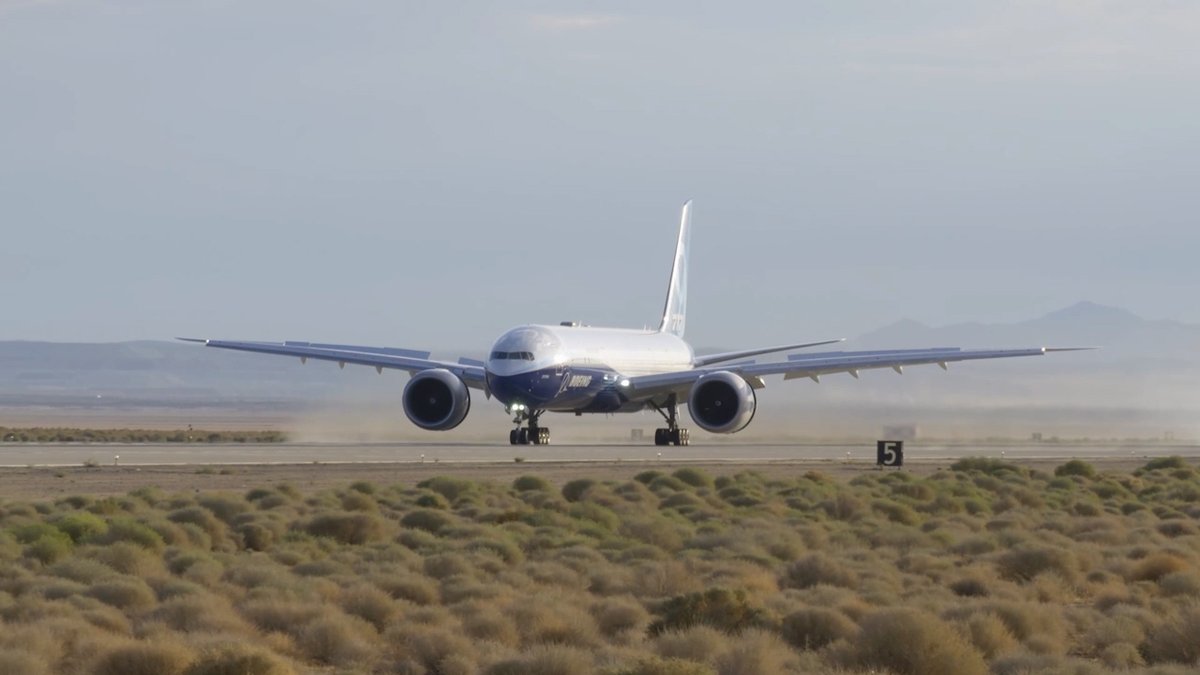
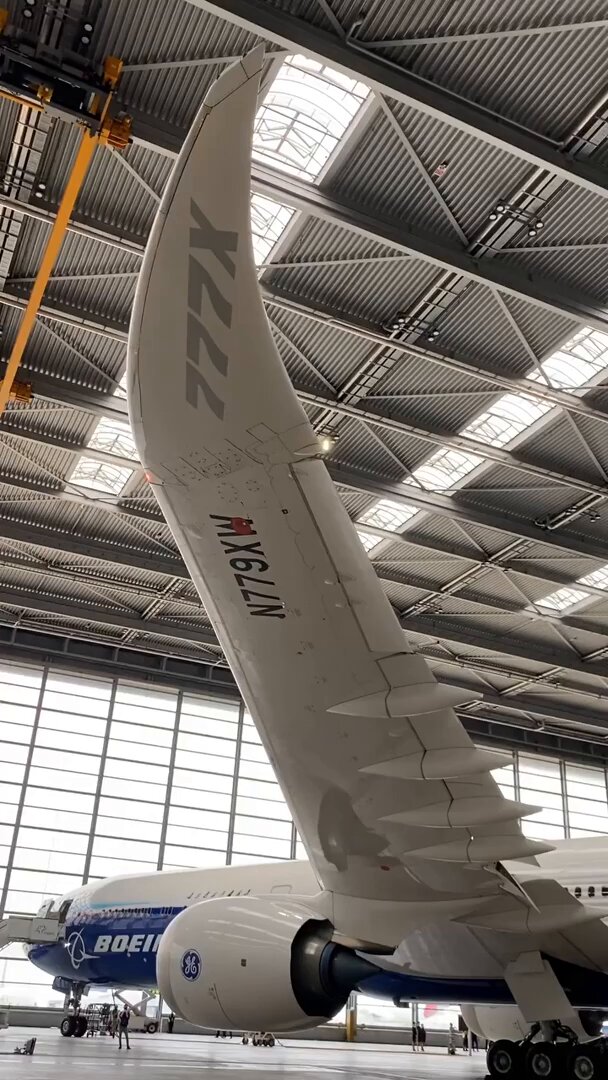
#EXTREME: The Boeing 777-9 successfully completes maximum brake energy testing, aborting takeoff at 190 knots with full weight, relying entirely on brakes heated beyond 2,500°F (1371°C). #777X #Boeing777X

43,498 Aufrufe • vor 4 Monaten •via X (Twitter)

0 Kommentare

Keine Kommentare verfügbar

Kommentare vom Original-Post werden hier angezeigt

Ähnliche Videos

Evaluation Results Note: Technicians translated Russian instrument labels, added U.S. gauges (e.g., accelerometer, temperature probe), checked for booby traps, and modified minor systems (e.g., using standard JP-1 fuel and hydraulic fluid mixtures). Testing and Observations - The MiG was structurally sound, with good workmanship in critical areas but some neglect elsewhere. It had a clean aerodynamic look, negative wing dihedral, large rudder, and wing fences for better low-speed handling. - First flight by Captain Collins; subsequent flights included chase by F-86s, showing the MiG's superior acceleration and climb due to lower thrust loading. - Handling was conventional at medium/low speeds; landing speeds were similar to the F-80 (approach ~120 knots, touchdown ~105 knots). - Armament: Unique quick-swap package with two 23mm and one 37mm cannon under the intake, allowing fast rearming. Fired for only ~6 seconds continuously (vs. F-86's 14 seconds). Tests included strafing runs and static firing; casings/links jettisoned. - Performance data matched prior intelligence remarkably well. Strengths (Desirable Features) - Excellent high-altitude capability (reached 55,000 ft; F-86 max ~51,000 ft). - Superior rate of climb (45,000 ft in 9 minutes vs. F-86's 13 minutes). - Rapid acceleration from low speeds. - Short turning radius (effective in low-speed maneuvers). - Short takeoff/landing distances. Weaknesses (Undesirable Features) - Became uncontrollable above ~Mach 0.94 in dives (recovered only in denser air); F-86 remained controllable at higher speeds. - Slightly lower top speed than F-86 at all altitudes. - Poor handling at high speeds (small ailerons, ineffective elevators → slow roll rate). - Poor lateral-directional stability at high altitudes. - Inadequate cockpit features: poor rear visibility, inadequate defrosting, extreme cabin temperatures (up to 42°C low, freezing high), non-self-sealing fuel tanks, oxygen/cabin systems needing constant attention. - Limited ammunition duration and other equipment quirks. Overall Assessment The MiG-15 was a formidable but inferior fighter compared to the F-86 Sabre. Its advantages shone in climb, altitude, and low-speed maneuverability, but the F-86 excelled in high-speed control, handling, and pilot-friendly systems. The reported 13:1 kill ratio favoring F-86s over MiGs was attributed to superior aircraft design and better-trained pilots. After just 4 days and 11 flights, the MiG's capabilities were fully understood—no secrets remained.

Aviation Archive - Tim Farmer

13,707 Aufrufe • vor 5 Monaten

🇮🇷| Iran now competes with the US & China on advanced Nano-Insulation technology, used currently by NASA Iranian scientists have successfully localized a state-of-the-art nano-insulation material — the very same class of technology used by NASA to protect spacecraft and astronaut equipment against the most extreme environmental conditions. When the pores of a material are engineered at the nanoscale, they effectively block any transfer of energy through the structure. Building on this principle, an Iranian knowledge-based company has developed and commercialized 3 types of advanced insulation products designed for the industrial, energy, and construction sectors. • Aerogel Blanket: Tailored for use in refineries, petrochemical complexes, and power plants, this flexible blanket withstands temperatures ranging from –200 °C to +650 °C in a single system. • Aerogel Granules: Recognized as the lightest commercial solid in the world, these granules are added to gypsum, cement, and resin formulations to enhance thermal resistance while reducing weight. • Aerogel Powder (Sprayable Form): Derived from the same nanomaterial, this powder serves as the base for a sprayable coating that can easily cover complex geometries and metallic surfaces. Once applied, it creates a powerful barrier against heat, moisture, and even sound. Despite being 99% air, the aerogel blocks energy loss 6x more effectively than conventional insulators.

Arya - آریا

76,751 Aufrufe • vor 10 Monaten

US firm demos millimetre wave drilling tech to dig world’s deepest hole for power | Mrigakshi Dixit, Interesting Engineering Recently, millimeter wave drilling was demonstrated on a full-scale oil and gas rig in Houston, Texas. At present, the oil and gas industry is a major energy provider, delivering terawatts of power globally. Now, there’s an opportunity to leverage this existing infrastructure to tap into superhot geothermal energy, opening a new frontier for clean, abundant power. Founded in 2018, Quaise Energy’s primary goal is to revolutionize the energy landscape by harnessing superdeep geothermal energy. They aim to achieve this by deploying novel millimeter wave drilling technology. This technology is capable of reaching depths beyond conventional drilling limits, where temperatures are hot enough to provide abundant and globally accessible clean energy. Recently, millimeter wave drilling was demonstrated on a full-scale oil and gas rig in Houston, Texas. “This is the first-ever hybrid drilling rig, combining conventional and millimeter wave capabilities,” the company noted. It added that this development “puts us one step closer to superhot geothermal power production.” Geothermal hotspot lies miles deep The company says that the oil and gas industry operates on a massive scale, drilling around 70,000 wells annually worldwide using nearly 2,000 rigs. This extensive infrastructure and experience in large-scale operations are precisely what the geothermal sector needs to expand and become a more significant energy source. “By using these resources to drill superhot geothermal wells, we can generate abundant baseload power in record time. There’s no other energy solution capable of the same scale and speed,” it noted. To access geothermal hotspots, the company plans to drill wells ranging from two to twelve miles deep. This ambitious undertaking surpasses the depth of Russia’s Kola Borehole (7.6 miles). At these extreme depths exists “superhot rock,” where temperatures exceed 375°C (about 700°F). Superhot rocks could increase geothermal energy output, aligning with the U.S. Department of Energy’s goal to boost geothermal power production by 20 times in the coming years. Currently, geothermal energy accounts for less than 1% of total electricity in the U.S. The key hurdle is that conventional drilling technology cannot reach these extreme depths. This is precisely the problem that millimeter wave drilling technology is designed to overcome. The novel drilling method uses a gyrotron, a device that generates powerful, high-frequency millimeter waves. These waves are so intense that they can literally vaporize rock, functioning like a “microwave on steroids” to bore deep into the Earth. Technology demonstration Currently, Quaise Energy and Nabors Industries are running comprehensive tests to perfect the integration of their new drilling technology with existing oil and gas rigs. “We’ve taken a full-scale drilling rig and integrated our millimeter wave drilling system. We call it a hybrid rig, one that can perform both conventional and millimeter wave drilling to unlock geothermal energy at great depths all around the world,” noted Andres Calabressi, head of manufacturing at Quaise. New Atlas reported that Quaise successfully melted a hole into a granite/basalt rock mixture in a full-scale demonstration. They achieved this by powering a 100-kW gyrotron with 50,000 volts DC, connected to a Nabors F rig. During the demo, the drill operated at approximately 48 kW, burning through rock at a rate of 0.8 inches (2 cm) per minute. Read more:

Owen Gregorian

43,798 Aufrufe • vor 1 Jahr

The U.S. unveils it's new F-47 stealth fighter, the centerpiece of the NGAD program, a "family of systems" designed to integrate advanced manned and unmanned platforms, including Collaborative Combat Aircraft (CCA) drones. Announced by President Donald Trump alongside Secretary of Defense Pete Hegseth and Air Force Chief of Staff Gen. David Allvin, the F-47 is described as the "most advanced, most capable, most lethal aircraft ever built." It reportedly builds on a prototype that has been secretly flying for nearly five years, suggesting significant testing and refinement prior to its public unveiling. The aircraft is engineered for speed, stealth, and adaptability, with a focus on countering advanced threats from nations like China, which has also been developing sixth-generation capabilities. Boeing’s victory over Lockheed Martin for the NGAD contract, valued at approximately $20 billion for the Engineering and Manufacturing Development (EMD) phase, marks a critical win for the company amid its recent struggles in defense and commercial sectors. The F-47 is expected to enter service in the 2030s, with each unit potentially costing upwards of $300 million, reflecting its cutting-edge technology. Its development emphasizes rapid adaptability to emerging threats, leveraging advanced manufacturing and an open architecture design to allow for continual upgrades. Since exact specifications remain classified or undisclosed as of now, the following are informed projections based on NGAD program objectives, statements from officials, and sixth-generation fighter trends. Designation: Boeing F-47 Manufacturer: Boeing Phantom Works Role: Air dominance fighter with multi-role capabilities (air-to-air and air-to-ground) Crew: Likely manned with optional unmanned configuration, aligning with sixth-generation flexibility Dimensions: Larger than the F-22 and F-35 to accommodate greater range and payload; exact size undisclosed but possibly exceeding 60 feet in length and a wingspan over 40 feet Powerplant: Expected to use adaptive cycle engines from the Next Generation Adaptive Propulsion (NGAP) program—either General Electric XA102 or Pratt & Whitney XA103. These engines feature a three-stream architecture, offering over 20% better fuel efficiency, increased thrust (potentially 45,000-50,000 lbf per engine), and enhanced electrical output for directed-energy weapons. Speed: Likely exceeds Mach 2 (super cruise capable—sustained supersonic flight without afterburners), surpassing the F-22’s Mach 1.8 super cruise Range: Combat radius projected at 1,000-1,500 nautical miles (unrefueled), tailored for Indo-Pacific operations, significantly greater than the F-22’s 600 nautical miles or F-35’s 670 nautical miles Stealth: Advanced stealth features, including a tailless design, next-generation coatings, and materials to reduce radar, infrared, and acoustic signatures beyond fifth-generation standards Payload: Larger internal weapons bays (possibly 20-23 feet long) to carry advanced munitions like the AIM-174, hypersonic missiles, and future cruise missiles, with external hardpoints available at the cost of stealth Sensors and Avionics: AI-enhanced sensor suite for unmatched situational awareness, integrating radar, infrared search and track (IRST), and electronic warfare systems; likely includes "smart skins" with embedded sensors for reduced drag and improved performance Networking: Maximum connectivity for real-time data sharing with satellites, drones, and other platforms, supported by a robust, jam-resistant data link Additional Features: Potential for directed-energy (laser) weapons to counter missiles and drones Integration with CCA drones for expanded mission options (e.g., extra munitions, electronic warfare) Open architecture for rapid upgrades and mission-specific customization Key Highlights Human-Machine Teaming: The F-47 is designed to "unlock the magic" of human-machine collaboration, pairing pilots with AI-driven systems and autonomous drones to enhance decision-making and reduce workload. Strategic Purpose: Built to penetrate contested environments, countering advanced air defenses and stealth fighters from adversaries like China, with a focus on long-range engagements over vast theaters. Development Timeline: Prototypes have been flying since at least 2020, with full operational capability targeted for the 2030s, replacing the F-22 incrementally as numbers grow. Cost and Scale: Estimated at $300 million per unit, with plans for roughly 200 manned aircraft, though this is a planning figure subject to change. The F-47’s exact design and full capabilities remain shrouded in secrecy, typical of NGAD’s classified nature, but its unveiling signals a bold step forward in U.S. air power. Its blend of stealth, speed, range, and technological integration positions it as a cornerstone of future aerial warfare, though its high cost and complexity will likely spark ongoing debate about affordability and strategic priorities. U.S. military technology will continue to dominate all other nations like it always has.

The SCIF

453,624 Aufrufe • vor 1 Jahr

For almost the entire history of fighter aviation, one rule remained unchanged, Avoid the stall. At extreme angles of attack, airflow separates from the wings and control surfaces lose effectiveness. The aircraft enters a region where pilots have very little authority or control over the aircraft. NASA decided to ask a different question, What if a fighter could remain controllable after entering the stall? Between 1987 and 1996, NASA, the USA Navy and McDonnell Douglas transformed a pre-production FA -18 Hornet into the High Alpha Research Vehicle (HARV) a flying laboratory designed to explore flight beyond conventional aerodynamic limits. The solution was unlike anything seen on an operational fighter at the time across the world. Instead of relying only on aerodynamic control surfaces, engineers installed six thrust-vectoring paddles around the exhaust of two General Electric F404 engines. These massive control surfaces redirected engine thrust itself, allowing the aircraft to manoeuvre when normal controls were becoming ineffective. But making it work required solving an extreme materials challenge. The paddles sat directly in the engine exhaust stream, exposed to enormous temperatures and mechanical forces. They were built using Inconel, a nickel-based superalloy designed to maintain strength in extreme heat. Special actuation systems had to move these structures precisely while surviving repeated high-temperature operation, all were purpose built. The modification added around 2,200 lb (1,000 kg) of thrust-vectoring hardware alone, turning the F/A-18 into one of the most heavily instrumented research aircraft of its era. HARV completed 385 research flights in Area 51, demonstrating controlled flight at around 70° angle of attack, a regime where conventional fighters would normally lose control. The data collected helped shape the future of advanced fighter design, influencing later programs including the F-22 Raptor, where thrust-vectoring became an operational capability. HARV was built as a research aircraft with a clear combat purpose, to understand how far fighter manoeuvrability could be pushed. What followed next was full scale implementation on F-22 Raptor which to this day is considered the most potent stealth fighter aircraft ever designed and built at scale. Source :- NASA

Ammanichanda

34,009 Aufrufe • vor 11 Tagen

🚨 The balance of power in the Strait of Hormuz is shifting dramatically. Iran, which once believed it controlled this vital waterway with its fast boats, now faces a shocking reality. The arrival of the amphibious assault ship USS Tripoli at the head of a Marine Expeditionary Unit, including the 31st Reconnaissance Battalion, represents an unprecedented nightmare for the Iranian regime. This elite force of approximately 2,500 troops is moving at maximum speed toward the region, signaling Washington’s shift from airstrikes to a potential “boots on the ground” option. Known as “Force 911,” these units are not ordinary reinforcements—they are self-contained, integrated forces combining ground combat elements with artillery, amphibious vehicles, fighter jets like F-35s, and attack helicopters, effectively turning the ship into a miniature aircraft carrier operating in the heart of the Strait. Primary objective: regain control over the Strait of Hormuz from the Revolutionary Guard, which has disrupted global shipping. The number of transiting ships dropped to just 77 in early March, compared to over 1,000 in the previous year. With this deployment, all military options are on the table: from rapid raids on islands used by the Guard as missile and drone launch points, to full control of strategic sites like Kharg Island, Iran’s economic lifeline and source of roughly 90% of its oil exports. Missions may also include highly sensitive tasks, such as securing enriched uranium stocks to prevent any “dirty bomb” scenario, or collaborating with the CIA and Mossad to engage opposition groups and build an internal resistance movement to overthrow the regime. This marks a new phase that goes beyond traditional deterrence, putting Tehran’s influence and the regime’s existence at stake. These special forces could fundamentally shift the balance of power internally and potentially end the regime’s dominance forever.

The Middle East

563,316 Aufrufe • vor 5 Monaten

Watch this new ad first (agency: Talented). Then read the perspective below. ... ... ... ... ... ... ... ... The best uses of s****l innuendo or taboo references in advertising work because the product or the category earns the reference. A c***om ad using double entendre is doing thematic work. A men's underwear ad deploying the female gaze is commenting on the product's relationship to the body and desire. The risqué element and the product/category are in the same universe in terms of context and meaning. Here, the O***F**s reference is pure bait-and-switch. The "joke" is entirely in the gap between what you feared the ad was about and what it actually sells. Once the laugh lands, the fan has zero relationship to s****lity, desire, money, or anything O***F**s actually connotes. The category is just... there. This is sometimes called borrowed interest in advertising... using an emotionally charged idea that has nothing to do with your product to generate attention. It can work, but it's considered a crutch by serious creative standards, because the memorability attaches to the hook, not the brand. People tend to remember it as, "that O***F**s wala ad". There's a specific sensibility at work here: the ironic, terminally-online, "lol imagine if your mom heard the word O***F**s" energy. That is very native to a particular demographic. For that demographic, the reference lands as culturally fluent and funny. But it assumes that O***F**s sits in the same semi-taboo, widely-understood cultural space for a 45-year-old homemaker in Indore as it does for a 24-year-old copywriter in Bangalore. That's a significant assumption and a stretch. Worse, the ad arguably needs the older generation's confusion to function. The joke only works if Mummy-Papa-Daadu don't know what O***F**s is. Which means the creative is laughing at a gap in cultural knowledge rather than finding something universally true about the product, the category, or the audience. That's a very, very thin foundation. Of course, Flipkart's actual goal with these ads may not be deep brand-building at all, particularly since it is not selling the Flipkart brand here but merely selling a 'sales' promo for air conditioners (all brands). The goal might simply be virality and search traffic around the sale period. By that narrow metric, the O***F**s hook works perfectly regardless of product or brand or category fit. The disconnect almost doesn't matter if the goal is just "get clicked and shared". But that's a tactical win at the cost of craft, and at the cost of the brand. A more disciplined creative team would have asked "why does this product deserve this reference?" before signing off. The fact that no good answer exists (except, in an utterly juvenile way, "we are selling beyond fans, and the word has 'fans') suggests the reference came first and the category was fitted to it after... which is usually how mediocre advertising gets made. #advertising #marketing

Karthik 🇮🇳

56,800 Aufrufe • vor 4 Monaten

As a Member State of the International Civil Aviation Organization (ICAO), India is obligated to comply with the provisions of ICAO Annex 13, which governs aircraft accident and incident investigations. Under Annex 13, the investigating authority—in this case, India's Aircraft Accident Investigation Bureau (AAIB)—must: 1. Submit a Preliminary Report within 30 days of the occurrence. 2. Make the Final Report publicly available as soon as possible and, where feasible, within 12 months of the accident. 3. If the Final Report cannot be completed within 12 months, publish an Interim Statement on each anniversary of the occurrence, outlining the progress of the investigation and any safety issues identified. Importantly, ICAO emphasizes that preliminary reports are not substitutes for final reports. Preliminary reports provide only factual information available at an early stage and do not contain a comprehensive analysis of the systemic, operational, technical, or human factors that may have contributed to an accident. The AAIB complied with the first requirement by releasing its preliminary report on 12 July 2025, exactly one month after the accident. As the first anniversary of the crash approaches on 12 June 2026, attention is now focused on whether the AAIB will publish the Final Report or issue an Interim Statement in accordance with the requirements of Annex 13. On 12 June 2025, Air India Flight AI171, operated by a Boeing 787-8 Dreamliner registered VT-ANB, departed Ahmedabad, India, bound for London Gatwick. The aircraft was carrying 230 passengers, 10 cabin crew members, and 2 pilots. Shortly after takeoff, the aircraft suffered a catastrophic loss of thrust and crashed outside the airport boundary. Of the 242 people onboard, only one passenger survived, making it one of the deadliest aviation accidents involving a Boeing 787 and one of India's worst air disasters. According to the AAIB's preliminary findings, the aircraft reached a maximum recorded airspeed of approximately 180 knots indicated airspeed (IAS) at 08:08:42 UTC during its initial climb. Immediately thereafter, the Engine 1 and Engine 2 fuel cutoff switches transitioned from RUN to CUTOFF one second apart. As fuel flow to both engines ceased, engine parameters began decreasing from their takeoff values. Cockpit Voice Recorder (CVR) data captured a brief exchange between the pilots. One pilot was heard asking the other why he had cut off the fuel. The other pilot replied that he had not done so. Airport CCTV footage showed the deployment of the Ram Air Turbine (RAT) shortly after liftoff, indicating a significant loss of electrical and hydraulic power consistent with the dual-engine power loss. Investigators also reported no significant bird activity in the vicinity of the flight path. The aircraft began losing altitude before crossing the airport perimeter wall. Flight recorder data subsequently showed attempts to recover engine power. At approximately 08:08:52 UTC, Engine 1's fuel cutoff switch moved back from CUTOFF to RUN. Two seconds later, the Auxiliary Power Unit (APU) inlet door began opening, consistent with the aircraft's automatic emergency restart logic. At 08:08:56 UTC, Engine 2's fuel cutoff switch also returned to RUN. The Full Authority Digital Engine Control (FADEC) systems on both engines initiated automatic relight sequences. Engine 1 showed signs of recovery as exhaust gas temperatures increased and core speed stabilized. Engine 2 also relit but was unable to recover sufficient core speed before impact despite repeated fuel reintroductions. At approximately 08:09:05 UTC, one of the pilots transmitted a distress call: "MAYDAY MAYDAY MAYDAY." Air Traffic Control acknowledged the transmission and requested confirmation of the callsign. No further response was received. Controllers then observed the aircraft crash beyond the airport boundary and immediately initiated emergency response procedures. The preliminary report established a sequence of events but stopped short of determining why both engine fuel cutoff switches transitioned from RUN to CUTOFF during the critical initial climb phase. It also did not assign blame, determine probable cause, or provide a complete analysis of the human, technical, operational, and systemic factors involved. We now await either the AAIB's Final Report or an Interim Statement.

Turbine Traveller

64,463 Aufrufe • vor 2 Monaten

Bach’s Prelude in C Minor, BWV 999: When the Direction Is Set from the First Note A master archer does not determine the arrow’s flight at the moment the string is released. By then, nearly everything has already been decided. The aim has been fixed. The bow has been drawn. The force has been gathered. When the arrow leaves the bow, it simply completes what was prepared long before. Bach’s Prelude in C Minor, BWV 999, unfolds in the same way. At first hearing, the piece appears to change very little. Bach maintains almost the same arpeggiated pattern throughout—each chord’s notes sounded in succession according to a single, unbroken figuration from beginning to end. The rhythm remains steady, the motion continuous, and there are no passages of technical display. Yet when the music ends, the listener senses that they have been carried to a place entirely different from where they began. This transformation does not come from a striking melody. It arises from the way Bach orders the chords themselves. In this Prelude, no chord simply appears and disappears. Each one quietly prepares the ground for the chord that follows, much as the archer draws the bowstring a little farther with every small movement. Each action readies the next. From the opening measures, Bach therefore establishes not only a destination but a living chain of relationships among the chords. Everything that comes afterward is no longer arbitrary; it is the natural consequence of what has already taken place. That is why the music carries an unbroken sense of forward motion, even while its surface remains almost unchanged. The work begins in C minor, a key whose color is dark and inwardly unsettled. Bach does not create tension through sudden leaps or sharp contrasts. Instead, he lets the bass move by the smallest steps while the arpeggio pattern continues without interruption. Each change is so slight that, heard in isolation, it seems almost insignificant. Yet when the steps are joined, each one adds a further measure of tension. It is like the archer drawing the bowstring by degrees—without any dramatic gesture—storing energy for the release that must eventually come. Near measure 11, new colors begin to appear, most notably the Neapolitan chord on D-flat. The listener does not need to know its name to feel what it does. From this point the forward impulse already set in motion grows stronger still. The music does not turn aside; it simply draws the string tighter. The most remarkable passage lies at the center of the Prelude. From measure 13 to measure 33, Bach holds a single D in the bass for twenty-one measures while the chords above continue to change. On the surface the music seems to slow. In truth, this is the moment when the archer has drawn the bow to its fullest extent and now holds the posture firm. He has not released. He has not relaxed. While the bass note D remains motionless, every new chord above adds one more increment of tension. The entire energy of the work is held, gathered, and compressed. The listener may not be able to name what is happening, yet feels the music approaching a point that can no longer be delayed. This is not a stopping. It is the ripening of force. And then the moment comes. In the final measure the G-major chord sounds like the release of the bowstring. Nothing about it feels sudden, for the whole preceding process has been leading to this single instant. The closing chord is not an idea introduced at the last moment; it is the inevitable fruit of the chain of relationships established from the first measure. Yet Bach does not let the arrow fall. Instead of returning to C minor, he ends on a half cadence upon G major. The causal sequence he has built is therefore left open. The arrow has left the string, but the listener is not shown where it lands. The energy of the entire Prelude continues its flight beyond the final note. This is Bach’s particular mastery. He does not generate development through large turning points, but through an absolute inner order. Each chord grows out of the one before it and, at the same time, prepares the one that follows. It is this chain of causality that gives the Prelude its feeling of being at once entirely natural and entirely necessary. By the end, the listener does not feel that Bach has chosen a conclusion. They feel that the music could not have ended any other way. Perhaps this principle is not confined to music alone. An arrow does not reach its mark through the instant of release. Its path was decided the moment the archer set the aim and then held that aim steady through every stage of the draw. A single small deviation, and all the force so carefully stored loses its meaning. It is the same with human life. Once a person has found a goal worthy of pursuit, what matters most is no longer the moments of sudden inspiration, but the quiet capacity to remain faithful to the direction already chosen. Each small decision, each time one resists the urge to turn aside, each step taken even when the outcome is not yet visible—these are like drawing the bowstring a little farther. Taken one by one they may seem of little consequence, yet over time they accumulate into the strength that carries a person toward the goal. Perhaps this, too, is what Bach placed within Prelude BWV 999. From the very first note he established both a destination and the chain of relationships that would lead to it. Every chord remained true to the direction set at the beginning. It is this steadfastness that makes the final chord feel not like chance, but like necessity. And just as the arrow keeps flying after it has left the bow, Bach closes the Prelude on an open harmony—as if to remind us that once the direction has been set, the journey continues onward. One may hear Bach’s Prelude in C Minor, BWV 999 performed by David Tayler on the archlute. With the instrument’s warm, resonant voice, the Prelude’s quiet architecture comes into clear relief, allowing each harmony to unfold with unhurried clarity and revealing the quiet necessity of every step in Bach’s musical design.

🌸🎵 Beautiful Melody 🎶💖

16,880 Aufrufe • vor 1 Monat

The sun produces more energy in one second than humanity has used in its entire existence. SpaceX thinks the only way to actually use more of it is to leave Earth. Here's why Elon Musk is racing to build data centers in space: 1. Musk frames civilizational progress using the Kardashev scale, a measurement created by a Russian physicist that ranks civilizations by how much energy they can harness. Type one means harnessing a planet's full energy, type two means harnessing a star's energy, and type three means harnessing a galaxy's energy. 2. Right now, humanity registers as essentially nonexistent on this scale. We harness less than a trillionth of the sun's total power output. Musk says we are not even at the level of a micro soul on the scale. 3. The sun makes up 99.86 percent of all mass in the entire solar system. Earth is so small in comparison that it falls into the leftover miscellaneous category alongside everything that is not the sun or Jupiter. 4. Only about half a billionth of the sun's energy even reaches Earth's cross section, and most of that cannot be used because 70 percent of Earth is covered in water, and much of the remaining land is uninhabitable terrain like Antarctica and Siberia. 5. To meaningfully climb the Kardashev scale, humanity has to go to space. Reaching even one millionth of the sun's total energy output would require increasing civilizational energy use by more than a million times current levels. 6. Getting to just 1 percent of the sun's energy would make a civilization vastly more powerful than ours is today. Musk says even reaching that level would represent an extremely advanced civilization. 7. Three core requirements stand between humanity and this goal: mass to orbit capability, a massive amount of solar power, and enough AI chips to actually use that power. 8. Starship solves the mass to orbit problem. It is designed to be the first rocket in history with full and rapid reusability, a breakthrough Musk calls absolutely necessary for making life multi-planetary and for ascending the Kardashev scale at all. 9. Reusability is the same principle behind every successful mode of transport. Cars, planes, boats, and bicycles are all reusable. If airplanes were thrown away after every flight, flying would be far too expensive for anyone to use. 10. Starship is already the largest, heaviest, and most powerful flying object ever built. Version 3 produces more than double the thrust of the Saturn V moon rocket, and version 4 is expected to produce nearly three times that thrust. 11. SpaceX currently delivers between 85 and 90 percent of all mass that reaches orbit from Earth using Falcon 9 and Falcon Heavy. With Starship, the company aims to scale mass to orbit from roughly 2,500 tons a year to millions of tons a year within about three years. 12. The proposed AI satellites are actually simpler to build than Starlink satellites. They mainly need solar cells, radiators, and laser links, without the complex phased array and parabolic antennas that Starlink satellites require. 13. The first version of the SpaceX AI satellite targets 150 kilowatts of peak power and 120 kilowatts of sustained power, roughly matching the output of a single Nvidia GB300 compute rack here on Earth. 14. These satellites will connect to each other through laser links and to the Starlink constellation, which then relays data to the ground. Despite orbiting 600 to 800 kilometers above Earth, the added latency is roughly only 3 milliseconds. 15. Heat management in space is actually easier than on Earth because radiators can simply release heat directly into the vacuum, removing the need for the massive cooling infrastructure required by ground based data centers. 16. SpaceX already operates around 10,000 Starlink satellites and claims to be the only company with real experience safely operating constellations at that scale, which gives them a head start in managing potentially thousands or even up to a million AI satellites. 17. To actually scale chip production to the levels needed, SpaceX is planning what it calls a Terafab, a chip manufacturing facility expected to span roughly 100 million square feet, about ten times the size of the existing Tesla Gigafactory in Texas. 18. The rough timeline targets reaching an annualized rate of 1 gigawatt of space based AI compute by the end of next year, scaling by roughly 10x per year afterward, eventually aiming for a terawatt per year, which is twice the entire current electricity consumption of the United States. 19. To push three orders of magnitude beyond even that terawatt goal, Musk describes building a mass driver on the moon, an electromagnetic rail gun style system that uses the moon's lack of atmosphere and lower gravity to launch satellites into space without needing a rocket at all. 20. Musk frames the long term vision in deeply personal terms. If enough mass and infrastructure eventually moves to the moon, it would become accessible enough that almost anyone who wants to go could go, and potentially even live there permanently. Follow Brad if you want more content on business, mindset & life changing ideas.

Brad

12,955 Aufrufe • vor 1 Monat

🚨12 HOUR NEWS RECAP 1.⁠ LA descended into chaos for a second night as rioters attacked the ICE building, throwing explosives at windows and trying to break in. Trump deployed the National Guard to bring the protests under control. 2.⁠ ⁠Colombian Senator Miguel Uribe Turbay, 39, was shot twice from behind at a campaign rally in Bogotá and is now fighting for his life in critical condition. The suspect? A 15-year-old caught at the scene with a gun and a leg injury. 3.⁠ ⁠Trump blasted Fed Chair Jerome Powell again for not reducing interest rates: “We have a lot of debt coming due because Biden had all short-term debt mostly. We would get a lower interest rate if this guy would lower rates.” 4.⁠ Russian General Alexander Zorin said trains and trucks carrying the bodies of Ukrainian soldiers are being sent to the border. This comes after Russia accused Ukraine of postponing a prisoner exchange and refusing to accept the bodies, which Kyiv denied. 5.⁠ California Rep. Norma Torres unleashed on federal immigration agents, blaming ICE for the chaos in Los Angeles: “ICE, get the f*ck out of LA so that order can be restored.” 6.⁠ ⁠NASA is in full-blown panic mode, telling other rocket manufacturers to up their game after Trump threatened to cancel SpaceX’s contracts. Despite billions in funding, competitors such as Boeing have faced years of delays and are still stuck trying to play catch up. 7.⁠ ⁠The EU condemned El Salvador’s new Foreign Agents Law as a threat to civil society. Bukele’s reply? Pure fire: “El Salvador regrets that a bloc which is aging, overregulated, energy-dependent, tech-lagging, and led by unelected bureaucrats still insists on lecturing the rest of the world.” 8.⁠ ⁠The largest U.S military parade in decades is set for June 14: 7,000 soldiers, 7 million pounds of tanks, artillery, and armored vehicles rolling down Constitution Avenue. Steel plates are being laid to protect D.C.'s streets from the crushing weight of Abrams tanks, Bradleys, and Strykers. 9.⁠ A secret FSB memo revealed that while Moscow publicly courts China as a “no limits” partner, Russian intelligence sees Beijing as a top espionage threat. It describes China as recruiting Russian scientists, probing military secrets, eyeing Arctic and Far East territory, and embedding spies behind mining firms and universities. 10.⁠ Helix, the humanoid logistics robot, has leveled up fast: handling everything from rigid boxes to squishy poly bags with near-human dexterity. In just 3 months it’s mastered handling warehouse packages and looks set to reshape the future of logistics.

Mario Nawfal

470,594 Aufrufe • vor 1 Jahr

💥Richmond Hill daycare killer Vinay Gupta pleads guilty to dangerous driving charges – but couldn't be bothered to show up in court Vinay Kumar Gupta of Richmond Hill was charged with one count of dangerous operation of a vehicle causing death and two counts of dangerous operation causing bodily harm. You may recall the horrific event that took place last September in Richmond Hill, Ont. A full-size Hyundai INOIQ 9 SUV crashed through the plate-glass window of the First Roots Early Education Academy daycare centre. Shockingly, the vehicle kept going, smashing through three classrooms before finally coming to a stop on the other side of the building. The carnage that resulted was sickening. Liam Riazati, 18 months old, was killed. Five other toddlers ranging in age from 18 months to three years were rushed to the hospital, two in critical condition. The 70-year-old driver of the SUV was arrested at the scene. Vinay Kumar Gupta of Richmond Hill was charged with one count of dangerous operation of a vehicle causing death and two counts of dangerous operation causing bodily harm. Last Monday, Gupta was supposed to have made his most recent court appearance in Newmarket. But when the court opened at 9:30 a.m., Gupta was a no-show. Gupta’s lawyer was a no-show. The Hindi interpreter was a no-show. Justice Edward Prutschi was not amused. Earlier this month, Gupta and his lawyer were told they had to attend court on June 22, and it had to be in person, not via Zoom. Almost two hours went by before the relevant parties were tracked down. Court resumed, via Zoom. Justice Prutschi demanded an explanation from Gupta’s lawyer as to why he and his client were not present in court. And this was the explanation: Gupta apparently needed some sort of medical procedure on his leg last Friday. And wouldn’t you know it? He needs four to six weeks of recovery time. So, even though the daycare killer knew his day in court was going to be three days after the procedure, he did not postpone it. Why would that be, given the gravity of the matter? And why didn’t his legal counsel inform the court that an in-person appearance would not happen? Unbelievable. So it was that the matter did proceed later on Monday via Zoom, with Gupta pleading guilty to all counts. Of note, during the proceeding, the Crown presented facts from the Motor Vehicle Collision Reconstruction Report. Some of these facts included: On the day of the incident (Sept. 10, 2025), the weather was sunny, and the temperature was 22 C. The daycare’s parking lot was paved asphalt in good condition. It was dry and clear at the time of the incident. The vehicle, a large Hyundai Ioniq 9 SUV, travelled approximately 18.7 metres within five seconds. It was calculated to be travelling at approximately 15 km/h through the first classroom, 14 km/h through the second and 11 km/h through the third. Tire marks located just prior to the entry point indicated an acceleration resulting from the spinning of tire. There was no evidence of braking by the SUV. As seen in the CCTV footage, the rear brake lights never illuminated. More than 14,000 IONIQ 9s were sold worldwide in the first six months of its launch in February 2025, with no safety recalls being registered. The vehicle involved was almost brand-new, registering only 2,555 km on the odometer. In a statement given to police, Gupta indicated that he had been trying to stop the vehicle before it had entered the building and thought he was pressing on the brake pedal, but it was not working. The evidence shows that he, in fact, was pressing the gas pedal, which caused the vehicle to accelerate over the curb and into the building. In addition to Liam Riazati being killed, a three-and-a-half-year-old boy suffered severe, life-altering injuries. A 22-month-old girl suffered broken bones and a head injury. (The names of both victims are protected under a publication ban.) Next up is Gupta’s sentencing hearing, which is scheduled for Dec. 8. Justice Prutschi again stressed that Gupta must be present in the courthouse on that day. We assume Gupta’s leg will sufficiently heal over the course of six months and that, hopefully, yet another unforeseen medical procedure will not be required. It was also noted by Justice Prutschi that the maximum penalty for Gupta could include a “lengthy jail sentence.” Alas, given that Gupta is now a Canadian citizen, deportation is not in the cards. David Menzies

Rebel News

23,643 Aufrufe • vor 1 Monat

The Giant American Manta Ray The Manta Ray is, without exaggeration, the most fascinating underwater drone ever built. Since I’ve been talking a lot about the seas lately and new Chinese technologies, it’s worth remembering that the United States is finalizing tests on something truly groundbreaking. Imagine a metal manta ray with a 14-meter wingspan and weighing nearly 30 tons that can be launched from any pier in the world and then simply disappears for months, or even years without ever needing a mother ship, refueling, or a crew. It glides through the ocean in absolute silence, carrying tons of sensors, mines, torpedoes, and electronic warfare equipment. It can hibernate on the seabed when it wants to save energy and surface when it needs to receive orders via satellite. This giant can deploy smaller units connected by fiber-optic cables or using acoustic communication. Estimates suggest it could travel 18,000 km or more with solid-state batteries. The secret lies in its hybrid propulsion system: the primary mode is buoyancy-driven gliding. It fills ballast tanks with seawater, dives at an angle, then expels the water and rises, converting vertical motion into horizontal forward movement with almost zero energy consumption most of the time. Only a few minutes of pump operation are needed per cycle. When it needs to maneuver quickly or sprint, it switches to conventional propellers. This combination enables autonomy that can last years, especially because the vehicle has energy-harvesting systems that capture power from the ocean’s thermal gradient (warm surface water, cold deep water) and possibly from ocean currents too. It’s a technological marvel unlike anything we’ve seen before in the military domain. The vehicle is transported in standard shipping containers and can be assembled in the field in just a few days and this means the United States can deploy it anywhere in the world without relying on large naval bases. When it enters operational service (expected between 2028 and 2032), the U.S. Navy will gain a capability far beyond any current UUV. The Manta Ray doesn’t need to return, makes no noise, leaves no logistical trace, and can loiter for extended periods waiting for orders or simply monitoring key routes. But it’s not all smooth sailing. Chinese researchers from Northwestern Polytechnical University claim they have been developing biomimetic manta ray UUVs since 2006, with six prototypes ranging from 10 to 700 kg. According to them, in 2023 a 460 kg prototype successfully passed a 1,025-meter depth test in the South China Sea, and multiple variants have completed 60-day underwater gliding missions. That’s still a much shorter endurance than the American prototype has demonstrated so far, possibly because the objectives aren’t identical. My impression is that these are somewhat different projects. While the Chinese appear to focus mainly on swarm-capable units (with potential applications in underwater reconnaissance, anti-submarine, and anti-ship tasks), the Americans are developing a single large platform optimized for long-term persistent monitoring. The U.S. project is a 30-ton drone; the Chinese ones are 10–700 kg. China also claims that in 2025 it began testing swarms of these vehicles near coral reef areas, suggesting the start of a direct race with the Americans. The fact is that more and more unmanned underwater vehicles are emerging every day, and they will pose a major threat, especially to large manned submarines. A small 100 kg UUV could damage the rudder, propeller, or another critical point of a multi-billion-dollar nuclear submarine. After a series of canceled programs in recent years, the Pentagon desperately needs a big, innovative success like the Manta Ray to reinforce its reputation for effective program management.

Patricia Marins

48,963 Aufrufe • vor 8 Monaten