Video wird geladen...

Video konnte nicht geladen werden

Zur Startseite

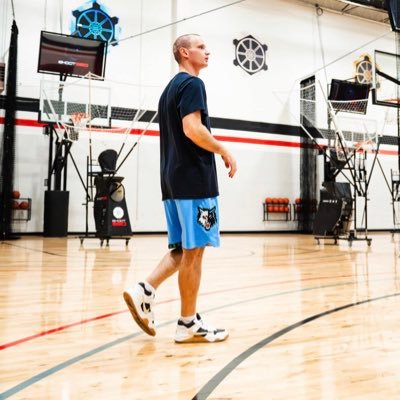
⬇️FULL HIGH-CALIBER POINT GUARD WORKOUT⬇️ 1. Heavy-Ball Pro Hops, Step Throughs🏋️ - 5x each way (repeat w/normal ball) 2. Free-Throw Lane Escapes Jumpers🥷 - 5x each way, double move and foot work focused 3. Lane Escape Counters Into 3s🎯 - must make BOTH shots for rep to count, 3x...

34,537 Aufrufe • vor 11 Monaten •via X (Twitter)

0 Kommentare

Keine Kommentare verfügbar

Kommentare vom Original-Post werden hier angezeigt

Ähnliche Videos

[CLIP] by Hand ✍️ The CLIP (Contrastive Language–Image Pre-training) model, a groundbreaking work by OpenAI, redefines the intersection of computer vision and natural language processing. It is the basis of all the multi-modal foundation models we see today. How does CLIP work? Goal: 🟨 Learn a shared embedding space for text and image [1] Given ↳ A mini batch of 3 text-image pairs ↳ OpenAI used 400 million text-image pairs to train its original CLIP model. Process 1st pair: "big table" [2] 🟪 Text → 2 Vectors (3D) ↳ Look up word embedding vectors using word2vec. [3] 🟩 Image → 2 Vectors (4D) ↳ Divide the image into two patches. ↳ Flatten each patch [4] Process other pairs ↳ Repeat [2]-[3] [5] 🟪 Text Encoder & 🟩 Image Encoder ↳ Encode input vectors into feature vectors ↳ Here, both encoders are simple one layer perceptron (linear + ReLU) ↳ In practice, the encoders are usually transformer models. [6] 🟪 🟩 Mean Pooling: 2 → 1 vector ↳ Average 2 feature vectors into a single vector by averaging across the columns ↳ The goal is to have one vector to represent each image or text [7] 🟪 🟩 -> 🟨 Projection ↳ Note that the text and image feature vectors from the encoders have different dimensions (3D vs. 4D). ↳ Use a linear layer to project image and text vectors to a 2D shared embedding space. 🏋️ Contrastive Pre-training 🏋️ [8] Prepare for MatMul ↳ Copy text vectors (T1,T2,T3) ↳ Copy the transpose of image vectors (I1,I2,I3) ↳ They are all in the 2D shared embedding space. [9] 🟦 MatMul ↳ Multiply T and I matrices. ↳ This is equivalent to taking dot product between every pair of image and text vectors. ↳ The purpose is to use dot product to estimate the similarity between a pair of image-text. [10] 🟦 Softmax: e^x ↳ Raise e to the power of the number in each cell ↳ To simplify hand calculation, we approximate e^□ with 3^□. [11] 🟦 Softmax: ∑ ↳ Sum each row for 🟩 image→🟪 text ↳ Sum each column for 🟪 text→ 🟩 image [12] 🟦 Softmax: 1 / sum ↳ Divide each element by the column sum to obtain a similarity matrix for 🟪 text→🟩 image ↳ Divide each element by the row sum to obtain a similarity matrix for 🟩 image→🟪 text [13] 🟥 Loss Gradients ↳ The "Targets" for the similarity matrices are Identity Matrices. ↳ Why? If I and T come from the same pair (i=j), we want the highest value, which is 1, and 0 otherwise. ↳ Apply the simple equation of [Similarity - Target] to compute gradients of for both directions. ↳ Why so simple? Because when Softmax and Cross-Entropy Loss are used together, the math magically works out that way. ↳ These gradients kick off the backpropagation process to update weights and biases of the encoders and projection layers (red borders).

Tom Yeh

67,864 Aufrufe • vor 2 Jahren

The Cameras ✨ Back in February I started exploring the idea of creating an art collection that doubles up as a PFP. After months of experimenting with different colour theories, art styles and AI, The Cameras are finished and ready for you to make a choice. Here’s all the info: The Cameras are built on a brand new dynamic Transient Labs contract called Collectors Choice. It works in a very similar way to now @amadon’s Doppelgänger. Each NFT points to one of multiple artworks in an array, and the collector can use the ‘ChangeURI’ function within the contract, to point to whichever artwork within the array they choose. But here’s the difference; there will be a deadline. Make as many changes as you wish, but once the deadline passes, your choice will be locked in and metadata will be frozen. To start, everyone will mint the same placeholder artwork. I will then reveal the 'Colour Series'; 70 cameras with various background colours, to choose which ever colour you want. Following that, 4 more series will be revealed sporadically, making up a total of 126 different cameras to choose from. Meaning, there’s more then enough for everyone to end up with a 1/1. However, chances are, someone will choose the same camera as you. You’ll then have a second decision to make, are you happy sharing the art and holding an edition, or will you choose different art for a 1/1? For me, once all the metadata is locked in, rarity won’t really matter. But the total number of cameras in each series, total number of 1/1s, total number of editions and total count of each edition, will all be decided by the collectors. Get ready to make your choice. - Mint Details: • Supply: 70 • Mint Price: 0.35 eth • 48hr Pre-Sale Mint: Aug 14th (7pm UTC) Collectors of 0xdgb’s 1/1 art + a few select people will get early access for 48 hours. • Public Mint: Aug 16th (7pm UTC) - Mint URL, series reveals, the deadline and instructions on how to choose your camera will be announced when needed.

dgb

45,569 Aufrufe • vor 3 Jahren

Benefits of strengthening our shoulder blade muscles: - Improves your posture. - Relieves neck and shoulder stiffness. - Resolves chronic pain. - Increases push and pull power. Focus on these forgotten heroes for the rest of December. You'll feel and look different by the end of the year. Scapular imbalances are typical in my assessments of clients with chronic pain and posture problems. They have so little muscle mass and strength there that they can barely support their shoulder blades. One side is often way too strong compared to the other. It's normal to have a more dominant side, but too much of a difference will affect you negatively over time. Do 3-5 sets of these exercises twice a week: - DB = Dumbbell. - BW = Body weight. - Rest 60s between exercises. - Rest 48-72 hours between workouts. - All exercises can be done without equipment. Week 1 and Week 3 Day 1 1 - DB Side-Lying External Rotations, 10-12 reps/arm (0:02) 2 - DB Bent-Over Scapular Retractions, 10-12 reps/arm (0:07) Day 2 3 - Unilateral DB T3 Raises, 10-12 reps/arm (0:12) 4 - Bench-Supported Reverse Flys, 10-12 reps (0:16) Week 2 and Week 4 Day 3 5 - Cable Standing 90 Degree External Rotation, 15-20 reps/arm (0:22) 6 - Standing Scapular Retraction, 15-20 reps with a 3s hold each rep (0:27) Day 4 7 - Lying Prone Y Raises, 10-12 reps with a 3s hold at the top of each rep (0:31) 8 - Bent-Over Reverse Fly, 15-20 reps (0:37) // I often discuss these exercises on my timeline because they have helped so many of my clients over the years. Focus on your shoulder blade muscles, and watch your body transform for the new year.

Alex Bernier

21,924 Aufrufe • vor 1 Jahr