Video wird geladen...

Video konnte nicht geladen werden

Zur Startseite

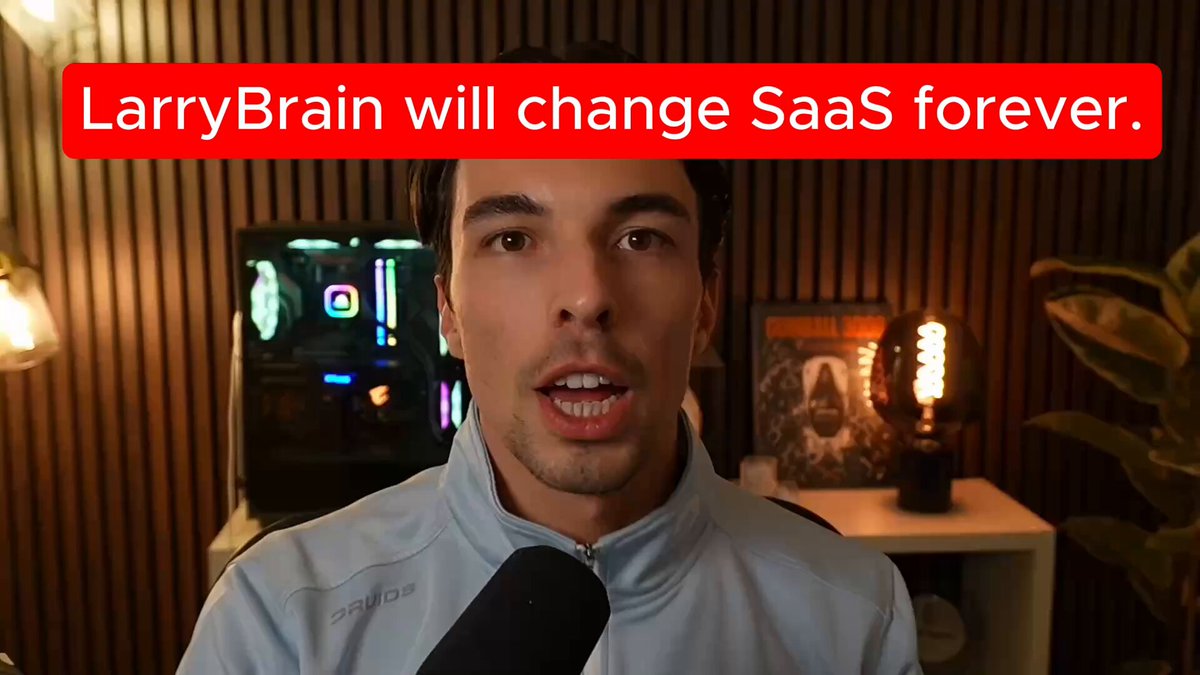
Getting your first 100 SaaS customers has almost nothing to do with going viral... Joseph has scaled two separate products past $3M in ARR. His current SaaS does over $250,000 a month. His approach? Capture the low-hanging fruit first. > That means things you can do in the next...

15,362 Aufrufe • vor 1 Monat •via X (Twitter)

0 Kommentare

Keine Kommentare verfügbar

Kommentare vom Original-Post werden hier angezeigt

Ähnliche Videos

From Eric Vishria on how the top AI founders are building products completely opposite of the SaaS era: "One of the things that is really different in the AI world versus the SaaS world, is that in the SaaS world, over and over again, you had people who really understood the customer. And the problem. And then they understood a domain. They understood what the technology was more or less capable of. But it wasn't a real question of if you could build something or not. For example, take Salesforce, Workday, and ServiceNow. CRM existed before Salesforce. HR management existed before Workday. Same thing with ServiceNow. So in every case, Salesforce followed Siebel. Workday followed Peoplesoft. ServiceNow followed Peregrine and Remedy, and others. So they were just kind of, cloud SaaS versions of the prior generation product. They just understood the customers. They understood the problem. And they were just like, here's a better version. And that evolved a little bit over time in SaaS land. But that's what it is. And so product development in that way was done by people who really understood the customer and the problems. And then just took advantage of the next wave. And this is almost diametrically opposite of product development in the AI era. When I look at the teams that are having the most success today, they have intimate knowledge of the models. They are right on the frontier of understanding which models are better at what, and why, and when. And what they're going to be good at and what they're not going to be good at. And what they're spending their time on, is figuring out how do I apply this capability of this model to this domain or to this user. So they're actually working inside out or technology out, versus customer problem in. And of course, they understand the customer problem. And a lot of times they have firsthand knowledge of it. But they're really close to the metal and capability, and they're applying it. And I think this is a really different way to develop products than in SaaS. I started my career as a product manager a long time ago, and it's almost the complete opposite of everything you learned. "Listen to the customer, understand it, then bring it back to the engineering and product teams." If you did that right now, ask a bunch of customers what they want out of AI, and you brought it back, for the most part, it may not be possible today with today's technology. Whereas the teams that are winning right now really understand the technology and are applying it out. And so I think this reversal matters. I think it's a big difference in terms of how companies are getting built. And maybe even the types of entrepreneurs that will be successful. I'm not sure. You're seeing some real change there. Look at the Bret Taylor's at Sierra. That's a super, super technical founder who really gets it. Brett and Clay really get it. You look at Michael and his co-founders at Cursor. They're super technical founders and they get it. They all really understand what these things can and can't do. And that's a pretty different dynamic relative to the way the best SaaS companies got built." Link in bio for the full conversation going deep on the current class of startups going from zero to $100m+ in ARR within 12 months.

The Peel

209,752 Aufrufe • vor 1 Jahr