正在加载视频...
视频加载失败
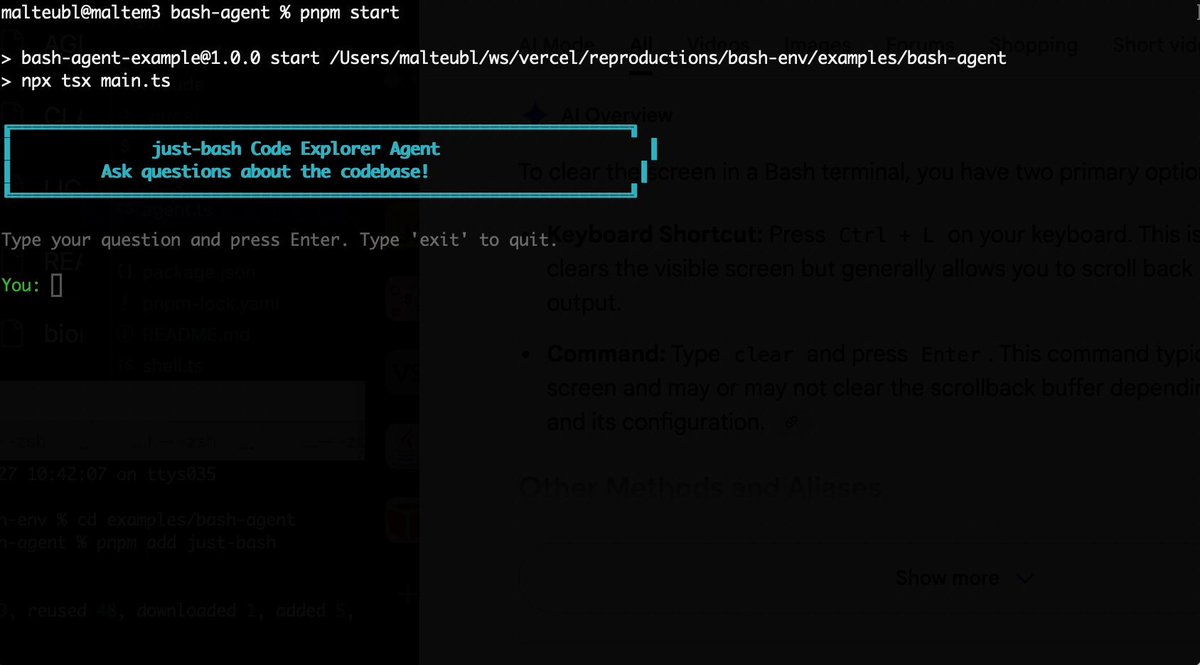
Here's a video of our Dell Technologies 7975 Precision workstation running local AI for coding agents. It features dual RTX6000 Blackwell GPU w/ 96GB each, so I'm running Qwen 3B on it. I had ChatGPT's desktop app set it all up and configure the integration into VS Code as... show more

25,558 次观看 • 8 天前 •via X (Twitter)
25 条评论

@Dell when you say "Qwen 3B" are you referring to their ancient Qwen2.5-3B model older than Jesus? o__O

@Dell Sorry, it's Qwen3.8 Flash Extra High. Not sure the size/quant.

@Dell I wish I was young enough to know what any of this meant, but I’m excited!

@Dell Pretty nice Dave. Best I have at the moment is a HP Z8, dual 8160's, 256GB with dual Nvida Quadro RTX4000's /w 8GB each. I'll get there one of these days. Cheers!

@Dell are you running llama.cpp? there's a fork that makes better use of multiple GPUs by splitting the graph differently (split mode "graph", more efficient than layer or tensor split)

@Dell 192GB of VRAM and a 3B model? that box wants a 30B coder

@Dell I'd copy the review-only part. A small local model earns its place on the work where slower doesn't matter and the code never leaves the box. Review is that job, since you're checking code that already exists.

@Dell Local tools are a different conversation from untethered systems — useful, inspectable, and with a clearer off switch. The governance question shifts as soon as the agent can act outside the screen.

@Dell 2x RTX6000's are like $50,000 here (NZD). Still makes no sense to do local AI until the models get better and hardware comes down in price.

@Dell The local-first boundary is compelling: keeping the agent in review mode makes the privacy and failure costs easier to contain, while the VS Code integration still removes a lot of setup friction.

@Dell Looks like whatever model your using is offloading to CPU as its only using 150watts max on each GPU.

@Dell Ohnoes. REGULATION! After Altman is done talking to the UN you'll be categorized as a terrorist my friend.

@Dell A local review agent is like a second pair of eyes that never needs to see the source code leave the room. Slower is a fair trade when the task is checking, not creating.

@Dell local models make way more sense for unlimited review runs. no token bill makes "very high" a lot easier to justify

@Dell keep tweaking the settings, you should be able to crank qwen3.8 flash next to 250 t/s+ on a rig like that.

@Dell Geht so. Ganz nett. GLM 5.3 Flash lacht.

@Dell Cost of the system?

@Dell Code reviews must be 1/3 of my token usage. Expensive.

@Dell getting chatgpt to wire the local model into vs code is the smart move. 96GB per card leaves room to run much bigger models later.

@Dell Epic! Hows that setup with power draw?? I’m on an rtx6000 ampere card with 3.8:27b. Very new to self-hosting models.

@Dell Like having your own little code monkey!

@Dell nope, I can't

@Dell hardware hardware blah

@Dell review-only on a 3B is the interesting bit. does it catch the same class of bugs Codex would, or only the ones that already look like lint?

@Dell Qwen 3B??? Why not qwen3.8:27b, or something bigger?


![✨ A dream I had finally came true: I can now chat directly with my sites to build any feature or fix any bug just via Telegram I've been playing with OpenClaw for 3 weeks now and it's great but I was always too scared to run it on any production server And I was right a bit as Marc Köhlbrugge was able to hack it by social engineering and acting as if it was me, and with enough tries it believed him, and was able to modify the server, change SSH keys etc. of course I had it isolated properly on its own VPS and it didn't touch anything sensitive (as it should!) Marc then reported that bug to Peter Steinberger 🦞 who patched it fast But I wanted to try something more basic and simple, and I think maybe more secure: to just connect Claude Code on my server to Telegram which would be hard locked to only messages from me So I installed claude-code-telegram by Richard Atkinson on the server and run it as a system daemon and it works really well The cool thing is that I was already using Telegram for server errors like this: > Photo AI - ❌ Random credits giveaway failed (Attempt 30/30) with an exception: SQLSTATE[HY000]: General error: 5 database is locked So now I can just reply, "Ok fix this", and Claude Code on the server in production will try (and probably succeed) in fixing it In the video below I asked it to make show [🌳 Parks ] on the map by default on load, it did that, then I reloaded the page and it instantly worked One thing it still needs is sending actual messages while it's doing stuff which OpenClaw does really well, it's annoying to just wait while it says "Working..." but that's probably next](https://image.24vids.com/tw-2023960543959101938/amplify_video_thumb/2023957728230584320/img/nSvuLd80oFfaBTqm.jpg)


![Why did OpenClaw take off? “I found it relatively easy to set up and get going… I didn’t have to spend seven hours just to do the Telegram use case and start playing with it.” "I just think it's sort of that, like just that level of accessibility to users who are maybe not living in a codebase day-to-day." "The other agent frameworks were pretty difficult to use, incredibly flaky, [I] didn't really want to spend a lot of time debugging someone else's stuff." "There's another major part of this that it can extend itself." "It's the first agent I've seen where I can say, 'I want integration with something.' And it's like: 'well, I've never seen this before, there's no package for that, but let me try to put something together.'" "There is definitely a long-running nature of it. You leave it running for a night and you're like, keep working on this until you finish." Yoko Guido Appenzeller on the AI + a16z Podcast](https://image.24vids.com/tw-2034722743493829061/amplify_video_thumb/2034722596961595392/img/2NTKsw-QMyHhDTol.jpg)