Video wird geladen...
Video konnte nicht geladen werden
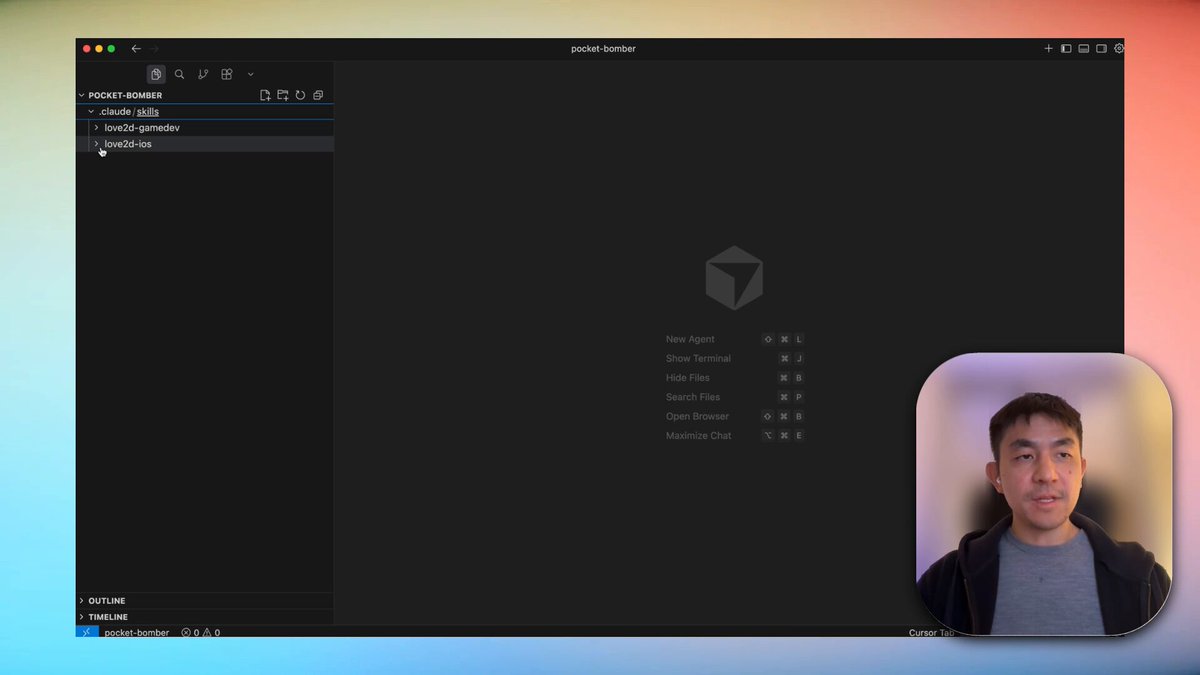
Here's how I use BOTH Codex + Claude Code to vibe code games For my Final Fantasy Tactics game: → 1. GPT 5.4/5.3-Codex/5.2 → 2. Opus 4.6 → 3. Nano Banana 2 → 4. Playwright → Plans + AskUserQuestion → Queue + interrupt prompts → Auto test + bug... show more

48,493 Aufrufe • vor 7 Monaten •via X (Twitter)
45 Kommentare

YT version here for those who might prefer

Have you already made a tutorial like this for someone that doesn’t have any experience in game dev? Would love to see what the starting process looks like to go from scratch.
I have two beginners tutorials that build games from scratch: This is for 2D games
And here’s one for 3d
That’s amazing! Thanks for sharing! Looking forward to diving into this.
Let me know if there are any questions or things to improve!

thanks for this, really interesting! Could you also show how you're making the spritesheets?
this spritesheet was bought - but i'll be doing a tutorial on generation

really good video! And very useful
Thanks! Glad it was helpful!
Yes! Loved seeing your workflow, borrowing some ideas for my own. For sure I am copying the idea of the folder with the prompts 😁
I am new to this series of videos, do you also make the spritesheet with nano banana or are you using an existing one?
This one is using an existing one

how are you driving Playwright with AI to actually *play* the game? Does it even know what to do (without specific training)??
Yup no training at all, literally just told it to fix the bug

great vid! But my inbox zero anxiety from your discord is real.
LOL I knew I should have hidden my dock

Love your work mate 🔥🔥🔥
Thanks again for your continued support George!
You put in the work, put out the alpha, and support is earned legend! 🍻

Thanks for sharing!
Very welcome! Enjoy!

Time to make some popcorn and enjoy your 30-minute video 🔥
Haha watch at 2x!
No worries 😂 good content deserves 1x 🙌
🙏

Killing it!
Thanks Nicolas!

this is the workflow post everyone in the "codex vs claude code" debate needs to see. the real answer is both — codex for fast parallel implementation, claude code for the hard reasoning and architecture decisions. using opus 4.6 specifically for tricky bugs and plan mode is smart. the models have genuinely different strengths and the best devs are building multi-model pipelines instead of picking sides

queued + interrupt prompts with codex is the piece most people sleep on. gives you real-time steering without breaking the agent's flow

the plans + worktrees approach is the right call. without that coordination layer multi-agent setups just thrash. curious how you're handling context bleed between opus and codex on longer tasks.

Nice workflow split. Do you track fix success by stage, like what percent of bugs are resolved in Codex pass versus Opus pass?

@chongdashu How about your coding agents get a Tamagotchi outfit while you vibe code your game?

Nice! I need to add this to my todo...I've started and stopped several game projects due to frustrations with bugs, tools, etc
Barrier is really low now, i built this pretty much in spare pockets of time, even while on the train on my phone
Very cool. Developing from your phone is seriously underrated. I did it on a recent flight using Claude Code in the iOS app. I have a game idea I had that was similar to Black & White but the 'people' in the game have unique AI agent personalities and respond accordingly.

stacking codex claude and tools like dev infinity gauntlet

Disgusting

Using four different models in one workflow is either brilliant or a debugging nightmare. Genuinely curious — how do you handle context drift between them? I've tried multi-model pipelines and the hardest part isn't the code. It's that each model has a different idea of what 'done' means.

Will definitely watch this for the playwright tips!

Using Opus specifically for tricky bugs is smart. we do something similar. cheaper models for routine implementation, Opus when reasoning actually matters. the Playwright auto-test loop is the real gem tho. agents will mark stuff done without actually checking unless you force verification. curious if you have it running in CI or just locally during dev

the multi-model workflow is what most people are sleeping on. using Codex for planning and queued prompts, then switching to Opus 4.6 for the tricky bugs, and Playwright for automated testing is basically a one-person game studio pipeline. saving plans as markdown files for reuse is such a simple but powerful pattern. the FFT vibes are strong too.

Curious about the handoff logic between Codex and Claude. Do you have explicit rules for what goes where, or is it more vibes-based? I've been running multi-agent setups on non-game stuff and the hardest part is keeping them from undoing each other's work.
I use Opus for more creative work - anything that requires design or taste, and if it needs copy / text / editing. I use GPT for everything else, esp. planning. The way you stop them from stepping on each other for me is I always use plans + worktrees.

using codex for high-level structure then opus for the hard parts is actually smart. they're not competing, they're handling different cognitive loads.