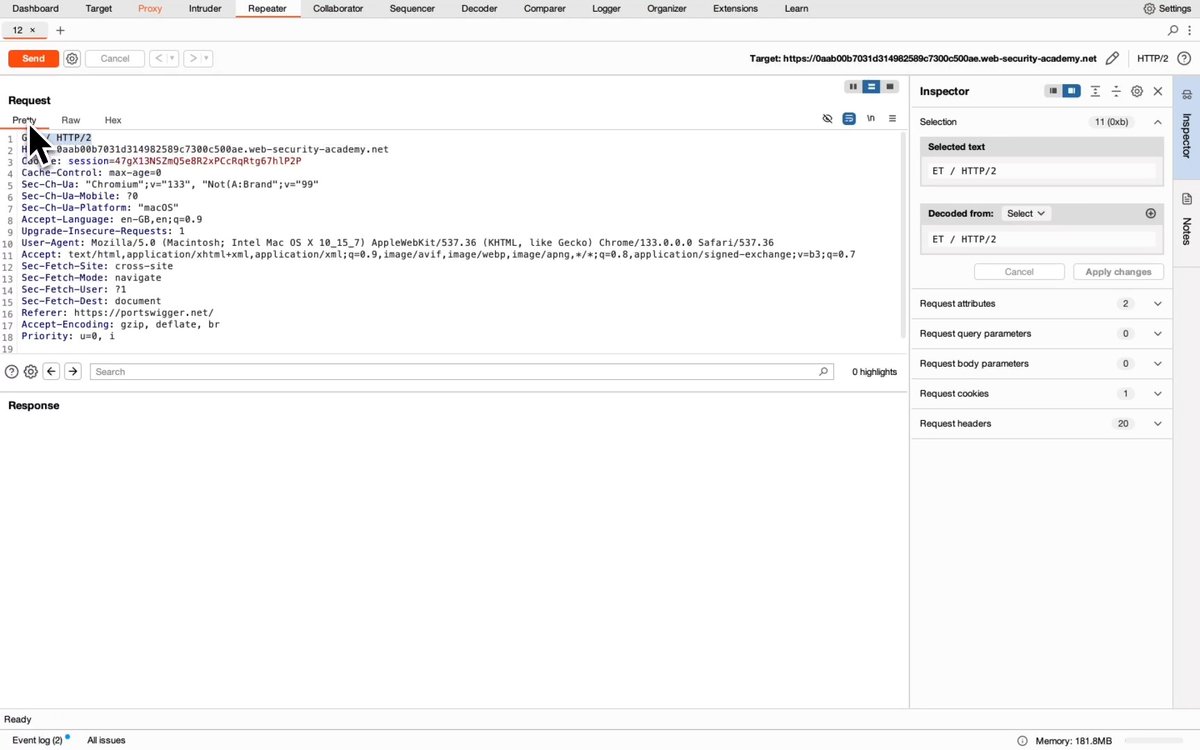
HTTP Request Smuggling Lab Walkthrough: Confirming a CL.TE vulnerability via differential responses.

Web Security Academy
Открыть в X@WebSecAcademy143 тыс. подписчиков
26 360 просмотров
HTTP Request Smuggling Lab Walkthrough: Confirming a CL.TE vulnerability via differential responses.
How to identify CLTE Vulnerabilities:
1. Send request to repeater
2. Downgrade protocol to HTTP/1.1
3. Disable "Update Content-Length"
4. Set Content-Length to 6
5. Add "Transfer-Encoding: chunked" heading
6. Send a chunk with an invalid chunk size
If the backend times out, this indicates a potential CLTE vulnerability.
Confirm the vulnerability with differential responses:
7. Create and send the attack request:
- Replace previous chunk with a terminating chunk.
- Add a smuggled request after the chunked body.
- Append X-ignore: X (without a newline) and send.
8. Send a normal request to repeater, downgrade to HTTP/1.1 and send immediately after the attack request.
If the response to the normal request is 404 instead of 200, the backend was poisoned! 🤮 Well done!
To learn more about HTTP Request Smuggling and take on this lab yourself, head over the the Web Security Academy now
#requestsmuggling #pentesting #bugbounty #hacking #cybersecurity
2 комментария
Комментарии из оригинального поста в X (Twitter)

@Atomsmade
What's the impact pls?

@SecBriefs
🧠Studying for #CompTIA #Security+ but struggling with #Cybersecurity terms?🔍 Cybersecurity Dictionary for Everyone covers everything you need to know and is available on Amazon!🔐 🚀Boost your Security+ prep with it today!💡
1 216 отметок «Нравится»