正在加载视频...
视频加载失败
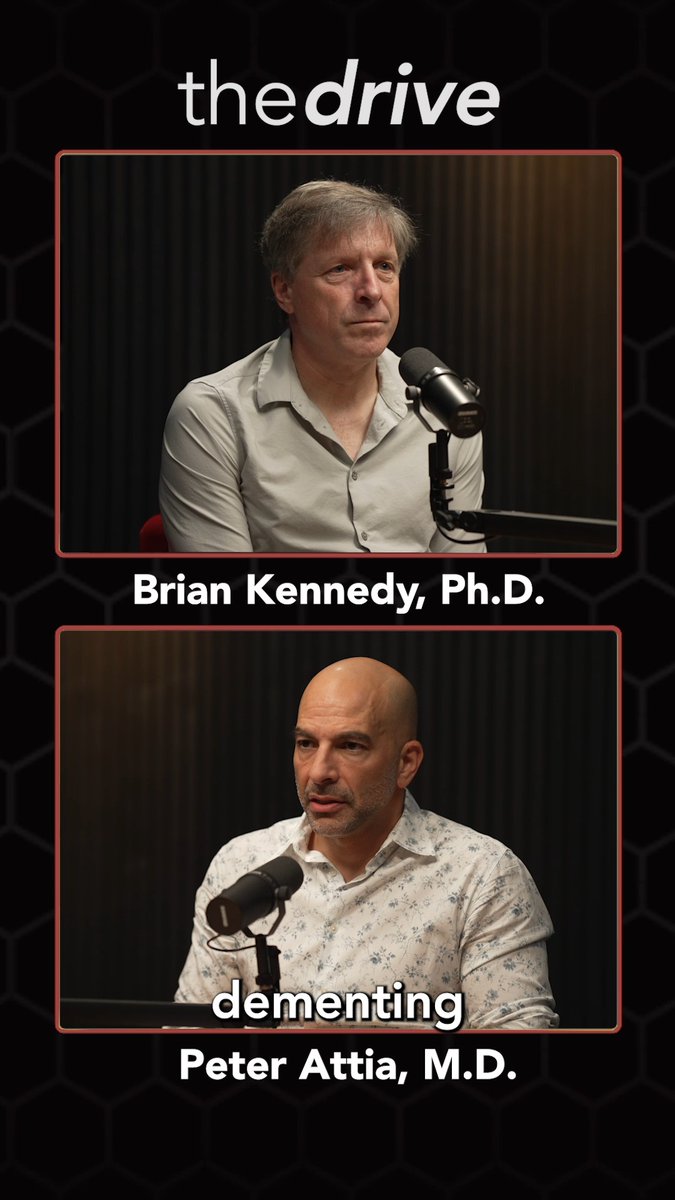
I'm convinced everyone aged 30+ needs to watch this exchange between longevity experts Peter Attia & Andrew Huberman. Understanding this may extend your lifespan by 10 years. Let me explain in simple language 👇:

29 条评论

The first key to living longer is to prevent the main causes of death. These are: - Heart disease - Metabolic disease - Neurodegeneration - Cancer
Exercise is clinically proven to reduce All-Cause Mortality (ACM), i.e. death from any kind of disease by 500%. This is not a headline. It's a fact. Humans as a species evolved to live an active life outdoors. It's not surprising that exercising has such life-altering effects.
It took me a 4-year biomedical engineering degree and 10+ years of experiments to perfect my exercise routine. Here's what I've implemented 👇
1. Less Cardio - Say "No" to Running Running more than 5 miles at a time is highly inflammatory, injury-inducing, and detrimental to mobility. If your goal is to lose fat, there are far more effective ways to achieve it than running.
What I do instead: I have traded in 4-5 days per week of long runs to 1 day per week of a moderate run. Then I integrate cardio into my strength training routines. Note: Long cardio sessions and endurance workouts are good for the brain but not good for the body/inflammation
Cardio absolutely has a place in your exercise routine. It's important to heart health & overall performance. But most people will largely benefit if they exercise MORE strength training and less cardio. Or at least combine the two.
2. Lift Weights 4-5x/wk Lifting helps me improve my quality of life today, extend my health span & look the way I want to look (in this order). Specifically I: - Rotate muscle groups - Focus on compound > isolation exercises - Do 5-10 minutes of mobility training before/after
My workout routines are significantly geared towards building a strong posterior chain (legs, back & butt). I swear by my leg days & ensure that I train my glutes, quads, and hamstrings every week. A strong posterior chain is key to overall functional strength. Butt > Abs ;)
Right now I'm following @fillymarcus's Functional Bodybuilding program 👇🏻 It's a full-body program that helps me cycle through a range of workouts and intensity levels. Also includes warm-up and cool-down exercises for improving mobility.
Exercise is only the first key to unlock longevity The second key is having great relationships. Since 1938, Harvard studied what makes people flourish. It’s the longest in-depth longitudinal study on human life ever done, and it led to a simple and profound conclusion:
Good relationships lead to great health We don’t prioritize relationships first. Consider the fact that the average American in 2018 spent 11 hours/day on solitary activities such as watching television and listening to the radio The result? We have a loneliness epidemic today
Studies have found that loneliness is just as lethal as smoking 15 cigarettes per day. So how can you solve it? Connections online and through devices seem to be poor replacements for the emotional and psychological sustenance we get from being around others.
Social media and video games are like the diet soda of our emotional well-being—it tastes like we’re hanging out with people, but there are no emotional calories. And in this case, no emotional calorie is a bad thing… it’s starving us. So how to make friends IRL?
Research shows that it’s far more useful to tackle feelings of loneliness by pursuing social groups rather than one-on-one interactions. The easiest way to join a group? Find an activity. The more participatory and active the group, the better.
Also, listen to this 80-second clip of Andrew Huberman and you'll likely grow deeper social bonds with your loved ones and people you meet 👇
3rd area: HEALTH TESTS But why are health tests so important for longevity? Because ~300 people die EVERY DAY prematurely because they don't identify symptoms soon enough.
I recommend this protocol to my family & friends because I would be crushed if they died too early from a preventable health condition. Here's a detailed thread I wrote a couple of months back on what tests you should have annually.
4th area: Your diet A smart diet is one that helps you meet your macros while matching your lifestyle.
My ground rule is 1 g of protein per pound of body weight. That's close to 200 grams of protein/day in my case. I'm able to hit this goal thanks to two protein-packed smoothies/day (w/ 40g+ protein each). I travel a lot, so this fits my lifestyle & ensures protein compliance.
Studies reveal our bodies can absorb more than 25g of protein in a single go, especially after a hard workout. So, incorporate smoothies that give you 25+ gms of protein in one go.
I consume lots of good fats: almonds, walnuts, and extra virgin olive oil. Since I'm an ectomorph (it helps to understand your body type), I can get away with not counting my calories and eating nutrient-rich foods. Besides, I hate counting calories and don't ever plan to.
I rarely consume carbs alone. That's because having them alone is one of the worst things you can do for your body/blood sugar. This is especially true for high glycemic carbs. I also found that I have gluten sensitivity, so I no longer eat it. Gluten isn't great for anyone.
5th Area: Sleep I now work out LESS than before. I take 1-2 days off every week and avoid pushing myself on days when I'm not at my best energy-wise. More rest is the easiest way to improve your health, focus and paradoxically, be more productive at work.
I have an elaborate night-time routine, a sleep toolkit, and a few thumb rules to get better sleep every night: - No alcohol on weekdays - Eat 3 hrs before bed - No emails/texts 2 hours prior to bed - Wake up w/o an alarm - Journal negative thoughts
I also aim to create the perfect sleep environment & hit a @eightsleep score of 95+ most days - Optimal sleep temp of 68°F or 20°C - Lightly stuffed pillow - White noise machine - MZOO sleep mask - Temperature-controlled mattress - Mouth-tape I sleep 50% better now.
To recap, here are 5 areas you need to focus on optimizing in order to be fit late into life: 1. Exercise 2. Relationships 3. Regular health tests 4. Diet 5. Sleep Nail these and live a long, energized, healthy life.
If you liked this, retweet the quote below. Follow me @seanpk for more threads on human performance, entrepreneurship, and investing.
A bit about me: 20 years ago, I was a broke biomedical engineering college student trying to get my first biz off the ground. Since then, I’ve grown six 7-figure businesses, three 8-figure businesses & raised $50M+ in VC. I'm also a General Partner at The Family Fund.
And I do all of this while prioritizing my health, traveling for fun every month & not grinding 247. I go deeper into everything I’ve learned about building businesses, investing & founder performance in my newsletter. Join thousands of founders here: