Video wird geladen...

Video konnte nicht geladen werden

Zur Startseite

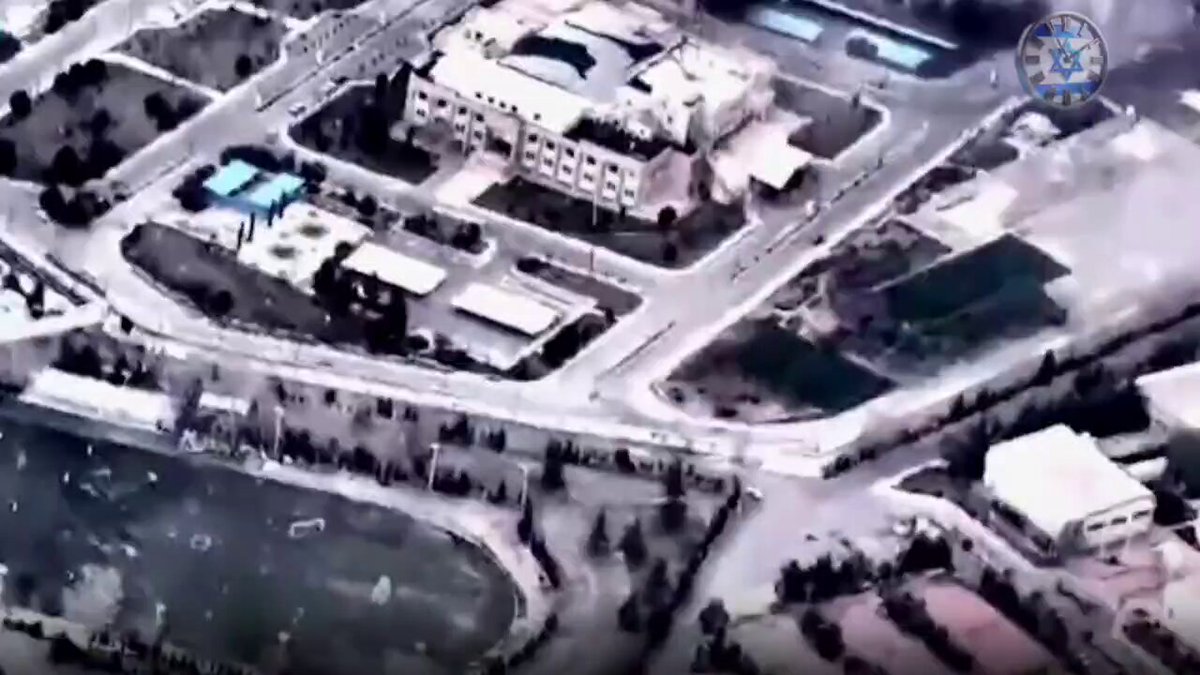
Important District Coordination Committee meeting held in Panjgur under the chairmanship of IG FC Balochistan (South). Deputy Commissioner, DPO, and senior officials reviewed public welfare, health & education facilities, progress on BSDI development projects, staff attendance, inactive schools' revival, open katcheries, and overall security situation. IG FC expressed satisfaction...

88,363 Aufrufe • vor 3 Monaten •via X (Twitter)

0 Kommentare

Keine Kommentare verfügbar

Kommentare vom Original-Post werden hier angezeigt

Ähnliche Videos

🇵🇰 🇮🇷 Mashkhel: Inauguration of Katagar Crossing Point — A New Era of Connectivity and Prosperity on the Pakistan-Iran Border In the border region of Mashkhel, Balochistan, the Katagar Crossing Point between Pakistan and Iran has been formally inaugurated for cross-border movement. Inspector General Frontier Corps (South) Major General Bilal Sarfraz Khan graced the occasion as the chief guest and inaugurated the crossing point. Member of the Provincial Assembly, Mir Zabid Ali Reki, also attended the ceremony. The decision to open the Katagar Crossing Point for transit was made during a grand jirga held in Dalbandin, Rakhshan Division, on July 2, 2025, chaired by Chief Minister Balochistan Mir Sarfraz Bugti and Corps Commander Balochistan Lieutenant General Rahat Naseem Ahmad Khan. In line with that decision, FC Balochistan (South), in close coordination with the district administration and Iranian authorities, completed all administrative and logistical arrangements through tireless efforts. A large number of locals, tribal elders, traders, and children enthusiastically participated in the inauguration ceremony. Speaking on the occasion, IG FC Balochistan (South) stated that the security and management of the crossing point will primarily be handled by the local community to prevent any unlawful activities. He further revealed that the Jodhar Crossing Point will soon be opened for trade, and work on establishing a buffer zone is already underway. The opening of the Katagar Crossing Point marks a historic and positive development for the people living in the border districts of both countries. It will serve as a milestone in promoting cross-border connectivity, cultural ties, regional stability, mutual trust, and shared prosperity.

Eagle Eye

13,063 Aufrufe • vor 9 Monaten

Doha: 16 April, 2026. His Highness the Amir and the Prime Minister of Pakistan Discuss Regional and International Developments Doha, April 16. Prime Minister Muhammad Shehbaz Sharif, who arrived in Doha earlier today, held a warm and cordial meeting with His Highness Sheikh Tamim bin Hamad Al Thani, the Amir of the State of Qatar. During their meeting held at the Amiri Diwan that lasted over an hour, both leaders discussed the latest regional and international developments, particularly in the Middle East. At the outset, His Highness the Amir welcomed the Prime Minister of Pakistan and his delegation, and expressed his deep appreciation for Pakistan’s pivotal role in supporting efforts to de-escalate tensions in the region and promote diplomatic dialogue in a manner that serves regional security and stability. For his part, the Prime Minister of Pakistan renewed his condemnation of the attacks against Qatar and other Gulf countries, while reaffirming Pakistan’s full solidarity and support the leadership and the people of Qatar. Both leaders underscored the importance of supporting de-escalation efforts and enhancing international coordination to ensure the security and stability of the region, particularly ensuring the maintenance of smooth flow of energy supply chains. The two leaders also reviewed bilateral relations between the two countries and ways to further develop them, especially in the fields of security, defense, and energy, in a manner that strengthens the partnership and opens new avenues for bilateral cooperation. The meeting was also attended by His Excellency Sheikh Mohammed bin Abdulrahman bin Jassim Al Thani, Prime Minister and Minister of Foreign Affairs; His Excellency Mr. Abdullah bin Mohammed Al Khulaifi, Chief of the Amiri Diwan; and a number of senior officials. On the Pakistani side, it was attended by His Excellency Mr. Muhammad Ishaq Dar, Deputy Prime Minister and Minister of Foreign Affairs; His Excellency Mr. Attaullah Tarar, Minister of Information; His Excellency Amb. Syed Tariq Fatemi, Special Assistant to the Prime Minister and Minister of State; and other senior officials. His Highness the Amir and the Prime Minister of Pakistan also held a one on one meeting, during which they exchanged views on current developments of mutual interest and emphasized the importance of continued coordination and consultation between the two countries, particularly in light of ongoing events and their implications for regional security and stability. Following the meeting, His Highness the Amir hosted a luncheon in honor of the Prime Minister and the accompanying delegation.

Prime Minister's Office

69,208 Aufrufe • vor 3 Monaten

The U.S. Special Presidential Envoy for Ukraine, General Keith Kellogg Keith Kellogg, is in Kyiv today. I am grateful for a constructive meeting. We discussed various vectors of cooperation – how to achieve real peace and guarantee Ukraine’s security. These include projects within the PURL initiative for financing production and procurement of Patriot systems, strong bilateral agreements on co-production of drones and weapons that we have proposed to America. We count on a positive response from the United States. We had a substantive discussion on stepping up pressure on the Russians and what we can do together with partners in tariff and sanctions policy to enable a meeting at the leaders’ level at the earliest and bring this war to an end. A trilateral leaders’ format is undoubtedly the most effective. We also discussed the return of abducted Ukrainian children, international cooperation on this track, and the conditions in which our children are being held. I expressed condolences to the American people over the horrific murder of Charlie Kirk and thanked President Trump for his condolences and response to the brutal murder of Ukrainian citizen Iryna Zarutska in North Carolina. It is important that justice prevail every time violence seeks to take hold. We are also preparing for the 80th session of the UN General Assembly in New York. We discussed planned events, coordination between Ukraine and the U.S., and work within the Coalition of the Willing. We are working on potential meetings and various formats.

Volodymyr Zelenskyy / Володимир Зеленський

228,146 Aufrufe • vor 10 Monaten

Telangana took another significant step towards deepening its global partnerships as Canada in India Mr Chris Cooter, called on Hon’ble Chief Minister Sri Revanth Reddy in Hyderabad for wide-ranging discussions on enhancing bilateral cooperation across trade, investment, innovation, education, and sustainable development. ✅The meeting underscored the growing momentum in Canada–Telangana relations, with both sides exploring new avenues for collaboration in sectors that are shaping the future of economic growth. ✅During the discussions, the High Commissioner extended an invitation to the Hon’ble Chief Minister to lead a high-level delegation to #Canada, paving the way for stronger institutional and business engagement between the two regions. ✅A key focus of the meeting was Telangana’s ambitious infrastructure and urban transformation agenda. The High Commissioner expressed keen interest in flagship initiatives such as the Musi River Development Project, the Hyderabad Metro Rail expansion, and the proposed Future City, highlighting the potential for Canadian expertise and investments to contribute to these landmark projects. ✅Reflecting the growing confidence of Canadian businesses in #Telangana, Mr. Cooter highlighted several recent milestones that reinforce the state's emergence as a preferred global investment destination. ✅These include Firan Technology Group's decision to establish a manufacturing facility in #Hyderabad, the launch of CIBC's Global Capability Centre (GCC) in the city, and the strategic partnership between CPP Investments and Hyderabad-based CtrlS Datacenters, under which CPP Investments has committed up to CAD 1 billion. ✅Sharing Telangana’s remarkable growth story, the Hon’ble Chief Minister outlined the state's rapid progress across Information Technology, Life Sciences, Defence, and Aerospace, while emphasizing Hyderabad’s position as one of the world’s fastest-growing hubs for Global Capability Centres (GCCs), attracting leading Fortune 500 companies. ✅The Chief Minister also elaborated on the government's transformative vision for the Musi River Rejuvenation Project, describing it as a catalyst for creating a vibrant riverfront economy that integrates sustainability, urban development, and economic opportunity. He sought Canada's partnership in advancing Telangana's renewable energy ambitions, including solarisation initiatives and the broader transition towards a green economy. ✅Highlighting Telangana's vision of becoming a global knowledge and innovation hub, the Chief Minister noted that several leading international universities are exploring opportunities to establish campuses in Hyderabad. ✅He also proposed the establishment of a multi-university campus by a consortium of Canadian universities, creating new opportunities for academic collaboration, research, and talent development. ✅Welcoming Canada's expanding engagement with Telangana, the Chief Minister invited Canadian companies, investors, academic institutions, and innovation partners to participate in the second edition of Telangana's Global Investors Summit, scheduled for December, as a platform to explore strategic partnerships and investment opportunities across high-growth sectors. ✅Speaking on the occasion, High Commissioner Chris Cooter commended Telangana's forward-looking governance, investor-friendly policies, and strong focus on job creation. He observed that the state's exceptional talent pool and innovation ecosystem position it as one of India's most promising destinations for global investment and collaboration. ✅Reaffirming Canada's commitment to strengthening ties with Telangana, Mr. Cooter assured full support for the state's development priorities and announced that a Canadian trade delegation will visit Telangana in the coming months to explore collaboration in areas including energy, urban development, defence, and aerospace. ✅The meeting was also attended by Advisor and Ex-Officio Special Chief Secretary to the CM K. Ramakrishna Rao garu, Invest Telangana CEO B. Ajith Reddy garu, TGIIC Managing Director Shashanka garu, ITE&C Joint Secretary Anudeep Durishetty garu, and Director of Industries Nikhil Chakravarthy garu. ✅The discussions reaffirmed the shared commitment of Canada and Telangana to building enduring partnerships that drive innovation, sustainable development, economic prosperity, and global competitiveness. #CanadaTelangana #CanadaIndiaRelations #InvestInTelangana

Telangana CMO

12,358 Aufrufe • vor 9 Tagen

#ISPR – Rawalpindi, May 2, 2025 Chief of Army Staff (COAS), General Syed Asim Munir, Nishan-e-Imtiaz (Military), chaired a special Corps Commanders Conference held at the General Headquarters (GHQ) today. The forum conducted a comprehensive review of the current geo-strategic environment, with particular focus on the ongoing tensions between Pakistan and India and the overall regional security situation. The forum reaffirmed that the Armed Forces of Pakistan stand ready with full force against any form of aggression or adventurism to defend the sovereignty and territorial integrity of the motherland. The Army Chief praised the professionalism, high morale, and operational preparedness of the armed forces, emphasizing that the Pakistan Army stands shoulder to shoulder with its nation and will defend the country at all costs. He stressed the importance of vigilance and preemptive readiness on all fronts. The forum expressed serious concern over the recent intensification of atrocities in Indian Illegally Occupied Jammu and Kashmir (IIOJK), especially following the Pahalgam incident, and the targeting of innocent civilians across the Line of Control (LoC). It stated clearly that such inhumane and unprovoked acts only escalate tensions in the region and will be met with a clear, forceful, and appropriate response. The forum also strongly criticized India's continued use of crises as a distraction from its internal failures and its repeated unilateral actions to manipulate the situation. It recalled how the Pulwama incident in 2019 was used as a pretext to revoke Article 370 and change the status of Occupied Kashmir. Similarly, the Pahalgam incident appears to be another calculated move by India aimed at diverting Pakistan’s focus from its western front—where it is achieving significant success against terrorism—and from its efforts toward economic recovery. These tactics, intended to provide breathing space to Indian proxies, will never succeed. The forum also expressed grave concern that India is now using the Pahalgam incident as an excuse to undermine the Indus Waters Treaty and attempt to deprive Pakistan of its inalienable water rights. Using water as a weapon threatens the survival of over 240 million Pakistanis and could lead to strategic instability in South Asia. It was also emphasized that India’s military and intelligence agencies are directly involved in terrorist incidents inside Pakistan. Such state-sponsored actions are a blatant violation of international law and are unacceptable in any civilized society. The forum reiterated Pakistan’s firm commitment to peace, stability, and development, while making it clear that any attempt to impose war will be met with a decisive and crushing response. The will of the Pakistani people will be upheld at all costs, God willing. The forum concluded by stating unequivocally that Pakistan's path to peace and development cannot be blocked by terrorism, coercion, or aggression—whether direct or through proxies. All Indian efforts to destabilize the region will be thwarted with determination and foresight. The conference concluded with the Army Chief expressing full confidence in the operational preparedness, defensive capabilities, and high morale of Pakistan’s armed forces, sending a clear message to the nation that Pakistan is fully prepared to confront any enemy at every level.

Defence Index

16,262 Aufrufe • vor 1 Jahr

Inside Kenya’s Multi-Million Smuggling Web: KRA Officials, Dual Citizen in High-Stakes Tax Evasion Syndicate A major tax evasion and smuggling scandal is unfolding in Kenya, placing senior officials from the Kenya Revenue Authority (KRA) under intense scrutiny alongside a Kenyan–US dual citizen accused of orchestrating a sophisticated contraband network that could expose deep-rooted weaknesses in the country’s customs enforcement systems. According to sources familiar with the investigation, detectives from Interpol have launched a probe into an elaborate scheme involving the importation and illegal clearance of goods into the Kenyan market. The operation allegedly exploited loopholes within customs systems and involved collusion with insiders, pointing to what investigators fear could be a well-organized cartel operating across borders. The mastermind, Peter Mwaniki Maina, is now on the police radar alongside his second wife, Stacy Wangari Njiri. Njiri is believed to be the key figure handling the local operations of the syndicate both have been advertising the company Arisilva logistics on different social media outlets. She reportedly resides along the posh Kiambu Road in a house allegedly purchased by Mr. Maina, from where authorities suspect coordination of logistics, storage, and distribution of the smuggled goods has been taking place. How the Scheme Allegedly Worked Investigations reveal that a suspicious container—number MAGU5438993 was cleared through the Compact Special Economic Zone (SEZ) in Nairobi under questionable circumstances. The clearance is said to have been facilitated by senior KRA officials within the verification department, raising serious concerns about internal controls and possible compromise of key clearance procedures. However, in a dramatic twist, internal whistleblowers within KRA reportedly leaked the irregularities to the Commissioner General’s office. Acting swiftly, enforcement officers tracked and seized the container while it was being offloaded at Viken Thirty Industrial Park in Kamakis, Nairobi an operation that insiders describe as a “near miss” in stopping what could have been a massive circulation of contraband into the Kenyan economy. Authorities say the shipment, valued at millions of shillings, contained undeclared goods. Even more alarming are suspicions that the consignment may have included counterfeit products and possibly illicit substances, widening the scope of the investigation from tax evasion to potential public health and safety risks. A Growing Pattern of Smuggling Through Kenyan Ports This case highlights a broader and persistent challenge facing Kenya’s trade and border control systems. The Kenya Ports Authority (KPA), particularly the Port of Mombasa, has long been identified as a critical entry point vulnerable to contraband smuggling despite increased surveillance and digitization efforts. Over the years, authorities have intercepted a wide range of illegal imports, including: * Counterfeit electronics and textiles flooding local markets and undermining legitimate businesses * Untaxed luxury goods falsely declared as household items to evade customs duties * Restricted pharmaceuticals and narcotics posing serious health and security threats * Vehicles imported under the “returning residents” scheme using falsified documentation Experts note that criminal networks often exploit tax exemptions, insider collusion, and weak verification mechanisms. In some cases, forged passports are used to falsely qualify for tax waivers, while bribery within clearance chains enables goods to pass undetected through official systems. The Alleged Mastermind At the center of the investigation is a Kenyan national with dual US citizenship, accused of running a highly coordinated smuggling ring with both international and local linkages. Detectives believe the suspect used fake identities and manipulated the “returning residents” tax exemption scheme to evade millions in taxes while maintaining a low profile behind legitimate-looking business operations. Authorities further allege that close associates, including Njiri, played a crucial role in logistics overseeing the deconsolidation, storage, and redistribution of goods into local markets. Social media platforms were also reportedly used to promote a logistics company linked to the network, helping to mask illicit operations under the guise of legitimate trade. A Potential Transnational Crime Case Investigators now believe the case could extend far beyond Kenya’s borders, describing it as a possible multinational smuggling syndicate with links to international supply chains. The involvement of Interpol signals the seriousness of the probe and raises the likelihood of coordinated cross-border arrests and asset tracing. If proven, the suspects could face serious charges under international law, including tax fraud, organized crime, and trafficking of illegal goods offenses that carry heavy penalties and could trigger extradition proceedings.

Cyprian, Is Nyakundi

112,321 Aufrufe • vor 3 Monaten

As we prepare to launch several projects, we're eager to provide a general update to our community. We are steadily approaching our end goal, thanks to the daily progress we're making toward our vision. Achieving our objectives will bring about a significant transformation in cross-chain interoperability and the flow of liquidity within protocols. This will address crucial challenges and drive mass adoption. Our future-focused approach and effective team collaboration keep us moving forward in an organized manner. Let’s delve deeper into the state of development of our current products and upcoming projects. Tao Bridge Starting with the Tao Bridge, which enables the #Bittensor community to unlock DeFi opportunities with their $TAO via a highly efficient blockchain like #MultiversX, known for its security, speed, and affordability. We deeply admire #Bittensor and believe a project like that is crucial for the future of not just the crypto space but also humanity, as it addresses the major challenges AI faces today: centralization, siloed and isolated work, which pose risks and hinder the technology's potential. We are committed to the vision of subnets and dynamic $TAO, convinced that this ecosystem is as groundbreaking as #Ethereum or #Bitcoin. We will continue to support #Bittensor wherever possible, and our bridge will also expand to other chains with Hatom V2. The TAO Bridge, deployed on and accessible through will launch on the Mainnet in 14 days, on March 27th. You can follow the countdown on the lending page at Given that our main priorities are security and stability, this period will be primarily focused on quality assurance to ensure a flawless Mainnet launch. The launch will also introduce TAO Liquid Staking at along with the integration of both $wTAO and $swTAO on the lending page. This allows #Bittensor users to leverage liquid stake, employ short or long strategies, among other DeFi strategies, or simply access stablecoin liquidity while maintaining exposure to their $TAO. Up to $1M will be distributed as additional incentives on top of the supply APYs at the launch of the $wTAO and $swTAO money markets, with $200K allocated for the first month specifically for bootstrapping. Initially, 70% of rewards will go to liquidity providers, and 30% to those using $HTM to boost their lending positions. This changes to a 50-50 split in the second month, and by the third month, all incentives are directed through the Booster. This approach encourages early participation and sustained engagement with $HTM. Introducing $TAO to #MultiversX will result in the creation of Liquidity Pools (LPs) on both AshSwap 🔥 and xExchange ⚡. These LPs will be incentivized by both entities, and Hatom will distribute extra rewards at launch. The goal is to make #MultiversX a one-stop hub for $TAO holders. Upon stabilizing the volumes, there will also be plans to integrate it on AshPerp 🔥. Furthermore, with the release of $USH, users will have the ability to mint it while retaining exposure to their $TAO. The TAO Bridge and TAO Liquid Staking smart contracts have been audited by Runtime Vеrification and @arda_project, while penetration testing and DevSecOps have been performed on our infrastructure by CertiK. We're excited to announce our exclusive partnership with TAONEW one of the top 5 validators on #Bittensor. TAONEW has been extremely helpful and supportive from day one. By sharing 50% of its service fee with its stakers, TAONEW enables Hatom to offer an optimized Staking APY to its users. Since our initial reference, #Bittensor has grown sevenfold, becoming the largest AI project in the crypto sphere. We reiterate our commitment to contribute to such technology and hope to address some of its current DeFi challenges. Syfy Moving forward, today marks a significant milestone, not only for our decentralized protocols but also for our development companies, which currently stand as the sole and primary contributors to the Hatom Labs and Soul Labs. We’re excited to unveil Syfy, the evolved identity of Hatom Labs and Soul Labs, now serving as the parent entity for our burgeoning development companies. Organization is crucial for scalability, which is why Syfy was established to cultivate an environment where our teams can collaborate more seamlessly, enhancing our effectiveness and efficiency. At the same time, we remain committed to upholding the financial independence of each project, supported by its own community of funding contributors. Feel free to explore our website at for more information! Additionally, don't forget to follow Syfy and explore their Genesis article highlighted in their initial post: Booster V2 The Booster V2 will introduce a range of new features and opportunities for $HTM holders: Optimized Position Boosting: Previously, boosting was done individually for each money market, necessitating $HTM token distribution and periodic rebalancing due to price fluctuations. With Booster V2, the system now considers the overall position, eliminating the need for manual rebalancing. Gas Fee Reduction: Booster V2 implements optimizations that result in reduced gas fees, making transactions more cost-effective for users. Incorporation of Governance: Users staking $HTM tokens gain voting rights directly within the Booster, allowing them to participate in governance decisions while maintaining their staked positions. (Note: Only $HTM tokens are considered for governance; LP tokens are not included.) Enhanced Boosting Mechanism: The Booster V2 enables LP Tokens to boost positions within the Booster, leveraging trading fees from swaps and farm incentives while boosting lending positions. Smart Contract Completion: The Booster smart contract has been completed and audited by @arda_project, ensuring security and reliability. Frontend Implementation: The frontend design for Booster V2 has been successfully implemented, providing users with an intuitive interface. Collaboration with xExchange: Exploration is ongoing for collaboration with xExchange ⚡ to enable LP creation, farming, and meta-staking within the Booster. Upon finalization of testing, we will launch the Booster V2 on the devnet to gather community feedback and begin preparations for the mainnet release. Soul Before delving into Soul Labs's developments, it's essential to summarize its core functionality briefly: Soul Labs seamlessly connects different lending protocols and blockchains, facilitating lending and borrowing across platforms like Aave, Compound Labs, and Hatom Labs, consolidating liquidity and users' borrowing capabilities. Utilizing LayerZero Labs and other messaging layers for cross-chain communication, Soul Labs bypasses asset bridging or synthetics, unlocking novel DeFi strategies and solidifying its position as the ultimate solution for cross-lending dilemmas. Soul V1 will be permissionless, holding censorship-resistant features, incorporating multiple redundancy mechanisms, and providing support for various DApps. We're thrilled to announce that, following the launch of the Tao Bridge in 2-3 weeks, we will introduce the Soul Labs website. This platform has been meticulously crafted over 250 days to not only provide a comprehensive overview of our vision but also to offer an engaging and captivating experience that promises to be memorable. Regarding the app, significant progress has been made on the V1 protocol, including: Smart Contract Development and Testing: • Completion of the initial phase of smart contract development. • Conducting advanced testing to ensure the system's robustness. • Establishment of a fully functional proof of concept. Successful deployment and testing on the #Goerli (#Ethereum Testnet) and #Mumbai (#Polygon Testnet), leveraging LayerZero Labs for seamless operation. Feature Enhancement and Protocol Optimization: • Enhanced testing procedures to bolster system resilience. • Integration of advanced features and significant code refactoring for optimization. • Incorporation of various communication methods, including LayerZero Labs, Formerly Axelar, now at @axelar, Chainlink CCIP), and wormholecrypto, into Soul Labs framework, enhancing its resilience and flexibility. This allows Soul Labs to maintain operation through alternative protocols if the primary one is temporarily paused. Website Development and Documentation: • Nearing the completion of the v1 app, with final touches being applied. • The preparation of comprehensive V1 documentation and the Yellow Paper, available upon Soul Labs's public launch, offering detailed insights into the platform's infrastructure and capabilities. USH Recognizing the critical need for stable liquidity within the ecosystem, we have positioned ourselves at the forefront of providing a solution by introducing $USH, the first native, decentralized, and over-collateralized stablecoin on #MultiversX. As market conditions have improved, we have observed a growing demand for stablecoins in the ecosystem, evidenced by the utilization rate in the Lending Protocol spiking to over 90% several times in recent months. Therefore, our goal is to tackle the current challenges faced by users by creating a robust product that will not only help them hedge against market volatility but also open up better opportunities to trade the markets and generate yield. We're happy to unveil the $USH website, now live with a sleek and intuitive user interface, designed for ease of use, which ensures that interacting with the protocol is straightforward and accessible for all. You can access it now through this link: For the technical side, we’re advancing steadily and we’ve accomplished the following milestones: Lending Protocol Facilitator: • Coded the first version to support multiple discount factors for different collaterals. • Implemented tracking of borrowing effectiveness to enable earnings forecasting for the module and support minting processes. Isolated Pools Facilitator: • Coded the first version of Isolated Pools Facilitator. • Use of $EGLD or $sEGLD as collateral, with positions stored always in $EGLD to benefit the protocol through Liquid Staking and lending interest. • Virtual account implementation for converting $sEGLD earnings into $USH, functioning like liquidation where users deposit $USH for a higher amount of $HsELGD. Staking Module • Coded the first version of the Staking Module that allows users to stake and unstake without any restrictions. We're currently focusing our efforts on the following tasks: • Implementation of HTM Booster in the discount model in the Lending Protocol. • Implementation of different depeg strategies and brainstorming further potential “soft” depeg mechanisms. • Research and implementation of rewards model for Staking Module. • Research and implementation of Boosted Vaults Facilitator. • Review and stress-test the first version of the code. Upon launch, $USH will be integrated into various protocols and AMMs across the ecosystem, further increasing both its utility and liquidity. The opportunities will be vast, enabling users to engage in a wide range of activities such as yield farming, staking, and arbitrage, all while leveraging a stable and reliable asset. Regarding the USH Airdrop campaign, it will continue until the official launch of $USH planned for late Q2-early Q3, rewarding all users who have actively participated in the initiative. Hatom V2 It is clear by now that we are driven to build a more robust, interoperable, and secure DeFi space, removing the current barriers that hinder users' capabilities to seamlessly interact with different blockchains. Through Hatom V2, we will introduce Hatom's cross-chain architecture, designed from the ground up for interoperability. This approach will elevate the protocol to unprecedented levels, enabling its deployment across various blockchains and facilitating seamless connections between them through Soul. By enhancing interoperability, Hatom V2 aims to foster a more inclusive and accessible ecosystem. This expansion will not only broaden the protocol's reach but also significantly increase its flexibility and utility, allowing users to interact with a diverse range of assets and products across different chains. We’re thrilled to share that we are currently crafting the V2 redesign of the Hatom webpage. Anticipate a jaw-dropping transformation that will truly astonish, blending cutting-edge design with an unparalleled user experience, elevating it to a dynamic, interactive hub, and making every interaction more engaging. Good things take time, but we are confident that the release of V2 website will take place in the second quarter of this year and will officially mark the start of our journey into the cross-chain landscape. We are excited about the future and we truly believe that this will mark the beginning of a new era for Hatom. It's crucial for us to develop rapidly without sacrificing the quality or the security of each product. We're strategically allocating resources to ensure smooth progress in every area of our work. As we push forward, we believe that the launch of Soul Labs will be the most important milestone due to its massive potential and disruptive technology. We would like to thank you all for the unwavering support you've shown over the past few months; it truly fuels our passion to push daily and make strides toward achieving our ambitious goals.

Hatom Labs

203,486 Aufrufe • vor 2 Jahren

$ASTS: AST SPACEMOBILE CATALYST SEASON A review of what has been and what is to come Upcoming Catalysts: ☑️BB7 Launch on Blue Origin New Glenn-3 ☑️BB8 - BB10 Delivery to Florida and Launch on Falcon 9 or NG5/6 ☑️BB11 - BB13 Delivery to Florida and Launch on Falcon 9 or NG5/6 ☑️Block-2 Launches in Batches of 3-4x or 6-8x satellites every 1-2 months ☑️FCC Approval for Full US SCS Commercial Service ☑️Execution of more Definitive Commercial Agmts w/ Prepaid Revenue and/or Investment w/ More than 50 global MNOs ☑️FirstNet Investment and Definitive Commercial Agreement ☑️Golden Dome (SHIELD Awarded, NOBLE Up Next) ☑️Unlocking portion of $20M, $25M, and $65M in Revenue Prepayments from AT&T, Vodafone and Verizon upon completion of milestones ☑️Beta Testing w/ AT&T and FirstNet in 1H 2026 ☑️Updates on Google Services Agmt Partnership ☑️Initiation of Research Coverage by JP Morgan, Morgan Stanley, Goldman Sachs, others ☑️Expansion of 11x contracts w/ Department of Defense, Space Development Agency, Defense Innovation Unit, Missile Defense Agency and more ☑️FCC 5G Fund grant ☑️Progress on 8 to 25x Block-2 BlueBirds in currently in Production ☑️Confirmation of Production Ramp to 6x satellites a Month ☑️Acquisition of New Manufacturing Space in Midland, TX focused exclusively on Micron production ☑️Proposal for PNT Service Accepted by FCC as Alternative to GPS ☑️Initial Commercial Service w/ AT&T, Rakuten, Verizon, Vodafone in late 2026 ☑️Securing +$500M of EXIM and IFC non-dilutive Funding ☑️Pursuit of L- and S-Band Spectrum Licenses Globally ☑️EU Allocation of 2GHz MSS Spectrum to SatCo JV ☑️Commercial agreements ☑️Strategic Partnerships and Investments to Focus on AI Data Center Opportunity ☑️Catalysts the SpaceMob have yet to Contemplate Recently Completed Milestones: ✅Telus Definitive Commercial Agreement w Strategic Investment and $200M Committed Revenue (speculated) ✅Partnership with Orange ✅Partnership with Taiwan Mobile ✅Partnership with AXIAN Telecom ✅Satellite Connect Europe Partnership (“SCE”) with Telefonica ✅SCE Partnership with Orange ✅SCE Partnership with CK Hutchinson ✅SCE Partnership with Sunrise Switzerland ✅SCE Partnership with Vodafone Romania ✅SCE Partnership with VodafoneThree UK ✅SCE Partnership with Vodafone Ireland ✅AST Awarded $30M Prime Contract by US SDA for Halo Europa Program ✅$63M to 71M of 2H 2026 Revenue ✅Development of AI Engine to Dynamically Manage Satellite Capacity and Spectrum Efficiency = Seeking 3-10x Capacity Improvement ✅Disclosed over $1.2 billion in Aggregate Contracted Revenue Commitments from Commercial Partners ✅Raised $1.08B 2.25% Convertible Note resulting in $4B of Pro Forma Cash ✅BB6 Unfolding Phased Array ✅AST Awarded Prime Contract Position on US Missile Defense Agency SHIELD Program ✅Filed w/ FCC to modify Existing License to use S-Band spectrum outside of the US ✅$175M Saudi Telecom prepayment to be made by 2025YE ✅BB6 Launched from India on ISRO LVM3 ✅Micron Production to Support 6x a Month by End of Q3 2025 ✅Expanded Manufacturing Floor Space to 500,000 Square Feet ✅1,800 Global Workforce ✅Established Germany as SatCo JV operations center, filed constellation with ITU ✅Closed $420M bridge financing to support Ligado spectrum transaction ✅Saudi Telecom 10-Year Definitive Commercial Agreement w/ $175M prepayment and over $1.8B value ✅Confirmed L- and S- band Spectrum to be Incorporated into Next 3GPP release ✅Verizon Definitive Commercial Agreement ✅Raised $1.15B 2.0% Convertible Note resulting in $3.2B of Pro Forma Cash and Liquidity ✅Successful Video and Voice Testing with Bell Canada ✅US Bankruptcy Court confirms AST and Ligado L-band spectrum transaction transaction, deal now only subject to FCC appoval ✅Acquired Global S-Band Spectrum Priority Rights held Under International Telecommunication Union ✅Successfully Completed the First-ever Native Voice Call (VoLTE) and Rext (SMS) with a Standard Cell Phone using AT&T Spectrum and Core Network ✅Hired JR Wilson as Chief of Networks and Spectrum, formerly AT&T VP of Tower Strategy, Roaming & In-Building Solutions ✅Raised $575M 2.375% Convertible Note w/ Capped Call struck at $120, resulting in $1.5B of Pro Forma Cash on Balance Sheet ✅Repurchased $360M of $460M 4.25% Convertible Note ✅Entered into $550M of Non-Recourse Senior Secured Term Loan to fund Ligado Transaction ✅Secured $100M Equipment Loan Facility ✅Moved to Russell 1000 from Russell 2000 Index ✅Demonstrated World's First Tactical NTN Connectivity over Standard Mobile Devices with Defense Prime Fairwinds Technologies ✅Announced Latest MNO Partnership with Vodafone Idea of India ✅Hired Jennifer Manner as SVP of Regulatory Affairs and International Strategy, Former NTIA Senior Advisor of Space and Policy and EchoStar SVP of Regulatory Affairs ✅FCC Accepts AST’s Application for US Commercial Service ✅FCC Chair Brendan Carr and Senator Ted Cruz visit HQ in support of AST ✅Verizon and AT&T Spectrum Lease Agreements filed w/ FCC ✅FCC grants STA for beta testing w/ AT&T, Verizon, Vodafone, Bell Canada, and Rakuten ✅FCC grants STA for Firstnet Evaluation on Public Safety Band 14 ✅AST SpaceMobile Forms SatCo Joint Venture w/ Vodafone to Better Serve European market, Selects Luxembourg as HQ and Germany for NOC ✅Secured $43M and $20M Contracts w/ US Space Development Agency and Defense Innovation Unit ✅AST5000 ASIC Development Finished and Integration into Block-2 Sats in Q1 2026 ✅Successful Video Calls Completed w/ AT&T, Verizon, Vodafone and Rakuten ✅Exercised Multi-launch Agmts w/ SpaceX, Blue Origin and ISRO ✅Reached +3,800 Patent & Patent pending Claims ✅Initiation of Research Coverage by Bank of America, Clear Street, Roth Capital, Cantor Fitzgerald, Oppenheimer and William Blair ✅Established Coordination Agmt w/ US National Science Foundation Covering Satellite and Ground-based Astronomy Operations ✅Closed $460M 4.25% Convertible Debt Funding ✅Signed 2-3x Additional Global MNOs, Bringing the Total to +53x Covering +3.2B Subscribers ✅Opened European Research Center w/ Vodafone and University of Malaga in Spain ✅Signed Deal w/ Singapore’s Defense Science and Technology Agency ✅Joined 5G Automotive Association, which Develops and Promotes 5G-based Solutions for Connected Autonomous Vehicles

Anp🅰️nman

51,628 Aufrufe • vor 4 Monaten

A new wave of protests is underway in Iran, a strategic partner of Russia. They started in late December 2025 and quickly became the most significant in several years. This time, the initial driving force has not primarily been cultural or human rights slogans such as "Woman, Life, Freedom" (as in 2022), but rather an economic shock. People are joining the protests because of rapid impoverishment, price increase, and a growing sense that the state has lost control over basic economic rules. The main trigger is a currency collapse. On the "open" (effectively parallel) market in late December, the US dollar was valued at roughly 1.39-1.42 million rials, while inflation in December reached over 40% in some estimates. For ordinary families, this means one simple thing: wages and savings are losing value faster than people can adapt, and basic purchases are becoming increasingly unaffordable. The protests were the largest in Tehran, particularly in commercial districts linked to major markets and urban trade. Notably, a key form of pressure has been not only street demonstrations but also merchants’ strikes - mass shop closures and an effective shutdown of trade. Such actions are harder to neutralize through targeted arrests, as they immediately affect urban life and the economy. Within days, the protest wave started spreading to other cities and reached parts of the university sector as well. Students and young people have taken up economic demands and quickly moved on to political questions about the accountability of those in power. The authorities’ response has been mixed. On the one hand, the government has publicly spoken of readiness for dialogue with representatives of the protesters and the trading community. On the other hand, reports from the ground indicate coercive containment measures: arrests, dispersals, and crackdowns. In several provinces, deaths and injuries have already been reported. The figures vary across sources, which is typical for Iran due to information restrictions, but the very fact of fatalities during clashes has been confirmed by several major media outlets. What makes this wave of protests particularly risky for the regime is that it rests on the urban economic base: small and medium-sized businesses, commerce, and the "bazaar." Even if these groups have not always been at the forefront of political protests, they serve as a sensitive barometer of legitimacy. When the "bazaar" shuts down, it signals not only discontent, but also doubt about the state’s ability to maintain basic order. Alongside the internal crisis, external risks are also mounting. Sanctions continue to narrow Iran’s financial and technological room for maneuver, while signals are emerging in the media about the possibility of a new round of coercive pressure on Iran in 2026 - particularly following discussions within the Israel-US-Iran triangle. ❓ What could come next? Four trajectories appear most realistic, and they may even overlap. ▪️ First, controlled de-escalation: the authorities attempt to "cool things down" through targeted economic measures and negotiations with the trading community. This would work only if the exchange rate and prices stabilize. ▪️ Second, wave-like protests: smaller in scale but more frequent and more radical, with repeated flare-ups across different cities and sectors. ▪️ Third, harsh repression: a tightening of the security apparatus and severe sentences, which may temporarily suppress mobilization but typically accumulate deferred anger. ▪️ Fourth, external escalation: which could either temporarily shift the domestic agenda or, conversely, sharply worsen economic conditions and bring people back onto the streets even faster. ‼️ Iran is one of Russia’s authoritarian partners, which raises a logical question: what consequences could the current crisis have for Russian-Iranian relations? If the situation in Iran deteriorates but the regime as a whole survives, the partnership with Russia is likely to be preserved or even strengthened. For Tehran, Moscow remains one of the few major partners available under sanctions and diplomatic isolation; for Moscow, Iran is an important component of its "anti-sanctions" infrastructure and political rear. In the short term, this is unlikely to significantly weaken Russia’s position. The most critical military component for Russia - the Shahed/Geran drone line - has already been largely integrated into Russian domestic production, meaning that a direct disruption of Iranian supplies would probably not be a turning point. More tangible risks for Russia emerge in the medium term if Iran enters a phase of governance paralysis or prolonged instability that undermines its ability to honor agreements. In that case, logistics and infrastructure projects would be hit first - especially those Russia views as alternative sanction-era routes, including the International North-South Transport Corridor (INSTC) and its critical segments. In such a scenario, Moscow would lose the Iranian vector for trade and transit and would face a less predictable partner in technology transfers and financial settlements. The most ambiguous scenario is one in which Iran’s deterioration is linked to a new external escalation (strikes or war). The effects for Russia could be mixed: on the one hand, heightened risks in the Persian Gulf often push oil prices higher, potentially boosting Russian oil revenues; on the other hand, war increases the likelihood of tighter sanctions enforcement and maritime controls, complicating both Iranian and Russian sanction-evasion schemes and disrupting logistics. In other words, "deterioration in Iran" does not guarantee a weakening of Russia, but it does increase environmental instability. Moscow may gain from higher energy prices, but lose in terms of partner predictability and transport capacity. ‼️ Russia’s position would weaken most sharply in a scenario where a new leadership in Tehran moves toward normalization with the West or at least distances itself from Moscow. In that case, the entire "anti-sanctions" framework - financial settlements, technological cooperation, and joint projects - would come under pressure, including the North-South Transport Corridor (INSTC) and its key Rasht-Astara segment, in which Russia is investing both financially and politically. For Russia, this would mean the loss of an important (though not the only) route and partner infrastructure in the region. While the purely military Shahed/Geran component may be somewhat less critical due to partial localization of production inside Russia, Iran’s political and logistical value as a partner would nonetheless diminish.

Anton Gerashchenko

83,100 Aufrufe • vor 6 Monaten

🚨 OPERATIONAL UPDATE: ISRAEL U.S. WAR WITH THE ISLAMIC REPUBLIC - Reporting Window: Last 24 Hours ✳️The war is entering its final phase, but the battlefield is becoming more dangerous, not less. For the first time since the conflict began, the United States has signaled that its objectives against Iran have largely been achieved and that military operations could conclude within 2 to 3 weeks. At the same time, the operational picture tells a more complex story. Strikes inside Iran are intensifying, not slowing. Iran’s responses are becoming less concentrated but more geographically expansive. And across the region, the risk of broader escalation remains very real. This is no longer an open-ended war. It is a race between final military objectives and the risk of wider regional destabilization. ━━━━━━━━━━━━━━━━━━ 🏁 POLITICAL ENDGAME SIGNAL EMERGES President Donald Trump stated that the war could end within weeks, indicating that core objectives have been achieved, including the degradation of Iran’s strategic capabilities and the disruption of its leadership structure. He also signaled that the United States does not intend to remain indefinitely engaged, suggesting that responsibility for securing critical global nfrastructure, particularly the Strait of Hormuz, may shift to regional and international stakeholders. At the same time, tensions with NATO allies are surfacing. Frustration over limited allied participation in the war has raised the possibility of a broader fracture within the Western alliance structure. Parallel reporting indicates that elements within Iran are signaling openness to a ceasefire framework, particularly if maritime access through Hormuz is restored. Taken together, this marks a clear transition: the war now has a defined political end state, even as military operations continue. ━━━━━━━━━━━━━━━━━━ ✈️ FINAL PHASE STRIKE CAMPAIGN INSIDE IRAN The intensity of strikes over the past 24 hours reflects what appears to be end-stage shaping operations. Israeli and US-aligned strikes targeted a wide range of sites across Iran, including weapons production facilities, research and development centers, and critical infrastructure nodes tied to the regime’s military capabilities. Tehran remains a central focus. Approximately twenty military-industrial sites were struck, along with infrastructure at Mehrabad Airport and locations linked to Basij coordination. A senior Quds Force engineering figure, Mahdi Vafaei, was eliminated in a precision strike. His role in developing underground weapons infrastructure across Lebanon and Syria made him a key long-term asset for Iran’s regional military network. Additional strikes hit industrial targets, including steel production facilities and a site identified as supporting materials linked to Iran’s chemical weapons development pipeline. This is not a campaign aimed at symbolic damage. It is a systematic effort to dismantle Iran’s ability to produce, coordinate, and sustain war over time. ━━━━━━━━━━━━━━━━━━ 🎯 IRANIAN RESPONSE AND CIVILIAN IMPACT Iran continues to launch missiles toward Israel, but at a reduced scale compared to earlier phases of the war. Limited salvos were recorded over the past 24 hours, causing injuries and localized damage. One of the most significant developments was the reported use of cluster munitions in central Israel, critically injuring a child and causing multiple casualties. At the same time, Iran appears to be adapting operationally. Rather than attempting large-scale saturation attacks, it is increasingly relying on smaller strikes, drones, and diversified targeting strategies. This does not indicate de-escalation. It reflects an effort to remain operational under sustained pressure. ━━━━━━━━━━━━━━━━━━ 🌍 REGIONAL EXPANSION: THE WAR SPREADS While direct attacks on Israel have become more limited in scale, Iran is expanding the conflict across the region. In the Gulf, infrastructure in Kuwait and Bahrain was struck, including fuel storage facilities at Kuwait International Airport. Fires and damage were reported, adding to a growing pattern of attacks on energy and logistical nodes. A commercial tanker was also struck near Qatar, further extending the conflict into maritime space. These developments mark a continued shift where Iran is targeting not just Israel, but the broader economic and energy architecture of the region. ━━━━━━━━━━━━━━━━━━ 🚢 THE STRAIT OF HORMUZ The strategic center of gravity in this war is now unmistakable. The Strait of Hormuz remains contested, with ongoing disruption to global shipping and energy flows. The United States is actively evaluating options to reopen and secure the waterway, including potential direct military action against Iranian coastal capabilities. At the same time, Gulf states, particularly the UAE, are pushing for a coordinated military effort to ensure the strait is reopened. However, regional positioning remains complex, with some actors balancing public caution and private pressure. Notably, the United States has signaled that it may not take long-term responsibility for securing Hormuz, instead shifting that burden to global stakeholders. The implication is clear: control of Hormuz will determine not only the outcome of the war, but its aftermath. ━━━━━━━━━━━━━━━━━━ 🔥 NORTHERN AND PROXY FRONTS Iran’s proxy network remains active, but increasingly strained. In Lebanon, Israeli strikes continue to target Hezbollah leadership and infrastructure, including the reported elimination of a senior commander in Beirut. Rocket fire persists, but Israeli operations are steadily degrading launch capabilities. In Yemen, the Houthis have formally entered the fight against Israel and are likely contributing to the expanding pattern of regional attacks, including those affecting Gulf infrastructure. Across Iraq and Syria, Iranian-aligned militias remain engaged, while underlying instability continues to create openings for additional actors. This is now a multi-front conflict, but one in which Iran’s network is under pressure across every axis. ━━━━━━━━━━━━━━━━━━ 🧠 WARFARE EVOLUTION A critical and often overlooked development is the role of advanced targeting systems. Israel is employing AI-assisted capabilities to identify threats, prioritize targets, and synchronize strikes across multiple theaters in near real time. This has significantly compressed the operational cycle, allowing for rapid follow-up strikes and reduced recovery time for Iranian forces. The result is a battlefield environment where Iran has less time to act, less time to adapt, and fewer opportunities to rebuild degraded capabilities. ━━━━━━━━━━━━━━━━━━ 📊 THE BIG PICTURE The trajectory of the war is now coming into focus. The United States and Israel are executing a campaign designed to dismantle Iran’s ability to function as a coherent military actor. Iran, in response, is expanding the conflict geographically in an attempt to impose broader costs. At the same time, political signals indicate that the war is approaching a defined end state. Markets are already reacting to this expectation, with oil prices declining and global indices rising on the assumption that the conflict may soon conclude. However, the final phase carries its own risks. As Iran’s conventional capabilities degrade, its reliance on asymmetric and regional tactics is increasing. The decisive question is no longer how the war is fought day to day. It is whether the final objectives can be secured before broader escalation overtakes them. ━━━━━━━━━━━━━━━━━━ 📘 BOOK RECOMMENDATION If you want a deeper understanding of the history, narratives, and strategic realities behind this conflict: Contested Land, Uncontested Truth This book breaks down the ideological, geopolitical, and historical forces that led directly to moments like this, with clarity and evidence. 👉 If you found this report valuable, share it. Follow for daily operational updates.

Inside_Israel_Intel

60,835 Aufrufe • vor 3 Monaten

🚨 OPERATIONAL UPDATE: ISRAEL U.S. WAR WITH THE ISLAMIC REPUBLIC - Reporting Window: LAST 24 HOURS • Iran widened its fire again with a broad evening missile barrage on central Israel and continued attacks across the Gulf, including a drone strike that hit a fuel tank at Kuwait International Airport • Israel intensified strikes across Iran, with reported hits in Tehran, Qazvin and Alborz industrial areas, plus continued pressure on missile infrastructure and launch cells • Hezbollah kept the northern front active, including a direct rocket hit on a building in Kiryat Shmona, while Israel deepened its Lebanon campaign and Katz publicly framed the objective as a security zone up to the Litani • The diplomatic track moved forward, but only in the strangest possible way: Trump says talks are progressing, Iran still publicly denies direct negotiations, and multiple reports now point to JD Vance as Tehran’s preferred American interlocutor • The big picture is unchanged: the war is still live on every major front, but the center of gravity is shifting toward a contest over how it ends, who gets to define victory, and whether the Gulf will stay adjacent to the war or be pulled fully into it The most important thing to understand about the last 24 hours is that this was not a quiet period masked by negotiations. It was the opposite. The battlefield remained active from Tehran to southern Lebanon to Kuwait, even as Washington and Tehran edged further into a murky negotiation channel. That is what gives the last day its character: not de escalation, but simultaneous escalation and diplomacy, both moving at once. Open source reporting reflects the same picture, with repeated indications of strikes in Tehran and Qazvin, attacks near Baghdad airport, a Kuwait airport fuel fire, and a large Iranian barrage toward central Israel late in the window. **Special thanks to Michael W for your continued contribution to the open-source intel picture behind these updates. ━━━━━━━━━━━━━━━━━━ 🚀 IRANIAN MISSILE FIRE ON ISRAEL Iran kept up the pressure on Israel in two different ways over this window. Earlier in the cycle, a cluster warhead strike wounded nine people in Bnei Brak, with additional damage in Petah Tikva, while Hezbollah fire from Lebanon killed a woman near Mahanayim Junction and wounded several more in Kiryat Shmona. Later, near the end of the reporting window, Iran launched another broad barrage toward central Israel, with warnings stretching across Gush Dan, Sharon, Wadi Ara, Samaria, Judea and the Dead Sea region. Open source reporting you provided tracked that second wave in real time, showing how broad the alert footprint was even though initial reports indicated no immediate casualties from that specific evening barrage. This is what stands out operationally: Iran’s missile campaign is not gone, but it looks increasingly built around selective disruption rather than the huge opening barrages of the war. The salvos are still dangerous, still capable of civilian casualties and still capable of producing visually dramatic and politically effective moments, but they are landing against a backdrop of steadily intensifying strikes on Iran’s launch network. That makes each successful hit feel more deliberate and more strategic. ━━━━━━━━━━━━━━━━━━ ✈️ THE AIR CAMPAIGN OVER IRAN KEPT MOVING Israel’s strike campaign inside Iran also remained broad and geographically layered. Reuters reported renewed Israeli strikes as talks were being floated through intermediaries. Open source intelligence adds texture to that by showing repeated reporting from open source channels of impacts in eastern and western Tehran, the Alborz industrial zone in Qazvin province, and additional blasts reported across Khuzestan and other regions. There were also repeated reports of targeted assassination attempts in east Tehran, which fits the broader pattern of not just degrading launchers and production nodes, but also hunting the people tied to them. The color here matters. This no longer looks like a campaign limited to air defenses and obvious military compounds. The picture from the last 24 hours is of a system being pressed from multiple angles at once: missile depots, industrial support zones, launch crews, command elements and regime infrastructure in and around Tehran. Open source reporting reinforces that sense of breadth, especially the repeated references to Qazvin and Alborz secondary explosions and to ongoing heavy activity over Tehran. ━━━━━━━━━━━━━━━━━━ ⚡ THE ENERGY WAR IS STILL HOT The clearest new regional energy development in this window was Kuwait. Reuters reported that a drone attack hit a fuel tank at Kuwait International Airport, causing a fire but no casualties. That matters not because the material damage was catastrophic, but because it again shows Iran or Iran aligned actors reaching directly for civilian and logistical energy infrastructure in Gulf states. This was not an abstract threat anymore. It was a live strike on a functioning international hub. Your outbox tracked the same event quickly and repeatedly, alongside additional open source reporting about nearby attacks and power disruptions in Kuwait. At the same time, the diplomatic and military discussion around the Strait of Hormuz kept shaping everything else. Markets moved on talk of a U.S. proposal and possible hosted talks in Pakistan or Turkey. Oil eased on negotiation optimism, but the underlying structure of the crisis remains the same: Iran still retains the ability to disrupt shipping and energy confidence without fully “closing” the Strait in a formal sense. That is why even modest signs of diplomacy can move oil sharply, and why even a localized drone strike in Kuwait still carries outsized weight. ━━━━━━━━━━━━━━━━━━ 🇱🇧 LEBANON IS NOT A SIDESHOW The northern front kept boiling. Reuters reported that Israel now intends to occupy a swathe of southern Lebanon up to the Litani River, with Defense Minister Israel Katz explicitly describing a “security zone” concept. That is not rhetoric you use if you still think this is a short punitive phase. At the tactical level, Hezbollah continued to demonstrate that it can still impose costs, including a direct rocket hit on a building in Kiryat Shmona and earlier casualties in the north. Meanwhile, open source reporting pointed to Israeli strikes in Nabatieh, Rashidiya, Bchamoun and broader southern Lebanese infrastructure, which matches the picture of sustained pressure rather than episodic retaliation. The broader meaning is straightforward. Israel is signaling that if the Iran war ends inconclusively on the Iranian front, it does not intend to leave Hezbollah’s northern threat structure intact and simply hope for the best. Lebanon is being shaped now as part of the endgame, not just the current fight. ━━━━━━━━━━━━━━━━━━ 🇮🇶 IRAQ STAYED ACTIVE TOO Iraq remained active in the background, but it should not be treated as background noise. Open source intel reporting includes repeated reporting on a targeted U.S. strike on a vehicle near Baghdad airport and continued militia related activity tied to U.S. positions and proxy structures. That comes after the prior cycle’s major strikes on PMF and militia command nodes. It fits the larger pattern we have now seen for weeks: Iraq is not the main theater, but it is still one of the places where the war keeps trying to widen horizontally. ━━━━━━━━━━━━━━━━━━ 🌍 THE NEGOTIATION TRACK GOT STRANGER, NOT CLEARER Trump is still publicly presenting the talks as real progress. Reuters reports that Pakistan conveyed a U.S. proposal, with Pakistan or Turkey possible venues, and that Washington has floated a broader framework dealing with nuclear capability, missiles and proxies. At the same time, Iran continues to publicly deny meaningful direct talks and has toughened its public stance, insisting on guarantees, compensation and no rollback of its missile deterrent. What makes the last 24 hours more interesting is the growing focus on who would even talk for the United States. Times of Israel and Jerusalem Post reporting both indicate that JD Vance is increasingly central to the diplomacy, with Tehran reportedly preferring him over Witkoff and Kushner. The diplomatic track here appears as both real and deeply unstable, with questions about who on the Iranian side actually holds authority and whether Washington is now seeking an end state short of outright regime collapse. That shift matters because it tells us something important: Washington increasingly seems to be searching for an off ramp that still looks like victory, while Israel and Gulf allies appear much less comfortable with ending this war before Iran’s military and proxy architecture are degraded further. That tension is now one of the defining features of the conflict. ━━━━━━━━━━━━━━━━━━ 📌 WHAT MATTERS MOST RIGHT NOW 1️⃣ The war is still fully active across multiple fronts Iran hit central Israel again, Kuwait airport was struck, Lebanon stayed hot and Israel kept pounding targets inside Iran. Negotiations did not replace combat. They were layered on top of it. 2️⃣ The pressure on Iran’s internal military system keeps deepening The accumulating pattern of strikes in Tehran, Qazvin, Alborz and other areas suggests a campaign that is still broadening the target set, not narrowing it. Open source reporting in your files strongly supports that picture. 3️⃣ The diplomatic track is real, but it is not clean Trump is selling progress. Iran is denying direct talks. Vance is becoming more central. And nobody looking at the battlefield would conclude that the war is genuinely close to stopping on its own. ━━━━━━━━━━━━━━━━━━ BOTTOM LINE The last 24 hours painted a clearer picture than some of the recent reporting windows. This is no longer just a war of salvos and counterstrikes. It is now a war over end states. Iran is still trying to prove it can widen the cost map, not just hit Israel but keep the Gulf under pressure too. Israel is still trying to prove that sustained, system level degradation inside Iran can continue even while diplomacy swirls overhead. And Washington is trying to find a formula that can stop the war without looking like it backed down. That is why the reporting feels different now. The battlefield is still violent, but the arguments over how this ends are becoming just as important as the strikes themselves.

Inside_Israel_Intel

23,818 Aufrufe • vor 3 Monaten

**Doris Yin Speech at China Guizhou Zunyi GCV Barter Conference** Hello to the community leaders, GCV ambassadors, merchants, and pioneers of GCV Guizhou in China! Today is January 12, 2025, marking the first GCV Barter Conference in China in New Year and the 13th Barter Conference overall. I would like to extend my sincere gratitude to the organizers of this conference, the Guizhou Zunyi GCV Community, and the co-organizers, Barter Huishang (Guizhou) Digital Economy Industry Group Co., Ltd. I also want to acknowledge the following GCV ambassadors for their active dedication and contributions to this conference: **GCV Ambassador of China:** - Yang Zhizhong - Cai Zaiqiao **Ambassadors of Guizhou Province GCV:** - Wang Shiqiong - Cai Weisheng - Guo Jiaqing **Zunyi GCV Ambassadors:** - Wang Jianbo - Luo Nanlu **GCV ambassadors at the district and county level in Zunyi City** Additionally, I would like to express my heartfelt thanks to our numerous GCV merchants and sponsors. Without your support, we would not have been able to hold such a grand and large-scale event. Today's gathering in Zunyi, a sacred site of the revolution, reminds me of the Red Army's 25,000-mile Long March. Their perseverance and sacrifice continue to inspire us. The Zunyi Conference took place from January 15 to 17, 1935, and exactly 90 years later, we are gathered here today. The defining characteristics of the Zunyi Conference included the commitment to uphold the truth, correct mistakes, establish the correct leadership of the Party Central Committee, and creatively develop and implement strategies that fit the nature of the Chinese revolution. Today, our Zunyi Conference will also be recorded in the history of blockchain, as every effort you have put in has contributed to building a strong network ecosystem. Our partial fiat and partial distribution policy serves as a solution for the rapid development of the ecosystem during the closed mainnet of the Pi Network. As we all know, the first quarter of this year will bring about the successful mainnet launch of Pi Network. After six long years of challenges and perseverance, all of our pioneers will have the opportunity to witness this significant historical moment. What an exciting and proud day this will be! It has not been easy for everyone to persist through these six years; it requires great blessings, unwavering faith, and the courage to overcome difficulties. Today, our pioneers in Zunyi, Guizhou Province, gathering for this GCV barter conference holds great significance. I see that ten companies are providing products for barter, with nine companies, including Guizhou Meitan County Daoqin Hospital and Barter Huishang (Guizhou) Digital Economy Industry Group Co., Ltd., sponsoring this event. Once again, I extend my heartfelt thanks to all of you. The GCV Barter Conference serves multiple purposes. It is not only about creating GCV data or demonstrating the strength of our China region to CT, but also about showing how closely we align with their vision and mission. Additionally, it provides robust evidence for a substantial number of KYC and migration initiatives in China. More importantly, what we do today aims to boost China’s future economic development. Once the main network of the Pi Network is launched, we anticipate a significant demand for Chinese products from numerous international pioneers, which will in turn generate a large volume of export orders. At the same time, there will be international merchants looking to export their products to China. Once OM, import and export transactions will be conducted using the new currency, facilitating the vision of a stable currency and enabling seamless and reliable exchanges with fiat currency. Therefore, the merchants who engage now will have the advantage of being early adopters. The Pi Network offers a partner program and a MapofPi program. To participate in the partnership, businesses are required to have a company website. We invite businesses with websites to join us. However, if you do not have a company website, you can still join the Mapofpi program, which encompasses a wide range of industries, allowing participation from both large companies and small traders. Registration for the Mapofpi does not require a business license or website; various entities including shops, hospitals, schools, hair salons, accounting firms, law firms, restaurants, and hotels are welcome to register. Please select an active merchant and support GCV at $314,159. Prior to the OM launch, it is advisable to use partial fiat currency and partial Pi to ensure that merchants can cover their costs and fulfill their tax obligations. Recently, on January 9, we established the China GCV Industry Chain Alliance, which aims to create an industrial chain that facilitates the circulation of Pi among merchants, thereby reducing the burden of exchanging fiat currency after OM. During the enclosed mainnet, you can assist merchants in registering as Pi Network Partners and Mapofpi . Ms. Lumari is our Global GCV CT executive director and her goal is to have 200,000 registered Mapofpi merchants worldwide. My personal target is to reach 100,000 registered merchants in China alone. This goal is achievable given the over 58 million enterprises and more than 20 million pioneers in China. If we can effectively convey that Pi Network WEB 3.0 blockchain technology will significantly enhance human productivity and that the business opportunities from accepting partial Pi and partial FIAT during the 60 days before OM will present numerous benefits and minimal risks to merchants, then it is likely that no merchant will be unfavorably surprised by the initiative. This strategy offers a multitude of advantages with virtually no downsides. Furthermore, it benefits pioneers by allowing them to transfer purchasing power to the community and minimize fiat currency expenses in their daily life. Consequently, the GCV data we generate will significantly benefit the Chinese pioneers, as a large number of registered merchants can transform the China region from a high-risk area to a safe zone. Not only can this region be promoted to a VIP area, which would enjoy expedited KYC and mapping processes, but it will also allow pioneers and merchants to thrive together in our ecosystem. This collaboration will enhance the prosperity of our country and empower the China region to contribute to the welfare of communities worldwide. Once OM, it will play a crucial role in the economic development of both China and the world. If you pay attention to our migrartion speed, you might have noticed that it has slowed down recently. From December 17th to around the 30th, the migrating speed was over 50,000 to 100,000 per day, but now it has dropped to just over 10,000. What is the reason for this decline? If it was previously possible to migrate over 100,000 per day, why has it changed? The CT has stated that they will OM until the first quarter of this year to bring the migratiion in line with KYC amounts. However, if it's technically feasible to achieve a higher migration speed, why isn’t it being done? The answer is quite simple: it depends on what everyone does with the Pi after such large migration numbers. If pioneers rush to buy and sell, hold onto their Pi coins, or trade at low value, it will impact the speed and efficiency of the next migration in these regions. This principle is not only theoretically valid but has proven true in practice. For instance, countries like the Philippines, Indonesia, and Malaysia have a solid educational foundation in GCV. Most pioneers there are highly aware of the risks involved in participating in the black market, which allows them to generate a substantial amount of GCV data. As a result, their migration speed is notably fast, and there are many large wallet migrated. To help the CT regain momentum, we all need to cooperate. Engage with the migrated Pi and participate in the GCV barter ecosystem. Be cautious of individuals who aim to deceive you for personal gain; devaluing the Pi often serves as a tactic to exchange something small for your valuable treasure. It's crucial to educate pioneers about the true value of what they hold and encourage them to avoid dishonest practices. I urge everyone to actively participate in partial Pi and partial FIAT barter. The more GCV data we generate, the more secure our wallets will be. Therefore, it's important for everyone to read and share the Pioneer Handbook I wrote which has been translated into 30 languages to raise awareness among pioneers. By learning from the Pioneer Handbook and participating in GCV bartering, we can improve China's migration efforts and foster ecological development. This stability can ensure that the value of our Pi endures for future generations, rather than becoming worthless in a few years. Wouldn't that be something we want to preserve for our children and grandchildren? Today's message is lengthy but very important, and I hope you take the time to understand it. I wish our Guizhou Zunyi Conference great success! Thank you to all GCV Ambassadors, Merchants, and Pioneers for your incredible support! Your efforts today are planting the seeds for a prosperous future, and I hope you find safety and fulfillment in the days to come. May your wishes come true! Wishing you health and happiness! Let’s work together to create a better future! I also hope you all have a joyful Chinese New Year! Doris Yin 🪷🪷🪷 Founder, Global GCV Movement January 12, 2025

Doris Yin 东方紫莲🪷

18,335 Aufrufe • vor 1 Jahr

🚨 OBAMA’S BOND-VILLAIN BLUEPRINT: Biolabs Offshored, Iran Nuclear-Fueled, Russia Hoax Weaponized — Declassified Proof That One Administration Engineered Today’s Global Inferno 🔥 Scholars of power have long recognized the signature of empire-builders who cloak chaos in the language of “hope” and “diplomacy.” Barack Obama’s eight years were no anomaly. They were the deliberate incubation of a shadow architecture: offshoring America’s most dangerous tools, recalibrating Middle Eastern power to favor volatile proxies, and turning the intelligence apparatus inward against a domestic political threat. The sanitized textbooks call it “legacy.” The declassified record calls it managed destabilization. The 2014 Biolab Pivot. After domestic scrutiny forced a pause on high-risk gain-of-function research, the machinery didn’t stop — it relocated. Ukraine became the premier hub. Pentagon-linked programs, framed as “public health” and “non-proliferation,” cataloged and engineered pathogens on foreign soil, evading congressional oversight. Obama himself, as a senator in 2005, toured these very facilities with Sen. Lugar, inspecting unsecured anthrax and plague vials. By his presidency, the network had matured into dual-use infrastructure: plausible deniability wrapped in noble intent. The Iran Recalibration. The JCPOA was never containment. It was leverage transfer: sanctions relief flooding the regime with cash, enrichment infrastructure preserved under sunset clauses, breakout time shortened to near-zero in the long run. Not diplomatic miscalculation — strategic success for a radical realignment that empowered proxies and shattered regional balances. The result? A nuclear-threshold Iran bankrolling the very instability now consuming the Levant. The Domestic Coup de Grâce: The Russia Hoax. When a populist outsider threatened the machine, the permanent bureaucracy struck. Declassified 2025 DNI releases — including the Durham annex and HPSCI oversight report — expose it: Obama officials manufactured the January 2017 ICA on Russian interference. They knew the Steele Dossier was Clinton-funded opposition research riddled with disinformation. Yet they used it for FISA warrants on Carter Page, suppressed contradictory intel, and pushed a “Trump-Putin collusion” narrative they privately admitted lacked empirical evidence. Susan Rice’s infamous “by the book” email from the January 5, 2017 Oval Office meeting with Obama, Biden, Comey, and Yates? The bureaucratic CYA that now reads like a smoking gun. Crossfire Hurricane wasn’t counterintelligence — it was political espionage. This was no incompetence. It was the “Bond Villain paradigm”: erode sovereignty, empower transnational proxies, weaponize the unelected state. A technocratic empire incubated in plain sight. Trump’s second term is the high-stakes remediation — dismantling networks hardened over a decade. The media meltdown, bureaucratic sabotage, and institutional resistance aren’t random. They’re validation. The propaganda veil is tearing. Sovereignty or shadow control? The choice is no longer abstract. The long game is over. The cleanup has begun. Share this before the censors scramble. History is being rewritten in real time — by those who lived it. Many of my X followers are not seeing posts like this one. If you are reading this, you are the exception. 👉 Boost the algorithm, fight the throttling, and get more 👀: bookmark, share, reply, repost, like, and follow Tony Seruga The evidence speaks for itself: Declassified HPSCI Majority Staff Report on the Manufactured Russia Hoax (July 23, 2025) → Direct link to the report: This details how the Obama administration allegedly directed the creation of the January 2017 Intelligence Community Assessment (ICA) they knew contained false or manipulated elements regarding Russian preference for Trump. ODNI Press Release on Obama-Directed False Intelligence Report (July 23, 2025) → Announces the release and frames it as evidence of a "treasonous conspiracy" involving Obama, Clapper, Brennan, and Comey. Declassified Evidence Package on Obama-Era Efforts (July 2025) → Includes memos, timelines, and supporting materials. Declassified Durham Report Appendix ("Clinton Annex") (Released July 31, 2025 via Sen. Chuck Grassley) → Additional context on the origins, including alleged Clinton campaign actions and FBI handling. House Intelligence Committee announcement: These build on earlier declassifications like the Susan Rice "by the book" email from the Jan. 5, 2017 Oval Office meeting. #DeepStateExposed #ObamaHoax #RussiaCollusionHoax #IranDealDisaster #UkraineBiolabs #TrumpRemediation #AmericaFirst #ManagedChaos 📽️ Nuland’s own 2022 Senate admission on Ukraine’s biological research facilities (the “concern” when Russia advanced) 👇 📽️ OBAMA’S CANADIAN COUP: Private Talks With PM Carney While Trump Leads — Logan Act Felony or Globalist Shadow Presidency? 🔥 Barack Obama in Toronto last week, holding closed-door “important conversations” with Prime Minister Mark Carney — the same week President Trump is reshaping America’s foreign policy. Let’s speak with scholarly precision. The Logan Act (18 U.S.C. § 953, enacted 1799 amid the Quasi-War with France) is crystal clear: “Any citizen of the United States… who, without authority of the United States, directly or indirectly commences or carries on any correspondence or intercourse with any foreign government… with intent to influence the measures or conduct of any foreign government… in relation to any disputes or controversies with the United States, or to defeat the measures of the United States, shall be fined… or imprisoned not more than three years, or both.” 👇

Tony Seruga

20,407 Aufrufe • vor 2 Monaten

🚨 OPERATIONAL UPDATE: TALKS ADVANCE, PRESSURE HOLDS - Reporting Window: Last 24 Hours *⃣ If you find these reports useful, PLEASE consider sharing them, this is how more people get access to clear, open source breakdowns of what’s actually happening. Diplomacy is now fully underway, but the underlying structure of the war has not changed. U.S. and Iranian officials are actively engaged in talks in Islamabad, while Israel continues operations in Lebanon and regional pressure points remain unresolved. Negotiations are real, but they are happening alongside continued military activity, not in place of it. ━━━━━━━━━━━━━━━━━━ 🧠 MY ASSESSMENT The disconnect in this phase of the war is no longer just military. It is perceptual. Iran is negotiating like a peer power. It is not operating like one. The regime has taken real damage across leadership, infrastructure, and military capability. That much is clear from weeks of sustained strikes and the cumulative effect they’ve had on its systems. At the same time, the United States and Israel retain clear escalation dominance, including the ability to threaten core Iranian infrastructure on a scale that would put the regime itself at risk. And yet, Iran continues to negotiate from a maximalist position. That is not because it holds superior leverage. It is because the leverage it does have is concentrated in disruption, not control. Hormuz remains the clearest example. Iran does not need to shut it permanently to create pressure. It only needs to make it unstable enough to raise global economic costs and force urgency into negotiations. The same applies to its proxy network. Hezbollah does not need to win in Lebanon. It only needs to remain active enough to prevent a clean separation of fronts. So the reality is more specific than either extreme. Iran is not negotiating from strength. But it is not negotiating without leverage. It is negotiating from a weakened position, using time, disruption, and regional pressure to offset what it has lost militarily. That is what makes this phase unstable. The United States is trying to convert military advantage into a negotiated outcome. Iran is trying to convert limited leverage into constraints on that outcome. Israel is continuing to act where it is not constrained. Those dynamics do not resolve cleanly. They drag. And the longer they drag, the more the outcome depends not just on capability, but on tolerance for escalation and time. Now let's break down all the different theaters contributing to this assessment: ━━━━━━━━━━━━━━━━━━ 🇵🇰 ISLAMABAD TALKS: REAL, HIGH-STAKES, BUT FAR APART The most significant development in this window is the shift to direct U.S.–Iran engagement in Pakistan. Senior delegations are now physically present in Islamabad under heavy security, with Pakistan acting as the central intermediary trying to convert a temporary ceasefire into something more durable. But the gap between the two sides remains wide: • Iran’s reported framework focuses on sanctions relief, security guarantees, and preserving proxy influence • The U.S. framework demands nuclear dismantlement, missile limits, and a permanently open Hormuz Both sides are treating these as opening positions, not final terms. At the same time, Iranian negotiators are still pushing to include Lebanon in ceasefire guarantees, a condition that continues to complicate progress. ━━━━━━━━━━━━━━━━━━ 🇱🇧 LEBANON REMAINS ACTIVE Despite the diplomatic push, Lebanon remains an active combat zone. Israeli strikes continued across southern Lebanon in this window, including deadly strikes in Nabatieh and surrounding areas. Reporting indicates: • More than two dozen killed in a single strike event, including members of Lebanese security forces • Additional strikes on urban areas, shops, and infrastructure • Continued clashes on the ground, with IDF personnel wounded in exchanges along the border At the same time, Hezbollah fire has not stopped entirely, with intermittent launches toward northern Israel continuing. The key continuity point holds: Lebanon is not covered by the ceasefire structure being negotiated in Pakistan, and it is not behaving like it is. ━━━━━━━━━━━━━━━━━━ ⚓ HORMUZ: STILL UNRESOLVED The Strait of Hormuz remains the central strategic lever. U.S. officials are signaling active efforts to secure the waterway, including naval movements and mine-clearing operations, though some claims remain unverified. At the same time, Iran continues to threaten rapid retaliation against U.S. vessels operating in the area. This is the same unresolved issue sitting underneath the negotiations: • The ceasefire depends on Hormuz being open and stable • That condition has not yet been fully met • Both sides are still signaling willingness to escalate if it breaks down ━━━━━━━━━━━━━━━━━━ 🌍 REGIONAL PRESSURE AND SPILLOVER The regional layer of the war remains active even as talks proceed. Recent reporting highlights: • Continued Iranian-linked pressure on Gulf infrastructure, which has already disrupted Saudi industrial capacity in recent days • Pakistan increasing its own military posture, including sending fighter jets to Saudi Arabia as part of broader defense coordination • European pressure, particularly from France, to expand the ceasefire framework to include Lebanon This reinforces the broader pattern: The war is no longer confined to one front, and it cannot be easily paused in one place without consequences elsewhere. ━━━━━━━━━━━━━━━━━━ 🇮🇷 INTERNAL IRAN DYNAMICS Additional reporting in this window provides a clearer picture inside Iran. • Iran’s current Supreme Leader, Mojtaba Khamenei, remains seriously injured from earlier strikes but is still actively governing through remote coordination • The regime continues to maintain tight control domestically, including extended internet blackouts • There are increasing indications of information control and narrative shaping as negotiations proceed Separately, reporting suggests the regime has encouraged civilians to position themselves near key infrastructure as a deterrence tactic, reinforcing a pattern of using civilian presence as part of its defensive posture. ━━━━━━━━━━━━━━━━━━ 📌 WHAT MATTERS MOST RIGHT NOW • Direct U.S.–Iran talks are now fully underway in Pakistan, but positions remain far apart • Lebanon remains an active battlefield, with continued Israeli strikes and ongoing casualties • Hormuz is still not fully stabilized, leaving the entire diplomatic framework conditional • Regional actors are adjusting posture, including Gulf states and Pakistan, signaling continued instability • Iran continues to operate from a constrained but still functional position, both militarily and internally

Inside_Israel_Intel

15,357 Aufrufe • vor 3 Monaten

🚨 Protocol Update #9 It's incredible how time flies when you’re laser-focused on building and delivering the essential products that form the backbone of decentralized finance. Hatom has now been live on the Mainnet for over a year, and we're proud to say that this entire period has been free of issues or downtime. Our platform has been battle-tested during volatile market conditions, and each of our products has performed exactly as expected—solidifying our place as a cornerstone in the #MultiversX ecosystem. Describing last year as “incredible” feels like an understatement. We’ve witnessed unprecedented growth across the entire #MultiversX ecosystem, particularly in terms of TVL and yield opportunities. The day before Hatom launched its Lending Protocol and Liquid Staking on Mainnet, #MultiversX had a total TVL of $95 million. Within two weeks, the ecosystem surpassed $200 million in TVL, with Hatom driving over 50% of that growth. At its peak, Hatom reached over $280 million in TVL, accounting for more than 70% of the chain’s total TVL. What's even more remarkable is that, after initially using Treasury funds to incentivize users, Hatom has shifted to distributing rewards solely from protocol revenue. This marks the start of a fully sustainable, real-yield model, proving our products' rapid product-market fit and long-term viability. A Recap of the Past Year Here’s a quick overview of what we’ve accomplished in the past year: • Launched the first Lending Protocol in the #MultiversX ecosystem, along with the Liquid Staking Protocol on Mainnet. • Surpassed $100 million in TVL within just five days of the launch. • Deployed the HTM Booster Module and Accumulator. • Launched the Tao Bridge and Tao Liquid Staking, bringing over 33k $TAO into the #MultiversX ecosystem in just two weeks. • Implemented multiple upgrades to core infrastructure. • $HTM became the second-largest ESDT token after $EGLD. • Distributed over $3.85 million in rewards to our users. We are happy to announce that Hatom V2 is now live! After an incredible year of growth, we’re excited to take the next step toward becoming the leading liquidity hub across multiple chains. We invite you to explore our newly rebranded website at marking the beginning of our omni-chain journey. This rebranding reflects our bold vision and sets the stage for a full overhaul of our dApps, delivering a fresh and enhanced experience for all users. Achieving self-sustainability in such a short time, we now focus on research and development. Instead of pursuing many ideas, we’re committed to building high-impact products that create perfect synergies within our ecosystem. With that said, let’s dive into the key topics of this update: USH and Booster V2. Hatom USD (USH) We’ve highlighted USH in several updates, and it’s great to see the community recognizing its potential. USH is set to be one of the most impactful products on #MultiversX, providing a key revenue stream for Hatom while helping us maintain competitive rates and long-term sustainability. USH is the result of extensive research and careful development, designed to seamlessly fit into the Hatom ecosystem. While many DeFi projects are raising millions for new stablecoins, USH stands as another powerful product within our hub. The time has finally come for USH to be unveiled to the public, and we are excited to announce that USH will officially launch on Devnet on 28th October. While we’ve thoroughly tested for bugs internally, we’re excited to engage the community in this critical phase. To encourage participation, we’ll offer incentives for those testing USH on the Devnet, with more details to be shared at launch. Understanding USH's architecture is key to how it functions within our ecosystem. Let’s break it down step by step, starting with an explanation of each component. Facilitators USH’s minting process is driven by Facilitators—smart contracts responsible for the controlled minting and burning of USH. At launch, two primary facilitators will handle these tasks, each with distinct functionality: 1. Lending Protocol Facilitator The Lending Protocol Facilitator allows users to mint USH using a variety of supported collateral assets directly into the Hatom Lending Protocol. Unlike traditional lending mechanisms, where interest rates fluctuate based on the utilization rate, the minting of USH has fixed interest rates, thanks to Hatom's unique role as the entity managing the minting process. In a scenario where a user is minting USH through this facilitator using multiple assets as collateral, the protocol automatically prioritizes collateral with the lowest Minting APY. Let’s consider an example where a user deposits: - $1,000 in USDC (with a collateral factor of 80% and a 2% Minting APY) - $1,000 in BTC (with a collateral factor of 75% and a 3% Minting APY) - $1,000 in HTM (with a collateral factor of 70% and a 4% Minting APY) Based on these parameters, the user can mint a maximum of $2,250 worth of USH, distributed as follows: - $800 from $USDC (80% of $1,000) at 2% Minting APY - $750 from $BTC (75% of $1,000) at 3% Minting APY - $700 from $HTM (70% of $1,000) at 4% Minting APY The overall Minting APY will be a weighted average of these individual APYs, calculated based on the proportion of USH minted from each collateral type. Now, if the user decides to borrow only $1,000 worth of USH, the APY is determined as follows: - The first $800 will be borrowed from $USDC at 2% APY - The remaining $200 will be borrowed from $BTC at 3% APY This results in an effective Minting APY of 2.2%, reflecting a weighted average of the APYs across the borrowed amounts. It’s important to note that EGLD and wTAO, along with their liquid staking derivatives such as sEGLD and swTAO, can only be used as collateral in the Isolated Pools (which will be explained in the next section), not in the Lending Protocol 2. Isolated Pools Facilitator The Isolated Pools Facilitator allows users to mint $USH at zero interest using $EGLD, $wTAO, or their liquid staking derivatives ( $sEGLD or $swTAO) as collateral. Here’s how it works: When depositing EGLD or wTAO • These assets are staked through the Hatom Liquid Staking Protocol, generating the staking APY. • The staked assets are then deposited into the Lending Protocol, earning a supply APY, but are not activated as collateral. When depositing sEGLD or swTAO • When users deposit staking derivatives into the Isolated Pools, the protocol holds the staking derivatives, but the user's exposure is immediately shifted to the underlying asset ( $EGLD or $wTAO). This means the user no longer benefits from the staking rewards of the derivative, and instead, their exposure is entirely tied to the value and price movements of the underlying asset. • The staked assets are deposited into the Hatom Lending Protocol, earning the supply APY, but again not being activated as collateral. Since the protocol generates revenue from staking and supplying assets in the Lending Protocol, this income is used to incentivize the USH Staking Module. The protocol buys HTM tokens from the open market and distributes them, along with all fees generated by other facilitators, as rewards to stakers. We believe that the Isolated Pools Facilitator is one of the most important pieces of the USH ecosystem. Its potential impact on the TVL within both the Hatom ecosystem and the broader #MultiversX blockchain is immense and the revenue generated by this facilitator through fees will significantly bolster the overall growth of the protocol. To illustrate the potential of Isolated Pools, let’s use the following example: • $50 million worth of $EGLD is deposited into the Isolated Pools, generating a 6% staking APY • $50 million worth of $wTAO is also deposited, earning a 15% staking APY The total staking rewards generated from these assets would be: • $EGLD staking rewards: $50 million × 6% = $3 million annually • $wTAO staking rewards: $50 million × 15% = $7.5 million annually In total, the protocol generates $10.5 million in staking rewards annually. These rewards are then used to buy back HTM tokens from the open market, driving significant buying pressure on the HTM token itself. The purchased HTM tokens are distributed to USH LP stakers in the USH Staking Module, alongside the revenue generated by the Lending Protocol Facilitator. TVL and Yield Impact As we explore the broader impact of USH and the Isolated Pools, it becomes evident how these mechanisms contribute to the overall growth of the Hatom ecosystem, particularly in terms of TVL and potential yield generation. Based on the above numbers, if $50 million worth of $EGLD and $50 million worth of $wTAO are deposited into the Isolated Pools with a 75% collateral factor, we could mint up to $75 million worth of $USH. However, to prioritize safety, we’ll mint only 50% of the maximum, resulting in $37.5 million worth of $USH. In an ideal scenario, but also very unlikely, the $37.5 million $USH would be deposited in the Staking Module to generate rewards. In order for $USH to be deposited in the Staking Module, it is paired with another token (e.g., $USDC or $EGLD) to form Liquidity Pool (LP) position, contributing $75 million to the USH Staking Module. Additionally, the $100 million deposited in the Isolated Pools cycles through Liquid Staking and into the Lending Protocol, contributing a total of $300 million in TVL. Total TVL Breakdown: • $300 million from assets flowing through Isolated Pools ($100m) → Liquid Staking ($100m) → Lending Protocol ($100m) • $75 million from LP positions in the USH Staking Module Total TVL = $375 million As mentioned above, the $100 million deposited in Isolated Pools generates approximately $10.5 million annually in staking rewards (6% APY from $sEGLD and 15% APY from $swTAO). If all minted $USH is deposited into the Staking Module, the $75 million staked would benefit from these rewards, resulting in a 14% APY for USH LP stakers. On top of the protocol’s rewards, liquidity providers earn additional fees from their LP positions on decentralized exchanges, creating the perfect opportunity for all the participants in the USH Staking Module looking for attractive yields. USH Stability: The Peg Mechanism Ensuring the stability of USH is paramount, and to maintain its value close to $1 under all market conditions, we’ve implemented a robust dual peg mechanism. This system consists of two key layers of protection—Soft Peg and Hard Peg—designed to keep USH stable through both market-driven incentives and other mechanisms for scenarios where the Soft Peg mechanism can’t reclaim the peg. 1. Soft Peg Mechanism The Soft Peg Mechanism helps keep USH stable around its $1 value by encouraging market participants to act when USH trades above or below $1. When USH trades below $1 Users can buy USH at a discount, on a DEX, and repay their USH loans on Hatom, as USH is always valued at $1 on the protocol. This action removes $USH from circulation, helping to restore its price. When USH trades above $1 Users can borrow USH from the protocol at $1 and sell it on the open market at the higher price, increasing the circulating supply of USH and pushing its price back down to $1. 2. Hard Peg Mechanism (Redemption Mode) In cases where the Soft Peg alone cannot restore USH to $1 and its price drops significantly below the peg, the Hard Peg Mechanism is triggered through Redemption Mode. This mechanism allows any market participant to step in and help restore the peg by repaying USH loans for other borrowers, seizing their collateral at the full $1 value. It's important to note that Redemption Mode is only activated in the Isolated Pools and does not impact users minting USH through the Lending Protocol. Here’s how Redemption Mode works: When USH trades below $1 and the Redemption Mode is activated, redeemers can buy USH at the lower market price (e.g., $0.95), and use it to repay borrowers' debts at the full $1 value within the protocol. The redeemer receives collateral in the form of liquid staked tokens(such as $sEGLD or $swTAO) equivalent to the USH they repaid at its full $1 value, profiting from the difference between the discounted purchase price and the redemption value. The borrower being redeemed also benefits by receiving a redemption bonus, which allows them to keep a portion of their collateral after part of it is seized after loan was repaid. This system ensures that borrowers are not penalized during redemption, creating a balanced mechanism where both the redeemer and the borrower have something to gain. Redemption Mode differs from Liquidation in several ways: Redemption is triggered by USH falling below $1 and involves repaying borrower accounts to restore the peg. Both the redeemer and the borrower benefit, with the redeemer profiting from the price difference, and the borrower receiving a bonus from their collateral. Liquidation occurs when a borrower’s collateral falls below a certain threshold, making them risky. During liquidation, a portion of the borrower’s loan is repaid, and the collateral is seized, while also incurring a liquidation penalty. Redemption Mode uses a data structure known as a Red-Black Tree to efficiently monitor and rank all borrower positions within the protocol smart contract itself. This structure dynamically tracks borrowers based on their Borrow Limit Used, which is the percentage of collateral they have utilized relative to their borrowing capacity. The system prioritizes borrowers with the highest Borrow Limit Used, meaning those who have borrowed the most relative to their collateral are considered first for redemption. USH Airdrop Regarding the USH Airdrop, we would like to inform you that snapshots will end once USH is deployed on the Public Mainnet. The airdrop will be concluded shortly after, once all liquidity pools are stable and we determine the optimal moment to distribute the rewards to the community. USH Staking Module & Booster V2 The USH Staking Module will play a critical role in maintaining deep liquidity for USH while offering users high-yield opportunities. By staking USH LP tokens, such as USH/USDC and USH/EGLD, users can earn rewards generated by USH facilitators. This approach strengthens USH’s liquidity pools, making them robust enough to handle significant trades without destabilizing its price, thus reinforcing USH’s peg and overall stability. Beyond creating robust liquidity, the USH Staking Module serves as the key utility module within the USH ecosystem, designed to provide users with an opportunity to earn high yields on their USH holdings in a sustainable and organic way. All rewards distributed through the module are generated by various products across the Hatom ecosystem, ensuring long-term sustainability. For users seeking a more stable yield, the USH/USDC LP provides lower risk and steady returns. Those looking to leverage their EGLD holdings can opt for the USH/EGLD LP, which can be staked in the USH Staking Module. A key advantage of staking in the USH Staking Module is that rewards are based on the full value of the LP, not just the USH portion, maximizing your yield potential. As we continue to grow, we’ll be adding more LPs, providing users with even greater flexibility and options for staking their USH in the module. While our current focus is on LP tokens, we’re also exploring the possibility of allowing direct USH staking in the future, expanding the staking opportunities across the ecosystem. The Integration of Booster V2 with the Staking Module Booster V2 will be available for testing with the USH Devnet release, and with its introduction, we’ve strengthened the relationship between the HTM token and USH. Our ecosystem now features two independent boosters: one for the Lending Protocol and one for the USH Staking Module, each operating with the goal of maximizing yields for users. Key Improvements in Booster V2 Booster V2 brings several enhancements that elevate the functionality and user experience: Support for Multiple Token Types: Users will be able to deposit Pool Tokens, Farm Tokens, Dual Farm Tokens, or Staked HTM Tokens (via xExchange). Only the HTM portion will be considered for boosting. Unlimited Staking: The cap on HTM deposits will be removed, allowing users to stake without limits. This will foster a competitive environment where the more HTM you stake, the higher your potential APY. Integrated xExchange Management: Users will be able to manage their xExchange positions directly from the Booster dashboard. This will include creating pools, farming, dual farming, and staking HTM tokens, all from one convenient dashboard. Energy Management Integration: Booster V2 will allow users to manage their xExchange Energy directly from the dashboard, providing an additional way to boost rewards even further. Seamless Migration: Users will be able to migrate HTM between the Lending Protocol Booster and the USH Staking Module Booster without any cooldown periods, making it easier to optimize strategies across both modules. How the Yields Work Booster V2 will introduce a more structured and competitive approach to yield distribution across both the Lending Protocol and the Staking Module. HTM Booster in the Lending Protocol Base APY (First Batch): This is available to all users who stake a specific percentage of HTM relative to their collateral value. Any user can achieve this Base APY by staking the required amount of HTM. Boosted APY (Second Batch): After achieving the base level, users can boost their returns further by staking additional HTM, competing for the second batch of rewards. The more HTM staked beyond the base threshold, the higher the potential yield. USH Staking Module Yields Staking APY: Users who deposit USH-related LP tokens without boosting through the HTM Booster will still receive a Staking APY. This ensures that even passive participants which are not looking to stake their HTM in the Booster can take advantage of the USH Ecosystem to generate yields. Booster APY: Similar to the system in the Lending Protocol, users can stake HTM to unlock a Base APY. Beyond this threshold, any additional HTM staked will increase their APY in a competitive manner, allowing users to maximize their returns based on the amount of HTM they commit to boosting their positions. Rollout Plan for USH USH will be deployed in a phased rollout to ensure smooth implementation: Public Devnet: Open for testing, with incentives for participants to explore and stress-test the platform. Private Mainnet: A limited launch with partners to mint USH, bootstrap USH liquidity and generate initial protocol revenue. Public Mainnet: A full-scale launch, enabling all users to mint, stake, and trade USH. We know DeFi can be complex, which is why we’re committed to providing the tools and resources needed to navigate our ecosystem. With the USH Public Devnet launch, we’ll release updated documentation offering clear guidance on Hatom’s products. Developer documentation is also in the works, and we’re exploring the idea of a Hatom Academy for educational resources. Plus, we’ll soon roll out content focused on USH, helping users fully tap into its potential within Hatom and the MultiversX ecosystem. What’s Next? Hatom Pulse As Hatom grows, our focus remains on pushing DeFi boundaries while expanding across multiple ecosystems. Although this update doesn’t include a full roadmap—that will come later—our priority is clear: expanding Hatom across chains. To stand out in the competitive DeFi landscape, we’re committed to developing standout products. With that in mind, we’re excited to give you an exclusive preview of one of our most innovative products in development: Hatom Pulse. Over-collateralized non-custodial lending protocols, liquid staking, and over-collateralized stablecoins already exist on #Ethereum. What sets us apart is the synergy between these components within a unified ecosystem. By integrating these pillars, we tackle capital inefficiencies, allowing one protocol to enhance strategies that benefit the others, maximizing returns across the board. For example, when USH is minted, it means that EGLD is deposited, liquid-staked, and supplied in the lending protocol—all three protocols working in harmony. Hatom Pulse will elevate this synergy to another level, solving key issues faced by Aave, Compound Labs , and other leading protocols. We believe this innovation will be pivotal as we work to gain market share while expanding cross-chain. Our proof of concept will be deployed and battle-tested on #MultiversX, but the real growth will come when we scale this to markets that are thousands of times larger. This will be a turning point for Hatom. So, what is Hatom Pulse? On Hatom, like on Aave and other leading lending protocols, the largest assets used as collateral are often not borrowed, leading to substantial revenue loss for the protocol. This also results in very low income on the supply side, as borrowing fees depend on utilization rates, which only increase when borrowing activity rises. Generally, lending protocols are used to provide assets for borrowing stablecoins or for leveraging liquid staking strategies. This inefficiency locks up billions of dollars in dormant assets, and users earn very low supply rates on their collateral, which doesn’t help offset their loan interest. Hatom Pulse is designed to address these inefficiencies by leveraging the synergy between our existing products. It creates sophisticated vaults that activate dormant assets, unlocking advanced yield opportunities through a delta-neutral strategy. By utilizing assets like $EGLD, $sEGLD, $wTAO, and $swTAO, Hatom Pulse enables users to engage in delta-neutral strategies, where we long and short these assets on (CEXs), earning funding rates and staking rewards while keeping their assets intact. (The exact strategy, along with all the details, will be shared once USH is fully established). Initially, these vaults will operate on CEXs, where liquidity is highest, and will be managed through custodians like Copper.co to mitigate counterparty risks. Later, we plan to extend this to DEXs where all operations will be governed by smart contracts, ensuring full decentralization. serves as a strong proof of concept for us in this regard. However, our strategy will differ, as our focus will be on protecting the unit value, rather than the dollar value. Although Hatom Pulse is still in its research phase, early estimates suggest that this product alone could generate over 18% annual returns on $EGLD and more than 35% on $wTAO, with what we believe to be minimal risk. It’s important to note that these figures reflect current metrics based on internal calculations and may slightly differ upon product launch. But imagine reaching this on #Ethereum, while allowing users to borrow using their assets—this could be a disruptive protocol. We believe Hatom Pulse has the potential to become a cornerstone product as we transition into an omni-chain future. In a competitive DeFi landscape, it could give us a significant edge by offering something truly groundbreaking, capable of competing with well-established protocols across various chains. This strategy represents immense untapped potential. Hatom Pulse is being developed for risk-averse users who seek higher returns without excessive risk. By addressing inefficiencies in current DeFi strategies, we aim to offer a secure, robust option for yield generation that could rival established protocols. It's been an intense year for our team, and we sincerely thank the community for their patience, trust, and unwavering support as we've worked hard to build and deliver these groundbreaking products. As Hatom's omni-chain expansion nears, we remain focused on improving our existing products and researching new innovations to stay ahead in this competitive market. Our goal is to build a comprehensive DeFi ecosystem, accessible across all blockchains. With USH approaching its Mainnet release, we're proud of how our products have reshaped the DeFi landscape on MultiversX. By filling key gaps in the on-chain economy, we've created opportunities for users to generate yield, unlock the potential of decentralized finance, and provide strong utility for EGLD. In just over a year, we’ve built a strong ecosystem, but this is only the beginning. We’re ready to go even further, developing better products and unlocking new opportunities for our users. We’ll share more about our expansion plans in a dedicated post, staying focused on what matters most. Rest assured, what’s coming will be truly impressive for Hatom and our growing community!

Hatom Labs

182,801 Aufrufe • vor 1 Jahr

🚨What If Earth's Oldest Civilization Never Left the Ocean? What if the intelligence behind some UFO didn't actually arrive here from another star system at all? What if it has been here for longer than us, not hiding in the sky, waiting behind the Moon, or crossing the galaxy in the way that we imagine, but living beneath the oceans inside the one part of Earth we still barely understand? For decades, we have been looking up. The cultural image of UFOs is always the same thing with lights in the sky, craft descending through the atmosphere, visitors arriving from space. Even the word extraterrestrial pushes our attention away from Earth. It tells us the mystery must have to come from somewhere else. But what if that assumption is totally wrong? What if the most important part of the phenomenon is not its relationship to space, but its relationship to the oceans? Earth isn't a land planet it's an ocean planet with islands of land breaking the surface. Human civilization developed on those islands, built cities there, drew borders there, fought wars there, launched rockets from there, and then convinced itself it understood the world. But most of this planet is still beyond our direct reach. The deep ocean is dark, pressurized, vast, hostile to our bodies, difficult to map, difficult to monitor, and almost impossible to police in any sort of meaningful way. If there was another intelligence operating here and it wanted to avoid open contact with us, the ocean would be the obvious place to be. But maybe hiding is the wrong word because a civilization that evolved in the ocean would just live there. When we imagine an advanced underwater intelligence as aliens using the sea as a base, as if they arrived from somewhere else and chose the ocean as cover, that could be way off. It could be one possibility, but the stranger theory is that they never arrived at all. They may have emerged here, in Earth's oceans, long before we ever existed. Life on this planet is ancient. For most of Earth's history, land wasn't even the center of the biological story. The oceans held the chemistry, the minerals, the heat, the pressure, the vents, the darkness and the protection. Hydrothermal vent ecosystems already prove that life doesn't even need sunlight in the simple way that we once thought it did. Entire ecosystems can be built around chemical energy rising from the seafloor. That should have changed how we (SETI) think about life, but humans still keep defaulting to our own surface bias. We imagine intelligence as something that crawls onto land, discovers fire, makes tools, builds cities and eventually launches machines into the sky. That is our path but it's not necessarily the only path. An intelligence that evolved in the deep ocean would have faced a completely different set of conditions. It wouldn't begin with fire, because fire is obviously useless underwater. It wouldn't develop metallurgy in the same way that we did, because open flame and smelting are surface technologies. It wouldn't need wheels, roads, walls or conventional buildings as we do. It would evolve inside pressure, darkness, currents, sound, vibration, magnetism, chemistry and geothermal energy. Its entire technological history would be alien to us even if it was native to Earth. So when people dismiss the idea of an ancient underwater civilization by asking where the factories are, where the ruins are, or where the tools are we have to question whether their technology would leave the same signatures ours does. Would they even build like we build? Industrialization may look totally different. A deep ocean intelligence might not construct dead machinery in the way we do. It might grow structures and use biological engineering before mechanical engineering. It might use mineral matrices, pressure systems, acoustic fields, electrochemical processes or living materials. It might not separate biology and technology at all. To us, that would look less like a civilization and more like an environment. A sufficiently old oceanic intelligence may not have cities that resemble human cities. Its infrastructure may be embedded into geology, vents, trenches, caverns, mineral deposits or biological networks. Its power systems may use geothermal gradients, tidal forces, pressure differences, ocean chemistry or field effects we don't yet even understand. Its communications may not use radio in the way we expect. Sound travels really well underwater. Electrical and magnetic sensitivity exists throughout marine life. A technological species born in that world might build an entire science around signals we barely even treat as communication. This would also explain why the UFO subject keeps revolving around water. The ocean appears again and again in the background of the mystery. USOs, transmedium objects, craft entering or leaving the sea, naval encounters, disturbances under the surface, objects tracked over water, and sightings near coastlines and military maritime zones all point toward the same possibility, that maybe water isn't incidental to the phenomenon, maybe it is central. If some UFO are connected to an ocean based intelligence, then what we see in the sky could only be the visible edge of something way bigger. The craft are not arriving from elsewhere in every case. They may be surfacing from their native domain into ours for short periods of time, crossing that boundary between ocean and air the way we cross from land into water with submarines and diving equipment. The only difference is that they appear to do it way better than we do. Human technology is divided by environment, aircraft are built for air, submarines are built for water while rockets are built for space. Each domain creates different engineering problems, so we build separate machines for each one. But UAP don't appear to play by the same rules. That is what makes the transmedium reports so important. If an object can move through water, air and possibly even space without changing its basic behavior, then it might not even be flying or swimming in the conventional sense. It could actually be controlling the interaction between itself and the medium around it. That kind of technology would make sense for a civilization born in the ocean because water is dense. It resists movement, crushes weak structures. It creates drag, turbulence and cavitation. If an intelligence developed vehicles in that environment, it would eventually need to master boundary control, so it would need to reduce friction, manage pressure, avoid destructive wake effects and move through dense fluid without wasting enormous amounts of energy. If that same technology was later used in air, it might appear to us as silent propulsion, impossible acceleration, no sonic boom, no heat plume and no obvious aerodynamic logic. So what looks impossible to us may simply be the result of a technological path that did not begin with wings and rockets. The old black budget explanation doesn't fully solve this problem either. Yes, some triangle craft, drones and experimental platforms may be human and it would be naive to deny that, but human secret technology still has to come from somewhere. If certain platforms show silent hovering, field effects, plasma signatures, extreme acceleration and transmedium behavior, then we are either dealing with a hidden human science far beyond public understanding, or we are dealing with something that we are trying to imitate. That is where the old 'alien reproduction vehicle' idea and the cryptoterrestrial theory start to overlap. Maybe some of what people call black budget technology isn't purely invented, it's most likely adapted from encounters with something already operating here. Going back to what Grusch said earlier, the implications are massive. If there are underwater bases, facilities, habitats or recurring operational zones known to governments, then this isn't just a question of disclosure. There's a sovereignty issue, who controls the oceans? Who has access to the deep sea? Who monitors undersea cables, nuclear submarines, offshore infrastructure, shipping lanes and military testing ranges? If an unknown intelligence can operate in those spaces without permission, then every major navy on Earth has a problem it cannot publicly admit. Scary thought and that may be one reason the subject is buried so deeply (no pun intended). Some people think that secrecy exists because governments don't want to admit aliens are real, but that may only be part of it. The bigger issue here could be that governments don't want to admit they aren't in full control of the planet. There is a huge difference between saying, 'We have evidence of unknown craft,' and saying, 'There may be advanced non human infrastructure in the oceans and we cannot remove it.' That would also explain the change up from UFO to UAP and from extraterrestrial to non human intelligence. Non human is pretty broad lets be honest. It doesn't tell us where they come from, it leaves room for extraterrestrial, interdimensional, post biological, artificial, ultraterrestrial, cryptoterrestrial or native Earth intelligence. That could well be deliberate. Perhaps the people closest to the classified material know the answer isn't as simple as aliens from another planet as Grusch implied in the clip. An ancient oceanic intelligence would also force science to confront its own blind spots. We know intelligent life evolved on Earth at least once because we are here. But we have no law of nature saying it could only happen once, only on land, only recently, or only through primates. Evolution isn't a ladder with humans at the top. It's a branching process with countless experiments, most of which vanished or left traces we don't fully understand. If an intelligent lineage emerged in the ocean and then moved into environments where fossilization, geological preservation and surface archaeology are poor, we probably wouldn't even recognize the evidence even if fragments existed. Ocean crust is constantly recycled through plate tectonics. Seafloor environments are really destructive. Structures can be buried, subducted, corroded, overgrown or mistaken for natural formations. If a civilization was millions or even hundreds of millions of years old, the survival of obvious surface style evidence would be highly unlikely. Even human civilization, after a few million years, would leave less behind than we like to imagine. Plastics, isotopic anomalies, altered sediment layers and some industrial traces might possibly survive, but buildings, machines and cultural artifacts would mostly vanish. So now imagine a civilization that even never built like us in the first place. This doesn't prove anything obviously, but it makes the dismissal less easy. Then there is the question of why such an intelligence would stay hidden. If it is older and more advanced, why not reveal itself? The answer could be as simple as open contact with humans may not benefit it. We are violent, territorial, extractive and unstable. We turn discoveries into weapons as quick as we can. We militarize frontiers, poison ecosystems, test nuclear devices. We drag the deep sea with cables, sonar, submarines, mining ambitions and military hardware. From the perspective of an older oceanic intelligence, humans probably don't look like peers. Instead we look like the dangerous surface species entering an adolescent technological phase that we are. That could explain the strange pattern of UFO interest in nuclear sites, military installations and weapons systems. If an intelligence lives here, our nuclear age is all of a sudden not just our problem. It is a planetary problem. Nuclear weapons, nuclear submarines, nuclear waste, missile systems and military escalation would all be highly relevant to any non human civilization sharing Earth with us. The same would be true of deep sea mining, ocean pollution, climate change, undersea military networks and artificial intelligence. We may think these are all just human issues, but a hidden Earth based intelligence would see them as threats to a shared planetary system. This gives the UAP phenomenon a very different emotional tone. It's not necessarily invasion or salvation. It may be monitoring, containment or quiet intervention when we cross certain lines. It could be an intelligence trying to stay out of sight while still making sure the surface species doesn't burn the house down. The ancient ocean theory also gives a different reading to secrecy. If governments encountered evidence of this, the first instinct wouldn't be public education. It would be containment, map the sites, track the objects and recover materials if possible. Then to build programs around the technology. Keep adversaries away from the data. Use ridicule to suppress leaks. Let the phenomenon remain absurd, because absurdity is an excellent security system. People don't demand answers from something they have been trained to laugh at. That could be why the UFO/UAP subject always feels half visible. There are official hearings, but not the full data. There are whistleblowers, but never the files. There are blurry videos, but not any context. There are pilots, radar operators and military witnesses, but the system keeps absorbing their testimony into classified channels. The public sees fragments while the real pattern remains locked away. As I always say... Disclosure for the few and not the many. If the ocean is actually involved as Grusch and Burchett imply, the missing data may be even more important than the aerial data. We shouldn't only be pressing what pilots saw in the sky. We should be asking what sonar operators heard under the water, what submarines have tracked. We should also be asking what undersea sensors have recorded near restricted zones and whether there are recurring coordinates, depths, magnetic anomalies, thermal signatures or unexplained acoustic events associated with UAP activity. We need to be asking whether naval archives contain the real spine of the phenomenon. The possibility of underwater bases actually changes how we think about disclosure. If the answer is extraterrestrial visitation, disclosure is about humanity's place in the cosmos. If the answer is an ancient Earth based intelligence, disclosure is about humanity's place on its own planet. That is more intimate and more destabilizing to me than E.T. It means the human story is not the only advanced story Earth has produced. It means our myths of ownership, dominance and uniqueness all collapse overnight, suddenly 'we are not alone' applies to home. That might be harder for people to accept than aliens from space. Aliens can leave but a hidden terrestrial intelligence is part of the planet will blow peoples minds. There is also a spiritual and philosophical layer to this. Many ancient cultures contain stories of beings from the sea, underwater kingdoms, gods emerging from water, serpent people, fish like teachers, luminous beings, and hidden realms beneath or beyond the visible world. That doesn't mean the myths are literal history of course, but it is interesting that human cultures repeatedly placed mystery, intelligence and otherworldly contact in the water. The ocean has always been the border between the known and the unknown. Maybe that symbolism came from imagination or perhaps some of it came from encounters filtered through the language of the time. If an older intelligence interacted with early humans, we wouldn't expect ancient people to describe pressure engineered transmedium craft or non human oceanic infrastructure. They would describe gods, spirits, shining beings, dragons, serpents, sky boats, sea people, underworlds and portals. Human language can only describe the unknown through the symbols available at the time. Even now, we struggle. We call them craft, orbs, drones, angels, demons, aliens, ultraterrestrials, interdimensionals. The labels change, but the confusion always stays the same. The ocean theory also sits strangely well with the consciousness aspect of the phenomenon. If an ancient intelligence developed through biology and field sensitivity rather than brute mechanical industry, it may have integrated consciousness into technology way earlier than we could have. We are only now beginning to wonder whether mind, perception and information are more deeply connected to physics than our materialist models allow. An older civilization may have already built that bridge. Its craft, communication systems and interfaces may respond to awareness, intention, emotion or neural patterns in ways that seem impossible to some of us. That would explain why the phenomenon often feels both technological and psychological. It behaves like machinery, but it interacts like intelligence. It appears on sensors, but it also appears in dreams, symbols, synchronicities and personal experiences. Skeptics see that as evidence the whole thing is imaginary. Maybe sometimes it is, but maybe the strangeness is part of the interface. A civilization that understands consciousness as a field related phenomenon would not necessarily separate contact from perception. It might use perception as one of the channels. This is where the theory becomes tricky, because it doesn't allow us to keep the phenomenon safely outside ourselves. If the intelligence is oceanic, ancient, field based and consciousness aware, then contact might not look like radio signals or embassy meetings at all. It could look like sightings, dreams, intuitions, symbolic downloads, altered states, close encounters, military incidents and physical traces all mixed together. That is messy, but perhaps the mess is not a flaw in the data, it could actually be the signature of a phenomenon that crosses categories we invented too recently to trust. All of this having been said, the theory still needs evidence. It needs coordinates, sensor data, sonar records, materials, biological traces, repeatable patterns and testimony that can be checked. However as a framework, it definitely needs more attention than it gets, because it explains why the UAP phenomenon feels close, evasive, ancient and deeply tied to Earth. The extraterrestrial hypothesis asks how they got here, although I have a theory about that. While the ancient ocean hypothesis asks whether they were already here. That is a completely different question. If what Grusch is saying is even partly correct, then disclosure will reveal that human civilization has been sharing this planet with another intelligence all along. Not openly or equally, and not in a way we were ready to understand, but sharing it nonetheless. The oceans would no longer be an empty wilderness. They would become the frontier of the greatest secret in human history. Could that be why the truth has been so hard to release. Because it's one thing to tell humanity there may be life elsewhere, but it's another thing entirely to tell humanity that Earth was never only ours. #UAP #UFO #USO #UAPDisclosure #NonHumanIntelligence #NHI #UnderwaterBases #OceanMystery #Cryptoterrestrial #Transmedium #Disclosure #ufotwitter #uapX

Skywatch Signal

83,052 Aufrufe • vor 1 Monat