Video wird geladen...

Video konnte nicht geladen werden

Zur Startseite

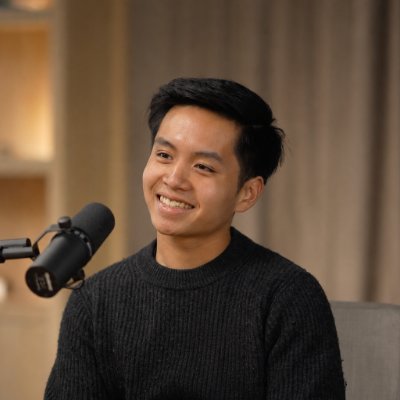
Inside the $6B quant fund that turned down a shot at $20B to keep control — early investors who stayed in day one are up almost 40x. Suhaimi Zainul-Abidin — CEO @ Quantedge, Asia's top quant hedge fund, CEO since 2018 "We're trying to beat the markets. 20% annualized...

151,472 Aufrufe • vor 1 Monat •via X (Twitter)

7 Kommentare

Profilbild von Ruuj
Ruujvor 1 Monat

You are making a good podcast man!

Profilbild von Ethan Kho
Ethan Khovor 1 Monat

Thanks a ton!!!

Profilbild von Linh Trinh
Linh Trinhvor 1 Monat

not taking anything away, but looking at their annual returns, sharpe is less than 1 (actual sharpe should be even lower, because annual return mask away lot of volatility and drawdown) and beta to SP500 is high, would have been interesting to address this and see his view on it

Profilbild von Bordia
Bordiavor 1 Monat

Thanks for doing this, it was a gem.

Profilbild von Peter Chayson
Peter Chaysonvor 1 Monat

Great video. Any youtube channel?

Profilbild von confinedape
confinedapevor 1 Monat

excellent podcast.

Profilbild von Ethan Kho
Ethan Khovor 1 Monat

Thank you 🙏

Ähnliche Videos

Leaving Citadel & launching a $1B AI hedge fund — how Renee Yao built NeoIvy Capital from scratch Renee Yao walked away from two of the most elite hedge funds on Wall Street — Citadel & Millennium — and built a quant fund on a fundamentally different model: modern AI instead of human-powered alpha generation. The result: $1B+ in regulatory AUM, uncorrelated returns through COVID, & a fund Business Insider named one of the top transforming investing in North America. We cover: - Why large multi-manager quant firms rely on massive global researcher headcounts — & why Renee saw that as a model worth disrupting - The 3 barriers to entry in AI-driven quant — & why legacy sequential infrastructure can be a disadvantage compared to modern parallel distributed systems - How NeoIvy's self-evolving models adapted in real time during the March 2020 crash — while traditional quant managers had a nightmare month - The difference between beta returns, factor returns & pure alpha — & why size is the enemy of true idiosyncratic returns - Why the "black box" reputation of quant funds has been the #1 fundraising obstacle - How a 4-year-old girl visiting her uncle's room-sized supercomputer in China set the foundation for all of this - The edge/breadth/constraint framework from Grinold & Kahn — & how it shaped Renee's thinking on diversification - Renee's raw advice on staying disciplined when everyone around you is chasing beta in a bull market Transcript: 00:00 Intro 01:14 Renee Yao’s journey to founding Neo Ivy 02:28 Joining Citadel after the financial crisis 04:13 Hedge fund diversification and breadth of edge 04:45 Why Neo Ivy trades with AI strategies 07:50 How self-learning AI adapts to markets 09:40 Causation vs correlation in AI hedge funds 10:33 Barriers to entry for AI hedge funds 14:47 Risks of crowded factor bets explained 16:39 Why big funds struggle with AI talent 17:29 From PM at Citadel to hedge fund founder 18:47 Challenges of launching a quant hedge fund 20:25 Biggest constraint for AI hedge fund startups 22:08 How AI hedge funds adapted during COVID 24:04 Modern AI tools used in quant trading 25:13 Building hedge fund infrastructure from scratch 26:26 Career advice for aspiring quants and traders 28:55 Adapting career goals to changing job markets 31:57 Life lessons from trading and risk management 32:51 Staying disciplined while running a hedge fund 34:38 Obsession and belief in AI hedge funds 35:41 Closing thoughts on hedge funds and life

Ethan Kho

138,224 Aufrufe • vor 7 Monaten

"I haven't seen a real new idea in trading in at least 15 years." Tom Costello (Tom Coste) ran money at Tudor, Moore Capital, and Caxton. Built one of the first NLP-driven equity systems in 2003. 20 years managing capital, never had a down year. "Comparing what a retail trader does to what a quantitative hedge fund does is like comparing driving a bus on the New Jersey Turnpike to winning a Formula One race." We cover: - His hot take: no genuinely new trading idea in 15 years — only better people doing the same things faster - Why everyone in quant finance is a genius — and why that makes you ordinary, not special - Crypto is "super smart guys cosplaying at finance" — built for retail, which is exactly why it's the easiest money in finance right now - Why AGI won't beat the hedge fund industry — all the readily-capturable alpha is already captured - The status trap: why the path that made Paul Tudor Jones a billionaire won't work for the kid trying to copy it in 2026 - His friend the investment banker who'd quit it all to run a 10-employee ambulance supply company worth $150M - Why excitement is "wildly overbid" in finance — and why wanting an exciting trading job is itself a disqualifier - The most honest end of the financial industry — and why the media has it exactly backwards Thanks so much to Tom for coming on Odds on Open! Highlights: 00:00 Intro 01:18 Building institutional credibility for early-stage managers 03:01 The Pareto distribution of hedge fund returns 04:25 Applying the Unified Field Theory of Finance to fair value 08:14 Trading against human incentives in a deterministic market 13:54 Why allocators don’t steal alpha from prospective PMs 25:16 Evaluating career edge in quantitative finance for 2026 30:48 Paul Tudor Jones and the art of game selection 33:42 Analyzing the economic viability of starting a new fund 35:16 Identifying common retail pitfalls: Mean reversion and arbitrage 38:55 Why there hasn't been a new trading idea in 15 years 50:33 Managing tail risk: Physics vs. deterministic financial distributions 59:10 Career pathing for PMs after a fund blow-up 1:07:53 SBF and FTX: Credibility vs. the "Founder-Genius" archetype 1:13:44 Establishing proof-of-concept through audited multi-year returns

Ethan Kho

1,187,584 Aufrufe • vor 4 Monaten

Inside the Billionaire Backed Prediction Markets Hedge Fund. Run by a 24-Year-Old. Camilo Saravia (camilo), founder of BlueWalker Capital, a systematic prediction markets fund backed by Daniel Howard of Halo Capital. "I don't want more capital. I'm extremely long our equity." We cover: - Why insider trading in prediction markets is terrible for liquidity and GOOD for society - Prediction markets as cash-backed truth in a world of AI slop and disinformation - Why he turned down the allocator question entirely, and the "Goldilocks zone" that makes a fund this size work - His research team's actual mission statement: "collapse the entropy of the internet into signal" - Trading Spotify streams and measuring how fast Mamdani viralizes vs Cuomo on TikTok - Why beating earnings has almost no correlation with the stock going up, and why only testing reveals that - Mention markets as literal next-word prediction, and how makers got sniped out - Hiring missionaries with a mercenary work style, and why every hire takes a pay cut vs Citadel, Jane Street, Wintermute - Daniel Howard's mandate: faster, more risk, more aggression. "They haven't backed me to print 7% APY" - The abundance mindset, from a kid with immigrant parents sitting across from generational wealth - A venture mindset applied to public equities: pulling the thread from free cash flow down to Glassdoor culture - Why you never need to be binarily right: buy at 20, sell at 40, never wait for resolution Highlights: (00:00) Intro (00:56) Taker vs maker, reflexive vs proactive: the strategy map (03:08) What makes an event contract different from an equity (04:53) Insider trading in prediction markets: bug or feature (08:18) Cash-backed truth in a world of AI slop (12:43) Where edge actually comes from (14:19) The dataset: billions of records a day (17:44) Building a money management business from an empty office (21:34) Why asset management competes with software as a business model (23:51) How to underwrite elite talent (25:50) Missionaries vs mercenaries, and why the tension is the point (30:54) Recruiting against Citadel money (and losing on salary every time) (37:32) "We can't compromise speed": the Daniel Howard mandate (44:45) The abundance mindset (48:28) "Why should I invest?" / "I don't want more capital" (50:12) Collapsing the entropy of the internet (51:04) Spotify streams, TikTok virality, and mention markets (53:17) The one data provider he'd long if he could (55:49) There's a business behind everything (01:00:07) How to find the real drivers in any market (01:04:04) A venture mindset applied to public equities (01:10:06) Prediction markets 101: where to actually start (01:12:05) Why you don't need to be binarily right (01:13:19) Final question: building personal edge against the models

Ethan Kho

127,789 Aufrufe • vor 1 Monat

MUST-WATCH: Macro Hedge Fund Founder Alfonso Peccatiello Reveals his Edge in Macro Trading Alfonso Pecatiello (former large global bank PM, founder of The Macro Compass & Palinuro Capital) breaks down how to create durable edge in macro investing and why concentration is the death of many fund managers. "You can hear from Druckenmiller and Soros about concentration — but you won't hear from the thousands of managers who went bankrupt trying the same approach." We cover: - Why bank reserves (QE "liquidity") have NO direct pipe to the S&P 500 - The real money creators: commercial banks & government deficits — not the Fed - Why the second derivative of money creation drives nominal growth & asset prices - How to run 40-50 ideas/year & arrive at 10-12 truly independent bets - The "Trump error term": modeling exogenous volatility injections - The handbrake rule: when models fail, cut risk (the math of negative compounding destroys you) - Launching Palinuro with zero GP stakes & why 80% of funds fail in year 1-5 Thanks to Alf (Alf) for pulling back the curtain on finding edge in macro trading and the unglamorous reality of fund building. Highlights: 00:00 Understanding Money Creation and Strict Process as a Macro Edge 04:21 Commercial Banks and Government Deficits Drive Real Money Creation 12:52 Why Diversification and Risk Parity Beat Concentrated Bets 19:30 Using the "Handbrake" to Cut Risk During Black Swan Events 27:47 Why Factor Neutral Mandates Don't Make Sense for Macro Investors 32:22 The Underestimated Challenges of Building a Macro Hedge Fund 43:20 Passion, Delegation, and the Grinder Mentality for Fund Founders 52:13 The High Probability of Failure and Necessary Financial Runway 56:58 Building an Empathetic Team Through Intentional Hiring Frameworks 1:02:11 Why Communication Skills Are Crucial for Success in Finance

Ethan Kho

80,288 Aufrufe • vor 7 Monaten

Hedge fund managers in their first 3 years beat the hedge fund index by ~8 points. This new fund is built entirely around that stat. Tyler Errickson (17 years in fund management | Co-founded the Ophir Global Funds: $2M → $1B+ AUM | Brant Point | Now founder & CEO of Riptide Advisors - the multi-manager betting on undiscovered talent, launched Jan 2026) "You're going to get discovered when you deserve to be discovered." We cover: - Why being a small single-manager has never been harder: the fund that met 46 investors, got 3 callbacks & 0 subscriptions - The flipped script: 10 managers chasing $10M checks vs. one platform raising $100M for all of them - The "optimal point of the alpha curve": why the hungriest managers are in their first 3 years - Ray Dalio's warning — "you're not building a 50-year business" in a pod — & why Tyler thinks PMs deserve an annuity on their success - Why fund founders spend 40–60% of their time on non-alpha work — and how Riptide absorbs it - Anti-screening: bring $250K, get on the field — the combine vs. game-film theory of talent - The 3-day bus tour from China to Vietnam with Ophir's Andrew Mitchell (22% net for 16 years) - Single A → Triple A → the majors: opportunities fund, market neutral, flexible equity, then your own fund - The $2M → $25M void: too small for seed checks, too slow through friends & family - How Riptide wins when you leave: GP stakes, 20% revenue shares & rights of first refusal Highlights: 00:00 Introduction 00:19 Building Riptide in a challenging environment for small funds 02:59 What is Riptide? 03:26 Two-sided marketplace: talent and capital 11:32 Sourcing and attracting talent 20:42 Screening process and X factors 27:20 Fund structure: opportunities, flexible equity, market neutral 35:09 Revenue share and strategic partnerships 42:09 Raising capital and allocator relationships 50:27 Core value proposition and closing thoughts

Ethan Kho

135,140 Aufrufe • vor 2 Monaten

Alex Behring and Daniel Schwartz have almost never spoken publicly about how 3G Capital invests and operates. The firm is different in many fascinating ways. Every fund they raise is designed to make exactly one investment. They invest more of their own money than any of their limited partners in every deal and send their own people to run the businesses as CEOs and CFOs. Over 20 years they have never lost money on a deal. The conversation includes the story of how they spent 15 years building a relationship with the founding family of Hunter Douglas before getting the opportunity to buy it. They describe receiving a two line rejection email from Tim Hortons after weeks of silence and how they managed to get back to the table and close the deal. They talk about how they bought Burger King for a billion dollars when no other firm showed up to compete. And they explain why Skechers being the third largest sneaker company in the world surprised even them. A major theme is how they develop talent. Daniel was an analyst who became CFO at 26 and CEO of Burger King at 32. Alex became CEO of the largest railroad in Latin America when he was 30. They explain what they look for in young people, why they give them significant responsibility faster than anywhere else, and what it takes to set them up to succeed while holding an unusually high bar. Daniel and Alex are two of the most talented and intense people I know. They are incredibly serious about business quality and disciplined about waiting for the right opportunity. They would rather do nothing than compromise. Enjoy! Timestamps: 00:00:00 Episode Intro: Daniel Schwartz & Alex Behring 00:01:20 The "One Investment Per Fund" Model 00:05:39 Characteristics of Great Businesses 00:08:40 The Unique Structure of 3G Capital 00:14:21 Why Hunter Douglas Was Appealing 00:20:15 Alex's Railroad Story 00:28:12 The "Burger King is Run by Children" Story 00:30:38 Negotiating with Tim Hortons 00:38:18 Be Wired for Urgency 00:46:43 3G's Operating System 00:55:35 Why Burger King Was Undervalued 00:59:43 From Zero to $2 Billion in France 01:01:42 Kraft Heinz: Concentration Risk 01:04:25 Skechers: Great Product Meets Great Distribution 01:13:10 Zero-Based Budgeting & When It Works 01:16:28 The Current State of Capital Markets 01:23:04 3G's Founder-Led Focus 01:28:57 The Kindest Thing

Patrick OShaughnessy

43,117 Aufrufe • vor 7 Monaten

Victor Haghani helped build LTCM & watched it collapse — with winning trades still on the books. The lesson was never what to buy. It was how much. Victor Haghani (Co-founder @ LTCM | Founder @ Elm Wealth | Author of The Missing Billionaires) "It wasn't on the selection of the trades. It was on the sizing." We cover: - The two decisions every investor makes: what to own and how much, and why everyone fixates on the harder one - The biased-coin game that bankrupted Wall Street PMs and finance grads: a 60/40 edge handed to them, and they still blew up - Why the cost of risk is a fee you pay yourself, plus the napkin rule to price it (15% vol = 2.25% a year) - The Elon problem: 50% vol on your net worth means a ~90% chance of little left in 10 years, before anyone's even bearish - "The right answer to the wrong question," and why chasing billionaire money wrecks the plan - The crystal-ball game: hand someone tomorrow's WSJ front page and watch 1 in 6 still go bust - Claude, GPT, Gemini and Grok play the same game, and the two AIs that actually lost money - His 92-year-old mother, who day-trades every day and won't hear a word of it Highlights: 00:00 Right & ruined — the LTCM paradox 01:40 The two decisions: what to invest in vs. how much 02:50 The 60/40 coin & why max-EV bankrupts you 04:00 The experiment: PMs & PhDs sizing it all wrong 07:00 Kelly in plain English — a constant 10–20% 08:20 Why sizing isn't zero-sum, but beating the market is 10:30 Why even pros don't optimize sizing 12:50 The cost of risk is a fee — paid to yourself 15:20 Pricing your own risk: variance as the charge 16:30 Concentrated stock: 30% vol = a 9% toll 20:50 Elon, 50% vol & the log-normal trap 22:45 The right answer to the wrong question 23:35 The real objective: smooth lifetime spending & giving 27:35 The crystal-ball / WSJ front-page game 33:25 Claude, GPT, Gemini & Grok step up to trade 37:40 Claude's 66% hit rate — & the two AIs that lost money 40:35 Can anyone actually beat the market? 50:25 How much risk a young person should take 58:00 Estimating your human capital 1:02:40 The mom who won't stop day-trading 1:07:30 The one rule: if you don't save, nothing else matters

Ethan Kho

626,586 Aufrufe • vor 3 Monaten

Fewer than five people on Earth have built two open-source JavaScript framework companies. Sam Bhagwat is one of them. The book that made him known is now one of the go-to texts for building agents. You’ve seen it: Principles of Building AI Agents. But the part that’s important to his story is the low point before Mastra. When Gatsby faded, the acquisition went sideways. They went off to build sales AI and failed for months, then came back to open-source dev tools and instantly felt like they were back on track. His word for it: the "unknown knowns." The things you know so well you forget you know them. They'd forgotten they were world-class at the exact thing they walked away from. I sat down with him at Y Combinator, where Mastra went through the Winter 2025 batch. We got into: •Why "that's interesting" is the most dangerous thing a user can tell you •Why planning in quarters is dead, it's actions-per-minute now •Why it's okay to quit your idea •Writing a print book in an era that moves too fast to print •The loneliness nobody talks about: teams stopped pair programming because everyone's driving their own agent His rule, from a YC partner: generosity breeds luck. 𝐓𝐈𝐌𝐄𝐒𝐓𝐀𝐌𝐏𝐒 (00:00) Intro — Y Combinator (01:30) What Mastra Is (03:00) Content Wants to Be Frequent (05:00) Shipping a Tier-One Feature Every Day (07:00) The $13M Seed and $22M Series A (09:00) Turn-Based vs. Real-Time Strategy (12:00) Why Experience Beats Fresh Eyes (15:00) "That's Interesting" Means They're Not Interested (18:00) It's Okay to Quit Your Idea (21:00) The Book That Started as a Joke (25:00) From Journalism to Open Source (28:00) The Netlify Acquisition, and What It Cost (32:00) The Unknown Knowns (36:00) The YC Winter '25 Takeoff Story (40:00) Remote Work Is Underrated in the Age of AI (44:00) The New Loneliness of Building With Agents (47:00) What He Still Can't Figure Out About Agents

Julia Fedorin

35,776 Aufrufe • vor 1 Monat

You can have a verified track record, audited numbers & a Sharpe above 1.5 — & still never raise a dollar. Claudia Quintela raises $50–200M checks for emerging hedge fund managers who can run a book but can't yet get in the room — she's done it for 25 years across UBS, Morgan Stanley & State Street. "I raised a manager $150M in 3–4 months. The week before, I found out one partner had runway until September. It was June." This is what institutional capital raising actually looks like. We cover: — Why $10M in audited personal capital is still below the threshold most allocators care about — Capacity constraints: the difference between a $250M boutique strategy & a $1B scalable platform — How to structure economics when an investor loves the strategy but the term sheet isn't there yet — Why the fundraising process for an early-stage manager runs 9–18 months minimum — The break-even analysis every investor will run on your business before they run it on your returns — How one manager kept institutional money through a massive drawdown — by over-communicating every step down — Why fact sheets get ignored & what the best managers send instead — The "get out of bed price"— how to negotiate with prime brokers when you have no AUM Huge thanks to Claudia for 25 years of hard-won insight distilled into one conversation. Highlights: 00:00 Understanding the High Failure Rate of Startup Hedge Funds 04:42 The Critical Shift from Trader to Business Builder 18:39 Mastering Communication and Transparency with Investors 24:36 Beyond Skills: Personality Traits of Top Managers 31:56 Using AI and Data to Build Investor Relationships 48:11 Financial Literacy and Portable Skills for Long-Term Success

Ethan Kho

146,215 Aufrufe • vor 6 Monaten

Ex-Balyasny PM Ying Hua (Ying Hua) on why automation will increase demand for hedge fund talent, the quant/fundamental convergence, & why quant is blackjack but fundamental is poker. Ying Hua (PM @ Balyasny — built & led a quantamental team covering US insurance, capital markets & fintech | ~5 yrs @ Citadel running a long/short insurance book | Equity research @ Goldman Sachs | MS in Data Science @ UC Berkeley | Now founder & CEO of Implied Implied) "One of the best-kept secrets: fundamental investors are not good at sizing. Quant funds are really good at sizing." We cover: - The only real line between quant and fundamental: historical pattern matching vs. "how is this time different" — and the alpha neither group is looking at - Why she rebuilt her process so every model updated within 2 minutes of a print - Scraping highway patrol data from 15 states to track auto insurance losses live, every single day - The Malibu wildfire: mapping burned mansions from celebrity tweets to estimate losses before any industry consultant published a number - Her automation math: data gathering ~100% automatable, processing ~80%, judgment still 100% human - AI is quant for words — next-token prediction is pattern matching, which makes this just the next automation wave after quant and indexing - The proof differentiated views pay more: insurance stocks moved 2-3% on earnings in 2010; by the time she left, 15-20% intraday - Why "hook Claude Code up to data and let it rip" fails: BloombergGPT losing to a smaller open-source model, & why horizontal models are college grads - Quant is blackjack with card counting; multi-manager investing is poker — your hand, others' perception of it, your seat, everyone's stack - Most PMs are playing the wrong game: the positioning game hiding inside "fundamental" sectors with no new money coming in - Her hiring bar at BAM: every fundamental analyst learns Python — and the one skill she says can't be trained - The only two truly meritocratic jobs: hedge fund PM & sales Highlights: (00:00) Intro (00:40) How a quantamental PM actually puts on a position (02:05) The only real line between quant and fundamental (04:45) Why quantamental lowers the burden on your brain (06:40) Scraping 15 states of highway patrol data to nowcast insurance losses (09:25) The Malibu wildfire: estimating losses from celebrity tweets (11:55) How much of fundamental investing can be automated (13:45) Quantifying intuition: when a CFO's filler words jump 8% to 20% (16:25) The contrarian case: automation expands demand for talent (18:15) Earnings vol exploded — differentiated views pay more (20:25) Why Claude Code can't run your book (23:40) Horizontal models are college grads with no domain knowledge (30:50) Why chat is the wrong interface for investors (36:20) Will AI make markets more or less efficient? (39:10) Two things every fundamental PM should do today (41:50) The moat that expands: talent, redefined (45:50) Sometimes the game is positioning, not fundamentals (48:25) Blackjack vs. poker vs. surfing: matching the game to your horizon (52:00) Should young analysts chase the hottest sector? (57:55) Munger vs. Musk: two philosophies of wealth (1:01:05) Self-awareness in investing is bimodal (1:07:05) The only two truly meritocratic jobs: hedge funds & sales (1:08:50) The one skill for every regime: reconstruct the narrative

Ethan Kho

244,449 Aufrufe • vor 1 Monat

Confluent just sold for $11 billion. Jay Kreps built it by learning a distinction that sits at the center of every hard company decision. There are two questions you can ask about anything hard: what can we do? And what do we have to do? The first is answered by your team. The second is imposed by the world. When Confluent needed a cloud product, most of the company thought it was a terrible idea. The on-prem business was working. The economics were better. Investors thought they were making a mistake. As Jay put it: if there were two standalone companies, we'd invest in this one and definitely not that one. Jay's answer: we have to do this. There's no question that a huge portion of the market is going to be in the cloud. So we have to serve that part of the market. The fact that it's very hard is not relevant. Once you know you have to do something, you find a way to do it. We cover this insight amongst dozens of others in my most recent "In Depth" conversation. Timestamps: 01:18 Making the leap from engineer to CEO 03:33 The 80% rule: what a CEO actually needs to know 04:54 Scaling different business disciplines 09:31 How Confluent’s story began in LinkedIn 12:13 The growing need for scalable data tech 13:37 What the early Kafka product looked like 16:38 Kafka’s underwhelming open-source launch 18:38 The blog post that accelerated Kafka’s adoption 20:16 Why so many marketing messages fail 28:08 The decision to build Confluent 34:24 Planning to fundraise before building the product 39:19 Confluent’s early years: Tough product decisions 47:07 The underrated growth lever question for companies 55:46 Why founder optimism is an overrated trait 1:00:29 What should founders give up as they scale? 1:02:47 Why people become trapped in a failure mindset 1:08:33 The Chipotle problem: Losing excellence at scale

Brett Berson

19,608 Aufrufe • vor 5 Monaten

Inside the mind of an ex-SIG quant trader who can't turn off the EV brain - even for his kid's school choice Andrew Courtney (Andrew Courtney) ran the International ETFs Trading Desk at Susquehanna International Group for ~15 years before leaving in 2023. He now runs Kalshionomics (Kalshinomics), a prediction markets analytics tool, and writes the Whirligig Bear, one of the sharpest prediction markets Substacks out there. "I think of everything as a bet. I kind of don't understand how you talk to normal people — they do not do that." SIG trains their junior traders with poker, spending 2hrs/day turning over cards after every hand, justifying every decision quantitatively AND qualitatively. 15 years later, Andrew views prediction markets the same way: read who's on the other side, size accordingly, fold when the whale comes back at you 10x. We cover: - Why SIG pays junior traders to play poker for 2hrs/day — & what happens after every single hand - The "one eye on the market, always" attention tax that destroys most people's careers - How to find edge in prediction markets by asking: who am I actually trading against? - Why meme-heavy, overhyped markets (Taylor Swift at the Super Bowl) might be the juiciest trades - The insider trading debate in prediction markets — & why it's "socially corrosive" - Floor trading vs. upstairs quant: why the transition saved his career - 40 connections after ~15 years at one of the world's best firms — the hidden cost of prop trading - Why he doesn't have collision insurance on his car (& the EV math behind it) Thank you so much Andrew Courtney for coming on the pod! Timestamps: 00:00 Intro 05:00 Floor trading vs. electronic trading 06:28 What makes an upstairs trader 10:16 Poker as trader training 13:00 Thinking in bets as a mental framework 15:11 Decision trees in real life 16:40 Where prediction markets actually have edge 19:00 Why the LLM forecasting layer falls short 19:40 Liquidity incentives and trading low-volume markets 22:00 Limiting downside even when the model is wrong 24:32 Executing in illiquid markets 25:44 Fair value vs. directional conviction 27:11 Bayesian updating when liquidity responds 28:40 Fading hype and crowded narratives 31:07 Longshot bias vs. fanbase bias 34:20 How to judge whether you really have edge 36:40 Building analytics tools for prediction markets 38:20 The temporary edge for smart amateurs 40:35 Where prediction markets fit best 41:20 Markets that shouldn’t exist 43:20 Why insider trading corrodes incentives 46:52 Are prediction markets a net good or bad 50:47 Minimizing degeneracy and maximizing signal 53:32 A simple EV mindset anyone can use

Ethan Kho

436,074 Aufrufe • vor 7 Monaten

This guy beat the market for 17 straight years trading a sector many investors have written off post-2008 Derek Pilecki (Derek Pilecki) runs a financials-only fund. 21%+ annualized. His edge? A corner of the market many investors moved away from after the GFC. We cover: - Why he expanded from 25 → 40 positions and returns went UP - His counterintuitive rule: buy higher, not lower (positions get LESS risky as they rise) - The Robinhood call — bought late 2023, rode it to a multibagger - Why he's quietly watching FactSet, Morningstar & Verisk right now - His view on private credit risk (and why he disagrees with Jamie Dimon) - How he uses AI to analyze more stocks without losing his edge - Why markets chronically underreact to good news — and how to exploit it - The brutal career reality no one tells young PMs about Highlights: 00:00 Intro 01:06 Derek's +21% annualized return track record 02:50 Fundamental business change vs market noise in Robinhood 05:25 Portfolio construction: Concentration limits and adding to winners 09:09 Sourcing alpha and identifying three-year doubles in financials 12:44 Developing edge through repetition and management team cycles 14:16 Why the post-GFC regime fundamentally changed bank underwriting 17:07 Assessing tail risk and leverage in the private credit market 21:23 AI-driven market dispersion and identifying moaty businesses 24:11 Why shareholder base turnover matters for timing broken charts 29:37 Integrating AI into fundamental research and SEC filing analysis 35:39 Risk management: Permanent capital loss vs mark-to-market volatility 37:12 Capacity constraints: Optimizing for returns over AUM scale 50:39 Career risk and the reality of active money management

Ethan Kho

801,151 Aufrufe • vor 5 Monaten