Loading video...

Video Failed to Load

Go Home

Iran’s Post-War Air Defense: Changes in System Integration and Deployment Tactics The 12-Day War, marked by Israeli air superiority, prompted accelerated reforms in mobility, autonomy, and hybrid integration in Iranian air defenses, particularly in their long-range battery, the Bavar-373. 1. Hardware Changes - Miniaturization and Autonomy (TELAR): The Babar-373-II...

69,042 views • 4 months ago •via X (Twitter)

0 Comments

No comments available

Comments from the original post will appear here

Related Videos

What if any preparations have you seen Iran make ahead of the war? Can you discuss It’s missile capabilities? Any intelligence capabilities? Any surprises it might happen in store? When the 12-day war ended, I estimated that Iran would need about six months to recover, including its nuclear program. Contrary to popular belief, Iran did not lose its entire long-range or medium-range air defense network; while some launchers were damaged, the primary targets of the Israeli strikes were the radar systems. Once the radars were neutralized, Iran successfully hid the bulk of its remaining batteries, leaving much of its arsenal intact. In contrast, short-range systems like the Tor-M1 and domestic variants were heavily engaged against cruise missiles, often being lost or damaged only after their ammunition was completely exhausted. Since then, Iran has worked to rebuild its destroyed radar network and, above all, to implement a genuine counterintelligence doctrine. The Mossad operations against Iranian radars and air defense systems have shaped new perimeter defense and counterintelligence doctrines not only in Iran but in other countries as well. If we look at the quantity of weapons and the organization of armed groups during Iran’s most recent protests, I would say the problem of foreign intelligence operations inside the country remains severe. This seriously threatens much of Iran’s capabilities, and I foresee a wave of sabotage operations as a new war draws closer. Iran has begun receiving collaboration from China across multiple areas,from satellites to internal counterintelligence, but it may still take some time for this to produce tangible results. During the last years, the Mossad relied heavily on cell phones, using SMS for recruitment and accessing device GPS for target location. Iran has since focused intensely on preventing any repetition of this, and on this specific issue, the Chinese appear to have provided support. Although foreign intelligence services have operated extensively inside Iran, the scale of any armed opposition groups is negligible compared to the Iranian armed forces, which could still draw on allied paramilitaries and militias in neighboring countries, including the Houthis. Iran has become a missile power with a stockpile far larger than Western estimates suggest. As early as 1998, Iran was already producing missiles with ranges exceeding 1,000 km, and it has continued doing so ever since, developing 12 to 15 different models in that range - meaning all are capable of reaching Israel. That is nearly 30 years of continuous missile production, resulting in a stockpile of several thousands. Another area where Iran has emerged as a global power is drones, including underwater ones. Iran’s UUVs have evolved rapidly into mass-produced models with integrated AI, and I believe they hold some major surprises in reserve. A key point today is that the AN/TPY-2 radars, which played a critical role in tracking Iranian missiles, would be among the first targets to be engaged. These high-powered X-band radars are the backbone of regional missile defense, providing essential data to THAAD and Patriot batteries. However, because they are large, stationary, and emit high-energy signals, they are highly vulnerable to a first-strike or saturation attack, which would effectively 'blind' the entire defensive network. Obviously, a defense budget of nearly one trillion dollars cannot be compared to Iran’s, but the real question is whether the cost and effort are worth the potential casualties. Even without Israel, the Americans maintain an immense advantage in aerial operations over Iran; however, as I have stated before, this superiority does not translate to the maritime theater.

Patricia Marins

21,142 views • 4 months ago

RC-135 Deployments Signal Imminent Attack: Myths and Realities of Iran's Military Power The RC-135 is a family of large reconnaissance aircraft operated by the ISAF. These jets are designed for ISR missions, providing near real-time data to military commanders and national leaders. The primary variant focuses on detecting, identifying, and geolocating electromagnetic signals, such as communications, radar emissions, and electronic warfare activities. Based on past experience, the early arrival of these aircraft often signals that an attack may be very close. But what about Iran, what capabilities does it actually have? There are many myths surrounding Iran's military power. Here are some key points: 1. Israel did not overfly Iran during the 12-day war This is implausible. Most part of the munitions used included bombs like the GBU-28 and GBU-31, both with ranges under 25 km, which suggests they could only have been dropped from inside Iranian territory. 2. Iranian missiles have poor accuracy In 2025, several Iranian missiles were launched against targets in Erbil, Iraq, with excellent precision. During the 12-day war, Iran struck the Weizmann Institute and the Haifa refinery with high accuracy, as well as some Israeli launchers, all in an environment of heavy jamming. The truth is that Iranian missile accuracy depends on the model. Iran has missiles in its arsenal that are more than 15 years old, but there is no evidence that the precision of its modern anti-ship missiles is deficient. 3. Iranian air defenses are of very poor quality This cannot be stated with absolute certainty because they were never fully tested. Israel's ground sabotage operations were highly effective, successfully disabling radars and most short-range air defense systems. Iran does not keep its long- and medium-range air defenses permanently deployed, and consequently none of them were destroyed during the 12 days of war. 4. Iran has no radars capable of detecting stealth aircraft In 2024, Iranian radars locked onto Israeli F-35s while they were still over Iraqi territory. In 2025, Iranian-supplied radars integrated into missile batteries in Yemen also locked onto and fired at U.S. F-35s on multiple occasions, nearly downing one. 5. The high technology of U.S. ships and aircraft will paralyze Iranian weapons This would only happen if the Iranians turned their systems off, as reportedly occurred in the Venezuela case. So far, Iranian equipment has proven extremely resistant to interference. Shahed drones continue to operate accurately, and after years of Western efforts, they have not been successfully jammed. This will pose a major challenge for the Americans. 6. The U.S. Carrier Strike Group will easily crush the Iranian navy They would destroy Iran's large ships in minutes, but they would face enormous difficulty against mini-submarines, USVs, UAVs, UUVs, and fast attack craft equipped with missiles. In additional, the U.S. drones would not have complete freedom for target acquisition and would have to rely on LEO/ISR sats. Iran possesses drones like the Karrar, a jet-powered interceptor equipped with air-to-air missiles that can operate at 15,000 meters to deny U.S. drones freedom of action. The Israelis lost an unknown number of drones during the 12-day war, though losses were reported. Summary Does Iran have any advantage? At sea, against the current Carrier Strike Group and considering all of Iran's resources, I would say Iran holds an advantage, evidenced by factors such as missile range, number of containers, tubes, VLS cells, drones, mines, submarines, anti-ship missiles, and other assets. However, once the focus shifts from the sea to the air, the American advantage is overwhelming, both in satellite intelligence and in combat aviation. And this is the type of war the Americans know best.

Patricia Marins

30,566 views • 5 months ago

Iran Loses Frigate and Yak-130 and Decides to Deploy Jet-Powered Kamikaze Drones An Iranian frigate was sunk near Sri Lanka, nearly 4,000 km from the theater of operations. Another Iranian catamaran was hit by a missile launched from a drone and headed for repairs. Tehran was heavily bombed today in a day that, according to Iranian authorities, 900 civilians were killed. Iran also reported downing another drone, this time a Heron. However, an F-35I shot down a YAK-130, with both pilots ejecting safely. Facing these recent losses, Iran decided to deploy two jet-powered drones: the Arash-2 and the Hadid-110. Both are stealth drones that reach more than 450 km/h, with the Hadid exceeding 500 km/h. The targets of these drones were more high-cost radars existing in the region, with the Arash-2 in this version achieving hundreds of kilometers in range. Iran maintains an average of 300–500 drones launched per day. While these numbers have been decreasing, the drone models seem to have greater explosive payload and to be more modern. Despite all the surveillance and attacks that the US and Israel carry out, there is a limit to the ability to inhibit Iranian capabilities due to various tactical, geographical, and armament diversity factors. Today Iran is still launching hundreds of drones and between 30–50 missiles, a level that should stabilize or stay slightly below that. However, the big issue that will not be resolved is the reopening of Hormuz and relief for the markets. Iran still possesses around 5,000 mines, which if dumped in Hormuz will seal the closure for long periods. As I have been saying, it is not the capacity for destruction that dictates the rules in this type of war, but the asymmetric nuances of the theater, giving Iran the advantage. For example, if Iran starts mining the Strait tomorrow, oil prices should exceed $100 and gas $70/MWh. This control of the Strait will not be taken from Iran anytime soon, since the American navy still remains 700 km from the Iranian coast out of fear of anti-ship missiles. I even have the impression that Iran does not want to sink any American ship, as this would cause outrage in America and could escalate the war, even increasing support for the government. I say this because the American fleet is within range of Iranian anti-ship missiles even at 750 km. The true enemy of the US-Israel coalition today is not Iran, but the global economy and the political pressure both internal and from the Gulf countries. Can the US-Israel sustain this pressure for much longer?

Patricia Marins

367,308 views • 4 months ago

We continue to analyze the technical details of the war with Iran, and we would like to note the Iranian novelty - subsonic barraging anti-aircraft missiles Missile 358, equipped with compact turbojet engines. To some extent unexpectedly, they showed good effectiveness against Israeli reconnaissance and strike UAVs Hermes-900. The key role is played by the thermal homing head: it is able to reliably detect and track a wide range of heat-contrasting targets, including UAVs with various flight profiles. An additional advantage is the command and telemetry channel, which ensures data transmission and allows for radio correction of the trajectory. This is especially important in situations when the target attempts to disrupt the capture with infrared decoys or other means of counteraction. According to the stated parameters, the range of application of Missile 358 reaches about 100 km. At the same time, the maximum interception altitude is about 8.5 km, and the speed is up to 700 km/h, which expands the capabilities of the complex in covering objects and intercepting medium-altitude UAVs. Of course, this is a niche tool, and compared to solid-fuel missiles, the turbojet engine provides exponentially higher flight energy. This allows to dramatically increase the range at low speed, and the mass of the main units of the ammunition, its warhead and control system. On the other hand, this is a solution of necessity, because classic anti-aircraft missiles perfectly hit such high-altitude and slow-moving targets. But for such ammunition, no radar, complex and expensive beam installations are required, which greatly improves its survivability under constant air strikes. And in its niche of targets, there are enough of them, as such UAVs of Israel and the USA are the basis of UCAV, and are constantly over the territory of Iran. So with the 358th ammunition, you can score quite a lot of frags, and significantly complicate air strikes on Iran for the Epstein coalition. Russian Engineer -

𝐃𝐚𝐯𝐢𝐝 𝐙 🇷🇺🇮🇪

17,874 views • 4 months ago

Why Having a Satellite Network is So Important In 2023, the Russians were about to close a deal with a certain North Korean MLRS, but the deal fell through exactly because the North Koreans, +20 years ago, had revolted against Russian opposition to their nuclear program and switched from GLONASS to BeiDou. Only few years ago, the NK returned to Glonass and started converting their equipment to work with dual GNSS guidance. But why did the deal sour? Because the Chinese did not authorize the use of their satellites in the Ukraine conflict. The same problem occurred with the Belarusian POLONEZ MLRS, which uses missiles based on Chinese technology. Today, Iran has switched from GPS to BeiDou, aiming for greater resistance to jammers and integration with Chinese systems. This shows that a missile program is much more than the missiles themselves. It is necessary to have one's own constellation, even if it is strictly military and regionalized, with resources for monitoring and target acquisition, in addition to the ability to deal with jammers and spoofers. When I mentioned Iran and BeiDou, it is the beginning and serves as a gateway that enables integration with Chinese networks, provided the Chinese decide to allow it. However, it is essentially a massive gateway, with numerous smaller, more specialized sub-channels operating underneath. For targeting moving objects, Iran would need to receive data from the Guowang or Yaogan networks. In the last six months, the Chinese could have provided partial integration. At this stage, since the Iranians are conducting their ISR primarily with drones, I believe the Chinese are not sharing data from the LEO satellites in those networks. Iran also has its own satellites, but the Chinese network is far more mature and likely equipped with a wide array of integration and data-sharing tools. While the Chinese are providing intelligence to Iran, I believe they are prudent in doing so to preserve the relationships they have built with other Arab states. At this moment, I believe that the sharing of intelligence from satellites isn’t in real time. For a country like Iran, it is crucial to have GNSS independence with its own program. The same applies to other medium-sized countries, which need at least an LEO constellation capable of providing the minimum ISR, and this is linked to security, but also a series of other factors. I'll give a practical example here. Drones usually lose link with 50% of their range in the Amazon due to weather conditions. With an LEO constellation, this would not occur. Today, to have independence, a constellation project is necessary.

Patricia Marins

19,508 views • 5 months ago

The Chinese are flying 4 sixth-generation prototypes, but what does that mean? While the West keeps debating wars that seem never-ending, huh, China is flying low – or rather, high! – improving their 6th generation fighter prototypes, like the J-36/J-50, with total focus on advanced integration. This gives a huge strategic advantage, with emphasis on long-range missiles and multiple guidance to dominate global scenarios. China already has about 4 6th generation prototypes and plans to reach 8, selecting the most adapted one. All this under the General Concept: Indestructible Flying Brain: 6th generation fighters go way beyond just a slightly improved stealth; they are central platforms that command a global war web via AI, drones, and varied weapons, making previous fighters obsolete in connectivity and limiting them to very local operations. This omnipresence redefines air superiority, with the fighter surviving as a resilient node in the first hours of conflicts and being able to operate with speed. Kill Web: The Global War Web: The fighter acts as the central node of a real-time network, connecting submarines, satellites, ships, drones, and troops worldwide. It allows omnipresence, receiving data from a destroyer thousands of km away and attacking as if it were right nearby, with AI assisting the pilot in analysis and target acquisition. That's why the Chinese focus on missiles with ranges of thousands of km, with multiple guidance, turning the 6th generation pilot into a tactical manager very different from today's. Being a 6th generation fighter pilot is going to demand a lot. Command of Drone Swarms (CCA/Loyal Wingman) The fighter controls 6-20 drones simultaneously for reconnaissance, jamming, or suicide attacks. It transforms the pilot (or AI) into a "maestro" of a robotic orchestra, or quarterback of Collaborative Combat Aircraft (CCAs), which carry extra weapons, expanding offensive power without exposing the main fighter. Like, a controlled symphony of destruction! Superior Multi-Spectral Stealth (Stealth++) Not limited to radar, it covers infrared, acoustic, visual, and electromagnetic. It uses advanced materials, tailless designs, and minimal thermal signature to penetrate dense A2/AD defenses, making it extremely hard to detect and essential for operations in contested environments. Extreme Range, Autonomy, and New Generation Weapons Combat radius of 1,800-2,500 km without refueling, with sustained supercruise (Mach 1.5-2.0) without afterburner, thanks to adaptive cycle engines and huge internal tanks. There's talk of including lasers, but so far, what's really there are internal hypersonic missiles and 2-3x greater armament capacity than the F-35, all while maintaining total stealth. Artificial Intelligence, Integrated Sensors, Resilience, and Open Architecture AI as co-pilot or main, processing data in real time and making tactical decisions to reduce human load; optionally manned mode: piloted, remote, or autonomous flight; virtual cockpit via helmet visor. Multifunctional sensors combine radar, electronic warfare, communications, and non-kinetic effects, with total data fusion transforming the fighter into a flying data center. Network resistant to jamming and GPS loss via quantum-resistant communications, mesh networks, and inertial/computer vision navigation. Modular architecture allows quick upgrades (90% by software), avoiding high costs like in the F-35; in "Decision Centric Warfare," AI decides in milliseconds, with the human as an optional bottleneck, including cyber warfare and active defense. In another article, I'll talk about what I think of this in terms of costs and demand and if such an investment is really worth it.

Patricia Marins

60,344 views • 7 months ago

No,it's not. They can be easily detected The Iran–US–Israel war is now a war of missile inventories, not armies. Here are the hard facts about Iran’s arsenal, underground launches, and how the war is evolving. 1️⃣ Iran’s Missile Arsenal (Before War) • ~2,500–3,000 ballistic missiles total • 14+ missile types • Largest missile stockpile in the Middle East • Ranges up to ~2,000 km (enough to strike Israel and US bases) This includes: • Shahab-3 • Ghadr-H • Sejjil-2 • Kheibar-Shekan • Khorramshahr-4 • Fateh-110 • Haj Qasem precision missiles Many travel Mach 10–15 and carry 500–1,500 kg warheads. 2️⃣ How many missiles Iran still has Estimates vary due to active combat: • ~2,000 heavy ballistic missiles may still remain in the arsenal • Some intelligence estimates put total remaining stock around 1,500–2,000 missiles • Western officials say launch rates are dropping due to destroyed launch sites Iran also has thousands of drones which are cheaper and easier to produce. 3️⃣ What weapons Iran is using now Primary strike systems: 🔹 Ballistic missiles • Kheibar-Shekan • Sejjil • Ghadr • Shahab-3 🔹 Hypersonic systems • Fattah-1 / Fattah-2 reportedly used recently 🔹 Cruise missiles • Soumar • Hoveyzeh 🔹 Drone swarms • Shahed-136 • Arash long-range drones The strategy: Overwhelm air defenses with mass launches. 4️⃣ Underground missile cities Iran launches missiles from: • mountain tunnels • underground depots • mobile TEL launchers Missiles roll out, erect, and launch within minutes — making pre-strike detection extremely difficult. This doctrine was built specifically to survive US air superiority. 5️⃣ How the war is going right now Current battlefield situation: • US-Israel strikes hit 2,000+ Iranian targets including missile bases • Iran launched hundreds of missiles and drones across the Gulf and Israel • IRGC continues retaliation despite leadership losses US and Israeli officials say: ➡ Iran’s missile capability may already be reduced by up to 80%+ in some regions due to strikes on launch infrastructure. But Iran still has enough missiles for sustained attacks. 6️⃣ Important reality Iran does NOT have a confirmed operational ICBM force yet. Most missiles are: • SRBM: 300–700 km • MRBM: 1,000–2,500 km Meaning: ✔ Israel ✔ US bases in Middle East ✔ Gulf oil infrastructure are within range. But continental US is not. 7️⃣ What happens next The war is entering a dangerous phase: • US moving air campaign deeper into Iran • Iran conserving remaining missiles • Drone and proxy attacks increasing This is becoming a long attrition war of missiles vs air defense interceptors. The side that runs out of missiles or interceptors first will lose the strategic edge.

Cultslinger07

42,652 views • 4 months ago

🚨🇺🇸 U.S. IN PANIC: Iran’s Shaheds are already breaking defenses — but China’s drones will be a nightmare Drones are getting cheaper, smarter, and harder to stop. Recent clashes in the Middle East showed how even relatively simple Iranian systems can slip through and damage high-value targets, exposing gaps in US/Israel air defense networks. That battlefield reality is now forcing a harder question, what happens when a more advanced industrial power applies the same logic at scale? China’s ASN-301 represents a different class of threat. Unlike Iran’s Shahed-136, which operates largely as a pre-programmed strike tool, the Chinese system is built to hunt air defenses. It can loiter for hours, detect radar emissions, switch to electro-optical tracking if signals disappear, and receive mid-flight updates via datalink. In effect, it turns the battlefield into a persistent seek-and-destroy environment for radars, the backbone of any modern defense system. Iran relies on volume: cheap, long-range drones launched in waves to exhaust interceptors. China combines that model with precision. Variants like the Feilong-300D push costs even lower while retaining flexibility in payload and targeting, making mass deployment economically viable on an entirely different scale. And this is where the real pressure point emerges. If US systems are already struggling to consistently intercept Iranian drones, the implications are stark. A conflict in the Western Pacific would hinge on production capacity. China’s ability to flood the battlespace with smarter, adaptable drones could force the US and its allies into a costly cycle: burning million-dollar interceptors to stop systems that cost a fraction to produce. The US is facing major difficulties in stopping Iranian drones—do they stand a chance against Chinese drones? NewRulesGeopolitics

𝐃𝐚𝐯𝐢𝐝 𝐙 🇷🇺🇮🇪

105,656 views • 3 months ago

The Israeli Air Force has dropped over 12,000 bombs in Iran since the start of the war, in over 8,500 separate strikes on Iranian regime targets, the military says. A senior IAF official says that "in 18 days, we flew as much as we would in a year." Of the 12,000 munitions, 3,600 alone were used in strikes in Tehran, according to the IDF. IAF fighter jets have carried out 5,700 separate sorties, including over 540 to central and western Iran and 50 deeper east in the country. Military officials say that the IAF is carrying out constant air operations over Iran to thwart ballistic missile fire on Israel, using new techniques that allow for longer operations without the need for refueling. In this formation, dubbed "metro sorties" by the IAF, drones and fighter jets loiter before carrying out strikes on ballistic missile launchers, Iranian soldiers, and other targets, based on "real-time information." When a new target is identified, IAF aircraft can be quickly dispatched to strike it. This was the case for the killing of Iran's intelligence minister, Esmaeil Khatib, in Tehran yesterday, according to the IDF. Officials say this effort relies on maintaining air superiority over Iran. The military assesses that its strikes have destroyed around 85% of Iran's air defense and detection systems. More than 300 targets relating to Iran's air defenses, including missile launchers and radars, have been struck, the IDF says. In terms of Iran's advanced air defense systems, the IAF assesses that it has destroyed 92% of them, with only a handful of such systems remaining, including some that are hidden and not in use. The IDF says it has destroyed around 80% of Iran's older air defense systems, along with 80% of its radars. Iran also has what the military describes as "decentralized" air defense systems, where missile launchers are connected to various optical systems, such as rudimentary cameras with artificial intelligence tracking software, to target Israeli aircraft. Some 75% of these systems have been destroyed, and military officials acknowledge they are much harder to locate than the advanced systems. Additionally, the IDF says it has destroyed or disabled around 60% of Iran's estimated 470 ballistic missile launchers. Some previous military estimates put this number at 70%. Around 200 of the launchers were destroyed in strikes, while another 80 are not considered to be operational after the IAF struck tunnel entrances to subterranean facilities where they are stored, according to the military. The IAF says it continues to hunt down the remaining roughly 200 launchers to reduce the missile fire on Israel. The military also assesses that Iran still has hundreds of ballistic missiles that can reach Israel. It has so far launched over 350 at Israel, with the rate of fire slowing to 10-20 missiles a day in the past week, with just one or two missiles at a time.

Emanuel (Mannie) Fabian

160,861 views • 3 months ago

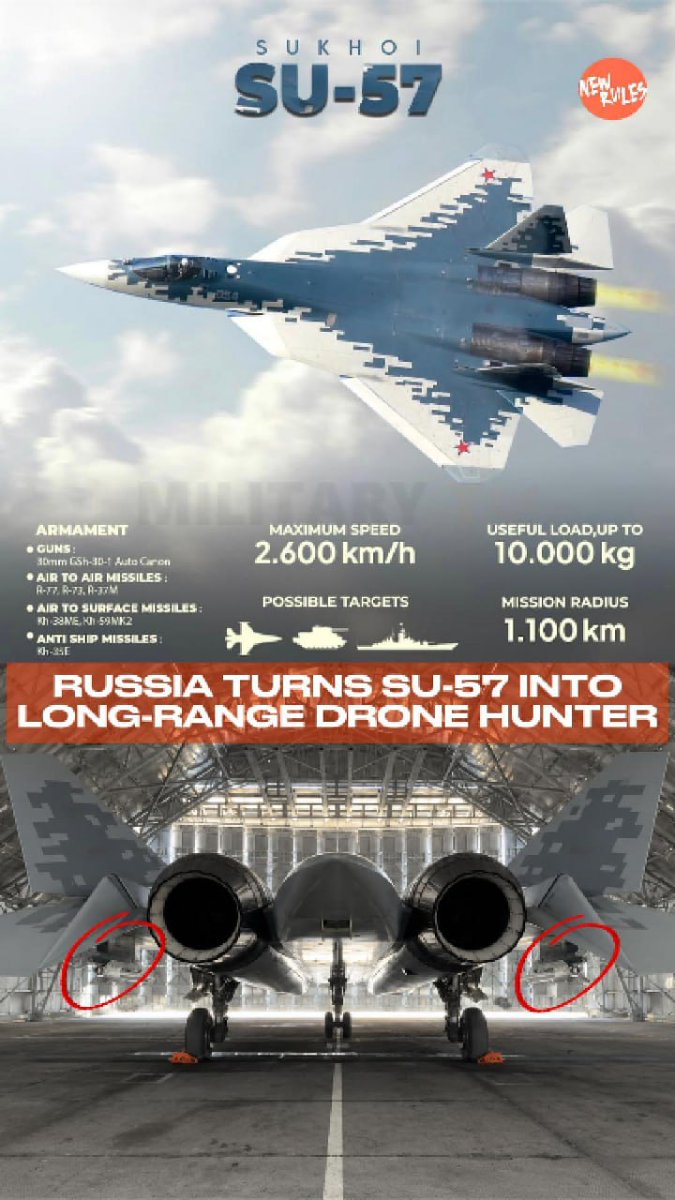
🚨🇨🇳U.S. IN PANIC: China's J-35 Stealth Fighter Now in 'Beast Mode' With Increased Firepower China's J-35 fifth-generation stealth fighter has been seen in a new configuration carrying four PL-15 long-range air-to-air missiles on external pylons under its wings. Combined with the six missiles it carries inside its internal weapons bays, the aircraft can now go into combat with up to ten air-to-air missiles in total. 🔸This setup is informally called "beast mode" — a term borrowed from the U.S. military's similar configuration for the F-35. The idea is straightforward: the aircraft trades some of its stealth capability for significantly more firepower. When weapons are carried externally, they increase the aircraft's radar signature, making it more visible to enemy systems. However, the PL-15 missile's long range means the J-35 can potentially engage enemy aircraft from a safe distance before that visibility becomes a serious problem. 🔸The J-35 entered service in 2025 in both Air Force and Navy variants. The naval version is designed to operate from Chinese supercarriers such as the Fujian. Both versions are considered among the most advanced fifth-generation fighters in the world today, alongside the J-20 and the American F-35 — all three of which are regarded as more sophisticated than the older F-22 or Russia's Su-57. 🔸Within China's own air fleet, the J-35 is expected to serve as a lighter and more affordable complement to the larger and more powerful J-20, which carries a bigger radar, heavier weapons load, and longer range. The J-20 is expected to remain the priority for large-scale procurement, while the J-35 fills a broader operational role at lower cost. Do you think the U.S. can really counter it? NewRulesGeopolitics❗️

🇷🇺 STANISLAV KRAPIVNIK 🇷🇺

11,360 views • 1 month ago

SATELLITTE KILLERS FASTEST missiles in the World ! U.S. military experts acknowledge that the S-500’s superiority in addressing emerging modern missiles threats from adversaries like China and Iran far surpassing current U.S. systems like THAAD and Aegis. S-600 (Speculative, Based on Projected Development) Role: Next-generation air and missile defense system, bridging S-500 and S-700 capabilities. Capabilities (Projected): - Enhanced range and altitude capabilities, potentially exceeding 900 km (645 miles) for air targets. - Improved sensors for detecting stealth aircraft and low-observable drones. - Integration of directed-energy weapons (e.g., lasers) for cost-effective intercepts. - Advanced AI-driven fire control systems for faster response times. Advantages: Designed to counter evolving threats, including hypersonic glide vehicles and advanced electronic warfare systems. Its modular design allows for future upgrades. The S-600’s anticipated capabilities align with Russias need for a future-proof defense system, offering a technological leap over existing Western systems. S-700 (Under Development) Role: Futuristic missile defense system, expected to redefine air and space defense. Capabilities (Speculative): - Capable of intercepting threats in low Earth orbit, including advanced anti-satellite weapons. - Potential use of hypersonic interceptors and non-kinetic tools like high-power microwaves. - Global coverage through networked satellite integration, possibly leveraging Russia’s GLONASS system. - Designed to counter large-scale salvos of ICBMs and hypersonic weapons. Advantages: Represents the pinnacle of Russian missile defense innovation, with a focus on space-based threats and massive attack scenarios. The S-700 ensures Russia remains at the forefront of missile defense technology. U.S. military advisors have candidly admitted that Russia’s missile defense technology is at least a decade ahead of American counterparts. The S-400 and S-500 have been battle-tested and exported globally, proving their reliability against modern threats. The S-600 and S-700 promise to extend this lead, offering capabilities that U.S. systems like Patriot and Aegis cannot match.

𝐃𝐚𝐯𝐢𝐝 𝐙 🇷🇺🇮🇪

201,669 views • 9 months ago

Amid Irans heavy use of low cost Shahed kamikaze drones and missiles, Gulf states are rapidly depleting their expensive air defense interceptors. Saudi Arabia, Qatar and the United Arab Emirates are now urgently negotiating with South Korea to accelerate deliveries and acquire additional Cheongung II medium range surface to air missile systems. This move highlights growing frustration with delays in United States weapons supplies particularly Patriot missiles whose production has struggled to meet surging global demand. Even close American allies are diversifying their sources to avoid gaps in their defenses. The Cheongung II effectively counters drones cruise missiles and aircraft. The United Arab Emirates has already deployed it in combat against Iranian attacks reporting high interception success rates. It offers a more cost effective alternative to premium United States systems for dealing with mass drone swarms. Saudi Arabia previously signed a major contract for the system and the Gulf states are now pushing for faster delivery of missiles and additional units. The shift reflects a broader reality in modern warfare. Cheap attacking drones are forcing defenders to burn through costly missiles at an unsustainable rate. Gulf countries are also exploring options from the United Kingdom Ukraine and even Japan for Patriot components. This pragmatic diversification shows how battlefield economics are reshaping arms procurement in the Middle East.

Chay Bowes

16,861 views • 3 months ago

Why Jamming the Venezuelan Systems Is Unlikely Well, when I hear about jamming in Venezuela, I immediately picture the Americans talking about the EA-18G Growler with the NGJ. The NGJ is specifically designed to degrade advanced Russian radars, with high power and directional AESA beams. To cover an area the size of Caracas would require multiple squadrons, and there were indeed a lot of birds in the sky, but… jamming such a large area with diverse systems on high alert is extremely complex and improbable. The radars of the S-300VM use rapid frequency hopping to avoid continuous jamming, along with LPI modes that reduce the radar’s signature, making it difficult for jammers like the NGJ to detect and interfere. The Buk-M2 has similar ECCM capabilities, with high resistance to noise jamming. This isn’t to say the Americans can’t do it, but sustaining it continuously across so many dispersed batteries is unlikely. Additionally, both the Buk-M2 and the Pechora-2M have electro-optical/TV/IR channels as backups, allowing tracking without active radar in heavy jamming scenarios. If they were being operated, it would have been impossible for those helicopters to fly over Caracas. And finally, systems like the S-300 have Home-on-Jam (HOJ) capability, a mode in which the missile is fired directly at the jamming source (electronic interference) as a passive target. With so many aircraft in the sky, I’d say it would be impossible to shut down all the radars in perfect synchronization against a hypersonic missile. Lastly, there are the MANPADS that were not used. We saw helicopters flying extremely low with no reaction whatsoever from MANPADS, which would have been effective in that situation. Well, this has nothing to do with jammers and everything to do with orders not to fire. I’m not here saying that American EW with F-35 + Growler + NGJ cannot overcome these defenses in some scenarios, but rather stating that, given the scale and the conditions, it is unlikely that this is the reason for the silence of the Venezuelan air defenses.

Patricia Marins

386,162 views • 6 months ago

Day 2: Israel decimales Iranian Installations - Iran Retaliates Unprecedentedly Overnight Israel and the US have been relentlessly bombing Iranian territory on the second day of the war, launching strikes primarily from Iraqi and Saudi airspace. Approximately 1,000 targets have been hit in Iran, including air bases and bunkers. The Iranian navy was also targeted, with 3 to 4 warships sunk. However, it's worth noting that only one of these vessels was modern; the others date back to the 1960s. The hunt for Iranian missile launchers continues, with Israel striking several mobile launchers and anti-aircraft units daily. This is an extremely arduous task, as estimates from The Military Balance suggest Iran may possess up to 500 mobile launchers and hundreds of SHORAD systems. On this second day, Iran decided to strike five bases/airports being used by US-Israel forces all at once. The Saudi Prince Sultan Air Base was hit by multiple ballistic missiles, with several reports of smoke rising. Similarly, Iraq's Ain Al-Asad base was targeted. But nothing compared to the intensity of the attacks on Erbil Air Base in northern Iraq and Ben Gurion Airport, which came under several ballistic missiles overnight. And do you know what the biggest problem is? Iranian missiles are slipping through Israeli and American air defenses like a hot knife through butter. Yesterday and today, I've shown videos where launchers fire up to 9 (or more) interceptors in attempts to down a single Iranian missile, often with little success. Iran's retaliation against US bases in Qatar, Bahrain, and the UAE continued on the second day, mainly using drones. As I mentioned yesterday, Iran has proven that the war is only just beginning. It targeted Israeli cities with modern missiles that disperse submunitions during reentry, significantly expanding the affected areas. These missiles had never been used before in combat, showing that Iran is now deploying its most advanced systems, which are also far more resilient to interceptors. At the current rate, interceptors will run out soon, and panic will grip both Israeli and American leadership. Both sides are failing in their primary objective: significantly reducing Iran's launch capacity, which remains high, with roughly 450 missiles and 850 drones ready in just two days. If this pace holds, defensive munitions won't last more than 4-5 days. Based on what we've observed, Iran launches 200-220 missiles per day, while the coalition expends no fewer than 700-1,000 interceptors (or even more), with very limited success. In the best-case scenario, this gives about 5 days of defensive ammo left; in the realistic (worst-case) scenario I've estimated from the interceptions I've seen, it's only 4 days. This puts enormous pressure on the leaders of both countries to seek a ceasefire. I believe that if Iran refuses a ceasefire, both Israel and the US will push for Gulf countries to enter the war, aiming to bolster defenses and deter further Iranian actions. The entry of these countries would be paramount for the US and Israel due to their air support and, especially, their naval power. These Gulf nations possess approximately 400 vessels, including frigates, corvettes, and patrol boats. But until that happens, the war boils down to the same question: What runs out first, Iran's missile launch capability or the coalition's interceptors?

Patricia Marins

735,793 views • 4 months ago

The US can apply pressure, but Iran is not Venezuela. The choice to arm groups in Iran instead of investing in peaceful protests eliminated all chances for the movement seeking greater change and freedom. Although President Trump is discussing support for the protesters and possible aid, I don't believe there are resources available for that. Although Iran is facing severe problems with electricity and water, in addition to high inflation and debts from the 12-day war, they have accelerated repairs on military installations as well as in the missile cities. The manufacturing and the pace of refurbishment of missiles produced before 2015 and with liquid fuel, such as the Shahab-3, Emad, Ghadr, and the Soumar cruise missiles, are proceeding at full steam. A country like Iran can recondition more than 1,000 of these missiles in 6 months. Anyone who thinks Iran's missile stock is somehow limited is deluding themselves. The missile cities are fully loaded. There may be shortages of water and electricity in the country, but missile production there has proven to be a priority. Furthermore, a new attack on Iran could unite the country and lead to violent retaliations against various American bases, in addition to closing the Strait of Hormuz with more than 20 submarines and thousands of anti-ship missiles with ranges exceeding 1,000 km, causing daily economic losses of billions to the world. And there's another thing to worry about. The US sent Israel more than 90,000 tons of bombs that were dropped on Gaza and Iran. This left American stocks in a position where they have not yet been replenished. The same goes for air defense missiles from both the US and Israel, which have not yet been restocked. The entire situation is being evaluated by the US. Iran used little of what it has in the 12-day war, mainly because it knew it had been caught by surprise and was without strategic air defense systems. It preserved a large part of its military units. Today, it is likely that Iran would treat any attack and the proportional retaliation as matters of survival. Furthermore, Iran is more under Chinese and Russian influence than American, another point that differs greatly from the Venezuela situation. President Trump is already dealing with problems in Venezuela and now this Greenland issue. Given the weapon stock issues, Iran's potential retaliations, and the matters Trump is still resolving, I don't think an attack on Iran is likely, unless it's something small and symbolic.

Patricia Marins

24,061 views • 6 months ago