Loading video...

Video Failed to Load

Go Home

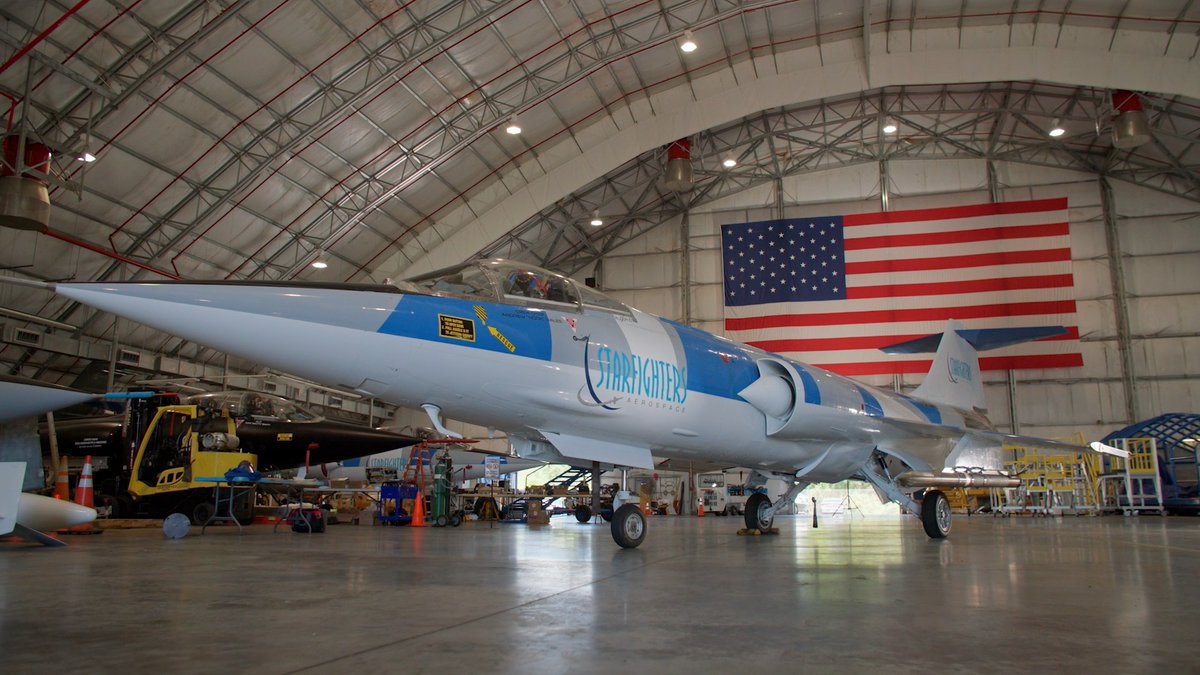
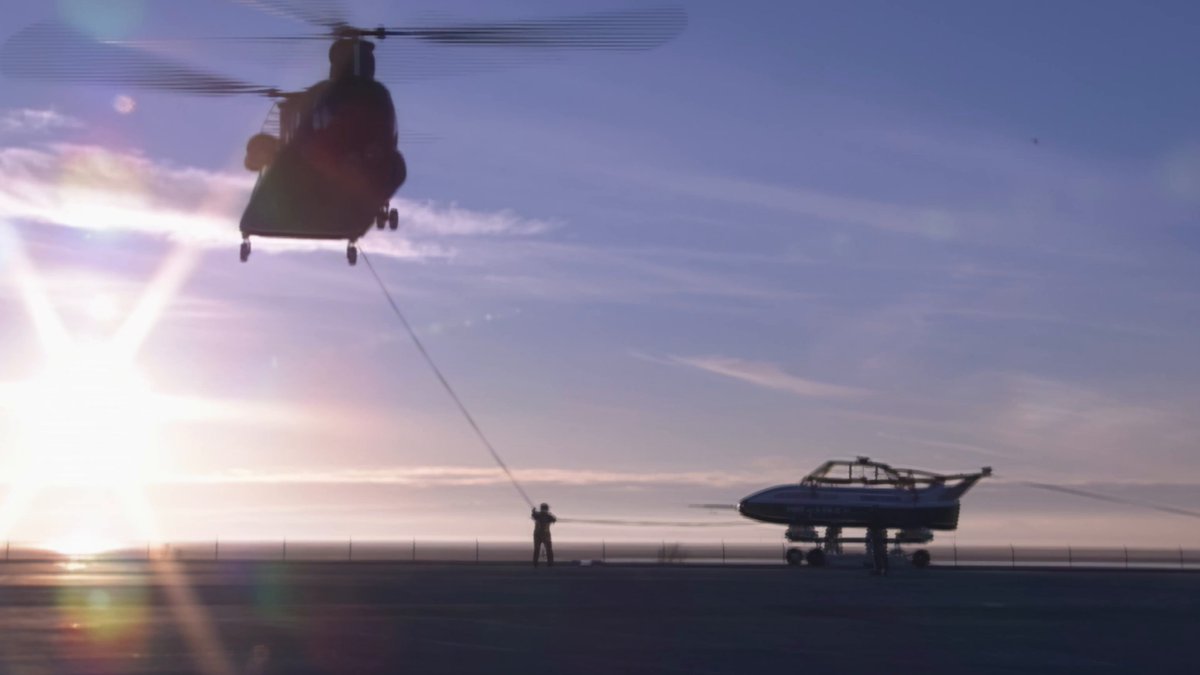
JENIAH's unmanned flight test at EDGE's multi-domain testing and evaluation facility, X RANGE in Abu Dhabi, showcases its autonomous capabilities. With speed reaching 1,050 km/hr, JENIAH navigates successfully. 🚀 Know more at #EDGE #LeadingEDGE #JENIAH #Unmanned #Autonomous #Testing #FlightTest #TomorrowBeginsNow #FutureofDefence

3,184,857 views • 2 years ago •via X (Twitter)

6 Comments

Strato 🇹🇷's profile picture
Strato 🇹🇷1 year ago

This one is better than the others.

محمد's profile picture
محمد2 years ago

كفو ينطح كفو 💪🏻 الى الأمام دائماً لكل الصناعات الخليجية

AAQ's profile picture
AAQ2 years ago

Congratulations 👍🏻

NEW ALGORITHM TAKE NOTE-Life is beautiful's profile picture
NEW ALGORITHM TAKE NOTE-Life is beautiful2 years ago

Good job.

ابوناصر العوذلي's profile picture
ابوناصر العوذلي2 years ago

الف الف مبروك للامارات العربيه المتحده

azizhasan82 🇦🇿🇹🇷🇮🇶🇸🇦🇦🇪's profile picture
azizhasan82 🇦🇿🇹🇷🇮🇶🇸🇦🇦🇪2 years ago

Good job! Congratulations.

Related Videos

🚨#ISPR Surface to Air Missile Rawalpindi, 10 January, 2026 #Pakistan Navy demonstrated its operational readiness and combat preparedness through a comprehensive exercise in the North Arabian Sea, showcasing both conventional and unmanned capabilities, as per dictates of evolving naval warfare. The exercise included the successful live firing of LY-80(N) Surface to Air Missile (SAM) from Vertical Launching System at extended range, validating the long-range capabilities of Pakistan Navy's modern air defence systems. LY-80(N) SAM successfully engaged and neutralized an aerial target, demonstrating Pakistan Navy's robust air defence capabilities. The exercise also featured the successful engagement of surface targets using Loitering Munition (LM), demonstrating Pakistan Navy's precision strike capabilities. Loitering Munition (LM) successfully engaged and destroyed surface targets, showcasing its effectiveness in modern naval warfare. Successful open-sea trials of Unmanned Surface Vessel (USV) were also conducted, marking a significant leap in autonomous naval technology. The trials validated the platform’s ability to combine high-speed performance with mission-critical durability. Key capabilities demonstrated include extreme maneuverability, precision navigation and weather resilience. USV offers a low-risk, high-impact solution with the stealth of a tactical interceptor. Commander Pakistan Fleet witnessed the exercise, which showcased Pakistan Navy's ability to employ advanced systems. Admiral Naveed Ashraf, NI, NI (M), T Bt, Chief of the Naval Staff, commended officers and men of Pakistan Navy for their professionalism and operational competence. He reaffirmed Pakistan Navy's resolve to ensure seaward defence of Pakistan and safeguard national maritime interests under all circumstances.

Pakistan Armed Forces News 🇵🇰

13,150 views • 6 months ago

Let’s talk about Zipline’s test sites and who we’re hiring for 🧵 They are where elite talent meets 24/7 large scale high volume testing. They’re the engine that helped scale Zipline to the largest autonomous delivery service on earth, 5,000+ autonomous trips around the world and we’re just getting started. Zipline's testing in 2025: 315,000+ test flights 🚀 35,000+ flight hours (480+ straight days of nonstop flying) 🙂‍ 3,000+ flights per day 📈 Our test sites are built to push our system to the max so that we de-risk tomorrow. Each one tackles a different brutal edgecase to make sure the system’s reliability is bulletproof. Our 'engineering test site' in the video I posted is reconfigured every few weeks: new obstacles are added, new flight apps reviewed, new edge cases are tested in any weather condition. Every new software build deploys here first, into live airspace. Our other sites are placed around the U.S. and are focused on testing in severe conditions that ground most if not all other forms of transport. They operate in scorching heat of up to 125 degrees, high-altitudes, intense rainstorms, 60+ mph winds, hail, sleet, and extreme cold-weather, down to -20F. Heavy ice and snow accumulation on propulsion and sensors is the norm. We aggressively chase these conditions in test so we dominate when it really matters. We are now developing 5+ new test sites, each one dialed in to push even more extreme weather and edge conditions. What I am especially proud of is that our safety has kept improving even as flight volume, complexity and environmental hostility increases. We’ve been able to test and develop at a scale that’s unprecedented in aviation history because our teams own a 100% fully vertical tech stack, built hand in hand with our flight and application software teams. We have to have the most robust airspace and fleet management tools on earth because Zipline will soon operate the largest fleet of aircraft on earth. Now to the fun part, we're hiring! DM me or send me an email to marcusZipline.com if you want to join Zipline Test Operations! We're hiring Flight Test Operators, Test Site Operators, Flight Test Electricians, Flight Test Construction Staff, Flight Test Project and Program Managers, Flight Test Engineers, Flight Test Safety Managers, Flight Test Security and, most importantly, Flight and Fleet Application Software Engineers. Please, cut to the chase. We have zero requirements on degrees, formal education or tenure. What counts is what you can do, merit, and what you’ve shown you’re capable of. Highlight that. Let's go!

Marcus Mueller

311,452 views • 4 months ago

Today we're unveiling something truly extraordinary—one of the coolest and most transformative technologies: Mixed Reality Testing (MRT). Since launching Waabi World four years ago, we've been building towards this pivotal moment - bringing our virtual testing capabilities into the physical world to fundamentally transform what's possible in autonomous vehicle development. For over 100 years, closed-course testing has been the staple of vehicle safety testing. But creating scenarios on a physical test track resembles elaborate movie-stunts—it’s difficult to reproduce tests consistently, those tests do not capture the diversity of the real-world, and the range of safety-critical scenarios we can test is very limited because of the risk of damaging equipment or, worse, endangering lives. MRT changes everything! In the same way that augmented reality goggles blend the physical world with a virtual world, MRT enables the Waabi Driver to drive autonomously down a physical test track while simultaneously experiencing numerous intelligent, simulated actors that coexist in this hybrid reality and react to each other and to the physical world in naturalistic ways. All this is possible by leveraging Onboard Waabi World, a version of Waabi's neural simulator that runs in a few milliseconds on the onboard compute. As Onboard Waabi World generates new scenarios, the real physical sensor readings are modified instantaneously so the Waabi Driver can react to the blend of real and virtual elements while driving in the physical world. This fusion creates a first-of-its-kind reality that unlocks unlimited testing possibilities previously impossible to achieve safely or practically. Traffic jams can materialize instantly, motorcycles can weave between lanes, crowds of pedestrians can jaywalk unpredictably, children can dart into the street from behind parked cars, animals can wander across the road, debris can appear in lanes creating hazardous obstacles. The possibilities are endless. This breakthrough eliminates all traditional constraints of closed-course testing. We can do exponentially more tests than ever before and in a continuous fashion, with extraordinary levels of diversity and realism. Most importantly, we can push the boundaries of safety testing without real-world consequences. MRT represents the culmination of years of work toward safe, scalable autonomous deployment. It's been central to our testing approach for over two years and fundamental to achieving feature-complete autonomous driving capabilities earlier this year. But this is just the beginning. MRT’s impact extends beyond self-driving trucks – we’re laying the foundation for a future where any physical AI system can be tested and validated safely - from robotaxis to humanoid robots, manufacturing automation to healthcare robotics. Learn about Mixed Reality Testing:

Raquel Urtasun

13,106 views • 1 year ago