正在加载视频...

视频加载失败

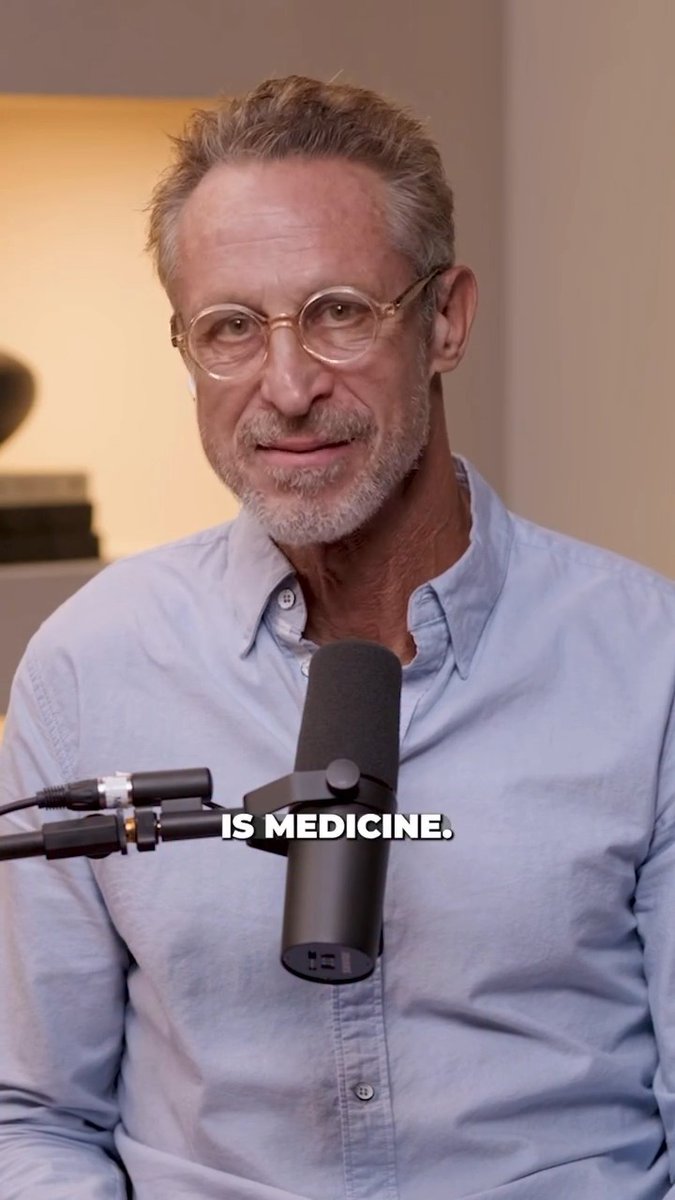
Joe Rogan asked David Sinclair: If one meal a day is so effective, why not just eat smaller meals multiple times instead? Sinclair’s answer cuts deep: Our bodies evolved over millions of years in environments full of adversity — hunger, scarcity, survival. We’ve removed that stress because it feels...

484,467 次观看 • 5 个月前 •via X (Twitter)

0 条评论

暂无评论

原始帖子的评论将显示在这里
相关视频

The Truth About Eating: Why Three Meals a Day Is a Modern Lie Most people don’t realize it, but the idea of eating three meals a day was not born from nature or tradition. It was engineered—by the Rockefeller Foundation, as part of a broader system designed to reshape how we consume, think, and live. Our ancestors didn’t sit down to breakfast, lunch, and dinner every day. For many, eating three times a week was a luxury. The human body is built to thrive in a fasted state. When you sleep, your body heals—not because you’re resting, but because you’re fasting. Without food to digest, your energy is redirected toward repair, regeneration, and recovery. That’s why fasting isn’t just a trend; it’s a biological imperative. When you feel sick, the instinct is often to seek out a doctor in a white coat. But how much do they really know about the body’s innate healing mechanisms? Instead of rushing to a clinic, consider this: a 36-hour fast can activate your stem cells. These cells travel to areas of injury, targeting inflammation and promoting healing from within. The modern food system wants you dependent—on processed meals, on constant snacking, on the illusion that you need to eat all day to survive. Obesity isn’t natural; it’s installed. It’s the result of a system designed to keep you fat, lazy, and reliant on their products. Your body is not broken. It’s meant to fast. It’s meant to heal. And it’s time to reclaim that power.

Camus

79,580 次观看 • 9 个月前

Joe Rogan is stunned by a theory that could completely rewrite human history: an advanced civilization may have existed LONG before recorded history. ROGAN: “There was a very advanced civilization that existed on Earth tens of thousands of years ago.” ROGAN: “We were probably wiped out by a comet impact, and what we have today is a rebuild of civilization.” ROGAN: “There’s not a linear progression from caveman to us.” ROGAN: “When you look at the Sumerian kings list, it gets very weird because there’s kings that reign for thousands of years.” ROGAN: “And then you have the flood. After the flood, the age of these people drops pretty dramatically.” ROGAN: “Is this just myth? Poor recordkeeping? Or had they achieved something we don’t understand?” ROGAN: “They had achieved incredibly complex structures like the pyramids.” ROGAN: “How did they move these 500-ton stones from hundreds of miles away? We don’t really know.” ROGAN: “Had they also gotten involved in genetic engineering?” ROGAN: “Had they figured out a way to extend lifespan?” Then Sinclair takes the idea even further. SINCLAIR: “Imagine if you had 500 years to do research, not just 57 years.” SINCLAIR: “Imagine if you could continue learning and growing.” SINCLAIR: “You would get so much done.” SINCLAIR: “The exponential increase in technological innovation that we would have in this society would be absolutely mind-blowing.” SINCLAIR: “If we do have extension of human lifespan… how will you think about your life if being 100 is still your prime?” SINCLAIR: “You might have multiple lifetimes, multiple marriages, multiple families.” SINCLAIR: “That will happen. It’s not really a question of if anymore.”

gomi

121,550 次观看 • 16 天前

Dr. David Sinclair said something to Prof Andrew Huberman that left me thinking... "Your cells are forgetting who they are." That is not a metaphor. That is the biological mechanism behind aging itself. Dr. David Sinclair then explained how it works... Every cell in your body carries the same DNA. A nerve cell and a skin cell are genetically identical. What makes them different is which genes are switched on and which are kept silent. That system of switches is called the epigenome. Think of DNA as a music library. The epigenome is the playlist. Each cell plays a specific set of songs. As long as every cell plays the right playlist, the body works perfectly. Aging is what happens when the playlists get corrupted. Genes that should stay silent start activating in the wrong cells. The cell loses its identity. It forgets what it was built to do. And according to Dr. David Sinclair, that single process is the root cause of heart disease, Alzheimer's, and most cancers. Not separate problems. The same problem, showing up in different places. The part that stopped me cold was what comes after that. If aging is information loss, it can be reversed by restoring the information. Dr. David Sinclair's lab has already done this in animals. When they restored the epigenetic signals, the cells remembered what they were. The aging reversed. Huberman asked whether the diseases go away too. Dr. David Sinclair did not hedge. " If you turn the clock back in tissues, those diseases go away." Every generation inherits assumptions about what the body can and cannot do. This one just changed. Follow @YourDocGoku for the science rewriting what we thought was permanent. David Sinclair

Goku

32,589 次观看 • 5 个月前

I’ve lost 138 pounds. Reversed my insulin resistance, high blood pressure, sleep apnea, depression, and anxiety. Perimenopause symptoms, gone. PMS, gone. Cramps, gone. Gut issues, almost fully healed. SIBO, gone. The only thing I still work on is my gallbladder and some irregular bile dumping, but that’s expected when you have stones and sludge. I’m actively working on it. Now. Something I hear a lot in my comments is “Isn’t that boring? Don’t you get bored eating that? I could never.” No. I really don’t. There are so many combinations of animal products you can eat. The most nutrient dense is red meat, specifically ruminant animals like beef and lamb that ferment their food through rumination. That’s the gold standard. But you can also eat chicken, fish, pork, and plenty of other options. It does not have to be boring. If you tolerate dairy, you can add it in on occasion. I wouldn’t recommend eating a ton of it though, especially hard cheeses or cottage cheese, because they can slow weight loss and stop you up. Yes, I’ve had that experience. It’s not fun. I have to really watch my cheese intake. LMAO. But here’s the real answer to the “boring” question. When you heal your relationship with food and you’re no longer eating to be entertained, no longer eating for comfort, no longer chasing flavor just for the sake of it, and you start eating because your body is genuinely hungry and genuinely needs those nutrients, everything changes. This is something I’ve experienced firsthand. When you sit down and you’re truly hungry, you’re going to eat what’s in front of you. Period. You’re not going to let yourself starve. The truth is, most of the time we eat it’s not even real hunger. It’s “oh it’s been five hours, I should probably eat something.” Or it’s “I had a bad day and I need comfort.” When you stop approaching food that way and your relationship with it shifts to the point where you see it as medicine, as something that heals and nourishes your body in the best way possible, something wild happens. You start to actually crave those foods. I crave steak. I crave cheeseburgers. I crave fat. Never in my life did I think I’d say that. And here I am. Craving fat. So no, to answer your question, I don’t get bored. Because food is not my focus anymore. And honestly, that’s the real problem out there. Food has become everyone’s focus. Not a means for survival but a means for entertainment and pleasure. We’ve got to break that cycle. So eat the meat. Eat the eggs. Eat the kielbasa if that’s what you can afford. Eat the bacon. Eat the ground beef. If you can afford rib eyes every day, go for it. If you can’t, don’t feel bad about it. Not even for a second. I don’t gatekeep information. This is not rocket science, y’all. I don’t even crave those old foods anymore. Not the pasta. Not the garlic bread. Not the ice cream. Not the sandwiches. I do crave soup, but I can kind of have that on carnivore so we’re good. LOL. My point is this. Heal your relationship with food and you won’t be asking that question anymore. Is it boring? No. It was never about the food.​​​​​​​​​​​​​​​​👑

Queen of Carni

19,369 次观看 • 6 个月前

Why the 1970s Way of Eating Hit Different – And Why I Can’t Stop Thinking About It I ran across this TikTok video the other day and it genuinely stopped me in my tracks. It was all about how Americans in the 1970s stayed naturally thinner—not because of better genetics or iron willpower, but because the whole food environment was completely different. Meals had real boundaries. You ate breakfast, lunch, and dinner at set times, and that was pretty much it. Snacking wasn’t the constant background noise it is today. As someone who actually grew up in that era, it rang so true. We didn’t have endless cabinets full of brightly packaged snacks calling our names. You ate when it was mealtime, portions were reasonable (a hamburger was hamburger-sized, fries came in actual small bags), and the kitchen pretty much closed after dinner cleanup. No grazing all day long, no supersized everything, no ultra-processed options lurking everywhere. Meals were smaller, more proportionate, and made from basic ingredients—fresh or simply prepared. It made me reflect: maybe we really do need to borrow a page from the 70s playbook. Go back to eating at specific times instead of all-day snacking. Choose normal, human-sized portions instead of the inflated ones we’ve gotten used to. Cut way back on the junk and focus on real food again. It felt healthier, more balanced, and honestly more sustainable than the constant diet culture we live in now. That video stuck with me because it wasn’t about shaming anyone—it was about remembering a simpler, more natural way of relating to food. I’m inspired to try bringing more of that 70s rhythm into my own life. Clear meal times, smaller plates, fewer processed snacks. It might just be the reset a lot of us need. Who else remembers eating this way and feels like it’s time to bring it back?

NancyH

113,568 次观看 • 3 个月前

"Every team wants to win a championship, but not every team wants to do the things required for a championship. And here's the thing: it's easy to be an average team. It doesn't require a lot. It's less adversity to be average in the world. The consequences of being average aren't easy. We end up wearing them. There's strain and struggle that comes with that too. The standard is just lower to be an average team. To be a championship team, to be champion, to be a championship team member here . . . I'm not gonna lie to you . . . I'm going to tell you the truth. It is harder. It is. The question is: Is it worth it? Some people say, "Oh it's not harder work." Yes it is. It's harder work. You can pursue comfort or you can pursue excellence. If we pursue comfort, we gotta give up some excellence. But if we pursue excellence, then we're just going to face more adversity. Everyone who's ever accomplished something excellence has had to overcome it. We are here today for a reason. Two reasons actually. Reason #1 is let's make sure that we identify and realize the opportunities that are in front of us. Reason #2 is let's make sure that we are preparing for the adversity that those opportunities require. And just understand: every single time you lever up your opportunities and you identify, "Oh there's something more I can do, more I can achieve. I can get better. I can earn more. I can do this." It's going to be matched with the adversity that comes with it. I want to make sure we are prepared for both of those, so that we're not chasing big opportunities and then getting mad when things start getting harder along the way. Is that fair? Does that make sense?"

Brian Kight

125,742 次观看 • 2 年前